

You’re driving across Plano, the engine starts to shudder at a light, and the check engine light comes on. Maybe it still runs, but it feels off. Maybe it suddenly sounds like it’s missing a beat. That moment gets stressful fast, especially if you were only planning a routine tune-up and now you’re worried you’ve got a broken spark plug.
A spark plug is small, but it has one job the engine can’t do without. It creates the spark that lights the air and fuel mixture inside each cylinder. When that plug cracks, fouls, seizes, or breaks during removal, the engine loses a clean burn in that cylinder. You feel that as a rough idle, weak acceleration, hard starting, or a flashing warning light.
“Broken” doesn’t always mean the same thing. Sometimes the ceramic insulator is cracked. Sometimes the plug is oil-soaked and no longer firing correctly. Sometimes the plug body is physically stuck in the head and snaps during removal. Each version points to a different repair path, and the wrong move can turn a manageable job into a much bigger one.
Your Engine Is Stuttering Now What
A lot of drivers first notice spark plug trouble in traffic. The car idles rough at a red light, then smooths out just enough to make you wonder if you imagined it. Then it does it again. By the time you get home, you’re searching symptoms on your phone and debating whether it’s safe to keep driving.
That stutter usually means one cylinder isn’t burning fuel the way it should. The spark may be weak, inconsistent, or gone. If the plug is cracked, fouled, or physically damaged, the ignition event in that cylinder becomes unreliable. The engine computer notices it before long, and the driver feels it almost immediately.
What broken can mean
A broken spark plug usually falls into one of these buckets:
- Cracked ceramic insulator caused by impact or installation damage
- Seized plug body that won’t back out cleanly from the cylinder head
- Oil-fouled plug tip that stops firing consistently
- Broken shell or threads left in the head during removal
Each one matters because the fix changes. A fouled plug may point to an engine condition that needs attention. A cracked insulator may have started with a simple tool mistake. A stuck shell requires patience, cleanup, and the right extraction method.
If your check engine light is on, start by understanding what the car is trying to tell you. This quick guide on how to read check engine codes helps you narrow the problem before you start removing parts.
Practical rule: If the engine is actively shaking, don’t keep driving it just to “see if it clears up.” Misfires can create bigger problems if you ignore them.
Warning Signs Your Spark Plugs Are Failing
Spark plugs usually give some warning before a complete failure. The trick is knowing which symptoms matter and what they suggest.
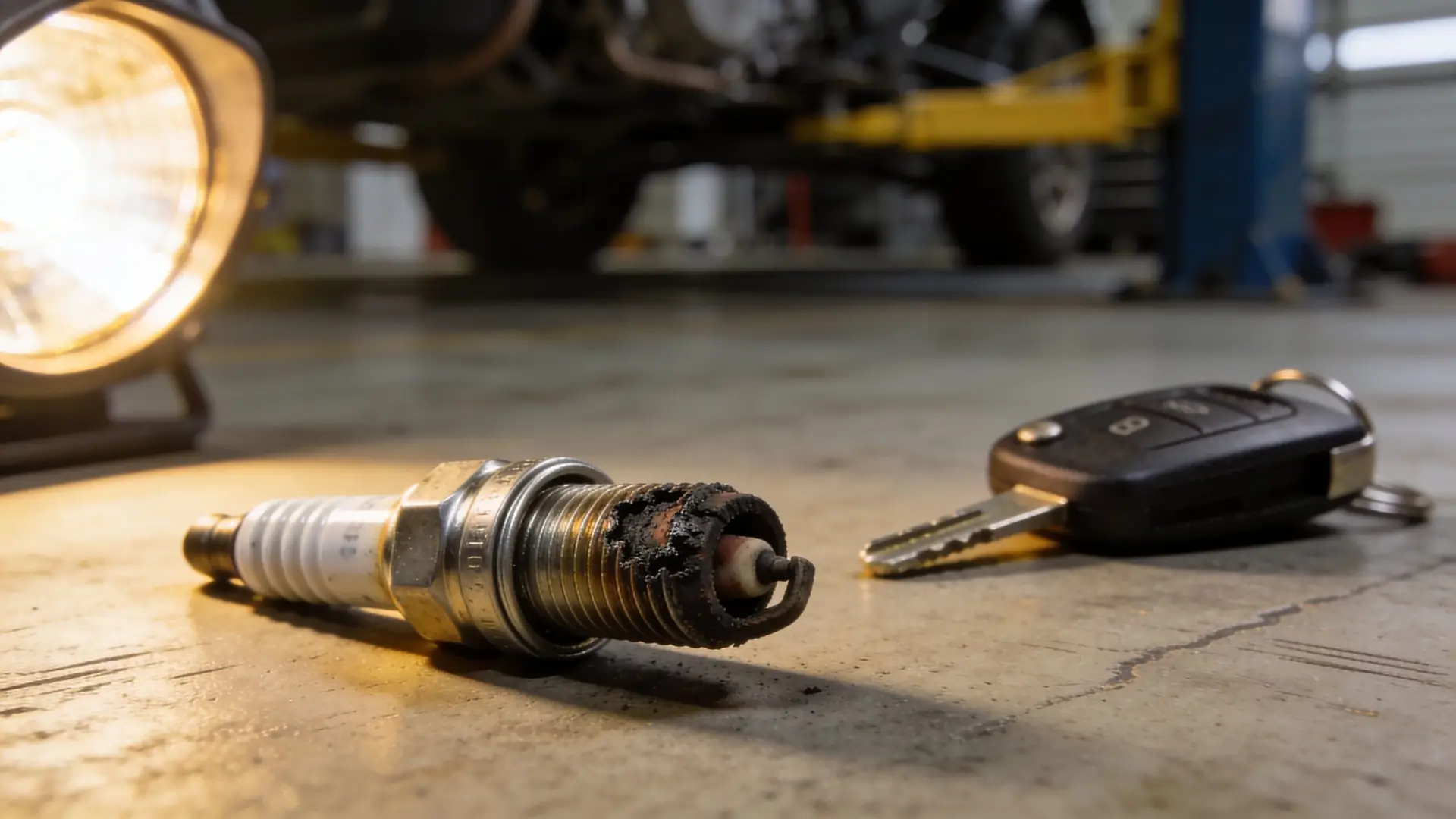
Rough idle and shaky starts
If the engine feels uneven at idle, one plug may not be firing consistently. At low speed, the engine has less momentum to hide a weak cylinder, so the stumble is more obvious. You may feel it through the steering wheel or seat.
Hard starts show up for the same reason. The engine needs a clean, strong spark to light the mixture quickly. A worn or damaged plug can make the car crank longer than normal.
Sluggish acceleration
Press the pedal and the car responds late, or it feels flat pulling away from a stop. That can happen when one cylinder drops out under load. The engine still runs, but it doesn’t pull evenly.
This symptom gets mistaken for transmission trouble all the time. Before assuming the worst, ignition should be checked.
Fuel smell, soot, or a check engine light
A cylinder that isn’t burning correctly can leave behind fuel smell, soot, or code activity. One leading cause is oil fouling, where engine oil leaks into the combustion chamber and coats the plug tip. Older vehicles are affected more often. Data cited in this repair overview indicates that many older vehicles burn oil, and this can significantly shorten spark plug life. The same source says fouling and carbon buildup are tied to a significant number of annual diagnostic scans for check engine issues (why a broken spark plug can ruin your summer cruise).
What you can notice before opening the hood
Here are the signs drivers usually catch first:
- The idle changed: It feels rougher than normal when parked in gear or at a stoplight.
- The engine hesitates: Throttle response gets lazy, especially merging or climbing.
- Fuel economy drops: The engine has to work harder when one cylinder isn’t doing its share.
- The car starts harder: It may crank longer, especially first thing in the morning.
- The warning light appears: The computer often catches misfire activity before you find the bad plug.
One of the most useful next steps is comparing your symptoms with a more focused list of signs of bad spark plugs. That helps separate ignition issues from fuel, sensor, or airflow problems.
Don’t judge spark plugs by mileage alone. A plug can fail early if the engine has an oil leak, a rich running condition, or contamination in the well.
One symptom doesn’t tell the whole story
A single rough start doesn’t prove you have a broken spark plug. But when rough idle, hesitation, and a warning light show up together, spark plug condition needs to move near the top of the list.
That’s also why replacing the plug without finding the cause can waste time. If oil is fouling the tip, the new plug may not last. If carbon is building up, removal later can become much harder.
Why Spark Plugs Break In The First Place
Most broken spark plugs don’t happen because the part was weak. They break because something mechanical, chemical, or procedural went wrong around them.
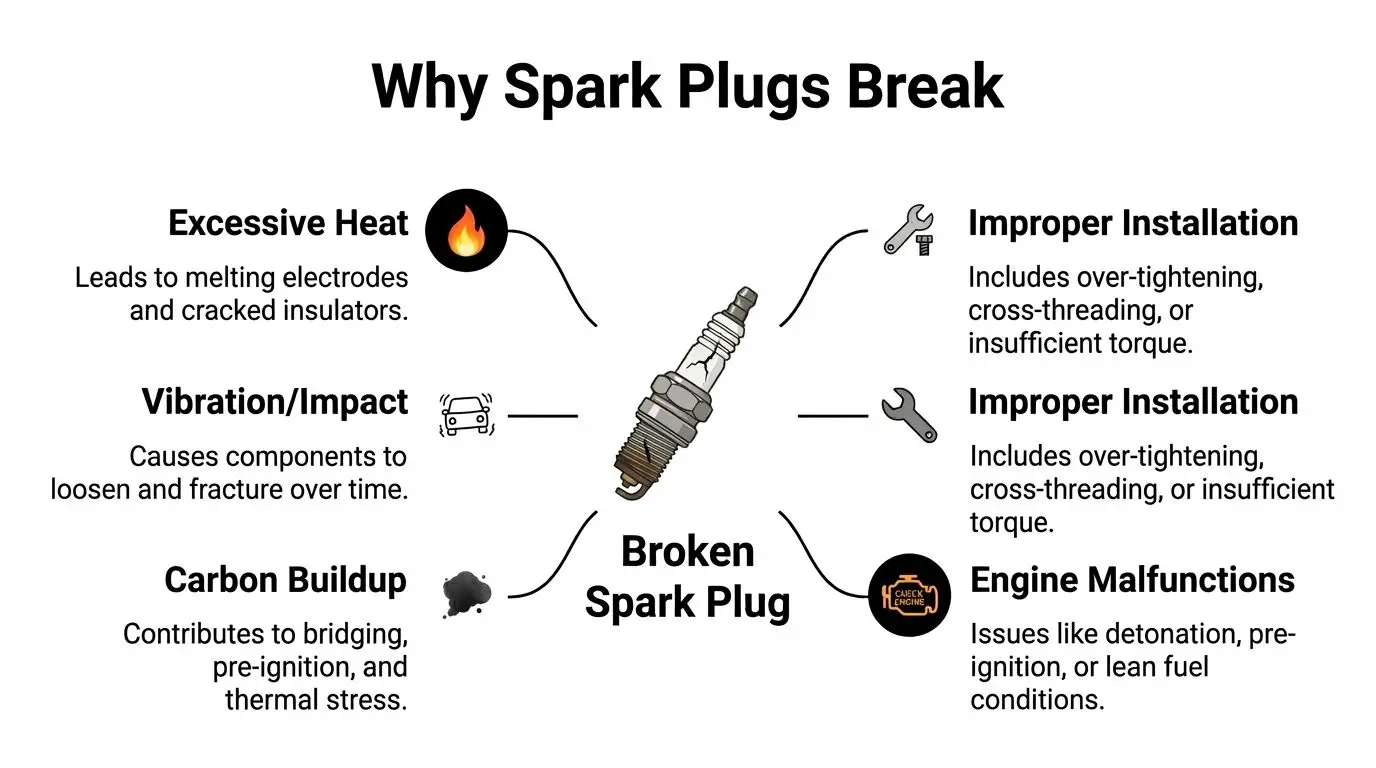
Installation mistakes do more damage than people think
One of the most common causes is improper installation, especially socket strike. That happens when the spark plug socket goes in at the wrong angle and hits the white ceramic insulator. The crack may be obvious, or it may be small enough that the plug gets installed anyway and fails later.
Over-tightening causes a different kind of damage. The shell can deform, pressure can build against the ceramic, and the internal structure can crack without a dramatic snap. A fully flattened crush gasket is a warning sign. On gasket-style plugs, that gasket should compress enough to seal, not get crushed flat. This problem is common enough that NGK has made instructional material warning against it, as described in this overview of spark plug failure from socket strike.
Heat and deposits work together
A spark plug lives in a harsh place. It sees pressure, combustion heat, and repeated thermal cycling. When deposits build up on the tip or threads, removal gets harder and operation gets dirtier.
Carbon buildup can trap heat and contribute to pre-ignition. Oil contamination can make the plug run poorly and leave sticky deposits behind. Once a plug sits in that environment for a long interval, especially in an aluminum head, it may not want to come out cleanly.
Common root causes at a glance
| Cause | What happens | Why it matters |
|---|---|---|
| Improper socket angle | Ceramic insulator gets struck | Plug may crack before it even goes in |
| Over-torquing | Shell and gasket deform | Hidden internal damage can follow |
| Carbon buildup | Threads and seat collect deposits | Removal gets riskier later |
| Oil fouling | Tip gets coated and overheats | Misfires start and service intervals shrink |
| Corrosion in modern engines | Threads bond more aggressively | Plug can seize during removal |
Modern engines add another layer
Newer engines pack components tighter, and many direct-injection designs leave less room for sloppy tool handling. Long service intervals also create a trap. Drivers hear that modern plugs last a long time, so they wait and wait, then the first removal turns into a wrestling match.
That doesn’t mean long-life plugs are bad. It means the engine still needs periodic inspection, especially if it sees short trips, oil consumption, or contamination in the plug wells.
A spark plug rarely “just breaks.” Usually the engine, the installation method, or the maintenance interval set it up to fail.
The subtle causes people miss
Not every broken spark plug starts with brute force. Some fail because the plug well filled with debris before removal. Some crack because the socket wasn’t fully seated. Others seize because the threads were dirty when the plug went in and stayed that way through years of heat cycles.
I’ve also seen plugs damaged by rushing. A person feels resistance, leans harder on the ratchet, and assumes the threads are just tight. Sometimes they are. Sometimes the plug is already binding, and that extra force is what shears the shell.
The practical takeaway is simple. Spark plugs reward clean setup, correct alignment, and exact torque. They punish guessing.
Your Step By Step Guide To Removing A Broken Spark Plug
You pull the coil, put a socket on the plug, and the top comes off in your hand. Now the job changes. The goal is no longer speed. The goal is protecting the cylinder head, keeping debris out of the engine, and avoiding a repair that creates misfires six months from now.
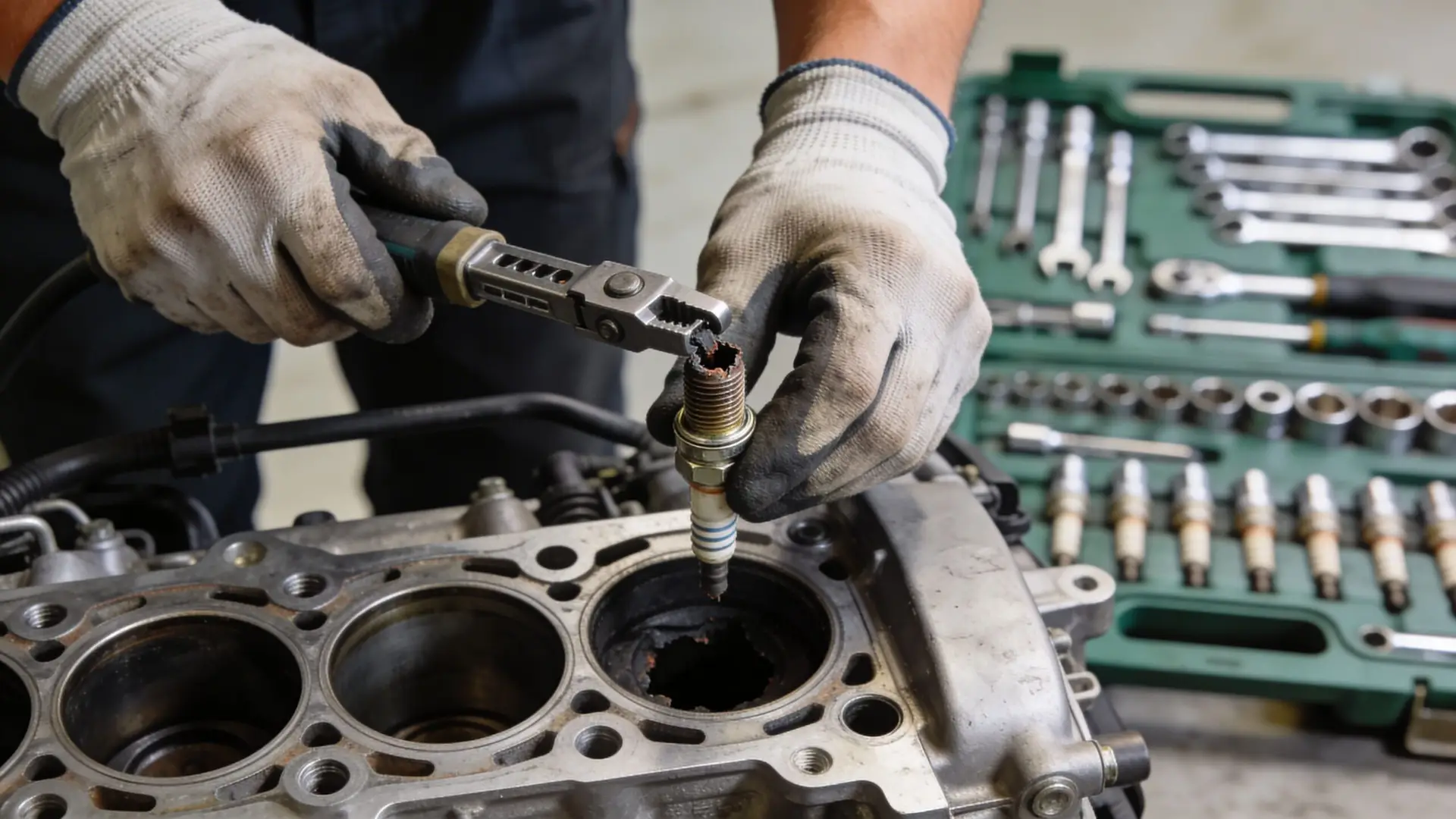
Start with setup, not force
Broken plugs punish rushed work. On modern aluminum heads, especially on tight engine bays common in late-model cars around Plano, one bad move can damage threads or drop ceramic into the cylinder.
Let the engine cool fully before touching the plug. Then do four things in order:
- Disconnect power safely: If you are working around ignition coils and wiring, review how to disconnect battery connections the right way first.
- Blow out or vacuum the plug well: Dirt and grit around the well often become the next problem.
- Confirm what broke: The repair changes if only the hex snapped off, the porcelain cracked, or the shell stayed in the head.
- Position the piston low in the bore: Bottom dead center gives you more room if inspection or debris recovery becomes necessary.
Use solid hand tools that fit correctly. A sloppy extension or worn socket can turn a bad situation into a stripped head. If your toolbox is missing the basics, a quality socket and ratchet set gives you better control in a narrow plug tube.
Gather the right tools before you start
The exact tool list depends on how the plug failed, but this is the setup I want nearby before I begin:
- Penetrating oil
- Dedicated broken spark plug extractor or the correct easy-out
- Ratchet and extensions
- Small hammer for seating the extractor
- Compressed air or a vacuum
- Magnet and pick tools
- Borescope if debris is possible
- Thread chaser or thread repair kit if the head threads are damaged
A vehicle-specific extractor kit is often worth the money. Some engines break plugs in predictable ways, and the correct kit reduces guesswork.
Soak the threads and let the oil work
Apply penetrating oil where it can reach the shell and threads. Then wait. Add another small amount and wait again.
This part feels slow because it is slow. That is the point.
Champion’s broken spark plug removal guidance recommends penetrating oil, careful hand-tool removal, and avoiding air tools that can worsen breakage (Champion broken spark plug removal guidance). In the shop, if the plug still feels dry and locked after the first soak, I give it more time instead of more torque.
Seat the extractor straight
Once the remaining shell is ready, install the extractor that matches the plug size and failure style. Tap it in just enough to seat it firmly and evenly. Crooked engagement is one of the fastest ways to break an extractor.
Turn the ratchet with smooth, steady pressure. Feel matters here. If the extractor starts winding up, flexing, or slipping, stop and reset before you break hardened steel inside the plug shell.
That repair gets expensive fast.
Use a simple decision point during removal
A careful extraction usually follows one of three paths:
| Situation | Best next move | Main concern |
|---|---|---|
| Shell starts turning smoothly | Continue slowly and back it out in stages | Pulling threads with the shell |
| Shell moves, then binds | Stop, add more penetrant, work it back and forth gently | Galling the aluminum threads |
| Nothing moves and torque rises | Stop the DIY attempt | Head damage, extractor failure, debris risk |
If the shell begins to move, do not rush the last few turns. Back it out, clean the area, and inspect what came out on the tool. Heavy thread material on the plug means the head may already be damaged.
Watch this process before trying it
A visual walkthrough helps because broken plugs fail in different ways depending on what’s still left in the head.
Stop and inspect if porcelain or metal may have dropped inside
If the porcelain broke apart or the ground strap is missing, extraction is only half the job. The bigger issue is what may be inside the cylinder.
Do not crank the engine and hope it clears itself.
Use a borescope if one is available. Check the piston crown and the area around the valves. For Plano drivers who plan to keep their vehicle a long time, this inspection matters. A tiny fragment can leave behind a misfire complaint, hot-spot pre-ignition, or cylinder wall damage that does not show up until later.
Repair damaged threads correctly
If the plug comes out and the head threads are torn, do not run a new plug into the hole and hope it grabs. That shortcut usually comes back as a repeat blowout or a weak seal.
Use a thread repair system designed for spark plug holes, and keep the cut straight and clean. Time-Sert provides installation guidance for insert repairs and emphasizes correct alignment and chip control during the process (Time-Sert spark plug thread repair information).
The details matter here:
- Cut slowly and keep the tool square
- Remove chips as you go
- Inspect the chamber before final assembly
- Install the insert fully and evenly
- Torque the replacement plug to spec
A thread insert can be a sound repair. A crooked or dirty insert is the start of the next failure.
Reassemble with long-term engine health in mind
A successful extraction is not the finish line. The engine still needs to leave with the right plug, clean threads, and correct torque.
Start the new plug by hand only. If it does not thread in smoothly, stop and correct the alignment. On modern engines, especially coil-on-plug systems, I also check the boot condition and look for oil in the well before reassembly. A broken plug sometimes exposes a second issue that was there all along.
Stop the job if any of these happen
Call for help if you run into any of the following:
- The extractor starts twisting or deforming
- Torque rises and the shell still will not move
- Thread material comes out with the plug
- You suspect ceramic or metal entered the cylinder
- Access is too tight to keep the extractor straight
- You cannot verify the chamber is clean before reassembly
That is not giving up. It is how you protect an aluminum head, avoid hidden engine damage, and keep a plug problem from turning into a cylinder head repair.
DIY Repair Or Call A Pro A Decision Guide For Plano Drivers
A broken spark plug sits right on the edge between realistic DIY work and a repair that can go sideways fast. The right choice depends less on confidence and more on what broke, what tools you have, and how much risk you’re willing to carry.
DIY makes sense when the situation is controlled
If the engine is accessible, the shell is intact, you have the right extractor, and the plug failed in a clean way, a careful DIY repair can work. This is especially true when you caught the issue early and there’s no sign that ceramic or metal entered the cylinder.
DIY also makes more sense for experienced hands who know what “too much resistance” feels like. That judgment matters.
A shop becomes the smarter move when the risk changes
Once debris may be inside the cylinder, this repair is no longer just about removal. Long-term engine health becomes the issue.
Mechanic forum data summarized in this discussion suggests that incidents where plug fragments enter the combustion chamber can lead to subtle persistent misfires or later piston scoring that may not show up immediately. The same source notes that a post-removal borescope inspection is the surest way to confirm the cylinder is clear and may help prevent a $2,000+ engine rebuild later (video source discussing fragment risk).
If you can’t confirm the cylinder is clean, you cannot consider the repair finished.
A simple decision table
| Situation | DIY may be reasonable | Call a pro |
|---|---|---|
| Ceramic cracked but plug still removable | Yes | If access is poor |
| Shell broke in the head | Maybe, with correct tools | Yes if extractor fit is questionable |
| Threads damaged | Only if you have insert repair experience | Usually the safer path |
| Debris may be in cylinder | No | Yes |
| Daily driver needed back quickly | Maybe | Often the practical choice |
The hidden cost of forcing it
Often, individuals focus on the visible repair. Extract the plug. Install a new one. Done.
The hidden cost is what happens after a rushed extraction. A tiny ceramic fragment can mark a piston crown. Thread debris can stay behind. A repaired hole can fail later if it wasn’t cleaned fully. The engine may run, but not run right.
For busy Plano drivers, that matters more than winning the DIY battle. If the vehicle is your commuter, family hauler, or work truck, downtime and repeat repairs are often more expensive than handing the job to someone with the right extractor set, borescope, and thread repair tools from the start.
The honest rule
Try it yourself only if all three are true:
- You know exactly what failed
- You have the correct extraction and inspection tools
- You’re willing to stop before causing head damage
If even one of those is missing, professional help usually costs less than the mistake you’re trying to avoid.
Frequently Asked Questions About Broken Spark Plugs
Can I drive with a broken spark plug
It depends on what “broken” means, but in most cases, you shouldn’t keep driving any farther than necessary. A misfiring cylinder can make the engine run rough, and if the plug is physically damaged or loose, the problem can escalate quickly.
If the engine is shaking hard, stop and have it inspected.
What makes modern engines more likely to have stuck plugs
Modern direct-injection engines can be less forgiving during plug service because the packaging is tighter and the heads are often aluminum. Prevention gets more important as these engines age.
One overlooked factor is fuel chemistry. Guidance on modern plug seizure notes that E15 adoption in Texas has seen a notable surge, and that ethanol-blended fuels can speed corrosion in aluminum cylinder head threads, increasing the chance of seizure during removal. The same guidance recommends proactive inspection during routine oil changes and using a quality anti-seize compound during installation in the right applications (broken spark plug prevention for modern engines).
What can I do to prevent a broken spark plug
The best prevention is boring, and that’s a good thing.
- Keep service intervals sensible: Don’t leave plugs untouched forever just because they’re long-life.
- Use clean installation technique: Start plugs by hand and torque them correctly.
- Inspect for oil or carbon contamination: Those clues often show up before breakage.
- Check high-mileage engines more closely: Especially if they see short trips or oil consumption.
- Think about related maintenance: On older vehicles with carbureted systems, mixture problems can contribute to plug fouling, and careful fuel-system work like superior carburetor cleaning can help address the conditions that dirty plugs in the first place.
Will anti-seize always prevent seizure
Not always. It helps in the right context, but it doesn’t replace correct torque, clean threads, and proper service timing. Used incorrectly, it can also affect clamping force.
Follow the plug maker and vehicle maker guidance for the engine you’re working on.
Can I just install a new plug after extraction and move on
Only if the threads are good and the cylinder is clean. If there’s any chance fragments entered the chamber or the threads were damaged during removal, the job needs inspection before reassembly.
If your engine is misfiring, a plug broke during removal, or you want a second opinion before risking cylinder head damage, Express Lube & Car Care can help. Their ASE-certified team in Plano handles diagnostics, spark plug service, and deeper engine repair with the kind of careful inspection this job requires, and the shop’s no-appointment model makes it easier to get answers without putting off the repair.