

You walk out to the car, glance at the tire, and see a lump in the sidewall that definitely wasn't there yesterday. Most drivers hope it's cosmetic. It isn't.
A bubble on sidewall of tire means the tire has suffered internal damage. The right response isn't to keep driving and “watch it for a few days.” The right response is to treat it like a safety issue, decide how you'll get the vehicle off that tire, and replace it before normal driving resumes.
What Is a Tire Sidewall Bubble?
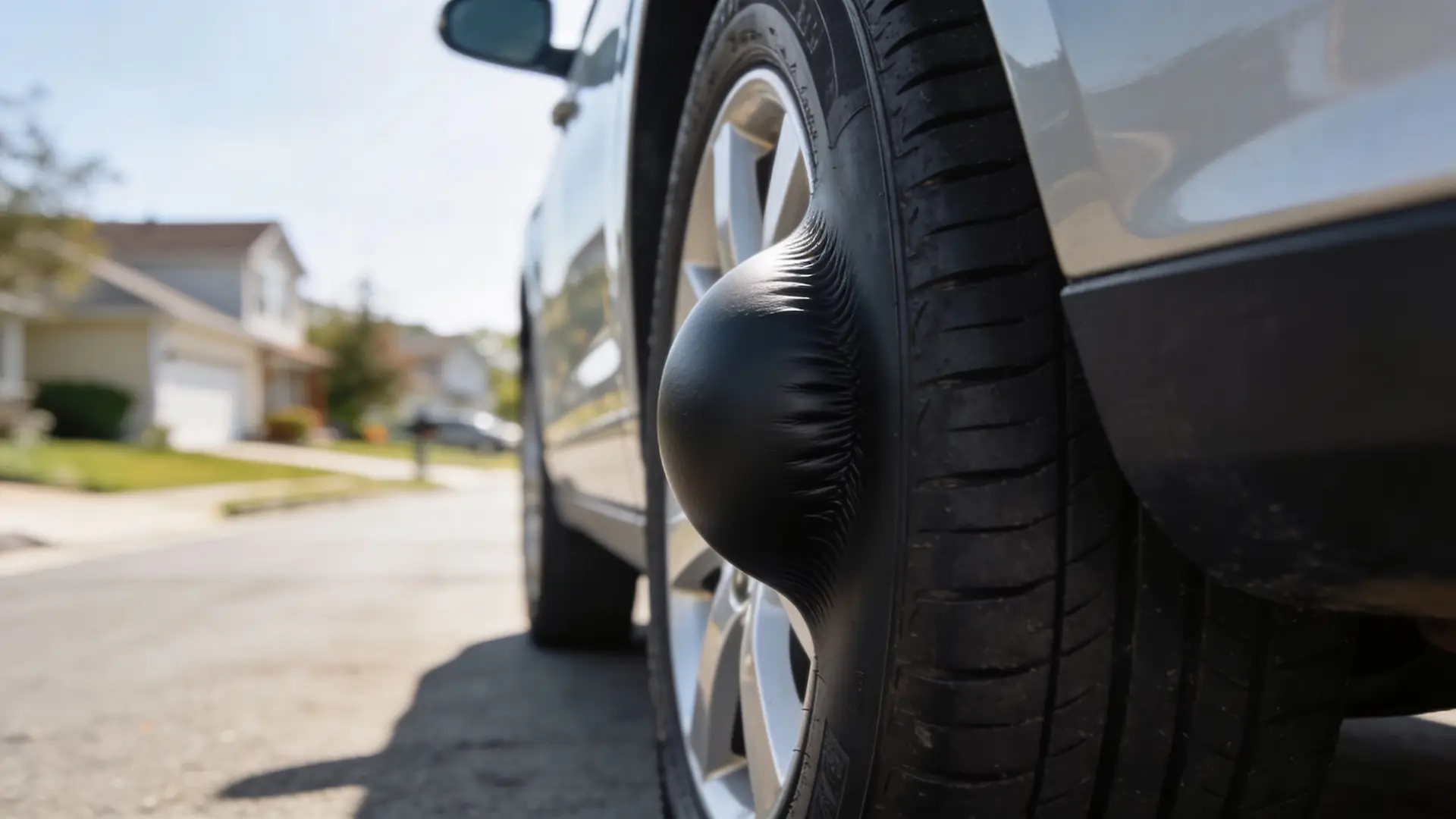
A sidewall bubble is a bulge in the tire's outer rubber caused by internal structural failure. The easiest way to picture it is a hernia, or air trapped under a sticker. The outside looks swollen, but the underlying problem is underneath.
What's happening inside the tire
A radial tire sidewall is built from several layers, including an inner liner, reinforced body plies, and outer rubber. When a hard impact punctures or weakens that inner structure, pressurized air can move outward and collect between layers, creating the bulge you can see from the outside. Tire forensics show 85 to 90% of sidewall bubbles trace to impacts, which is why a bulge is treated as a serious structural problem, not a minor blemish, according to this tire sidewall bulge analysis.
The important distinction is this. A tread puncture can sometimes be repairable if it's in the right area. A sidewall bubble is different because the tire's carcass has already been compromised.
Practical rule: If you can see a bubble, the tire has already failed internally.
Why the bubble itself is the warning sign
Drivers sometimes ask whether a small bubble is less serious than a large one. In the shop, that's not how we look at it. The bubble is proof that air has moved into a place it should never be.
That means the tire can no longer be trusted to carry load, absorb heat, and flex normally. Even if the tire still holds air and the car feels mostly fine at low speed, the structure is no longer intact.
A sidewall bubble is not dirt, not a molding irregularity, and not something a tire dressing caused. It's damage from the inside out. Once that bulge appears, replacement is the safe move.
Common Causes of a Bubble on Your Tire
Most sidewall bubbles start with an impact. The driver may not even remember the exact moment, especially if it happened in traffic, at night, or during a rough commute.
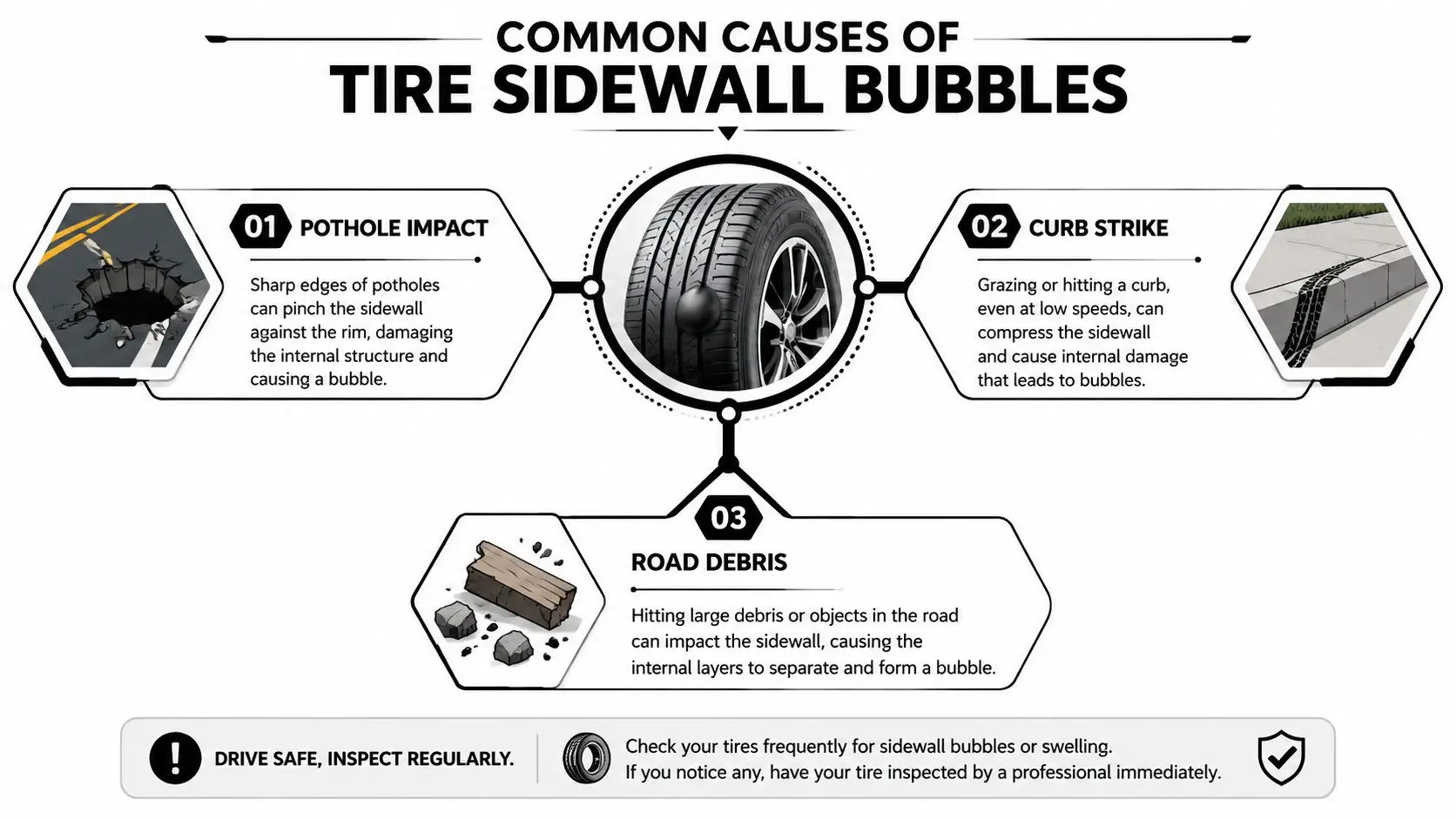
In Plano, common stories sound the same. You clipped a curb while parking, hit a pothole on U.S. 75, rolled over debris you couldn't avoid, or crossed a speed bump harder than usual. The tire gets pinched between the road hazard and the wheel, and the internal layers take the hit.
The three causes shops see most often
- Pothole impacts: A sharp pothole edge can compress the sidewall against the rim hard enough to damage the inner liner and body plies.
- Curb strikes: Even a low-speed hit can injure the sidewall, especially when the wheel contacts the curb at an angle.
- Road debris and bumps: Debris, rough construction zones, and abrupt speed bumps can all create the same pinch-type damage.
According to Pirelli's tire bulge guidance, impact damage from potholes, curbs, and speed bumps accounts for most sidewall bubbles. The same source notes that underinflation contributes to 75% of tire failures on U.S. roads, and AAA reported in 2023 that tire problems were the top reason for roadside assistance calls.
Factors that make bubbles more likely
Some tires are more vulnerable because of conditions the driver can control, and some aren't.
Underinflation is a major one. A low tire flexes more, runs hotter, and absorbs impacts worse than a properly inflated one. Overloading also raises sidewall stress. Rarely, a manufacturing defect is involved, but that's not the usual explanation when a bubble shows up after everyday driving.
Most of the time, a sidewall bubble isn't bad luck in isolation. It's a road impact plus a tire that had less margin than you thought.
If you're trying to figure out what caused yours, think back over the last few days, not just the last trip. The damaging hit often happens before the bubble gets noticed.
Why a Sidewall Bubble Is a Major Safety Risk
The danger isn't that the bubble looks bad. The danger is that the tire is still trying to do a hard job with weakened structure.
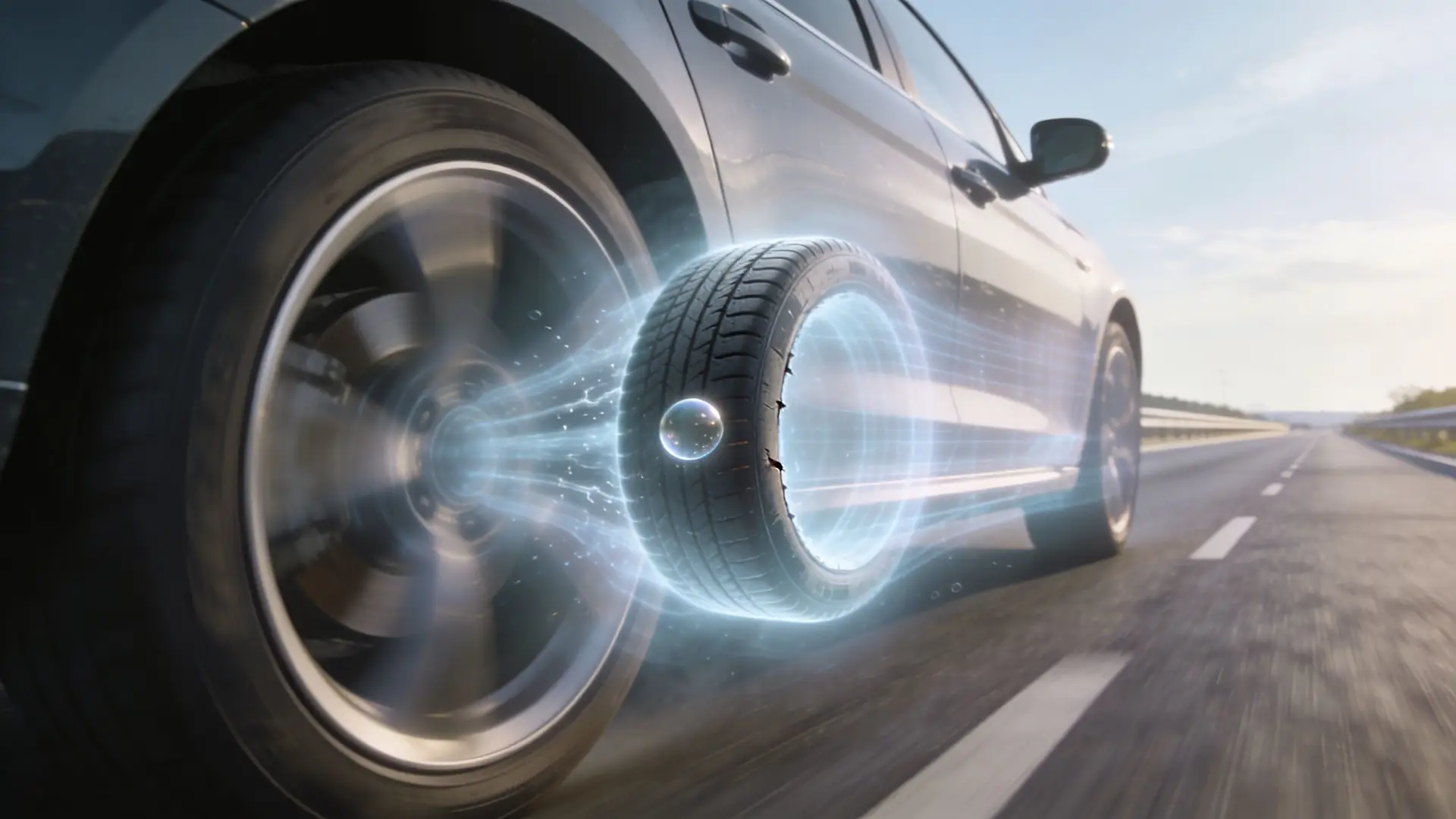
A passenger tire typically carries 32 to 36 PSI, and that pressure keeps pushing outward every second the vehicle is moving. When the sidewall has a damaged section, that force is no longer being contained the way the tire was designed to handle it. According to this tire safety explanation, a sidewall bubble can lead to instantaneous failure, and NHTSA reported over 11,000 tire-related crashes in 2022.
Why failure can happen suddenly
A bubbled sidewall doesn't usually fail on a schedule. It fails when heat, speed, road shock, or load pushes the damaged area past its limit.
That's why a tire may seem okay pulling out of a parking lot and then come apart later on the highway. The weak point is already there. Higher speed just exposes it faster.
Texas driving makes that gamble worse. Hot pavement, long commutes, and highway speeds all raise the stress on a compromised tire.
A bubbled sidewall is one of those problems that can stay quiet right up until it doesn't.
This visual does a good job showing why the risk isn't just cosmetic:
What makes driving on it risky right now
A driver usually asks one of two questions: “Can I make it home?” or “Can I make it to the shop?” The honest answer is that every mile adds risk.
The bubble can grow. The sidewall can rupture. The tire can lose air quickly enough to upset the vehicle, especially during lane changes, braking, or highway travel. That's why a sidewall bubble is treated differently from a slow tread leak. You're not managing an inconvenience. You're managing a possible blowout.
Your Immediate Action Plan for a Tire Bubble
If you find a sidewall bubble, keep the next few decisions simple. Don't drive normally on it, and don't talk yourself into “just one more errand.”
What to do first
- Pull over somewhere safe if you notice it while driving. A parking lot, shoulder with room, or side street is better than continuing into faster traffic.
- Look at the tire without touching the bubble. You're confirming what you saw, not testing it.
- Check whether you have a usable spare and the tools to install it. If you do, that's usually the fastest safe exit.
- If you don't have a spare, call roadside assistance or a tow. This is the smart move when the tire is already structurally compromised.
When a very short move may be necessary
Sometimes the car is sitting in a place that isn't safe to stay, such as a narrow shoulder or a traffic lane. In that case, move it the shortest possible distance to safety at low speed and with as little steering input as possible.
That is not the same thing as deciding the tire is safe to drive on. It's an emergency repositioning decision.
If the vehicle is already parked safely, leave it there until the spare is on or help is on the way.
What not to do
- Don't air it up more in hopes of reshaping it.
- Don't press or cut the bubble to “see how bad it is.”
- Don't plan a normal trip to work, school, or across town before dealing with it.
- Don't confuse this with a repairable flat. Sidewall damage is a different category of problem.
If you're weighing whether any damaged tire is still drivable, this guide on driving on a flat tire helps explain why even short-distance driving on compromised rubber can create bigger safety and wheel damage issues.
The fastest safe decision
For most drivers, the right answer is one of these:
- Install the spare.
- Call roadside assistance.
- Have the vehicle towed to a tire shop.
That may feel inconvenient in the moment, but it's a lot easier than dealing with a roadside blowout, wheel damage, or collision afterward.
Tire Replacement Costs and Repair Myths
The biggest myth is also the most dangerous one. A sidewall bubble cannot be safely repaired.
Plugs are for certain punctures in the tread area. Patches don't restore broken sidewall cords. Sealants don't rebuild internal structure. If a tire has a bubble, the solution is replacement, not a workaround.
Why repair doesn't work
The sidewall flexes constantly. That flex is exactly why a damaged sidewall won't hold a meaningful repair over time. Even if someone were willing to attempt a patch, the tire would still have internal separation and weakened reinforcement.
Here's the practical comparison:
| Action | Safety | Feasibility | Recommendation |
|---|---|---|---|
| Patch the sidewall bubble | Unsafe | Not a valid repair | Do not do it |
| Plug the tire | Unsafe for this problem | Not suitable for sidewall damage | Do not do it |
| Add air and keep driving | High blowout risk | Easy, but reckless | Do not do it |
| Replace the damaged tire | Safe solution | Standard tire service | Yes |
| Replace in pairs when needed for balance and wear | Often the better choice | Depends on vehicle and tread condition | Ask the shop to measure and advise |
One tire or two
Sometimes one tire can be replaced. Sometimes replacing the pair on that axle is the better call for handling, balance, and wear consistency.
That decision depends on tread depth, tire age, drivetrain, and what the opposite-side tire looks like. If you want a better sense of what a proper tire service includes after replacement, this guide on mounting and balancing tires is a useful reference.
Insurance and liability matter more than most drivers think
This is the part many bubble guides skip.
If a sidewall bubble leads to a crash in Texas, a driver can face at-fault liability and may have an insurance claim denied if the damage was known and ignored. The same source notes that rare manufacturing defects account for 1 to 2% of cases and may be covered by warranty, while most bubbles come from road hazards. It also notes that documenting the damage can help with potential insurance claims. That guidance appears in this insurance and liability discussion.
If you're unsure how your policy is structured, the breakdown of Select Insurance Group insights is helpful for understanding the difference between liability-only protection and broader coverage that may matter in a road-hazard situation.
Keep photos of the bubble, the wheel, and the road hazard if known. Keep the invoice too. Documentation helps when warranty or insurance questions come up.
What works versus what doesn't
What works is straightforward: inspect the tire, replace the damaged one, and check the matching tire and wheel for related impact damage.
What doesn't work is gambling on “one more week,” asking for a patch, or assuming insurance will sort everything out later. A bubbled sidewall is one of those repairs where delaying the decision usually makes the situation more expensive, not less.
How to Prevent Sidewall Damage on Plano Roads
You can't avoid every pothole, chunk of debris, or bad construction edge. You can reduce the odds of sidewall damage by giving the tire more protection before the impact ever happens.
Keep pressure where it belongs
Underinflation is the easiest preventable factor. According to Les Schwab's sidewall bubble guidance, driving on underinflated tires at less than 80% of recommended PSI increases bubble risk because the sidewall flexes and heats up more. The same source notes that at 28 psi instead of 35 psi, sidewall flex can increase by up to 40%.
Check pressure monthly when the tires are cold, and use the door placard recommendation, not the number molded on the tire sidewall.
Drive to protect the sidewall
A few habits make a real difference:
- Slow for visible potholes: If you can't avoid one safely, reduce speed before impact.
- Don't climb curbs while parking: Even a low-speed pinch can injure the sidewall.
- Watch construction zones: Rough edges, plates, and debris are common bubble starters.
- Avoid overload when possible: A heavily loaded vehicle gives the sidewall less room for error.
Make visual checks part of routine maintenance
Walk around the car now and then. Look for scuffs, cuts, bulges, or a tire that suddenly looks different from the one on the other side.
Regular rotation helps too because it gives someone a reason to inspect all four tires closely. If you want a schedule baseline, this article on how often to rotate tires is a practical place to start.
Seasonal preparation matters as well. While it's not tire-specific, a checklist for preparing your home for extreme cold is a good reminder that weather readiness starts before conditions get bad, and that same mindset applies to vehicles.
Check pressure, look at the sidewalls, and catch damage in the driveway instead of on the shoulder.
A little prevention won't stop every impact bubble, but it gives your tires the best chance to survive rough roads without internal damage.
If you've found a bubble on sidewall of tire and need a clear answer fast, Express Lube & Car Care can inspect the tire, explain whether replacement should be one tire or a pair, and help you get back on the road safely without the runaround.