
Most drivers know they should maintain their cars, yet the details of a proper local auto maintenance checklist explained in clear, practical terms remain elusive for many. The reality is stark: annual maintenance costs for gas-powered vehicles now exceed $1,300, and with the average American vehicle aging past 12.6 years, the margin for neglect keeps shrinking. Skip the right service at the wrong time, and a $40 oil change becomes a $4,000 engine repair. This guide cuts through the noise and lays out exactly what your vehicle needs, when it needs it, and why.
Table of Contents
- Key takeaways
- Understanding your manufacturer’s maintenance schedule
- Core checklist tasks by mileage interval
- Seasonal maintenance and local conditions
- Maintenance myths that cost you money
- Tools and habits for staying on schedule
- My perspective on disciplined maintenance
- Keep your car running with Express Lube & Car Care
- FAQ
Key takeaways
| Point | Details |
|---|---|
| Owner’s manual is law | Your manufacturer’s schedule beats any generic checklist for accuracy and cost control. |
| Mileage drives the schedule | Group tasks by interval — every 3,000 to 100,000 miles — to stay organized and on time. |
| Seasons change priorities | Winter and summer each create distinct wear patterns that a seasonal checklist addresses directly. |
| Avoid unnecessary upsells | Fluid flushes and early replacements not backed by mileage data often cost more than they protect. |
| Document everything | Keeping a maintenance log and a symptom list cuts diagnostic time and labor costs at service visits. |
Understanding your manufacturer’s maintenance schedule
The phrase “auto service checklist” gets thrown around constantly, and most of what you find online is either too generic to be useful or quietly shaped by shop upsell incentives. The real vehicle maintenance guide you need already came with your car. It’s your owner’s manual.
Expert mechanics consistently point to the owner’s manual as the single most reliable source for service timing. Manufacturers engineer those intervals based on actual component testing, not guesswork. When you follow them, you protect your powertrain warranty, avoid premature part failures, and sidestep paying for services you don’t yet need.
Here’s where most drivers go wrong with generic checklists:
- Blanket oil change intervals. Many shops still push 3,000-mile oil changes for vehicles designed to run 7,500 or even 10,000 miles between changes.
- One-size coolant flush schedules. Coolant service intervals vary widely by manufacturer, from 30,000 miles to 150,000 miles depending on coolant type and engine design.
- Transmission flush upsells. Some shops recommend flushes at 30,000 miles when the manufacturer specifies no flush at all under normal driving conditions.
- Tire rotation timing conflicts. Generic advice says every 5,000 miles. Your manual may specify 7,500. The difference adds up to unnecessary shop visits over a vehicle’s life.
Pro Tip: Keep a physical or digital copy of your owner’s manual in your glove box and on your phone. Before every service appointment, check the manual first. If a shop recommends something not listed, ask them to show you where it appears in your manufacturer’s documentation.
Core checklist tasks by mileage interval
A well-structured car maintenance schedule by mileage is the backbone of reliable vehicle ownership. Think of it like a building’s maintenance log: address the small stuff consistently, and the major systems rarely fail unexpectedly.
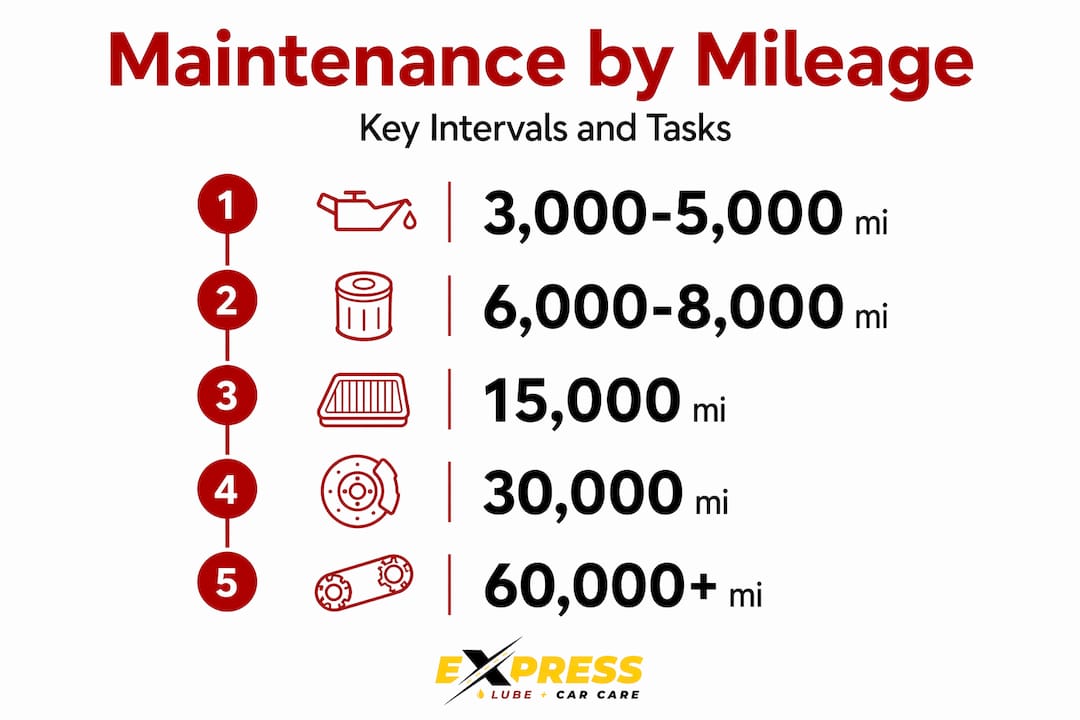
Here is a practical breakdown of what belongs at each interval:
| Mileage Interval | Service Tasks | Why It Matters |
|---|---|---|
| Every 3,000–5,000 miles | Oil and filter change, fluid level checks, tire pressure inspection | Prevents buildup and maintains engine lubrication |
| Every 6,000–8,000 miles | Tire rotation, brake inspection, cabin air filter check | Front tires wear faster; rotation evens wear and extends tire life |
| Every 12,000–15,000 miles | Engine air filter replacement, battery test, wiper blade check | Annual filter replacement protects engine intake and improves fuel efficiency |
| Every 30,000 miles | Spark plugs, fuel filter, coolant flush (check manual), brake fluid test | Addresses intermediate wear and prevents larger failures |
| Every 60,000–100,000 miles | Timing belt or chain inspection, transmission service, full suspension check | High-cost failure prevention; timing belt failure can destroy an engine |
A few specifics worth knowing. Brake inspections at the 6,000-mile mark often catch rotor wear early, before scoring occurs. Installing quality brake pads and rotors together gives you the best braking performance and extends the life of both components. Cutting corners on one part undermines the other.
For oil changes specifically, the role of regular oil changes in engine longevity goes well beyond lubrication. Fresh oil carries heat away from moving parts, suspends combustion byproducts, and keeps seals conditioned. Letting it degrade beyond its service life accelerates wear in ways that show up silently over thousands of miles.
Seasonal maintenance and local conditions
Car upkeep explained purely by mileage misses a critical variable: your local environment. A vehicle driven in Plano, TX, with summer temperatures regularly above 100°F faces different stress than one parked in a mild coastal city. Local climate shapes what your checklist needs to prioritize and when.
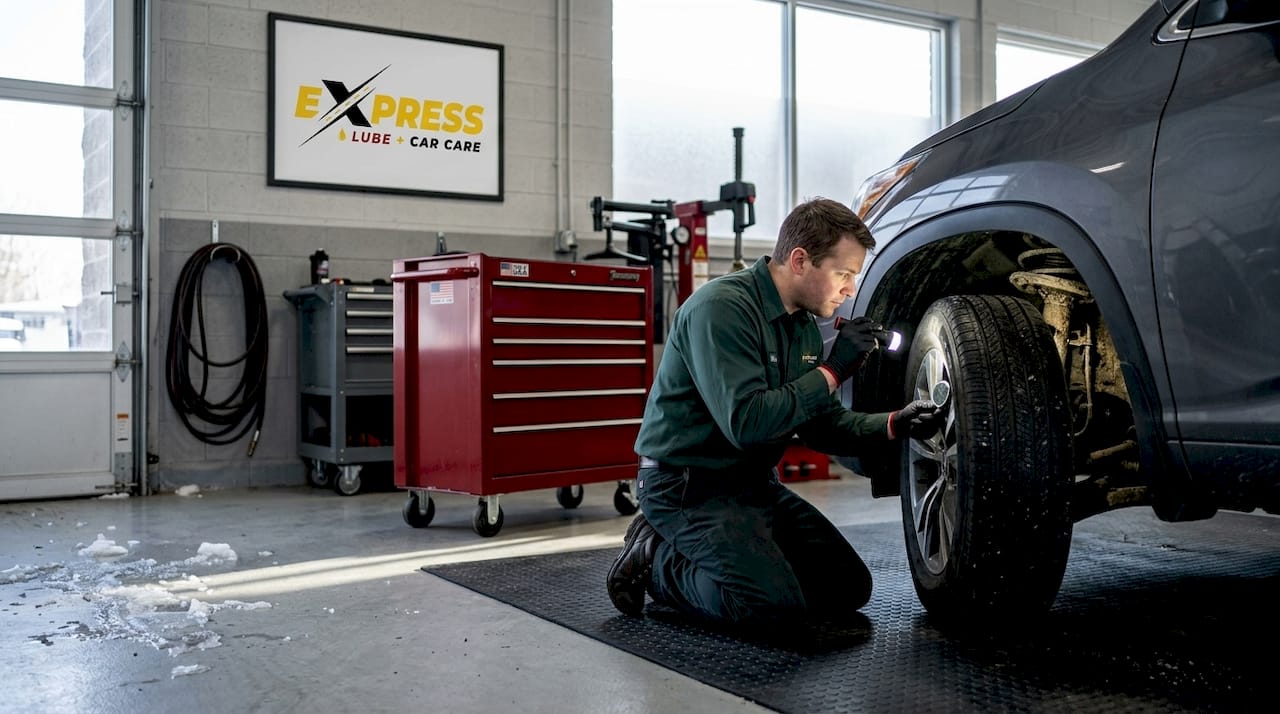
Winter road conditions create grime and salt buildup that accelerates corrosion on brake components, wheel wells, and undercarriage fasteners. Even in Texas, drivers encounter cold snaps, temperature swings, and storm events that stress rubber components and drain battery reserves faster than normal.
A practical seasonal checklist looks like this:
Before winter:
- Test battery cold-cranking amps (batteries degrade significantly in cold)
- Inspect belts and hoses for cracking or stiffness
- Check tire tread depth and consider all-season tires if needed
- Top off antifreeze and verify the coolant mixture ratio
- Replace wiper blades before ice and debris season
Spring reset (after winter):
- Inspect undercarriage and brake lines for salt corrosion
- Check tire pressure (cold weather deflates tires; warm weather can over-inflate)
- Seasonal inspections uncover hidden wear from winter stress before it becomes a breakdown
- Test AC system before summer heat arrives
- Inspect suspension components for pothole damage
Before summer:
- Verify coolant level and system pressure
- Check AC refrigerant charge and cabin filter
- Inspect tires for sidewall cracking from UV exposure
Pro Tip: Even if you live in a mild climate, schedule two dedicated seasonal inspections per year. Spring and fall visits give a certified technician the chance to catch developing issues that mileage-based intervals alone won’t surface at the right time.
Maintenance myths that cost you money
The local car maintenance tips world is full of advice designed more to sell services than to protect your vehicle. Knowing what to skip is just as valuable as knowing what to do.
The most common misconception: frequent fluid flushes protect your car better than manufacturer-timed ones. They don’t. Flushing transmission fluid or coolant before it’s due can actually disturb settled particulates, introduce air, or degrade fresh fluid integrity. Manufacturers engineer these systems with specific service intervals for a reason. High-pressure flush equipment, while impressive-looking, isn’t always what the engineering spec calls for.
Here are specific traps to watch for at service counters:
- Early power steering fluid flushes. Most manufacturer specs don’t call for this until 75,000 miles or beyond.
- Frequent fuel injector cleaning. Unless you’re running low-grade fuel or noticing performance issues, this is rarely necessary before 60,000 miles.
- Differential fluid upsells on front-wheel-drive vehicles. Front-wheel-drive cars don’t have a rear differential. This one gets pushed more often than you’d think.
- Premature serpentine belt replacement. Modern belts are designed to last 60,000 to 100,000 miles. Replacing one at 30,000 miles because it “looks worn” is usually not warranted unless inspection reveals actual cracking.
Pro Tip: Before authorizing any additional service beyond what you scheduled, ask the technician to show you the component in question. A reputable shop will walk you to the lift and show you the issue directly. If they won’t, that tells you something.
Tools and habits for staying on schedule
Knowing how to maintain your vehicle is only half the equation. The other half is execution. Drivers who stay current on maintenance aren’t necessarily more knowledgeable. They’re more organized.
Providing exact symptom details to your technician at service time is one of the most underused cost-saving moves available to vehicle owners. Note the mileage when a symptom first appeared, the conditions that trigger it (hot vs. cold start, highway vs. city, wet vs. dry roads), and how frequently it occurs. That specificity cuts diagnostic time and focuses labor where it actually belongs.
Here is a practical comparison of tasks you can handle yourself versus those that genuinely need a professional:
| Task | DIY-Friendly | Professional Recommended |
|---|---|---|
| Checking tire pressure | Yes | — |
| Checking and topping off fluid levels | Yes | — |
| Replacing cabin air filter | Yes (most vehicles) | — |
| Replacing engine air filter | Yes (most vehicles) | — |
| Brake pad inspection | Visual check only | Full inspection and replacement |
| Oil change | Possible, but messy | Recommended for correct disposal |
| Battery test and load check | Basic voltage only | Full load test with proper equipment |
| Transmission service | No | Always professional |
| Timing belt replacement | No | Always professional |
Beyond the wrench work, your maintenance tracking system matters. A simple log in your glove box or a maintenance app like Fuelly or CarFax’s service tracker keeps your service history organized. When you eventually review your vehicle safety record before a major trip or resale, that history becomes real, documentable value.
Building a relationship with a trusted local shop amplifies every other step on this list. When a technician knows your vehicle’s history, they catch anomalies faster and recommend services with more precision. That continuity is worth more than chasing discount coupons across four different shops.
My perspective on disciplined maintenance
I’ve worked with vehicle owners long enough to recognize the pattern. The cars that come in for catastrophic failures almost always have one thing in common: a spotty or entirely absent service history. Not because the owners didn’t care, but because no one ever gave them a clear, honest picture of what a proper checklist looks like and why it matters.
What I’ve found is that most overspending on car repairs isn’t caused by bad luck. It’s caused by deferred small maintenance. A $15 battery test that gets skipped becomes a $180 jump-start service call at 7 a.m. An air filter left in past its service life slowly starves the engine, dropping fuel economy by 10% over months before anyone notices.
My honest take: trust your owner’s manual above everything else. Verify any recommendation that goes beyond it. And find a shop whose technicians show you the problem rather than just tell you about it. That last point separates reliable service from profitable upselling.
The routine car maintenance checklist isn’t about perfection. It’s about consistency. Drive the same car for 200,000 miles or more, and you’ll understand why every interval on that list exists.
— Express Lube & Car Care
Keep your car running with Express Lube & Car Care
Staying current on your maintenance schedule is far easier when you have a shop that works around your life, not the other way around.
Express Lube & Car Care in Plano offers no-appointment-needed service for oil changes, brake inspections, battery tests, and seasonal tune-ups, all performed by certified technicians who prioritize your safety and your time. Whether you’re due for a quick fluid check or a full service review, the team is ready to help you stay on schedule without disrupting your day. Check out the current oil change service specials to see what’s available, and if your brakes are overdue, explore the brake repair services in Plano. Military and healthcare workers also receive dedicated discounts as part of the shop’s commitment to the local community.
FAQ
What is a local auto maintenance checklist?
A local auto maintenance checklist is a structured schedule of service tasks tailored to your vehicle’s mileage intervals and local driving conditions, covering oil changes, tire rotations, brake inspections, and more.
How often should I get an oil change?
Intervals vary by vehicle, but most modern engines using synthetic oil require changes every 5,000 to 7,500 miles. Always check your owner’s manual for the manufacturer’s specific recommendation.
Are seasonal car inspections necessary?
Yes. Seasonal inspections catch wear caused by temperature extremes, road salt, and UV exposure that mileage-based checks alone may not surface at the right time.
How do I avoid unnecessary maintenance upsells?
Stick to manufacturer-specified intervals from your owner’s manual, ask technicians to show you any worn components in person, and research service recommendations that don’t appear in your manual before authorizing them.
What is the most cost-effective maintenance habit?
Documenting symptoms precisely before a service visit, including mileage, conditions, and frequency, reduces diagnostic labor and helps technicians address the actual problem faster.