

For decades, the 3,000-mile oil change rule dominated automotive advice. Today, that number is largely outdated, yet skipping oil changes entirely is one of the fastest ways to destroy an engine. Understanding the role of oil change in engine longevity means knowing what oil actually does inside your engine, how degraded oil causes progressive damage, and when your specific vehicle genuinely needs fresh oil. This article cuts through the noise with evidence, real-world teardown data, and practical guidance built for car owners who want their engines to last.
Table of Contents
- Key Takeaways
- How engine oil protects and extends engine life
- Modern oil change frequency and what actually matters
- What happens when you skip or delay oil changes
- How oil changes affect engine performance and vehicle health
- Best practices for long-lasting engine care
- My take on oil monitors and why I trust the calendar, too
- Keep your engine protected with reliable service at Express Lube
- FAQ
Key Takeaways
| Point | Details |
|---|---|
| Oil does more than lubricate | Engine oil cools, cleans, and protects against corrosion in addition to reducing friction. |
| Modern intervals are longer | Most vehicles today require oil changes every 7,500–10,000 miles, not the outdated 3,000-mile rule. |
| Skipping changes causes real damage | A Honda CR-V teardown showed sludge, worn bearings, and filter collapse after 30,000 miles without a change. |
| Short trips accelerate oil degradation | Frequent short drives prevent oil from reaching full operating temperature, speeding up contamination. |
| Monthly oil checks prevent engine wear | Checking oil level between changes protects against low-oil conditions that cause rapid internal damage. |
How engine oil protects and extends engine life
Engine oil performs four distinct jobs simultaneously, and most drivers only think about one of them.
Lubrication is the most recognized function. Oil forms a thin protective film between metal components like pistons, crankshafts, and camshafts, preventing direct metal-to-metal contact. Without that film, friction between moving parts generates heat so intense it can weld metal surfaces together. That is called engine seizure, and it is as catastrophic as it sounds.
Beyond lubrication, here is what oil is actually doing every time you drive:
- Heat removal: Oil absorbs heat from engine components and carries it away to the oil pan, acting as a secondary cooling system. This is especially important in areas around the pistons and cylinder walls where coolant cannot reach.
- Contaminant suspension: Oil uses detergent and dispersant additives to grab soot, carbon particles, and combustion byproducts, holding them in suspension so they travel to the oil filter rather than forming deposits on engine surfaces.
- Corrosion prevention: Acids naturally form inside the engine as a byproduct of combustion. Oil contains alkaline additives that neutralize these acids before they attack metal surfaces.
- Deposit control: As oil circulates, it prevents varnish and sludge deposits from forming on critical components like piston rings and valve train hardware.
Fresh oil is working on all four of these fronts at once. As oil ages, each of these protective properties degrades at its own rate. The detergents get depleted. The additives break down. The base oil oxidizes. What remains looks like oil and might still flow, but it is not providing anything close to the protection your engine needs.
This is why the role of oil change in engine longevity is not just about removing dirty fluid. It is about restoring the full protective chemistry your engine depends on.
Modern oil change frequency and what actually matters
The old 3,000-mile rule was created as a conservative marketing guideline. It made sense when vehicles used conventional oil and had less refined engine tolerances. Today, it is simply not accurate for most cars on the road.
Many modern automakers specify intervals of 7,500–10,000 miles or 6–12 months, and several luxury and performance brands push even further with full synthetic formulas. The oil change frequency for engine health is not a single universal number. It depends on your vehicle, your oil type, and how you drive.
Here is a clear comparison to help you calibrate:
| Driving condition | Recommended interval | Oil type |
|---|---|---|
| Highway commuting, mixed driving | 7,500–10,000 miles or 12 months | Synthetic or synthetic blend |
| Frequent short trips under 5 miles | 3,000–5,000 miles or every 6 months | Conventional or synthetic |
| Towing, hauling, or extreme heat | 5,000–7,500 miles or every 6 months | Full synthetic |
| Severe cold climates | 5,000 miles or every 6 months | Full synthetic |
One detail most drivers miss: oil degrades even when you are not driving. If your vehicle sits for months at a time, moisture builds up inside the crankcase, creating the conditions for sludge and corrosion. Low mileage owners still need changes twice a year regardless of how little they drive.
Pro Tip: Do not rely solely on your oil-life monitor to time your changes. These algorithms estimate oil degradation based on mileage and driving cycles, but they cannot account for every variable. If you take lots of short trips or drive in extreme temperatures, shorten your interval manually.
For a deeper look at how to determine the right schedule for your vehicle, the oil change frequency guide from Express Lube & Car Care covers intervals based on vehicle type and real driving habits.
What happens when you skip or delay oil changes
The damage from skipping oil changes does not happen all at once. It accumulates quietly until something fails.
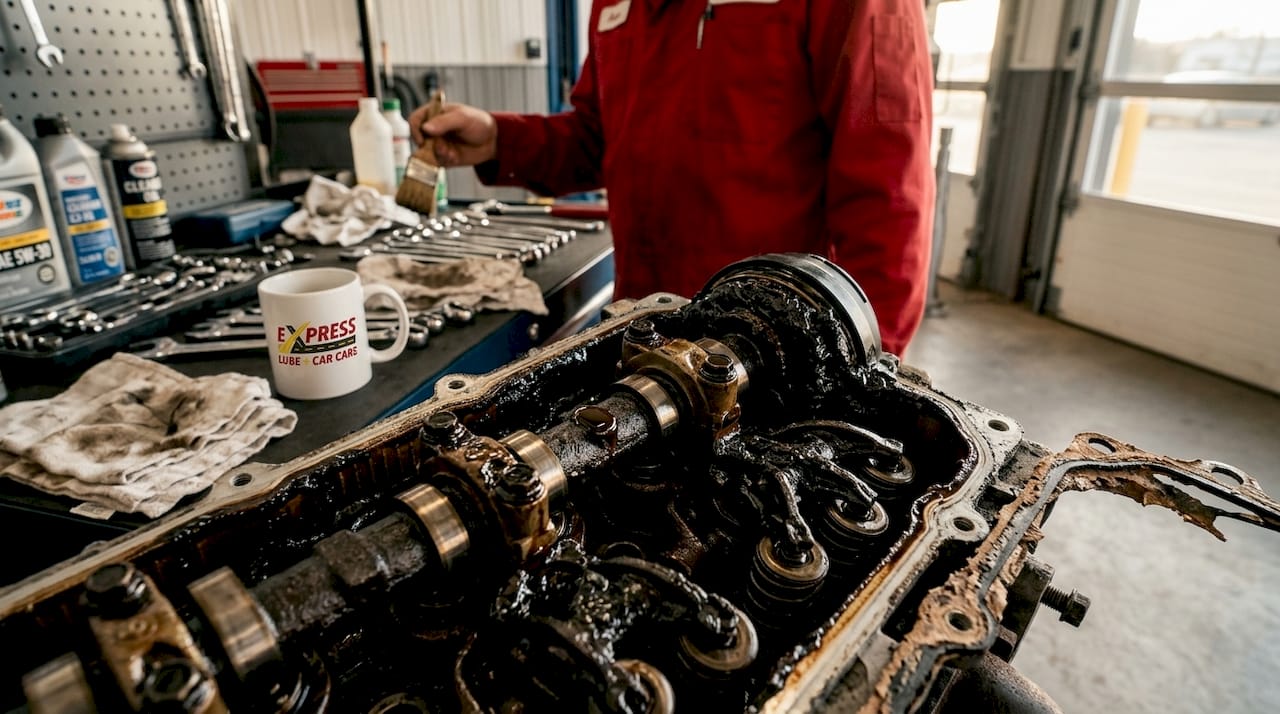
Water contamination causes sludge and corrosion, which reduces the oil’s ability to circulate and protect engine surfaces. As the oil filter becomes saturated with contaminants, a bypass valve opens to maintain oil pressure. At that point, unfiltered oil flows directly through the engine. Think of it as running your drinking water through a clogged filter and then bypassing the filter entirely.
The progression of damage typically follows this pattern:
- Sludge formation: Degraded oil and combustion contaminants combine to form thick, tar-like sludge that coats internal surfaces and blocks narrow oil passages.
- Reduced oil flow: Blocked passages mean less oil reaches critical components like main bearings and rod bearings, which rely on pressurized oil to maintain their protective film.
- Accelerated bearing wear: With reduced lubrication, bearings begin wearing at an accelerated rate. Metal particles from the wear get recirculated through the oil, compounding the damage.
- Oil filter collapse: A severely overloaded oil filter can physically collapse under pressure, causing complete loss of filtration and dramatically increasing internal wear.
- Engine failure: Without intervention, the cumulative damage leads to spun bearings, scored cylinder walls, or complete engine seizure.
This is not a hypothetical scenario. A Honda CR-V teardown showed exactly this progression after 30,000 miles without an oil change: sludge buildup throughout the engine, collapsed filter media, and significant bearing wear. The repair cost dwarfed decades of regular oil changes.
The financial stakes are real. Drivers who skip routine maintenance can pay up to 75% more over five years due to accelerated component failure and major repairs. A typical oil change costs $50 to $100. An engine rebuild can exceed $4,000. There is no comparison.
Beyond cost, neglecting oil changes can void your warranty coverage. Manufacturers require documented maintenance at specified intervals. Without records proving compliance, a warranty claim for engine damage can be denied. That is a risk no car owner should take.
How oil changes affect engine performance and vehicle health
Fresh oil does not just protect your engine. It actively helps it perform better.
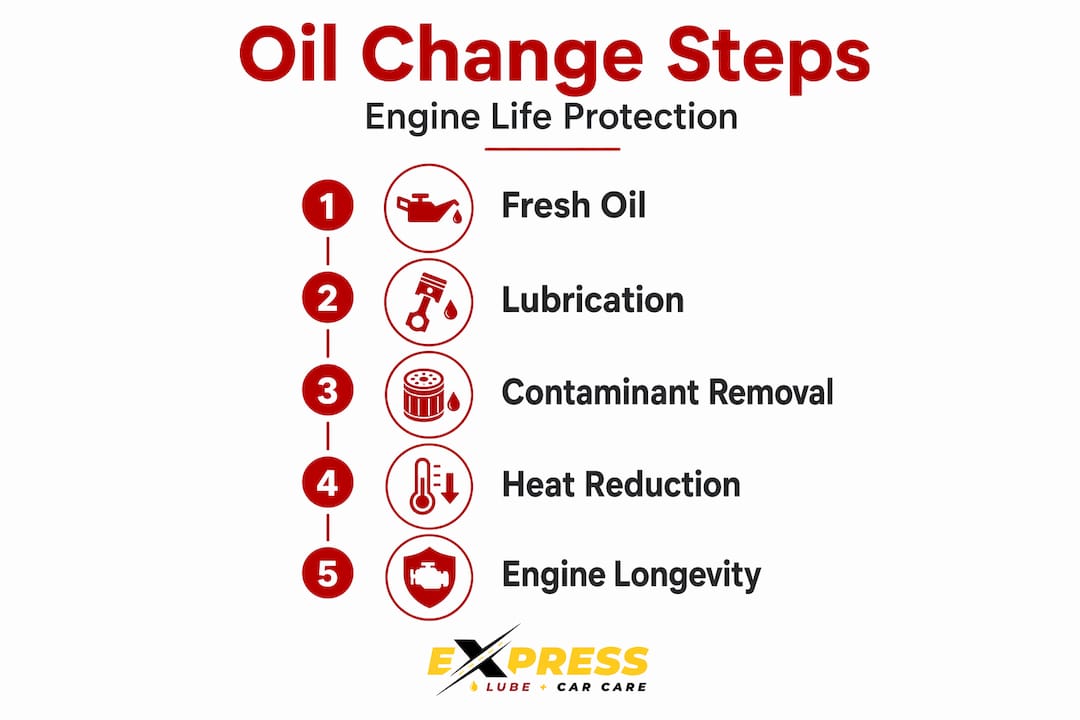
The benefits of regular oil changes go well beyond preventing catastrophic failure. When oil is clean and fully additive-loaded, it reduces internal friction more effectively. That reduction in friction translates directly to slightly better fuel economy and smoother power delivery. You may not notice it with each individual change, but over time the cumulative difference between a well-maintained engine and a neglected one is measurable.
Here is what regular oil changes deliver in terms of performance and long-term vehicle health:
- Improved fuel efficiency: Friction consumes energy. Clean oil minimizes friction, meaning more of your fuel’s energy reaches the wheels instead of being lost as heat.
- Smoother cold starts: Fresh oil flows more readily when cold, reducing the critical wear period that occurs in the first few seconds after startup before oil pressure builds.
- Reduced emissions: Sludge and deposit buildup can push combustion byproducts past piston rings into the crankcase, increasing harmful emissions. Clean oil keeps rings seated properly.
- Fewer unplanned repairs: When oil is doing its job correctly, related components like timing chains, cam phasers, and variable valve timing actuators last significantly longer. These components rely on clean, pressurized oil to function.
- Extended engine life: This is where how oil changes affect engine performance becomes most visible. Engines with consistent maintenance histories routinely reach 200,000 miles. Neglected engines frequently fail before 100,000.
Pro Tip: Pay attention to oil color and texture between changes. Fresh oil is amber and translucent. Oil that looks black and gritty is past due. Milky or foamy oil signals coolant contamination and needs immediate attention.
For car owners in hot climates, oil changes in Texas heat deserve extra consideration, since high ambient temperatures accelerate oil oxidation and thermal breakdown faster than in moderate climates.
Best practices for long-lasting engine care
Knowing that oil changes matter is only useful if you act on it correctly. These practices make the difference between an engine that lasts and one that does not.
- Follow your manufacturer’s interval, not the oil change shop’s sticker. That quick-lube reminder sticker often defaults to 3,000 miles to generate more business. Your owner’s manual is the authoritative source for your specific engine.
- Choose the right oil type. Synthetic oil resists breakdown better in extreme heat and cold, and it provides more stable protection under heavy load. If you tow, haul, or live where temperatures swing dramatically, full synthetic is worth the modest cost difference. For more on this decision, the synthetic vs. conventional oil guide from Express Lube & Car Care explains the tradeoffs clearly.
- Check your oil level monthly. Monthly oil checks protect against low-oil conditions that can cause rapid internal engine wear even between scheduled changes. Some engines, particularly high-performance or higher-mileage units, can consume a quart every 1,000 to 2,000 miles without showing symptoms.
- Shorten intervals for severe driving conditions. Frequent short trips prevent oil from reaching full operating temperature, which means moisture never burns off and contamination builds faster. If most of your driving is under five miles per trip, treat your driving as a severe service condition and adjust accordingly.
- Use quality filters. A cheap filter with low media capacity saturates faster and offers the engine less protection between changes. The filter is part of the oil system, not an afterthought.
- Keep records. Whether you handle maintenance yourself or go to a shop, document every oil change with date, mileage, and oil type. This protects your warranty and gives a technician critical information if engine issues arise.
My take on oil monitors and why I trust the calendar, too
I’ve seen plenty of engines come through that looked fine on paper but told a different story under the hood. The oil-life monitor showed 15% remaining. The owner was comfortable waiting. But when we pulled the drain plug, what came out was thick, dark sludge that had clearly been circulating for too long.
Oil-life algorithms are genuinely useful tools. They track temperature cycles, RPM data, and mileage to estimate degradation. What they cannot account for is every real-world variable. I’ve watched engines develop wear in vehicles where the oil monitor never triggered early, because the algorithm underestimated how hard frequent short trips were beating up that oil. The moisture never burned off. The additives were depleted.
My honest recommendation: treat the oil-life monitor as a maximum limit, not a target. If you drive hard, drive short, or live somewhere with extreme temperatures, build in a buffer. Change the oil when you are at 25% to 30% remaining rather than waiting for the warning light. The cost difference is minimal. The protection difference can be significant.
I’ve also seen what happens when car owners skip oil level checks between changes. One low-oil condition can cause more wear than months of extended intervals. It’s proactive habits, not just scheduled visits, that build engines that reach 200,000 miles.
— Express Lube & Car Care
Keep your engine protected with reliable service at Express Lube
Understanding the importance of oil changes is step one. Acting on it consistently is what actually protects your engine.
At Express Lube & Car Care in Plano, no appointment is needed. Pull in, and certified technicians will use the correct oil grade and filter for your specific vehicle, check your fluid levels, and get you back on the road quickly. Regular maintenance should be convenient, not complicated. Check out the current oil change service specials to see affordable options that fit your schedule and budget. If your engine has already been showing signs of wear, the engine diagnostics and repair team is also on hand to assess and address any damage before it escalates.
FAQ
How often should I change my oil?
Most modern vehicles need an oil change every 7,500–10,000 miles or every 6–12 months, whichever comes first. Drivers who take frequent short trips or use their vehicle for towing should shorten that interval.
Does an oil change actually extend engine life?
Yes. Regular oil changes prevent sludge buildup, reduce metal-to-metal wear, and preserve critical engine components, all of which directly extend how long an engine lasts.
What happens if I skip too many oil changes?
Skipping oil changes leads to sludge formation, restricted oil flow, bearing wear, and eventually engine failure. A real-world teardown of a Honda CR-V that went 30,000 miles without a change showed collapsed filters and severe bearing damage.
Is synthetic oil worth the extra cost?
Synthetic oil resists thermal breakdown better than conventional oil and provides more reliable protection in extreme temperatures and under heavy loads. For most drivers, the performance and longevity benefits justify the modest price difference.
Can skipping oil changes void my car warranty?
Yes. Manufacturers require documented maintenance at their specified intervals. Without proof of proper oil change history, a warranty claim tied to engine damage can be denied by the manufacturer.