

Fast turnaround auto service is the process of completing essential vehicle maintenance and repairs quickly and reliably to minimize your car’s downtime without sacrificing quality. For busy individuals and families, every hour a car spends in the shop is an hour without transportation. This fast turnaround auto service guide covers the fastest service types, how shops cut delays, what you can do before your visit, and which minor fixes you can handle yourself. Express Lube & Car Care is built around this exact principle: certified technicians, no appointment needed, and most services completed while you wait.
What are the fastest types of auto maintenance and repair?
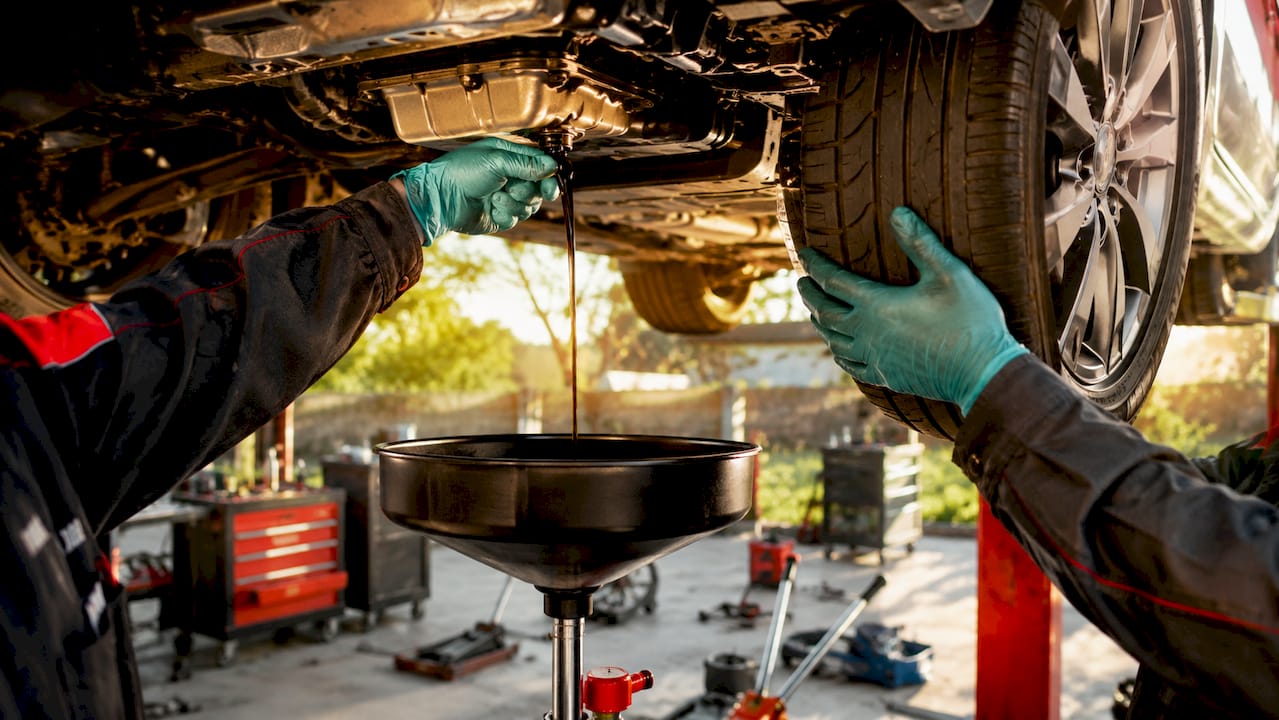
The quickest auto services share one trait: they follow a predictable, repeatable process with no diagnostic guesswork. Oil changes and brake pad checks are routinely completed in under 30 minutes at a well-run shop. That speed is possible because technicians know exactly which tools to reach for and which steps to follow.
Here are the most common rapid vehicle maintenance services and their typical time frames:
- Oil and filter change: 15–30 minutes at a quick-lube bay
- Air filter replacement (engine or cabin): 10–15 minutes, no specialized tools required
- Tire rotation: 20–30 minutes with a lift and impact wrench
- Brake pad inspection: 15–20 minutes as a visual check during a tire rotation
- Wiper blade swap: 5–10 minutes; a task any driver can do in a parking lot
- Battery terminal cleaning: 10 minutes with a wire brush and protective gloves
- Fluid top-offs (coolant, washer fluid, power steering): 5–10 minutes
The pattern is clear. Services that require no disassembly beyond a drain plug or filter housing stay well under the 30-minute mark. Services that require wheel removal or brake caliper work take slightly longer but still qualify as rapid vehicle maintenance when a shop runs efficiently.
Pro Tip: Book a tire rotation and oil change together. Technicians perform both simultaneously when one car is on the lift, cutting combined service time by 20–30% compared to two separate visits.
How can service providers optimize workflow for fast turnaround auto service?
Repair delays come from poor internal workflow, not slow technicians. A shop where parts are missing, job cards are handwritten, or communication between the service advisor and the bay breaks down will always run behind, regardless of how skilled the team is. Fixing the process fixes the clock.
The most effective workflow improvements follow a clear sequence:
- Digital job cards. Replace paper with a tablet-based system that updates in real time. Every technician sees the job status, the parts needed, and the customer’s approval status without walking to a front desk.
- Parts inventory management. Stock the 20 most common filters, brake pads, and fluids on site. Waiting for a parts delivery is the single most common cause of a 30-minute job becoming a 3-hour job.
- Staggered scheduling. Booking vehicles 15 minutes apart rather than in batches prevents the “rush hour” effect where five cars arrive simultaneously and all sit idle.
- Digital vehicle inspections (DVIs). Technicians photograph findings and send them directly to the customer’s phone. Digital vehicle inspections grow average repair order values by 15–30% and eliminate the back-and-forth that stalls approvals.
- Clear technician-to-advisor handoffs. A verbal or digital flag when a job is complete prevents a finished vehicle from sitting in the bay while the advisor is occupied elsewhere.
“Efficient shops focus more on operational discipline and communication than merely technician speed to deliver faster vehicle turnaround. Speed is a byproduct of a well-organized system, not the starting point.”
Centralized workshop management software connects scheduling, job tracking, parts ordering, and customer communication in one place. Shops that adopt these systems report meaningful reductions in per-vehicle service time. The technology is not the solution by itself. Consistent use by every team member is what closes the gap between a good shop and a fast one.
What steps can you take to speed up your auto service visit?
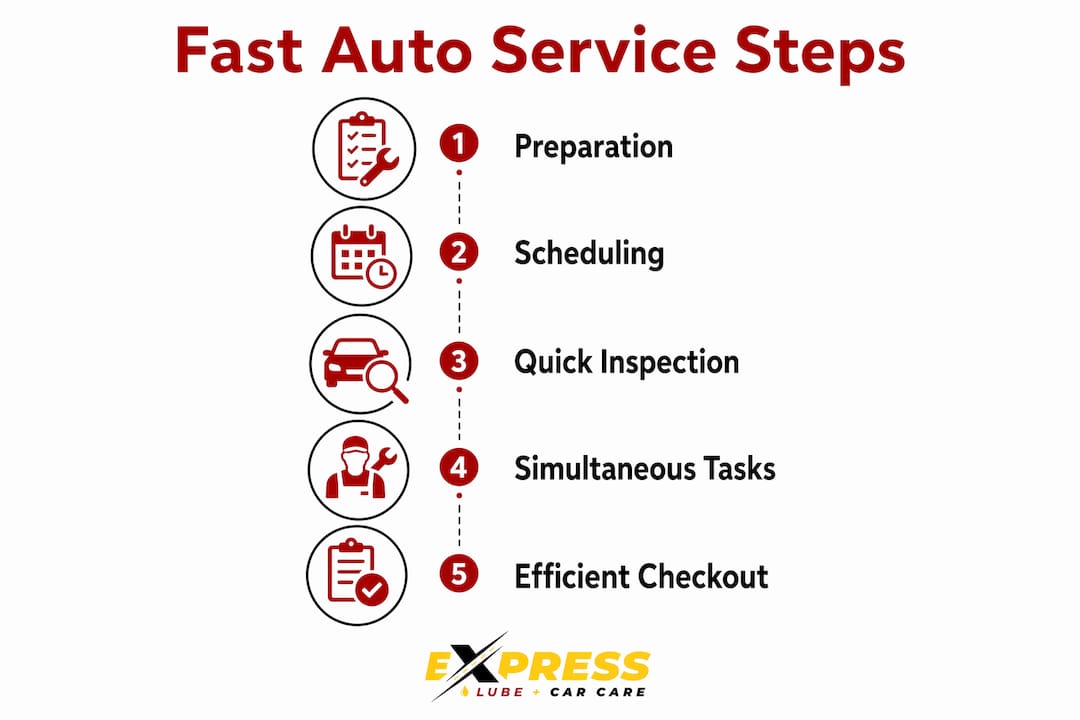
Preparation before you arrive is the most underused tool in a driver’s arsenal. Advance preparation speeds up check-in and diagnosis by giving the service advisor exactly what they need before the conversation starts. A driver who walks in knowing their mileage, their last service date, and the specific symptom they noticed cuts the intake process in half.
Follow these steps before your next visit:
- Gather your maintenance records. A printed or digital log of past oil changes, tire rotations, and brake work tells the technician your vehicle’s history at a glance.
- Write down the symptom, not the diagnosis. “There is a grinding noise when I brake at speeds above 40 mph” is more useful than “I think my brakes are bad.” Specific descriptions lead to faster, more accurate diagnoses.
- Check your owner’s manual. Know your vehicle’s recommended oil viscosity and service intervals before you arrive. This prevents delays caused by the advisor looking up specs mid-check-in.
- Choose a no-appointment service provider for routine work. For oil changes, filter swaps, and fluid checks, a walk-in quick-lube model eliminates the scheduling step entirely.
- Arrive early in the day. Most shops see their lowest volume in the first two hours after opening. An 8:00 AM arrival often means your car goes straight into a bay.
Pro Tip: Take a 60-second video of any unusual noise or warning light before your visit. Showing a technician the exact moment a sound occurs saves diagnostic time and removes ambiguity.
What quick fixes can car owners handle at home?
Many minor maintenance tasks require no professional training and no shop visit. Simple repairs like changing bulbs or topping off fluids can be done safely at home, keeping your car in good shape between professional visits. The key is knowing which tasks are genuinely safe for a driveway and which ones require a lift, specialized tools, or professional judgment.
| Task | Time needed | Tools required | Safe for home? |
|---|---|---|---|
| Engine air filter swap | 10–15 min | None | Yes |
| Cabin air filter swap | 10–15 min | Screwdriver | Yes |
| Wiper blade replacement | 5–10 min | None | Yes |
| Exterior bulb replacement | 10–20 min | Screwdriver | Usually yes |
| Tire pressure check | 5 min | Pressure gauge | Yes |
| Coolant top-off | 5 min | None | Yes (cold engine only) |
| Brake pad replacement | 60+ min | Jack, torque wrench | Defer to professionals |
| Brake fluid flush | 45+ min | Specialized equipment | Defer to professionals |
The dividing line is straightforward. Tasks above the wheel and accessible without lifting the vehicle are generally safe for home service. Anything involving the brake hydraulic system, suspension geometry, or drivetrain belongs in a professional bay. Attempting brake work without a calibrated torque wrench and proper jack stands creates a safety risk that no time savings justifies.
Wiper blade replacement is one of the most overlooked home tasks. Fitting wiper blades correctly takes under 10 minutes and requires no tools. Skipping it means reduced visibility in rain, which is a safety issue, not just a maintenance gap.
Pro Tip: Buy a quality tire pressure gauge and check all four tires monthly. Correct tire pressure improves fuel economy, extends tire life, and takes five minutes. It is the highest-return maintenance task a driver can do at home.
Key takeaways
Fast turnaround auto service depends equally on shop workflow discipline, driver preparation, and knowing which tasks belong at home versus in a professional bay.
| Point | Details |
|---|---|
| Fastest services under 30 minutes | Oil changes, air filter swaps, and tire rotations finish quickly when shops run a tight process. |
| Workflow drives speed | Digital job cards, on-site parts inventory, and digital vehicle inspections cut delays more than technician pace. |
| Preparation cuts check-in time | Arriving with maintenance records and a written symptom description speeds up diagnosis significantly. |
| Home tasks save time and money | Air filters, wiper blades, and tire pressure checks are safe, tool-free tasks any driver can handle. |
| Choose the right service model | Walk-in quick-lube shops eliminate scheduling delays for routine maintenance. |
What I have learned about fast service after years in the bay
The biggest misconception drivers carry into a shop is that speed and quality trade off against each other. They do not. The fastest shops are also the most organized, and organization is what produces consistent quality. A technician who knows exactly where the correct filter is, has the digital job card open on a tablet, and receives real-time customer approval through a DVI system makes fewer errors, not more.
What actually slows service down is ambiguity. Ambiguity about what the customer wants. Ambiguity about which part to order. Ambiguity about whether the job is approved. At Express Lube & Car Care, we have built our entire process around eliminating those gaps. No appointment needed means no scheduling friction. Certified technicians on every job means no guesswork about the repair. Transparent pricing means no approval delays.
The advice I give every driver is this: your preparation matters as much as our process. A customer who arrives with a clear description of the problem, their service history, and a realistic expectation of the repair scope will always leave faster than one who does not. Speed is a shared responsibility. We handle the workflow. You handle the preparation. Together, that combination produces the fastest, most reliable service outcome possible.
— Express Lube & Car Care
Fast, reliable service at Express Lube & Car Care
Express Lube & Car Care delivers efficient auto service without the wait. No appointment is needed for most services, and certified technicians handle everything from oil change specials to brake pad and rotor service with transparent pricing and same-day turnaround.
Military personnel and healthcare providers receive special discounts as a direct thank-you from the Express Lube & Car Care team. Whether you need a quick oil change on your lunch break or a brake inspection before a road trip, the shop is ready when you are. Visit Express Lube & Car Care in Plano, TX, or check the current service specials online to see what fits your schedule and budget.
FAQ
How long does a standard oil change take at a quick-lube shop?
Most oil changes finish in under 30 minutes at a well-run quick-lube facility. Express Lube & Car Care completes most routine maintenance while customers wait.
What causes the most delays at auto repair shops?
Poor internal workflow is the leading cause of repair delays, including missing parts, paper-based job tracking, and slow customer approval processes. Digital job cards and on-site parts inventory solve most of these issues.
Can I replace my car’s air filter at home?
Yes. Engine and cabin air filter replacements take 10–15 minutes and require no specialized tools. Check your owner’s manual for the correct filter part number before purchasing.
What should I bring to speed up my auto service visit?
Bring your maintenance records, your vehicle’s mileage, and a written description of any symptoms. Advance preparation cuts check-in and diagnostic time significantly.
Is it safe to do brake work at home?
Brake pad replacement and brake fluid flushes require a calibrated torque wrench, proper jack stands, and professional knowledge. Defer all brake hydraulic work to a certified technician to protect your safety.