

Run these nine checks before the next 100-degree week hits: coolant level and mixture, engine oil and other fluids, battery capacity and terminals, tire pressure and sidewall condition, A/C output and cabin filters, belts and hoses for cracking, radiator for leaks, paint and interior UV protection, and a stocked emergency kit. That’s the full picture of car care hot Texas summers demand, and skipping even one item raises your odds of a roadside breakdown or premature part failure.
Here’s the quick-hit version:
- Top off coolant and check for a proper 50/50 mix weekly during heat waves.
- Check oil, transmission, and brake fluid every two weeks.
- Test battery voltage and clean terminals monthly.
- Check tire pressure weekly when tires are cold, per NHTSA guidance.
- Confirm A/C vents blow cold and swap cabin filters seasonally.
- Inspect belts and hoses monthly for cracking or soft spots.
- Apply UV protection or ceramic coating to paint each season.
- Condition leather and interior plastics regularly.
- Pack a heat-ready emergency kit and keep it stocked.
AAA and Express Lube & Car Care both see the same pattern every July: batteries and tires take the brunt of Texas heat, and drivers who check them proactively rarely get stranded.
Key Takeaways
Texas summer heat shortens battery life, raises tire pressure by about 1 PSI per 10°F, and accelerates paint and interior damage, making proactive checks the single best defense against breakdowns.
| Point | Details |
|---|---|
| Test battery before failure | Heat degrades battery chemistry faster than cold does, so load-test it before peak summer, not after it dies. |
| Check tires weekly, cold | Pressure rises roughly 1 PSI per 10°F, so check tires in the morning and inspect sidewalls for cracking. |
| Verify A/C output early | Vents should blow noticeably colder than outside air; a small drop signals a refrigerant leak worth catching early. |
| Protect paint with coating | Ceramic coating outlasts wax against Texas UV and cabin temperatures that can reach 140°F to 160°F in direct sun. |
| Book pre-summer service | Express Lube & Car Care offers same-day battery, cooling, A/C, and fluid checks backed by a 24-month/24,000-mile warranty. |
Table of Contents
- Cooling System Checks: Why Coolant Mixture Matters in Extreme Heat
- Why Batteries Fail in Texas Heat and What to Do Now
- Managing Tire Pressure and Blowout Risk on Hot Pavement
- Keeping the A/C and Cabin Cool Without Overworking the Engine
- Engine Oil and Other Fluids: What Heat Changes and When to Check
- Visual Checks for Belts, Hoses, and Radiator That Prevent Breakdowns
- Protecting Paint and Interior From Texas UV and Heat
- What to Keep in the Car During Texas Heat Waves
- How Heat Changes Tire PSI and Battery Chemistry
- When to Bring Your Car in for Pre-Summer Service
- Get Your Car Summer-Ready Before the Next Heat Wave
- Sources
- FAQ
Cooling System Checks: Why Coolant Mixture Matters in Extreme Heat
Check your coolant level, inspect the radiator, hoses, and water pump now, before the next heat wave, not after your temperature gauge climbs. A correct 50/50 coolant-to-water mix (or your manufacturer’s specified ratio) transfers heat far more efficiently than plain water or an off-ratio mix, and that difference matters most exactly when ambient temps hit the triple digits.
Checking the reservoir is simple: look at the level marks on the translucent overflow tank when the engine is cold, and never open a hot radiator cap. Do this weekly during sustained heat waves and monthly the rest of the year. Watch for sweet-smelling puddles under the car, which usually mean a coolant leak.
At a shop, ask for a cooling system pressure test, a thermostat function check, and a radiator flush if it’s overdue. Local reporting on Texas heat backs up frequent coolant checks as one of the highest-value habits a driver can build each summer.
- Check reservoir level weekly during heat advisories
- Look for coolant puddles or a sweet smell under the vehicle
- Ask your technician for a pressure test and thermostat check
- Flush coolant if it’s discolored or overdue per your owner’s manual
Pro Tip: Schedule a cooling system flush in April or May, before the first heat wave hits, so a worn hose or weak thermostat gets caught while the shop schedule is still light.
Coolant that’s overdue for a flush loses its ability to resist boil-over, which is exactly the failure mode Texas summers are built to expose.
Why Batteries Fail in Texas Heat and What to Do Now
Test your battery’s capacity and secure its terminals now, because heat, not cold, actually kills car batteries. Sustained high temperatures accelerate the internal chemical reactions that degrade battery plates, and that process is largely why AAA sees a sharp spike in dead-battery service calls once temperatures push past 90°F.
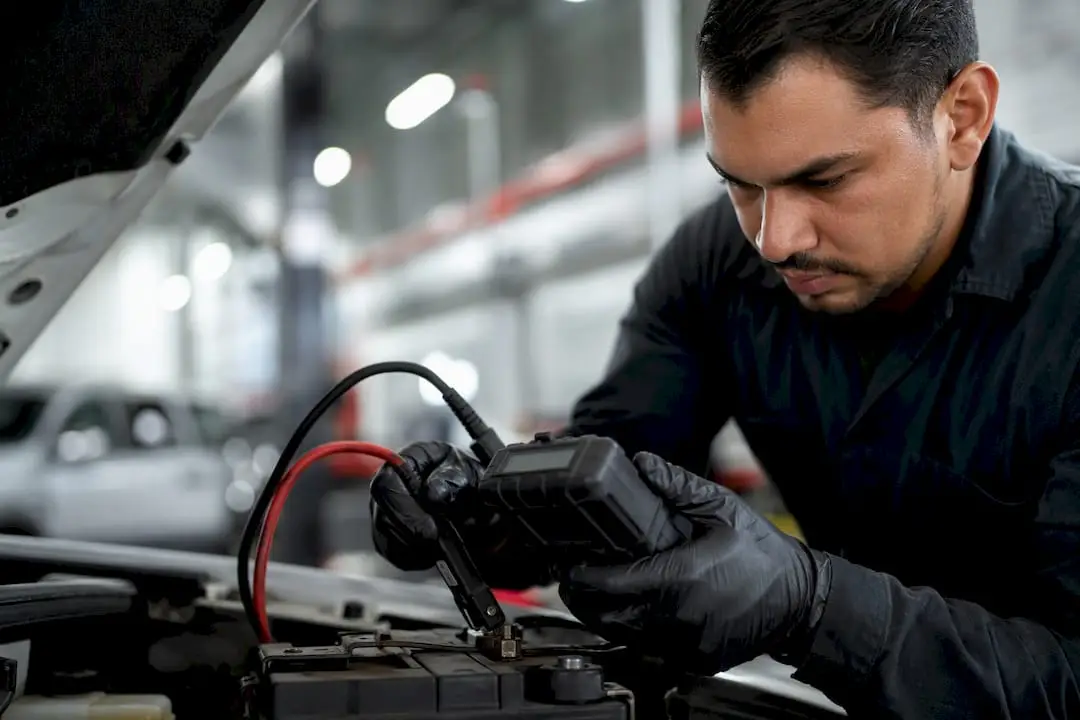
A basic voltage check with a multimeter tells you a lot, but a load test at a shop tells you more. It measures whether the battery can hold up under real cranking demand, not just whether it shows a healthy resting voltage.
Watch for slow cranking on startup, visible corrosion at the terminals, or a battery case that looks slightly swollen. In Texas heat, most batteries hold up for three to four years rather than the five-plus you might get in a milder climate, so plan replacement earlier than you would up north.
- Test voltage and cranking amps monthly in summer
- Clean corrosion off terminals with a wire brush and baking soda solution
- Replace a battery showing slow cranks or bulging, don’t wait for full failure
Pro Tip: A loose battery hold-down lets vibration shake internal plates loose over time. Check that the clamp is snug every time you’re under the hood, it takes ten seconds and adds real life to the battery.
Managing Tire Pressure and Blowout Risk on Hot Pavement
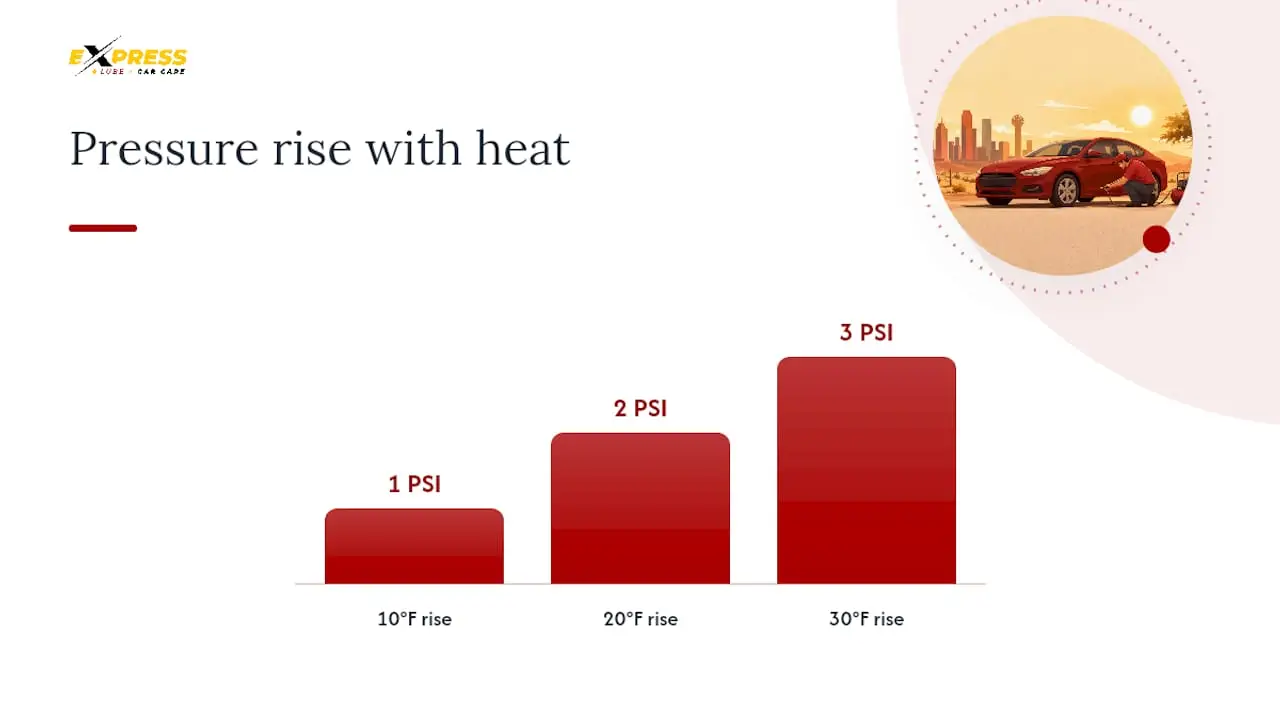
Check tire pressure when tires are cold, ideally first thing in the morning, and inspect sidewalls monthly for cracking or bulges.
Ambient heat raises tire pressure by roughly 1 PSI for every 10°F increase, so a tire set correctly at 70°F can run several PSI higher by the time asphalt temperatures hit their afternoon peak.
- Find your vehicle’s recommended PSI on the driver-side door jamb sticker, not the number stamped on the tire itself.
- Check pressure with a reliable gauge before driving, never right after a highway run, since a hot tire reads artificially high.
- Inspect sidewalls for bulges, cracking, or uneven tread wear at the same time.
Never let air out of a tire that’s hot from driving to hit your cold-PSI target. You’ll underinflate it once it cools, which raises blowout risk rather than lowering it.
- Bulging sidewalls signal internal damage, replace immediately
- Cracking rubber (“dry rot”) means the tire is aging out regardless of tread depth
- Uneven wear patterns point to alignment or pressure problems worth a shop visit
Before any long highway drive in summer heat, check pressure, tread depth, and the spare, all three take under ten minutes and materially cut your breakdown risk.
Keeping the A/C and Cabin Cool Without Overworking the Engine
Verify your A/C actually cools, swap the cabin air filter, and have refrigerant levels checked before the season’s worst heat arrives. A rough but useful test: vents should blow air roughly 35 to 40 degrees cooler than the outside temperature. If they’re barely dropping 10 or 15 degrees, something in the system, often refrigerant level or the compressor, needs attention.
AutoZone recommends verifying A/C performance annually since refrigerant can leak slowly over time without any obvious sign until cooling output drops.
Reducing how hard your A/C works also helps the whole system last longer. Sunshades, tinted windows where legal, and breathable seat covers all cut cabin heat load before the compressor even kicks on.
- Replace cabin air filters every 12,000 to 15,000 miles, or sooner in dusty conditions
- Use a windshield sunshade every time you park in direct sun
- Have refrigerant checked if vent air isn’t noticeably colder than outside air
Pro Tip: If your A/C blew ice cold last summer and feels lukewarm this year with no other changes, that’s almost always a slow refrigerant leak, not a compressor failure. Catching it early is a much cheaper fix.
Engine Oil and Other Fluids: What Heat Changes and When to Check
Check engine oil, transmission fluid, brake fluid, and power-steering fluid more often once temperatures climb, and top off or service anything running low. Heat thins oil viscosity faster than normal driving does, and cleaner oil manages engine temperatures far better than oil that’s overdue for a change.
- Check oil level every two weeks during sustained heat waves.
- Spot-check transmission, brake, and power-steering fluid monthly.
- Schedule a professional flush if any fluid looks dark, low, or overdue per your maintenance schedule.
Topping off fluid is a driveway job. Flushes and full fluid changes belong at a shop, especially transmission fluid, which needs the right type and volume to avoid damaging seals.
- Low oil accelerates wear on hot-running engine components
- Dark or gritty brake fluid should be flushed before a long trip
- Regular oil changes matter more in Texas heat than in milder climates
Visual Checks for Belts, Hoses, and Radiator That Prevent Breakdowns
Inspect belts for cracks or a glazed, shiny surface, check hoses for soft or spongy spots, and look at the radiator for any sign of leaking. Replace anything showing heat damage before it fails on the highway.
With the engine cool, open the hood and flex each hose gently, checking for bulges, cracks, or fraying at the clamps. A belt that looks glazed or has visible cracks across its ribs is close to failure regardless of mileage.
- Cracked or glazed belts should be replaced immediately, not “monitored”
- Soft, spongy hoses are close to bursting and shouldn’t wait for a scheduled visit
- Radiator leaks often start as a faint stain before they become a puddle
Pro Tip: A hose that feels slightly swollen near a clamp is often the first sign of a coming failure, weeks before it actually leaks. Catch that early and you skip the tow truck entirely.
Protecting Paint and Interior From Texas UV and Heat
Use sunshades, apply UV protectants, and consider ceramic coating for real long-term defense against Texas sun. Condition leather seats regularly, since UV exposure dries and cracks it faster than almost any other type of wear.
Parked cabin temperatures in direct Texas sun can climb to 140°F to 160°F, which is hot enough to warp plastics and fade upholstery within a single season.
- Do: park in shade, apply wax or coating seasonally, condition leather monthly
- Don’t: leave pets, people, or aerosol cans in a parked car under any circumstances
Ceramic coating chemically bonds to clear coat and holds up multiple years against UV oxidation, where traditional wax breaks down within weeks in Texas summer conditions. Detailers who work Texas-specific climates increasingly treat ceramic coating as the baseline, not the upgrade, for anyone who wants their paint to still look good in three years. A matte finish requires its own coating approach if your vehicle has one.
What to Keep in the Car During Texas Heat Waves
Water, sun-protective items, jumper cables, a portable phone charger, a tire gauge, basic tools, and something for shade or shelter belong in every trunk from June through September.
If you break down, stay with the vehicle unless it’s unsafe or you can quickly reach shade and help. Heat exhaustion sets in fast when you’re stranded on open pavement.
- Store water and a charged phone battery pack where you can reach them without opening the trunk in traffic
- Replace bottled water every few weeks, since heat degrades plastic bottles and warms water past useful
- Keep jumper cables and a tire gauge in an easily accessible spot, not buried under gear
How Heat Changes Tire PSI and Battery Chemistry
Ambient heat raises tire pressure by roughly 1 PSI per 10°F and speeds up the chemical degradation inside a car battery, both of which shorten component life and raise breakdown risk in Texas summers.
Overinflated tires from heat buildup reduce the contact patch touching the road, cutting traction and raising blowout risk on hot pavement. Underinflated tires flex more and generate their own heat, compounding the problem from the opposite direction.
Battery plates degrade faster with every degree above optimal operating temperature, which is why hot climates routinely shave a year or more off a battery’s expected lifespan compared to milder regions.
Check tire pressure weekly in summer and get a battery load test at least once before peak heat season starts.
When to Bring Your Car in for Pre-Summer Service
Bring your car in for a pre-summer inspection the moment you notice a warning sign, or proactively before any long highway trip. Waiting until something fails costs more than a scheduled visit ever does.
- Ask for a cooling system pressure test and thermostat check.
- Request a battery load test, not just a voltage reading.
- Have A/C performance and refrigerant levels checked.
- Ask the technician to assess belts and hoses for replacement need.
Late spring, April through early June, is the ideal window to book service before Texas heat peaks and shop schedules fill up.
- A full vehicle safety inspection covers most of these items in one visit
- Fleet managers should schedule service in batches ahead of peak summer routes
A Local Perspective on Texas Summer Breakdowns
Every summer, the same pattern repeats at our bays: batteries that tested fine in March fail by July, and drivers who skip one tire check end up with a blowout on I-75. Our ASE-certified technicians run same-day battery, cooling, and A/C checks backed by a 24-month/24,000-mile warranty, because prevention beats a tow truck every time.
Get Your Car Summer-Ready Before the Next Heat Wave
Express Lube & Car Care runs the exact checks this guide covers, battery testing, cooling-system service, A/C diagnostics, belts and hoses inspection, and full fluid service, the same day you walk in, with no appointment required.
That matters most during Texas summer, when a battery that “seemed fine” last week can leave you stranded this week. Every service comes backed by a 24-month/24,000-mile warranty, and current oil change and service specials make it easy to bundle a summer inspection with routine maintenance. If your brakes have felt off during hot-weather stop-and-go traffic, a $30 brake service coupon is also available. Stop by any Plano location this week and get your cooling system, battery, and tires checked before the next 100-degree day arrives.
Sources
- AAA: Car Care Tips for Extreme Heat | AAA Oregon/Idaho
- How to protect your car from Texas heat: Battery, tires and coolant | Statesman
- How to Protect Your Car from Texas Heat | Mobile Detailing Expert
- How to prepare your car for the extreme heat | AutoZone
FAQ
How hot can a car get inside during a Texas summer?
Parked cabin temperatures can reach 140°F to 160°F in direct sun, hot enough to warp plastics, crack leather, and pose serious risk to anyone left inside.
Is it safe to drive when it’s 100 degrees outside?
Yes, but 100°F ambient heat pushes engine, battery, and tire components closer to their limits, so checking fluids, tire pressure, and battery health beforehand meaningfully cuts breakdown risk.
Is 200 degrees too hot for a car’s engine?
A gauge climbing well above the normal operating temperature signals overheating and means you should pull over and shut off the engine immediately.
Is 90 degrees too hot for a car to sit in?
A 90°F day is exactly the threshold where AAA sees a sharp jump in dead-battery calls, so it’s not too hot to park, but it is hot enough to justify a pre-summer battery and cooling system check.
How often should I check my tire pressure in summer?
Check tire pressure weekly when tires are cold, since ambient heat raises pressure by roughly 1 PSI per 10°F and increases blowout risk on hot pavement.