

The moment your car's temperature needle creeps into the red zone is a universal signal of trouble. However, your vehicle often provides subtler warnings long before a full-blown overheating crisis occurs.
Understanding how to recognize these early signs is essential for preventing a minor radiator issue from escalating into catastrophic and costly engine damage.
Understanding Your Car's Cooling System
Think of the radiator as the core component of your engine's heat management system. It works continuously to circulate a special fluid, called coolant, through passages in the engine block. This fluid absorbs intense heat generated by combustion and then flows back to the radiator, where the heat is dissipated into the surrounding air. When this critical thermal cycle is interrupted, engine temperatures can rise to dangerous levels in just a few minutes.
A puddle of brightly colored fluid under your car or a strange, sweet smell after parking is not just a quirk—it's a direct indication that the cooling system is compromised. Ignoring these signals is like ignoring a smoke alarm in your home.
The Most Common Warning Signs
The good news is that most radiator problems develop gradually. They typically start as small issues and worsen over time. Keep your senses tuned for these tell-tale signs:
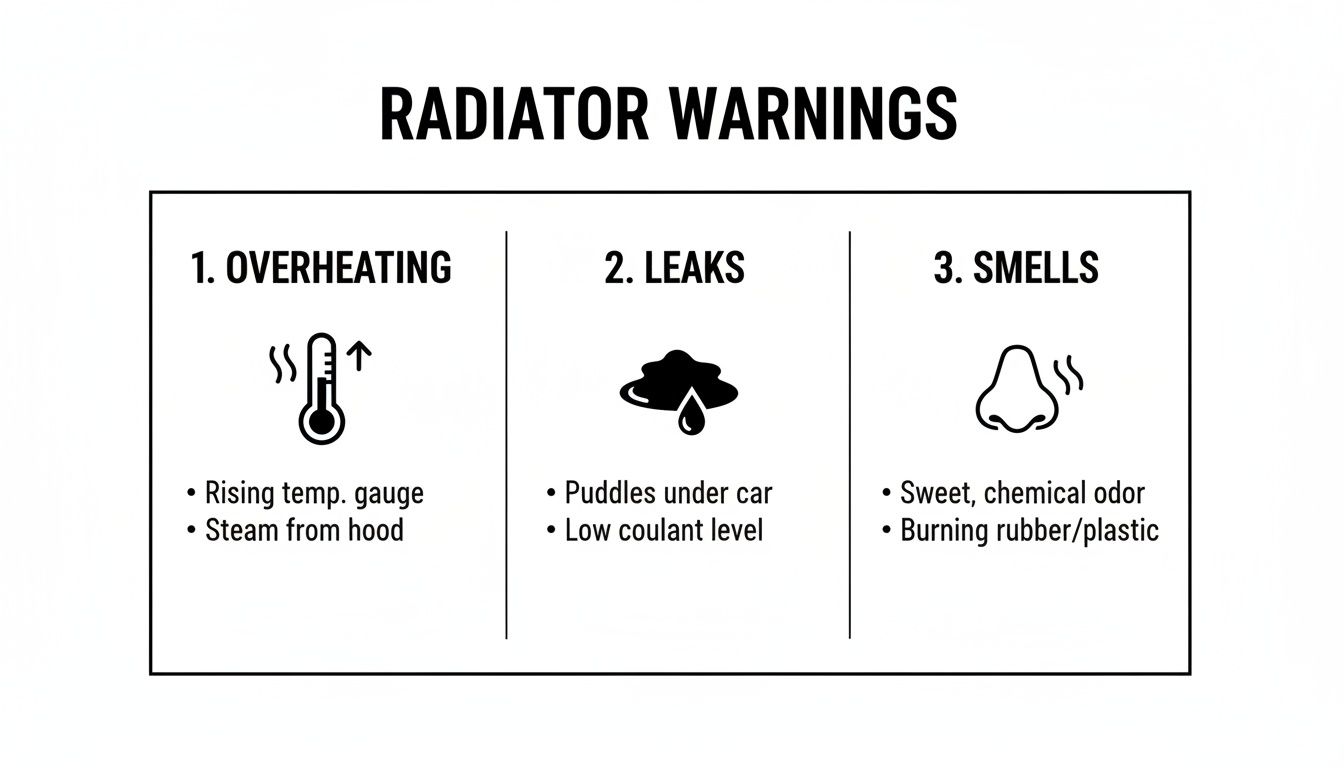
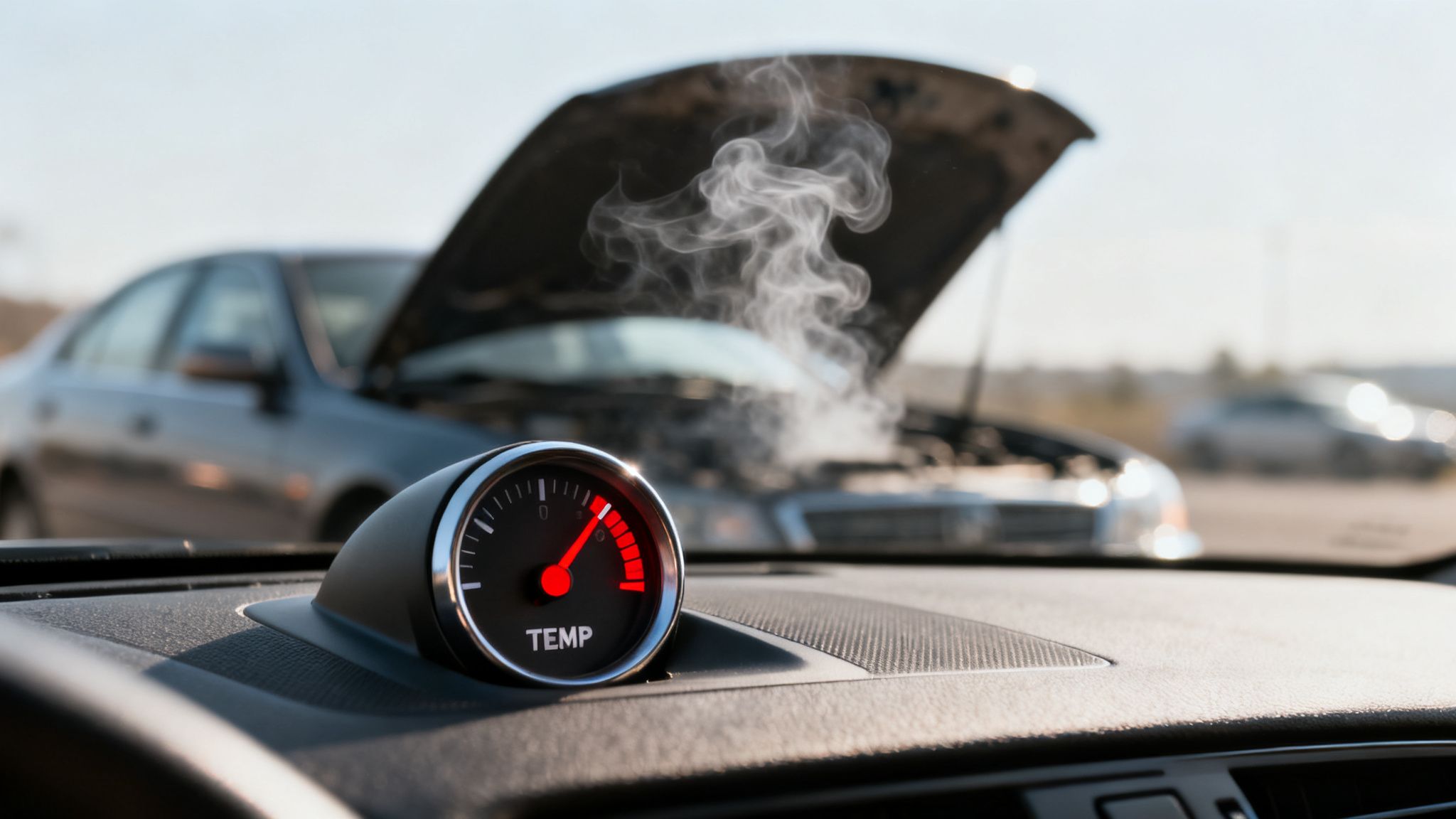
- Engine Overheating: This is the most critical symptom. Your dashboard temperature gauge will spike, or a warning light will illuminate.
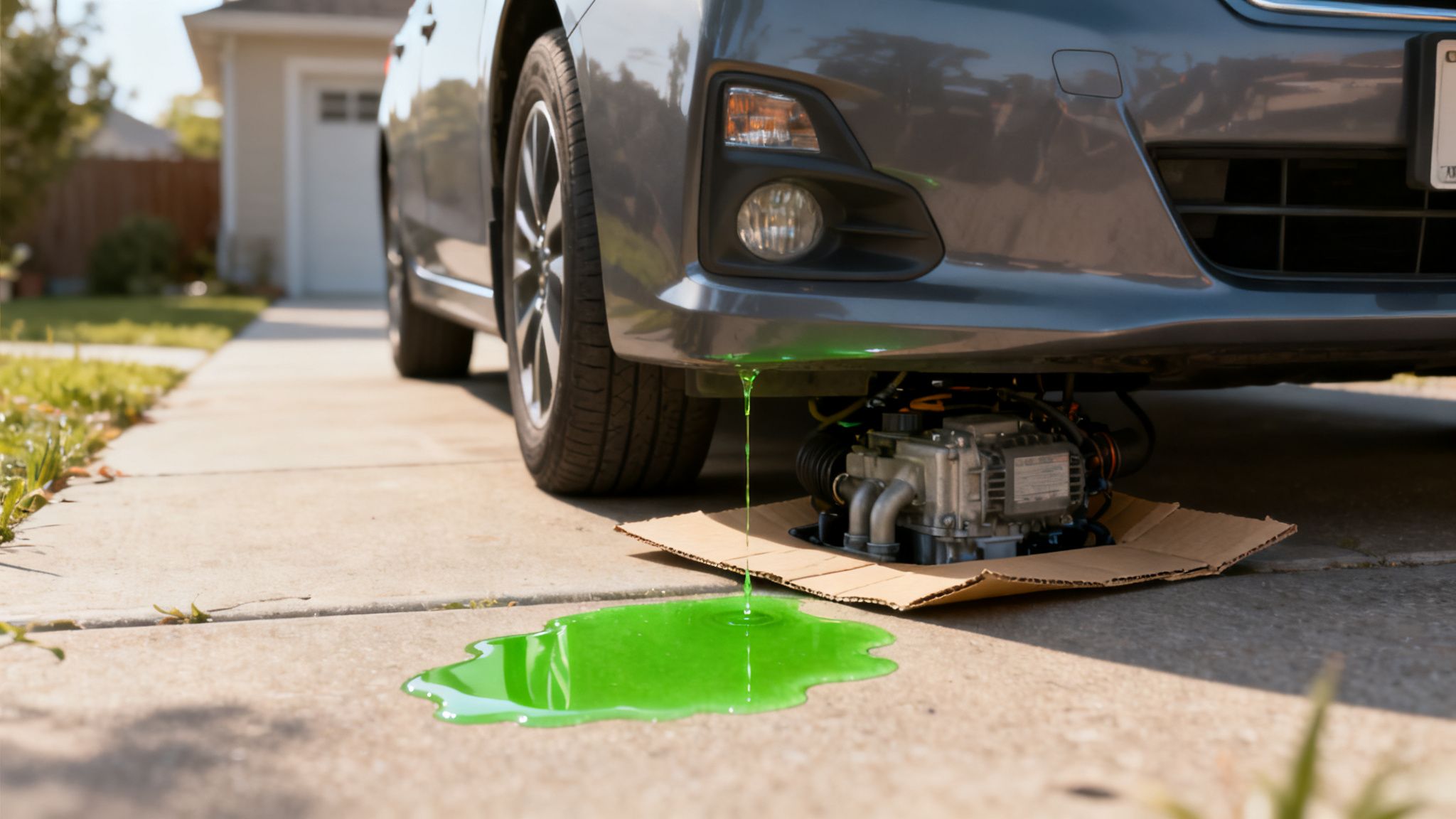
- Visible Coolant Leaks: You'll notice puddles of bright green, pink, or orange fluid underneath the front of your vehicle.
- A Distinct Sweet Smell: A scent similar to maple syrup or boiling sugar indicates that coolant is leaking onto a hot engine component and vaporizing.
This infographic provides a quick visual summary of what to look for.
These symptoms often trigger dashboard warnings as well. If a light appears, your vehicle's onboard diagnostic system is demanding immediate attention. For a more detailed explanation of these alerts, our guide on what your check engine light means is a valuable resource.
Quick-Check Guide to Radiator Warning Signs
To simplify diagnosis, here is a quick-glance table summarizing common symptoms, their severity, and the appropriate immediate actions.
| Symptom | Description | Severity Level | Immediate Action |
|---|---|---|---|
| Overheating Engine | Temperature gauge in the red; steam from the hood | CRITICAL | Pull over safely and turn off the engine immediately. Do not open the radiator cap. |
| Coolant Leak | Bright green, pink, or orange puddle under the car | High | Check coolant level when the engine is cool. Avoid driving if the leak is significant. |
| Sweet Smell | An aroma like maple syrup or burnt sugar | High | Visually inspect for leaks. This is burning coolant and requires professional attention. |
| Low Coolant Level | Reservoir is below the "MIN" line | Moderate | Top off with the correct type of coolant when the engine is cold. Monitor for future leaks. |
| Fluctuating Temp Gauge | The needle moves erratically between normal and hot | Moderate | This may indicate a failing thermostat or air in the cooling system. Schedule an inspection. |
| White Exhaust Smoke | Thick, sweet-smelling white smoke from the tailpipe | CRITICAL | This often indicates a serious internal leak, such as a failed head gasket. Stop driving immediately. |
Remember, these are not minor inconveniences. They are clear indicators that your engine is struggling with thermal regulation, placing its most vital components at serious risk of failure.
Sign 1: Your Engine is Overheating—A Critical System Warning
An engine temperature gauge climbing into the red zone is the most urgent and obvious sign of radiator trouble. Even before this happens, your car may provide subtler clues. You might notice a loss of power during acceleration or hear an unusual "pinging" sound (detonation), which are often symptoms of an engine running at an excessively high temperature.
The radiator's primary function is to circulate coolant to dissipate heat. If its internal passages become obstructed by sediment and corrosion, coolant flow is restricted, and the engine's temperature can rise rapidly.
What Causes an Engine to Overheat?
When an engine overheats, the root cause is almost always a failure within the cooling system. A few common culprits are responsible:
- Clogged Radiator Passages: Over years of operation, rust, scale, and mineral deposits can accumulate inside the radiator's narrow tubes, creating a blockage that impedes coolant flow and heat transfer.
- Stuck Thermostat: The thermostat is a valve that regulates coolant flow. If it fails in the closed position, it traps coolant within the hot engine, preventing it from reaching the radiator to be cooled.
- Low Coolant Levels: A leak is the most common cause of low coolant. Without sufficient fluid, the system lacks the capacity to absorb and dissipate the immense heat produced by the engine.
Ignoring an overheating engine, especially in high-temperature climates like Texas, can lead to severe consequences. The issue can quickly escalate from a manageable repair to a catastrophic failure like a warped cylinder head, a blown head gasket, or a seized engine—repairs that can cost thousands of dollars.
An overheating engine is more than an inconvenience; it is a critical failure. The extreme heat and pressure can permanently damage seals, warp metal components, and destroy your engine if not addressed immediately.
This is a frequent issue for vehicle owners. Clogged passages and age-related corrosion are primary causes of radiator failure. In fact, passenger car replacements constitute 48% of the global radiator market, a figure driven by these exact problems. You can explore more data from the global radiator market for a comprehensive overview.
The moment you see the temperature gauge rising, pull over to a safe location, shut off the engine, and allow it to cool down completely. Under no circumstances should you attempt to open the radiator cap while the engine is hot. The system is highly pressurized, and opening the cap can release scalding steam, causing serious burns. This is the single most important safety precaution to take.
Sign 2: Coolant Leaks and Puddles Under Your Car
Spotting a brightly colored puddle under your parked vehicle can be alarming. It is crucial not to mistake this for normal condensation from the air conditioning system. This is one of the most definitive signs of a radiator problem, indicating that coolant—the lifeblood of your engine's cooling system—is escaping.
Coolant, also known as antifreeze, has a distinct appearance and texture. It is typically a vibrant green, orange, or pink and feels slightly oily or slimy. If you observe a stain with these characteristics on your driveway, you have a leak.
Leaks of this nature do not occur without cause. They are a direct signal that a component within the cooling system has failed.
Pinpointing the Source of the Leak
While a professional technician is needed to diagnose the exact cause, understanding the common sources can help you grasp the situation. Most leaks originate from either physical damage or the natural degradation of materials over time.
- Cracked Radiator Tanks: Modern radiators often have plastic end tanks that can become brittle with age and repeated heat cycles, eventually developing stress fractures under high pressure.
- Corroded Radiator Fins: The delicate aluminum fins of the radiator core can be damaged by road debris, creating pinhole leaks that worsen over time.
- Failing Hose Connections: The rubber hoses that transport coolant can degrade, and the clamps securing them can loosen, allowing fluid to seep out at the connection points.
A simple diagnostic trick is to place a large piece of clean cardboard under your engine when you park overnight. In the morning, any drips will be clearly visible, showing you the precise color, volume, and location of the leak.
Even a minor drip is a significant issue. This slow loss of coolant means your engine is operating at a higher-than-optimal temperature, which will inevitably lead to overheating if ignored. A coolant leak is a major red flag, and industry data confirms its prevalence—48% of all radiator replacements worldwide are for passenger vehicles.
For drivers in Texas, where summer temperatures can exceed 100°F, a coolant leak is an urgent warning. Low coolant in such heat is a recipe for a breakdown. A standard radiator repair can range from $400 to $800, a cost that pales in comparison to the expense of repairing severe engine damage. For more details, you can consult reports on the global automotive radiator market.
Sign 3: That Unmistakable Sweet Smell or Billowing Steam
Sometimes, the first indication of radiator trouble is detected by your sense of smell rather than sight. If you notice a distinct, sweet scent—similar to candy or maple syrup—coming from your engine bay, it is a telltale sign of a coolant leak.
This signature aroma is caused by ethylene glycol, the primary chemical component in most antifreeze products. When coolant drips from a compromised hose or a pinhole leak in the radiator onto a hot engine surface, it vaporizes instantly, producing that sugary smell. It is one of the most common early warnings drivers notice.
What White Smoke or Steam Really Means
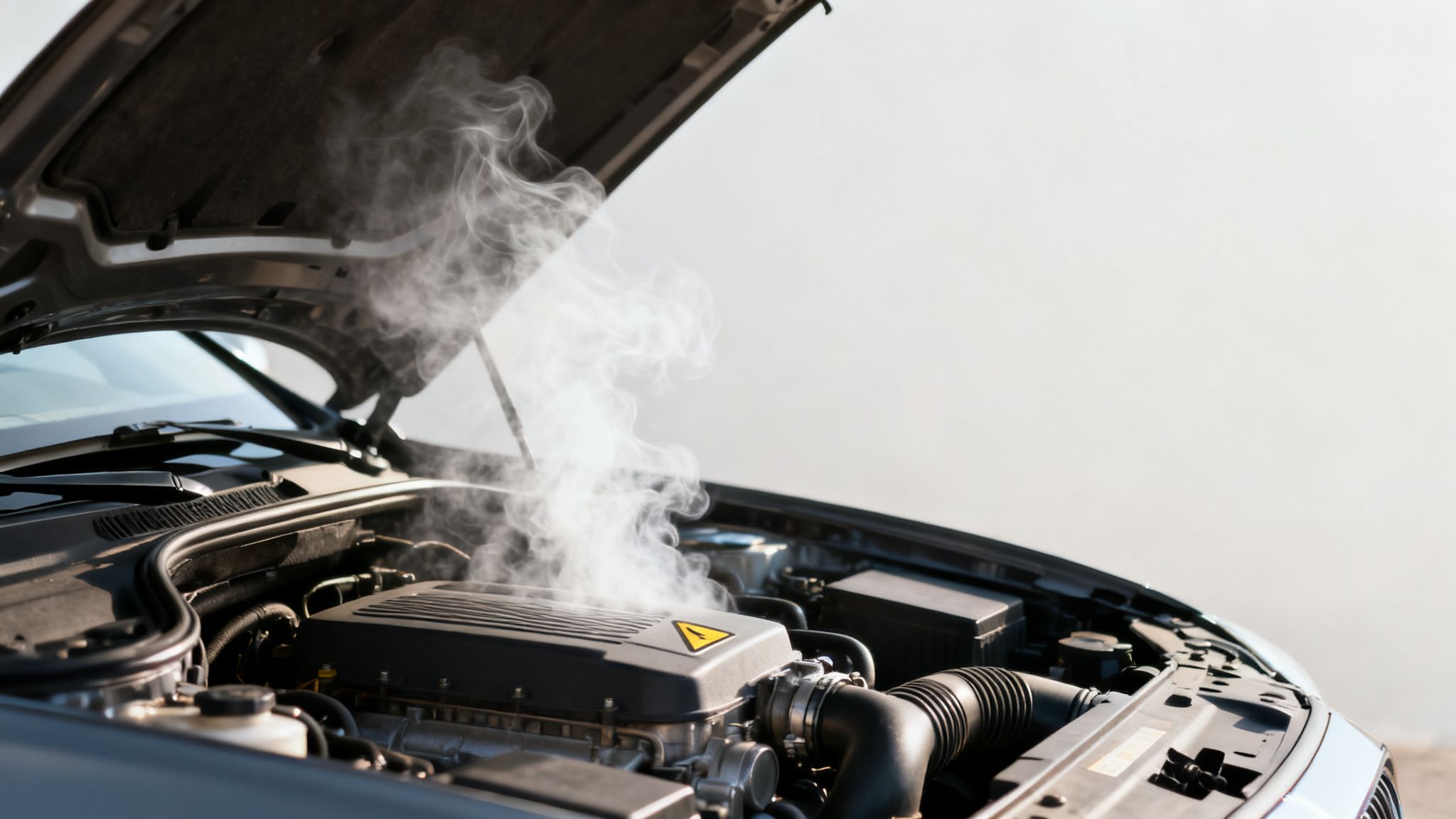
If the sweet smell is a warning, then seeing white steam or smoke billowing from under the hood is an emergency. This is not normal exhaust vapor; it is your engine's coolant boiling away. This indicates a significant leak or a system that has already reached a dangerously high temperature.
The steam is coolant escaping under intense pressure. At this stage, your engine is rapidly losing its ability to cool itself, and catastrophic damage could be imminent.
Safety First: Never attempt to open the radiator cap when the engine is hot or steaming. The cooling system is under extreme pressure, and opening the cap can cause a violent eruption of scalding coolant, leading to severe burns.
Immediate Steps to Take
Observing steam or smelling burning coolant requires immediate action to protect both yourself and your vehicle.
- Pull Over Safely: Find the first available safe location to get off the road.
- Shut Off the Engine: Turn off the ignition immediately to prevent further heat buildup.
- Do Not Drive Further: Attempting to "limp home" can warp your engine's cylinder head or cause it to seize completely.
- Allow It to Cool Down: The engine must cool completely before you touch anything under the hood, which can take an hour or more.
The sweet smell or steam points directly to coolant escaping from a faulty radiator or hose—a common issue caused by corrosion and constant pressure cycling. If this leaking coolant mixes with engine oil, it can form a thick sludge that complicates repairs, potentially increasing costs from $500 to $1,500. More data on this prevalent issue can be found in reports on the global automotive radiator market.
Sign 4: Low or Contaminated Coolant
Sometimes, the most significant signs of a radiator problem are less dramatic than puddles or steam. The true condition of your cooling system may be revealed inside your coolant reservoir. A quick visual inspection under the hood is one of the most effective diagnostic checks you can perform.
Healthy engine coolant should be a vibrant color—typically bright green, orange, or pink—and the liquid should be translucent. If you check your reservoir and find the fluid is murky, rusty, or brown, it is a major red flag indicating internal corrosion.
Sludge and Contaminants in the System
Contaminated coolant acts like sludge in your engine’s arteries. Over time, rust particles and mineral deposits can break loose from the inside of the radiator and engine block, suspending themselves in the coolant. This forms a thick, abrasive slurry that can clog the narrow passages within the radiator, damage the water pump's impeller, and restrict flow, thereby reducing the system's cooling efficiency.
Another critical contaminant to look for is engine oil. A milky, frothy film on the surface of your coolant often indicates a serious internal engine failure, such as a blown head gasket. This failure allows oil and coolant to mix—a catastrophic condition for your engine. For a visual reference of what your fluid should look like, review our guide on the difference between antifreeze and coolant.
The color and consistency of your coolant are direct indicators of your cooling system's internal health. A simple visual check can alert you to silent but serious damage long before your engine begins to overheat.
The Mystery of Disappearing Coolant
What if your coolant level is consistently low, but you never find a puddle on your driveway? This frustrating scenario, often called "mystery coolant loss," usually points to one of two elusive causes.
- A Faulty Radiator Cap: The cap is designed to maintain pressure within the system. If its seal degrades, it can allow hot coolant to escape as vapor. This results in a slow, steady loss of fluid that leaves no visible trace.
- A Slow Internal Leak: A minuscule crack in the engine block or a failing head gasket can permit coolant to seep into a combustion chamber. There, it is vaporized with the air-fuel mixture and expelled through the exhaust system.
Constantly needing to add coolant is a significant warning sign. It guarantees that your engine is not receiving the proper cooling it requires. Without enough fluid to transfer heat, it is only a matter of time before you face an overheating event and the severe engine damage that follows.
What To Do When You Spot Radiator Problems
Recognizing a warning sign is the first step, but your subsequent actions are what truly protect your engine. Prompt intervention can mean the difference between a simple, affordable repair and a catastrophic engine failure costing thousands. Ignoring the problem is never a viable solution.
Once you have noticed an anomaly—whether it's a rising temperature gauge, a green puddle, or a sweet smell—the next step is to obtain a professional diagnosis. A qualified technician uses specialized tools and procedures to identify the exact source of the issue.
Getting a Professional Diagnosis
A thorough inspection involves more than a quick look under the hood. To accurately pinpoint a cooling system fault, a mechanic will typically perform several key tests.
- Pressure Test: This is the most effective method for locating leaks. A special tool is used to pressurize the cooling system to its normal operating pressure. If the pressure drops, it confirms a leak, and the technician can often hear or see where the coolant is escaping.
- Visual Inspection: An experienced mechanic can identify many issues through a visual check, such as cracked hoses, corroded radiator fins, or a faulty radiator cap. They will also assess the condition of the coolant for signs of contamination.
- Block Test: If a blown head gasket is suspected, a chemical test is performed to detect the presence of combustion gases in the coolant. This test provides definitive evidence of a major internal engine leak.
Common Repair and Maintenance Options
Depending on the diagnostic results, your repair options will vary. Some issues can be resolved with a simple component replacement, while others may require a complete radiator replacement.
The most important principle is that taking proactive measures now can save significant money and stress later. A small hose leak addressed today is infinitely better than a warped cylinder head that leaves you stranded tomorrow.
Common solutions include replacing a worn hose, installing a new thermostat, or performing a complete radiator flush to remove accumulated sediment and corrosion. You can learn more about how a professional radiator flush service restores your cooling system's performance.
If the radiator itself is severely corroded, clogged, or physically damaged, replacing the entire unit is the only safe and reliable solution.
Frequently Asked Questions About Your Radiator
Even with a good understanding of the warning signs, it is normal to have additional questions about your car’s cooling system. Clear answers can help you make informed decisions and feel more confident in maintaining your vehicle's health.
Here are the most common questions our technicians hear from drivers.
How Often Should I Have My Cooling System Checked?
As a general guideline, a professional cooling system inspection is recommended annually or every 30,000 miles. However, in hotter climates like Texas, we advise a quick visual check during every oil change. This is an easy way to catch potential problems early.
This proactive inspection allows a technician to identify:
- Hoses that are showing signs of aging, such as brittleness or bulging.
- Low coolant levels that could indicate a slow, hidden leak.
- Corrosion forming on the radiator or at hose connections.
Addressing these minor issues before they escalate into major failures is the best strategy to avoid a breakdown on a hot day.
Can I Just Use Water Instead of Coolant in an Emergency?
In a true emergency, yes. If you are stranded and need to move your vehicle to a safe location, adding water to the radiator is far better than allowing the engine to run without any coolant. However, this should be considered a temporary measure, not a long-term solution.
Coolant (antifreeze) is a precisely formulated fluid. It is engineered to raise the boiling point and lower the freezing point of the liquid in your engine. It also contains critical additives that inhibit rust and corrosion, protecting the internal components of your cooling system.
Plain water boils at a much lower temperature and will cause significant internal corrosion over time. After using water, it is imperative to have the system professionally flushed and refilled with the manufacturer-specified coolant as soon as possible.
What Does it Cost to Replace a Radiator?
The cost of a radiator replacement varies depending on the vehicle's make and model. Generally, you can expect the total cost for parts and labor to be in the range of $400 to $900.
Vehicles with complex engine bays or luxury models that require more time for disassembly will typically be at the higher end of this range. A reputable repair shop will always provide a clear, itemized quote before beginning any work, ensuring there are no surprises on the final invoice.
Is a Radiator Flush Really That Important?
Absolutely. A radiator flush is not an upsell; it is a critical component of preventative maintenance. Over time, rust, scale, and other debris accumulate inside the cooling system, forming a thick sludge. This material can easily clog the narrow passages in the radiator and heater core, severely impeding performance.
A professional flush service removes these harmful deposits, restores the system's efficiency, and replenishes the fluid with fresh anti-corrosion additives to protect your engine. It is a small investment that helps prevent much larger and more expensive repairs in the future.
If you've spotted any of these radiator warning signs or just want the peace of mind from a professional inspection, the ASE-certified techs at Express Lube & Car Care are here to help. Stop by our Plano shop for fast, honest service that will keep your engine cool and your car running right. Visit us online to learn more about our services at https://www.expresslubeplano.com.