

You turn the key, the cabin starts heating up, and the first thing you do is hit the A/C. Instead of cold, clean air, you get a blast that smells like a wet towel, old socks, syrup, or something burnt. That's one of the most common complaints drivers bring into a shop, especially after hot weather, humid mornings, or a stretch of short trips.
The good news is that most car ac smells follow patterns. The smell itself usually gives you the first real clue. A musty odor points in one direction. A sweet smell points somewhere else. A sharp chemical or burning smell changes the conversation fast.
I like diagnosing this problem by smell first, parts second. That saves time, avoids random part-swapping, and helps you decide whether this is a safe driveway fix or something that needs a professional. Some odors are annoying but manageable. Others are warnings you shouldn't ignore.
That Unmistakable Smell from Your Car Vents
In Texas heat, this problem shows up at the worst time. You're already uncomfortable, the interior feels like an oven, and then the vents hit you with a stale, sour blast. A lot of drivers assume the A/C itself has “gone bad,” but that's usually not what's happening.
Most of the time, the system is still cooling. The smell is coming from something inside the HVAC housing, ductwork, or heater side of the system. That's why the air can feel cold and still smell terrible.
Practical rule: The odor matters as much as the cooling performance. Smell is often the first symptom before a larger HVAC or cooling-system problem shows up.
I've seen people try to solve this with vent clips, hanging air fresheners, and heavy interior sprays. Those can cover it for a day or two, but they rarely fix the source. If the smell comes back every time the blower starts, the problem is still in the system.
The useful way to approach it is simple:
- Identify the odor type: Musty, sweet, vinegar-like, chemical, or burning.
- Match it to the likely source: Evaporator moisture, microbial growth, heater core leak, or an electrical or rubber issue.
- Choose the right response: DIY cleaning for some smells, immediate inspection for others.
That approach keeps you from wasting money on the wrong fix and helps you avoid pushing a small issue into a bigger repair.
Why Your Car AC Smells in the First Place
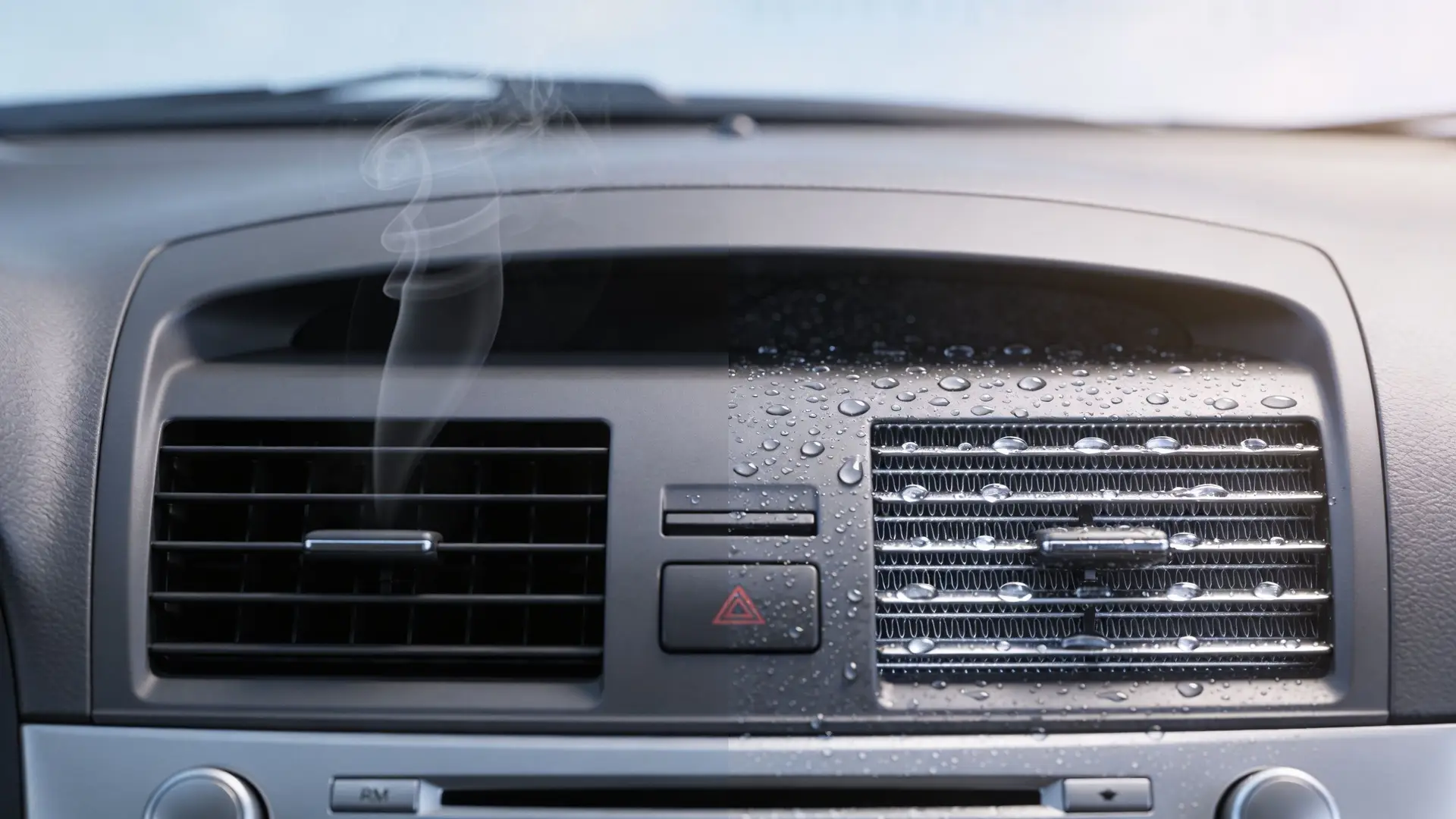
A car's A/C system naturally creates water. That part surprises people, but it's normal. Think about a cold glass on a humid day. Water forms on the outside because moisture in the air condenses on the cold surface. Your evaporator core does the same thing inside the dash.
Where the odor actually starts
The key fact is straightforward. The odor usually comes from moisture condensing on the evaporator core. Dust, pollen, and other contaminants can mix with this condensate and support micro-organism growth, which is why the smell is often described as musty or like sweaty socks, as explained by Consumer Reports on musty car air conditioner odors.
That means most car ac smells are really moisture-management problems.
If everything drains and dries properly, you may never notice anything. If moisture lingers, the HVAC box becomes a dark, damp place where mold, mildew, and bacteria can grow. Then the blower motor pushes that smell right into the cabin the next time you start the car.
Why short trips make it worse
This is one of the trade-offs drivers don't think about. A/C use removes humidity from the cabin, which is good. But if you make short trips, shut the car off quickly, or the drain path doesn't clear water well, the evaporator may stay damp.
That creates a cycle:
- The evaporator gets cold
- Moisture condenses on it
- The moisture doesn't fully drain or dry
- Contaminants stick to the wet surface
- Odor develops and blows through the vents later
A dirty cabin air filter can add to the problem, but it usually isn't the whole story. If the smell source is deeper in the evaporator housing, replacing the filter alone won't solve it for long.
A smelly A/C system usually isn't “bad air.” It's leftover moisture holding contamination where the airflow passes every time you drive.
That's why the right fix depends on whether you're dealing with trapped moisture, a blocked drain, surface contamination, or a leak from another system entirely.
Diagnosing the Odor Type and Source
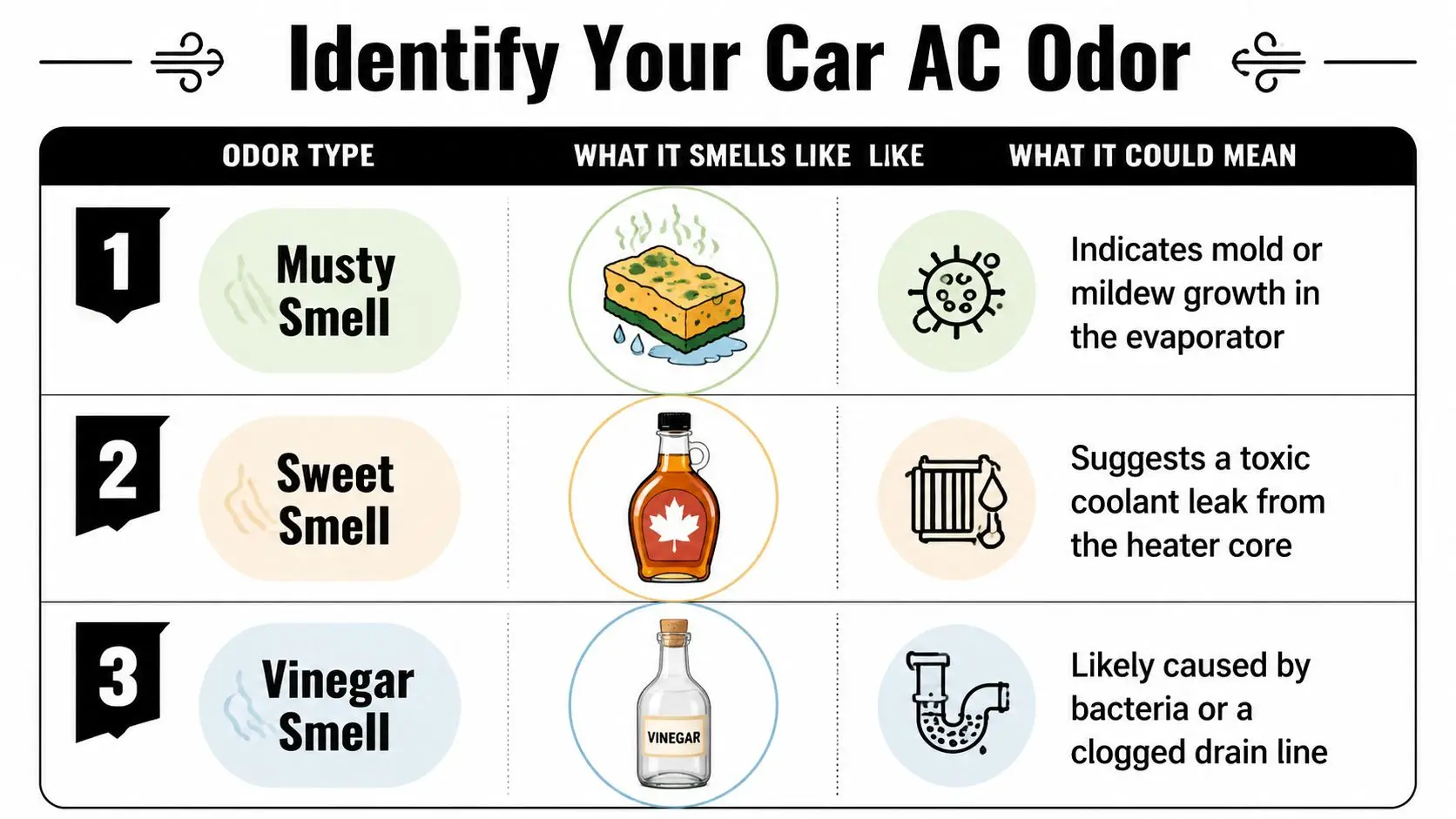
If you want the fastest path to the right fix, start with the smell and stay honest about what it resembles. Drivers often describe odors differently, but they usually fall into a few categories that point to specific problems.
The three smell families that matter most
Major service chains now treat odor diagnosis as a standard part of troubleshooting. A mildew or vinegar smell points to the evaporator, while a sweet “maple syrup” smell is a classic sign of a coolant leak from the heater core into the ventilation system, according to Firestone's guide to car A/C smells.
That gives you a solid starting point.
| Smell Type | Likely Cause | Recommended Action |
|---|---|---|
| Musty or mildew | Damp evaporator housing, mold, mildew, bacteria | Replace cabin filter if due, inspect for drainage, use an A/C cleaner if appropriate |
| Vinegar or sour | Bacteria or mildew in the ventilation system, possible drain issue | Check filter and drain path, sanitize the system, monitor for quick return |
| Sweet or syrup-like | Coolant entering the ventilation path, often heater core related | Stop treating it as a cleaning issue and have it inspected professionally |
| Burning rubber, plastic, or oil smell | Belt, wiring, oil leak, electrical fault, or hot component | Turn the system off and get the vehicle checked before continued use |
What urgency looks like in real life
A musty smell is usually the most DIY-friendly. It's unpleasant, but it often responds to cleaning, better drying habits, and fixing drainage.
A vinegar-like smell often lives in the same neighborhood. It still points toward microbial growth in the HVAC system, but it can also suggest the moisture problem has been hanging around for a while.
A sweet smell is different. Don't confuse it with “fresh” or “clean.” If the vents smell like syrup, heater-core coolant contamination moves to the top of the suspect list. That's not a spray-can job.
Then there's the sharp chemical or burning smell. That can involve wiring, oil, plastic, belts, or hot electrical parts. At that point, odor is no longer a comfort issue. It's a safety issue.
If the smell is sweet or burning, skip the trial-and-error cleaning routine. You need diagnosis, not deodorizer.
A quick driveway check
Before you buy anything, answer these questions:
- Does the smell hit hardest at startup? That often points to contamination sitting in the HVAC box between drives.
- Does it improve after a few minutes? That still supports a moisture-related source.
- Is cooling normal? If cooling drops along with the smell, the issue may be broader than odor alone.
- Do you notice anything unusual under the hood or on the passenger-side floor area? That can help separate HVAC odor from coolant or leak concerns.
The smell category won't tell you everything, but it tells you where to start and whether you should keep your hands on the job.
Safe DIY Fixes for Common AC Smells
If your car ac smells musty, sour, or mildly vinegary, there are a few things you can safely try at home. Stay in your lane, though. DIY works best when you're dealing with contamination and moisture, not coolant leaks or electrical smells.
Replace the cabin air filter first
This is the simplest place to start because it's cheap, safe, and often overdue. On many vehicles, the filter sits behind the glove box or under a dash panel.
- Check the owner's manual: Confirm the filter location and airflow direction.
- Wear gloves: Old filters can be dirty, damp, and packed with debris.
- Remove the old filter carefully: Don't dump dust into the blower opening.
- Inspect the filter condition: If it's damp, stale-smelling, or visibly loaded, replacement was necessary.
- Install the new filter correctly: The airflow arrow matters.
If you want a basic refresher on timing, this guide on how often to change a cabin air filter gives a practical maintenance baseline.
Use an evaporator-safe A/C cleaner properly
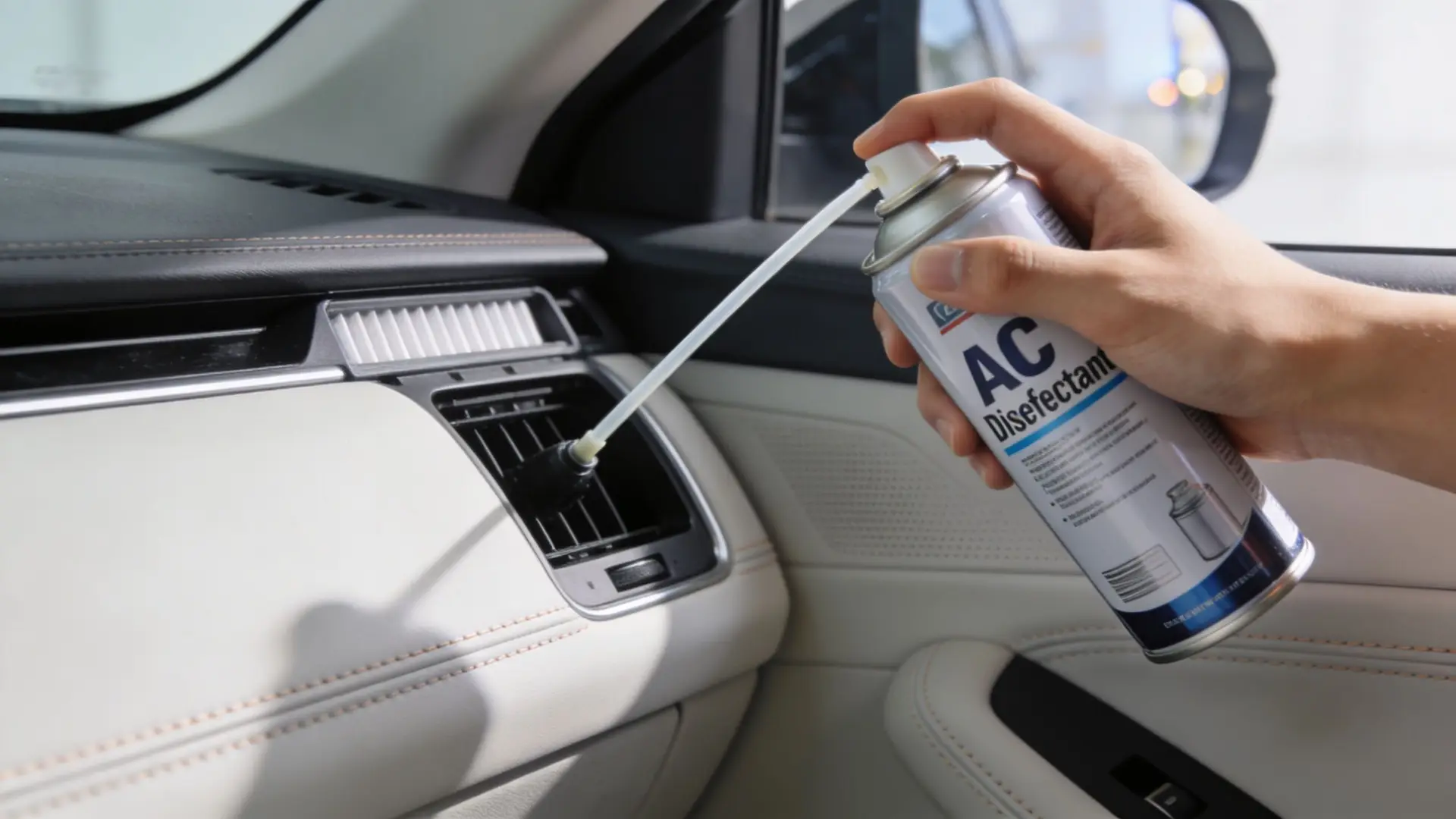
Aerosol A/C disinfectants can help when the smell source is microbial growth on damp surfaces. The mistake people make is spraying random interior vents without reading the product instructions.
Use the cleaner the way the product was designed:
- Choose the right product: Look for an automotive A/C evaporator or HVAC cleaner, not a household disinfectant.
- Work outside or in a well-ventilated area: You don't want to trap chemical mist in a closed garage.
- Wear eye protection: Overspray happens.
- Follow the intake path listed by the product: Some cleaners go through the cowl intake, others through a drain tube access point.
- Run the blower as directed: The product needs airflow to move through the system.
If you want a general primer on coil cleaning methods before using a system cleaner, these steps for cleaning air conditioner coils are useful for understanding what you're trying to clean and why surface contamination sticks.
Shop-floor advice: Don't soak the dashboard vents with random spray and hope for the best. The target is the evaporator area, not the plastic louvers you can see.
Here's a visual walkthrough that can help you understand the process and tool placement before you start:
Check whether the condensate drain is doing its job
If moisture can't leave the HVAC box, the smell often comes back fast. A blocked drain is one of the common reasons DIY odor fixes don't last.
Look for these clues:
- No water dripping under the vehicle after running the A/C
- Odor that returns quickly even after replacing the filter
- Smell that gets worse in humid weather
That pattern matters because if a musty smell returns quickly after replacing the cabin filter or intensifies in humid weather, it confirms the problem is stagnant moisture in the evaporator housing, where odor-causing bacteria and mold get aerosolized when the blower turns on, as noted by Orion Motor Tech's explanation of recurring car A/C odor.
A light check is reasonable. Aggressive poking is not. If you can clearly identify the drain outlet and gently remove loose external debris, fine. If access is poor or you're tempted to jam wire into a tube you can't see well, stop there. It's easy to damage soft components.
What usually works and what usually doesn't
Usually worth trying
- Fresh cabin filter
- Proper A/C evaporator cleaner
- Drying the system after use
- Basic drain inspection
Usually a waste of time
- Air fresheners alone
- Spraying perfume into the vents
- Changing the filter repeatedly without addressing moisture
- Ignoring a fast-returning odor
If the smell stays after one careful cleaning attempt, or if you'd rather skip the trial-and-error, a shop that handles A/C service and drain-line problems, such as Express Lube & Car Care, can inspect the system more directly.
How to Prevent Car AC Smells from Returning
The easiest odor repair is the one you never need. Once you've cleaned up a musty system, a few habits make a real difference because they reduce the moisture that lingers inside the HVAC box after you park.
Build drying time into your routine
Before you shut the engine off, turn the A/C compressor off and let the fan run briefly. You're not trying to heat the car up. You're trying to move air across damp internal parts so they don't stay wet between drives.
This matters most if you make short trips, drive in humidity, or notice startup odor after the vehicle sits overnight.
Don't trap moisture all the time
Recirculation has its place, especially in very hot weather, but using it constantly can keep the cabin and system from exchanging air the way they should. Mix in fresh-air mode when conditions allow.
A simple maintenance habit helps too. Keep up with the basics on a regular schedule, not just when something smells off. A general routine car maintenance checklist is a good way to avoid letting small HVAC issues hide behind bigger service gaps.
Keep your prevention realistic
Use this checklist as your baseline:
- Replace the cabin air filter when it's due: Don't wait for airflow to get weak or stale.
- Run the fan before shutdown: Let the system dry instead of parking it wet.
- Pay attention after rainy or humid stretches: That's when moisture problems show up fastest.
- Treat recurring odor as a symptom: Repeated masking usually means the root cause is still there.
Some drivers also like an in-cabin device for general odor control between cleanings. If that's your style, you can find car units for odor removal to help with cabin freshness. Just keep the expectation realistic. Those products can support air quality inside the cabin, but they do not replace fixing moisture, contamination, or leaks inside the HVAC system.
Prevention works better than repeated deodorizing because it attacks the conditions that let odor develop in the first place.
When to Visit a Professional Mechanic in Plano
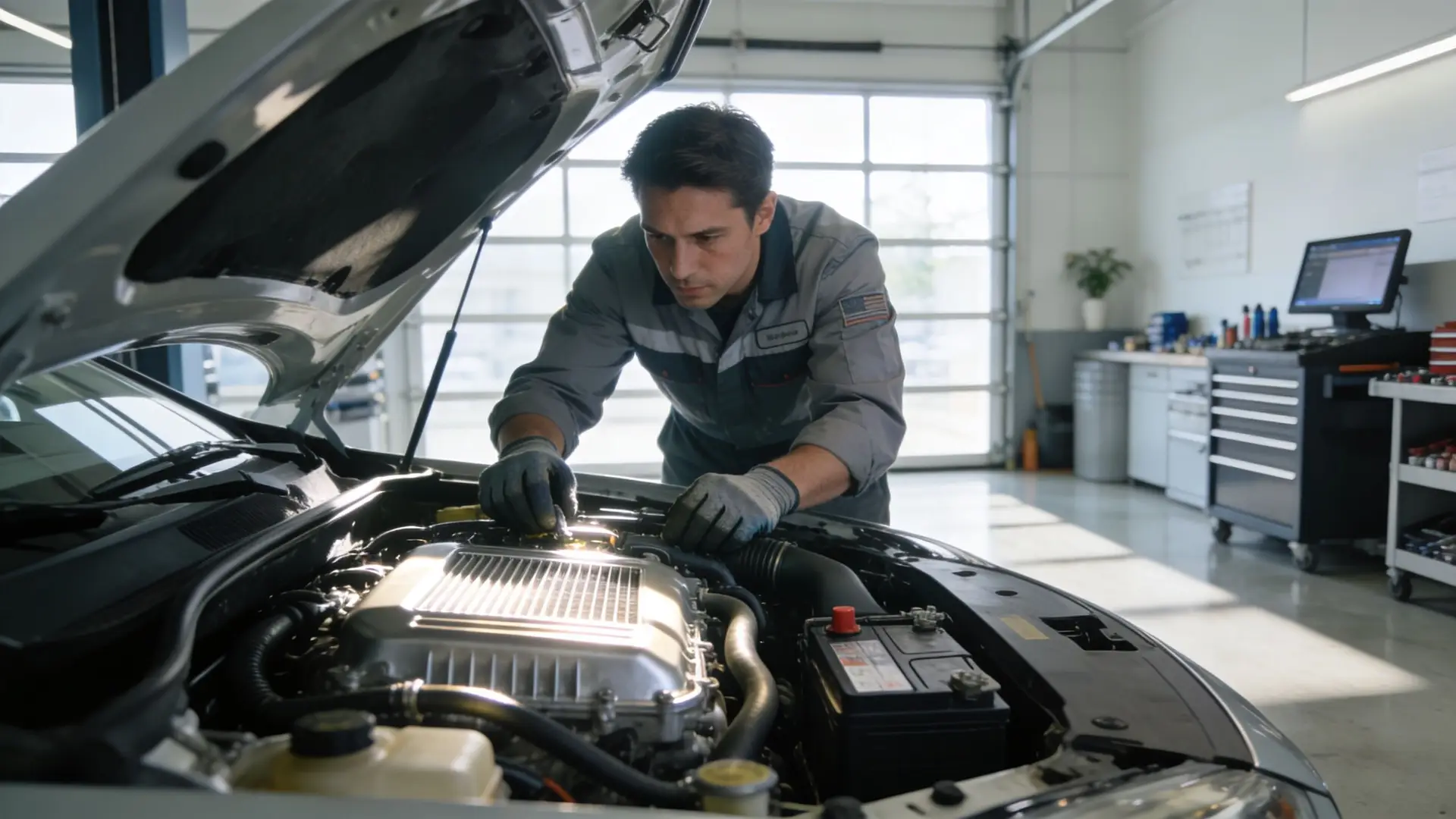
Some smells belong in the DIY category. Others don't. If the odor is sweet, chemical, or burning, if cooling performance has changed, or if the smell survives a proper filter replacement and cleaning attempt, it's time to hand the problem over.
Red flags that deserve inspection
- Sweet smell from the vents: Possible heater core or coolant issue
- Burning or sharp chemical odor: Possible wiring, belt, oil, or hot-component problem
- Odor plus weak cooling: The A/C system may have more than one fault
- Persistent smell after DIY cleaning: The contamination or leak source may be deeper than you can reach
- Unusual vent noises: Debris, blower issues, or component failure may be involved
A professional inspection matters because the repair may require more than sanitation. It may involve drain diagnosis, HVAC access, leak tracing, or cooling-system testing.
If you're in the area and the problem has moved beyond filter-and-cleaner territory, it's worth reading about A/C recharge and service in Plano so you know what a proper shop visit can include. The big advantage is having technicians with the equipment to separate an odor complaint from a refrigerant problem, a heater-core leak, or an electrical issue before parts get replaced unnecessarily.
Frequently Asked Questions About AC Odors
Is a bad A/C smell harmful to breathe
Sometimes it's just unpleasant. Sometimes it points to mold, mildew, bacteria, or coolant entering the ventilation path. If the smell is sweet, chemical, or makes you cough or feel irritated, don't keep driving around hoping it fades.
Why does the smell only happen when I first start the car
That usually means odor is building up while the car sits. When you first turn on the blower, it pushes air across damp or contaminated surfaces and sends that odor into the cabin.
Will an air freshener solve the problem
Usually not. It can cover the odor briefly, but it doesn't remove trapped moisture, contamination, or a leak. If the source stays in the HVAC system, the smell returns.
If I changed the cabin air filter and the smell came back, what does that mean
That strongly suggests the filter wasn't the root cause. The source is often deeper in the evaporator housing or related to drainage, especially if the smell returns quickly.
If your vents still smell wrong, the safest next step is to get the system inspected instead of masking it. Express Lube & Car Care handles routine maintenance and automotive repair in Plano, including the kinds of A/C and ventilation issues that often sit behind persistent car ac smells.