

ATF (automatic transmission fluid) and power steering fluid are both hydraulic fluids, but they are not automatically interchangeable. Some vehicles, mostly domestic cars and trucks, specify an ATF such as Dexron or Mercon in the steering system. Many newer vehicles, especially European and Asian models, call for a dedicated power steering fluid. ABRO says the same, and warns that the wrong choice can swell seals, make the pump noisy or cause leaks. The only reliable answer for your car is the one printed on the reservoir cap or written in the owner’s manual.
TL;DR
- ATF belongs in a power steering system only when your owner’s manual or reservoir cap names it. Fluid quality is not the deciding factor. Compatibility with your system is.
- Ford, Chrysler, Dodge and Ram steering systems often specify ATF-type fluids. Many European and Asian vehicles do not.
- Never put power steering fluid in an automatic transmission.
- If the wrong fluid or a mixture went in, plan on a drain, flush and refill with the correct fluid rather than topping off and hoping.
- Whining, stiff steering or leaks after a fluid change are reasons to have the system inspected promptly.
Table of Contents
- ATF and power steering fluid: what is actually different
- Can you use ATF in power steering?
- How to find the right fluid for your vehicle
- Power steering fluid types
- Is Dexron III suitable for power steering?
- Can you mix ATF and power steering fluid?
- What to do if the wrong fluid went in
- Warning signs of the wrong or low fluid
- Our perspective on steering fluid
- Steering fluid service in Plano without the guesswork
- FAQ
- Sources
ATF and power steering fluid: what is actually different
Both fluids transmit force through hydraulic pressure and lubricate moving parts. The difference is in the details. A steering system is built around a particular viscosity and additive package, and its rubber seals were chosen to match. A transmission fluid is formulated for clutches, bands and a torque converter, so its friction and additive package serve a different job.
The tolerances in a steering pump and rack are tight. As Shop Owner Magazine explains, even a slight swelling of a gasket or a pump issue can produce symptoms a driver notices, such as inconsistent assist or noise under the hood.
| ATF | Dedicated power steering fluid | |
|---|---|---|
| Main job | Hydraulic medium and lubricant in an automatic transmission | Hydraulic medium and lubricant in a steering pump and rack |
| Where it is specified | Transmissions, and some steering systems | Steering systems built for it |
| Common spec names | Dexron, Mercon, ATF+4, import ATF, CVT fluid | Manufacturer-specific, or standards such as DIN 51 524T3 and ISO 7308 |
| In the transmission | Correct when it matches the transmission spec | Never acceptable |
| In the steering system | Correct only if the manual or cap names it | Correct when it matches the spec |
The standards named in the last row come from UTI’s overview of power steering fluid, which also notes that some ATF types, including Dexron and Mercon, can be used in some steering systems.
Can you use ATF in power steering?
Yes, in some vehicles, and only when the manufacturer says so. The most useful way to think about it is by maker, because the factory specification is what decides.
Chrysler, Dodge, Jeep and Ram
FCA’s official power steering fluid level procedure says to use Mopar Power Steering Fluid +4 or Mopar ATF+4 in the steering system. Both share the same material standard (MS-9602). It also says no other power steering or automatic transmission fluid should be used, because damage to the pump and system may result.
The 2022 Ram 2500/3500 owner’s manual gives the same two choices for both the 6.4L gasoline and 6.7L diesel engines. FCA’s quality assurance group adds that ATF+4 is the correct fluid for both the transmission and power steering in vehicles that require it, and that only licensed products with a valid license number on the label contain the genuine formulation.
Ford
Ford’s service content specifies that vehicles with hydraulic power assisted steering use Motorcraft MERCON LV (WSS-M2C938-A), the same specification as the automatic transmission fluid. Ford vehicles with electric power steering have no steering fluid at all, so check which system you have before buying anything.
European and Asian vehicles
These are where ATF is most likely to be the wrong answer. If your manual calls for a dedicated or synthetic power steering fluid, or a specific standard, that is what the pump and seals were designed around. Chevron’s product data sheet for its Multi-Vehicle ATF 3 is explicit on a related point: it suits systems that call for a mineral-type power steering fluid, but it should not go into steering or active suspension systems that call for specific semi-synthetic or synthetic fluids, because response speed may suffer.
Some European vehicles also use a central hydraulic system that serves steering, suspension and level control with one fluid. Dyade Lubricants explains that the mineral type (green) and the synthetic type (orange) are not compatible and must never be mixed.
Quick rule
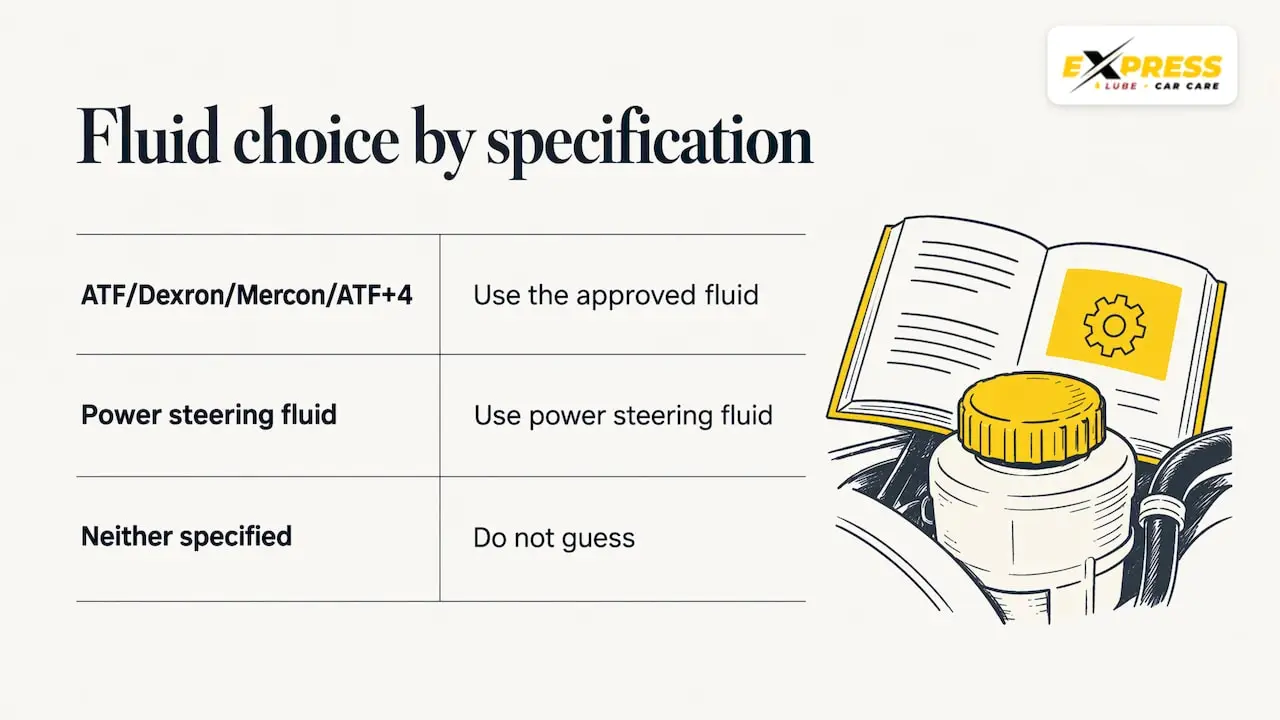
If the cap or manual says ATF, Dexron, Mercon or ATF+4, that fluid is approved. If it says power steering fluid, use power steering fluid. If it names neither, do not guess.
How to find the right fluid for your vehicle
Work through these in order:
- Read the reservoir cap. Many caps are molded or printed with the fluid type.
- Check the owner’s manual. The maintenance or capacities section names a specification rather than a brand. Match the spec.
- Ask a parts counter or service advisor. A dealer parts department can identify the fluid from your VIN.
- Confirm you have a hydraulic system. Many newer vehicles use electric power steering and have no reservoir.
When you are ready to look under the hood, our guide on how to check power steering fluid walks through finding the reservoir and reading the level.
A 2017 NHTSA-hosted service bulletin adds another wrinkle. It states that vehicles built in 2017 would be factory filled with ATF in the steering reservoir, and that ATF and power steering fluid are the only acceptable fluids for vehicles whose brake booster shares the hydraulic system. In other words, on some vehicles the steering fluid is also part of the braking system, which is one more reason the specification matters.
Power steering fluid types
There is no single universal power steering fluid. In practice you will meet these groups:
- ATF-type fluids. Dexron, Mercon and ATF+4 are the common ones, used in steering systems whose maker specifies them.
- Conventional (mineral) power steering fluid. A petroleum-based fluid for systems that call for it.
- Synthetic power steering fluid. Usually engineered for a particular car or system, so it follows the maker’s specification closely.
- Central hydraulic fluids. Mineral and synthetic types that serve steering plus other systems, as described above. These must never be mixed with each other.
- Manufacturer-branded fluids. Some makers sell their own fluid with its own part number. When the manual names it, use it or a product that clearly states the same specification.
On the transmission side, the main ATF families are Dexron for General Motors, Mercon for Ford, ATF+4 for Stellantis brands, CVT fluid for continuously variable transmissions, multi-vehicle ATF, and import ATF for Honda, Nissan, Toyota and others, as AutoZone’s fluid overview lays out. Choosing between them is a matter of matching the specification, not picking the most expensive bottle.
Is Dexron III suitable for power steering?
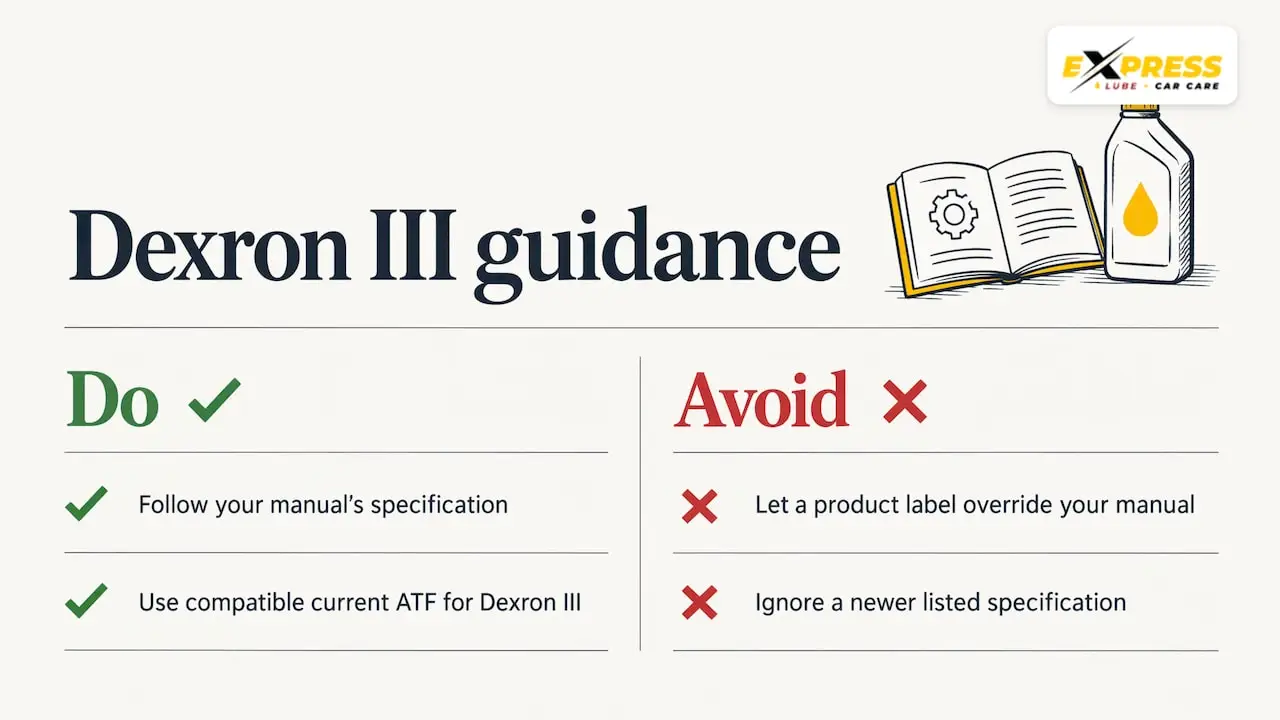
It can be, when your vehicle calls for Dexron or Mercon-type fluid. Motul describes its Dexron III as an ATF for systems requiring a Dexron or Mercon standard, including power steering. Yamamoto Lubricants says the same of its Dexron III product for vehicles requiring General Motors quality fluids.
Two cautions apply. First, a product label that lists power steering as one possible use does not override your manual. Second, Chevron’s data sheet notes that GM has technically made the Dexron III specification obsolete, though many equipment makers still recommend fluids of this type. If your manual lists Dexron III, a current multi-vehicle ATF that states compatibility is the usual route. If it lists something newer, follow the newer spec.
Can you mix ATF and power steering fluid?
As a lasting fix, no. As a short emergency measure, sometimes it happens, and the right response is to correct it afterward.
Why it matters: different base oils and additive packages can behave differently together, and seals chosen for one chemistry can react to another. The result may be foaming, noise, a sluggish response or leaks. If your system calls for a synthetic fluid, adding a petroleum-based fluid is the situation to avoid, and a central hydraulic system has its own strict no-mixing rule.
The small top-off exception: where your vehicle is specified for ATF in the steering system and you add the same specified ATF, that is not a mix. It is the correct fluid.
What to do if the wrong fluid went in
Call it early. A steering pump that is running on the wrong fluid is the kind of problem that gets more expensive the longer it continues.
- Stop adding fluid. More of the wrong thing does not dilute the problem.
- Avoid heavy steering loads such as repeated full-lock turns while parked.
- Schedule a drain, flush and refill with the specified fluid. One steering specialist’s FAQ describes the sequence for an emergency mix: drain and flush the system, replace the reservoir filter where there is one, then refill with the correct fluid. It also notes that steering fluid is cheap compared with a pump or steering gear.
- Do not run the pump dry. During a flush, the system has to be refilled as the old fluid is pushed out, because a dry pump can be damaged. O’Reilly describes that sequence as draining the old fluid, adding the recommended amount of new fluid, and cycling the engine to push remaining fluid out.
For a closer look at how a proper flush works, read our guide to flushing a power steering system.
Emergency substitutes
If you are stranded with a low reservoir, the safest substitute is the fluid your manual specifies. If you can only reach a fluid that is a different type, treat it as a short trip to a shop, not a permanent top-off. Do not substitute brake fluid or engine oil for steering fluid under any circumstances, and never put power steering fluid into the transmission.
Warning signs of the wrong or low fluid
Watch for these after any top-off or service:
- A whining or groaning noise when you turn the wheel
- Steering that feels heavy, jerky or inconsistent
- Foamy or discolored fluid in the reservoir
- Fluid spots under the front of the vehicle
- A burning smell near the pump
Steering is a safety system. If assist becomes unpredictable, have the car inspected before continuing normal driving. Leaks have several possible sources, from hoses to the pump to the rack, which is why we cover them separately in our guide to power steering leak testing and costs. A groan that appears only while turning may also point elsewhere, and our article on grinding noise when turning the steering wheel explains other causes.
Our perspective on steering fluid
We see the same pattern often: a driver tops off a steering reservoir with whatever fluid was on the shelf because both bottles looked like “hydraulic fluid.” The intent is sensible. The outcome depends on the vehicle.
Our approach is to treat the specification as the answer. Think of it like a recipe: the ingredient list is set by the engineer, and substitutions are not ours to improvise. We read the cap, check the manufacturer’s specification for that vehicle and use the fluid it calls for.
That matters even more with the mix of vehicles on Plano roads, from domestic trucks and SUVs to European and import models. They do not all want the same fluid, and a flush with the correct one is far easier to do before a pump is damaged than after.
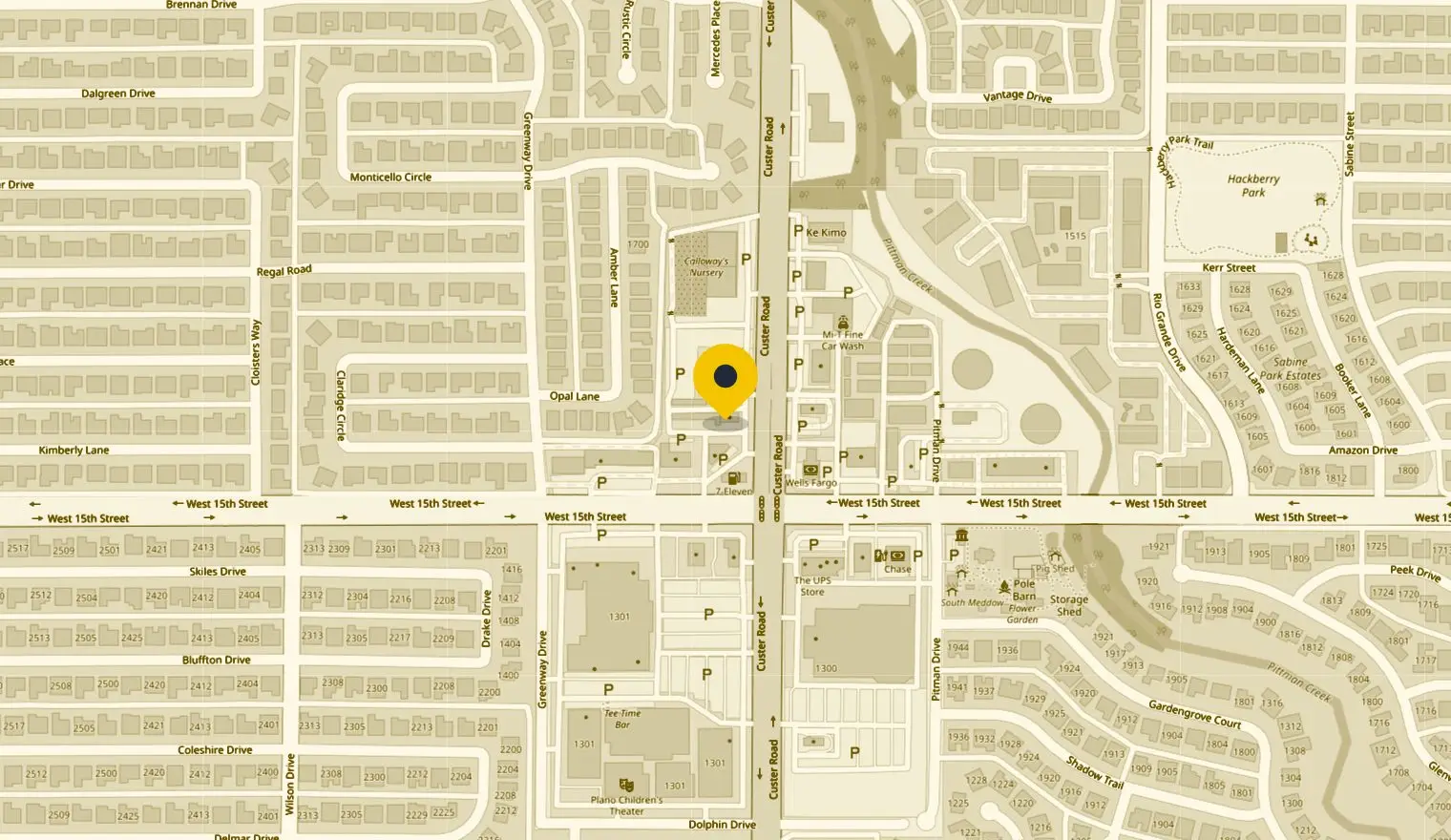
If you are not sure what went into your system, bring it in. You do not need an appointment, and we can look at the fluid, the level and the condition of the system with you.
Express Lube & Car Care
Steering fluid service in Plano without the guesswork
If you are unsure which fluid your vehicle takes, or you suspect the wrong one went in, we can help. We offer fluid exchange services and steering and suspension repair with no appointment required. Look through our full list of services or learn more about steering and suspension repair in Plano.
Qualifying repairs carry our 24-month/24,000-mile limited warranty, whichever comes first, and qualifying suspension repairs may be covered by our Lifetime Suspension Warranty. Eligibility, limitations and exclusions apply to both, and not every repair is covered, so ask us for the details on your specific job.
FAQ
Can I use ATF instead of power steering fluid?
Only if your owner’s manual or reservoir cap specifies ATF, such as Dexron, Mercon or ATF+4. Many Ford and Chrysler-family systems do, while many European and Asian vehicles do not. If your manual names a dedicated or synthetic power steering fluid, use that instead.
Can I use power steering fluid in my transmission?
No. The two are formulated differently, and a transmission needs the fluid that matches its own specification. If power steering fluid went into a transmission, avoid driving and have it inspected by a professional right away.
What happens if I mix ATF and power steering fluid?
Depending on the two fluids and your system, you may see foaming, noise, reduced assist or seal problems. The safe fix is a drain, flush and refill with the specified fluid. Mixing mineral and synthetic central hydraulic fluids is specifically prohibited.
How do I know what power steering fluid my car takes?
Check the reservoir cap first, then the maintenance or specifications section of your owner’s manual. It will name a specification rather than a brand. A dealer parts counter can also confirm it from your VIN.
How often should power steering fluid be changed?
Intervals vary by vehicle, so follow your manufacturer’s maintenance schedule. Some makers list a service interval and others only call for inspection. A technician can also check the condition of the fluid during routine service.
Sources
- ABRO USA: Power Steering Fluid vs. ATF
- Shop Owner Magazine: Choosing the Right Power Steering Fluid
- UTI: What Is Power Steering Fluid?
- FCA standard procedure: Power Steering Fluid Level Checking (NHTSA)
- Mopar: 2022 Ram 2500/3500 Chassis Fluids and Lubricants
- FCA ATF+4 FAQ, Center for Quality Assurance
- Ford Owner Manual: Capacities and Specifications
- Chevron: Multi-Vehicle ATF 3 product data sheet
- Dyade Lubricants: Power Steering Fluids LHM, LDS and CHF
- NHTSA service bulletin IK0500058: Steering Fluids
- Motul USA: MOTUL DEXRON III
- Yamamoto Lubricants: ATF DEXRON III
- AutoZone: Transmission Fluid vs Power Steering Fluid
- PSC Steering FAQs
- O’Reilly Auto Parts: How to Flush and Bleed Your Power Steering System