

A complete brake job usually runs $400 to $900 per axle, and if your car needs both front and rear brakes, the total often lands between $800 and $1,800. If you're hearing squealing in Plano traffic or feeling something odd in the pedal, the question usually isn't just “how much,” but “how bad is it now, and what happens if I wait?”
That worry is normal. Most drivers don’t think about brakes until the car starts talking back with a squeal, a grind, a shake in the steering wheel, or a soft pedal at a red light.
As an ASE-certified mechanic would tell a neighbor, brake repair cost makes a lot more sense once you break it into parts, labor, and timing. Timing's impact is often not fully appreciated. A simple pad job is one kind of bill. Pads, rotors, and a seized caliper is a very different conversation.
Your Guide to Understanding Brake Repair Costs in Plano
If your brakes just started making noise, the first thing to know is that different sounds usually point to different stages of wear. A high-pitched squeal often means the pads are getting thin. A grinding sound usually means the friction material is gone and metal is contacting metal. A soft pedal can point to fluid or hydraulic issues. A shake when braking often suggests rotor problems.
Those symptoms matter because they change the brake repair cost. The earlier you catch the issue, the more likely you are to stay in the lower end of the repair range. Wait too long, and one worn part starts damaging the next one.
That timing has become even more important because repair prices have climbed. According to this 2025 repair cost report, the automotive repair industry saw a 15% year-over-year increase, and brake components rose 12-18%. The same report notes that a brake service that cost $500 in 2024 could exceed $575 in 2025-2026.
What usually confuses drivers
Most estimates combine several things into one number:
- Parts wear: Pads, rotors, calipers, and brake fluid don't fail the same way or at the same time.
- Vehicle design: A compact sedan and a heavy truck don't use the same size brake hardware.
- Labor time: Some brake jobs are straightforward. Others require more inspection, cleaning, testing, and careful reassembly.
Practical rule: Brake noise is cheaper to inspect than brake damage is to repair.
If you're unsure whether the sound is minor or urgent, a professional inspection is the first smart move. It gives you a real answer before the problem spreads to more expensive parts.
How to Know Your Brakes Need Service
Some brake problems announce themselves clearly. Others sneak up on you. The trick is knowing which symptom means “plan for service soon” and which one means “stop putting this off.”
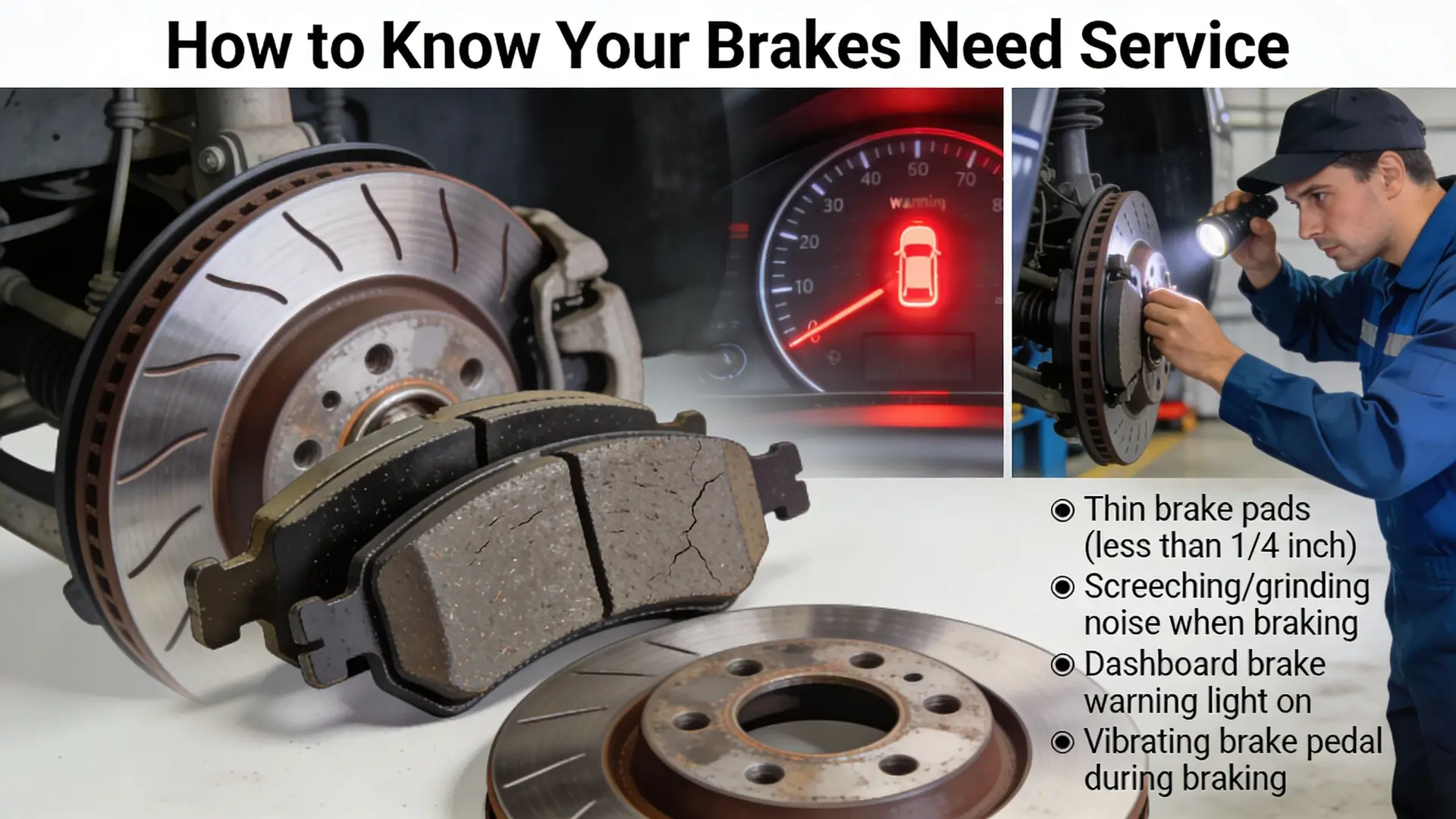
Squealing, grinding, vibration, and pulling
A squeal is often the earliest warning. Many pads use a wear indicator that makes noise when pad material gets low. That noise is annoying on purpose. It's trying to get your attention before the repair gets expensive.
A grinding sound is more serious. At that point, the brake pad material may be worn down enough that metal is contacting the rotor. That tends to chew up the rotor surface fast.
A vibration in the pedal or steering wheel while braking can point to rotor issues. Rotors can warp from heat, and one source notes they often need replacement when heat exceeds 600°C, while pads should be replaced when thickness drops below 3mm to avoid rotor damage and a possible up to 20% compromise in stopping distance according to this brake cost and wear guide.
What a soft pedal or pulling sensation can mean
A soft or spongy brake pedal usually feels different from worn pads. The pedal may travel farther than normal or feel less firm. That can point to moisture in the brake fluid, air in the system, or another hydraulic problem.
If the car pulls to one side when you brake, that can mean uneven pad wear or a caliper that isn’t applying pressure evenly. Drivers often describe this as the car feeling unstable or “grabbing” on one side.
For a deeper look at the warning signs, this guide on signs you need new brakes does a good job explaining what to watch for.
A simple way to think about urgency
Here’s a practical ladder:
- Squeal: Usually an early warning.
- Vibration: Something is wearing unevenly or heating unevenly.
- Pulling or soft pedal: Brake balance or hydraulic function may be affected.
- Grinding: The repair has likely moved beyond pads alone.
A quick visual explanation can help if you want to see how these parts work together.
If your brakes changed suddenly, don't treat that as normal wear. Sudden changes usually deserve a closer look.
Decoding Your Brake Repair Estimate Price Ranges
When a shop hands you an estimate, the number can feel random if you don’t know what’s built into it. Most brake estimates are really a combination of friction parts, rotor condition, hydraulic component condition, and labor.
Here’s the fast version. Brake pad replacement alone is usually the lower-cost repair. A complete brake job means more parts and more labor. If rotors are damaged or a caliper is sticking, the bill climbs.
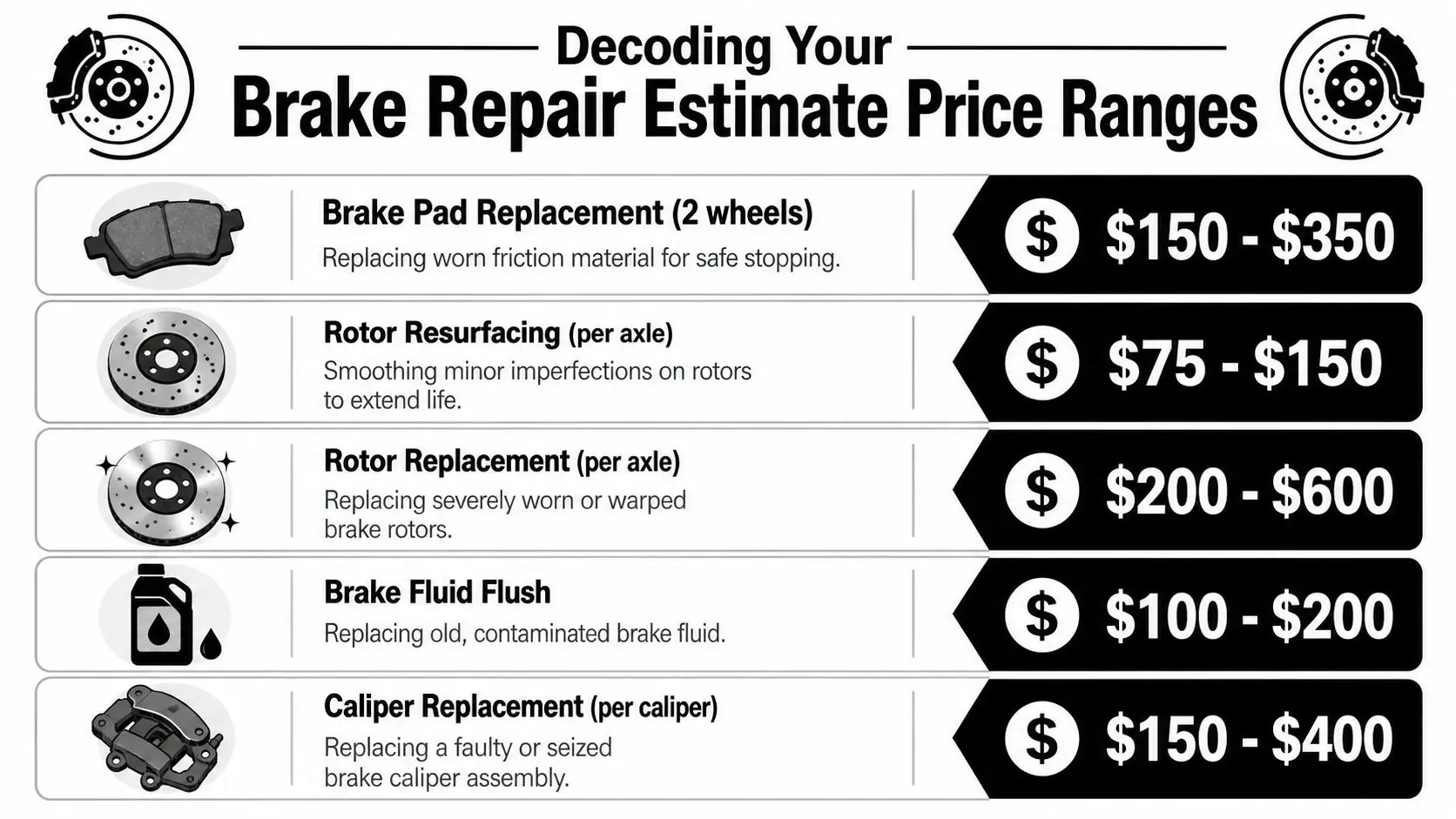
Estimated Brake Repair Costs in Plano 2026
| Brake Service | Average Cost Range (Per Axle) |
|---|---|
| Brake pad replacement | $150 to $300 |
| Complete brake job with pads and rotors | $400 to $900 |
| Rotor resurfacing or replacement with labor | $300 to $600 |
| Caliper-related repair adds | $50 to $200 per component, plus labor |
These ranges come from ConsumerAffairs brake repair pricing, which notes that brake pad replacement averages $150 per axle but can reach $300 per axle, aftermarket rotors usually cost $30 to $75 each, and a complete brake job typically costs $400 to $900 per axle. The same source says calipers can range from $50 to $200 each, and servicing both front and rear brakes often totals $800 to $1,800.
What each line item usually means
Brake pad replacement is exactly what it sounds like. The worn friction material gets replaced so the car can stop safely without damaging the rotor.
Rotor work depends on condition. Some rotors can be resurfaced if they still meet thickness requirements and have enough material left. Others need replacement because they’re too worn, heat-damaged, or uneven.
Caliper repair enters the estimate when the caliper is leaking, sticking, or seized. That’s one reason one brake quote can be much higher than another even when both customers came in saying, “My brakes are making noise.”
Why one car gets a different estimate than another
A Honda Civic and a BMW may both need front brakes, but the hardware, parts cost, and labor complexity aren’t the same. Larger rotors, premium pad materials, and more complex brake systems raise the estimate.
You can get a better sense of what shops include in a standard inspection and service process in this article on what brake service includes.
What matters most: Ask whether the estimate includes pads only, pads and rotors, or pads, rotors, and hydraulic components. Those are three very different repairs.
Key Factors That Influence Your Final Bill
Two drivers can walk into different shops with “bad brakes” and get very different estimates. That doesn’t always mean one estimate is wrong. It usually means the jobs are not truly the same.
Vehicle size and part choice
Start with the vehicle itself. A heavier SUV or truck puts more demand on its brake system than a small commuter sedan. Bigger vehicles usually need larger pads and rotors, and those parts cost more.
Then there’s pad material. Organic, semi-metallic, and ceramic pads don’t behave the same. Ceramic-based pads often cost more, but they’re commonly chosen for quieter operation and longer life. OEM parts can also raise the bill compared with many aftermarket options.
Labor isn't just time on the clock
A lot of drivers look at labor and think, “Why is this so high?” That’s fair. But labor on brake work covers more than the act of swapping parts.
According to this explanation of common brake repair costs, labor rates can range from $80 to $200 per hour, and that price reflects technician ASE certification, diagnostic complexity for modern vehicles, shop overhead, and warranty backing.
That matters on modern cars. A good technician doesn’t just bolt on pads. They inspect rotor condition, check caliper operation, look for uneven wear patterns, verify hardware condition, and make sure the system is safe when it leaves the shop.
A familiar cost story
Here’s how this usually plays out in real life.
A driver hears a light squeal and assumes the brakes can wait another month. If the pads had been replaced early, the job might have stayed simple. But the driver keeps commuting, the pads wear through, and now the rotors are scarred. If one caliper has been hanging up, that extra heat can push the repair into another category altogether.
That’s why two estimates can be so far apart. One customer is paying for routine friction wear. The other is paying for friction wear plus damage caused by delay.
The Hidden Cost of Delaying Brake Repairs
Drivers don’t ignore brake service out of indifference. Instead, they wait because life gets busy, money gets tight, and the car still stops. That’s precisely why brake repair cost often gets worse than it needed to be.
The cost ladder of waiting
The lowest rung is usually pads only. Many guides put brake pad replacement around $100 to $300 per axle, but the bigger issue is what happens after that point if the car keeps getting driven.
According to AAA’s brake pad replacement guide, once pads are fully worn, they almost always damage the rotors, pushing the minimum repair cost to $250 to $500 per axle. Wait longer, and caliper seizure can add $300 to $800 per caliper.
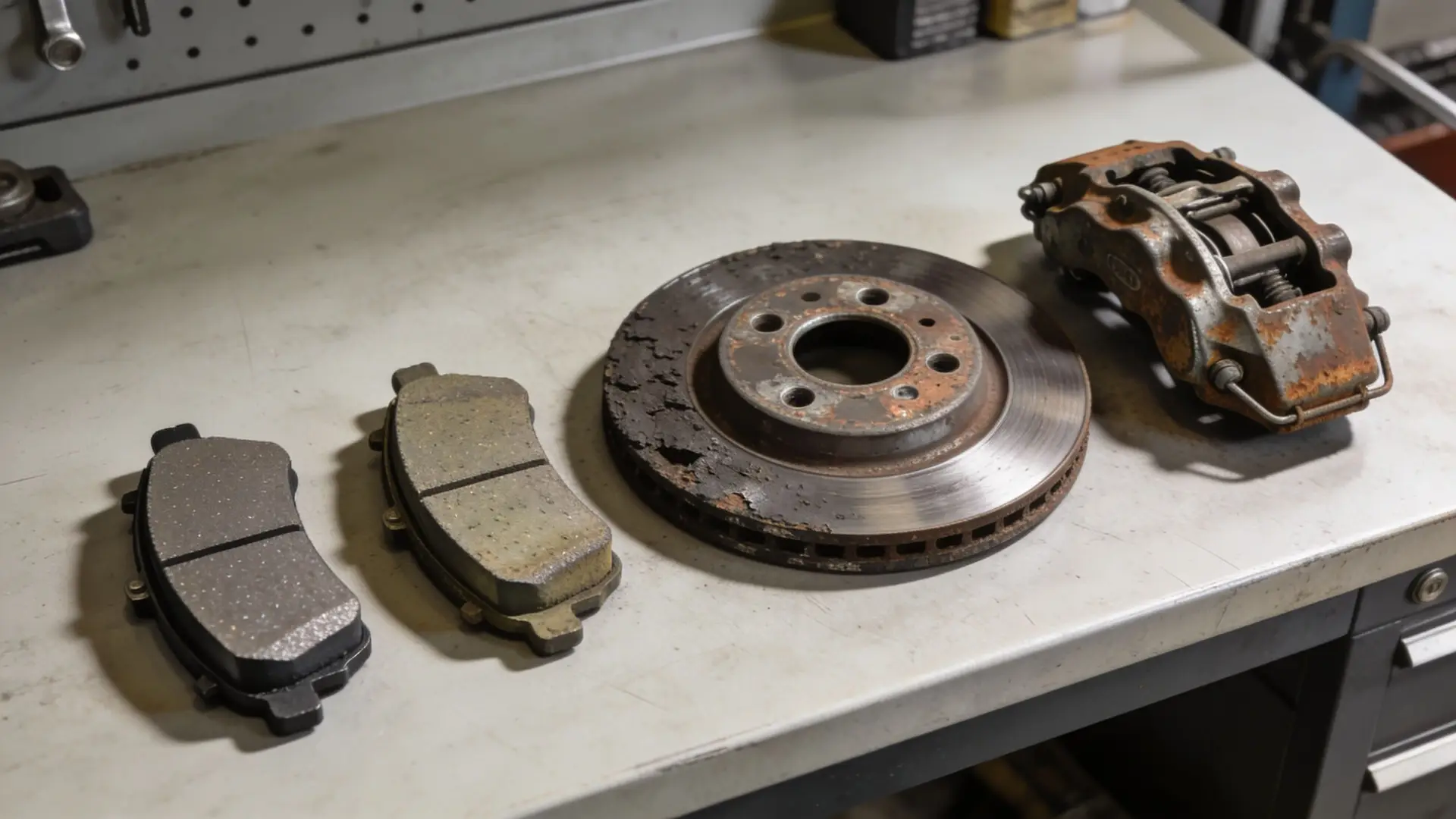
That’s the part many generic price guides leave out. They tell you what pads cost in isolation, but they don’t always show the financial chain reaction.
Delay versus action
Here’s the practical comparison:
- Act early: You may be dealing with a simpler service focused on friction material.
- Wait until grinding: Rotors usually enter the estimate.
- Keep driving with obvious problems: Calipers and hydraulic parts may get involved, and the car may become unsafe to drive.
If you’ve also noticed fluid near a wheel or a dropping pedal, it’s smart to learn the warning signs of a brake fluid leak, because hydraulic issues can turn a brake concern into a no-drive situation fast.
What about DIY to save money
DIY brake work can save labor money if you have the tools, experience, and time. For some owners, replacing pads on a familiar vehicle is manageable. For many others, the risk starts when the job expands beyond the original plan.
A stuck caliper, damaged bleeder screw, worn rotor, or hydraulic issue changes the job quickly. Brakes are one system where a small installation mistake can create a major safety problem.
Waiting rarely saves money on brakes. It usually shifts a smaller bill into a larger one.
DIY Brake Repair vs Professional Service A Safety-First Comparison
A lot of drivers search brake repair cost because they’re trying to answer a second question underneath it. “Can I save money by doing this myself?” Sometimes yes. But “possible” and “wise” are not always the same answer.
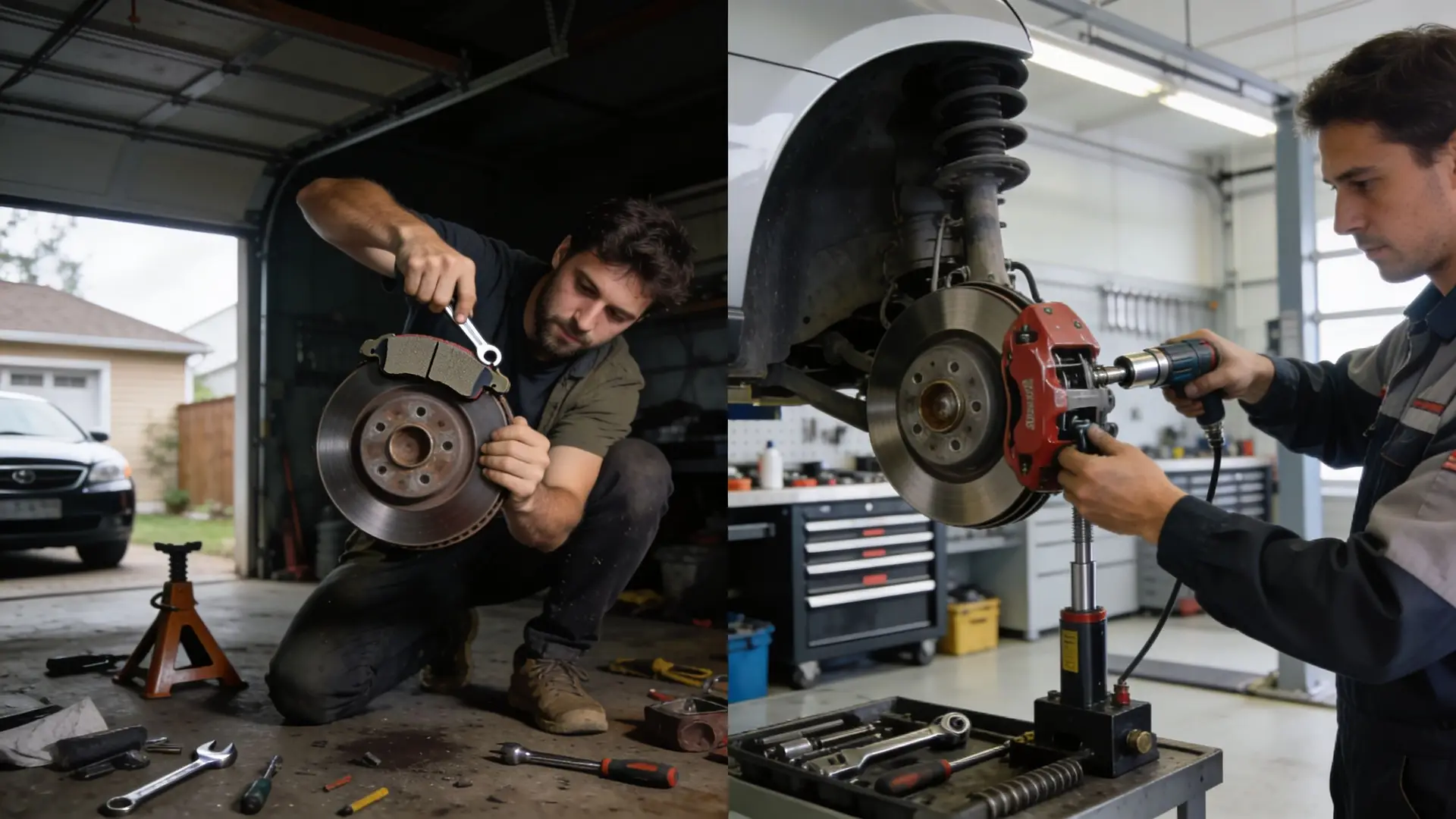
When DIY makes sense
If you’ve done brake work before, own the right tools, and know how to inspect more than just pad thickness, DIY can reduce labor cost. You still need to be comfortable with safe lifting, torque specs, caliper handling, brake hardware inspection, and road testing.
For experienced owners, the appeal is simple. You control the parts selection and avoid shop labor.
Where DIY gets risky fast
Brake work becomes more than a parts swap when any of these show up:
- Uneven wear: One side wearing faster can point to caliper or hardware issues.
- Rotor damage: The rotor may need resurfacing or replacement, not just a new set of pads.
- Soft pedal: That can mean hydraulic work, fluid bleeding, or further diagnosis.
- Electronic systems: Modern vehicles may have added complexity around sensors and braking components.
There’s also liability. If you run a repair business, insurance and risk management become part of the picture too. For shop owners or anyone curious about how repair operations protect themselves, this guide to Florida auto service insurance gives useful context about why professional repair environments are built around procedures, coverage, and accountability.
Side-by-side reality check
| Option | Best advantage | Biggest tradeoff |
|---|---|---|
| DIY brake repair | Save on labor | Safety risk if diagnosis or installation is off |
| Professional service | Proper inspection, tools, and warranty backing | Higher upfront cost |
Professional service also saves time. The time required for brake work is often underestimated when rust, seized hardware, incorrect parts, or rotor issues enter the job.
A brake job isn't the place to guess. If you're uncertain about diagnosis or installation, paying for skilled work is often the cheaper decision in the long run.
How to Save on Brake Repair Costs Now and in the Future
The cheapest brake repair is usually the one that stays small. You can’t stop normal wear, but you can slow it down and avoid turning a routine service into a larger repair.
Habits that help your brakes last longer
Try these simple habits:
- Brake smoothly: Hard, last-second stops create more heat and wear.
- Leave more distance: Coasting earlier gives the brakes less work to do.
- Avoid carrying unnecessary weight: Extra weight asks more from the brake system.
- Pay attention to new noises: Squeals and vibration are cheaper to inspect early than to ignore.
- Have the system checked during routine service: A quick look at pad thickness and rotor condition can catch problems before they spread.
Questions worth asking at the shop
A good brake conversation usually includes practical questions, not just price:
- Are the pads worn evenly?
- Do the rotors need resurfacing or replacement?
- Are the calipers moving properly?
- Is the brake fluid condition acceptable?
- What part quality options do I have?
Those questions help you compare estimates more intelligently. They also reduce the chance that you approve work you don’t understand.
Local savings still matter
If you’re already in for maintenance, bundled service offers can soften the sting. Some local shops offer specials that help with routine upkeep and related repairs, including $20 off oil change and additional services for military, first responders, and healthcare workers, plus $25 off oil changes on Ladies Day every Wednesday. Deals like that won’t erase brake wear, but they can make it easier to stay ahead on the maintenance that supports the whole vehicle.
The big picture is simple. Brake repair cost stays more manageable when you catch wear early, drive with a little mechanical sympathy, and ask clear questions before authorizing the work.
Common Questions About Brake Service in Plano
How long does a typical brake job take
That depends on what the car needs. Pads only is usually quicker than pads plus rotors, and both are simpler than a job involving a caliper or hydraulic issue. Rust, stuck hardware, and parts availability can also affect the timeline.
Do I have to replace rotors every time I replace pads
Not always. Rotors can sometimes be resurfaced if they’re still in good enough condition and meet thickness requirements. If they’re too worn, heat-damaged, or uneven, replacement is the safer call.
Are squeaky brakes always a problem
Not every squeak means immediate danger, but a change in brake noise should never be ignored. Some pads are naturally noisier than others, and weather can play a role. Still, if the noise is new, persistent, or getting worse, have it checked.
What is bedding in new brakes
Bedding in is the process of gradually bringing new pads and rotors into proper contact so the friction surfaces work together correctly. In plain English, it means driving gently at first and avoiding repeated hard stops right after service unless your technician tells you otherwise.
Is a soft brake pedal always caused by bad pads
No. Pads can affect how the brakes feel, but a soft or spongy pedal often points more toward fluid or hydraulic concerns than friction material alone. That’s one reason an inspection matters more than guessing.
How do I know if a brake estimate is fair
Look for an estimate that clearly separates pads, rotors, calipers if needed, and labor. If a shop explains why each item is needed and shows you the wear or damage, that’s a good sign. The best estimates are transparent, not just cheap.
If your brakes are squealing, grinding, shaking, or just not feeling right, Express Lube & Car Care can help you get a clear answer without the guesswork. Their ASE-certified team handles inspections, brake service, and full repair work with honest recommendations, quality parts, and no-appointment-needed convenience for busy Plano drivers.