

You turn the key on a cold Plano morning, wait for the engine to wake up, crank the temperature knob to hot, and get nothing but cool air out of the vents. That's frustrating. It's also one of those symptoms that can mean anything from a simple coolant top-off to a repair that needs proper testing.
A heater problem matters for more than comfort. When your car heater not getting hot also comes with foggy windows, a rising temperature gauge, or a sweet smell inside the cabin, the issue can affect visibility and engine safety at the same time. The good news is that you can narrow it down in a sensible order before you spend money on parts you may not need.
Why Your Car Heater Is Blowing Cold Air
A car heater is basically a small heat exchanger that borrows warmth from the engine. Hot coolant flows through the heater core under the dash, and the blower motor pushes air across that hot surface into the cabin. If heat, airflow, or coolant flow gets interrupted, the vents start blowing cold or barely warm air.
That's why heater problems usually trace back to a short list of suspects. The common ones are low coolant, a thermostat that isn't working properly, air trapped in the cooling system, a restricted heater core, or a blend door issue inside the dash that sends air the wrong way.
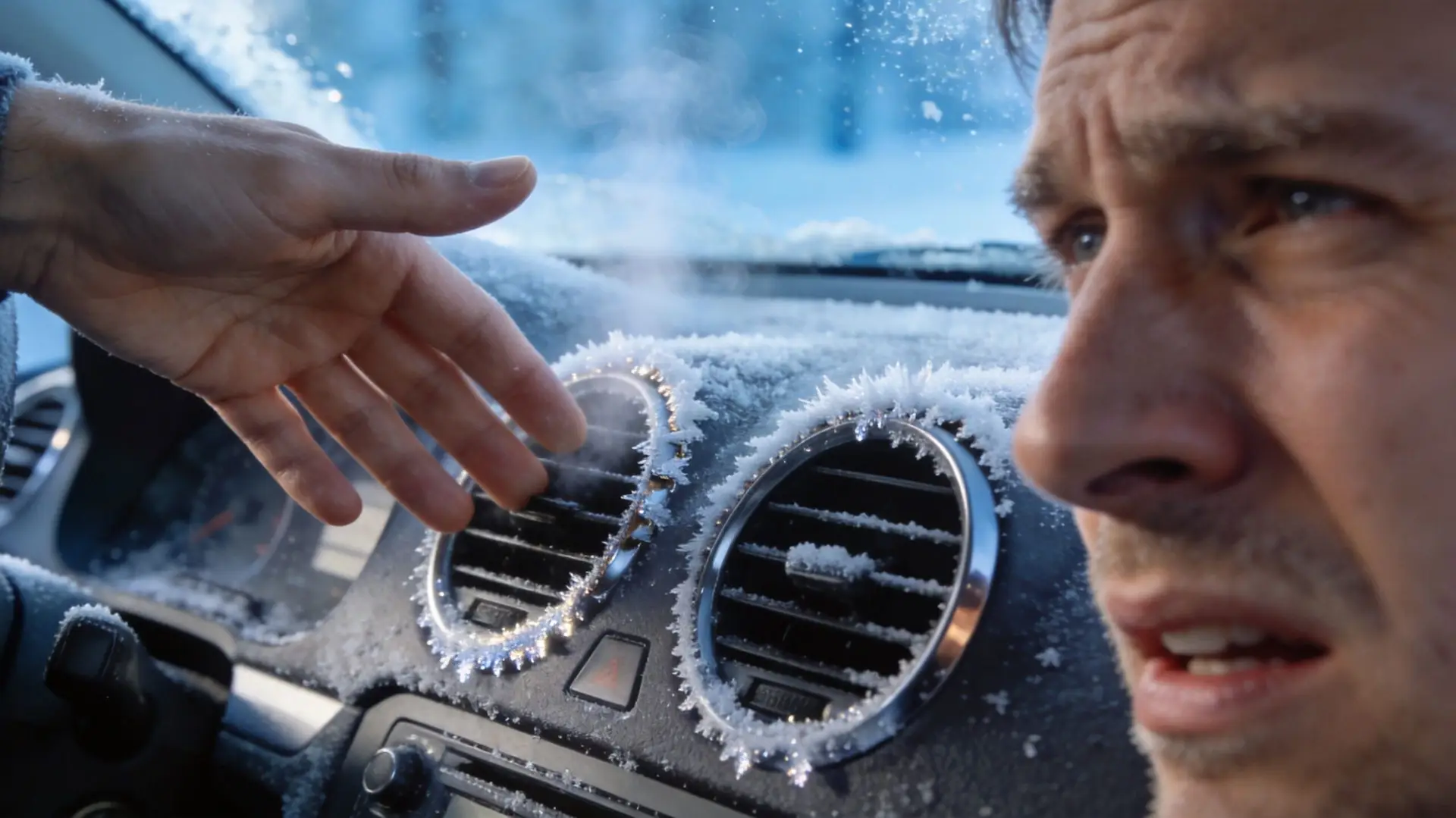
This isn't rare. A 2023 AAA survey revealed that 28% of drivers experienced car heater failures during winter, and heater problems contributed to 15% of all cold-weather service calls (AAA winter heater failure data). If your heater stopped working, you're not dealing with some weird one-off issue.
What each likely cause means
- Low coolant means the engine may not have enough hot fluid circulating through the heater core.
- A stuck-open thermostat can keep the engine from warming up fully, so the heater never gets the heat it needs.
- Air pockets can block coolant flow through the heater core, especially after cooling system work.
- A clogged heater core limits hot coolant flow inside the dash.
- A blend door or actuator problem can leave the system blowing cold air even when the engine and heater core are hot.
Practical rule: If the heater suddenly got weak and the coolant reservoir is low, don't assume you just “used a little coolant.” Cooling systems are sealed. If the level dropped, inspect for a leak.
If you suspect that kind of issue, it helps to know the signs of coolant leaks and what they usually look like. In the shop, I treat loss of heat and loss of coolant as connected until proven otherwise.
Your Step-by-Step Heater Diagnostic Checklist
A cold heater on a Plano morning can send you straight to the wrong conclusion. Before you buy parts or book a tow, run through these checks in order. They start with the safest observations and work toward the tests that narrow the problem down.
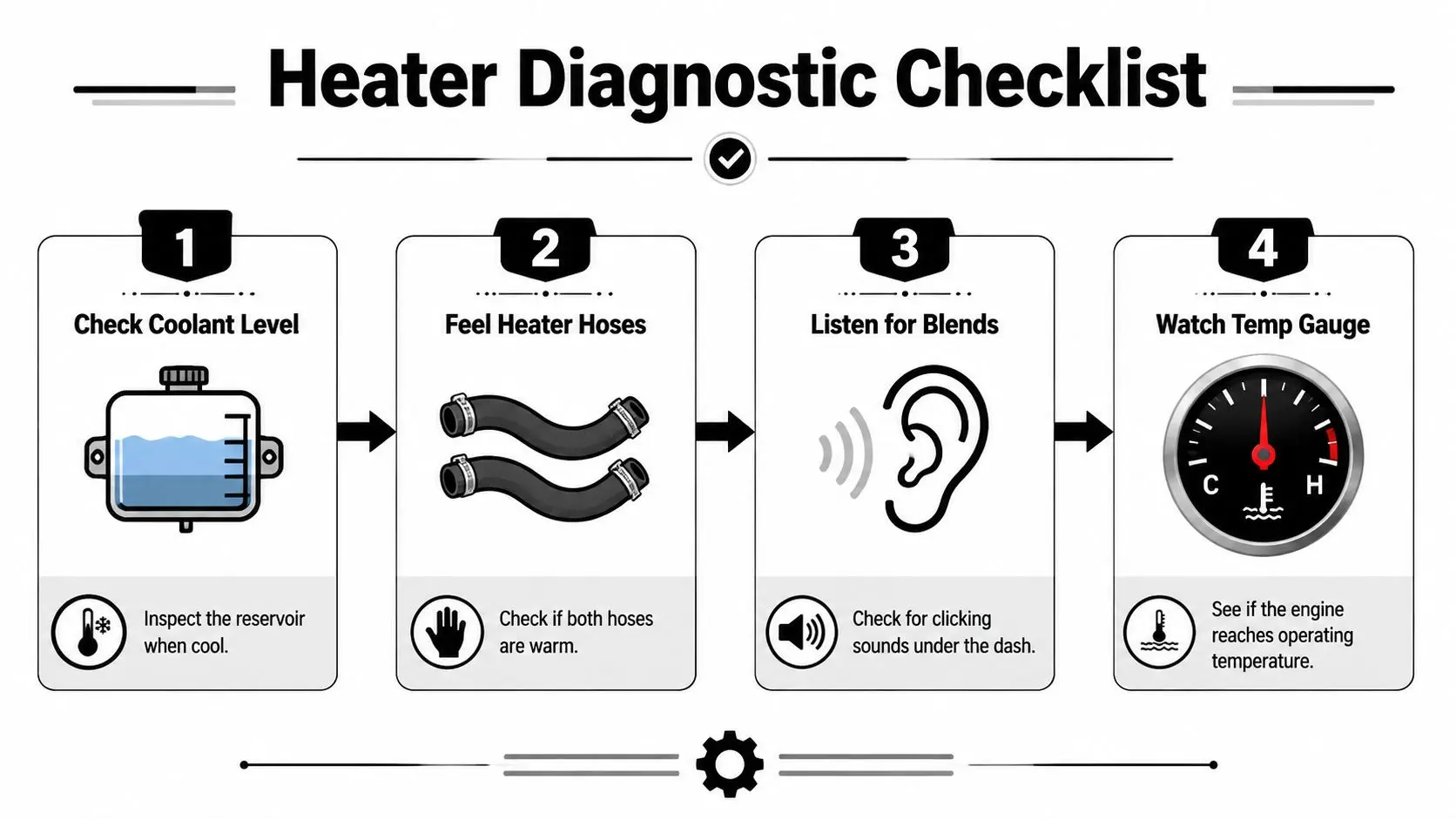
Step 1 Check the temperature gauge first
Start inside the car. Let the engine warm up on a normal drive, or idle it long enough to reach normal operating temperature if you cannot drive it safely.
Watch the gauge, not just the air from the vents. If the needle stays unusually low, the thermostat may be stuck open and the engine is never getting hot enough to feed the heater. If the gauge climbs too high, stop here. An overheating engine is a bigger safety issue than no cabin heat, and continuing to drive can turn a manageable repair into major engine damage.
Step 2 Check the coolant level only when the engine is cold
Once the engine is fully cold, inspect the overflow reservoir. Leave the radiator cap alone unless you know the system is depressurized and the service procedure for your vehicle.
The level should sit between the marked lines. If it is low, that alone can explain weak or cold heat because the heater core depends on a full supply of hot coolant. In the shop, coolant level is one of the first things I check because it often points to the root problem instead of just the symptom.
Look for a few simple clues while you are there:
- Low coolant in the reservoir suggests the heater core may not be getting steady flow.
- White, pink, orange, or green crust around hose connections can mean dried coolant from a slow leak.
- A sweet smell near the engine bay often goes with coolant seepage.
- Puddles or damp spots under the front of the vehicle point to an active leak.
- A reservoir that keeps dropping after top-offs means the system needs diagnosis, not repeated refilling.
If the reservoir is empty, the vehicle has been overheating, or you see steam, stop and have it inspected.
Step 3 Feel the heater hoses only after the engine is fully warm
This is the first hands-on check that helps separate coolant-flow problems from HVAC control problems. With the engine at normal temperature and the heater set to hot, locate the two heater hoses where they pass through the firewall.
Use care. Keep hands, sleeves, jewelry, and tools away from the belt, pulleys, and cooling fan. If the hoses are buried or access is tight, skip this test and let a technician handle it.
Here is how to read what you find:
- Both hoses feel hot. Hot coolant is likely moving through the heater core. If the vents still blow cold, the problem is more likely inside the dash, such as a blend door or actuator.
- One hose is hot and the other is much cooler. Coolant is entering the heater core but not flowing through it well. A restricted heater core becomes more likely.
- Both hoses stay cool or only slightly warm. The engine may not be reaching temperature, coolant may be low, or circulation may be poor.
Do not do this test too early. A half-warm engine gives half-useful answers.
Step 4 Listen for blend door movement inside the dash
Set the blower on low. Switch the temperature from full cold to full hot and listen near the center dash and passenger side footwell.
A clicking, tapping, or repeated ratcheting sound often points to a failing blend door actuator. If the engine is fully warm and both heater hoses are hot, but the air from the vents never changes temperature, that is another strong sign the problem is in the HVAC box rather than the cooling system.
The repair path is completely different. Coolant problems live under the hood. Blend door problems usually mean dash-side diagnosis, electrical testing, and sometimes actuator replacement.
Step 5 Pay attention to the pattern
When the heater fails tells you a lot.
- Heat is weak at idle but improves while driving. This can point to low coolant, air in the system, or a water pump that is not circulating well at lower speed.
- The heater stays cold all the time. That pushes the thermostat, heater core, or blend door higher on the suspect list.
- Heat comes and goes. Air pockets, an early coolant leak, or an intermittent actuator fault move up the list.
- The defroster is weak along with the heat. That can be an airflow or mode-door issue, not just a temperature issue.
That pattern is what helps a good shop diagnose the car quickly. For Plano drivers, this checklist also helps you decide whether you are dealing with a simple coolant service, which is usually on the lower end of the bill, or a heater core or dash repair, which can get expensive fast.
Common DIY Fixes You Can Perform Safely
A couple of heater-related fixes are reasonable at home if you're careful. The key word is careful. If the vehicle is overheating, losing coolant quickly, or showing steam, stop and get it repaired.
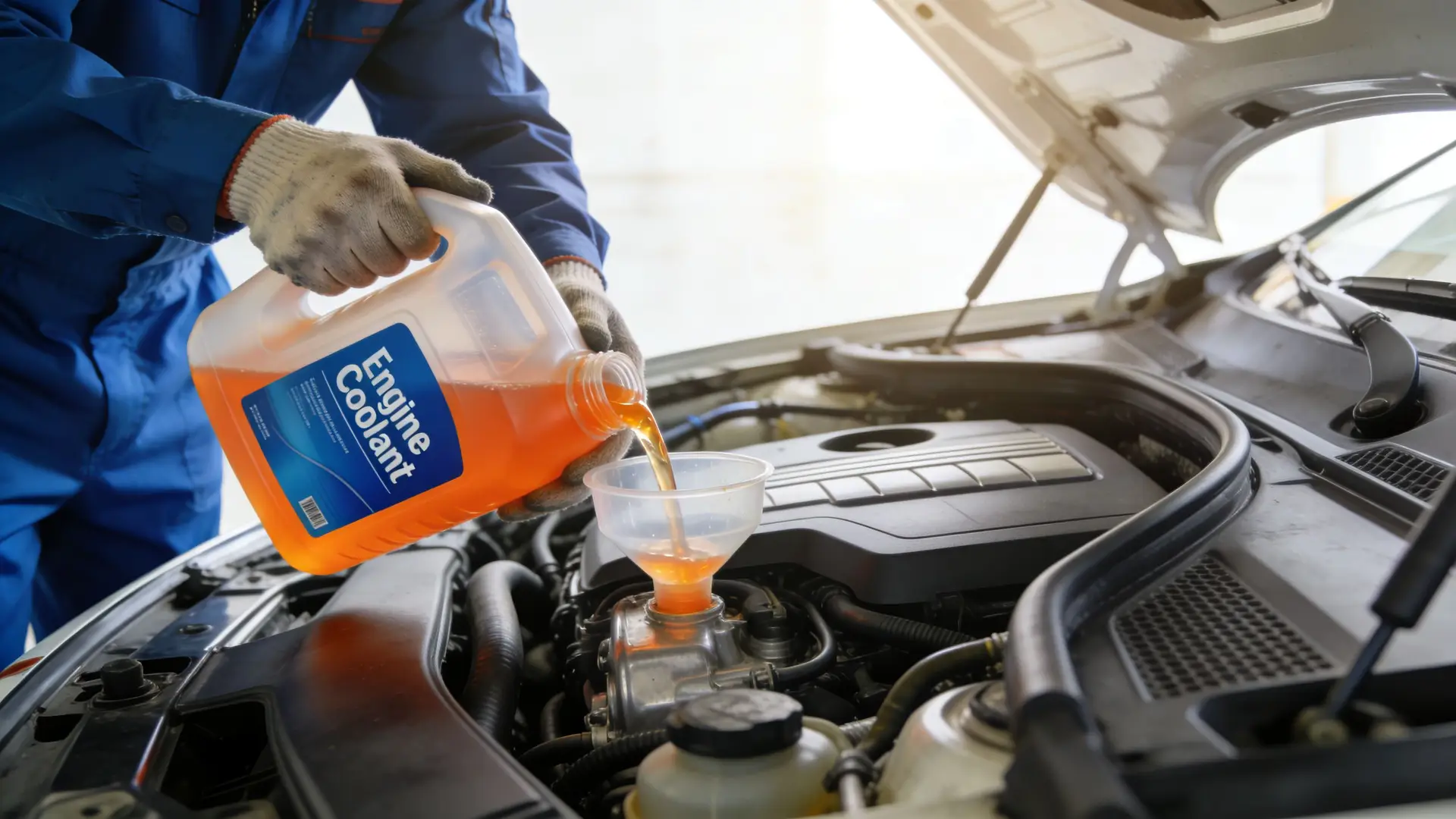
Topping off low coolant the right way
If the reservoir is low and the engine is completely cold, you can top it off using the exact coolant type specified in the owner's manual. Don't choose by color alone. Different coolant formulas can look similar and still be incompatible.
Use a clean funnel and add coolant slowly to the correct mark. If you're using concentrate, mix it only as directed for your vehicle. If you bought pre-mixed coolant, don't dilute it further.
A safe basic checklist:
- Use the correct specification from the owner's manual, not a guess from the shelf color.
- Fill only when cold so you don't risk burns or false level readings.
- Stop at the marked line on the reservoir. Overfilling can create a mess and confuse diagnosis.
- Monitor the level over the next few drives. If it drops again, you likely have a leak.
Burping trapped air out of the system
If the coolant was low or the system was recently serviced, trapped air may be the reason your car heater isn't getting hot. Air pockets can keep hot coolant from flowing through the heater core.
A no-spill funnel kit makes this job cleaner and more controlled. With the engine cold, attach the funnel at the proper fill point if your vehicle design allows it, start the engine, set the heater to full hot, and let the engine come up to temperature. As the thermostat opens, you may see bubbles escape through the funnel.
This walk-through helps show the general process:
Watch for steady coolant level changes and air burps, not violent boiling. If the temperature gauge climbs too high, shut the engine off.
A simple top-off can restore heat. It does not explain why coolant was low in the first place.
Where DIY should stop
DIY ends when the fix stops being straightforward. Don't keep chasing heat at home if you notice any of these:
- Coolant keeps disappearing
- The engine temperature rises or fluctuates
- You smell coolant inside the cabin
- You hear clicking under the dash
- One heater hose stays cold after full warm-up
At that point, testing matters more than guesswork. You're trying to avoid replacing a thermostat when the actual problem is a clogged heater core, or flushing a heater core when the actual fault is in the blend door system.
Understanding Complex Heater Problems and Repair Costs
Some heater faults are simple. Others get expensive because access is difficult, diagnosis takes time, or both. The part itself isn't always the main cost. Labor usually decides the bill.
One repair stands out here. According to the 2024 CarMD Vehicle Health Index, heater core replacement averages $1,247, and neglected coolant changes can restrict flow by up to 60% after 60,000 miles (CarMD heater core repair cost data). That's why routine coolant service matters so much.
What these failures look like in the real world
Thermostat problems usually show up on the gauge first. A stuck-open thermostat can leave the engine running too cool, so the cabin heat stays weak. A stuck-closed thermostat is more serious because it can lead to overheating.
If you want a clearer idea of what's involved before approving that job, this guide on how thermostat replacement works in a car is a useful background read.
Blend door actuator failures are common on vehicles with electronic HVAC controls. The engine may be fully warm and the heater core may be hot, but the cabin still gets cold air because the air door isn't moving into the heat position.
Water pump issues affect circulation. If the pump leaks or loses efficiency, the heater may get weak before the engine shows obvious overheating.
Heater core restrictions are the classic hidden problem. You may have normal engine temperature, decent coolant level, and weak cabin heat because sediment has narrowed the heater core passages.
Estimated heater repair costs and times
| Repair Service | Estimated Cost | Estimated Time |
|---|---|---|
| Heater core replacement | $1,247 average | Varies by vehicle access |
| Thermostat replacement | Varies by vehicle | Usually a shorter repair than heater core work |
| Blend door actuator repair | Varies by vehicle and dash access | Often moderate labor |
| Cooling system leak diagnosis and repair | Varies by leak source | Depends on testing and part location |
| Heater core flush attempt | Varies by vehicle and condition | Usually shorter than replacement |
The table is intentionally conservative because exact pricing depends on the vehicle, engine layout, and whether other failed parts are found during testing. A truck, compact sedan, and luxury SUV won't land in the same place.
What works and what usually doesn't
- A thermostat replacement works when the engine temperature behavior clearly supports it.
- A heater core flush can work on a mild restriction.
- A flush won't fix a leaking heater core or a broken blend door actuator.
- Throwing parts at it rarely works when the root issue hasn't been confirmed.
Good diagnosis saves money. The most expensive heater repair is often the part that got replaced before anyone tested the system correctly.
When to Visit a Plano Auto Repair Shop
There's a clear point where DIY stops being smart. If the heater still blows cold after basic checks, you need testing, not more guessing.
Call a pro if any of these are true:
- The coolant level keeps dropping after you top it off
- The engine runs hot or the gauge behaves strangely
- You hear clicking or grinding behind the dash
- You smell coolant inside the cabin
- You see steam, active leaking, or wet carpet
- You've already tried the safe basics and the car heater is still not getting hot
That's not giving up. That's making the safe choice before a heater issue turns into an overheating issue or a visibility problem on your morning commute.
In Plano, the biggest advantage of a proper shop visit is speed of diagnosis. An ASE-certified technician can separate coolant-flow faults from airflow-control faults much faster than trial-and-error at home. That usually means less downtime, fewer unnecessary parts, and a clearer repair plan.
What to Expect at Your Plano Service Appointment
On the day of your appointment, the goal is simple. Confirm whether the problem is coolant flow, engine temperature control, or an HVAC door issue before anyone talks parts.
Start by telling the service advisor what the heater does under real driving conditions. Say whether it stays cold at idle, warms up only on the highway, changes temperature in turns, smells sweet inside the cabin, or makes noise behind the dash. Those details save time, and in a shop, time matters because it shapes what gets tested first.
A solid heater diagnosis usually starts with the cooling system. The technician may check coolant level and condition, pressure-test for leaks, confirm the engine reaches normal operating temperature, and compare inlet and outlet heater hose temperatures. If coolant flow looks normal, the next step is often HVAC testing, including blend door movement, actuator operation, and scan tool checks on vehicles with electronic climate control.
If you want a better sense of that process before you go in, this overview of car diagnostics in Plano explains how shops narrow down a fault instead of guessing.
You should also expect a written estimate before repairs begin. In my experience, the better shops separate diagnostic time from repair cost, explain what failed in plain English, and tell you where a lower-cost option makes sense. A heater core flush might be worth trying on a partially restricted system. It is not the right answer for a leaking heater core, a stuck thermostat, or a failed blend door actuator.
For Plano drivers, diagnostic charges commonly land around $100 to $180, depending on the vehicle and how much dash or scan work is needed. Simple repairs like a thermostat or hose issue may stay in the low hundreds. Heater core or dash-related work can climb fast because labor is the big cost, not just the part. Ask two questions before approving anything: what test confirmed the failure, and what happens if you wait a week.
That last question matters. A comfort problem can turn into a cooling system problem, and cooling system problems can leave you stranded. A good shop will be clear about that without trying to scare you.
If your car heater not getting hot has turned your Plano commute into a cold one, Express Lube & Car Care can help you get a real answer fast. Their ASE-certified team handles cooling system diagnostics, thermostat issues, heater core concerns, and broader repair work with clear communication and no-appointment convenience.