
If you're reading this because your car has started shifting a little later than usual, or you've hit a maintenance milestone and you're trying to decide whether a transmission flush is smart or risky, you're asking the right question. Around Plano, a lot of drivers notice transmission behavior first in daily commuting. Warm weather, stop-and-go traffic, and long stretches of routine driving make fluid condition matter more than commonly appreciated.
A transmission flush can be excellent maintenance when it's done on the right vehicle, in the right way, with the right fluid. It can also be the wrong move if the transmission is already damaged, badly neglected, or if the job gets treated like a simple drain-and-fill. That difference is where most online advice falls short.
The capable DIYer doesn't just need instructions. You need a decision framework. You need to know whether your vehicle should get a basic pan service, a cooler-line flush, or a professional machine service. You also need to know when to stop and let a shop inspect it first.
Why a Transmission Flush is Your Engine's Best Friend
Your transmission fluid does more than "keep things slippery." In an automatic transmission, ATF cools internal parts, provides hydraulic pressure, and lubricates moving components that have to work together smoothly every time you accelerate, slow down, or sit in traffic. When that fluid breaks down, shifting quality usually changes before the average driver realizes what's happening.
That matters because transmission problems get expensive fast. Major automotive sources recommend transmission fluid service every 30,000 to 60,000 miles, and neglect is tied to 80 to 90% of transmission repairs caused by fluid issues, with rebuilds commonly landing in the $2,500 to $5,000 range, according to AutoZone's transmission flush guide.
A lot of people use "flush" and "fluid change" like they mean the same thing. They don't.
Flush versus simple drain
A drain-and-fill removes only the fluid that will leave the pan by gravity. A flush aims to exchange fluid from more of the system, including what remains in the cooler circuit and other passages. That fuller exchange is why some vehicles benefit from a flush, but it's also why the method needs to match the condition of the transmission.
Practical rule: If the fluid is just aging and the transmission still shifts normally, service is preventive. If it's already slipping, shuddering, or smelling burnt, maintenance may no longer be the real issue.
A healthy transmission usually responds well to clean fluid. A damaged one may reveal its condition after service.
Why drivers put this off
Transmission service gets delayed because the symptoms can feel mild at first. Slight hesitation. A rough shift once in a while. A little extra flare between gears. Drivers often assume it's harmless until the problem becomes obvious.
If you're unsure when your vehicle is due, this guide on when to change transmission fluid is a useful starting point.
Gathering Your Tools and Materials for the Job
Before you start learning how to do a transmission flush, get organized. Most DIY transmission jobs go wrong before the pan bolts ever come out. The problem usually isn't effort. It's poor preparation, the wrong fluid, or missing parts on a Saturday afternoon when the car is already in the air.
What you need on the floor before you begin
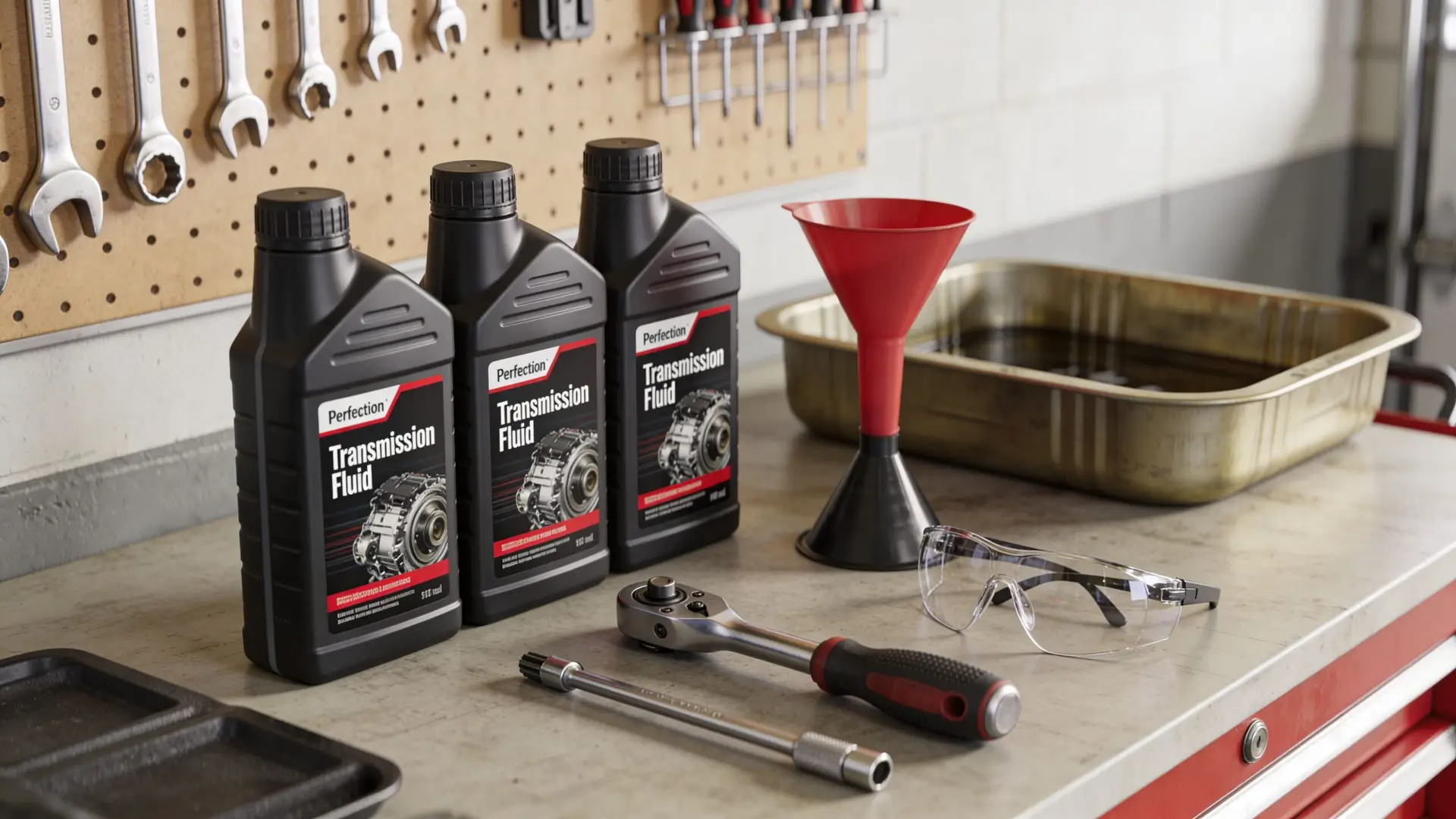
At minimum, set out these basics:
- Correct OEM-specified ATF. This is the big one. Use the exact fluid your manufacturer calls for, such as Dexron-family fluid where specified or brand-specific fluid like ATF+4 where required. Don't guess.
- Transmission filter and pan gasket if your transmission has a serviceable filter.
- Large drain pan or catch container with enough room for a full exchange.
- Socket set and ratchet for pan bolts and brackets.
- Torque wrench for reinstalling the pan correctly.
- Funnel with a long neck or hose so you can refill cleanly.
- Clear hose if you're doing a cooler-line flush and need to route old fluid into a container.
- Brake-clean-safe shop towels or lint-free rags for cleanup.
- Nitrile gloves and safety glasses because ATF gets messy quickly.
- Jack, jack stands, and wheel chocks if the vehicle must be raised.
A level work surface matters. Fluid level checks are only meaningful if the vehicle sits level.
The fluid choice is not a small detail
The fastest way to create trouble is to treat transmission fluid like engine oil and assume "close enough" will work. It won't. Automatic transmissions depend on the fluid's friction characteristics and additive package. The wrong fluid can change how clutches apply and how valves respond.
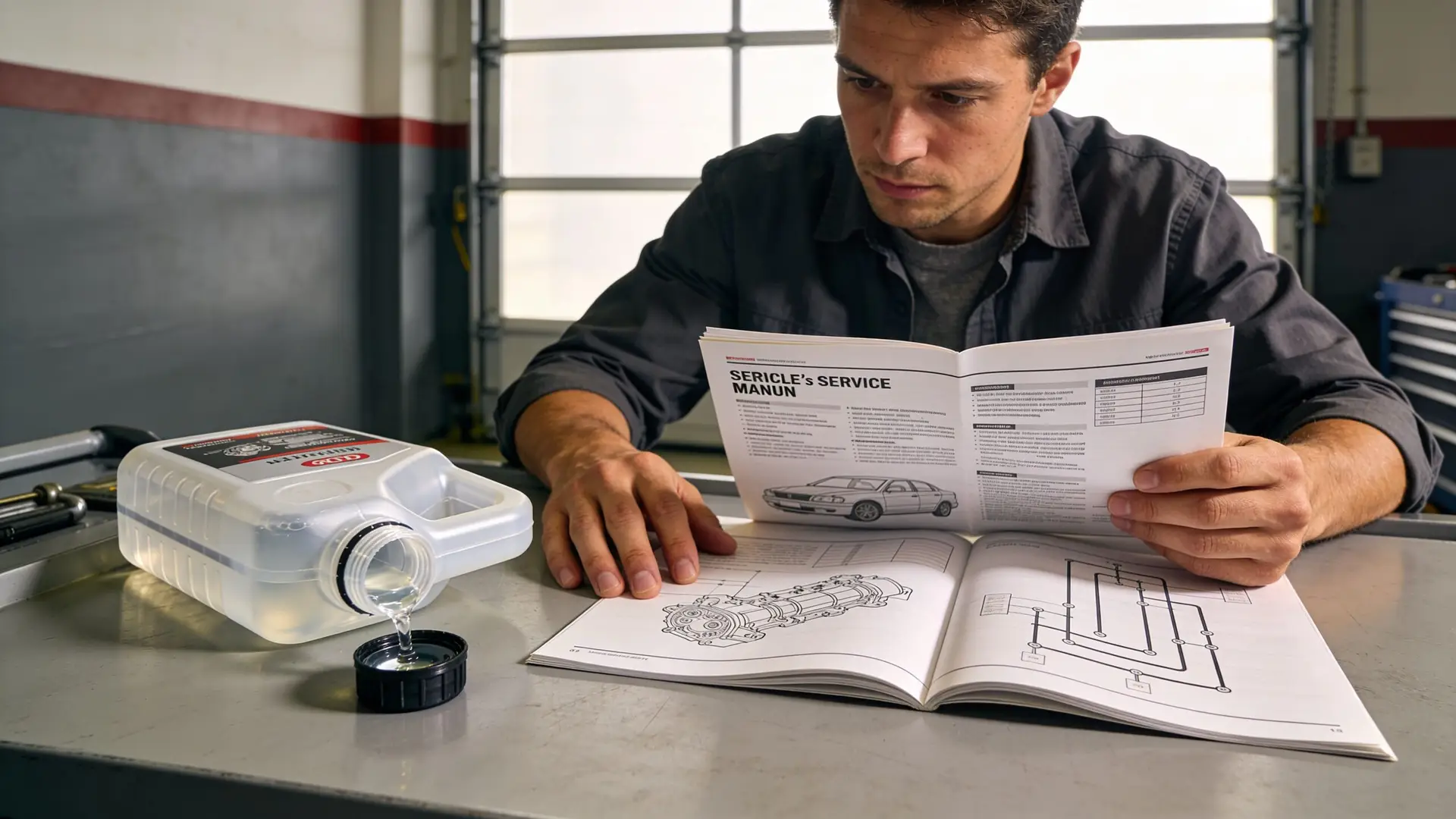
If the bottle says "multi-vehicle," don't treat that as automatic permission. Verify it against your owner's manual and service information. If your transmission is known to be picky, use the exact spec and brand type you can confirm.
I've seen careful DIYers do everything right mechanically and still create shifting complaints because they used fluid that was merely compatible on the label, not correct for that transmission.
Parts worth replacing every time
If your transmission has a serviceable filter, replace it. If the pan gasket is removable, replace that too unless your service information clearly calls for a reusable style and it's still in excellent condition.
Skipping the filter means leaving old debris in the system. Reusing a questionable gasket means risking a leak that forces you right back under the car.
A good prep checklist looks like this:
| Item | Why it matters |
|---|---|
| Correct ATF | Protects shift quality and clutch operation |
| New filter | Keeps old contamination from circulating |
| New gasket | Prevents leaks after reinstall |
| Torque wrench | Helps avoid stripped threads and warped pans |
| Catch container | Keeps the process controlled and measurable |
Safety and setup choices that save trouble
A transmission flush is not the job to improvise through. Keep the vehicle stable, keep the exhaust area clear, and keep fluid containers labeled so you don't mix old and new ATF.
If you have to identify cooler lines, take your time. Clean the area first so you can see fittings and routing. On some vehicles, access is easy. On others, it's cramped enough that a home garage turns a straightforward service into an aggravating one.
Your Step-by-Step Guide to a Manual Transmission Flush
The manual flush most capable DIYers mean is really a cooler-line exchange on an automatic transmission. It combines a pan service with a controlled fluid exchange through the cooler circuit. Done properly, it can exchange up to 10 quarts in under an hour, replacing a substantial share of a transmission system that may hold 12 to 16 quarts, with some drivers seeing real-world MPG gains of 1 to 2% from smoother operation, as shown in this DIY flush demonstration.
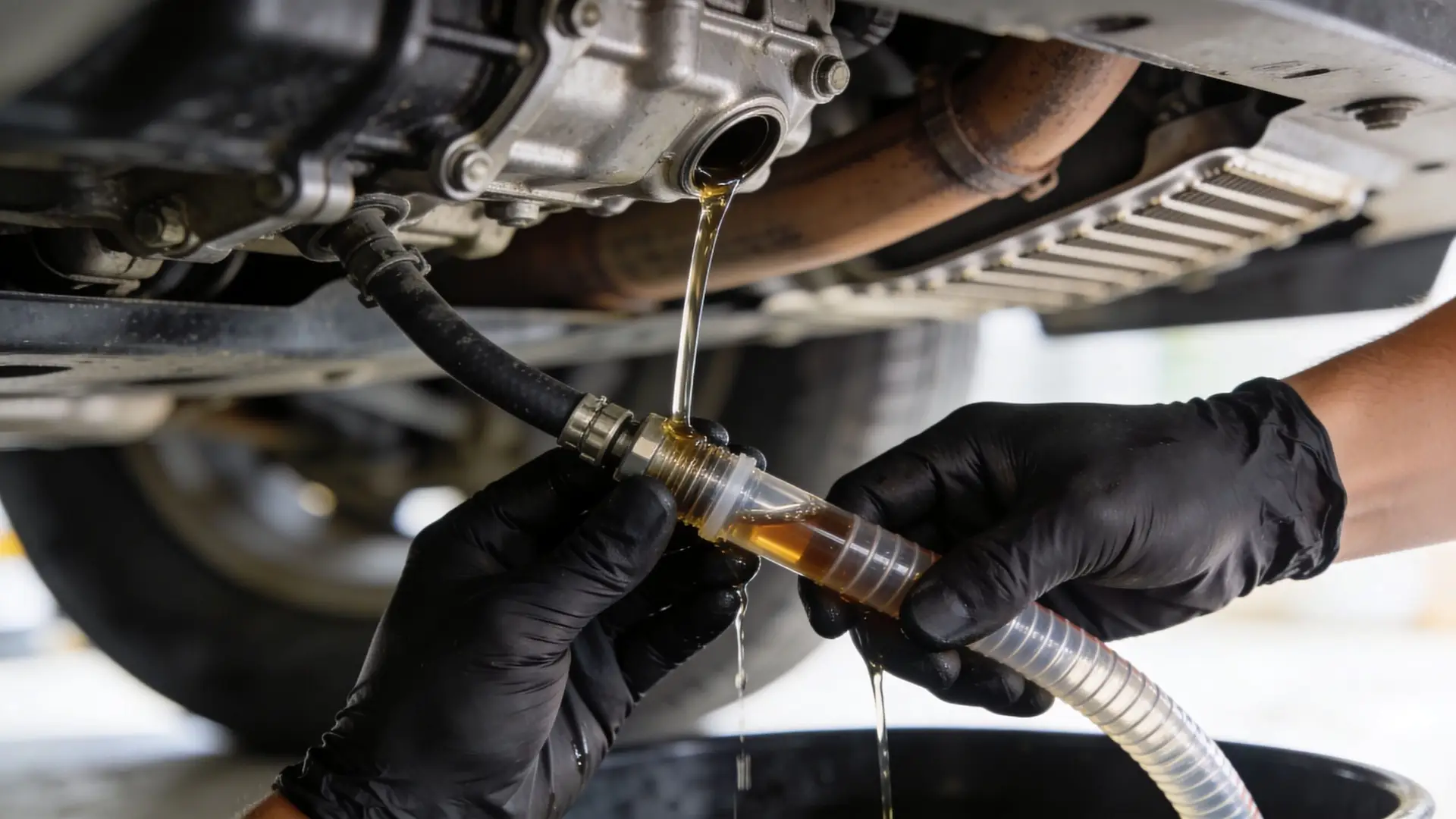
The idea is simple. You remove what you can from the pan, service the filter, then let the transmission's own pump move old fluid out through a cooler line while you add fresh fluid back in. You're not blasting the system. You're exchanging fluid in a controlled way.
Warm it up and check the basics
Start with the vehicle at a normal warmed-up state, not stone cold. A short idle period is enough to get the fluid moving better and make the initial level reading more meaningful. Park on level ground, set the brake, and chock the wheels.
Before touching anything, inspect these points:
- Fluid appearance. Bright red or pink fluid is one thing. Dark, burnt-smelling fluid is another.
- Current symptoms. Delayed engagement, slipping, or shuddering changes the risk calculation.
- Pan access. Make sure you can remove the pan and reach the cooler line safely.
If the transmission already has severe symptoms, don't continue just because you've gathered the parts.
Drain the old fluid from the pan
Raise and support the vehicle safely if needed. Set the drain pan under the transmission pan. If there's a drain plug, remove it first. If not, loosen pan bolts gradually so one side drops first and the fluid can pour in a controlled way.
Most of the mess in this job happens right here. Go slow.
Once the flow slows down, remove the remaining bolts and lower the pan carefully. Expect more fluid to spill when the pan tilts.
Clean the pan and inspect what you find
With the pan off, inspect the bottom carefully. Many pans have a magnet. Clean it. Wipe out the pan with appropriate cleaner and shop towels. Don't wash transmission parts with water.
What you're looking for:
- Normal fine gray paste on the magnet. That's common wear material.
- Heavier metallic debris or visible shavings. That points to internal wear.
- Burnt odor and dark residue. That suggests overheated fluid and a harder life inside the unit.
This inspection matters as much as the fluid change itself. It tells you whether you're doing maintenance on a healthy transmission or trying to service one that's already failing.
Replace the filter and gasket
Remove the old filter. Some filters pull straight down. Others use bolts or clips. Keep the area underneath ready because more fluid usually comes out when the filter releases.
Install the new filter carefully and make sure it's fully seated. Then prep the pan and gasket surfaces. If the transmission uses a traditional gasket, align it cleanly and reinstall the pan by hand-starting all bolts first.
Never run pan bolts down with force just to "pull the gasket into place." That's how threads get damaged and pans warp.
A clean, even pan install beats a fast one every time.
Set up the cooler-line exchange
This is the heart of how to do a transmission flush without a dedicated machine. You disconnect the transmission cooler return or outlet line, depending on the vehicle's design, and route the old fluid into a waste container through clear hose.
At the same time, you add fresh fluid through the fill point or dipstick tube.
If you're comfortable with service procedures on other systems, the same mindset applies here. Follow a clean process, verify direction of flow, and don't skip setup steps. This step-by-step flushing guide for other vehicle systems is a good reminder that flushing work always comes down to controlled flow, clean routing, and careful refill.
Before starting the engine, add back enough fresh ATF to replace what came out with the pan drop. You don't want the pump starting low.
Exchange the fluid in short cycles
Have a helper if possible. One person watches the hose and waste container. The other adds fresh ATF.
Run the engine briefly and let old fluid pump into the container. Shut the engine off before the flow sputters or the output volume gets too low. Add fresh fluid. Repeat in short cycles.
This is the practical rhythm:
- Start briefly and monitor output color and flow.
- Stop the engine before you risk running the pump low.
- Measure what came out and add about the same amount back in.
- Repeat until the outgoing fluid looks clean and fresh.
You'll usually see the old fluid change from darker used ATF to a clearer red or pink tone. Keep the process gentle and controlled. This is not the time to rush because you're close to done.
Final fill and level check
Reconnect the cooler line securely. Wipe everything down so you can spot leaks later. Refill to a safe starting level, then start the engine and move the shifter through all gear positions while the vehicle remains stationary. That circulates fluid through the passages and clutch circuits.
Then bring the fluid to the proper checking condition required by the vehicle and verify the level on the dipstick or service port procedure. Add small amounts as needed. Don't guess and don't overfill.
A proper finish includes:
| Final check | What you want |
|---|---|
| Pan area | Dry gasket rail, no drips |
| Cooler connection | Fully seated, no seepage |
| Shift feel | Normal engagement, no flare |
| Fluid level | At manufacturer spec under correct conditions |
What a good result feels like
A successful flush doesn't always feel dramatic on the test drive. Sometimes the best outcome is smoother, more consistent shifting with less hesitation when selecting drive or reverse.
Good signs after service include:
- Cleaner, quicker engagement
- More consistent shift timing
- No new leaks
- No whining, flare, or abnormal slip after level verification
If the transmission acts worse immediately after service, stop driving it until you confirm the fluid level, cooler-line connection, and fluid type.
Common Transmission Flush Mistakes and How to Avoid Them
Most DIY transmission mistakes don't come from lack of effort. They come from one bad assumption. A person assumes all red fluid is close enough. They assume tighter bolts are safer. They assume the old filter can stay because the fresh fluid will "clean things out." That's how a maintenance job turns into a comeback.
Skipping the filter
This is the mistake I worry about most on serviceable transmissions. A critical failure point in transmission service is not replacing the filter, because old metallic shavings and clutch material remain in circulation and reduce the value of the flush, as noted in this transmission service procedure reference.
Fresh fluid can't do its job well if contamination is still sitting in the filter or trapped where it immediately reenters circulation.
If your transmission has a serviceable filter and you skip it, you didn't really finish the service.
Using the wrong fluid
This one can create harsh shifts, delayed shifts, or clutch apply problems that didn't exist before. Some transmissions are especially sensitive to fluid friction characteristics. The bottle's marketing language doesn't matter. The spec does.
If you can't confirm the exact ATF, wait. That's cheaper than guessing.
Over-tightening pan bolts and damaging threads
Transmission pans don't need brute force. They need clean threads, even gasket alignment, and proper torque. Tightening bolts unevenly can warp the pan rail. Tightening them too much can strip the case threads.
That creates a much uglier repair than a fluid service.
A smart reinstall habit looks like this:
- Start bolts by hand so you know they aren't cross-threaded.
- Snug in stages rather than taking one corner all the way down.
- Use the service specification instead of feel alone.
Confusing "cleaner fluid" with "fixed transmission"
A flush is maintenance. It is not a mechanical repair. If a transmission already has internal wear, no fluid exchange will rebuild clutches, restore damaged seals, or repair worn hard parts.
Drivers often misread this. The transmission was already failing. The service just made the condition more obvious, or failed to hide it any longer.
Missing the post-service checks
Some people finish the refill, see no puddle, and call it done. That's not enough. You need to verify operation.
Do these checks before declaring victory:
- Cycle through all gears while parked to circulate fresh fluid
- Inspect pan rail and cooler-line fittings with the engine running
- Test drive gently and pay attention to shift timing and engagement
- Recheck for leaks afterward once the vehicle is back in the work area
One more hard truth. If you don't have a reliable way to set fluid level on a sealed or temperature-dependent transmission, you may be doing only half the job.
DIY Flush vs Professional Service Which Is Right for You
Here, the fundamental decision is made. Many articles jump straight into how to do a transmission flush, but the better question is whether your vehicle should get a drain-and-fill, a DIY cooler-line flush, or a professional machine service at all.
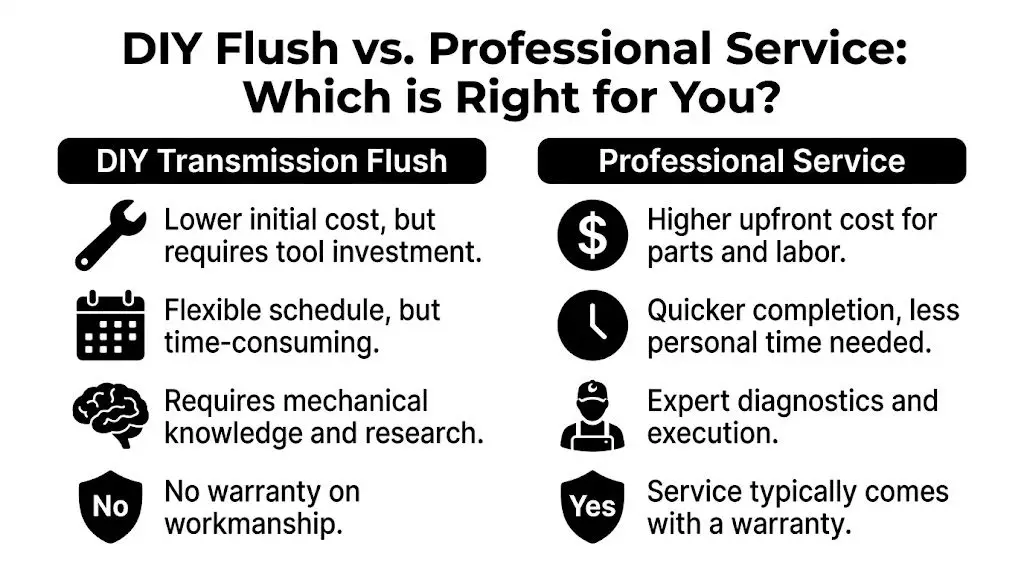
Most online guides blur the line between these choices. They shouldn't. A drain-and-fill removes only 30 to 50% of old fluid, while a professional machine flush can exchange over 95%, but the more aggressive method may dislodge deposits in older neglected units, according to this comparison of drain-and-fill versus flush methods.
The three choices and when they fit
Here's the practical framework I use.
| Service type | Best for | Main drawback |
|---|---|---|
| DIY drain-and-fill | Older vehicle with uncertain history, mild concerns, or cautious first service | Leaves a lot of old fluid behind |
| DIY cooler-line flush | Well-maintained vehicle, confident DIYer, serviceable design | Requires correct setup and fluid management |
| Professional machine flush | Vehicle with known history and a transmission that benefits from a thorough exchange | Wrong candidate can be a poor fit without inspection |
When a drain-and-fill is the smarter move
If the vehicle is older, the service history is unknown, and the transmission still works reasonably well, a basic pan service can be the safer first step. You get to inspect the pan, replace the filter where applicable, and avoid a full-system exchange right away.
This is especially reasonable when:
- The fluid is old but not badly burnt
- The vehicle has been neglected and you don't want to shock the system
- You want inspection more than maximum fluid exchange
It doesn't refresh the whole system, but sometimes caution is the right call.
When a DIY cooler-line flush makes sense
A DIY flush works best when the transmission has been serviced before, still shifts normally, and you can verify the proper fluid and procedure. In that situation, the cooler-line method can be a solid middle ground between partial service and machine equipment.
This option fits the owner who:
- already does their own maintenance,
- has enough room and tools to work cleanly,
- and understands that fluid level accuracy matters as much as the exchange itself.
When professional machine service is worth it
Machine-based service has real advantages. It can exchange fluid very thoroughly, and in a shop setting a technician can monitor condition, quantity, and connections closely. That's useful on vehicles where access is poor, where the transmission is sealed, or where the owner wants the exchange handled with less trial and error.
A good overview of what shops typically handle during that visit is in this guide on what a transmission service includes.
The right professional service isn't just "someone else does the work." It's also inspection, fluid verification, and a second set of trained eyes on whether the transmission should be flushed at all.
The decision framework that actually helps
Ask these questions in order:
Does the transmission have obvious symptoms already?
If yes, stop thinking maintenance first and think diagnosis first.Do I know the service history?
If yes, a fuller exchange is often easier to justify. If no, caution matters more.What does the fluid and pan inspection show?
Minor normal wear is one thing. Heavy debris changes the plan.Can I set the final fluid level correctly on this exact transmission?
If not, DIY becomes much less attractive.Am I choosing based on vehicle condition or just price?
Cheapest is not the same as safest.
That's the part many people miss. The right method depends less on what sounds best online and more on the age, maintenance history, and current behavior of your transmission.
When to Skip the DIY and See a Professional in Plano
Some vehicles shouldn't get a driveway flush, even if you're comfortable with tools. The warning signs usually show up before the pan comes off.
Stop and get the transmission evaluated if you notice any of these:
- Burnt-smelling fluid
- Very dark fluid
- Noticeable metal shavings in the pan
- Slipping under load
- Shuddering during shifts
- Hard engagement into drive or reverse
- A transmission-related warning light or check engine light
Those signs usually point to more than old fluid. They suggest wear, overheating, pressure loss, or internal damage. In that situation, a flush won't repair the root problem. It may even make the transmission behave worse because fresh fluid can't compensate for worn internal parts.
Sealed transmissions are another reason to be cautious. If level setting depends on a specific temperature window or a fill procedure that you can't confidently verify, the safer move is professional service. The same goes for vehicles with poor cooler-line access or transmissions buried behind splash shields and tight packaging.
A local service overview can help if you want to understand your options before booking. This page on transmission service in Plano gives a good picture of what a shop can inspect and handle.
One more thing. If you're hoping a flush will cure a transmission that's already slipping badly, don't spend money based on hope alone. Get it diagnosed first. A shop can determine whether you're dealing with overdue maintenance, a valve body issue, internal wear, or something else entirely.
Transmission Flush Frequently Asked Questions
Can I do this on a sealed transmission with no dipstick
Sometimes, but it's often not the best DIY project. Sealed units usually require a very specific fluid temperature and fill procedure to set the final level correctly. If you can't verify that procedure exactly, leave it to a shop.
Should Texas drivers inspect transmission fluid more often
Heat is hard on fluid, and local driving conditions don't help. Even if you follow the factory maintenance plan, it's smart to inspect fluid condition periodically, especially if your driving includes heavy traffic, short trips, or towing. You don't need a panic schedule. You do need regular attention.
Can I save money with universal ATF
Maybe on paper. Not always in real life. Transmission fluid is one area where "universal" can become expensive if the friction characteristics aren't right for your unit. Use fluid you can verify against the manufacturer's spec.
Will a transmission flush fix hard shifting
Sometimes hard shifting improves if old fluid was the main problem. Sometimes it doesn't, because the cause is mechanical or electronic. A flush is maintenance, not a guaranteed cure.
What should I watch after service
Watch for leaks, delayed engagement, flare between gears, shuddering, or any change that feels worse instead of better. Also check fluid condition again at the next inspection. If you're organizing all your vehicle costs, not just maintenance, this Plano Car Insurance Ultimate Guide is a practical local resource alongside your service planning.
If your transmission is due for service, showing warning signs, or you're not sure whether a drain-and-fill or full flush is the safer move, Express Lube & Car Care can help with honest guidance, skilled inspection, and no-appointment convenience for Plano drivers.