

You’re probably here because you’re trying to make a smart call, not because you want to cut corners for fun.
Maybe you looked at the price of oil and a filter, glanced at the clock, and thought, “If I drain the oil and pour in fresh oil, do I really need to change the filter too?” That question comes up all the time. It’s a fair question.
Sometimes the car is due. Sometimes payday isn’t here yet. Sometimes you’ve already got the oil in the garage but forgot to buy the filter. And sometimes you’ve heard somebody say they always change oil without changing filter and never had a problem.
The honest answer is that it depends on the situation, but most drivers should treat it as a bad habit, not a maintenance strategy. There are narrow exceptions. There are also real risks that don’t show up right away.
The Tempting Shortcut Answering a Common Question
A lot of drivers arrive at this question the same way.
They know the engine needs attention. They want to do something good for the car. But they also want to save a little time, skip one part purchase, or stretch maintenance until a better moment. So they ask whether changing the oil alone is “good enough for now.”
That thought makes sense. Oil is the part you can see. It gets dark. It drains out. You replace it and feel like you’ve done the important part.
The filter feels smaller, almost optional. It’s easy to think of it as a bonus item rather than part of the same job.
That’s where people get tripped up.
A modern oil change is really one service with two connected parts. Fresh oil helps only if the system carrying that oil is still clean and working properly. If you’re unsure how often your vehicle even needs service in the first place, this quick guide on how often to change oil is a helpful starting point.
The question isn’t just “Can I do it?” It’s “What risk am I taking for a very small shortcut?”
For some drivers, the answer may be manageable once. For many Plano commuters, family haulers, and stop-and-go drivers, the risk is higher than it looks. Heat, traffic, and repeated short trips make this a more personal decision than a generic internet answer suggests.
Understanding Your Engine's Circulatory System
The reason cars need oil changes is simple. Oil is doing dirty work every minute the engine runs, and the filter is the part that keeps that dirt from making another lap through the engine.
To understand the relationship, it helps to compare the engine to a circulatory system. Oil flows through narrow passages, reaches loaded contact points, carries away heat, and picks up contamination along the way. The filter works like the cleaning organ in that system. It removes some of what the oil collects before that material can keep circulating.
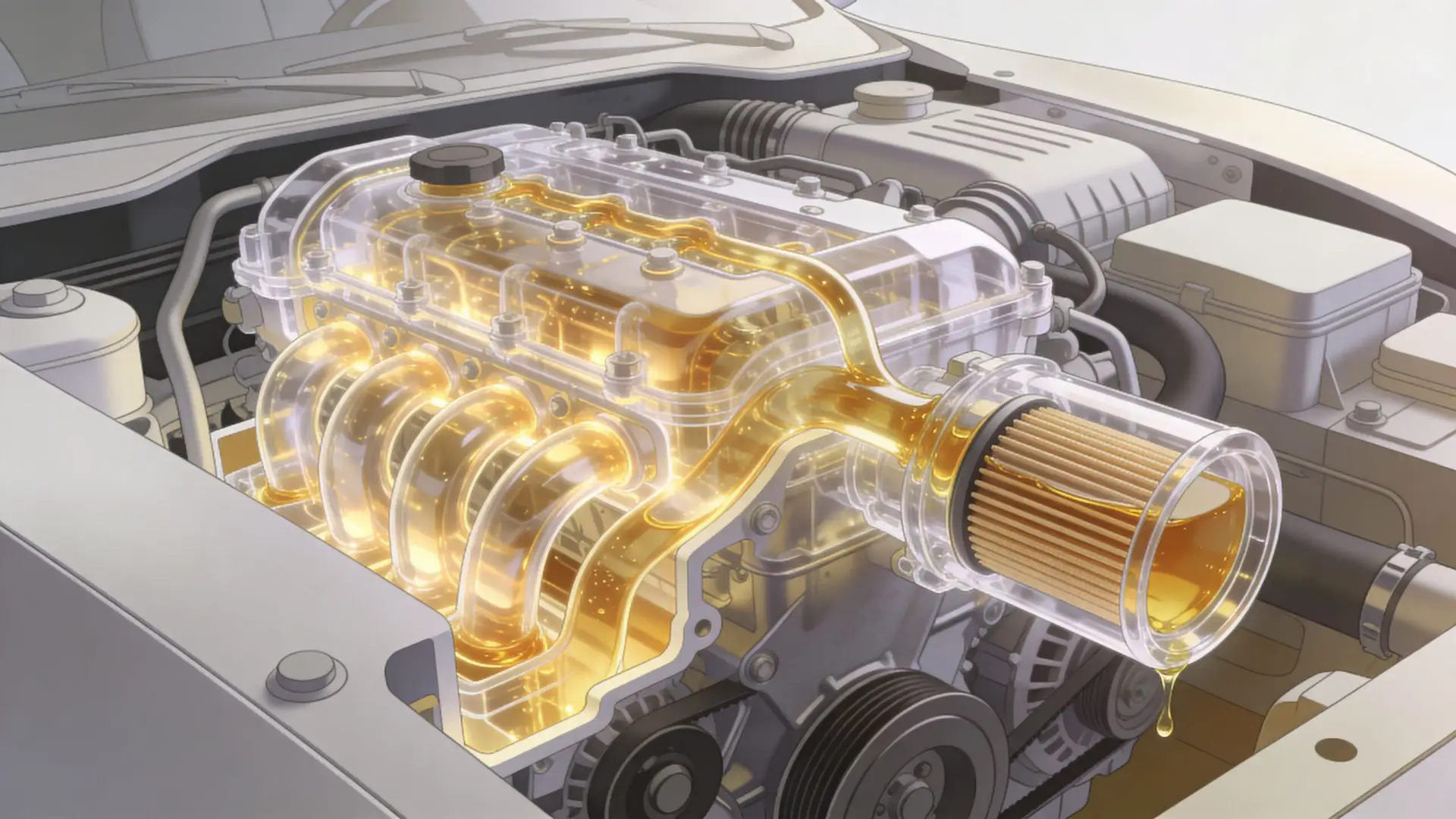
How oil actually helps
Motor oil has several jobs at once.
It forms a thin protective film between moving parts so metal surfaces do not grind against each other. It also helps carry heat away from parts that live under constant friction and combustion. Just as important, it suspends tiny byproducts from normal engine operation so they can be carried out of sensitive areas instead of sticking there.
That is the answer to why cars need oil changes.expresslubehaltom.com/blog/why-do-cars-need-oil-changes/). Over time, oil gets loaded with contaminants and loses some of its ability to protect, cool, and clean.
What the filter contributes
The filter is not a side item. It is part of the oiling system itself.
As oil circulates, the filter catches fine debris such as metal particles, carbon, and other residue created by wear and combustion. If the filter still has good capacity left, it keeps helping the oil do its job. If it is already partly loaded, fresh oil starts out in a system that is not fully refreshed.
A simple shop-floor comparison helps here. Pouring in new oil while keeping an old filter is a lot like mopping a floor with clean water after leaving the dirty mop head in the bucket. The water is new, but the cleaning system is not.
Why this matters more for Plano drivers
This point gets more personal in Plano than a generic maintenance article usually admits.
Summer heat, long idle time in traffic, and repeated short trips all put extra stress on oil. Under those conditions, clean flow matters. Filter condition matters. Oil pressure matters too, especially if you already drive an older vehicle or one with high miles. If you want a clearer picture of that side of the system, this guide on what causes low oil pressure in an engine explains what can happen when lubrication is not moving the way it should.
Why oil and filter service are usually paired
Oil carries contamination away from engine parts. The filter removes contamination from circulation. Those are two halves of one job.
That is why professional service usually replaces both at the same time. The savings from skipping a filter are small, but the margin for error gets smaller too, especially for Plano commuters dealing with heat and stop-and-go driving. At our shop, we would rather help you protect the engine properly once than save a few dollars now and leave you with more risk than you realized.
The Real Risks of Reusing an Old Oil Filter
Reusing an oil filter is the kind of shortcut that can look harmless in the driveway. The engine starts, the new oil goes in, and nothing seems wrong right away.
That is exactly why this choice fools people.
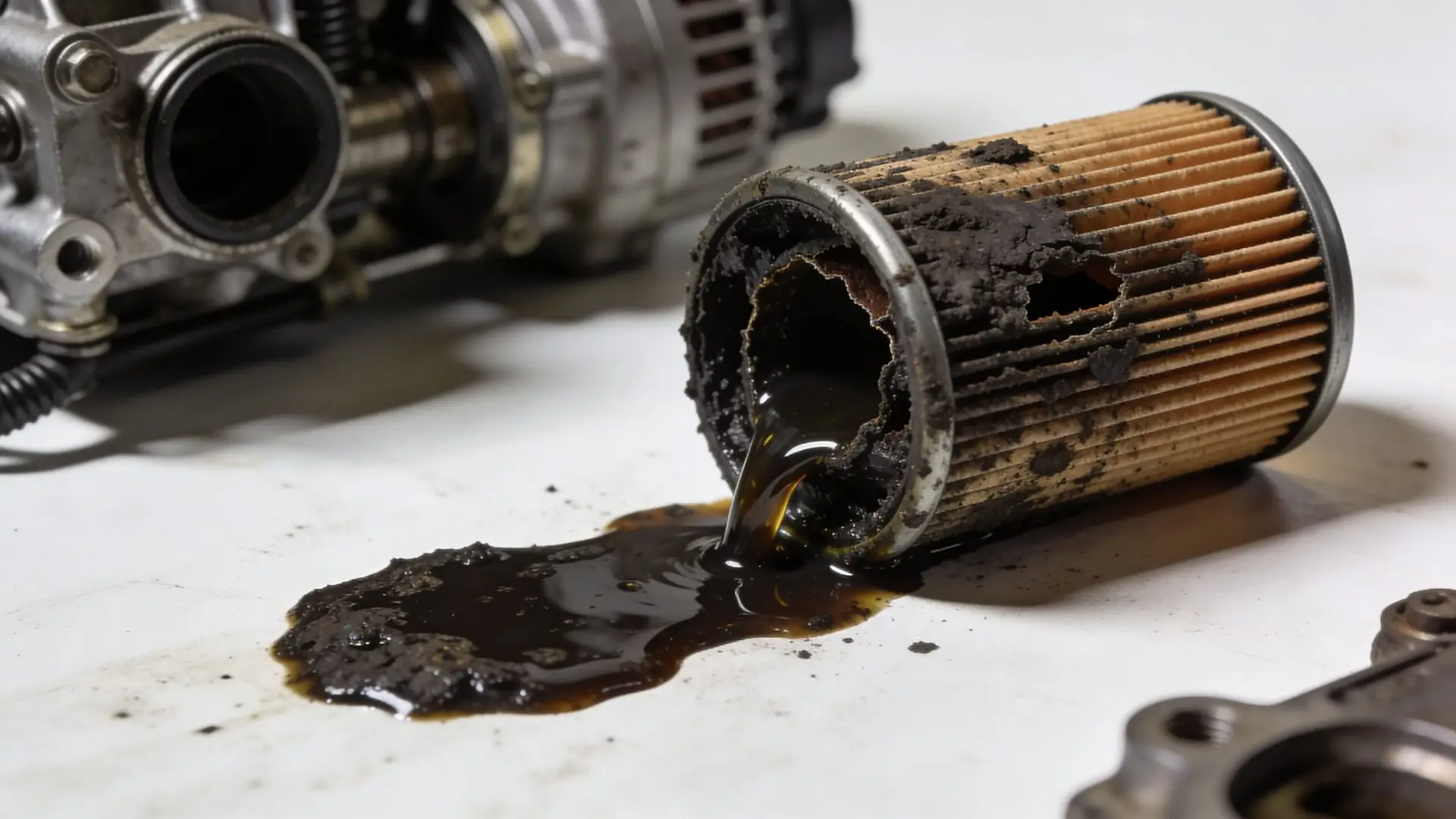
A used filter may still work, but you do not know how well
An old filter is not automatically bad. The trouble is that its remaining capacity is hard to judge from the outside.
A filter works a lot like a coffee filter that has already brewed several pots. It may still let liquid pass through, but it is no longer starting fresh. Some of its trapping ability has already been used up, and the material inside has already collected debris from the last stretch of driving.
Fresh oil cannot reset that wear inside the filter. It only shares the same housing with it.
The bigger concern is restricted flow or bypass operation
This is the mechanical risk that makes professional shops cautious.
Oil filters are built with a bypass valve so the engine can still get oil if the filter becomes too restricted. That safety feature protects against oil starvation, but it can also mean some oil is no longer being filtered the way drivers expect. Firestone has explained this general point in its consumer guidance, and mechanics see the same concern in the shop all the time.
So the main question is not just, “Will the engine get oil?” It is, “Will it get clean oil with normal flow under load, heat, and stop-and-go use?”
Those are not the same thing.
Plano driving makes a small shortcut riskier
This matters more around Plano than it would for a lightly driven car in mild conditions.
Heat, traffic, long idle time, and short errand trips all make the oiling system work harder. A partly loaded filter has less margin for those conditions. If your vehicle already has age, higher mileage, or a history of lubrication concerns, the gamble makes even less financial sense. Saving the cost of one filter is minor compared with the cost of diagnosing wear, startup noise, or pressure-related problems later.
That connection becomes clearer if you have ever dealt with a warning light or noisy operation. Our guide on what causes low oil pressure in an engine explains how flow problems can show up in ways drivers often dismiss at first.
The warning signs are easy to miss
A reused filter does not usually announce itself with one dramatic failure.
More often, the signs are subtle:
- Slightly noisier cold starts
- Oil that looks dirty sooner than expected
- Less confidence in heavy traffic or hot weather
- More uncertainty about oil pressure and filter condition
That last point matters. Good maintenance should remove uncertainty, not add more of it.
This quick visual does a good job showing the service logic behind replacing both parts together.
Reusing a filter usually saves very little money while asking you to accept more risk than you can actually measure. For many Plano drivers, that trade is not a good one.
Are There Any Exceptions to the Rule
You pull into your driveway after a long day in Plano traffic, the oil is due, and you realize the new filter is still sitting on a parts store shelf across town. That is usually when this question comes up. It is rarely a best-case maintenance plan. It is usually a rushed situation.
There are a few narrow cases where reusing the current filter may be mechanically reasonable. The key word is narrow.
A filter is not just a container you swap out because it is cheap. It is part of the engine’s cleaning system, much like replacing the water in a fish tank but leaving a dirty filter behind. If the oil is being changed well before the vehicle maker’s schedule, and the existing filter is still well within its own service life, some drivers may technically have room to reuse it once. That does not mean it is a smart default for Plano driving.
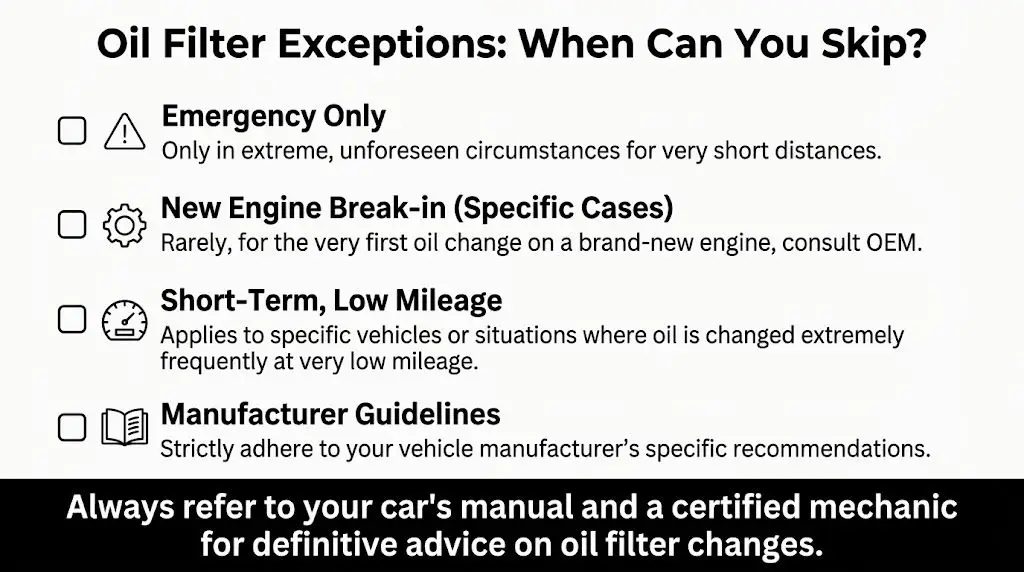
Situations that might qualify
An exception usually requires several favorable conditions at the same time:
- You are changing the oil early, not stretching it late. The filter has seen only part of its expected service interval.
- You know the filter’s age with confidence. You installed it, or you have clear records showing when it was installed.
- You are using the correct oil and a quality filter. Cheap parts leave less margin for error.
- Your driving is mild. Short errands in summer heat, long idle times, and stop and go commuting do not count as mild.
- The engine is healthy. No sludge history, no metal contamination concerns, and no lubrication-related warning signs.
Situations that usually do not qualify
For many Plano drivers, the exception falls apart fast:
- You are near the normal oil change interval
- You drive in heavy traffic, high heat, or repeated short trips
- You are not sure when the current filter was installed
- The engine has leaks, sludge history, startup noise, or wear concerns
- You are doing it to save the cost of one filter, not because the maintenance plan supports it
That local part matters. Plano heat and congestion put oil and filtration under more strain than gentle highway cruising in cool weather. A shortcut that looks harmless on paper can make less sense in real daily use here.
Decision Checklist
| Condition | Requirement for Exception | Your Answer (Yes/No) |
|---|---|---|
| Manufacturer interval | You are changing the oil earlier than the manual calls for | |
| Filter age | The current filter is still within its intended service life | |
| Driving conditions | Your use is mild, not severe heat, traffic, towing, or repeated short trips | |
| Engine condition | No known sludge, metal contamination, low oil pressure concerns, or internal wear issues | |
| Parts quality | You’re using the correct oil and a quality filter matched to the vehicle | |
| Confidence level | You know exactly when the filter was installed and why you’re reusing it |
If nearly every answer is not a clear yes, you are probably not looking at a real exception. You are looking at a compromise.
If you want to compare the normal procedure against a shortcut, our guide on how to change engine oil at home step by step shows what a complete oil service is supposed to include.
Often, this question comes from a rushed scenario, not a best-case one.
At our shop, that is the honest dividing line. A carefully documented, early oil change on a healthy engine is one thing. Reusing a filter during a hot-weather, stop and go Plano driving cycle just to save a few dollars is a very different risk, and usually not a good value.
An Emergency Guide for Draining Oil Without a New Filter
Sometimes life gets messy.
Maybe the oil is contaminated, maybe you had to drain it for another repair, or maybe you’re stuck and the replacement filter isn’t available yet. In that kind of emergency, the goal shifts from “perfect service” to damage control.
This is not a recommended routine. It’s a temporary measure.
What to do if you must proceed
- Check the owner’s manual first. Confirm the correct oil type and capacity before you add anything.
- Inspect the old filter carefully. If the canister is dented, the gasket is brittle, or there’s any sign of damage, stop and wait for the proper replacement.
- Keep everything clean. Dirt introduced during the job defeats the purpose of fresh oil.
- If the old filter was removed, reinstall it carefully. Make sure the sealing surface is clean and the gasket seats properly.
- Refill with the correct amount of oil. Don’t guess. Don’t overfill.
- Start the engine briefly and watch for leaks. Shut it down if you see drips or warning lights.
- Recheck the oil level after the engine settles. Top off only if needed.
What not to do
- Don’t treat it like a normal interval service
- Don’t drive longer than necessary before proper service
- Don’t reuse a damaged or questionable filter
- Don’t assume topping off and changing are the same thing
If you need a refresher on the normal process, this walkthrough on how to change engine oil at home is useful for comparing the emergency version with the proper full service.
The right mindset
Drive only as much as needed to reach proper service.
Schedule a full oil and filter change as soon as you can. The point of this emergency approach is to reduce immediate harm, not to create a new maintenance routine.
The Professional Standard at Express Lube and Car Care
A professional oil change isn’t just “someone else doing the same thing.”
The standard is different because the goal is complete service, consistent parts selection, and a lower chance of small mistakes that turn into expensive problems.
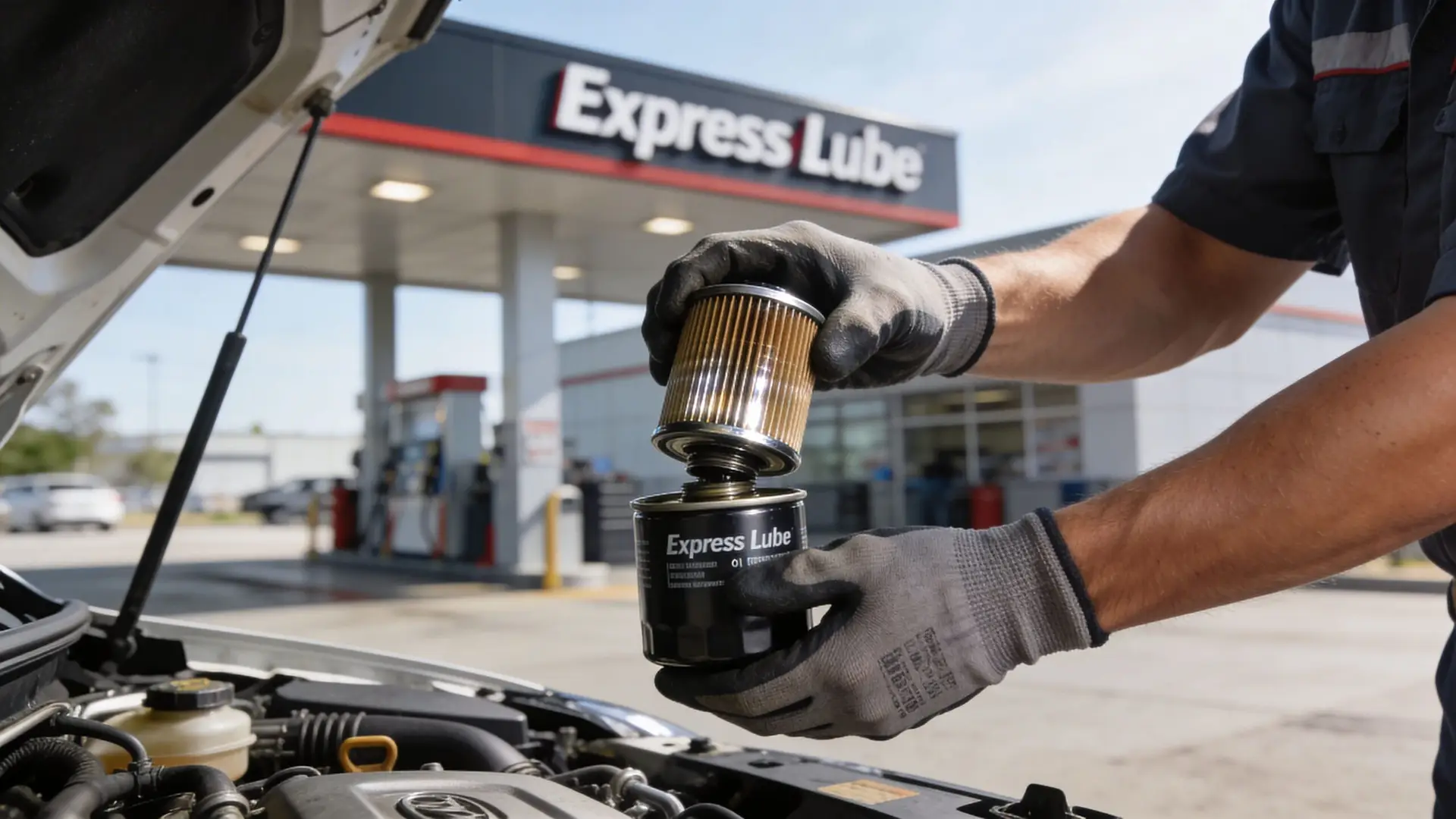
Why shops replace both together
Professional technicians usually change the oil and filter together because it removes more contamination in one visit and creates a clear maintenance baseline.
That matters for a few reasons:
- Consistency helps you track service intervals accurately.
- Warranty-minded care means fewer gray areas about whether maintenance was done properly.
- Inspection opportunity lets a technician catch leaks, worn components, or fluid issues while the vehicle is already being serviced.
A complete service also saves you from the “I’ll just do the filter next time” trap. That plan often gets delayed, forgotten, or confused with the next interval.
The local value is peace of mind
For a busy Plano driver, the biggest benefit isn’t just convenience.
It’s knowing someone checked the right oil, the right filter, the sealing surface, the fill level, and the immediate signs of trouble before you head back into traffic. That’s especially valuable when your car is a daily commuter, a family vehicle, or part of a work fleet.
Professional service removes guesswork. That’s often worth more than the filter itself.
Why the pricing argument is weaker than it sounds
Drivers often consider skipping the filter to save a little money or because they already have oil on hand.
That feels reasonable until you compare it with what you’re risking. The actual shortcut is small. The downside touches oil flow, contamination control, and long-term engine wear.
At Express Lube & Car Care in Plano, the professional option is also easier to justify because the shop offers $20 off oil change, discounts for military, first responders, and healthcare workers, and $25 off oil changes on Ladies Day every Wednesday. Add in no-appointment convenience, ASE-certified technicians, and premium parts, and the “shortcut” starts looking less practical than a proper visit.
The Smart Choice for Your Vehicle's Health
If you strip away the myths, the answer gets pretty simple.
Yes, it’s sometimes possible to change oil without changing filter. No, that doesn’t make it the smart default. For most drivers, especially in hot, busy local conditions, the risk is larger than the reward.
The filter isn’t a minor extra. It’s part of the engine’s contamination control system. Reusing it only makes sense in a limited, well-understood situation where the filter is still clearly within its service life and the vehicle isn’t being used under harsh conditions.
For everyone else, pairing fresh oil with a fresh filter is the safer call for engine life, reliability, and long-term value.
If you want a broader overview of what a complete service includes, the essential guide to an oil and filter change service lays out the basics well.
The short version is easy. Saving a little on a filter rarely beats protecting the engine you depend on every day.
Frequently Asked Questions About Oil Changes
Is topping off oil the same as changing it
No.
Topping off means adding oil because the level is low. That can help protect the engine between services, but it doesn’t remove old contaminants or clean out what the filter has already collected.
If the oil is due, topping off is a temporary help, not a substitute for service.
Does synthetic oil mean I can ignore the filter longer
Not automatically.
Synthetic oil can support longer service intervals, but the filter still has to match that interval and the way you drive. Extended-life products can change the conversation, but they don’t erase the need for a healthy filter.
The safer mindset is to treat the oil and filter as a matched pair unless you have a very specific reason not to.
Does a brand-new car still need the filter changed at the first service
Usually, yes.
People sometimes repeat old “break-in oil” stories and assume the first filter should stay on longer. In practice, the owner’s manual should decide this. If the manufacturer calls for standard oil and filter service, follow that.
With a new vehicle, guessing is the wrong move. Documented maintenance matters.
If my oil still looks clean, can I skip service
Not based on appearance alone.
Oil color by itself doesn’t tell you the whole story. Oil can look darker and still be serviceable, or it can look decent while the interval, contamination level, or driving conditions say otherwise.
Mileage, time, operating conditions, and the vehicle’s manual matter more than a quick glance at the dipstick.
What if I already changed the oil but left the old filter on
Don’t panic.
If the filter is relatively new and you did this by accident, the engine probably isn’t instantly harmed. But you should correct it sooner rather than later, especially if you aren’t sure how many miles are on that filter or you drive in harsh conditions.
The worst move is pretending it doesn’t matter. The better move is to schedule proper service and reset the maintenance baseline.
If you want fast, honest help with your next oil and filter service, Express Lube & Car Care makes it easy for Plano drivers to stop in without an appointment. You’ll get ASE-certified service, clear recommendations, and a complete job done the right way for your vehicle.