

At a fundamental level, the distinction is straightforward: antifreeze is the concentrated chemical compound, typically ethylene or propylene glycol, available for purchase. Coolant is the functional fluid circulating within your vehicle's radiator, which is a precisely formulated mixture of antifreeze and distilled water, most often in a 50/50 ratio.
To use an analogy, consider antifreeze as a concentrated syrup. By itself, it is too potent. Coolant is the final, correctly diluted beverage, ready for its intended purpose. Understanding this relationship is crucial for proper engine maintenance.
Antifreeze vs. Coolant: Defining the Core Concepts
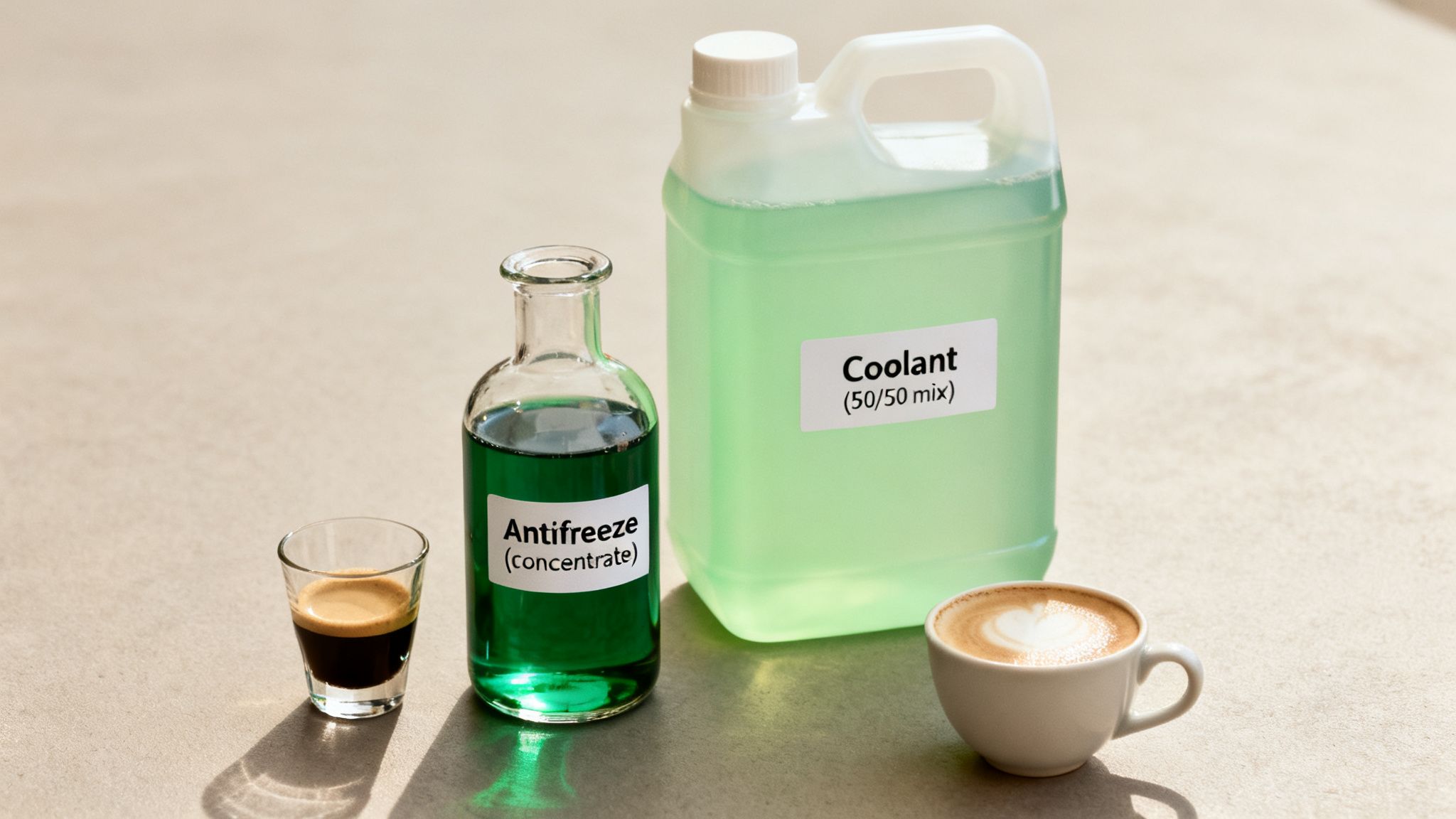
While the terms "antifreeze" and "coolant" are often used interchangeably in casual conversation, they are not synonymous. A clear understanding of their roles is the first step toward safeguarding your engine from potentially severe and costly damage.
Antifreeze is the raw, undiluted chemical agent responsible for regulating temperature at extreme ranges.
Coolant, conversely, is the final engineered product introduced into the vehicle's cooling system. It is a carefully diluted solution of antifreeze and water, designed specifically to maintain the engine's optimal operating temperature, preventing overheating in summer and freezing during winter.
The Importance of the Antifreeze-Water Mixture
A common misconception is that using 100% pure antifreeze offers maximum protection. This is incorrect. Pure antifreeze has poor heat transfer properties and can, paradoxically, lead to engine overheating.
Water is an excellent medium for heat absorption, but its natural freezing point (32°F / 0°C) and boiling point (212°F / 100°C) are insufficient for the demands of a modern internal combustion engine.
The optimal properties are achieved when the two are combined. A standard 50/50 blend creates a solution that lowers the freezing point to approximately -34°F (-37°C) and, within a pressurized cooling system, elevates the boiling point to over 265°F (129°C).
In essence, antifreeze provides the chemical properties for extreme temperature resistance, while water performs the essential function of absorbing and transferring thermal energy away from the engine.
This table provides a simple summary of the distinction:
| Term | Role in the Engine’s Cooling System | Composition |
|---|---|---|
| Antifreeze | The active chemical component that provides freeze and boil-over protection. | A concentrated glycol-based liquid. |
| Coolant | The ready-to-use fluid that circulates to manage engine temperature. | A diluted mixture of antifreeze and water. |
Ultimately, understanding this difference allows for more informed vehicle maintenance. It clarifies why both "concentrate" and "pre-mixed" formulations are sold and helps ensure your engine receives the precise thermal protection it requires for long-term reliability.
The Science of Engine Temperature Regulation
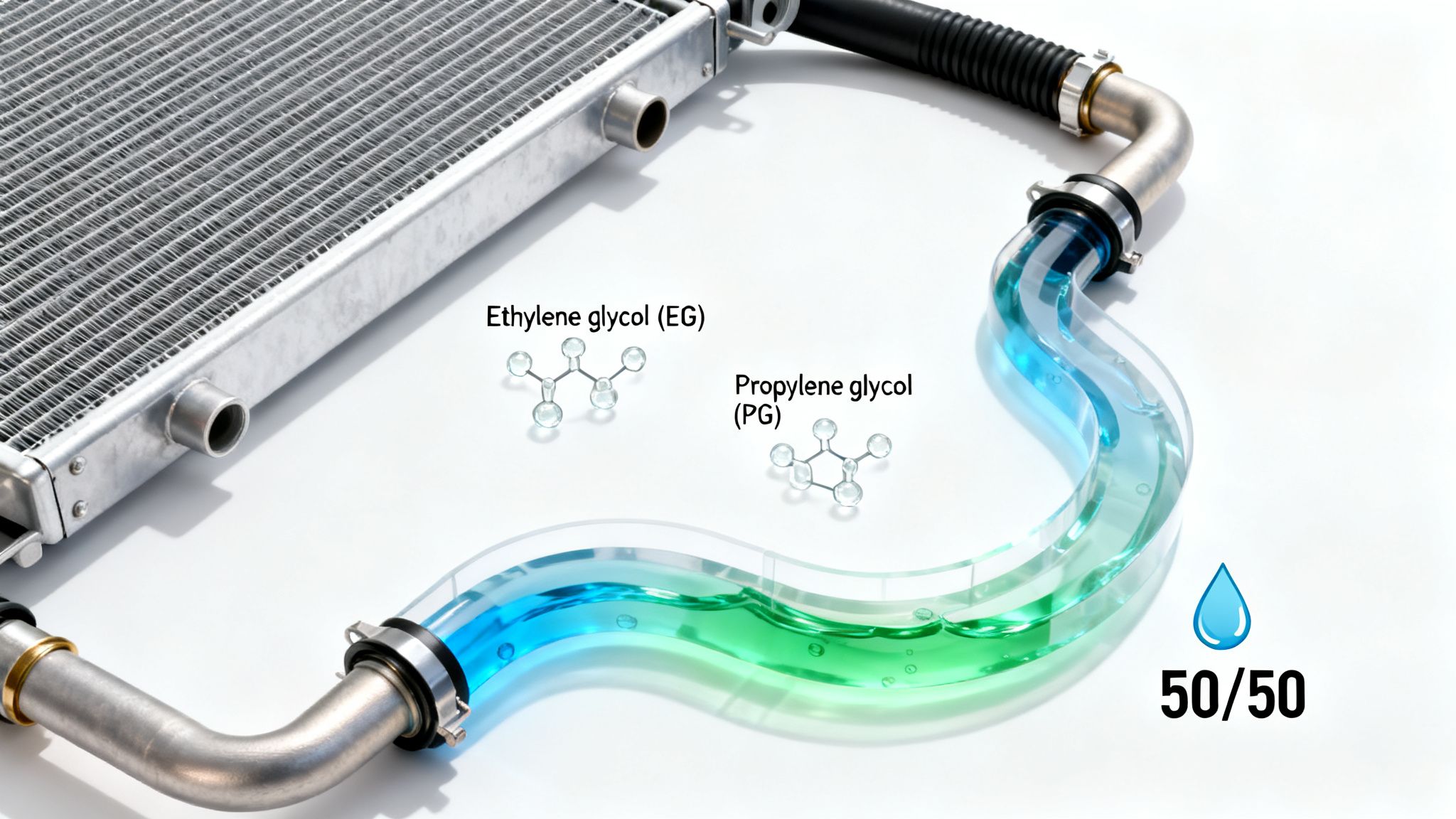
To fully grasp the difference between antifreeze and coolant, it is necessary to examine the chemistry that protects an engine. Maintaining an engine's optimal operating temperature—typically between 195°F and 220°F (90°C and 104°C)—is a critical function managed by the fluid circulating through the radiator and engine block.
The primary active ingredients in this fluid are alcohol-based compounds known as glycols. These form the basis of virtually all modern antifreeze formulations, with two types dominating the market.
Ethylene Glycol vs. Propylene Glycol
The most prevalent base for antifreeze is ethylene glycol. It became the industry standard due to its molecular structure, which is exceptionally efficient at transferring heat away from an engine's metal components. This superior thermal performance makes it the preferred choice for most vehicle manufacturers.
Ethylene glycol is so widely used that it accounts for approximately 64% of the global market share. It offers high effectiveness at a relatively low cost.
The primary alternative is propylene glycol. While it is slightly less efficient in terms of heat transfer, its main advantage is its significantly lower toxicity. This characteristic makes it a preferable option for consumers concerned with the safety of pets, wildlife, and the environment, though it typically comes at a higher price point.
The choice represents a trade-off: Ethylene glycol provides maximum thermal performance and economic value, whereas propylene glycol offers a safer, more environmentally conscious alternative.
The Critical Role of Water
An often-overlooked fact is that the glycol itself is not the primary agent of heat absorption. That role is fulfilled by distilled water. Water has a high specific heat capacity, meaning it can absorb a large amount of thermal energy before its own temperature rises significantly.
However, water alone is inadequate for automotive use. Its freezing and boiling points are too narrow, leaving an engine vulnerable to extreme temperatures. Combining antifreeze with water dramatically expands this operational temperature range.
The industry-standard 50/50 blend provides the ideal solution. It lowers the freezing point to about -34°F (-37°C) and, in a pressurized radiator system, raises the boiling point beyond 265°F (129°C). This properly mixed fluid is what is correctly termed "coolant."
Beyond Temperature: Additives and Corrosion Inhibition
Modern coolant is a complex formulation that extends beyond just glycol and water. It contains a crucial package of corrosion inhibitors and other chemical additives. These agents are vital for protecting the diverse metals within an engine and radiator—such as aluminum, iron, copper, and brass—from electrochemical degradation (rust) and scale buildup.
These additives prevent blockages in cooling passages and ensure the system operates efficiently over many years. However, these inhibitors deplete over time, which is why a periodic coolant flush is a critical maintenance task. To learn more about this service, you can read our detailed explanation of what a radiator flush entails.
Understanding Coolant Technology Beyond Color
Historically, coolant identification was simple: green was for older vehicles, while orange was for newer General Motors models. While this was a useful guideline in the 1990s, relying on color alone today can lead to significant engine damage. The crucial difference lies not in the dye but in the underlying chemical technology.
Selecting the correct coolant requires matching its additive chemistry to the specific metals and materials used in your engine. Introducing an incompatible coolant type can cause a chemical reaction between the additives, resulting in the formation of a thick, gelatinous precipitate. This sludge can obstruct radiators, heater cores, and narrow engine passages, leading to severe overheating.
The Primary Coolant Technologies
To make an informed choice, it is important to understand the three main categories of coolant technology, each developed to protect different engine designs and materials.
- Inorganic Additive Technology (IAT): This is the traditional green coolant. It utilizes silicates and phosphates to form a protective coating over the entire cooling system, preventing corrosion. It was effective for the cast iron and copper components of older vehicles but has a relatively short service life.
- Organic Acid Technology (OAT): Developed for modern engines with a higher proportion of aluminum, OAT coolants employ organic acids as corrosion inhibitors. Instead of coating all surfaces, these additives form a protective layer only where corrosion begins to occur, which significantly extends their longevity.
- Hybrid Organic Acid Technology (HOAT): As its name implies, HOAT is a hybrid formulation. It combines the long-lasting protection of OAT with a small quantity of fast-acting IAT silicates to provide comprehensive and immediate protection. It is often specified by manufacturers such as Ford and Chrysler.
The most critical rule is to never mix different coolant types. The chemical reaction between OAT and IAT formulations is precisely what creates the damaging gel. When uncertain, always consult your vehicle's owner's manual for the correct coolant specification.
Coolant Technology Comparison Chart
This chart outlines the key distinctions to help you identify the appropriate coolant for your vehicle.
| Coolant Technology | Acronym | Common Vehicle Applications | Typical Service Interval |
|---|---|---|---|
| Inorganic Additive Technology | IAT | Vehicles manufactured before the mid-1990s | 2 Years or 30,000 Miles |
| Organic Acid Technology | OAT | Most GM vehicles after 1995; many European models | 5 Years or 150,000 Miles |
| Hybrid Organic Acid Technology | HOAT | Many Ford, Chrysler, and some European models | 5 Years or 150,000 Miles |
This evolution in coolant chemistry reflects advancements in the automotive industry. As vehicles become more complex and efficient, the fluids that protect them must also advance. For instance, there is a growing demand for biodegradable, low-toxicity ingredients like propylene glycol, a market projected to grow at a CAGR of 7.5% through 2027. You can learn more about the future of antifreeze formulations to understand the trend toward specialized options.
Why the Correct Coolant Mixture is Crucial in Extreme Climates
For vehicle owners in regions like Plano, Texas, using the correct coolant is not merely a recommendation—it is essential for engine longevity. High summer temperatures place immense thermal stress on a vehicle's cooling system, making every drive a significant test of its capabilities.
Consider a scenario of heavy traffic on a hot afternoon. The engine generates substantial heat with minimal airflow to aid in cooling. In these conditions, the elevated boiling point of a properly formulated coolant is the only safeguard against catastrophic engine failure.
The Consequences of an Improper Mixture
Using the wrong type of coolant or an incorrect water-to-antifreeze ratio is a significant risk. If the mixture's boiling point is too low, the fluid can vaporize, a phenomenon known as "flashing to steam." This creates vapor pockets that impede or halt circulation, a condition that can quickly lead to warped cylinder heads and other severe engine damage.
This is why adherence to the manufacturer-specified coolant is non-negotiable for long-term engine health. It is a maintenance decision that can prevent a breakdown and a call for roadside assistance.
Employing the correct coolant is one of the most effective forms of preventative maintenance, particularly in a climate that regularly subjects an engine to its thermal limits.
Navigating the various coolant technologies can be complex. The following decision tree simplifies the selection process based on a vehicle's age and origin.
As the flowchart illustrates, matching the correct technology—IAT, OAT, or HOAT—to your specific vehicle is paramount to ensuring it receives the necessary protection.
How Climate Influences Market Demands
The need for specialized coolants is reflected in global market data. North America has become a significant force in the antifreeze market, with a projected growth rate of 9.48% between 2026 and 2033. The United States market alone is expanding at an annual rate of 6.3%, driven by diverse climate demands from freezing northern winters to hot southern summers. You can explore more detailed antifreeze market trends on cognitivemarketresearch.com.
Ultimately, understanding the difference between antifreeze and coolant is the foundational step in protecting your automotive investment. If you are ever uncertain about your vehicle's requirements, a professional inspection provides clarity. You can learn more about what is involved in our guide to heating and cooling system checks.
Essential Cooling System Health Assessments and Maintenance
Knowing the difference between antifreeze and coolant is valuable, but proactive maintenance is what preserves engine integrity. Over time, the protective additives in coolant degrade, leaving the engine vulnerable to corrosion, scale buildup, and damage from extreme temperatures.
Regular system checks are the most effective way to identify issues before they escalate into costly repairs. A visual inspection of the coolant reservoir is a good start, but a more thorough analysis is often required to ascertain the fluid's true condition. Neglecting the cooling system is a significant risk, particularly in demanding climates.
Indicators of a Failing Cooling System
Your vehicle often provides clear signals when the cooling system is compromised. Recognizing these signs is key to preventative action.
Be observant for these common warning signs:
- Rising Temperature Gauge: The most direct indicator. If the temperature gauge consistently moves toward the red zone, especially during idle or in traffic, the system is not dissipating heat effectively.
- Sweet, Syrupy Odor: A distinct sweet smell emanating from the vehicle after it has been running is a hallmark of an ethylene glycol leak.
- Puddles Beneath the Vehicle: Brightly colored fluid—often green, orange, pink, or blue—accumulating under your car is a definitive sign of a leak from a hose, the radiator, or the water pump.
- Visible Contamination: If the coolant in the reservoir appears rusty, murky, or contains particulate matter, its anti-corrosion additives have been exhausted. The fluid is no longer protecting the engine and may be causing damage.
Once coolant depletes its protective additives, it can become acidic. This acidic fluid then chemically attacks the metal surfaces in the engine and radiator, creating sludge that can block passages and cause overheating.
Professional Coolant Testing Procedures
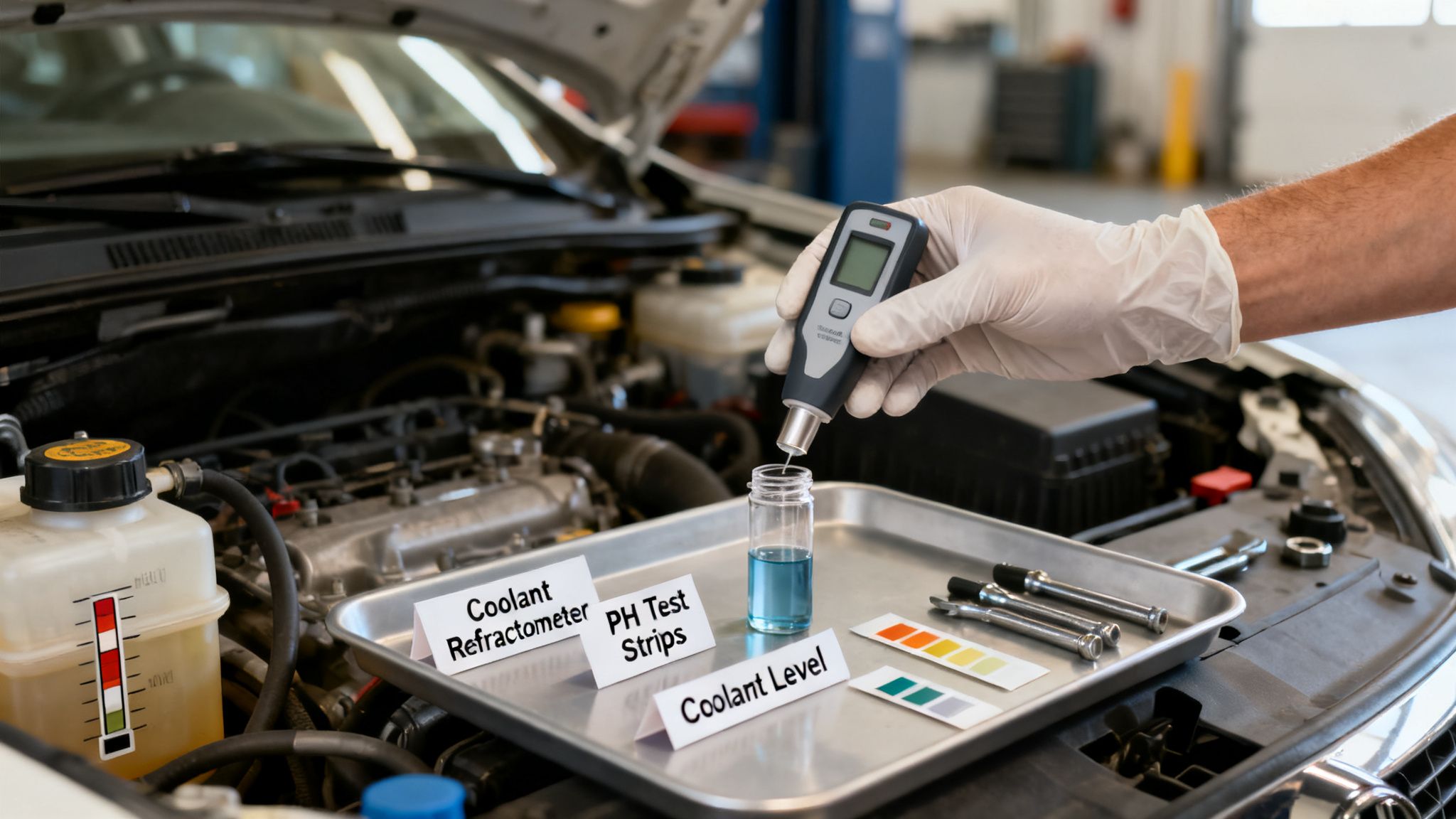
While a visual inspection is a useful habit, our technicians employ specialized tools to obtain precise measurements of your coolant's condition. These diagnostic tests determine whether your system is adequately protected or requires service.
For an accurate assessment, we utilize several key instruments.
- Refractometer: This optical device measures the precise freezing and boiling points of the coolant. It works by analyzing the refractive index of a fluid sample, which reveals the exact glycol-to-water concentration.
- Test Strips: Similar to pH test strips, these are immersed in the coolant to measure its acidity and confirm the continued efficacy of the corrosion inhibitors.
When tests indicate that the coolant's protective properties are depleted, simply adding more fluid is insufficient. The only way to restore full protection to the system is through a complete fluid exchange, or flush. To understand this process better, our guide explains in detail what a coolant flush does and its importance for long-term engine health.
Frequently Asked Questions About Coolant and Antifreeze
We receive many inquiries about antifreeze and coolant from customers. Here, we address some of the most common questions to provide clarity on proper cooling system maintenance.
Can I Simply Add Water to My Coolant Reservoir?
In an emergency situation, adding a small amount of distilled water can help you reach a service center. However, this should be considered a temporary measure only.
Adding water dilutes the critical 50/50 antifreeze-to-water ratio, thereby lowering the boiling point and raising the freezing point. This makes the engine more susceptible to overheating in summer and freezing in winter. Critically, it also weakens the concentration of corrosion inhibitors that protect the engine block and radiator.
If you have added a significant amount of water, it is highly recommended to have a professional flush the system and refill it with the correct, pre-mixed coolant.
What Occurs if I Mix Different Types of Coolant?
Combining different coolant technologies is highly inadvisable. The various types use incompatible chemical additive packages that can react negatively, forming a thick, gelatinous sludge. This is one of the most detrimental actions one can take against a cooling system.
This precipitate can clog the radiator, heater core, and the small coolant passages within the engine, leading to restricted flow, overheating, and potentially severe engine damage such as a warped cylinder head. Always adhere to the specific coolant type recommended in your vehicle's owner's manual.
How Often Should a Cooling System Be Flushed?
The recommended service interval depends on the vehicle's age and the type of coolant it uses. There is no universal schedule.
- Older vehicles using traditional green IAT coolant generally require a flush every 2 years or 30,000 miles.
- Newer vehicles using extended-life OAT or HOAT coolants can often go much longer, with intervals up to 5 years or 150,000 miles.
The owner's manual provides the manufacturer's official recommendation, but having a technician test the coolant's condition is the only definitive way to know when service is required.
Maintaining your cooling system in optimal condition is a critical aspect of vehicle ownership, especially in the Texas climate. The ASE-certified technicians at Express Lube & Car Care can inspect your coolant, verify you are using the correct type, and perform a professional flush to ensure your engine remains protected. Drive with confidence knowing your vehicle is prepared for any weather conditions. Visit us in person or online at https://www.expresslubeplano.com.