

An overheating car is a clear indication of a malfunction within the engine's cooling system. The root of the problem is often a straightforward issue like low coolant, but it can also signal a more complex failure, such as a broken thermostat or a malfunctioning radiator fan. When any component in this intricate system fails, your engine loses its ability to dissipate the extreme heat it generates, leading to a rapid and potentially damaging rise in temperature.
Decoding Your Car's Cooling System
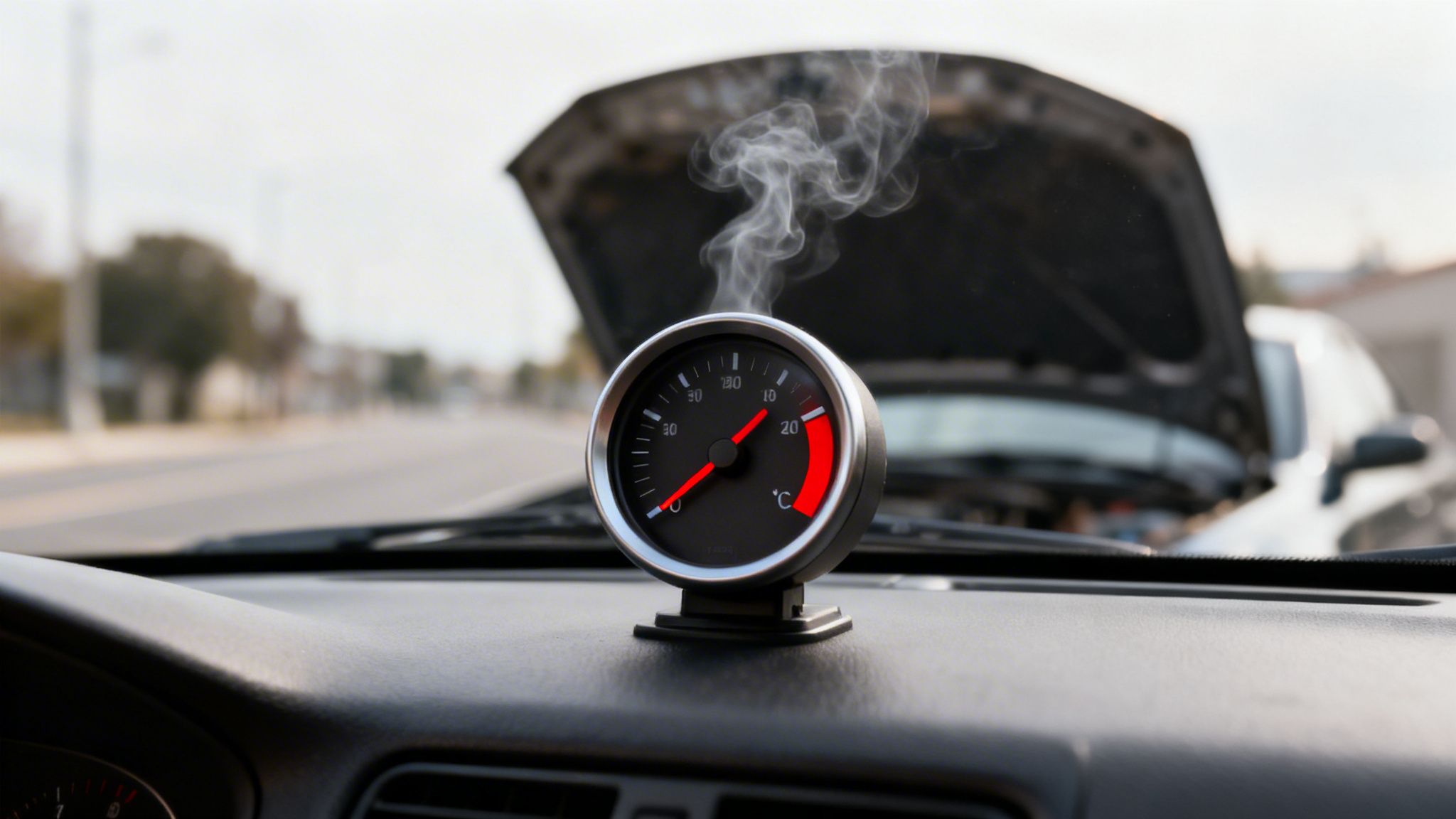
To understand why a car overheats, it's essential to first understand how its cooling system functions. This system operates as a circulatory network designed to manage engine temperature. A specialized fluid, known as coolant, circulates through passages in the engine block to absorb excess heat. The primary objective is to maintain the engine's optimal operating temperature, typically between 195 and 220 degrees Fahrenheit.
The heated coolant then travels to the radiator, where air passing through a network of fins dissipates the heat. Once cooled, the fluid is pumped back into the engine, and the cycle repeats. This continuous thermal regulation loop is vital for engine health. A disruption at any point in this loop will trap heat, causing the engine's temperature to rise to critical levels.
Common Culprits Behind Overheating
Several factors can interrupt this critical cooling cycle. Some are relatively minor and easily rectified, while others signify serious mechanical issues. Here are the most prevalent causes of engine overheating:
- Coolant Problems: This is the leading cause. The issue is typically low fluid levels, which can almost always be traced to a leak in a hose, the radiator, or the water pump.
- Failed Thermostat: This small valve regulates coolant flow. If it becomes stuck in the closed position, it prevents coolant from reaching the radiator, trapping heat within the engine.
- Radiator or Fan Issues: A radiator clogged with external debris or a non-operational cooling fan compromises the system's ability to dissipate heat, particularly in stationary traffic. You can learn more about the signs of radiator problems.
- Serious Mechanical Failures: More severe underlying problems, such as a failing water pump (the system's circulation pump) or a compromised head gasket, can also lead to significant overheating.
A car's engine generates sufficient heat to melt steel. The cooling system is engineered to manage this immense thermal energy. A seemingly minor failure can escalate rapidly, potentially causing thousands of dollars in engine damage.
To help you diagnose a potential issue, the following table correlates common symptoms with their most likely causes.
Quick Reference Guide to Overheating Symptoms and Causes
| Symptom You Notice | Most Likely Cause | Urgency Level |
|---|---|---|
| Temperature gauge in the red zone | Low coolant, faulty thermostat, fan failure | High |
| Steam or white smoke from under the hood | Boiling coolant from a severe leak or clog | Critical |
| A sweet, maple syrup-like smell | A coolant leak from a hose, radiator, or pump | High |
| Heater blows cold air when the engine is hot | Stuck thermostat or critically low coolant | High |
| Engine overheats only when idling or in traffic | Malfunctioning electric cooling fan | Medium |
| Milky, sludgy oil on the dipstick or oil cap | Blown head gasket (internal coolant leak) | Critical |
Use this guide as a preliminary diagnostic tool. However, due to the potentially severe consequences of overheating, a professional diagnosis is always the most prudent course of action.
The Critical Role of Your Engine's Coolant
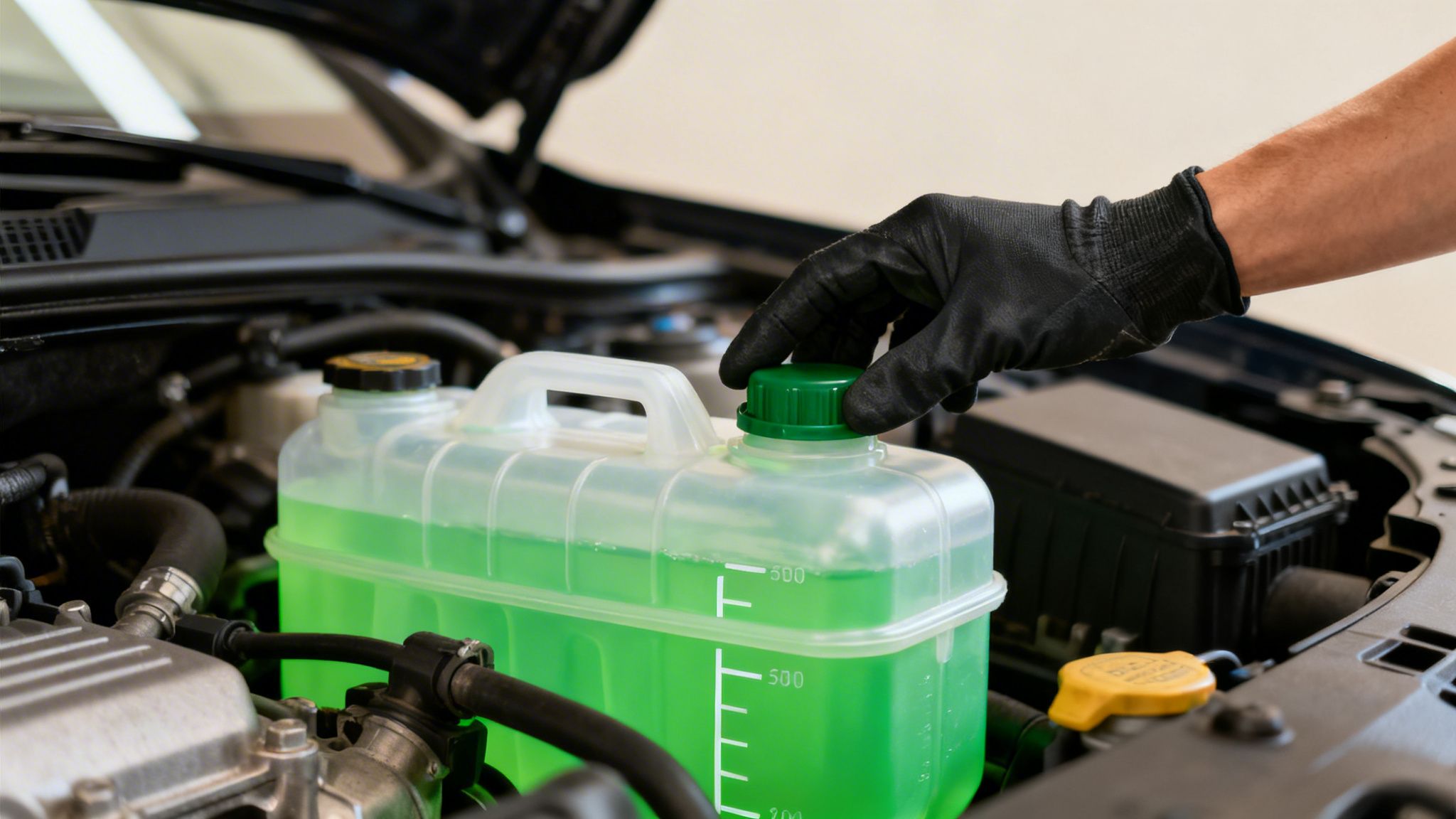
If the engine is the heart of a vehicle, then coolant is its lifeblood. This brightly colored fluid is tasked with one of the most vital functions under the hood: managing the tremendous heat generated by internal combustion. When investigating what causes overheating in cars, issues related to coolant are overwhelmingly the most frequent cause.
The engine operates by creating thousands of controlled explosions per minute. This process generates an immense amount of thermal energy that must be managed to prevent component damage. Coolant circulates through channels within the engine block, absorbing this destructive heat.
The heated fluid is then pumped to the radiator at the front of the vehicle, where airflow dissipates the thermal energy. This cycle repeats continuously, maintaining a stable operating temperature. If the coolant level drops or its flow is obstructed, heat becomes trapped, and the engine's temperature will rise uncontrollably.
Why Low Coolant Is a Major Red Flag
Statistically, the vast majority of overheating incidents are caused by an insufficient level of coolant. It is crucial to understand that low coolant is a symptom of a larger problem. The cooling system is a pressurized, closed-loop circuit; fluid should not simply "disappear." If you find yourself repeatedly adding coolant, a leak is present.
Low coolant is the primary reason for overheating-related roadside breakdowns. As the fluid level drops, the system's capacity to transfer heat is diminished, and engine temperatures can quickly exceed the critical threshold of 240°F (115°C).
Common sources of coolant leaks include:
- Aging Rubber Hoses: Over time, exposure to heat and pressure causes rubber hoses to become brittle, leading to cracks or pinhole leaks.
- Damaged Radiator: Corrosion or impact from road debris can create fractures in the radiator, allowing coolant to escape.
- Failing Water Pump: The seals within the water pump can wear out, resulting in a coolant leak, typically at the front of the engine.
- Cracked Reservoir Tank: The plastic coolant overflow reservoir can become brittle with age and crack under pressure.
Be vigilant for colored puddles under your parked vehicle or a distinct, sweet, syrupy odor from the engine bay after driving—a tell-tale sign of leaking coolant.
The terms "coolant" and "antifreeze" are often used interchangeably. Antifreeze is the concentrated ethylene glycol-based liquid. It is mixed with distilled water, typically in a 50/50 ratio, to create the coolant that circulates through the engine.
The Dangers of Using the Wrong Fluid
In an emergency, adding plain water can allow you to move the vehicle to a safe location. However, this should only be considered a temporary measure. Water alone lacks the chemical properties of a proper coolant mixture and does not provide the necessary protection against long-term engine damage.
Relying on water can lead to several problems:
- Boiling Over: Water boils at 212°F (100°C) at sea level. A 50/50 coolant mixture has a much higher boiling point of around 265°F (129°C), providing a critical safety margin, especially in warm climates.
- Corrosion and Rust: Formulated coolant contains corrosion inhibitors that protect the internal metal surfaces of the engine and radiator. Water, by contrast, accelerates oxidation, which can lead to blockages and component failure.
- Freezing in Winter: Antifreeze lowers the freezing point of the fluid, preventing it from expanding and potentially cracking the engine block in cold temperatures.
Each vehicle manufacturer specifies a particular type of coolant. Using an incompatible formula can trigger adverse chemical reactions, creating sludge and degrading seals. Ensuring you use the correct type and quantity of this vital fluid is the first line of defense against engine overheating.
How a Faulty Thermostat Can Cripple Your Cooling System
When an engine overheats, many people first suspect low coolant. However, a frequent cause is a small, mechanical component: the thermostat. This device functions as a temperature-sensitive valve, regulating the flow of coolant from the engine to the radiator.
Its operation is simple yet critical. When the engine is cold, the thermostat remains closed, trapping coolant within the engine block to help it reach its ideal operating temperature (typically around 195°F or 90°C) more quickly. Once that temperature is reached, a wax element inside the thermostat melts and expands, pushing the valve open. This allows hot coolant to flow to the radiator for cooling. This cycle of opening and closing maintains a stable engine temperature.
If the thermostat fails in the closed position, it acts as a complete blockage. Hot coolant is trapped within the engine, unable to circulate to the radiator to dissipate heat.
The Dangers of a Stuck Thermostat
When a thermostat fails to open, engine temperature can escalate with alarming speed. It makes no difference if the coolant level is correct or the radiator is functioning perfectly; if the coolant cannot circulate, the system is rendered ineffective. This single component failure can lead to catastrophic engine damage in a matter of minutes.
Thermostat failure is responsible for approximately 30% of all engine overheating incidents. After 50,000 to 100,000 miles, corrosion or mechanical wear can cause the device to fail. When it sticks shut, it traps immense heat, capable of pushing temperatures well past 250°F very quickly. For a more detailed explanation, you can learn more from automotive heating and cooling experts.
This sudden and extreme heat places enormous stress on engine components. Ignoring the warning signs of a failing thermostat can lead to some of the most significant repair costs a vehicle owner can face.
A stuck-closed thermostat is one of the most direct paths to severe engine damage. The intense, trapped heat can cause the aluminum cylinder head to warp or the head gasket to fail—transforming an inexpensive part replacement into a repair costing thousands of dollars.
How to Spot a Failing Thermostat
Fortunately, a thermostat often provides warning signs before it fails completely. Early detection can prevent a major mechanical failure and its associated costs.
Key indicators of a failing thermostat include:
- Erratic Temperature Gauge: If the temperature gauge fluctuates wildly, climbing toward hot and then suddenly dropping to normal, the thermostat is likely sticking intermittently before it fails permanently.
- Heater Isn't Working Properly: A vehicle's cabin heater relies on hot engine coolant circulating through a small radiator called a heater core. If the thermostat is stuck closed, hot coolant cannot reach this core, resulting in cool or lukewarm air from the vents, even as the engine temperature climbs.
- Coolant Leaks: In some cases, a failed thermostat can cause a pressure buildup that forces coolant past seals or hose connections. You may notice puddles of coolant under the vehicle.
- Rapid Overheating: This is the most definitive symptom. If the engine overheats within the first 15-20 minutes of operation, a stuck thermostat is the primary suspect. Overheating from low coolant is typically a more gradual process.
If you observe any of these symptoms, do not delay seeking professional service. A thermostat is a relatively inexpensive component, but neglecting its failure can lead to devastating and costly engine damage.
Airflow Problems: When the Radiator and Fan Can't Keep Up
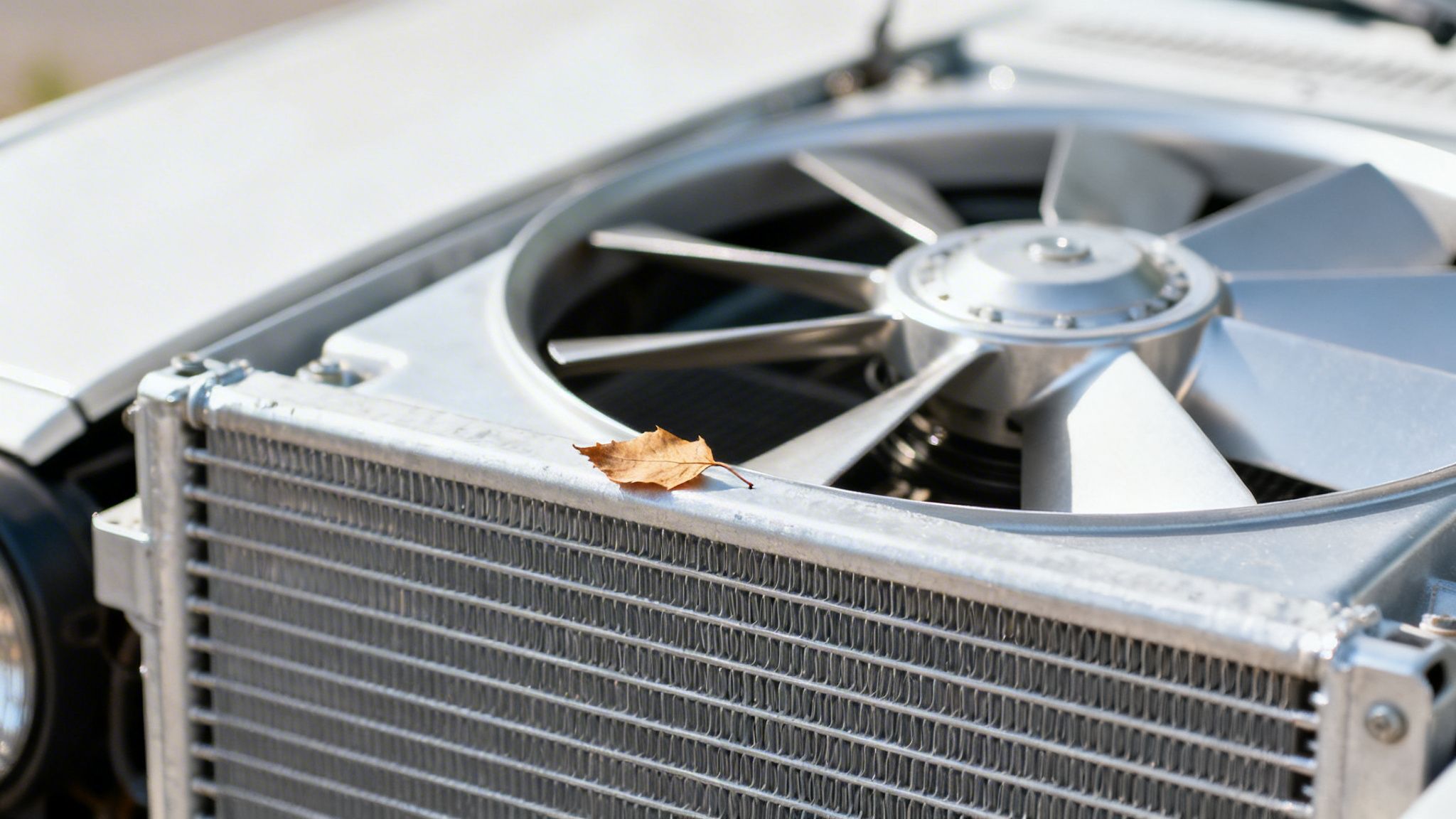
While coolant is responsible for absorbing heat from the engine, dissipating that heat into the atmosphere is equally important. This function is performed by two key components working in unison: the radiator and the cooling fan.
The radiator acts as a heat exchanger. Hot coolant flows through a series of small tubes, and thin metal fins transfer the heat from the coolant to the surrounding air. For this process to be effective, the radiator requires a constant and unobstructed flow of air. When this airflow is impeded, the coolant returns to the engine without being properly cooled, causing the engine's temperature to rise.
Any obstruction to airflow is a significant factor when diagnosing what causes overheating in cars.
The Radiator: A Magnet for Debris
Positioned at the front of the vehicle, the radiator is perfectly placed to receive airflow but also to accumulate road debris. Over time, leaves, insects, dirt, and other materials can become lodged between its delicate fins. This buildup acts as an insulating blanket, trapping heat and preventing the radiator from functioning efficiently.
The interior of the radiator can also become clogged. Mineral deposits, rust, and sludge from degraded coolant can accumulate in the narrow passages, restricting flow. This internal blockage is analogous to a clogged artery, leading to a dangerous increase in system heat and pressure.
Signs of a clogged radiator include:
- Constant Overheating: The engine temperature is consistently high, even with sufficient coolant and a functional fan.
- Dirty Coolant: The fluid in the reservoir appears discolored, rusty, or contains visible particulate matter.
- Visible Blockage: A layer of debris is visibly caked onto the radiator's surface when viewed through the front grille.
The radiator relies on a massive surface area to dissipate heat. Even a 20% blockage from external debris can significantly reduce its cooling efficiency, placing the engine at risk, especially in high ambient temperatures.
The Unsung Hero: The Cooling Fan
At highway speeds, the natural airflow is typically sufficient to cool the radiator. However, in slow-moving or stationary traffic, this airflow ceases. This is when the cooling fan becomes essential.
The cooling fan's sole purpose is to draw a large volume of air through the radiator when the vehicle is moving too slowly for natural airflow to be effective. Without a functional cooling fan, the engine's temperature would rise rapidly whenever the vehicle stops.
There are two primary types of cooling fans:
- Mechanical Fans: These are driven by a belt connected to the engine and operate continuously. They are common in older vehicles, trucks, and SUVs.
- Electric Fans: Controlled by sensors, these fans activate only when needed, such as when the engine reaches a specific temperature or the air conditioning is engaged. They are standard in most modern cars.
Failure of either type of fan will almost certainly cause overheating in low-speed conditions. In fact, a broken cooling fan accounts for a significant portion of overheating cases, estimated at 20-25%. The most common failure points are a burned-out fan motor or a faulty sensor, often occurring after approximately 80,000 miles.
A subtle indicator of a failing electric fan is if the air conditioning blows warm air at a stop but turns cold once the vehicle is moving. The A/C system's condenser also relies on this fan for cooling. When the fan fails, both systems are compromised, often providing an early warning before the engine overheats.
Diagnosing Major Mechanical Failures
While issues like low coolant are common, an overheating engine can sometimes be a symptom of a much more severe internal mechanical failure. These problems are more complex and costly to repair, making early and accurate diagnosis critical.
The two most significant mechanical failures that cause overheating are a defective water pump and a blown head gasket. Ignoring the symptoms of either can escalate a repairable situation into one requiring a complete engine replacement.
When the Heart of the System Fails: The Water Pump
If coolant is the engine's lifeblood, the water pump is its heart. This component's critical function is to circulate coolant from the radiator, through the engine to absorb heat, and back to the radiator to release it. When the water pump fails, this circulation ceases, and the engine's temperature will rise to dangerous levels very quickly.
A water pump typically fails in one of two ways. The internal impeller, which moves the fluid, can corrode or break. Alternatively, the pump's seals can wear out, causing a significant coolant leak.
Be alert for these key warning signs:
- Coolant Leaks: A puddle of green, orange, or pink fluid directly under the front-center of the engine is a classic sign of a failing water pump seal.
- A High-Pitched Whining Noise: A whining or groaning sound from the front of the engine that increases in pitch with acceleration often indicates a failing bearing inside the pump.
- Rapid Overheating: If the pump fails completely, coolant circulation stops, and the engine will overheat almost immediately after starting.
A failing water pump is not an issue that can be postponed. It is often driven by the engine's timing belt. If the pump's bearing seizes, it can cause the timing belt to snap, resulting in catastrophic internal engine damage.
The Dreaded Blown Head Gasket
A blown head gasket is one of the most serious and feared causes of engine overheating. The head gasket is a critical seal located between the main engine block and the cylinder head. Its purpose is to maintain separation between three crucial elements: coolant, engine oil, and the high-pressure combustion gases within the cylinders.
When this gasket fails, these systems are compromised. Coolant can leak into the cylinders to be burned as exhaust, or it can mix with engine oil, creating a thick, milky sludge that destroys the oil's lubricating properties.
The symptoms are typically severe and require immediate professional intervention. Our guide on engine diagnostics in Plano provides more insight into how technicians diagnose these complex failures.
Watch for these critical red flags:
- Thick, White Exhaust Smoke: This is not the thin vapor seen on a cold day. A blown head gasket can produce dense, sweet-smelling white smoke from the tailpipe, which is the result of coolant being burned in the combustion chamber.
- Milky, Foamy Oil: If the oil on the dipstick has the consistency and color of a coffee-flavored milkshake, coolant has contaminated the engine oil. This indicates a severe internal breach, and the engine is no longer being properly lubricated.
- Mysterious Coolant Loss: The coolant level drops consistently, but no external leak is visible. The coolant is likely being lost internally.
- Constant Bubbling in the Radiator: With the engine running, visible bubbles in the radiator or overflow tank indicate that high-pressure exhaust gases are being forced into the cooling system, a definitive sign of a head gasket failure.
Your Best Defense Is Proactive Maintenance
Understanding the various causes of engine overheating—from a simple leak to a major mechanical failure—makes it clear that prevention is far superior to reaction. An overheating incident is stressful, expensive, and almost always avoidable through routine maintenance.
The most effective strategy is to adopt a proactive approach to vehicle care. Think of it as preventative medicine for your car; small, regular check-ups can prevent a major emergency down the road.
Quick At-Home Checks You Can Do
You don't need to be a professional technician to perform basic visual inspections. Dedicating a few minutes each month to these checks can help you identify a developing problem before it becomes critical.
- Check the Coolant Reservoir: With the engine completely cold, locate the translucent plastic overflow tank. The coolant level should be between the "MIN" and "MAX" indicator lines. If you must add fluid regularly, there is a leak that requires professional diagnosis.
- Inspect the Hoses: Examine the large rubber hoses connecting to the radiator. Squeeze them gently (only when the engine is cool). They should feel firm but pliable, not excessively hard or soft and spongy. Look for any visible cracks, bulges, or frayed areas, which are signs of imminent failure.
- Look for Leaks: Routinely check the ground where you park. Puddles of bright green, pink, or orange fluid are a clear indication of a coolant leak that needs immediate attention.
Proactive maintenance is not an expense; it is an investment in the longevity and reliability of your vehicle. Studies show that for every $1 spent on routine maintenance, drivers can save up to $4 in future repair costs. A routine coolant flush is a small price to pay compared to repairing a warped cylinder head.
Why Professional Service Is a Must
While at-home inspections are a valuable first line of defense, they are not a substitute for professional service. A critical preventative measure for what causes overheating in cars is a periodic cooling system flush.
This service involves more than just draining and replacing old fluid. A flush uses specialized equipment to circulate cleaning agents through the system, removing rust, scale, and other deposits that accumulate in the radiator and engine block. These contaminants can cause blockages and reduce the system's efficiency. Most manufacturers recommend a coolant flush every 30,000 to 50,000 miles, but always consult your owner's manual for specific intervals.
During a professional service at Express Lube & Car Care, a technician can also pressure-test the system to detect small, slow leaks that are not easily visible. This is the most reliable method for preventing a future breakdown.
Your Seasonal Cooling System Maintenance Checklist
| Maintenance Task | Frequency | DIY or Pro Service? | Why It's Important |
|---|---|---|---|
| Visual Coolant Level Check | Monthly | DIY | Catches slow leaks before they become major problems. |
| Hose & Belt Inspection | Every Oil Change | Pro Service | Identifies worn-out parts before they break and leave you stranded. |
| Radiator Cap Test | Annually | Pro Service | Ensures the system can hold pressure, which is vital for efficient cooling. |
| Coolant Flush & Refill | Every 30k-50k Miles | Pro Service | Removes sludge and contaminants that cause clogs and corrosion. |
| Thermostat Check | Annually | Pro Service | Confirms the engine warms up properly and maintains the right temperature. |
Following this checklist is one of the easiest ways to ensure your vehicle is ready for anything the Texas weather throws at it. A little attention goes a long way in preventing an unexpected and costly overheating emergency.
Common Questions About Car Overheating
Even with a solid understanding of the cooling system, an overheating engine can be an unnerving experience. Here are answers to some of the most frequently asked questions about engine overheating.
This flowchart illustrates the two approaches to managing your cooling system: proactive maintenance versus reactive repair.
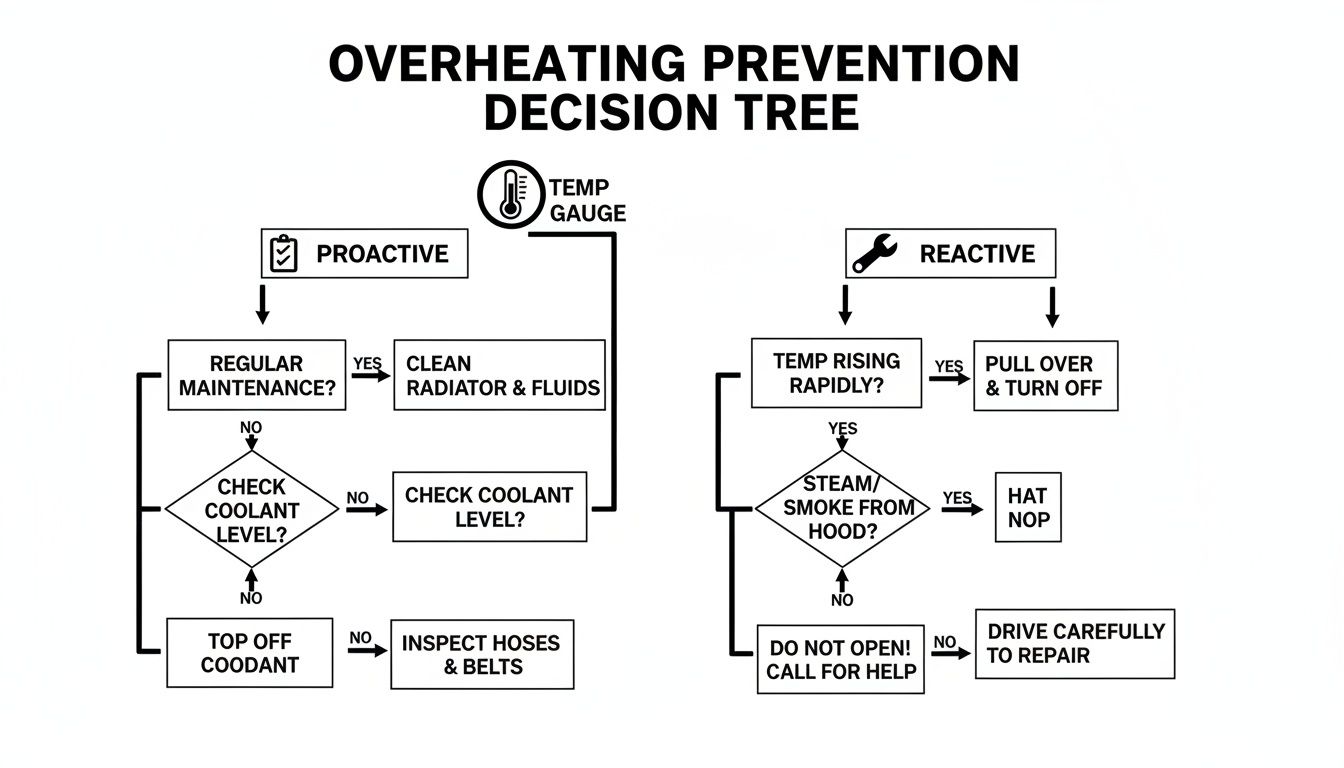
The conclusion is clear: following a proactive maintenance schedule is the most effective way to avoid the costly and stressful reactive path.
What Should I Do Immediately if My Car Starts Overheating?
If you observe steam from under the hood or the temperature gauge enters the red zone, pull over to a safe location as soon as possible and shut off the engine. This single action can prevent minor issues from escalating into catastrophic engine damage.
Crucial Safety Warning: Under no circumstances should you attempt to open the radiator cap while the engine is hot. The cooling system is highly pressurized, and opening the cap can release scalding steam and coolant, causing severe burns.
Allow the engine to cool down for at least 30 minutes. Once cool, a brief visual inspection may be possible, but the safest and most prudent action is to call for roadside assistance.
Can I Just Add Water if My Coolant Is Low?
In an emergency, adding water may allow you to drive a short distance to safety. However, this must be viewed as a temporary measure, not a solution. Your engine is designed to operate with a specific 50/50 mixture of antifreeze and distilled water.
Water alone has a lower boiling point and lacks the anti-corrosion additives present in formulated coolant. Operating the engine with plain water for an extended period can lead to rust and damage to components like the water pump. It is essential to have the system professionally flushed and refilled with the correct coolant as soon as possible.
How Often Should My Cooling System Be Inspected?
We recommend a professional inspection of your cooling system at least once per year, ideally before the onset of summer heat. A visual check of the coolant level, hoses, and belts can be incorporated into a routine oil change service.
For a complete system flush and fluid replacement, the general guideline is every 30,000 to 50,000 miles. However, your vehicle's owner's manual provides the definitive service interval. A small investment in preventative maintenance is the best way to ensure your engine remains cool and reliable.
If you're dealing with an overheating car—or just want to be proactive about preventing it—the ASE-certified technicians at Express Lube & Car Care are here to help. Drive with confidence knowing your vehicle is in expert hands. Stop by today for a complete cooling system check!