
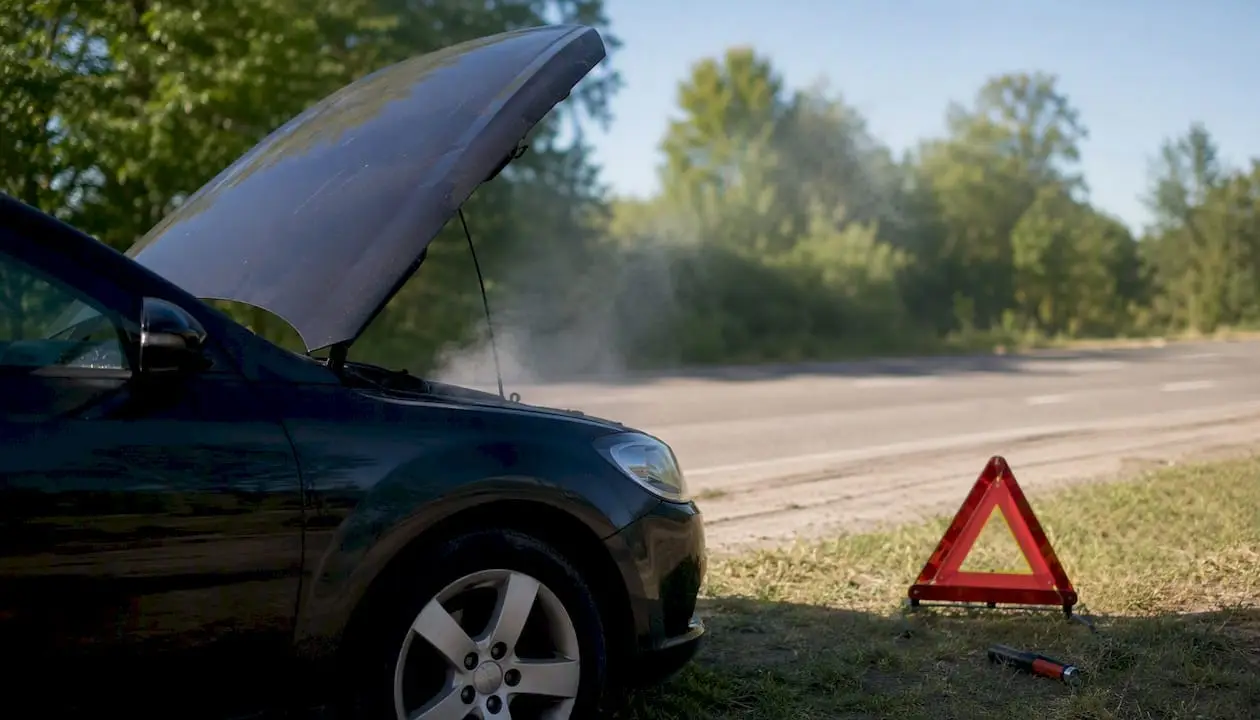
If your temperature gauge is climbing toward red or you see steam under the hood, act now: turn off the air conditioning, switch the heater to high, pull over safely, and shut off the engine. Then wait. Don’t touch the radiator cap, don’t keep driving, and don’t pour cold water on a hot block. Give the engine 20 to 30 minutes to cool before you inspect anything under the hood.
That sequence, in that order, is what keeps a coolant scare from becoming a $3,000 repair bill.
Here’s the priority checklist to run through the second you suspect trouble:
- Turn off the A/C immediately. It adds load to the engine and works against you.
- Switch the heater to high and roll the windows down. This pulls heat away from the engine block and into the cabin, using your car’s own heating system as an emergency cooling assist.
- Find a safe spot to pull over. Shoulder, parking lot, or side street. Avoid stopping in an active traffic lane.
- Shut off the engine completely and turn on your hazard lights.
- Stay in the vehicle if you’re in an unsafe spot, like a highway shoulder, and call for roadside help.
- Wait 20 to 30 minutes before you open the hood or touch anything metal near the engine.
A cooling system under pressure can hold coolant well above the boiling point of water. Cracking a radiator cap on a hot engine releases scalding steam and fluid without warning, and it’s one of the most common ways drivers get burned during a roadside breakdown. Patience here isn’t optional.
Key Takeaways
Engine overheating requires immediate shutdown and a 20 to 30 minute cooling period, since driving through it risks warped heads, blown gaskets, or a seized engine.
| Point | Details |
|---|---|
| Act in the first minute | Turn off the A/C, switch the heater to high, pull over safely, and shut off the engine. |
| Never open a hot cap | Wait 20 to 30 minutes before touching the radiator or reservoir cap to avoid steam burns. |
| Watch beyond the gauge | Sweet smells, ticking noises, and steam are valid warnings even if the sensor reads normal. |
| Know when to tow | Steam, a growing coolant puddle, or a red-zone spike means call a tow instead of driving on. |
| Prevention beats repair | Monthly coolant checks and on-schedule hose, belt, and oil service catch problems early. |
| Get it inspected same day | Express Lube & Car Care offers walk-in, ASE-certified diagnostics to catch the root cause before it escalates. |
Table of Contents
- Engine Overheating Symptoms You Shouldn’t Ignore
- Exactly What to Do Right Now (and What Never to Do)
- How to Check and Add Coolant Safely
- Common Causes of Engine Overheating (and How to Spot Them)
- Can You Drive to a Shop, or Do You Need a Tow?
- What Happens If You Keep Driving Anyway
- Preventing Engine Overheating Before It Starts
- What a Mechanic Will Check Once You Bring It In
- Why Prompt Inspection Matters More Than Most Drivers Realize
- Get Your Cooling System Checked Today
- Sources
- FAQ
Engine Overheating Symptoms You Shouldn’t Ignore
The temperature gauge climbing into the red zone is the most obvious signal, but it’s rarely the first one. By the time the needle hits red, the cooling system has often already been struggling for several minutes.
Watch for these signs, roughly in the order drivers tend to notice them:
- A rising or pegged temperature gauge, or an illuminated temperature warning light.
- A sweet, slightly syrupy smell drifting into the cabin, which usually means coolant is leaking onto a hot surface.
- Steam or visible vapor rising from under the hood.
- Ticking, knocking, or thumping sounds from the engine bay.
- Noticeably reduced power or a rough-running engine, especially at idle.
- A hot hood that feels warmer than usual to the back of your hand held a few inches above it.
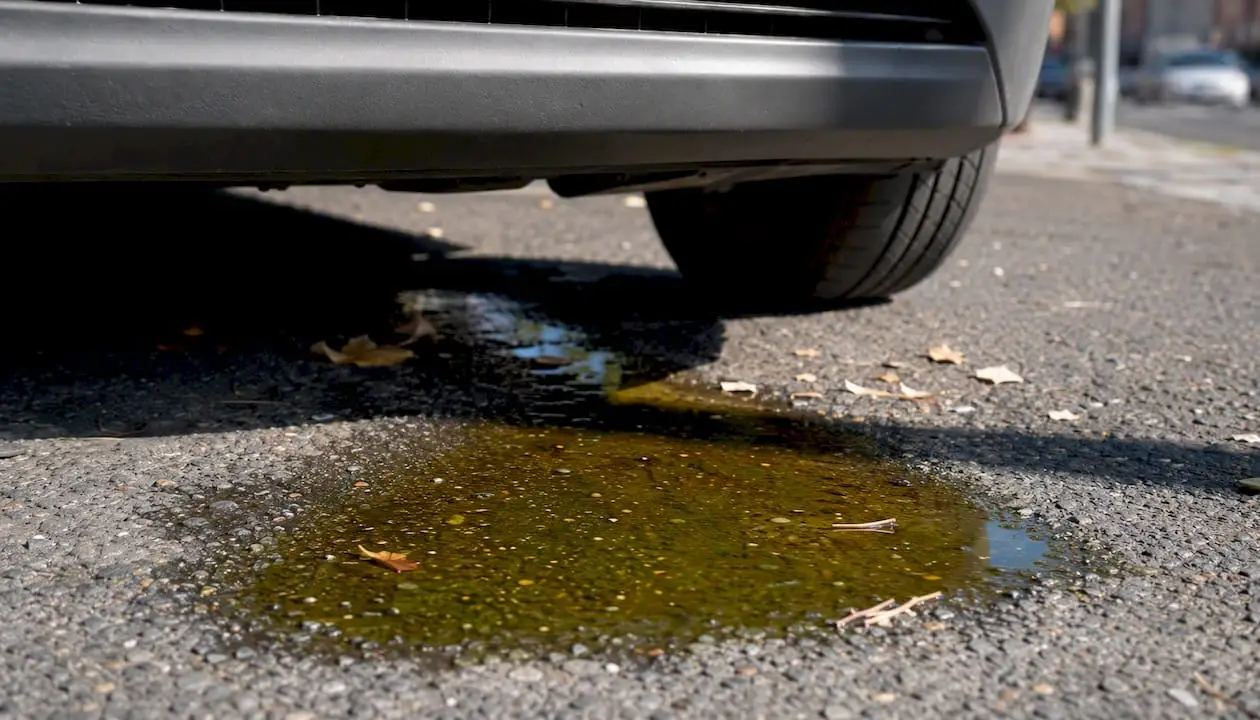
- Puddles of coolant, usually a bright green, orange, or pink fluid, under the front of the vehicle after parking.
Here’s what a lot of drivers get wrong: they trust the gauge completely and ignore everything else. Temperature sensors and gauges can fail just like any other electrical component. If you smell something sweet or hear a new engine noise, treat it as a real warning sign even if the needle sits calmly in the normal range. A failed sensor giving you a false “all clear” is arguably more dangerous than an accurate gauge in the red, because it removes your only early warning.
Signs consistently cited by auto safety organizations include the red-zone gauge, steam, sweet smell, unusual noise, and coolant puddles as the five most reliable indicators drivers report before a breakdown. If you notice two or more of these at once, don’t wait for the gauge to confirm it. Pull over.
Exactly What to Do Right Now (and What Never to Do)
Once you’ve noticed the signs, the sequence of your response matters almost as much as the response itself. Here’s the order that protects both you and the engine:
- While still driving: Turn off the A/C and switch the heater to its highest setting with the fan on. This pulls thermal load off the engine and buys you time to reach a safe stopping point.
- Find your spot: Look for a shoulder, parking lot, or side street. Avoid stopping in a live lane of traffic even if the temperature spikes suddenly.
- Shut down: Turn off the engine completely once you’re stopped safely. Engage the parking brake and hazard lights.
- Assess your location: If you’re on a busy road or highway shoulder, it’s often safer to stay inside the vehicle with your windows down than to exit into traffic. Call roadside assistance and wait.
- Let it cool: Give the engine a full 20 to 30 minutes before you pop the hood. This isn’t a suggestion you can shortcut. Cooling systems run under real pressure, and that pressure needs time to drop.
- Inspect visually first: Look for obvious leaks, disconnected hoses, or a shredded serpentine belt before you touch anything.
Just as important is what you avoid doing, because a handful of instinctive reactions actively make things worse:
- Don’t open the radiator cap or the coolant reservoir cap while the engine is hot. Pressurized steam and boiling coolant can cause serious burns.
- Don’t keep driving because the gauge dropped slightly or the steam seemed to stop. A temporary dip doesn’t mean the problem resolved.
- Don’t pour cold water directly onto a hot engine block or radiator. The sudden temperature swing can crack an already-stressed engine block or cylinder head.
- Don’t rev the engine to “test” it once you’re stopped. Let it idle down or shut off entirely.
Waiting 15 to 30 minutes before opening the hood gives the coolant enough time to drop below boiling and the internal pressure enough time to normalize. When you finally do open a cap, use a thick towel or glove, and turn it in small quarter turns, pausing to let pressure release gradually rather than cracking it open all at once.
How to Check and Add Coolant Safely
Once your 20 to 30 minute wait is up, you can start a careful visual inspection. This is where most drivers either solve a small problem themselves or realize they need a shop, so take it step by step.
- Open the hood and look before you touch. Check for obvious puddles under the car, a disconnected hose, or a belt hanging loose. A large, active leak on the ground is a strong sign you need a tow rather than a fluid top-off.
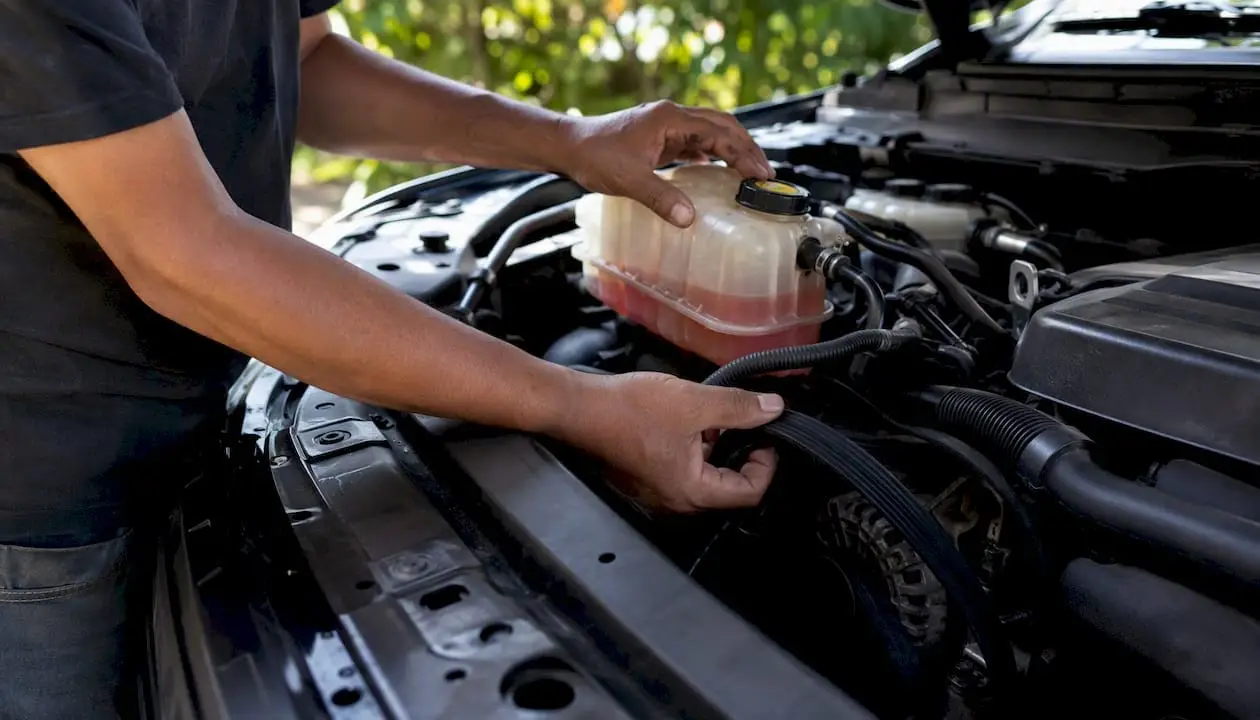
- Locate the coolant overflow reservoir. This is usually a semi-transparent plastic tank with “MIN” and “MAX” lines, separate from the radiator itself. Check the level here first; it’s cooler and safer than the radiator cap.
- If the reservoir is low, top it off. Use a coolant mix appropriate for your vehicle, ideally diluted per your owner’s manual (usually a 50/50 mix with water). If you don’t have coolant on hand, plain distilled water works as a temporary emergency substitute, but it lacks the corrosion inhibitors real coolant provides and needs to be flushed and replaced properly at a shop soon after.
- Only approach the radiator cap if the reservoir doesn’t solve it. Wrap it in a towel and turn it a quarter turn at a time, letting any remaining pressure hiss out slowly before removing it fully.
- Look at the color and smell of what comes out. Healthy coolant is typically green, orange, pink, or blue depending on formulation, and shouldn’t smell burnt. Brown, rusty, or oily coolant suggests contamination, possibly from a failing head gasket.
Pro Tip: Keep your heater running on high while you add coolant if the engine is still warm but safe to approach. It helps pull residual heat away from the block and speeds up the cooling process while you work. Wear gloves and eye protection regardless of how careful you think you’re being; hot coolant splashes are unpredictable.
Topping off coolant will often get you rolling again, but it’s a temporary measure. A quick top-up doesn’t fix a leaking hose or a failing water pump; it just buys you time to get the actual cause diagnosed.
Adding fluid is reasonable when the level is simply low and you don’t see an active external leak. It’s not appropriate when you’re looking at a large puddle spreading under the car, or when you’ve already noticed symptoms pointing toward a blown head gasket, like white smoke from the exhaust or milky oil on the dipstick. In those cases, a top-off won’t help and driving further risks serious damage. If you’re unsure what’s leaking, our guide on coolant leaks walks through how to tell a minor hose issue from something more serious.
Common Causes of Engine Overheating (and How to Spot Them)
Most overheating events trace back to one of a handful of usual suspects. Knowing which one you’re dealing with helps you describe the problem accurately to a mechanic and speeds up diagnosis.
- Low coolant or a coolant leak. By far the most common cause. A puddle under the car, a sweet smell in the cabin, or a reservoir that’s consistently low points here.
- Thermostat failure. A stuck-closed thermostat traps coolant in the block and prevents circulation. This often causes rapid overheating that seems to come out of nowhere, sometimes even at idle.
- Radiator or cooling fan failure. If the temperature climbs mainly in stop-and-go traffic or at idle but improves at highway speed, suspect the fan or a clogged radiator restricting airflow.
- Water pump failure. A failing pump can’t circulate coolant properly. Listen for a whining or grinding noise from the front of the engine, sometimes paired with coolant leaking near the pump housing.
- Clogged or leaking hoses. A bulging, cracked, or collapsed hose reduces flow or leaks fluid directly. Visual inspection usually catches this one quickly.
- Serpentine belt failure. The belt drives the water pump on many vehicles. A snapped or badly worn belt can cause sudden overheating alongside power steering or A/C loss. Worth noting: a loose or damaged serpentine belt is frequently the actual root cause behind water pump failures, since pumps typically last 60,000 to 100,000 miles unless something else is stressing them.
- Blown head gasket. Often the result of prolonged overheating rather than the initial cause. White exhaust smoke, bubbling in the coolant reservoir, and milky oil are the telltale signs.
- Low oil level. Oil helps manage friction-generated heat throughout the engine. Chronically low oil can contribute to overall engine temperature climbing faster than it should, and a persistent ticking noise is a common early clue.
External, mechanical causes like a cracked hose or a dead thermostat are usually straightforward and relatively affordable fixes. Internal symptoms, white smoke, a sweet smell from the exhaust, or oil that looks like a milkshake, point toward head gasket or cylinder head damage, which is a different conversation entirely with your mechanic.
Can You Drive to a Shop, or Do You Need a Tow?
This is the decision that determines whether your overheating incident costs you a hose or costs you an engine. A few conditions genuinely favor a cautious drive to the nearest shop:
- The temperature gauge has returned to normal and stayed there for several minutes after your cooling-off period.
- There’s no visible coolant puddle or active leak when you inspect underneath the car.
- Topping off the reservoir brought the level back to normal, and it holds steady rather than dropping again quickly.
- You’re within a short, low-traffic distance of a repair shop, ideally under a few miles.
If all four hold true, driving slowly and directly to a shop, watching the gauge the entire way, is reasonable. Keep the heater on and the A/C off for the drive, and pull over immediately if the needle starts climbing again.
A tow is the safer call when any of these apply instead:
- Steam is actively rising from under the hood.
- You see a coolant puddle that’s clearly growing, not just residual drips.
- The temperature spiked into the red zone even briefly before you pulled over.
- The gauge climbs back up again shortly after you resume driving.
If you’re stuck somewhere unsafe, like a highway shoulder, and it’s genuinely risky to stand outside the car, stay inside with your windows down and call for a tow. Switching the ignition to the accessory position can keep electric cooling fans running without restarting the engine, which helps dissipate residual heat while you wait for help to arrive.
What Happens If You Keep Driving Anyway
Every additional mile driven on an overheated engine increases the odds of permanent damage, and the failure modes tend to escalate in a predictable order.
Prolonged overheating first stresses the cylinder head, which can warp under uneven thermal expansion. Keep pushing past that point and you risk a blown head gasket, the thin seal between the head and block that keeps coolant, oil, and combustion gases properly separated. In the worst cases, sustained extreme heat can crack the engine block itself or cause the engine to seize entirely, where moving parts expand and fuse together, stopping the engine cold.
| Symptom Pattern | Likely Repair Category | Repair Scope |
|---|---|---|
| Low coolant, single visible hose leak, gauge normal after top-up | External component repair | Minor |
| Sweet smell, slow coolant loss over days, no white smoke | Leak diagnosis and hose or radiator repair | Minor to moderate |
| Repeated overheating episodes, fan or thermostat suspected | Component replacement (thermostat, fan, water pump) | Moderate |
| White exhaust smoke, milky oil, bubbling in reservoir | Head gasket diagnosis and replacement | Major |
| Engine seized or won’t turn over after overheating | Engine rebuild or replacement | Major |
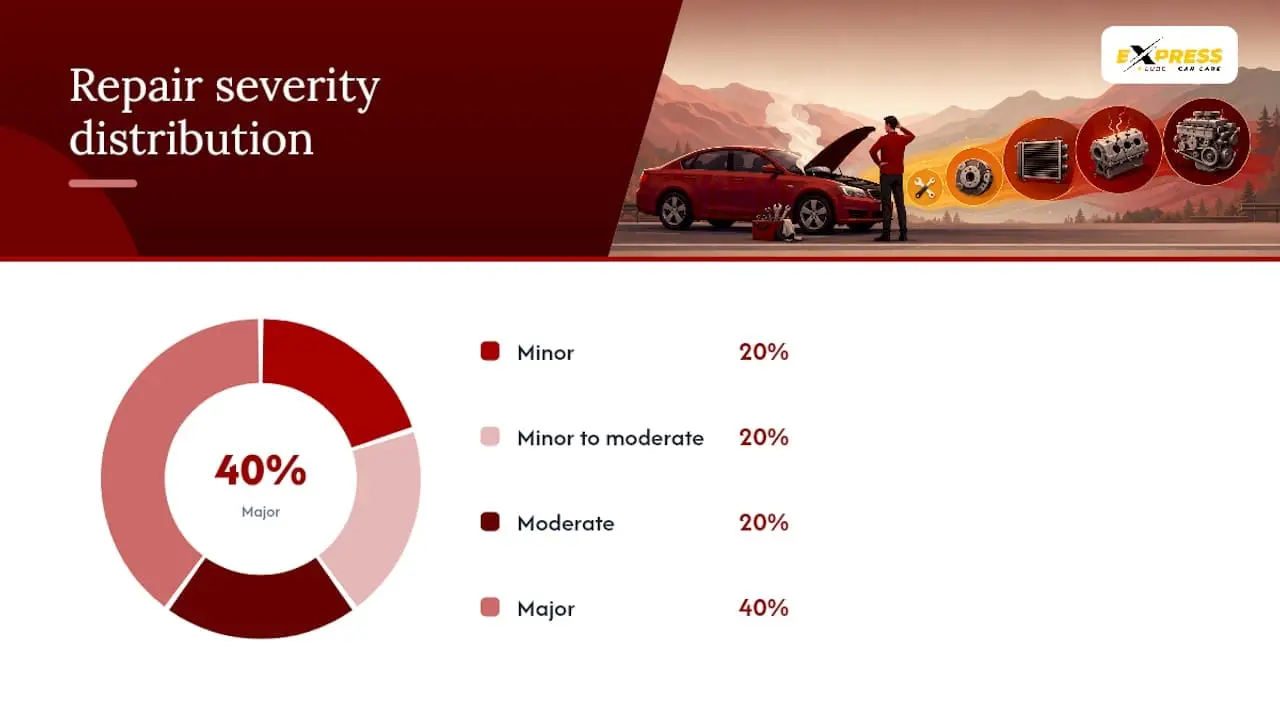
A shop’s first move after any significant overheating event is usually a pressure test on the cooling system to isolate leaks, followed by a compression test if head gasket failure is suspected. The severity band you land in determines both the parts needed and how long the vehicle sits in the bay. A hose swap might take under an hour; a head gasket job can tie up a vehicle for a full day or more given the labor involved in accessing internal components.
Preventing Engine Overheating Before It Starts
Most overheating incidents are preventable with maintenance most drivers already know they should be doing but tend to push off. Here’s the checklist worth actually following:
- Check coolant level in the overflow reservoir monthly, especially before long trips or hot weather.
- Follow your owner’s manual for coolant flush and replacement intervals, which vary by vehicle but often fall in the two to five year range depending on coolant type.
- Inspect hoses and belts for cracking, bulging, or fraying at every oil change.
- Keep oil changes on schedule since fresh oil helps manage engine-wide friction and heat.
- Have the radiator, fan, and thermostat checked during scheduled service visits rather than waiting for a failure.
- Watch for early warning signs like a slightly higher-than-normal gauge reading or a faint sweet smell, and address them before they become emergencies.
On the scheduling side, treat this as two tiers of habit:
- Monthly, five-minute checks: Coolant reservoir level, visible hose condition, and a glance at the belt.
- Service-visit items: Full cooling system inspection, thermostat function test, and radiator flush timing, ideally bundled into routine visits like those outlined in our car maintenance checklist.
Driving habits matter too. Towing heavy loads, aggressive acceleration, and extended idling in stop-and-go traffic all push the cooling system harder, especially in high ambient heat. On the hottest days of the year, giving yourself extra following distance to avoid hard braking and idling reduces the load on a system that’s already working overtime. Keeping your engine bay clear of debris and grime also helps; a clean, well-maintained engine bay makes it easier to spot early leaks before they become roadside emergencies.
What a Mechanic Will Check Once You Bring It In
Walking into a shop after an overheating incident goes faster and costs less when you can describe what actually happened. Here’s what a technician typically runs through:
- Pressure test on the cooling system to identify leaks that aren’t visible during a casual inspection.
- Thermostat test to confirm it’s opening and closing at the correct temperature.
- Radiator and fan check, verifying airflow and fan operation under load.
- Water pump inspection for bearing noise, seal leaks, or impeller wear.
- Oil level and condition check, since low or contaminated oil can both cause and result from overheating.
- Compression test, run specifically when head gasket failure is suspected, to measure whether cylinders are holding pressure correctly.
What you tell the technician matters as much as what they find on the lift. Be ready to describe when the overheating started, whether it happened at idle or highway speed, if you added any fluid yourself, and whether you noticed steam, smoke, or unusual smells. That context often narrows the diagnosis before the car even goes up on the rack. If a thermostat replacement turns out to be the fix, it’s a relatively quick job. Our thermostat replacement guide covers what that repair actually involves.
Why Prompt Inspection Matters More Than Most Drivers Realize
The instinct after a scary overheating incident is often relief once the gauge drops and the car seems to run fine again. That relief is exactly what leads to bigger repair bills down the road. A cooling system that overheated once, even briefly, has usually already told you something is wrong, whether that’s a weak hose, a tired water pump, or a thermostat on its way out. Driving on it for another week “to see if it happens again” just gives that underlying problem more chances to cause real internal damage.
Express Lube & Car Care built its model around no-appointment-needed service specifically for situations like this. When your engine overheats, you shouldn’t have to wait days for a diagnostic slot while quietly hoping the problem doesn’t repeat itself on the next commute. Our ASE-certified technicians run the same pressure tests, thermostat checks, and compression diagnostics a shop visit calls for, and they can usually get to it the same day you walk in. Catching a failing water pump or a cracked hose early is a far smaller repair, and a far smaller bill, than dealing with a warped head or a seized engine that overheating left behind.
Get Your Cooling System Checked Today
Express Lube & Car Care skips the scheduling wait that comes with most repair shops. If your engine just overheated, or you’re seeing early warning signs like a rising gauge or a sweet smell in the cabin, you can walk in the same day rather than booking a slot for next week.
Our ASE-certified technicians run full cooling system diagnostics, from pressure tests to thermostat checks, and handle everything from a simple hose swap to full engine diagnostics and repair. If your visit uncovers a low coolant level from general wear rather than a leak, ask about our current oil change and service specials, which often bundle fluid checks into routine maintenance. Stop by for a same-day inspection before a small overheating scare turns into a major repair.
Sources
- What to do if Your Car is Overheating and How to Prevent it | AAA Oregon/Idaho
- Car Overheating: 8 Causes and Solutions | AAA Automotive
- What to Do When Your Car Engine Overheats | Motul
- What To Do When Your Car Overheats | GEICO
- Roadside assistance guidance | Northeast AAA
FAQ
How do you fix engine overheating?
Pull over, shut off the engine, and wait 20 to 30 minutes before inspecting. Depending on the cause, the fix ranges from topping off coolant and replacing a hose to a shop repairing the thermostat, water pump, or radiator.
What happens if the engine overheats and you keep driving?
Continued driving while overheated can warp the cylinder head, blow the head gasket, or cause the engine to seize entirely, turning a minor repair into a major one.
What are three simple things to check if your car is overheating?
Check the coolant reservoir level, look for visible leaks or puddles under the car, and inspect the serpentine belt for looseness or damage, since a failing belt often causes water pump problems.
Is it expensive to fix a car that overheats?
It depends entirely on the cause. A hose or thermostat repair is relatively minor, while a blown head gasket or seized engine falls into major repair territory. Same-day diagnostics at a shop like Express Lube & Car Care help catch the issue while it’s still an inexpensive fix.