

If your car has crossed 100,000 miles, schedule a fluid and inspection service now: oil and filter, transmission and brake fluid checks, and a full technician inspection is your top priority this month. Everything else on your maintenance list can wait a few weeks. Those cannot. Check your owner’s manual for model-specific intervals, and bring your service records to whichever shop you choose.
TL;DR:
- Regularly check transmission and brake fluids for burnt smell or muddy appearance, replacing or servicing them sooner rather than later to prevent costly damage.
- Conduct visual inspections of tires for tread depth below 4/32 inch and worn brakes below 3mm, addressing these safety issues promptly.
- Replace timing belts as scheduled around 90,000 to 100,000 miles to avoid engine damage, especially in interference engines with a known risk of valve damage.
- Maintain a detailed service history with records to improve vehicle longevity and maximize resale value, tracking mileage, parts, and service specifics.
- Prioritize safety-related repairs like brakes, tires, and suspension over cosmetic issues or unnecessary preventatives, and seek immediate professional diagnostics for warning lights or unusual fluid colors.
Table of Contents
- Your High Mileage Vehicle Maintenance Best Practices Checklist
- Maintenance Milestones by Mileage: 30k, 60k, 90k, and Beyond
- Fluids and Oil: What to Change and What the Colors Mean
- Tires, Brakes, and Suspension: When to Act, Not Just Watch
- Timing Belts, Transmissions, Batteries, and Exhaust: The Expensive Failures
- Diagnostics: What to Check Yourself, What Needs a Shop
- Cost and Priority: What to Fix Now, What to Defer, and What to Skip
- How Express Lube & Car Care Supports Your High-Mileage Checklist
- Oil Leaks, Gasket Wear, and Compression: The Classic High-Mileage Trio
- Keeping Suspension and Steering Sharp on an Older Car
- Fuel System Care: Injectors, Filters, and What Deposits Actually Do
- Why Exhaust Inspections Matter More Than Most Owners Think
- Interior and Exterior Care That Actually Slows Down Wear
- Tracking Your Maintenance History (and Why It Pays Off)
- Our Take: The Owners Who Reach 200,000 Miles Aren’t Lucky
- Get Your High-Mileage Checklist Done Without an Appointment
- Where to Verify Model-Specific Intervals
- Sources
- FAQ
Your High Mileage Vehicle Maintenance Best Practices Checklist
A high-mileage engine doesn’t fail because it’s old. It fails because small deferred jobs stack up until they aren’t small anymore. The checklist below is ordered by urgency, not alphabetically, so tackle it top to bottom.
- Oil and filter change, matched to your owner’s manual spec. This is the single highest-leverage service on the list because oil breaks down and stops protecting moving parts long before it looks dirty.
- Transmission fluid check. Pull the dipstick or have a tech check level and color. Fluid that smells burnt or looks muddy brown instead of red needs attention soon, not eventually.
- Brake fluid inspection. Brake fluid absorbs moisture over time, which lowers its boiling point and can affect pedal feel.
- Tire and brake visual inspection. Tread depth, uneven wear patterns, and pad thickness all tell a story about alignment and driving habits.
- Battery test. A load test takes five minutes and tells you what a visual check cannot.
- Air filter and cabin filter swap. Cheap, easy, and directly tied to fuel economy and cabin air quality.
Tasks one, three, four (visual only), and six are DIY-friendly if you’re comfortable under the hood. Tasks two and five, along with any brake pad measurement beyond a glance, are better left to a shop with the right tools. Fluid color is your fastest diagnostic: healthy oil runs amber to dark brown, healthy coolant is bright and clear (not rusty or oily), and healthy brake fluid is light gold, not black.
Pro Tip: Keep a $5 tire tread depth gauge and a flashlight in your glove box. A thirty-second check every time you fill up catches slow leaks and uneven wear before they become a blowout on the highway.
Maintenance Milestones by Mileage: 30k, 60k, 90k, and Beyond
Manufacturers build service intervals around predictable wear curves, and hitting those markers on time is what separates a car that dies at 120,000 miles from one still running at 220,000. According to Consumer Reports’ guidance on making a car last 200,000 miles, disciplined milestone servicing is the biggest single factor in whether a vehicle reaches that number.
- 30,000 miles: Fresh filters (air, cabin, fuel), tire rotation, and a basic fluid and belt inspection. Nothing dramatic yet, but this is where habits get set.
- 60,000 miles: Coolant flush is commonly recommended around the typical mid-life maintenance point, along with a spark plug check and a real look at suspension bushings and ball joints for play. Brake fluid replacement also tends to fall somewhere in this window depending on the manufacturer.
- 90,000 to 100,000 miles: This is timing belt territory for engines that use one, plus a broader look at the battery, motor mounts, and drivetrain components that have simply been working for a decade.
- 100,000-plus: Ongoing vigilance rather than a fixed list. Watch for oil leaks, gasket wear, and gradual compression loss as the new baseline for inspections.
Not every engine has a timing belt. Many newer designs use a timing chain, which is lubricated by engine oil and typically lasts the life of the engine rather than needing scheduled replacement. Check your owner’s manual to know which one you have, because confusing the two is an expensive mistake. If you tow, do frequent short trips, or drive in extreme heat or cold, follow the severe-duty schedule instead of the normal one and cut these intervals down accordingly, a distinction your maintenance schedule by mileage should already reflect.
Fluids and Oil: What to Change and What the Colors Mean
High-mileage oil isn’t a marketing gimmick, but it’s also not automatically the right call. These formulations contain seal conditioners and slightly heavier viscosity additives designed to reduce leaks and burn-off in engines with worn seals. If your engine isn’t leaking or burning oil, stick with the viscosity and spec your owner’s manual lists. Switch to a high-mileage formula once you notice seepage, oil consumption between changes, or a spotty driveway, and browse the oil change benefits for high-mileage cars if you want the fuller comparison.
Transmission fluid is where owners make the most expensive mistake. For a neglected high-mileage transmission, a drain-and-fill service is generally safer than an aggressive machine flush, which can dislodge sediment that’s built up around seals and cause new leaks. A tech might recommend two drain-and-fills roughly 1,000 miles apart if the fluid is very dark.
- Coolant: Commonly due around 60,000 miles; rusty color or a sweet smell under the hood signals it’s overdue.
- Brake fluid: Replacement windows commonly fall between 20,000 and 45,000 miles depending on the manufacturer.
- Power steering and differential fluid: Check at every major service; a burnt smell or metallic sheen means contamination.
Tires, Brakes, and Suspension: When to Act, Not Just Watch
Tread depth is your clearest early warning system. Start shopping for new tires around 4/32 of an inch, since 2/32 is the legal minimum in most states and leaves almost no margin in wet weather. Rotate tires every few thousand miles, and get an alignment any time you notice pulling to one side or after replacing suspension components.
- Brake pads: Under about 3mm of pad material remaining means it’s time to plan a replacement, not wait for the squeal.
- Rotor vibration: A pulsing brake pedal usually means warped rotors; resurfacing works if there’s enough material left, otherwise replace them.
- Suspension symptoms: Uneven tire wear on the inside or outside edge, a noticeably softer or bouncier ride, and visible oily residue on shocks or struts all point to worn components.
Pro Tip: Push down hard on each corner of your car and let go. If it bounces more than once or twice before settling, your shocks are likely past their prime.
Timing Belts, Transmissions, Batteries, and Exhaust: The Expensive Failures
Some components are worth spending on before they fail because the failure itself causes secondary damage. A snapped timing belt in an interference engine can bend valves and destroy the engine entirely, which is why replacement around the manufacturer’s specified window (often 90,000 to 100,000 miles) is non-negotiable rather than optional.
- Timing belt: Replace on schedule even if it looks fine; you can’t inspect for internal fatigue.
- Transmission: Favor a drain-and-fill over a machine flush on any transmission with more than 100,000 miles and no documented fluid history.
- Battery: Most batteries last a few years regardless of mileage, and heat shortens that lifespan. Test it rather than guessing.
- Exhaust: Rust perforation and loose heat shields (that rattling sound at idle) are early signals worth addressing before a full pipe replacement becomes necessary.
Diagnostics: What to Check Yourself, What Needs a Shop
Run through oil level, tire pressure, all exterior lights, and a quick look under the car for leaks once a week. Do a more thorough fluid check monthly.
- Oil color: Amber to dark brown is normal; milky or foamy oil suggests coolant intrusion and needs a shop visit immediately.
- Coolant color: Should be bright, not rusty brown or full of floating particles.
- Warning lights: A flashing check engine light or any red light (oil pressure, brake, temperature) means stop driving and get it towed or inspected right away. A steady amber check engine light means schedule a diagnostic soon, not necessarily today.
Cost and Priority: What to Fix Now, What to Defer, and What to Skip
Rank every repair recommendation against four categories: safety, drivability, avoidable long-term damage, and cosmetics. Brakes, tires, and steering issues sit in the safety tier and get funded first, even if it means delaying something else. Drivability issues (a rough idle, a slipping transmission) come next because they tend to worsen quickly.
- Fund now: Brakes, tires below 4/32, steering or suspension play, timing belt at its scheduled interval.
- Fund soon: Fluid services, battery replacement if testing weak, exhaust leaks.
- Get a second opinion first: Any quote over a few hundred dollars for something you didn’t come in asking about.
- Decline by default: “Engine cleaning” additive treatments and aggressive transmission flushes pushed on units with no documented fluid history, since the routine maintenance versus reactive repair research consistently favors scheduled, gentler service over aggressive one-time interventions.
How Express Lube & Car Care Supports Your High-Mileage Checklist
Express Lube & Car Care’s ASE-certified technicians handle every item on this checklist, from oil changes and transmission service to brake repairs and full digital vehicle inspections with photos and notes. The no-appointment model means you can act on a warning light or a fluid color you don’t like the same day you notice it, backed by a 24-month/24,000-mile warranty on completed work. Bring your service records, describe any symptoms specifically (when the noise happens, what triggers it), and ask for a digital inspection so you have documentation for your own files.
Oil Leaks, Gasket Wear, and Compression: The Classic High-Mileage Trio
Every engine eventually seeps a little. The question is where from and how much. Valve cover gaskets harden and shrink with age and heat cycling, and they’re one of the most common sources of a light oil film on the top of the engine. It’s a relatively inexpensive gasket replacement if caught early, but ignored long enough, leaking oil can drip onto exhaust components and create a burning smell or, in rare cases, a small fire risk.
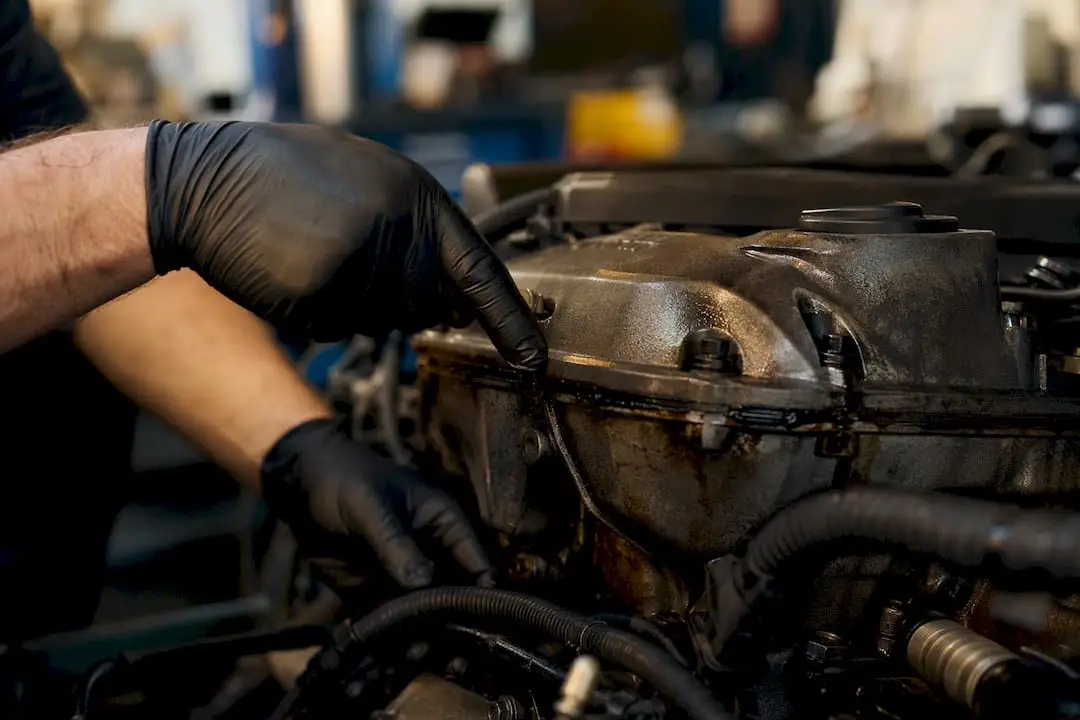
Oil pan gaskets and rear main seals are the next tier up in both cost and consequence. A rear main seal leak often shows up as a spot on the driveway directly under the back of the engine, and it typically requires more labor to access than a valve cover.
Compression loss is the quieter problem. It doesn’t announce itself with a puddle. Instead, you’ll notice gradually reduced power, rougher idle, or increased oil consumption without a visible leak. A compression test, performed with a gauge screwed into each spark plug hole while a technician cranks the engine, tells you whether your cylinders are sealing properly. Uneven readings across cylinders point to worn rings or valve issues, and catching this early through routine inspection gives you options; ignoring it usually means the decision gets made for you, at a much higher price, on the side of the road.
Keeping Suspension and Steering Sharp on an Older Car
Suspension components wear gradually, which makes them easy to ignore until the ride quality has degraded so much you’ve forgotten what “normal” felt like. Ball joints, tie rod ends, and control arm bushings all have rubber or grease-packed components that dry out and develop play over tens of thousands of miles.
The clearest self-check is the bounce test: push down firmly on each corner of the car and release. A healthy shock settles after one bounce. Anything more suggests the shock or strut has lost its damping ability. Beyond that, listen for clunks over bumps, which usually point to worn sway bar links or loose ball joints, and watch your steering wheel for excessive play before the wheels actually turn.
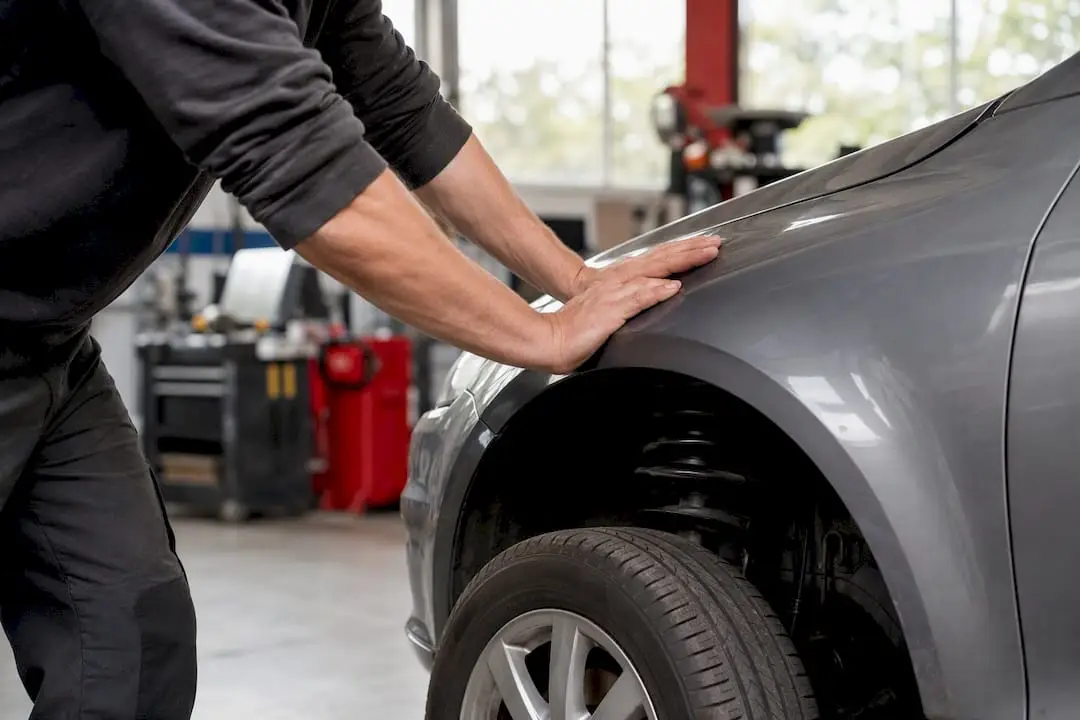
Alignment matters more on an older car than a new one, because worn bushings and tie rods change the geometry the alignment machine is trying to set. Getting an alignment on suspension components that are already loose is a temporary fix at best. Address the worn parts first, then align. Power steering fluid, if your car uses a hydraulic system rather than electric steering, should be checked at every major service; a burnt smell or dark color usually means the pump seals are starting to wear, and catching that early is far cheaper than replacing a failed pump.
Fuel System Care: Injectors, Filters, and What Deposits Actually Do
Fuel injectors are precision components, spraying fuel through openings smaller than a human hair, and deposits from lower-quality fuel or infrequent driving can partially clog them over time. The symptoms show up as rough idle, hesitation on acceleration, or a noticeable drop in fuel economy.
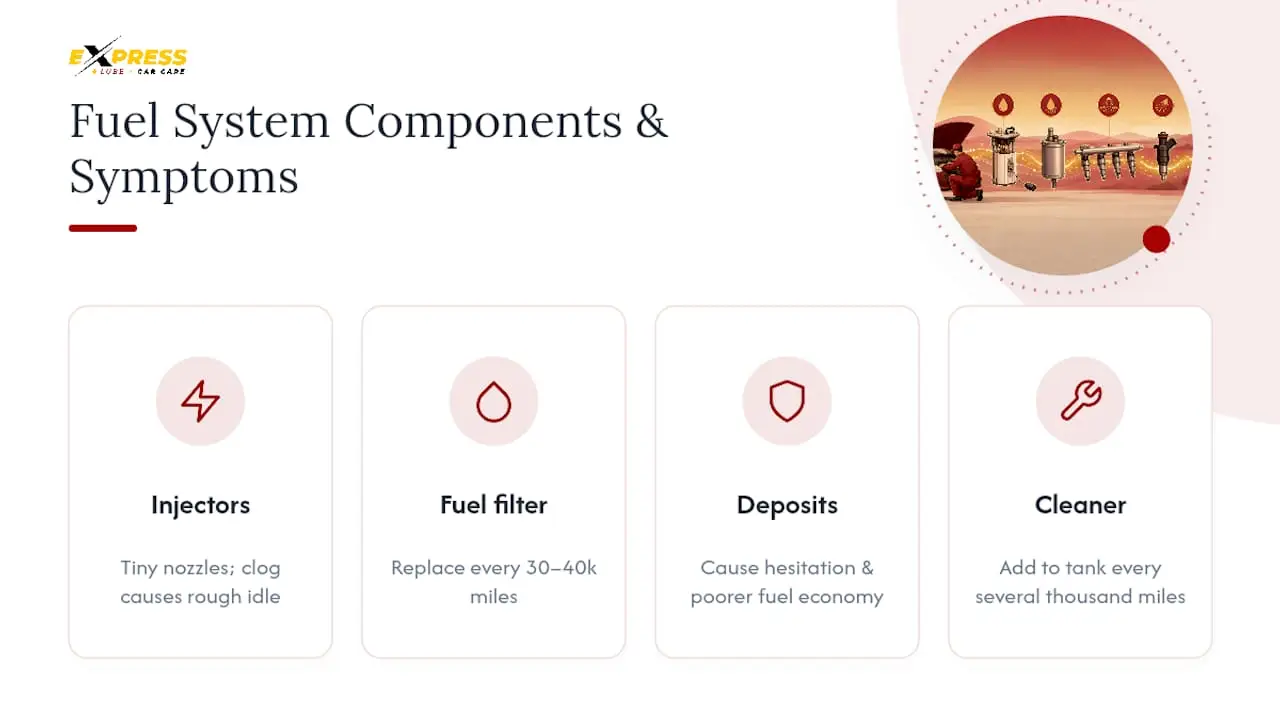
A fuel filter replacement is the cheap insurance policy here. On many vehicles it’s a scheduled service every 30,000 to 40,000 miles, though some modern systems have filters integrated into the fuel pump assembly with longer intervals. Check your owner’s manual, since guessing wrong on this one either wastes money on an unnecessary service or lets a clogged filter starve your engine of fuel under load.
Injector cleaning is worth doing periodically, but skip the walk-in “engine cleaning” upsell that isn’t tied to an actual symptom. A quality fuel system cleaner added to a tank of gas every several thousand miles, combined with using a reputable fuel brand, handles most preventive needs. If you’re seeing real symptoms like hard starts or a check engine light referencing a lean or rich condition, that’s when professional injector testing and cleaning earns its cost.
Why Exhaust Inspections Matter More Than Most Owners Think
The exhaust system does more than quiet the engine. It routes dangerous gases, including carbon monoxide, safely away from the cabin, and it houses the catalytic converter and oxygen sensors that keep your engine running efficiently and passing emissions tests. Rust is the primary enemy of an older car, especially in regions that salt roads in winter.
A rattling noise at idle or over bumps often means a loose heat shield rather than a serious problem, but it should still get checked, since a shield rubbing against the exhaust pipe can eventually wear through both. A louder, deeper exhaust note that develops gradually usually signals a rusted-through section or a failing muffler. Beyond noise, watch for a rotten egg smell, which can indicate a failing catalytic converter, and any check engine light tied to oxygen sensor codes.
Get the exhaust system visually inspected during every oil change, since a technician looking underneath already has eyes on the pipes and can catch a small rust hole before it becomes a full section replacement.
Interior and Exterior Care That Actually Slows Down Wear
Rust and interior wear are the two things that make a mechanically sound high-mileage car look, feel, and eventually run like a much older one. Washing the undercarriage periodically, especially after winter road salt exposure, removes the corrosive residue that eats through metal from the inside out. A coat of wax or paint sealant twice a year protects the clear coat from UV damage and the small chips that turn into rust spots.
Inside the cabin, UV exposure is the primary aging force. Sun-cracked dashboards and faded upholstery come almost entirely from ultraviolet light, so a windshield sunshade and, where possible, UV-protectant window tint go a long way. Vacuum and wipe down surfaces regularly, since built-up dirt acts like sandpaper on upholstery and carpet fibers over years of use.
Weatherstripping and door seals dry out and crack with age, letting in water and wind noise. Rubber conditioner applied a couple of times a year keeps them flexible and extends their life meaningfully.
Tracking Your Maintenance History (and Why It Pays Off)
A well-documented maintenance history isn’t just satisfying to look at. It meaningfully improves resale value and gives buyers confidence that a high-mileage car has been cared for rather than run into the ground.
Keep a simple system: a folder of paper receipts works, but a spreadsheet or a dedicated app that logs date, mileage, service performed, and cost is easier to search and share. Note the brand and spec of oil or fluid used, since that matters if you switch shops or want to stay consistent with a high-mileage formula. When you sell the car, that record becomes your strongest negotiating tool, turning “trust me” into a documented history a buyer can actually verify.
Our Take: The Owners Who Reach 200,000 Miles Aren’t Lucky
The gap between a car that dies at 130,000 miles and one still running strong at 220,000 usually isn’t the car. It’s the paperwork. Owners who hit high numbers almost always have two habits in common: they follow a schedule instead of reacting to symptoms, and they keep records that make every future service faster and cheaper. Skip the 30-60-90 rule as gospel; treat it as a floor, and follow your manual’s severe-duty schedule if your driving conditions call for it. The maintenance itself rarely surprises anyone. The savings from doing it on time consistently do.
— Express Lube & Car Care
Get Your High-Mileage Checklist Done Without an Appointment
You don’t need to juggle your schedule around a repair shop’s calendar. Express Lube & Car Care’s no-appointment model means you can walk in the moment you notice a warning sign, whether that’s a burnt smell from the transmission or tread wearing thin, and leave the same day with the work done and a 24-month/24,000-mile warranty behind it.
Right now, Express Lube & Car Care is running oil change and service specials that cover several items from this checklist in one visit, plus $30 off brake service if your pads or rotors are due. Bring your service records, describe any symptoms as specifically as you can (when the noise happens, what triggers the light), and ask the technician for a digital vehicle inspection with photos so you have your own documentation to add to your file. Ready to knock out your top three priorities this week? Book your visit and start with the fluid and inspection service your car is due for.
Where to Verify Model-Specific Intervals
Your owner’s manual remains the final word on intervals for your specific vehicle. For general guidance, Consumer Reports and CarGurus offer reliable, independent maintenance references, and tire ratings are worth checking before any replacement purchase.
Sources
- How to Make Your Car Last 200,000 Miles and More
- The Car Maintenance Schedule You Should Follow – CarGurus
- Does The 30-60-90 Rule For Car Maintenance Actually Make Sense?
- 100,000 Mile Maintenance: Service Checklist & Cost 2026 | AmpAuto
FAQ
What is the 30-60-90 rule for car maintenance?
It’s a rule-of-thumb template suggesting core services (fluids, filters, belts, brakes) at 30,000, 60,000, and 90,000 miles, but it’s a guideline rather than a universal mandate. Always check your owner’s manual for your specific vehicle’s requirements.
What is the $3,000 rule for cars?
It’s an informal budgeting guideline some owners use: if a single repair estimate exceeds a high cost relative to the car’s resale value, it may make more financial sense to consider replacement rather than repair. It’s a personal finance heuristic, not a mechanical standard.
What maintenance should be done at 200,000 miles?
Past 200,000 miles, focus shifts to ongoing vigilance: watch for oil leaks, valve cover gasket wear, gradual compression loss, and suspension component fatigue, alongside the same core fluid and filter schedule you followed earlier. A shop offering digital vehicle inspections, like Express Lube & Car Care provides, helps you track these gradual changes over time.
What maintenance should you do at 100,000 miles?
This is typically when a timing belt (if your engine has one) needs replacement, along with spark plugs, a battery test, and a thorough suspension inspection for worn bushings and ball joints. It’s also a smart point to switch to high-mileage oil if you’re noticing any leaks or consumption.
How often should I change transmission fluid on a high-mileage car?
There’s no single universal interval, since it depends on your manufacturer’s spec and driving conditions, but a drain-and-fill service is generally the safer choice over an aggressive machine flush once a transmission has high mileage and uncertain fluid history.