

You’re probably here because you’ve heard two versions of the same advice. One says, “Change the filter every time.” The other says, “You can skip it and save a few bucks.”
I’ve heard that question at the counter more times than I can count. A driver comes in for an oil change, sees the filter on the invoice, and wonders if it’s really necessary this time. That’s fair. From the outside, the oil filter looks like a small metal can. It doesn’t look important.
Inside your engine, it’s one of the parts doing the dirtiest job.
Think of engine oil as your engine’s lifeblood. The oil filter is more like the kidneys than a simple accessory. It cleans out the junk the engine creates while it runs. Dirt, tiny metal particles, and combustion leftovers all end up in the oil. If the filter doesn’t catch them, they keep circulating.
That’s why generic advice online often misses the mark for local drivers. Plano vehicles deal with heat, humidity, stop-and-go traffic, and dust from daily commuting. A filter that might survive longer in easy highway use can get stressed faster here. If you’ve been searching “how often change oil filter,” the actual answer depends on more than a single mileage number.
Your Engine's Unsung Hero The Oil Filter
A Plano driver can do everything right. Fresh oil, a good brand, service close to schedule. Then summer traffic on Central Expressway, dusty roads, and long idling in the heat put that oil through a harder day than generic advice ever accounts for.
Why this small part matters so much
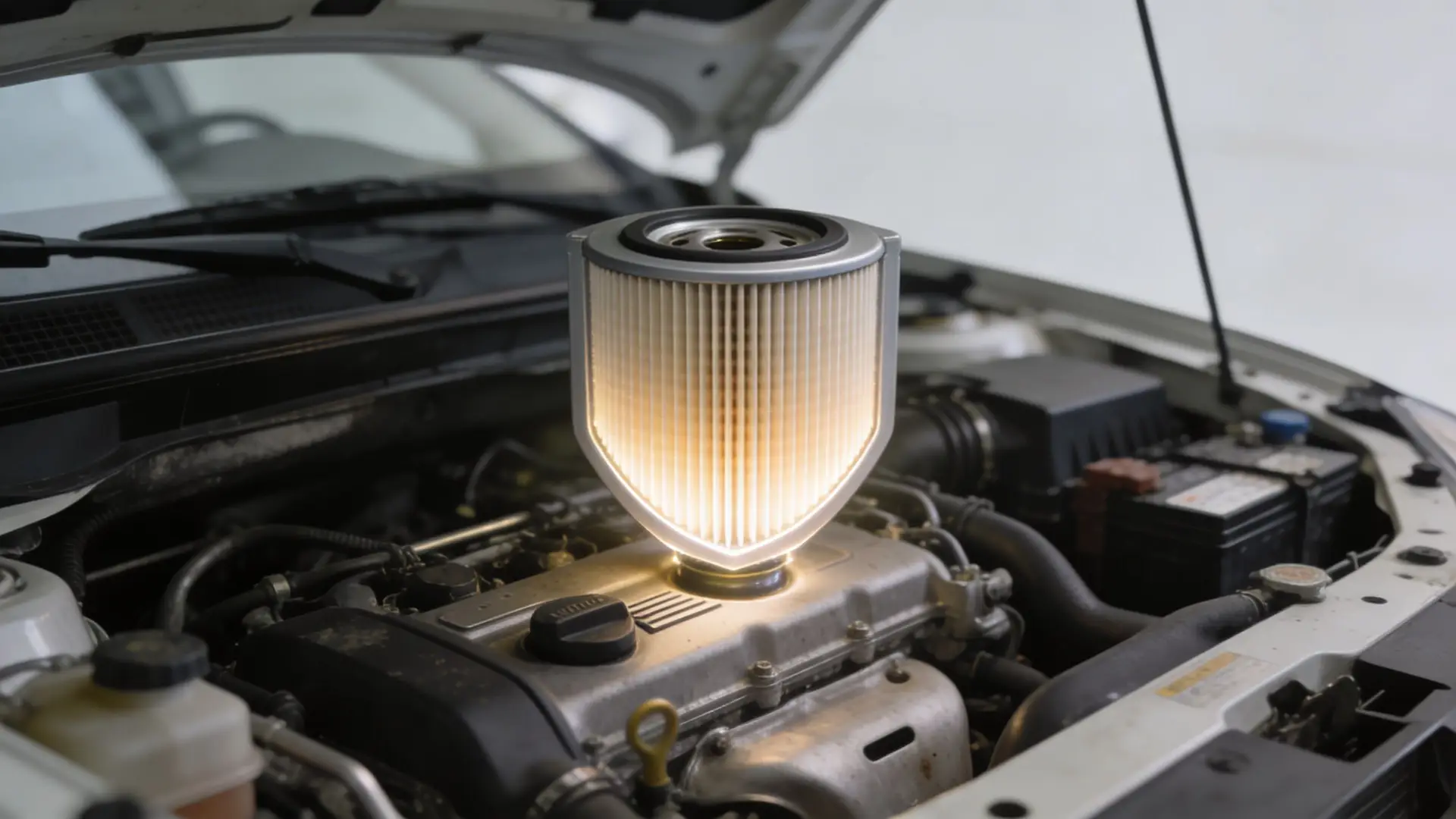
The oil filter is the part that keeps engine oil from turning into a dirty recirculating slurry. As the engine runs, tiny bits of metal, carbon, and outside dust can end up in the oil. If those particles stay in circulation, they pass through tight spaces between moving parts where heat and friction are already high.
A better comparison is an HVAC air filter in a Texas summer. It keeps working in the background, catching the stuff you do not want moving through the system. Leave it in too long, and flow suffers while more contamination hangs around where it should not.
That matters even more in Plano. Stop-and-go traffic means more idle time, more heat soak, and more short-trip operation where the oil does not always get an easy highway run. Add North Texas dust and humidity, and the filter has a tougher job than a car that spends most of its life cruising in mild weather.
What the filter is protecting
The filter helps protect bearings, camshafts, piston components, and other parts that depend on a thin film of clean oil to stay separated. Once abrasive debris keeps circulating, those surfaces can wear a little at a time. Drivers usually do not feel that happening from the seat.
Modern oil filters are built to capture very small particles. As explained by Mobil’s oil filter guide, many filters target contaminants in the roughly 10 to 20 micron range. That is small enough to matter inside the tight clearances of an engine.
If you are sorting out a full oil change schedule for your vehicle, remember this rule. Clean oil and a clean filter work as a team. Reusing a loaded filter with fresh oil is like pouring clean water through a rag that is already full of grit.
Practical rule: If the oil is being changed, the filter usually should be changed too.
That habit is simple, and it makes more sense in real Plano driving than stretching service based on a one-size-fits-all number.
Understanding the Standard Oil Filter Change Interval
Fresh oil poured through an old filter is a lot like fresh coffee run through a paper filter that is already full of yesterday’s grounds. The liquid is new. The filter is not. That is why the standard rule is simple. Change the oil filter every time you change the oil.
That recommendation lines up with how manufacturers and filter makers design the system to work. The exact mileage window depends on the vehicle, the oil, and the service schedule in your owner’s manual, but the pairing stays the same. Oil and filter service are one job, not two separate chores.
A filter has one main assignment. It traps the grit, carbon, and tiny wear particles that build up as the engine runs. Over time, that trapped material takes up space inside the filter media. In a place like Plano, where summer heat, humid air, dust, and stop-and-go traffic all push the engine harder, that loading can matter more than generic advice from a national article makes it sound.
Why the standard is every oil change
A used filter keeps everything it already caught. It does not become clean again when you drain the crankcase and add new oil.
That matters because the filter has a limit. As debris builds up, oil has a harder time passing through the media. To protect the engine from oil starvation, most filters include a bypass valve. If restriction gets high enough, that valve can open and let oil keep flowing. Flow is better than no flow. But oil moving through bypass is not getting the same level of filtration.
That is the part drivers usually do not see. The engine may sound normal. The dashboard may show nothing unusual. Meanwhile, the filter may be doing less of the cleaning work you are counting on it to do.
What the filter is catching during normal use
Inside a running engine, the oil is constantly picking up contamination. Some of it comes from normal wear. Some comes from combustion. Some comes from the outside world.
Common examples include:
- Dust and fine dirt: More relevant in North Texas than many drivers expect.
- Metal particles: Tiny wear material from internal engine parts.
- Carbon and combustion residue: Byproducts created as the engine runs.
- Moisture-related contamination: More likely with short trips and humid conditions.
- Sludge-forming material: The kind of buildup that makes oil work harder.
Plano drivers see a tougher mix than the textbook example. Long idle time on Central Expressway, short errands in hot weather, and airborne dust all add stress to the oil and the filter. That does not mean every car needs the shortest possible interval. It does mean the safe habit is to replace the filter whenever the oil is changed.
Why old advice still hangs on
You will still hear people say to change the filter every other oil change. That advice usually came from older habits, cost-cutting, or confusion about longer-life synthetic oil. The filter still has to catch contamination either way. Synthetic oil may support a longer service interval in some vehicles, but it does not give a loaded filter new capacity.
If you want to compare the filter decision with the rest of your maintenance timing, this guide on how often you should change oil helps put the full service schedule in context.
For most drivers, the right starting point is straightforward. Follow the manual’s mileage and time interval, and replace the oil filter at the same service. That is the cleanest, safest baseline before you fine-tune for your vehicle and your driving.
How Your Car and Driving Style Affect Filter Life
A Plano driver can do everything "right" on paper and still end up with a filter that ages faster than expected. The reason is simple. Oil filter life is not set by mileage alone. It is shaped by your engine, the oil you use, and the kind of driving your car sees every week.
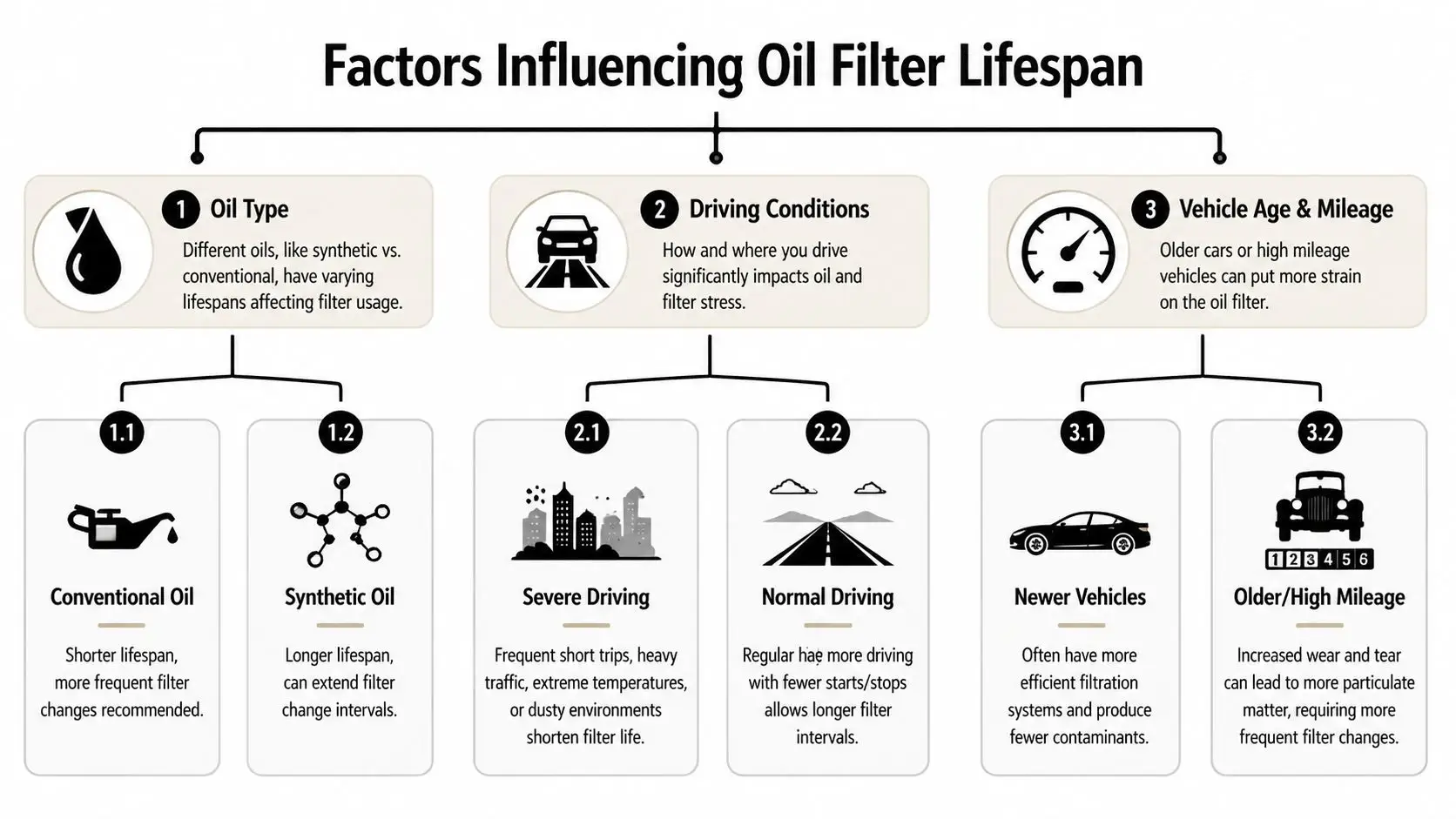
A good way to picture it is a coffee filter. If you run clean water through it, it lasts. If you run thick grounds and sediment through it all day, it loads up much faster. Your oil filter works the same way. The harder your engine works and the more contamination the oil carries, the sooner that filter reaches its limit.
Oil type changes the interval range
Synthetic oil usually holds up longer than conventional oil, especially in high heat. That matters in Plano, where summer temperatures and long idle time can punish oil fast. But longer-lasting oil does not mean the filter stops collecting debris. It still has the same job. It still needs to be replaced with the oil.
That is where drivers get tripped up. They switch to synthetic, see a longer oil interval on a bottle or a service sticker, and assume every part in the lubrication system can wait too. The filter does not get extra storage capacity just because the oil is synthetic.
Plano driving often falls into severe service
Many drivers hear "severe service" and picture towing or off-road use. In a shop, severe service often looks much more ordinary.
It includes habits and conditions like:
- Short trips around town: The engine may not stay hot long enough to boil off moisture and fuel dilution.
- Stop-and-go traffic: Common on Central Expressway and busy Plano corridors. Idling, braking, and re-accelerating put more stress on oil than steady highway cruising.
- Dust and construction exposure: Airborne grit around work zones adds contamination pressure.
- Texas heat and humidity: Heat thins oil faster under load, and humidity can contribute to moisture-related contamination during short-run driving.
A lot of Plano vehicles live in that pattern every day. School drop-offs, quick errands, heavy afternoon traffic, and summer A/C use all count. So does spending more time idling than moving.
Your engine design matters
Some engines are tougher on oil and filters.
Turbocharged engines run hotter and can contaminate oil faster. Diesel engines produce soot that places extra demand on the filter. Older, high-mileage engines may shed more wear material into the oil than a newer engine in the same traffic. Oil-life monitors can help you judge service timing, but they do not make the filter optional. They are a guide, not a free pass to stretch maintenance without checking how the vehicle is used.
One simple rule helps here. The harsher the use, the more conservative the interval should be.
Oil Filter Change Intervals for Plano Drivers
| Driving Condition | Conventional Oil | Synthetic Oil |
|---|---|---|
| Mostly highway, steady driving | 3,000 to 7,500 miles | 7,500 to 10,000 miles |
| Typical mixed driving | 3,000 to 5,000 miles | Follow vehicle guidance, but replace with each oil change |
| Stop-and-go traffic, short trips, dusty roads | Use the shorter end of the service range in your manual | Use a shortened interval based on your manual and driving conditions |
| Turbo or diesel use | Be conservative and follow the severe-service schedule | Be conservative and follow the severe-service schedule |
A practical way to judge your own filter life
If you are not sure which row fits you, start with your weekly routine, not your best-case driving day.
Ask yourself:
- Are most of your trips short? Short-trip driving is harder on the filter.
- Do you spend a lot of time idling or crawling in traffic? That points to a shorter service interval.
- Do you drive through construction zones or dusty areas often? The filter may load faster.
- Do you have a turbocharged, diesel, or high-mileage engine? Play it safe.
- Do you already use synthetic oil? Good. Still replace the filter every oil change.
That last point matters because generic online advice usually assumes ideal conditions. Plano drivers rarely get ideal conditions for long. Your owner's manual gives the starting point. Your heat, traffic, humidity, and daily route tell you whether to stay there or move to the shorter end of the schedule.
Symptoms of a Clogged or Overdue Oil Filter
A clogged filter doesn’t always wave a flag right away. Most of the warning signs start small. Drivers notice the engine feels different, sounds rougher, or seems less happy than usual.
What you might notice first
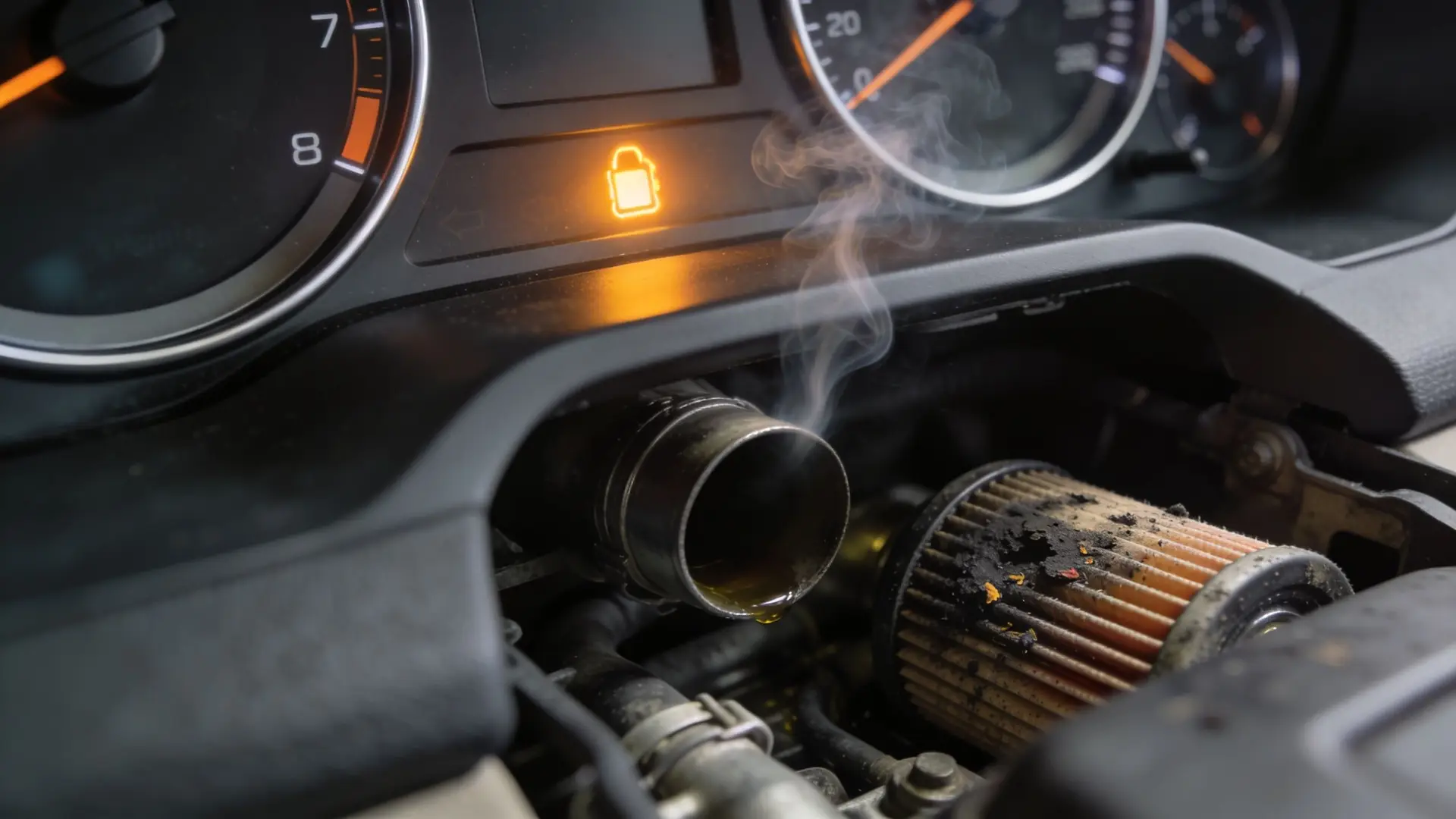
One common symptom is low oil pressure behavior. If oil has trouble moving through a restricted filter, the system can’t deliver the same clean flow the engine expects. Some vehicles show this with a warning light. Others show it through noisier operation.
Another sign is extra engine noise, especially on startup. When lubrication quality drops, metal parts don’t get the same cushion of clean oil between them. That can sound like ticking, tapping, or a rougher tone than normal.
You may also notice:
- Sluggish or rough engine feel: Restricted flow can affect how smoothly the engine runs.
- Dirty-looking oil sooner than expected: Old contamination can keep circulating.
- Burning smell or heat-related odor: Poor lubrication raises friction.
- Smoke or exhaust concerns: In some cases, poor oil control shows up indirectly through engine behavior.
Why the damage happens inside
The dangerous part is what you can’t see. When a filter clogs and reaches bypass mode, dirty oil can move past the filter media instead of through it.
Verified guidance notes that when an oil filter clogs and enters bypass mode, often after 4,000 miles, it can allow 10-30 micron particles to circulate and abrade cylinder walls and other critical components. The same verified source states that skipping even one filter change increases the odds of a costly repair by an estimated 25%, according to this JD Power oil filter interval article.
That’s the part many drivers miss. The filter doesn’t only fail when the engine stops running. It can fail by still allowing the engine to run while reducing protection.
Here’s a useful visual explainer on the topic:
Don’t wait for symptoms if you can avoid it
Symptoms are helpful for diagnosis, but they’re not a maintenance plan. By the time you hear metal noise or see a pressure light, the filter has already stopped doing its best work.
A clogged filter can still let the engine run. It just can’t protect it the same way.
If the car is overdue and showing any of these signs, don’t keep stretching it. Check the service history, inspect the oil condition, and get the filter replaced before minor wear turns into a larger repair.
Changing Your Filter At Home or Trusting The Pros
This part comes down to time, tools, and risk tolerance.
Some drivers like doing their own oil and filter service. I respect that. If you have the right wrench, drain pan, filter, seal lubrication, torque awareness, and a safe way to lift the vehicle, it can be a satisfying job. You get hands-on knowledge of your car, and you know exactly what parts went in.
When DIY makes sense
DIY works best for people who are comfortable with the details.
- You know the correct filter spec: The wrong filter can create fit or flow problems.
- You can install it cleanly: A dry gasket, double gasket, or cross-threaded filter can cause leaks fast.
- You dispose of used oil properly: That part matters more than people think.
- You have time to inspect for mistakes: Rushing is where DIY service goes sideways.
The job sounds simple because it is simple when everything goes right. It gets expensive when it doesn’t.
What professional service changes
Professional service takes away the common failure points. A trained technician matches the correct filter, checks sealing surfaces, verifies installation, and can spot related problems while the vehicle is already in the bay.
That matters for busy drivers. It also matters if your vehicle uses a cartridge-style housing, sits low to the ground, or has splash shields that make access annoying.
Here’s the tradeoff in a clean comparison:
| Option | Best part | Main risk |
|---|---|---|
| DIY service | Hands-on control | Installation mistakes, mess, disposal issues |
| Professional service | Convenience and inspection | Less personal involvement |
If you’ve ever wondered about the downside of cutting corners, this article on changing oil without changing the filter explains why that shortcut usually isn’t worth it.
For many Plano drivers, the value of professional service isn’t only the filter swap. It’s the extra set of eyes on the car, especially when schedules are packed and maintenance tends to get pushed back.
Simple Ways to Track Your Oil Service History
The biggest reason people miss filter changes isn’t lack of care. It’s lack of tracking.
Life gets busy. You mean to remember the mileage, then a few months pass. School pickup, work commutes, grocery runs, weekend errands. Suddenly you’re trying to recall whether the last service happened before or after that road trip.
Low-effort ways to stay on schedule
You don’t need a complicated system. Use one you’ll keep up with.
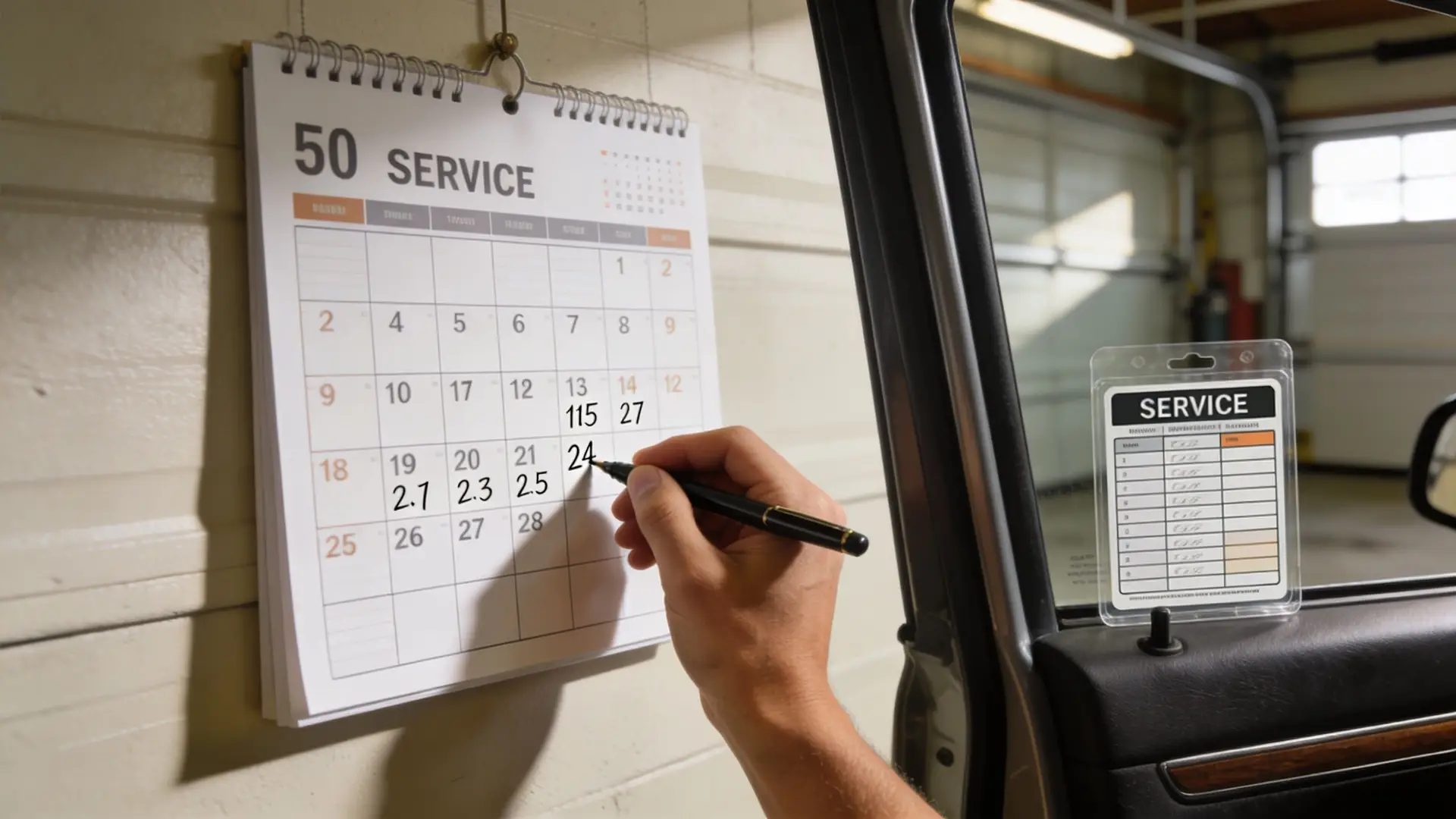
- Glovebox log: Keep a small notebook with date, mileage, oil type, and filter replaced.
- Phone reminder: Set a calendar reminder based on your last service mileage and driving habits.
- Service sticker: Old-school, but it works if you look at it.
- Maintenance app: Useful if you manage more than one vehicle in the family.
- Saved invoices: Keep digital copies in one folder so you can check history fast.
What to write down every time
A useful record has only a few pieces of information:
- Date of service
- Mileage at service
- Oil type used
- Filter changed yes or no
- Anything unusual found
That fifth item helps more than people expect. If a technician noted dirty oil, a leak, or heavy contamination last time, that context matters for the next interval.
Good maintenance records don’t just help you remember. They help you make better decisions.
If you want a broader planning tool, this guide to a car maintenance schedule by mileage is a practical way to line up oil service with the rest of your routine maintenance.
Why consistent records matter in Plano
Local driving conditions aren’t always gentle. Heat, humidity, and stop-and-go use can blur the gap between “probably fine” and “already overdue.” When you track service history, you don’t have to guess where you are in that window.
That’s especially helpful for families with multiple drivers, work vehicles, and older cars that don’t get driven the same way every week. A written record beats memory every time.
Frequently Asked Questions About Oil Filters
Can I change the filter without changing the oil
You can, but it usually isn’t the preferred routine unless there’s a specific service reason. Oil and filter work best as a pair. Fresh oil in an old filter starts dirty. A fresh filter with worn oil still leaves old oil in circulation.
Is it ever okay to skip the filter for one oil change
That shortcut is common, but it’s not good practice. The filter is already holding old contamination. Leaving it in place means the new oil has to pass through a used filter that may be partly restricted.
Does filter brand matter
Yes, fit and quality matter. The important thing is using the correct filter for the vehicle and service interval. A quality filter with proper sealing and good media is a better choice than the cheapest option that merely screws on.
What if my car has an oil-life monitor
Use it as a guide, not as permission to ignore real driving conditions. Oil-life monitors are helpful, especially on newer vehicles, but local use still matters. If your driving is mostly short trips, heavy traffic, or dusty roads, a more conservative approach makes sense.
If I use synthetic oil, can I wait much longer on the filter
Synthetic oil can support longer service intervals in the right vehicle and conditions, but the filter still needs to be changed with the oil. Synthetic doesn’t stop the engine from creating contamination. It just handles stress better than conventional oil.
What’s the simplest answer to how often change oil filter
For most drivers, the simplest and safest answer is this. Change the oil filter every time you change the oil, then shorten the interval if your driving conditions are hard on the vehicle.
If you’d rather stop guessing and get your maintenance handled by experienced professionals, Express Lube & Car Care offers no-appointment-needed service from ASE-certified technicians right here in Plano. They handle oil and filter changes, inspections, and broader vehicle care with fast turnaround, honest recommendations, and savings like $20 off oil change and additional services for military, first responders, and healthcare workers, $20 off batteries with the Express Lube Signature battery service, and $25 off oil changes on Ladies Day every Wednesday.