

A no appointment oil change is an oil change service that requires no prior scheduling, built specifically to give busy vehicle owners fast, reliable maintenance on their own timeline. Quick-lube providers like Jiffy Lube and Costa Oil have made this model standard, with service completed in 10–20 minutes and no phone call required. The industry term for this format is walk-in oil change service, and it runs on a first-come, first-served system designed to move vehicles through quickly. Understanding how this model works, what it costs, and where it fits your schedule helps you make a confident, informed decision every time your engine needs fresh oil.
How does a no appointment oil change work?
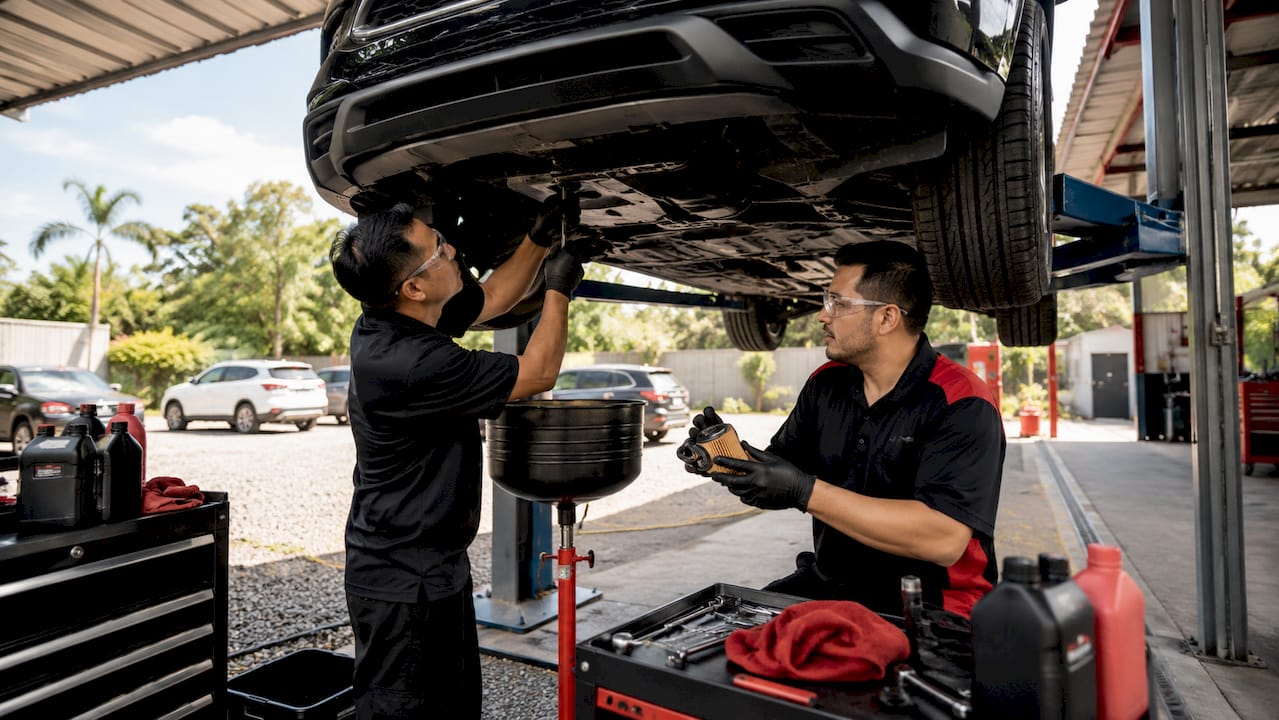
A walk-in oil change service operates on a first-come, first-served basis, meaning you pull in, join the queue, and a coordinated team handles your vehicle without any prior booking. This is the core mechanic that separates quick-lube shops from traditional dealerships or repair shops, where a scheduled appointment often means leaving your car for hours. The workflow is tightly sequenced, more like a commercial kitchen than a repair garage, with each technician handling a specific task simultaneously.
Here is the typical sequence at a quick-lube facility:
- Check-in. A service advisor confirms your vehicle’s make, model, mileage, and oil type. This takes roughly two minutes.
- Oil drain. A technician removes the drain plug beneath the vehicle and drains the used oil completely. Dirty oil thickens into sludge over time, which impairs engine lubrication and accelerates wear on pistons, bearings, and camshafts.
- Filter replacement. The old oil filter is removed from the filter housing and replaced with a new one. This step is non-negotiable for a proper oil change.
- Oil refill. Fresh oil is added to the manufacturer’s specified capacity, typically 4–6 quarts depending on engine size.
- Courtesy checks. Most providers, including Costa Oil and Jiffy Lube, include washer fluid refills and 20-point maintenance checks as part of the standard service. These checks cover tire pressure, air filters, and fluid levels.
- Final inspection and sign-off. The technician confirms oil level and pressure, replaces the drain plug with a torque wrench to spec, and clears the vehicle for pickup.
The entire process runs 10–20 minutes under normal conditions. That speed is possible because multiple technicians work the vehicle at once, not because any steps are skipped.
Pro Tip: Arrive with your vehicle’s owner manual or a note of the recommended oil type. Knowing whether your engine calls for 5W-30 conventional or 0W-20 full synthetic before you pull in saves time at check-in and prevents the wrong oil from going into your engine.
What are the benefits of walk-in oil change services?
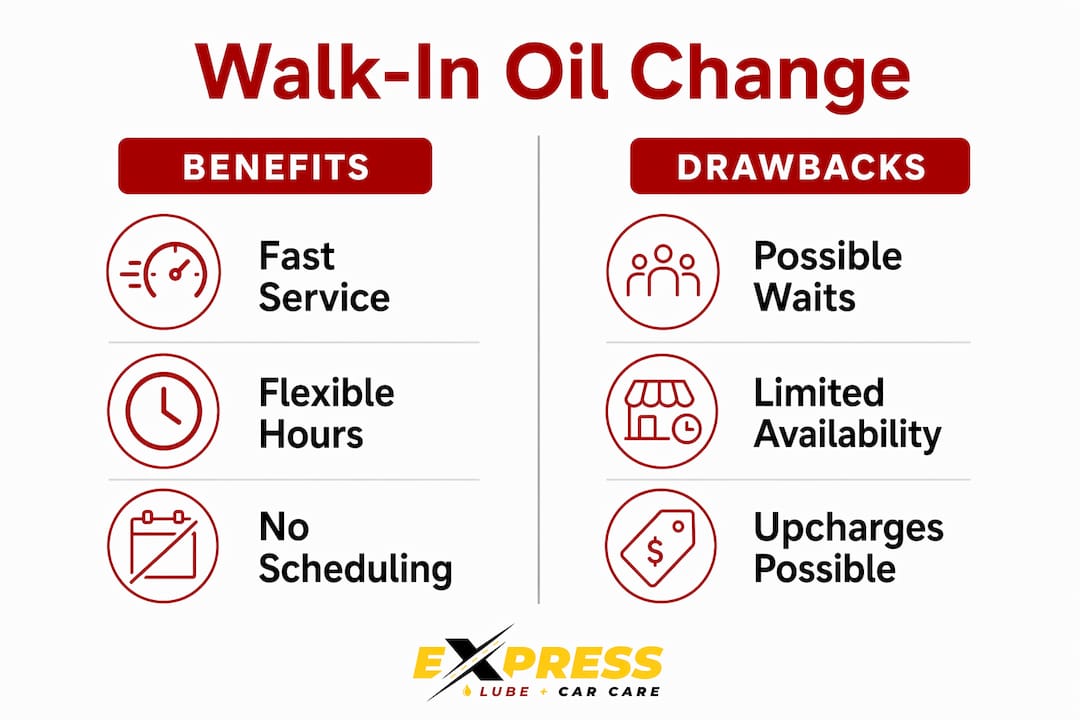
The primary benefit of an oil change without appointment is time. You do not need to plan a week ahead, call a service desk, or rearrange your schedule around a fixed slot. You pull in when it is convenient, and you are back on the road in under 30 minutes.
Here is what makes this model work for most vehicle owners:
- No scheduling friction. There is no phone call, no online booking form, and no waiting for a confirmation email. You decide when to go.
- Fast turnaround. The 10–20 minute service window means you can fit an oil change into a lunch break or a quick errand run.
- Stay in your vehicle. Many drive-through quick-lube setups allow you to remain seated in your car throughout the service. This is a practical advantage for parents with young children or anyone who prefers not to wait in a lobby.
- Complementary maintenance checks included. Providers like Costa Oil and Jiffy Lube bundle fluid top-offs and system inspections into the standard visit. You leave knowing your washer fluid, tire pressure, and air filter have all been reviewed.
- Multiple accessible locations. Quick-lube chains operate in high-traffic areas, making it easy to stop in near work, home, or a shopping center.
The no appointment auto service model also removes the psychological barrier of “I’ll schedule it next week.” That delay is one of the most common reasons oil changes get skipped, and skipped oil changes are one of the leading causes of premature engine damage.
Pro Tip: Check the provider’s website for current specials before you arrive. Many quick-lube shops post discounts that are not advertised at the location itself, and you can often show the offer on your phone at check-in.
What does a no appointment oil change cost?
Pricing for a same day oil change service varies by oil type, vehicle requirements, and location. Understanding the base price versus the final price is the most important thing to know before you pull in.
| Service Component | Typical Cost Range | Notes |
|---|---|---|
| Conventional oil change (up to 5 qts) | $35–$55 | Base price at most quick-lube chains |
| Synthetic blend oil change | $55–$75 | Mid-tier option for higher-mileage engines |
| Full synthetic oil change | $75–$100+ | Best protection; longer service intervals |
| Oil disposal fee | $5 | Charged separately at some providers |
| Premium filter upgrade | $10–$20 | Standard filter included; premium is an upcharge |
Several cost factors catch drivers off guard:
- Extra quarts. If your engine requires more than 5 quarts, each additional quart is billed separately.
- Premium oil upcharges. Choosing full synthetic oil adds cost but extends your protection interval, which can reduce the total number of oil changes per year.
- Disposal fees. A $5 disposal fee is common at chains like Costa Oil. It is a legitimate charge, but it should be disclosed upfront.
- Filter housing labor. Some vehicles have cartridge-style filter housings that require more time to access, which may add a small labor fee.
The best practice is to ask for a full itemized quote before the technician begins. A reputable provider will give you that without hesitation. For a detailed breakdown of what drives oil change pricing, the oil change cost guide from Express Lube & Car Care covers the variables clearly.
What are the drawbacks of no appointment oil changes?
Walk-in oil change service is not without limitations. Knowing the potential downsides helps you plan around them and choose the right provider.
Wait times can increase significantly during peak hours, typically Saturday mornings and weekday lunch rushes. The first-come, first-served model means a full queue adds 20–40 minutes to your visit, even if the oil change itself takes 15 minutes. This is the most common complaint from drivers who expect zero wait time.
Service quality varies between quick-lube shops. Not every location uses the same grade of replacement filter, and not every technician has the same level of experience. A filter that is not torqued to spec on the drain plug is a real risk at lower-quality shops.
A few additional points to keep in mind:
- Verify what is included. Ask specifically whether a new oil filter is part of the base price. Some budget services charge extra for the filter.
- Confirm the oil type going in. Mistakes happen when a technician assumes conventional oil when your engine requires full synthetic.
- Check technician certification. Certified technicians from programs like ASE (Automotive Service Excellence) bring a measurable standard of competence to the job.
- Read recent reviews. A quick look at Google reviews for the specific location, not just the chain, tells you more than any marketing claim.
Pro Tip: If you drive a vehicle with a turbocharged engine or a high-performance model, always confirm the oil specification with the technician before service begins. Turbo engines run hotter and require oils with specific viscosity ratings. The wrong oil in a turbo engine causes faster wear on the turbocharger bearings.
How to get the most out of your walk-in oil change visit
Preparation takes less than five minutes and makes a real difference in the quality of your service. Follow these steps to get a smooth, efficient experience every time.
- Arrive early in the day. The first hour after opening is consistently the least busy time at quick-lube shops. You reduce your wait to near zero and get a fresh technician at the start of their shift.
- Know your vehicle’s oil specification. Check the owner’s manual or the sticker inside your driver’s door jamb. Bring the oil type, viscosity grade, and the last service mileage.
- Review the service menu before you arrive. Most providers post their oil change specials online. Knowing the price tiers in advance prevents upsell pressure at the counter.
- Ask what the service includes. Confirm that a new oil filter, drain plug replacement, and fluid top-offs are part of the standard package before you approve the work.
- Track your service history. Keep a simple note on your phone with the date, mileage, and oil type from each visit. This takes 30 seconds and gives you a reliable record for warranty purposes and resale value.
- Ask about synthetic oil if your mileage is high. Vehicles over 75,000 miles often benefit from a high-mileage synthetic blend, which contains seal conditioners that reduce minor leaks. The upcharge is modest compared to the protection it provides.
The drive-through oil change process at well-run facilities covers all of these steps automatically. At less organized shops, asking the right questions upfront protects your engine and your wallet.
Key takeaways
A no appointment oil change is the fastest, most flexible way to maintain your engine, provided you choose a reputable provider and understand the full cost before service begins.
| Point | Details |
|---|---|
| Walk-in model is fast | Most quick-lube shops complete oil changes in 10–20 minutes with no scheduling required. |
| First-come, first-served applies | Arrive early to avoid peak-hour waits that can add 20–40 minutes to your visit. |
| Base price rarely covers everything | Disposal fees, premium oil, and extra quarts are common upcharges to confirm before service starts. |
| Service quality varies by location | Verify filter replacement, oil type, and technician certification before approving any work. |
| Preparation shortens your visit | Knowing your oil spec and service history in advance removes delays at check-in. |
The honest truth about no appointment oil changes
At Express Lube & Car Care, we have seen both sides of this service model. The convenience is real. Drivers who use walk-in oil change services consistently stay on top of their maintenance intervals because the barrier to getting it done is so low. That matters more than most people realize. A missed oil change at 5,000 miles does more cumulative damage than most drivers expect, especially in stop-and-go traffic where oil degrades faster.
What concerns us is the assumption that fast means thorough. Speed and quality are not opposites, but they require discipline to maintain together. A well-run quick-lube bay operates like a professional kitchen: every technician knows their role, every tool is in its place, and the process is repeatable. When that discipline breaks down, the 15-minute oil change becomes a liability.
Our honest recommendation is this: use no appointment services freely for routine conventional or synthetic oil changes on standard vehicles. If you drive a turbocharged engine, a diesel, or a vehicle with a cartridge-style filter housing, take an extra two minutes to call ahead and confirm the shop has the right parts and experience. The difference between a quick-lube shop and a dealership is not always quality. It is often just process. Find a shop with a solid process, and the no appointment model works exceptionally well.
— Express Lube & Car Care
Fast, reliable oil changes at express lube & car care
Express Lube & Car Care in Plano offers drive-through oil changes with no appointment needed, completed by certified technicians who follow a consistent, documented process on every vehicle. You stay in your car, the service runs in minutes, and you leave with a full record of what was done.
Current oil change specials include pricing on conventional, synthetic blend, and full synthetic options, with transparent itemization so you know exactly what you are paying before the drain plug comes off. Express Lube & Car Care also offers discounts for military personnel and healthcare providers as part of its commitment to the Plano community. Pull in when it works for you. No scheduling required.
FAQ
What is a no appointment oil change?
A no appointment oil change is a walk-in oil change service that requires no prior scheduling. Providers operate on a first-come, first-served basis and typically complete the service in 10–20 minutes.
How long does a walk-in oil change take?
Most quick-lube shops complete a standard oil change in 10–20 minutes under normal conditions. Wait times may increase during peak hours such as Saturday mornings or weekday lunch periods.
Are there extra fees at no appointment oil change shops?
Yes. Common upcharges include a disposal fee, premium oil or filter upgrades, and extra quarts beyond the base five. Always ask for a full itemized quote before approving the service.
Is synthetic oil worth the extra cost at a quick-lube shop?
Full synthetic oil costs more upfront but extends your service interval and provides better protection, particularly for turbocharged engines and high-mileage vehicles. The added cost is often offset by fewer annual oil changes.
How do i know if a quick-lube shop is reputable?
Check Google reviews for the specific location, confirm that ASE-certified technicians are on staff, and ask whether a new oil filter is included in the base price. A reputable shop answers these questions without hesitation.