

If your car bounces, sways, or pulls to one side, that is your suspension system asking for help, and waiting rarely makes the fix cheaper. We recommend a professional inspection as soon as you notice these signs. Same-day, no-appointment suspension inspections at a local shop are available, so you can get an answer the same day you call.
TL;DR:
- Replacing shocks and struts typically costs between $1,144 and $1,348 per pair, with additional expenses for related parts like ball joints and tie rods.
- Immediate suspension issues such as excessive bouncing, uneven tire wear, steering vibration, or knocking noises require prompt inspection to prevent further damage.
- A comprehensive suspension check includes visual inspection, bounce tests, steering play checks, tire examination, and a test drive, often revealing related wear items needing simultaneous repair.
- Most common repairs can be completed within the same day if parts are available, but multi-component or special-order parts may extend turnaround time.
- Regular maintenance like tire rotation, proper inflation, and timely alignment after impacts prolong suspension life and reduce the risk of costly repairs.
Table of Contents
- Common symptoms that mean you should bring your car in now
- What to expect during a suspension inspection and diagnosis
- Typical repairs, parts, and what they cost
- Timelines: how long inspections and common repairs take
- Maintenance and prevention to extend suspension life
- How to choose a trustworthy suspension shop
- Warranty and service guarantees at local suspension shops
- Why we prioritize quick, transparent suspension service
- Book a suspension inspection or shocks and struts service today
- FAQ
- Sources
Common symptoms that mean you should bring your car in now
Some suspension warning signs point to a problem that can wait a few days. Others mean you should get the car looked at before your next long drive. Excessive bouncing after a bump, a noticeable sway in corners, tire cupping or uneven tire wear, steering wheel vibration, and clunking or knocking noises are the symptoms most often tied to worn suspension components.
A steering wheel that starts vibrating at highway speed right after you hit a pothole is a classic example of sudden suspension or wheel damage, not something to shrug off. Our guide to bad shocks and struts breaks down each sign in more detail, and our steering wheel vibration explainer walks through what that particular symptom usually means.
- Bouncing or swaying: the car continues to bounce several times after a bump instead of settling quickly.
- Uneven tire wear or cupping: scalloped patterns on the tread usually mean the shocks or struts are no longer controlling tire contact properly.
- Steering vibration or pulling: vibration at speed or a car that drifts to one side can point to suspension or steering wear.
- Noises: clunks, knocks, or creaks over bumps usually mean a worn bushing, ball joint, or mount.
What to expect during a suspension inspection and diagnosis
A proper suspension check is more than a quick glance underneath the car. Our technicians work through a consistent sequence so nothing gets missed, and that order matters because suspension parts wear together.
- Visual inspection of shocks, struts, springs, control arms, and bushings for leaks, cracks, or corrosion.
- Bounce test at each corner of the vehicle to check how quickly the suspension settles.
- Steering and play checks on tie rods, ball joints, and the steering rack.
- Tire and wheel exam for cupping, uneven wear, or damage that points back to suspension issues.
- Test drive to confirm noises, pulling, or vibration reported by the driver.
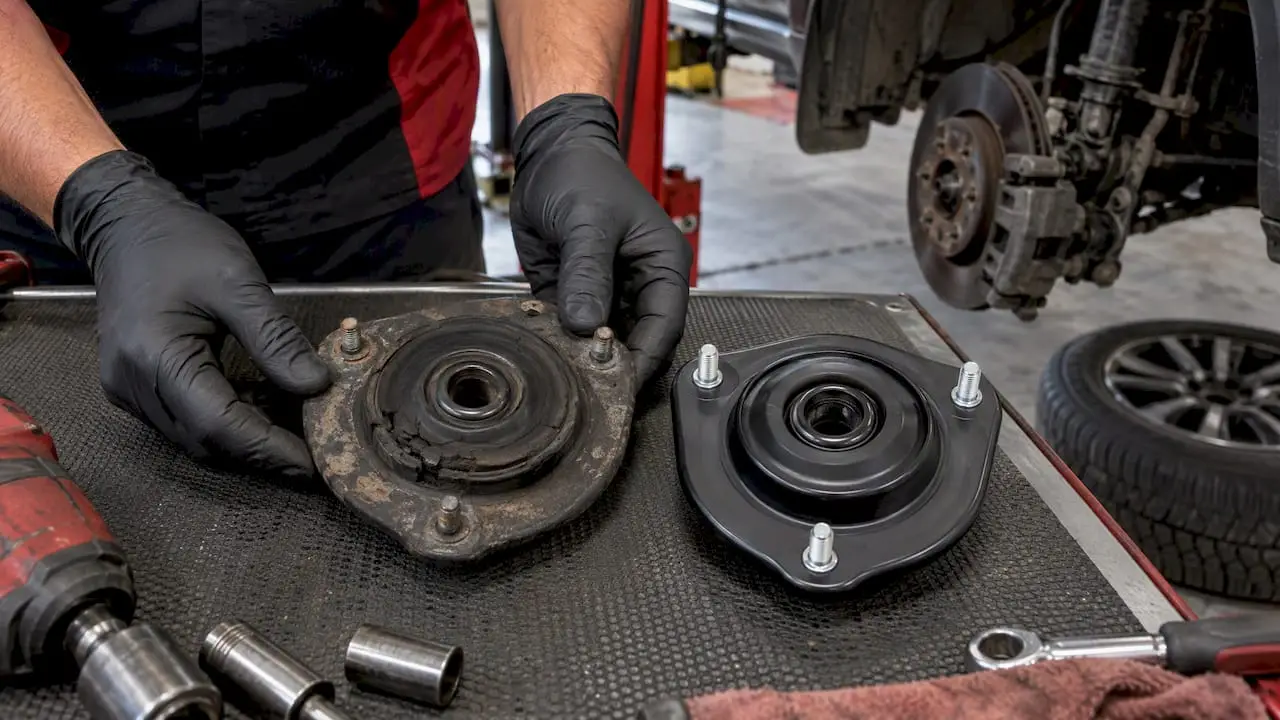
A full check like this often reveals related wear items, a loose tie rod end alongside a worn ball joint, for instance, and addressing them together during one visit usually saves on labor compared with separate trips. We document every finding with a digital inspection that includes photos, and our ASE-certified technicians walk you through what they found before any work begins.
Pro Tip: Ask to see the inspection photos yourself. A shop that shows you the worn part next to a new one is giving you the clearest picture of what actually needs attention.
Typical repairs, parts, and what they cost
Suspension repair costs vary widely depending on what needs replacing and what your vehicle requires. The most common jobs we see involve shocks and struts, ball joints, tie rod ends, control arm bushings, and full control arm assemblies.
- Shocks and struts: typically replaced in pairs on the same axle to keep handling balanced.
- Ball joints and tie rods: wear items that affect steering precision and tire wear when loose.
- Control arm bushings: rubber or polyurethane bushings that degrade with age and road exposure.
- Control arms: sometimes replaced as a full assembly when bushings or ball joints are integrated into the unit.
RepairPal estimates the average total cost for a shock or strut replacement falls between roughly $1,144 and $1,348, though the final number depends heavily on your vehicle and local labor rates. Parts quality plays a role too: OE parts generally cost more than quality aftermarket equivalents, and aftermarket options from a trusted shop can lower your bill without sacrificing reliability. Pothole damage adds its own cost driver: AAA notes that pothole-related repairs often run into the hundreds of dollars, and shocks or struts damaged by a hard impact can push a bill toward the higher end of that range.
Timelines: how long inspections and common repairs take
Planning around a repair is easier when you know roughly what to expect. A quick safety check, bounce test, visual look, and a short test drive, can often be done same day, sometimes while you wait. A full diagnostic that covers every corner of the suspension plus a steering system check takes longer, since technicians need time to road test and compare notes with the inspection findings.
- Quick safety check: generally finished within an hour, suitable when you just want a second opinion on a noise or vibration.
- Full diagnostic inspection: typically takes longer, since it includes a lift inspection, bounce test, and test drive.
- Shock or strut replacement: a pair replacement on one axle is often a same-day job when parts are in stock.
- Ball joint or tie rod repair: usually completed the same day, though complexity varies by vehicle.
- Alignment after strut or shock work: RepairPal recommends a four-wheel alignment any time struts are replaced, since ride height and alignment angles shift with new parts.
Same-day service is realistic for most individual repairs when parts are readily available. Jobs that involve multiple axles, rare parts, or a combination of suspension and steering work sometimes stretch past a single day, so it helps to ask for a timeline up front rather than assume.
Maintenance and prevention to extend suspension life
Good habits behind the wheel protect your suspension just as much as scheduled service does. Slowing down before rough patches, avoiding potholes when it’s safe to do so, and keeping tire pressure at the recommended level all reduce the stress your suspension absorbs every day.
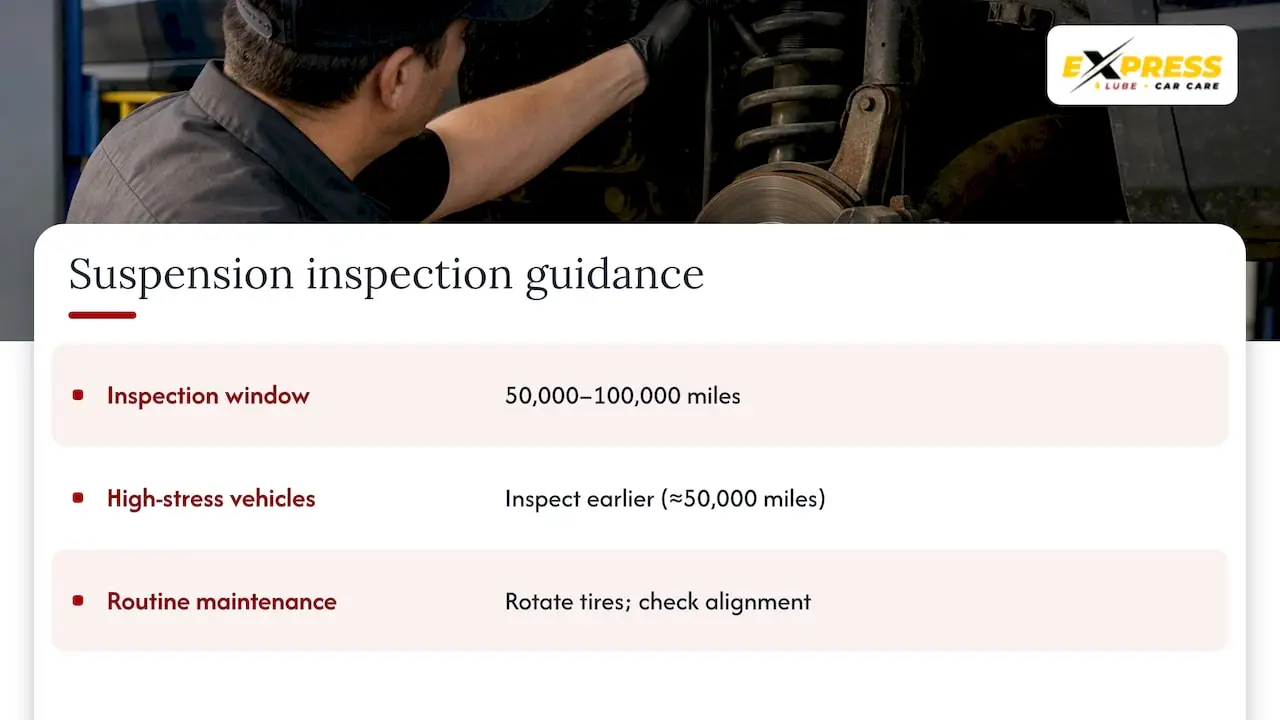
Routine maintenance matters just as much. Rotating tires on schedule helps you catch uneven wear early, and checking alignment after a hard impact, rather than waiting for symptoms, catches small problems before they turn into expensive ones. Our guide to alignment versus balance explains how to tell which service you actually need after you hit a curb or deep pothole.
As a general guideline, shocks and struts often need inspection or replacement between 50,000 and 100,000 miles, though frequent rough roads or heavy loads can shorten that window considerably. Drivers who regularly hit potholes or unpaved roads should lean toward the earlier end of that range.
How to choose a trustworthy suspension shop
A reliable shop makes its reasoning visible instead of asking you to take its word for it. Before you commit to a repair, a few questions separate a shop worth trusting from one worth avoiding.
- Ask whether technicians are ASE-certified and how they document their findings.
- Ask to see inspection photos of the actual worn parts, not just a verbal description.
- Confirm the shop replaces shocks or struts in pairs and performs an alignment afterward.
- Ask about parts options (OE versus aftermarket) and what warranty coverage applies to each.
Vague estimates with no itemized breakdown, a refusal to show photos, and pressure to add services you didn’t ask about are the clearest red flags. A shop confident in its diagnosis will give you a written estimate and a realistic timeline without hesitation.
Pro Tip: If a quote feels high, ask what’s included. A bundled estimate covering parts, alignment, and labor is easier to compare than a bare parts price.
Warranty and service guarantees at local suspension shops
Warranty terms differ from shop to shop, which makes them worth asking about before you approve any repair. A straightforward shop will tell you upfront what’s covered: parts, labor, or both, and for how long. We back our suspension work with a 24 month or 24,000 mile warranty, whichever comes first, giving you coverage that extends well past the day you drive off the lot.
It also helps to ask whether warranty coverage depends on the parts chosen. OE parts and quality aftermarket parts can carry different manufacturer backing, and a shop should explain that difference rather than leave you to guess. Ask whether the warranty is honored at other locations if you travel, and get the terms in writing rather than relying on a verbal promise. A shop that hesitates to put its warranty on paper is one worth questioning further.
Why we prioritize quick, transparent suspension service
The suspension process is built around what drivers need: a straight answer, fast. No appointment is required, inspections are documented with photos, and customers are walked through findings before any work begins. That transparency matters most when you’re deciding whether a repair is urgent or something you can plan around.
Many customers prioritize getting back on the road safely without losing a day waiting on a diagnosis. Same-day service, when parts allow it, aims to keep that promise realistic.
— Express Lube & Car Care
Book a suspension inspection or shocks and struts service today
We make suspension repair straightforward: no appointment needed, same-day service in most cases, and a digital inspection with photos so you see exactly what our technicians find. Our shocks and struts service covers the most common suspension repairs, and our broader services page lists check engine diagnostics, alignment-related services, and more under one roof.
Here’s what to bring and expect when you visit:
- Mention any specific symptoms, noises, vibration, pulling, so technicians know where to start.
- Expect a digital inspection with photos before any repair work begins.
- Ask about our current service specials if cost is a factor.
Stop by our Plano shop or request your visit through our appointment page and get a clear answer on your suspension the same day you ask for one.
FAQ
How much does it cost to completely replace a car’s suspension system?
A full suspension replacement cost depends heavily on how many components need work, but shock or strut replacement alone averages roughly $1,144 to $1,348 according to RepairPal estimates. Adding ball joints, tie rods, or control arms increases the total, so a shop should give you an itemized estimate after inspection rather than a single flat number.
How long do suspension repairs take?
Many common suspension repairs, including shock or strut replacement on one axle, can be completed the same day when parts are in stock. More involved jobs covering multiple components or requiring special-order parts sometimes take longer, so it’s worth asking for a timeline after the inspection.
Can car suspension be repaired?
Yes, most suspension problems are repairable rather than requiring a full system replacement. Shocks, struts, ball joints, tie rods, and bushings are typically replaced individually or in pairs, and a proper inspection determines exactly which parts need attention.
How can I make my car suspension ride smoother?
Replacing worn shocks or struts in pairs, as RepairPal recommends, restores even damping and a smoother ride. Following that with a four-wheel alignment and keeping tires properly inflated also helps the suspension perform the way it was designed to.
Sources
- Suspension shock or strut replacement cost estimate | RepairPal
- Signs of suspension damage | UTI collision blog
- Your car maintenance checklist | Consumer Reports
- Avoid pothole damage | AAA blog