

Understanding why oil change intervals vary mileage by mileage across different vehicles and drivers is something most car owners never get a straight answer on. You’ve probably heard “every 3,000 miles,” then seen your dashboard say 7,500 miles are still safe. Both can be right. Neither tells the whole story. The truth is that mileage is one factor among many. Driving habits, oil chemistry, engine technology, and even how long your car sits in the garage all shape when your oil actually needs changing. This guide breaks down every factor so you can make smarter decisions for your engine.
Table of Contents
- Key takeaways
- Why oil change intervals vary mileage reading to reading
- How driving conditions shorten or extend your interval
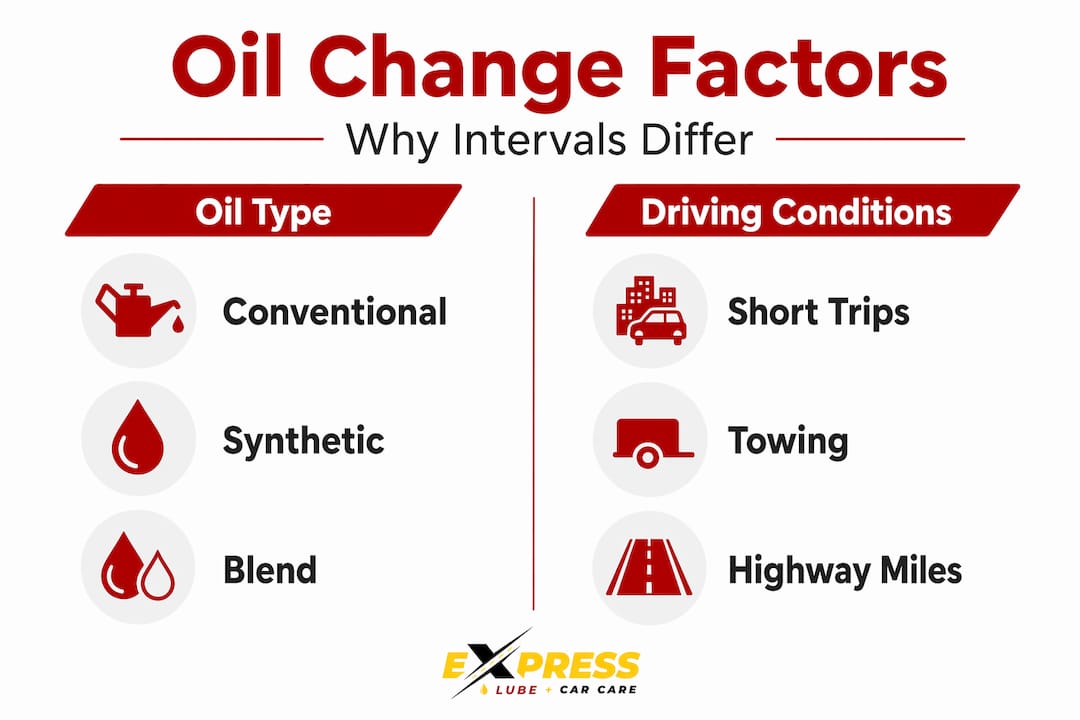
- Oil type and engine technology: the biggest variables
- Why the calendar matters as much as the odometer
- Applying this knowledge to your maintenance schedule
- What I’ve learned after years of watching drivers get this wrong
- Keep your engine protected with expert oil care
- FAQ
Key takeaways
| Point | Details |
|---|---|
| Mileage alone is incomplete | Oil degradation depends on engine load, temperature cycles, trip length, and oil type, not distance alone. |
| Driving conditions cut intervals | Severe conditions like short trips and towing can require changing oil at half the normal recommended mileage. |
| Oil type changes the math | Full synthetic oil can safely extend intervals to 10,000–15,000 miles, while conventional oil typically needs changing at 5,000–7,500 miles. |
| Time matters too | Oil degrades from oxidation and moisture even in a parked car, making annual changes necessary regardless of low mileage. |
| Your oil life monitor is a guide | Oil life monitors estimate degradation indirectly and can be inaccurate under unusual driving patterns, so they should inform, not dictate, your schedule. |
Why oil change intervals vary mileage reading to reading
Most drivers assume an oil life monitor works like a fuel gauge. It does not. Rather than sensing oil chemistry directly, these systems use engine operating data to estimate how much protective life the oil has left. Oil-life monitoring algorithms rely heavily on engine temperature cycles and cold start counts, because cold starts generate the most chemical stress on oil.
Modern systems track several parameters simultaneously:
- Engine revolutions: Higher RPM accumulates stress faster, degrading oil more quickly than low-speed cruising.
- Temperature cycles: Repeated heating and cooling breaks down the additive package in your oil over time.
- Trip length: Short trips that never allow the engine to fully warm up create a more corrosive environment inside the crankcase.
- Load conditions: Hauling heavy cargo or driving at sustained high speeds forces the oil to work harder.
The result is a system that adapts to your actual driving rather than resetting at a fixed mileage. Oil life monitors calculate remaining life based on these engine operating patterns and reset automatically after each oil change, giving a personalized interval rather than a generic one.
Pro Tip: If your driving shifts significantly from your usual pattern, such as a long highway road trip after months of city commuting, your oil life monitor will adjust its estimate. Check it again a week after the trip to see if the reading changed noticeably.
One important limitation: oil-condition estimation depends on engine parameters rather than any direct physical measurement of the oil itself. Extended idling, prolonged stop-and-go traffic, and other non-uniform patterns can cause the monitor to underestimate degradation. That is why treating the monitor as a guide rather than an absolute rule is the right approach.
How driving conditions shorten or extend your interval
Here is where the numbers get genuinely surprising. Two drivers with the same vehicle, same oil, and same annual mileage can have completely different ideal service intervals based purely on how and where they drive.
-
Short trips under 5 miles. Trips under 5 miles prevent complete evaporation of moisture and fuel contaminants in the oil. When oil never reaches full operating temperature, water and acids accumulate in the crankcase and attack metal surfaces. If most of your driving is a short commute or errand runs, you are operating under what manufacturers classify as “severe service” conditions.
-
Frequent towing or hauling. Towing a trailer, hauling heavy loads in a pickup, or consistently carrying a full van load generates elevated engine temperatures and increased oil shear stress. Your oil breaks down faster than the manufacturer’s normal service interval assumes.
-
Extreme climate driving. Operating in very high heat or extreme cold accelerates thermal degradation and increases wear during cold starts. Drivers in Texas summers or northern winters experience more rapid oil degradation than someone driving in a mild climate year-round.
-
Stop-and-go traffic. Continuous acceleration and braking cycles, common in urban driving, keep oil temperatures fluctuating and prevent the oil from stabilizing at an efficient operating temperature.
Severe driving conditions like these often require halving the manufacturer’s normal oil change interval. If your manual says 7,500 miles under normal service, severe conditions may mean 3,500 to 4,000 miles is the safer target.
Pro Tip: Most owner’s manuals define “normal” and “severe” service with a checklist. Pull yours out and run through it honestly. The majority of urban drivers qualify as severe service users, which means the conservative interval is not paranoia — it is the right call.
Your car maintenance schedule by mileage should reflect these real-world conditions, not just a number on a sticker. Understanding your driving pattern is the single most useful thing you can do before deciding how often to change oil.
Oil type and engine technology: the biggest variables
The old 3,000-mile rule made sense in an era of conventional oil and older engine tolerances. Neither of those conditions still applies to most vehicles on the road today.
| Oil Type | Typical Mileage Interval | Key Characteristic |
|---|---|---|
| Conventional | 3,000–5,000 miles | Lower thermal stability, breaks down faster |
| Synthetic blend | 5,000–7,500 miles | Improved performance over conventional in variable conditions |
| Full synthetic | 10,000–15,000 miles | Superior thermal stability, consistent molecular structure |
Full synthetic oils have better thermal stability and a longer service life, enabling the extended intervals now recommended by most manufacturers for modern vehicles. Unlike conventional oil, which is refined from crude oil and contains varying molecular sizes, full synthetic is engineered at the molecular level. That uniformity means it resists breakdown under heat and pressure far better.
Engine design has contributed equally to longer intervals. Tighter manufacturing tolerances, more efficient combustion chambers, and improved filtration systems mean that oil degrades more slowly in modern engines than it did in those built decades ago. Additive technology has advanced as well. Modern oil formulations include detergents, anti-wear additives, and viscosity modifiers that maintain protective qualities significantly longer than older blends.
That said, the risk of extended intervals leading to low oil levels is real. Engines consume a small amount of oil over time, and longer service intervals create more opportunity for oil levels to drop below safe thresholds without the driver noticing. Checking your dipstick every 1,000 miles during an extended interval is a habit worth building. For a thorough breakdown of how these two oil types differ, the guide on synthetic vs. conventional oil walks through the technical differences in accessible terms.
Why the calendar matters as much as the odometer
Picture a car that sits in a garage for six months. The owner drives it occasionally, racking up only 1,200 miles since the last oil change. The oil life monitor reads 60%. Does the car need an oil change? Almost certainly yes.
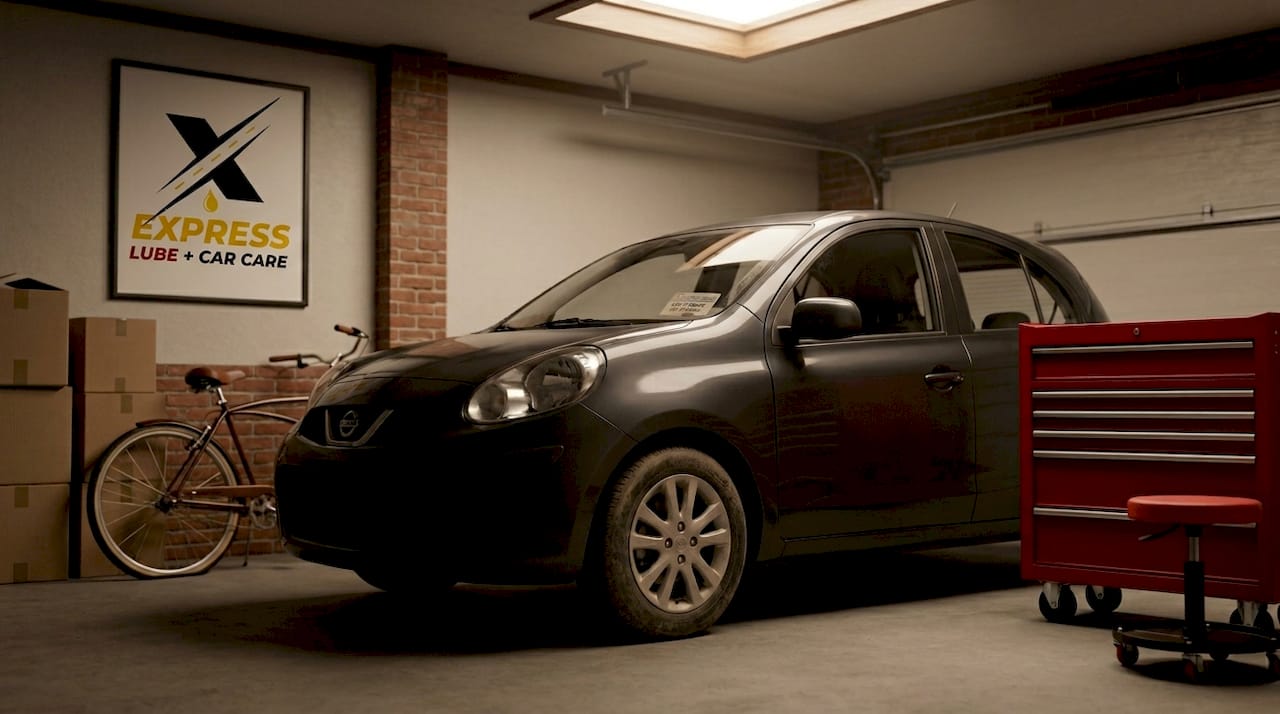
Oil ages chronologically due to oxidation and moisture even when a car is not being driven. When the engine sits, small amounts of moisture condense inside the crankcase. Over weeks and months, that moisture reacts with combustion byproducts already present in the oil and forms corrosive acids. The oil’s additive package also degrades simply from exposure to heat during those occasional starts.
Key facts about time-based oil degradation:
- Most manufacturers recommend an oil change at least once per year regardless of mileage, even for low-mileage vehicles.
- Maintenance is often required by miles or time, whichever comes first, precisely because chronological aging is real and measurable.
- Oil life monitors cannot fully account for time-based aging when a vehicle sits primarily unused between infrequent drives.
- Vehicles that are driven seasonally, such as a summer convertible or a winter-only four-wheel drive, need special attention to calendar-based service intervals.
The practical takeaway is straightforward: if twelve months have passed since your last oil change, change it. Even if your monitor still shows healthy oil life and your odometer has barely moved. The chemistry does not care that you were not driving.
Applying this knowledge to your maintenance schedule
Now that you understand the factors driving interval variability, here is how to translate that into a personal maintenance plan that actually protects your engine.
- Identify your service category honestly. Review the severe vs. normal service definitions in your owner’s manual. Short daily trips, regular towing, extreme heat or cold, and heavy traffic all push you into the severe category. Most urban drivers belong there.
- Use your oil life monitor as a guide, not a final word. The oil life monitoring system balances engine protection with minimizing unnecessary oil changes, but it uses indirect estimates. Pair the monitor reading with your honest driving assessment and the 12-month time rule.
- Match your oil type to your usage. If you drive short trips frequently in a hot climate, full synthetic is worth the modest extra cost. Its thermal stability protects your engine in exactly the conditions that punish conventional oil fastest. The resource on how often to change your oil can help you match your usage pattern to the right interval.
- Consider oil analysis for unusual cases. Oil analysis remains the most definitive method to confirm oil condition and optimize intervals for specialized use cases such as track driving, commercial fleet vehicles, or high-mileage engines. A lab analysis costs roughly $30 and tells you exactly what is happening inside your engine.
- Keep service records. Accurate records give you a clear picture of whether your intervals are working, and they protect your engine warranty if questions arise.
What I’ve learned after years of watching drivers get this wrong
I’ve seen a consistent pattern: drivers fall into one of two traps. Either they change their oil every 3,000 miles out of habit, wasting money on perfectly good oil. Or they stretch intervals far past what their driving conditions actually support because their monitor still shows green.
The second group worries me more. Urban drivers doing short daily trips are running their engines on oil that is far more degraded than the mileage number suggests. I’ve seen customers come in with oil that looked more like sludge than lubricant, yet the vehicle had only accumulated 5,000 miles on the current change. Short trips in city traffic are genuinely brutal on oil chemistry.
The other thing I’ve noticed is a misplaced confidence in synthetic oil. Yes, full synthetic supports longer intervals. But “longer” means longer under normal service conditions. A driver doing constant short trips in a hot climate on full synthetic still needs to change that oil more frequently than the 10,000-mile number implies. Oil type changes your interval ceiling, but your driving conditions set the actual floor.
My honest advice: respect both the mileage and the calendar, assess your driving conditions honestly against your owner’s manual, and never assume that a green oil life readout means you are in the clear if you have not turned a calendar page in nearly a year.
— Express Lube & Car Care
Keep your engine protected with expert oil care
At Express Lube & Car Care, we see every variety of driving pattern and vehicle condition walk through our bays. Our certified technicians do not just drain and fill. They assess your specific vehicle, driving habits, and oil condition to recommend the interval and oil type that actually fits your life.
Whether you are a daily highway commuter who can safely stretch to full synthetic intervals or a city driver doing stop-and-go errands who needs more frequent attention, we match the service to your engine’s real needs. No appointment is necessary, so there is no excuse to let degraded oil keep running through your engine. Check out our oil change service specials for current pricing and discounts, including offers for military members and healthcare providers. Stop in when it works for you. Your engine will thank you for not making it wait.
FAQ
Why do oil change intervals differ between vehicles?
Oil change intervals vary because manufacturers design them around each vehicle’s engine type, oil capacity, intended use, and oil type. A high-performance turbocharged engine running full synthetic will have a different interval than an older naturally aspirated engine using conventional oil.
Does mileage or time matter more for an oil change?
Both matter equally, and whichever threshold arrives first should trigger the service. Oil degrades over time from oxidation and moisture even when a car is not being driven, making annual changes necessary regardless of low mileage.
Can I trust my oil life monitor completely?
Oil life monitors provide reliable estimates but are not infallible. Monitors estimate degradation indirectly from engine parameters, so unusual driving patterns like prolonged idling or frequent cold starts can cause inaccuracies. Use the monitor as a guide alongside your own driving assessment.
What counts as severe driving conditions?
Severe conditions include regular trips under 5 miles, frequent towing or hauling, driving in extreme heat or cold, and consistent stop-and-go city traffic. Severe conditions often necessitate halving the manufacturer’s normal oil change interval to maintain adequate engine protection.
Is full synthetic oil worth the extra cost?
For most modern vehicles, yes. Full synthetic enables extended intervals up to 15,000 miles under normal service conditions, and its superior thermal stability makes it especially valuable for high-stress driving environments like Texas summers or frequent towing applications.