

If your car’s air conditioning blows warm after a few minutes, you spot an oily film around the fittings, or you hear a hiss near the firewall, you’re most likely dealing with a refrigerant leak. Icing on the lines and a compressor clutch that won’t engage round out the classic pattern. Some of these signs overlap with electrical or mechanical faults, so the smart move is a quick safe inspection at home followed by a professional AC performance check if the symptoms persist.
TL;DR:
- A low refrigerant charge often causes warm air output and weak cooling that worsens within minutes of starting the AC system.
- Visible oily residue around fittings, hissing sounds, or frost on the lines indicate refrigerant leaks that require professional repair.
- Rapid clicking of the compressor clutch signals a low refrigerant level and the system’s protective shutdown, which should not be ignored.
- DIY recharges are suitable only if there are no visible leaks, recent service, and the system has gradually lost refrigerant; otherwise, professional diagnosis is necessary.
- Regular inspection, timely replacement of aging hoses and seals, and proper leak testing during recharges help prevent refrigerant leaks and maintain AC efficiency.
Table of Contents
- AC Refrigerant Leak Symptoms Every Driver Should Recognize
- Safe Checks You Can Run Before Visiting a Shop
- Why Refrigerant Only Drops When There’s a Leak
- How Technicians Confirm and Locate the Leak
- When a DIY Recharge Works and When to Call a Pro
- Maintenance Steps That Cut Your Leak Risk
- What Our Technicians See Most Often
- Get Your AC Diagnosed the Same Day, No Appointment Needed
- Sources
- FAQ
AC Refrigerant Leak Symptoms Every Driver Should Recognize
Refrigerant doesn’t burn off or degrade with age inside a sealed system. When the charge drops, something let it out, and the symptoms below are your vehicle telling you where to look.
The most common complaint is air that starts cool at startup and drifts toward room temperature within a couple of minutes. This happens because there’s just enough refrigerant left to cycle briefly before pressure collapses. AutoZone’s diagnostic guidance lists this pattern, along with compressor clutch issues, as a top indicator that your AC needs attention.
- AC blows warm or cools slower than it used to, especially noticeable after the first two or three minutes of driving.
- Oily or greasy residue around the condenser, hose fittings, compressor shaft seal, or the low and high side service ports.
- A hissing or bubbling sound coming from the dash or engine bay when the system is running or freshly shut off.
- Ice or heavy frost forming on the refrigerant lines or evaporator housing, paired with noticeably weaker airflow from the vents.
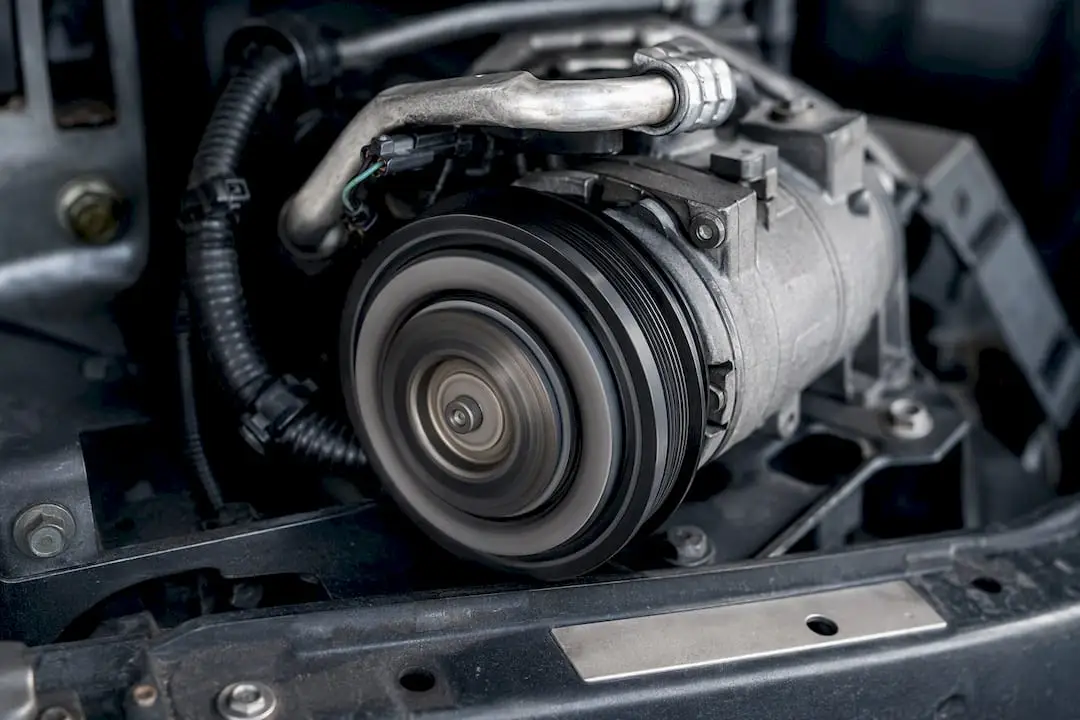
- Compressor clutch that won’t engage at all, or one that clicks on and off rapidly instead of holding a steady cycle.
That oily residue deserves special attention. Refrigerant itself is colorless and odorless, but it travels through the system mixed with compressor oil. When a leak opens up, the oil leaks out alongside it and leaves a visible film that’s often easier to spot than the gas itself, according to Carparts.
Pro Tip: A rapidly clicking compressor clutch is one of the most reliable low-refrigerant signs there is. The clutch’s pressure switch is designed to shut the compressor down before it runs dry and damages itself, so that clicking is the system protecting itself, not a random electrical glitch.
Safe Checks You Can Run Before Visiting a Shop
You can gather a lot of useful information in the driveway without touching any refrigerant lines. Here’s how to build a clear picture before you call Express Lube & Car Care or head to a shop.
- Start the engine, turn the AC to max, and time it. Cool air that fades to lukewarm within a few minutes points toward a low charge rather than a blower or electrical issue.
- Pop the hood and visually scan the condenser (the front-most radiator-like unit), compressor, hose connections, and service ports for a dark, oily sheen.
- Listen closely near the firewall and under-hood lines for a hiss while the AC runs. If you hear one, note where it seems loudest, but don’t lean in over pressurized fittings or attempt to trace it by touch.
- Check for ice buildup on the low-pressure line, and compare cooling performance at idle versus highway speed. Weak cooling at idle that improves once you’re moving is a pattern AutoZone associates directly with low refrigerant charge.
What you shouldn’t do: never intentionally vent refrigerant to “test” the system, and don’t attempt UV dye injection or recovery work without the proper equipment. Both require tools and training most driveways don’t have, and mishandling refrigerant carries real safety and legal risk.
Why Refrigerant Only Drops When There’s a Leak
Refrigerant is a sealed, recirculating gas. It doesn’t get consumed like engine oil or wear out with mileage. Kelley Blue Book puts it plainly: a low charge only happens because refrigerant escaped through a leak somewhere in the system. Topping off the charge without finding and sealing that leak just buys you a few weeks or months before the symptoms return.
That’s also why oily residue shows up so often. Compressor oil travels with the refrigerant, so wherever the gas is escaping, a trace of oil usually escapes with it.
Ignoring a slow leak carries real costs beyond the annoyance of warm air:
- A compressor running low on refrigerant also runs low on lubricating oil, which can lead to premature compressor failure.
- Weak AC performance often means weak defogging capability, a real visibility issue in humid or cold weather.
- A struggling compressor can add unnecessary load on the engine and belt system.
- Refrigerant released into the atmosphere carries environmental and, in many areas, legal consequences for improper handling.
How Technicians Confirm and Locate the Leak
Diagnosing a refrigerant leak accurately takes more than a stethoscope and a guess. Shops rely on a handful of proven methods, often layered together.
A pressure and vacuum test is usually step one. The technician evacuates the system to pull out air and moisture, then watches whether it holds vacuum or pressure over time. This step matters because Ontario’s regulatory guidance on refrigerant handling requires proper leak testing and recovery before a system is recharged, not just a quick refill.
UV dye is the next common tool. A technician adds dye that circulates with the refrigerant and oil, then uses a UV light to spot glowing traces at the leak point. It works well, but it has a catch:
UV dye needs enough refrigerant already circulating in the system to actually move through and reach the leak. On a system that’s nearly empty, technicians may need to add a small controlled charge first, and small or intermittent leaks can take hours or even days of driving to reveal themselves.
For leaks too small or intermittent for dye alone, electronic sniffers and ultrasonic detectors pick up trace gas or the sound signature of escaping refrigerant, useful for pinpointing punctures in condensers or worn O-rings. A complete repair estimate should include the diagnostic time, the part or seal being replaced, recovery and evacuation labor, and the recharge itself, billed by weight rather than a flat guess.
When a DIY Recharge Works and When to Call a Pro
A store-bought recharge can might make sense in narrow situations. It’s a different story when the signs point to something bigger.
- A DIY top-up is reasonable if your AC was serviced recently, you have no visible oily residue anywhere, and the system has simply lost a small amount of charge over a long stretch of time.
- Book a professional visit immediately if you see oily residue, hear hissing, or notice the compressor clutch cycling rapidly or not engaging at all.
- Repeated low-charge complaints every few months are a red flag that a can of recharge kit won’t fix. As Carrier’s troubleshooting notes on cooling systems point out, symptoms like warm air can stem from electrical or component failures that a can of refrigerant won’t touch.
- Certified shops recover the old refrigerant, evacuate the system properly, and recharge by weight, which is both more accurate and compliant with handling regulations than a driveway top-up.
Maintenance Steps That Cut Your Leak Risk
A little routine attention goes a long way toward keeping your AC’s charge intact for years, not months.
- Have the AC lines, condenser fins, and fittings visually inspected during regular service intervals, not just when the cooling stops working.
- Ask for aging hoses and O-rings to be replaced proactively during major service work rather than waiting for them to fail.
- Protect the condenser from road debris. It sits right behind the grille and takes the brunt of rocks and gravel on the highway. Similar exposure is why radiator damage often shows up alongside AC issues.
- Whenever a recharge is performed, insist it’s done by weight with a leak test included, not just “topped off until it feels cold.”
Pro Tip: If you’re already having coolant or radiator work done, ask the technician to glance at the AC condenser while it’s exposed. It costs nothing extra and catches early pinhole leaks before they become a warm-air complaint next summer.
What Our Technicians See Most Often
Working on AC systems across Plano’s summer heat and stop-and-go traffic, our techs at Express Lube & Car Care see the same failure points again and again: condenser punctures from road debris, worn service port seals, and evaporator leaks that hide behind the dash. Our workflow starts with a quick performance check, moves to UV dye or electronic leak detection when needed, then follows through with proper recovery, evacuation, and recharge. Because we run no-appointment-needed service with ASE-certified technicians, most drivers get a real answer the same day they walk in.
— Express Lube & Car Care
Get Your AC Diagnosed the Same Day, No Appointment Needed
Guessing at an AC problem costs more than it saves, especially when a $20 can of recharge only masks a leak that keeps draining your wallet every few months. Express Lube & Car Care runs full AC diagnostics the same day you walk in, no appointment required, using UV dye detection and proper recover-evacuate-recharge procedures performed by ASE-certified technicians.

Repairs completed here are backed by a 24-month/24,000-mile warranty, and we offer discounts for military personnel and healthcare workers. Bring your vehicle in for a complete AC recharge and leak check, and expect a straightforward estimate covering diagnostic time, parts, and refrigerant by weight. If you’re also noticing brake or engine concerns during the same visit, ask about our current service specials to bundle the work. Just drive in. No appointment. No waiting weeks for a diagnosis you need today.
Sources
Technical claims in this guide draw on Kelley Blue Book’s refrigerant guidance, AutoZone’s AC recharge signs, CarParts.com’s leak explainer, and dye leak detection methodology. For fleet-specific cooling system needs, Premier Fleet Repair’s guide offers additional depth. Always consult a technician for vehicle-specific diagnosis.
- Freon: Signs Your Car Needs It – Kelley Blue Book
- Signs Your Car’s AC Needs to be Recharged – AutoZone
- How to Add AC Dye to Find Leaks
- Carparts
FAQ
What is the first sign of an AC refrigerant leak?
The earliest sign is usually cool air that fades to warm within two to three minutes of running the AC, a pattern that points to a shrinking refrigerant charge rather than a blower or electrical fault.
Can a refrigerant leak be fixed by just adding more freon?
No. Refrigerant only drops because of a leak, so topping off without repairing the leak only delays the same symptoms from returning within weeks or months.
Is it safe to drive with a refrigerant leak?
Yes, in the short term, but a low charge strains the compressor and reduces defogging ability, so it’s worth getting checked before the compressor clutch starts cycling rapidly or fails outright.
How much does it cost to find and fix an AC refrigerant leak?
Costs vary by leak location and severity, but a proper estimate should include diagnostic time, the failed part or seal, recovery and evacuation, and a recharge billed by weight rather than a flat fee.
Does Express Lube & Car Care offer AC leak diagnostics without an appointment?
Yes, Express Lube & Car Care provides same-day, no-appointment AC diagnostics performed by ASE-certified technicians, including UV dye detection and full recover-evacuate-recharge service.