

A common question among vehicle owners is, "how often should you change your oil?" For decades, the standard advice was the 3,000-mile rule. However, due to significant advancements in automotive engineering and oil formulation, this guideline is now largely obsolete for most modern vehicles.
So, what is the current recommendation? For most vehicles manufactured in the last decade that use synthetic oil, the appropriate interval is typically between 5,000 and 7,500 miles. Some high-performance or newer models can extend this even further. The optimal frequency is not a universal number; it is determined by the vehicle's age, the type of oil used, and individual driving conditions.
Understanding Modern Oil Change Intervals
Historically, the 3,000-mile oil change was a critical preventative measure. Throughout the latter half of the 20th century, conventional motor oils had limited thermal stability and would degrade quickly under the high-temperature, high-pressure environment of an internal combustion engine. Adhering to this short interval was a necessary safeguard against premature engine wear and failure.
Today's automotive landscape is vastly different. Modern engines are manufactured with tighter tolerances and more sophisticated designs, while motor oils have undergone a chemical revolution.
To draw an analogy, conventional oil of the past was like a basic lubricant with a limited lifespan. Modern synthetic oil, by contrast, is a highly engineered fluid, specifically formulated to withstand extreme conditions and maintain its protective properties for an extended duration.
Debunking the 3,000-Mile Myth
Why have the recommended intervals changed so dramatically? According to automotive experts, including AAA, the standard interval for many vehicles has been extended to every 5,000 to 7,500 miles. Vehicles using premium full synthetic oils may even be manufacturer-rated for 10,000 miles or more between services.
This shift is not a marketing tactic but a direct result of superior oil technology and more efficient engine designs. You can learn more about the updated oil change recommendations and the science behind them.
The primary driver of this evolution is the development of motor oil. Full synthetic oils provide superior lubrication, enhanced cleaning capabilities through advanced detergent additives, and exceptional thermal stability. They protect an engine far more effectively and for a longer duration than conventional oils ever could.
This flowchart illustrates the initial decision point in determining your oil change schedule: the type of oil your engine requires.
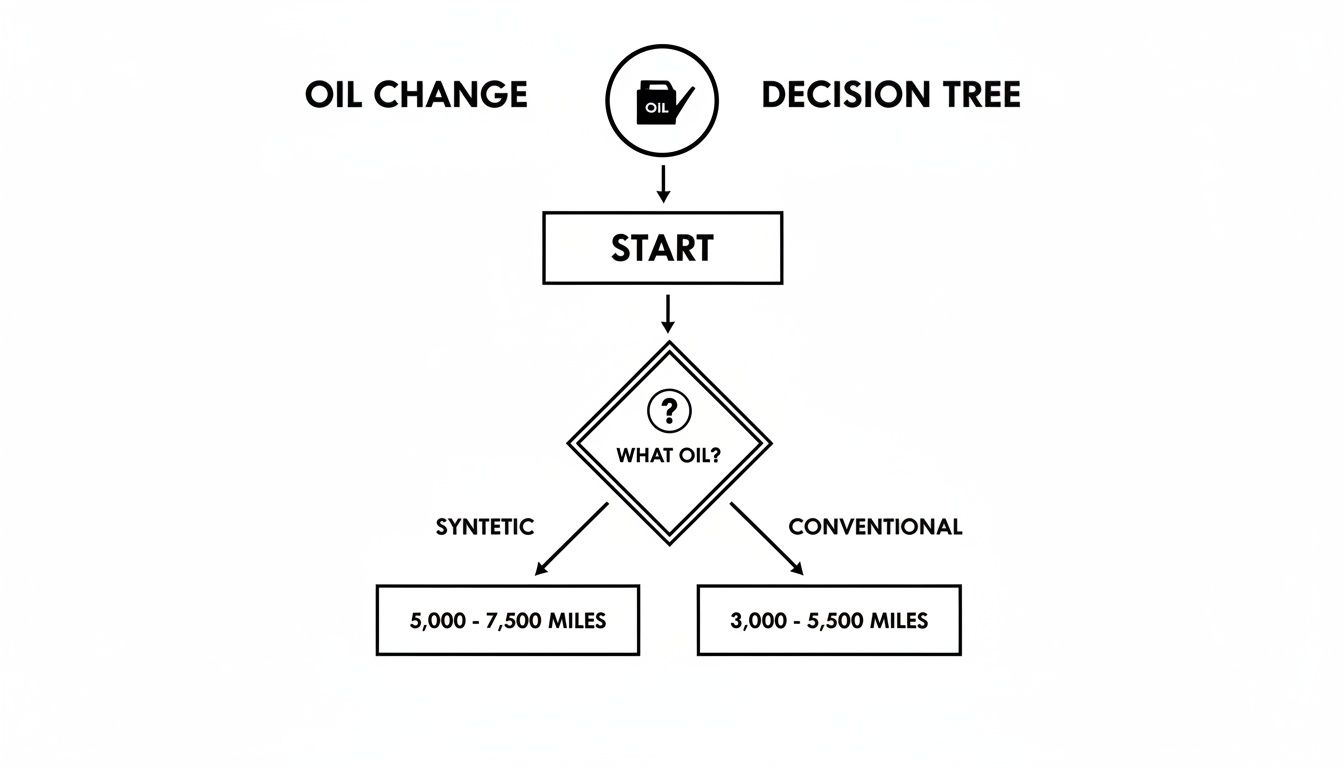
As the diagram indicates, oil type is a critical factor. However, to establish the most accurate maintenance schedule, one must also consider personal driving habits and, most importantly, the manufacturer's specific recommendations for the vehicle.
Modern Oil Change Intervals at a Glance
For a simplified overview, the following table outlines the general guidelines for modern vehicles based on oil type.
| Oil Type | Vehicle Age (Modern Engines) | Recommended Interval |
|---|---|---|
| Conventional Oil | 5-15 years old | Every 3,000 – 5,000 miles |
| Synthetic Blend | 5-10 years old | Every 5,000 – 7,500 miles |
| Full Synthetic | 0-10 years old | Every 7,500 – 15,000 miles |
Note that this table provides general estimates. The vehicle's owner's manual is the definitive source for maintenance schedules.
Conventional vs. Synthetic Oil: What’s Actually Different?
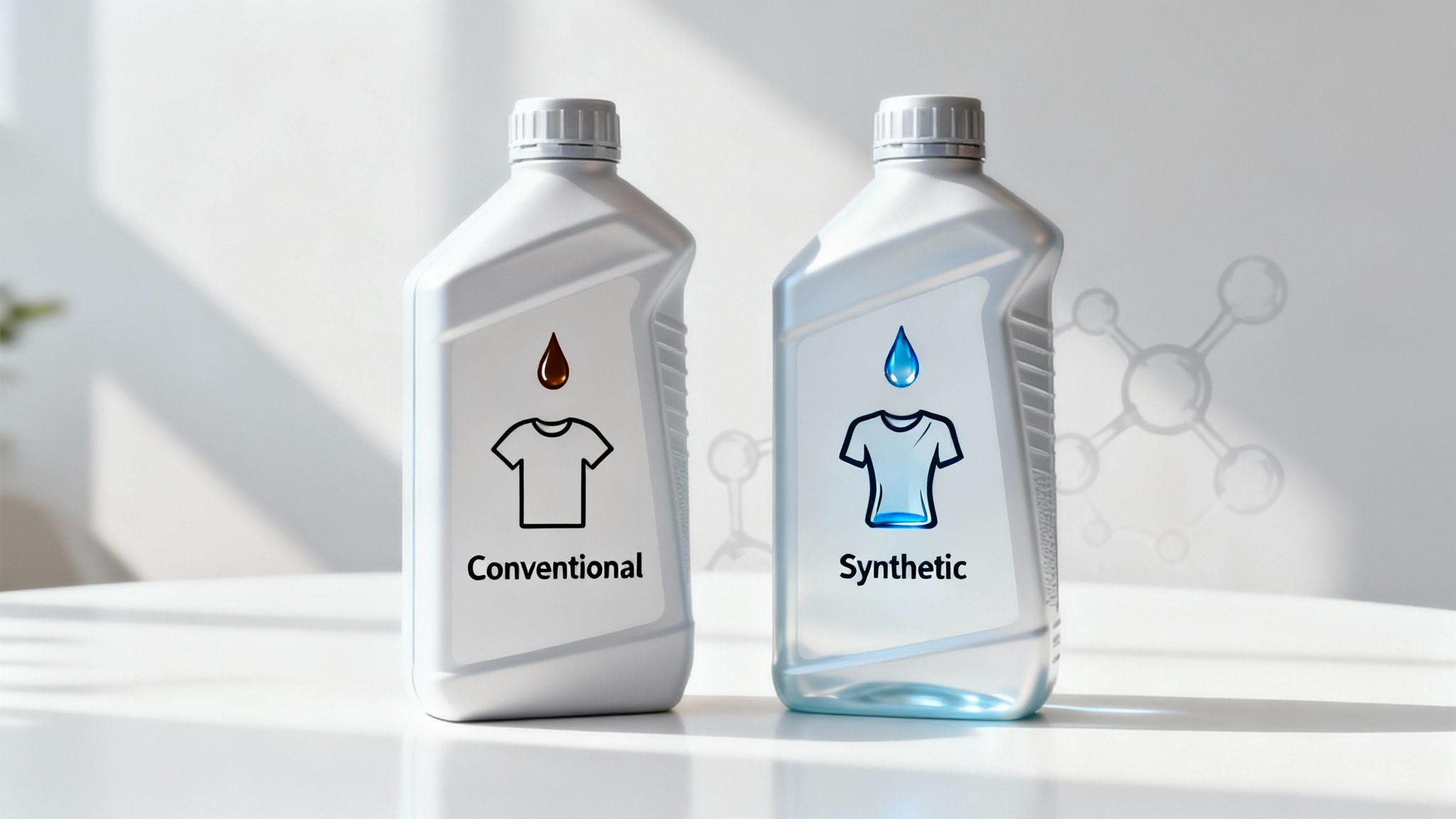
The significant extension of oil change intervals in modern vehicles is primarily attributable to the difference between conventional and synthetic motor oil. Understanding this distinction is key to appreciating why oil change practices have evolved.
Conventional motor oil is a refined petroleum product. It is derived directly from crude oil through a distillation process. While it has effectively lubricated engines for many years, its molecular structure is irregular and contains natural impurities. This inherent inconsistency causes it to break down more rapidly when subjected to the heat and stress of an engine.
The Engineering Behind Synthetic Oil
Synthetic oil, in contrast, is the product of chemical engineering. It begins with a base of refined crude oil, but it is then broken down to its fundamental molecules. Scientists then rebuild these molecules into uniform, pure structures, removing impurities and creating a lubricant with precisely tailored properties. This controlled process results in an oil with significant performance advantages.
This molecular uniformity provides several key benefits:
- Superior Temperature Resistance: Synthetic oil maintains a lower viscosity (flows easily) in cold temperatures for better startup protection and resists thermal breakdown and evaporation in extreme heat.
- Enhanced Lubrication: The uniform molecules form a stronger, more consistent lubricating film between moving engine components, reducing friction and wear.
- Better Cleaning Power: Synthetics are formulated with higher-quality detergent and dispersant additives that prevent the formation of sludge and carbon deposits, keeping the engine's internal components cleaner.
To explain with an analogy: if conventional oil is a natural, unprocessed material, synthetic oil is an engineered composite material designed specifically for maximum durability and performance under extreme stress.
What About Semi-Synthetic Blends?
A third category, semi-synthetic (or synthetic blend) oil, offers a compromise. It is a mixture of conventional and synthetic base oils, providing some of the performance benefits of a full synthetic at a lower price point. While it is an improvement over conventional oil, it does not offer the same longevity and protection as a 100% synthetic formulation.
The choice of oil depends on the vehicle's age, manufacturer specifications, and budget. For a more detailed analysis, consult our complete guide on synthetic vs conventional oil.
In summary, the exceptional resilience of synthetic oil is the principal reason modern vehicles can safely extend their service intervals to 7,500 miles or more, promoting better long-term engine health.
How Your Driving Habits Impact Your Oil's Lifespan
The oil change interval specified in your owner's manual is based on "normal" operating conditions, which may not reflect your actual driving patterns. How you operate your vehicle significantly influences the rate at which engine oil degrades. Your driving habits can necessitate shorter change intervals than the manufacturer recommends.
The manufacturer's guideline often represents a best-case scenario, such as consistent highway driving. If your daily commute involves frequent stop-and-go traffic, short trips, or extreme weather, your engine operates under more strenuous, or "severe," conditions. This increased stress accelerates oil breakdown, requiring more frequent changes.
What Are Severe Driving Conditions?
The term "severe" does not necessarily imply aggressive driving. It refers to common usage patterns that place additional demands on the engine and its lubrication system.
You are likely operating under severe conditions if your driving includes:
- Frequent Short Trips: Consistently driving less than five miles per trip prevents the engine from reaching its optimal operating temperature, which is necessary to burn off condensation that accumulates in the oil.
- Constant Stop-and-Go Traffic: Urban driving, with its repeated acceleration and deceleration, increases thermal stress on the oil, leading to faster degradation.
- Towing or Hauling Heavy Loads: These activities place the engine under sustained strain, elevating its operating temperature and demanding more from the oil's protective capabilities.
- Driving in Extreme Temperatures: Both the high heat of a Texas summer and freezing winter conditions force the oil to work harder to maintain proper viscosity and lubricate engine components.
- Driving on Dusty or Dirty Roads: Airborne contaminants can enter the engine's intake system, requiring the oil and filter to work harder to trap and suspend these particles.
Engine oil functions as the circulatory system of your vehicle, lubricating parts while carrying away heat and contaminants. Severe driving conditions are analogous to subjecting the system to constant high stress, requiring more frequent maintenance to ensure optimal performance.
The Science Behind the Stress
The impact of these habits is rooted in chemistry and physics. For instance, short trips prevent the engine from reaching a temperature sufficient to vaporize accumulated water moisture. This moisture can emulsify with oil byproducts to form engine sludge, a thick, viscous substance that can obstruct critical oil passages, leading to oil starvation and catastrophic engine failure.
Similarly, towing heavy loads significantly increases engine temperatures. This accelerates the oil's oxidation process, causing it to thicken and lose its lubricating properties.
To accurately answer "how often should you change oil," you must perform an honest assessment of your driving habits. If they align with the "severe" category, it is prudent to shorten your oil change interval from the standard recommendation.
Understanding Your Car's Oil Life Monitoring System
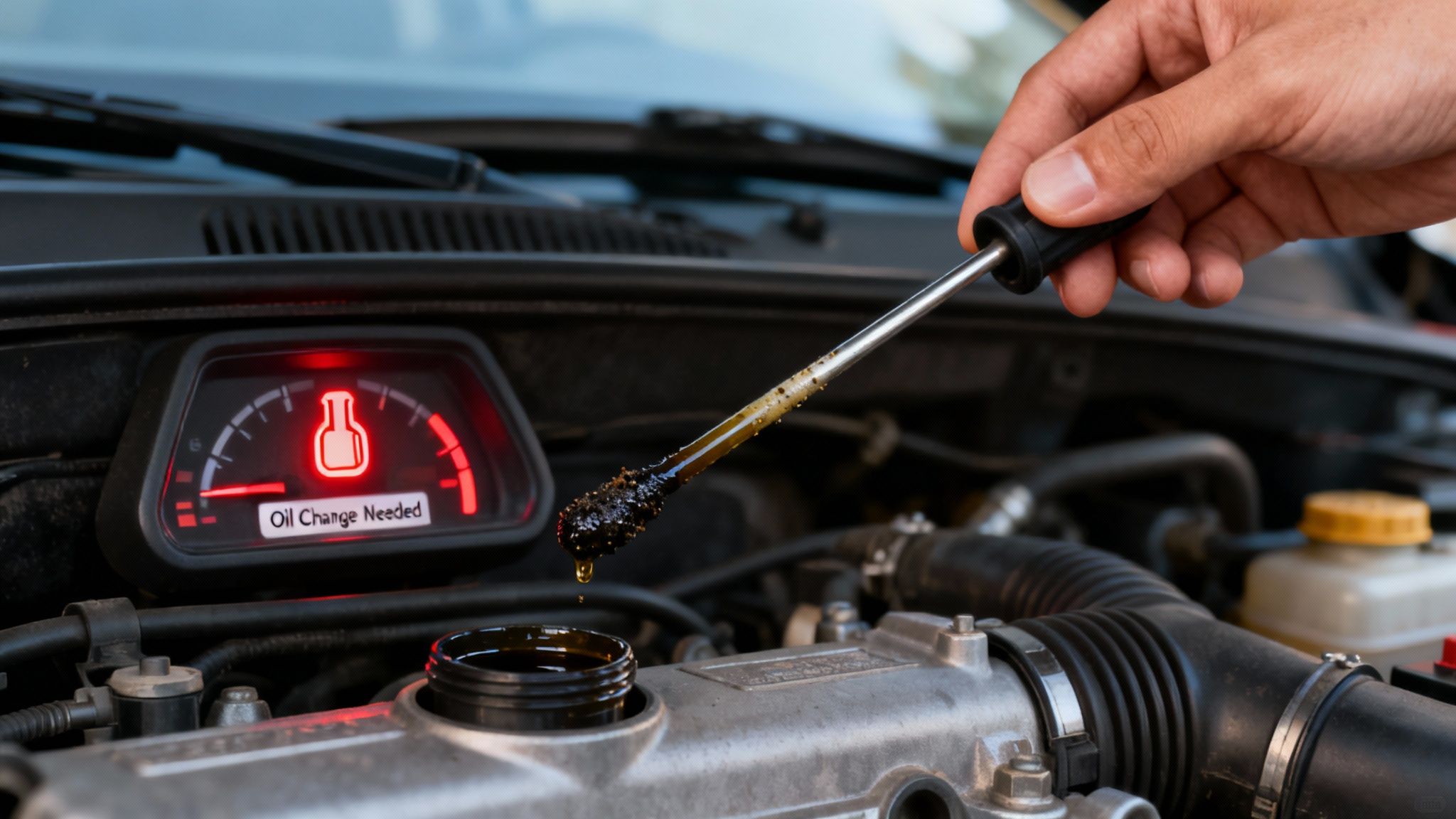
Most vehicles manufactured in the last 15 years are equipped with an Oil Life Monitoring System (OLMS), which illuminates a dashboard indicator when service is due. It is a common misconception that these systems are simple mileage-based timers. In reality, they are sophisticated diagnostic tools.
A frequent question is whether to trust the OLMS over a traditional mileage sticker. The answer is unequivocally yes. An OLMS does not merely track distance traveled; it analyzes a wide range of operational data to calculate the actual remaining life of the engine oil. It provides a data-driven, personalized answer to the question: "When do I really need to change my oil?"
How Does the System Actually Work?
The vehicle's onboard computer, or Engine Control Unit (ECU), continuously gathers data from various sensors. While it does not perform a chemical analysis of the oil, it monitors the key variables that contribute to oil degradation.
This intelligent system logs factors such as:
- Engine Revolutions: The total number of rotations the crankshaft has made.
- Operating Temperatures: Tracking engine temperature fluctuations, from cold starts to high-heat conditions.
- Trip Duration: Differentiating between short, damaging trips and longer, more ideal journeys.
- Engine Workload: Measuring periods of high strain, such as towing, climbing steep grades, or rapid acceleration.
By processing this data through a proprietary algorithm, the OLMS generates an accurate, dynamic assessment of the oil's condition and calculates its remaining useful life.
An Oil Life Monitoring System is engineered to eliminate guesswork from vehicle maintenance. It generates a customized service schedule based on your specific usage, ensuring an oil change is performed at the optimal time—not prematurely, and more importantly, not too late.
Why You Should Never Ignore the Light
When the maintenance indicator illuminates, it is a calculated alert signifying that the oil's protective additives have been depleted to a critical level.
Simply resetting the light without performing an oil change is extremely detrimental. Doing so deceives the system into believing it has fresh oil while the degraded, contaminated fluid continues to circulate. This practice can lead directly to sludge formation, overheating, and ultimately, severe engine damage.
Trusting your vehicle's integrated technology is a cornerstone of modern maintenance. It can save money by preventing unnecessary services and protect your engine by ensuring timely intervention.
Warning Signs Your Car Is Due for an Oil Change

While the OLMS and service reminder stickers are effective tools, your vehicle may also provide physical and audible signals that its oil requires changing. Recognizing these symptoms is crucial for preventative maintenance and avoiding costly repairs. These signs indicate that the oil has lost its ability to properly lubricate and protect the engine. Ignoring them can lead to increased friction, overheating, and serious mechanical failure.
Physical and Audible Indicators
One of the most fundamental diagnostic checks is a visual inspection of the oil via the dipstick. Fresh motor oil is typically translucent and amber in color. If an inspection reveals the oil is dark, opaque, or contains gritty particles, it is saturated with contaminants and has begun to break down chemically.
Audible cues from the engine are also important. Healthy oil creates a hydraulic cushion between moving metal components. As the oil degrades and thins, this cushion weakens, leading to increased noise.
- Engine Knocking or Ticking: This sound can indicate that the oil is no longer properly lubricating the valvetrain components, resulting in metal-on-metal contact.
- Louder Engine Rumble: A general increase in the engine's operating volume is a classic symptom of heightened friction due to worn-out oil.
An engine operating with degraded oil is analogous to a precision machine running without adequate lubrication. Components are subjected to increased stress, heat, and wear, accelerating their path toward premature failure.
Dashboard and Sensory Warnings
In addition to physical checks, your vehicle uses dashboard indicators and even olfactory cues to signal a problem.
The most direct warnings are the dashboard lights. Both the check engine light and the oil pressure light can indicate an oil-related issue. The oil pressure warning is particularly critical; if it illuminates, you should pull over and shut off the engine as soon as it is safe to do so to prevent catastrophic damage.
Finally, trust your senses. The smell of burning oil inside the cabin may suggest a leak onto hot engine components. Similarly, visible smoke from the exhaust can indicate that oil is leaking past seals into the combustion chamber. Both are serious symptoms that require immediate professional diagnosis.
Finding a Trusted Oil Change Service in Plano
Knowing the correct oil change interval is the first step. The second is selecting a reputable service facility to perform the work correctly. When seeking a local service provider in Plano, prioritize a team that values both your time and your vehicle's long-term health.
A quality auto shop should provide efficient service without compromising on quality. At Express Lube & Car Care, for instance, we operate on a no-appointment-necessary basis, allowing you to service your vehicle when it is convenient for your schedule.
What to Look for in a Local Shop
When selecting a service center, technical expertise is paramount. Ensure the facility is staffed by ASE-certified technicians. The ASE (Automotive Service Excellence) certification is a nationally recognized standard, signifying that the mechanics have passed rigorous testing and are proficient in their field.
The quality of the materials used is another critical factor. A reputable shop will use premium oils and high-grade filters that meet or exceed your vehicle's OEM (Original Equipment Manufacturer) specifications. This ensures the engine receives the level of protection it was designed for. Transparent communication, honest recommendations, and clear, upfront pricing are essential for building trust.
The right automotive service partner does more than change your oil; they provide confidence. This peace of mind is derived from knowing that skilled professionals are servicing your vehicle with superior products, all while providing transparent advice about your car's actual needs.
At Express Lube & Car Care, we integrate these principles for our Plano community. We also show our appreciation for community service by offering discounts to military personnel, first responders, and healthcare workers.
Operating a vehicle in Texas presents unique challenges due to the extreme heat, which places additional stress on the engine and its fluids. You can learn more in our guide on why regular oil changes matter in Plano.
Frequently Asked Questions About Oil Changes
Even with a solid understanding of the fundamentals, several common questions often arise. Addressing these can help clarify any remaining points about proper vehicle maintenance.
Can I Switch Between Synthetic And Conventional Oil?
Yes, it is generally safe to switch between oil types. Upgrading from conventional oil to a synthetic blend or a full synthetic is beneficial, providing improved engine protection. However, once you upgrade to synthetic oil, it is advisable to continue using it to maintain consistent performance.
Downgrading from synthetic to conventional oil is generally not recommended, particularly for newer engines engineered specifically for the superior properties of synthetic lubricants. When in doubt, always consult the owner's manual for the manufacturer's specifications.
Remember that changing your oil type also means you must change your service interval. If you switch from a full synthetic (7,500+ mile interval) back to a conventional oil, you must revert to a shorter 3,000-5,000 mile schedule to prevent engine damage.
Does Oil Expire If I Don't Drive Much?
Yes, motor oil degrades over time, a process known as "time-based degradation," regardless of mileage. Even in a stationary vehicle, oil is exposed to oxygen, which causes it to oxidize. Furthermore, moisture can condense within the engine, contaminating the oil.
For this reason, nearly all vehicle manufacturers and mechanics recommend changing the oil at least once per year, even if the mileage-based interval has not been reached. This ensures the oil's protective properties remain intact.
It is also important to remember that engine oil is just one of several critical fluids. Knowing when to change your transmission fluid, for example, is equally vital for the long-term reliability of your vehicle.
Ready to provide your vehicle with the expert care it needs? At Express Lube & Car Care, our ASE-certified technicians deliver fast, reliable oil changes with no appointment necessary. Visit our Plano location today for service you can trust. https://www.expresslubeplano.com