

When you search for a full service oil change in Plano, you're seeking more than a simple fluid replacement. This service is best understood as a foundational wellness check for your vehicle. It’s a crucial preventative maintenance step that pairs a fresh supply of high-quality engine oil and a new filter with a systematic safety inspection, designed to identify potential issues before they escalate into costly repairs.
Understanding What a Full Service Oil Change Includes
It's common to picture an oil change as merely draining old, dirty fluid and pouring in new. However, a full service oil change is a much more comprehensive procedure that provides a detailed snapshot of your vehicle's operational health. It’s not just a single task, but a proactive diagnostic process for your car.
Certified technicians follow a detailed checklist of crucial inspections that function as a valuable diagnostic tool. This methodical approach is fundamental to ensuring your vehicle remains reliable, safe, and efficient for the long term.
The Core Component: Fresh Engine Oil
The heart of the service is, of course, replacing your engine's oil. Your engine contains numerous moving parts that operate under intense heat and pressure. Clean oil is essential for lubricating these components, reducing friction, dissipating heat, and preventing premature wear. Over time, engine oil degrades, becoming saturated with contaminants and losing its effectiveness.
During the service, a technician will drain the old fluid, replace the oil filter—a critical component that traps harmful particles—and refill the engine with the correct type and grade of new oil. Understanding the difference between oil types is important for modern vehicles; our guide on synthetic vs. conventional oil explains the benefits of each for your specific car.
This preventative care is more critical than ever, as vehicles are staying on the road longer. The U.S. oil change market is projected to reach $13.2 billion in 2025, driven partly by the fact that the average vehicle age is now 13.6 years. Older vehicles, common throughout Plano, require consistent, high-quality maintenance to remain dependable.
A full service oil change is a direct investment in preventative care. By addressing minor items like fluid top-offs and filter inspections during a routine visit, you can proactively avoid unexpected breakdowns and significantly more expensive future repairs.
The service culminates with the multi-point inspection, where a technician examines other critical systems to confirm your car is in optimal condition. For any driver in Plano, it represents the most intelligent approach to vehicle maintenance.
Deconstructing the Multi-Point Inspection Checklist
When a service is described as "full service," it signifies that your oil change is bundled with a valuable diagnostic benefit: a thorough vehicle health assessment. This isn't a cursory glance under the hood; it's a systematic, multi-point inspection performed by trained professionals.
Consider it your car's regular physical examination—a proactive checkup intended to detect small issues before they evolve into major, potentially dangerous problems. By understanding what this checklist covers, you can appreciate the true value contained within a single maintenance visit.
The diagram below illustrates how the oil change, filter replacement, and safety inspection work in concert to maintain your car's peak condition.
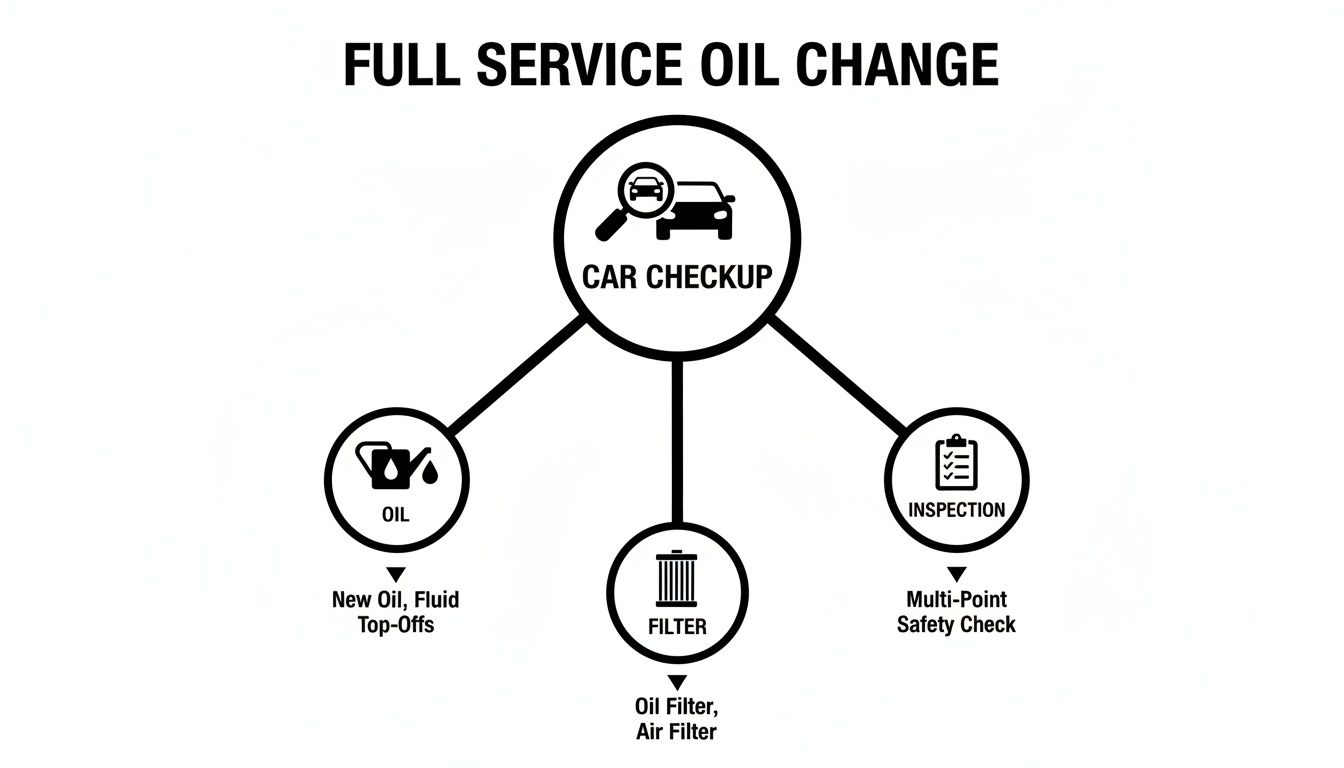
As shown, the inspection is a fundamental part of the process, providing a holistic view of your vehicle’s health, not just its lubrication system.
Inspecting Your Vehicle's Vital Fluids
Your vehicle relies on a range of fluids, not just engine oil, to operate correctly. A skilled technician will visually inspect both the level and condition of these other essential fluids. Low levels or contaminated fluid often serve as the first warning sign of a leak or a more significant internal issue.
- Coolant/Antifreeze: This fluid is responsible for regulating engine temperature, preventing overheating in the Texas heat and freezing during cold spells.
- Transmission Fluid: Proper levels of clean transmission fluid are necessary for smooth gear shifts. If the fluid appears dark or has a burnt smell, it can indicate internal component wear.
- Brake Fluid: As a hydraulic fluid, this is a non-negotiable component of your braking system. We verify it's at the correct level and free of moisture or contaminants.
- Power Steering Fluid: In vehicles with hydraulic power steering, this fluid ensures turning the wheel is effortless. Low levels result in stiff or noisy steering.
- Windshield Washer Fluid: While seemingly minor, this is a critical safety item. Maintaining a clear line of sight is a top priority for safe driving.
Checking Key Mechanical and Safety Components
Next, the inspection shifts to a hands-on examination of critical parts that experience wear over time. Identifying wear on these components early is a primary benefit of a full-service visit. It's a key reason the global oil change market is forecast to grow from $164.76 billion in 2024 to $239.74 billion by 2032—consumers increasingly value these comprehensive diagnostic checks.
This proactive approach is the difference between an affordable belt replacement and a costly tow and repair after that same belt fails on the highway.
A technician will also inspect:
- Belts and Hoses: We look for cracks, fraying, or other signs of aging on serpentine belts and radiator hoses.
- Air Filter: A clogged engine air filter restricts airflow, negatively impacting performance and fuel efficiency. We check its condition to see if a replacement is needed.
- Battery Health: We inspect for corrosion on the battery terminals and can perform a load test to ensure it holds a proper charge and won't fail unexpectedly.
- Wiper Blades: Cracked or brittle wiper blades are a safety hazard during rain. We will inform you if they are no longer effective.
- Exterior Lights: A walk-around inspection of headlights, brake lights, and turn signals ensures you can see and be seen by other drivers.
Completing this checklist provides a comprehensive snapshot of your car's health. To learn more about everything involved in proper vehicle upkeep, explore our comprehensive routine car maintenance checklist.
Key Benefits of a Full Service Oil Change
Choosing a full service oil change in Plano is an investment in your vehicle’s longevity, performance, and safety. The true value extends beyond the fresh oil; it lies in the preventative care delivered through the multi-point inspection. This comprehensive approach yields significant long-term benefits, saving you money, time, and stress.
The most direct benefit is improved engine longevity. Clean oil provides essential lubrication, drastically reducing friction between moving parts. This simple act prevents premature wear and tear, helping your engine perform optimally for many years.
To put it in perspective, operating an engine with old, sludge-filled oil is like trying to run a marathon in heavy, mud-caked boots. You might finish, but you’ll place immense strain on your body. Fresh oil allows every component to move freely and efficiently as designed.
Maximizing Performance and Preventing Breakdowns
A properly lubricated engine doesn't just last longer—it performs better. By minimizing internal friction, your engine operates more efficiently. This often results in improved fuel economy and more responsive acceleration, which is particularly beneficial in Plano's stop-and-go traffic.
Crucially, the inspection serves as your primary defense against unexpected breakdowns. Consider a scenario where a technician spots a small crack in your serpentine belt during an oil change. Replacing it is a minor, inexpensive repair. However, if that belt were to snap on the Dallas North Tollway, you would face an overheated engine and a repair bill that could easily reach thousands of dollars.
Identifying and addressing small problems early is the single most effective way to avoid a catastrophic and costly mechanical failure. A full service oil change provides the regular check-up needed to detect trouble before it starts.
This understanding is becoming more widespread among vehicle owners. The U.S. oil change industry, valued at $8.11 billion in 2024, is projected to grow to $11.31 billion by 2030, largely because consumers are keeping their cars longer and recognize the need for diligent maintenance. Technology continues to make this process more transparent and efficient, a trend you can explore further by reading about how technology is improving auto care on Deloitte.com.
Improving Safety and Peace of Mind
Ultimately, these benefits converge on a single, invaluable outcome: confidence. A full service oil change provides peace of mind, assuring you that your vehicle’s key safety systems have been professionally inspected and are in good working order.
Here’s how this service directly enhances your safety:
- Fluid Checks: Ensuring brake and power steering fluids are at correct levels guarantees your car stops and steers predictably and reliably.
- Tire Inspection: Correct tire pressure significantly improves handling, reduces braking distances, and lowers the risk of a dangerous blowout.
- Light Checks: Functional headlights, brake lights, and turn signals are essential for visibility, ensuring other drivers see you in all conditions.
This type of comprehensive assessment is an indispensable part of responsible car ownership, particularly given the extreme Texas climate. Learn more about why regular oil changes matter in the Texas heat in our specialized guide.
What to Expect During Your Service Visit
Understanding the process can eliminate any stress associated with a maintenance appointment. When you arrive for a full-service oil change in Plano, you'll find the procedure is designed to be transparent, efficient, and respectful of your time. The goal is convenience, especially at a no-appointment-needed facility.
Upon arrival, a service advisor will greet you, confirm the requested service, and ask a few diagnostic questions about your vehicle, such as its current mileage or any unusual noises you may have noticed. This brief intake provides the technician with valuable context. Most full-service oil changes are completed within 30 to 45 minutes, making them easy to incorporate into a busy day.

The Step-by-Step Service
Once your car enters the service bay, our technicians begin a well-defined process. Each step is performed in a specific order to ensure accuracy, safety, and completeness.
Here is a breakdown of how the service unfolds:
- Vehicle Preparation: First, protective coverings are placed on your driver's seat and floor to keep the interior clean.
- Draining Old Oil: The vehicle is raised on a lift to allow access for draining the used oil and removing the old oil filter. A new, high-quality filter is then installed and the drain plug is secured.
- Adding New Oil: After the vehicle is lowered, the engine is refilled with the precise grade and volume of premium motor oil specified by your vehicle's manufacturer.
- Multi-Point Inspection: Concurrently, the comprehensive inspection is performed. This covers all vital fluids, belts, hoses, filters, and tire pressure adjustments.
This efficient, parallel workflow allows our technicians to be both thorough and fast.
Reviewing the Results With You
After the service is complete, the service advisor will review the inspection findings with you. This is a crucial part of the experience. You will be provided with a clear, easy-to-understand report—typically a checklist—that details every item inspected and its current condition.
A reputable auto shop provides factual information without pressure. The objective is to educate you about your car's health and offer recommendations based on safety and urgency, not to upsell unnecessary services.
We will highlight any components that require attention and explain their priority. For example, we might note that your air filter is dirty and will need replacement soon, while your brake fluid is in excellent condition. This transparent communication empowers you to make informed decisions, allowing you to drive away with complete confidence in your vehicle's status.
Finding Trusted Auto Care in Plano
When it's time for a full service oil change in Plano, selecting the right auto shop is as critical as the quality of the oil itself. You are not merely purchasing a service; you are entrusting your vehicle's health and safety to a team of professionals. The goal is to find a true partner in car care—a shop founded on transparency, expertise, and a commitment to earning your trust.
This involves looking beyond marketing claims and focusing on the core attributes of a genuinely dependable auto center. A superior oil change experience is defined not just by the technical work performed, but by the confidence you have in the people performing it.
Hallmarks of a Quality Auto Shop
How can you identify a top-tier service center in Plano? The evaluation comes down to a few non-negotiable factors that guarantee your vehicle receives expert care every time. A trustworthy shop doesn't just change your oil—it delivers peace of mind.
Ensure the shop meets these criteria:
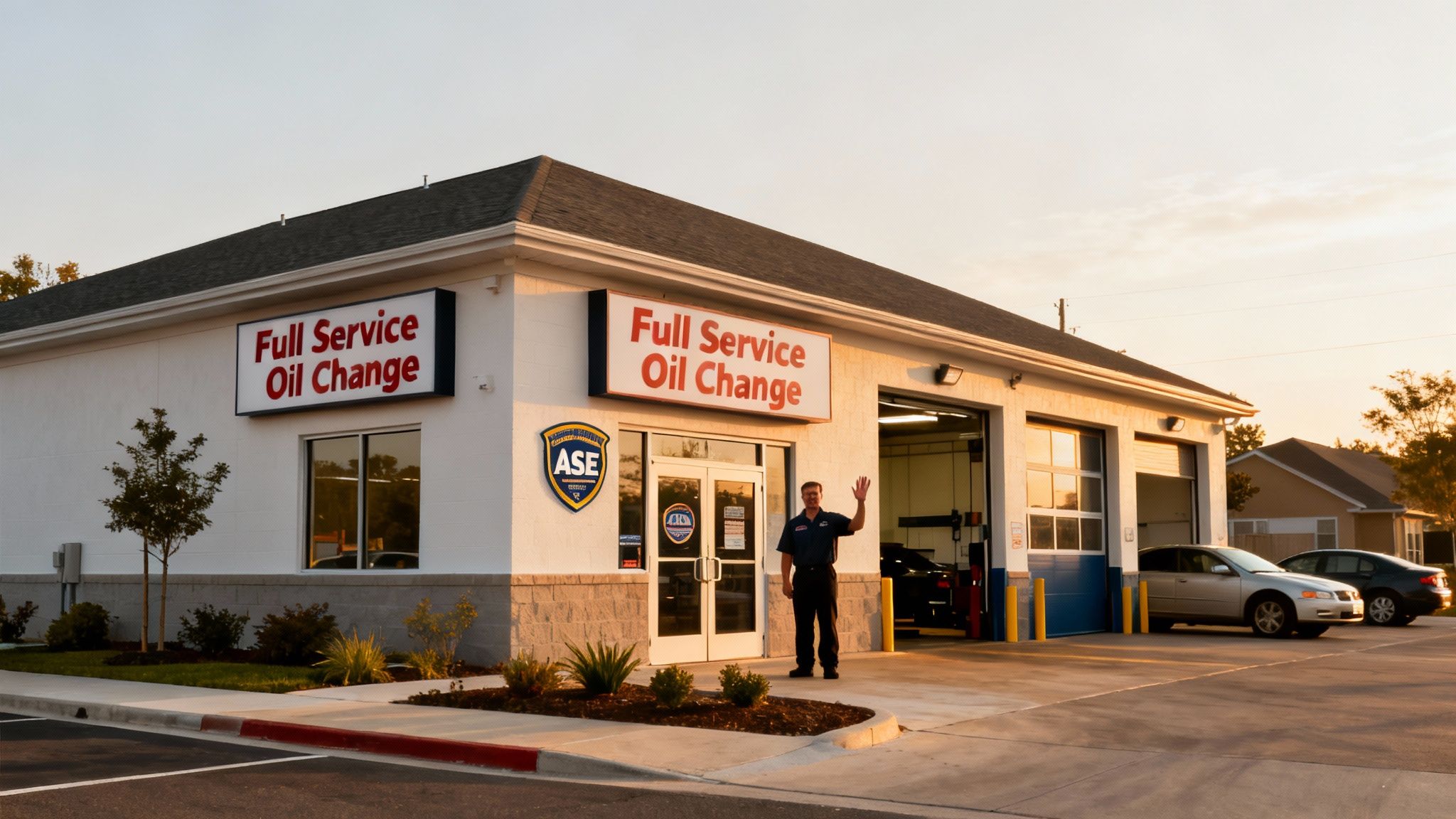
- ASE-Certified Technicians: The Automotive Service Excellence (ASE) certification is the industry's gold standard. It confirms that the mechanics have passed rigorous testing and possess the expertise to service your vehicle correctly.
- Premium-Grade Parts and Fluids: A quality shop will not compromise on materials. They use high-grade engine oils and filters that meet or exceed manufacturer specifications, which is vital for engine protection.
- Honest, Clear Communication: A professional service advisor will do more than just present a bill. They will walk you through the inspection report, explaining the "what" and "why" for any recommendations without resorting to high-pressure sales tactics.
The relationship with your auto shop should be built on a foundation of trust. A reliable provider acts as an advocate for your vehicle, prioritizing its long-term health over short-term profits from unneeded services.
This commitment to integrity is what distinguishes a transactional service from a lasting partnership and empowers you as a vehicle owner.
What Sets a Great Local Shop Apart
While technical proficiency is essential, a local shop's connection to the community is what truly sets it apart. These are businesses that invest in building genuine relationships with their customers and demonstrate appreciation for the people who live and work in Plano.
You will often find that local shops offer community-focused initiatives that provide tangible value, such as:
- Military and First Responder Discounts: This is a common and sincere way for local businesses to show gratitude to service members.
- Specialty Events: Programs like a "Ladies' Day" can offer special promotions while creating an inclusive environment for all customers to learn more about their vehicles.
- Local Partnerships: Involvement in community events and sponsorships shows that a shop is invested in the well-being of Plano.
Choosing a shop that upholds these values means you are not only receiving a top-quality full service oil change in Plano, but you are also supporting a business that strengthens our local community. It’s about finding a team that is as dedicated to its neighbors as it is to expert automotive care.
Got Questions? We've Got Answers
Even with a clear understanding of what a full-service oil change entails, you might still have a few questions. That's completely understandable. Here, we address some of the most common inquiries from Plano drivers to help you feel fully informed about your car’s maintenance needs.
These are the direct, educational answers you need to make the best decisions for your vehicle.
How Often Do I Really Need to Change My Oil?
The traditional "every 3,000 miles" rule is largely outdated due to advancements in engine technology and motor oil formulations. Your first point of reference should always be your vehicle's owner's manual; it contains the manufacturer's specific recommendations.
However, the manual cannot account for your unique driving conditions. If your daily commute involves frequent stop-and-go traffic in Plano, if you tow heavy loads, or if you regularly drive in extreme Texas heat, your engine is under greater stress. These "severe" driving conditions necessitate more frequent oil changes than for a vehicle used primarily for highway cruising. During a full-service oil change in Plano, our technicians can provide a personalized service interval recommendation based on your vehicle and driving habits.
What's the Real Difference Between Conventional and Synthetic Oil?
Think of conventional oil as the reliable, standard option. It is refined from crude oil and provides adequate protection for many engines under normal driving conditions.
Synthetic oil, in contrast, is engineered in a laboratory with uniformly shaped molecules. This molecular consistency provides superior performance across a wider range of temperatures, resists chemical breakdown more effectively, and lasts longer between changes. While it has a higher initial cost, many modern and high-performance vehicles require synthetic oil to operate as designed and to maintain the factory warranty.
For owners of turbocharged, high-performance, or newer vehicles, synthetic oil is the optimal choice. It offers a significant upgrade in engine protection and is specifically designed to handle thermal and mechanical stress far better than conventional oil.
If you are unsure which is right for you, we can identify your vehicle's specific requirements. For most modern engines, synthetic oil is a worthwhile investment in long-term health.
What Are the Signs I Need an Oil Change Right Now?
Your vehicle has several ways of indicating that its oil needs attention. Ignoring these warning signs means your engine is not receiving the lubrication it needs to prevent damage.
Be observant for these key indicators:
- Dashboard Warning Lights: The most direct signal. If your oil pressure light or check engine light illuminates, seek service immediately.
- Dark and Gritty Oil: Check the oil using the dipstick. Fresh oil is typically a translucent, amber color. If the oil on the dipstick is black, opaque, or feels gritty, it is well past its service life.
- Unusual Engine Noises: Clean oil provides a lubricating film that dampens sound between moving parts. If you hear knocking or rumbling from the engine, it could mean this protective cushion has broken down.
- Exhaust Smoke: Blue or gray smoke from your tailpipe may indicate that oil is leaking past seals into the combustion chambers and being burned—a serious issue that needs prompt attention.
Recognizing these symptoms early can help you avoid major engine repairs. An oil change remains one of the most simple, cost-effective, and critical forms of preventative maintenance.
Ready for a hassle-free oil change with a team you can trust? At Express Lube & Car Care, we offer a complete full service oil change with no appointment necessary. Our ASE-certified technicians will get you back on the road quickly and safely. Stop by today or learn more at https://www.expresslubeplano.com.