

When you hear the term conventional oil change, you're hearing about the classic, time-tested service that has kept vehicle engines running efficiently for generations. It is arguably the single most important piece of routine maintenance for your engine's health and longevity. The process involves draining the old, degraded motor oil and replacing it with fresh, clean conventional oil and a new oil filter.
Understanding Your Engine's Lifeblood
Think of motor oil as the lifeblood of your engine. Just as clean water is vital for your body, clean oil is essential for your car's engine. This straightforward service forms the foundation of your vehicle's health, ensuring it operates reliably and performs efficiently for years to come.
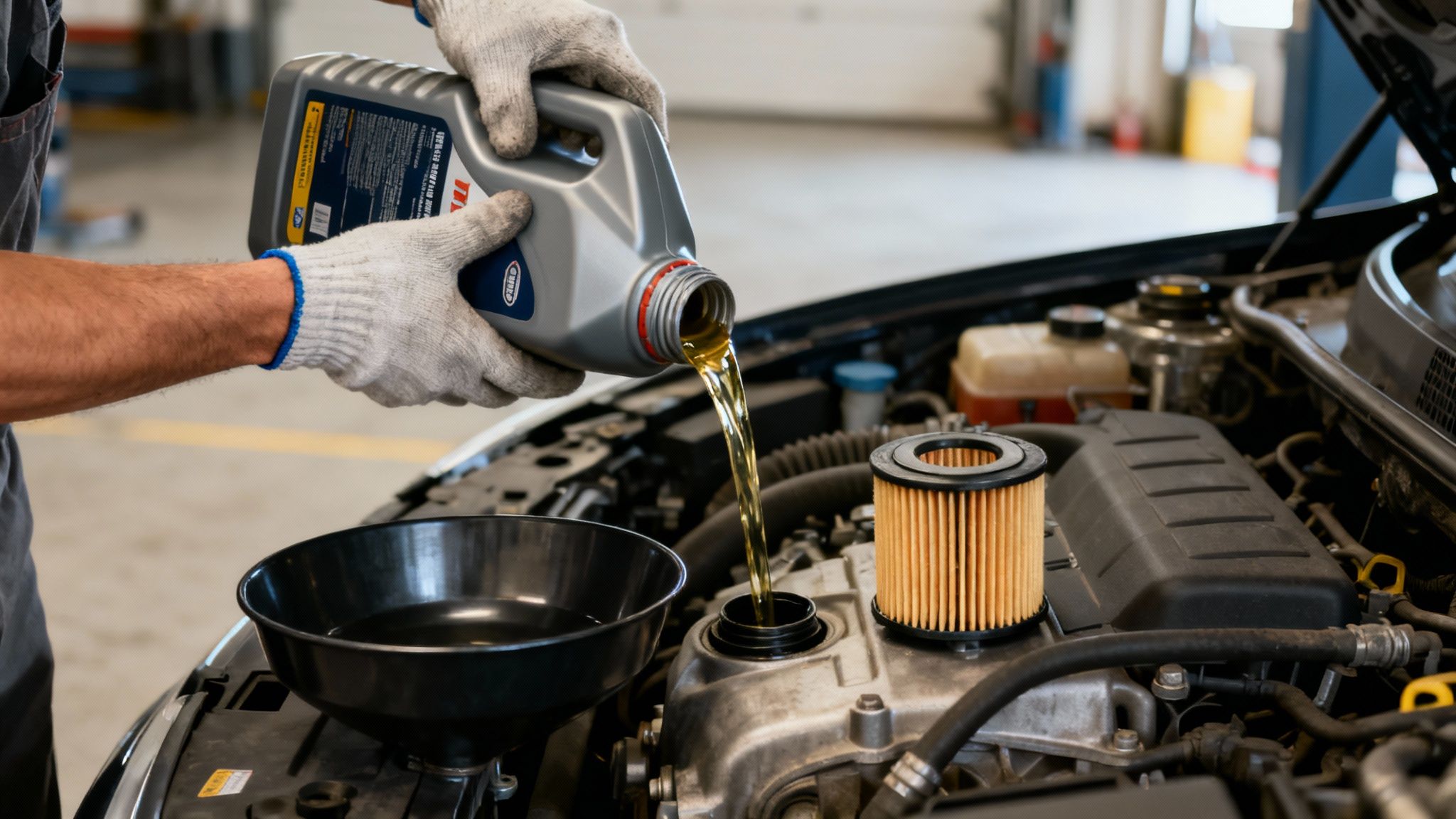
What Conventional Oil Does
Conventional motor oil is a lubricant derived directly from the fractional distillation of crude oil. This base oil is then blended with a variety of chemical additives to enhance its protective properties. Its function is multi-faceted and critical for keeping your car on the road.
- Reduces Friction: It forms a thin, protective film over the fast-moving metal parts inside your engine, such as pistons and bearings. This lubricating layer prevents them from grinding against each other, which would otherwise cause catastrophic wear and damage.
- Keeps Things Clean: As oil circulates, it collects contaminants like dirt, microscopic metal shavings, and combustion byproducts. These particles are transported to the oil filter, where they are trapped, preventing the formation of harmful sludge.
- Manages Heat: Internal combustion engines generate immense heat. Oil absorbs this thermal energy from critical components like the pistons and carries it away to the oil pan, helping to regulate engine temperature and prevent overheating.
- Prevents Corrosion: Additives within the oil create a protective barrier on metal surfaces, inhibiting the oxidation process that leads to rust and corrosion.
A conventional oil change is not merely a fluid top-off. It is a comprehensive service that flushes out old, contaminated fluid, allowing the engine to operate at peak efficiency.
The importance of this service is reflected in its market size. The U.S. oil change industry has seen steady growth, with revenue increasing at an annual rate of 7.0% over the past five years, projected to reach $13.2 billion in 2025. This demand is partly driven by the aging fleet of vehicles on the road, which require consistent care to maintain reliability. You can explore more industry data at IBISWorld.
Conventional vs. Synthetic Oil: What Your Car Needs
Selecting the right motor oil can seem complex given the variety of options available. However, the choice primarily depends on your vehicle's engine design, age, and your typical driving conditions. Understanding the fundamental differences between the main types of oil is key.
Let's examine the three primary categories: conventional, synthetic blend, and full synthetic.
The Old Reliable: Conventional Oil
Conventional oil is the traditional motor oil refined directly from petroleum. For decades, it has been the standard for automotive lubrication. It provides effective and reliable protection for many older vehicles or those with simpler, less powerful engine designs. It is the most economical option and a dependable workhorse for standard service requirements.
The High-Performer: Full Synthetic Oil
At the other end of the spectrum is full synthetic oil. This type is not refined from crude oil but is synthesized in a laboratory. This process allows engineers to create molecules that are uniform in size and shape, resulting in a product with superior stability and performance characteristics.
This advanced formulation provides exceptional resistance to thermal breakdown at high temperatures and maintains excellent flow properties in cold weather. This makes it the ideal choice for modern, high-performance, turbocharged, and direct-injection engines that operate under higher stress levels.
The Best of Both Worlds: Synthetic Blends
A synthetic blend offers a compromise between the two. As its name implies, it is a mixture of conventional and synthetic base oils. This combination provides enhanced performance and durability compared to conventional oil, but at a lower cost than a full synthetic product. It's a popular middle-ground option for many modern daily-driven vehicles.
The most crucial step is to consult your owner's manual. The vehicle manufacturer specifies the required oil type and viscosity grade to ensure proper engine function and maintain your warranty.
To clarify the choice, a side-by-side comparison is helpful.
Choosing Your Oil Type: Conventional vs. Synthetic vs. Blend
This table outlines the key distinctions to help you determine the best oil for your vehicle and driving habits.
| Feature | Conventional Oil | Synthetic Blend Oil | Full Synthetic Oil |
|---|---|---|---|
| Origin | Refined from crude oil | A mix of conventional and synthetic bases | Chemically engineered in a lab |
| Performance | Good protection for standard engines | Enhanced protection and durability | Superior performance in extreme temperatures |
| Lifespan | Shorter change interval (e.g., 5,000-7,500 miles) | Longer interval than conventional | Longest change interval (e.g., 10,000+ miles) |
| Cost | Most affordable option | Mid-range price point | Highest initial cost |
| Best For | Older vehicles, simple engines, regular commuting | Drivers seeking better protection than conventional without the full cost of synthetic | High-performance, turbocharged, or modern engines; harsh driving conditions |
Ultimately, the best oil is the one recommended for your car. If you wish to delve deeper, you can learn more about the differences between synthetic and conventional oil in our detailed guide.
How Often You Really Need a Conventional Oil Change
The traditional "change your oil every 3,000 miles" guideline, while appropriate for older vehicle technology, is largely outdated. Thanks to advancements in both engine design and oil chemistry, most modern cars using conventional oil can safely travel between 5,000 and 7,500 miles between services.
However, this range should be considered a baseline. Your specific driving habits, local climate, and vehicle usage can accelerate oil degradation, potentially requiring more frequent changes to ensure optimal engine protection.
This flowchart illustrates a simplified decision-making process for selecting an oil type based on your engine.
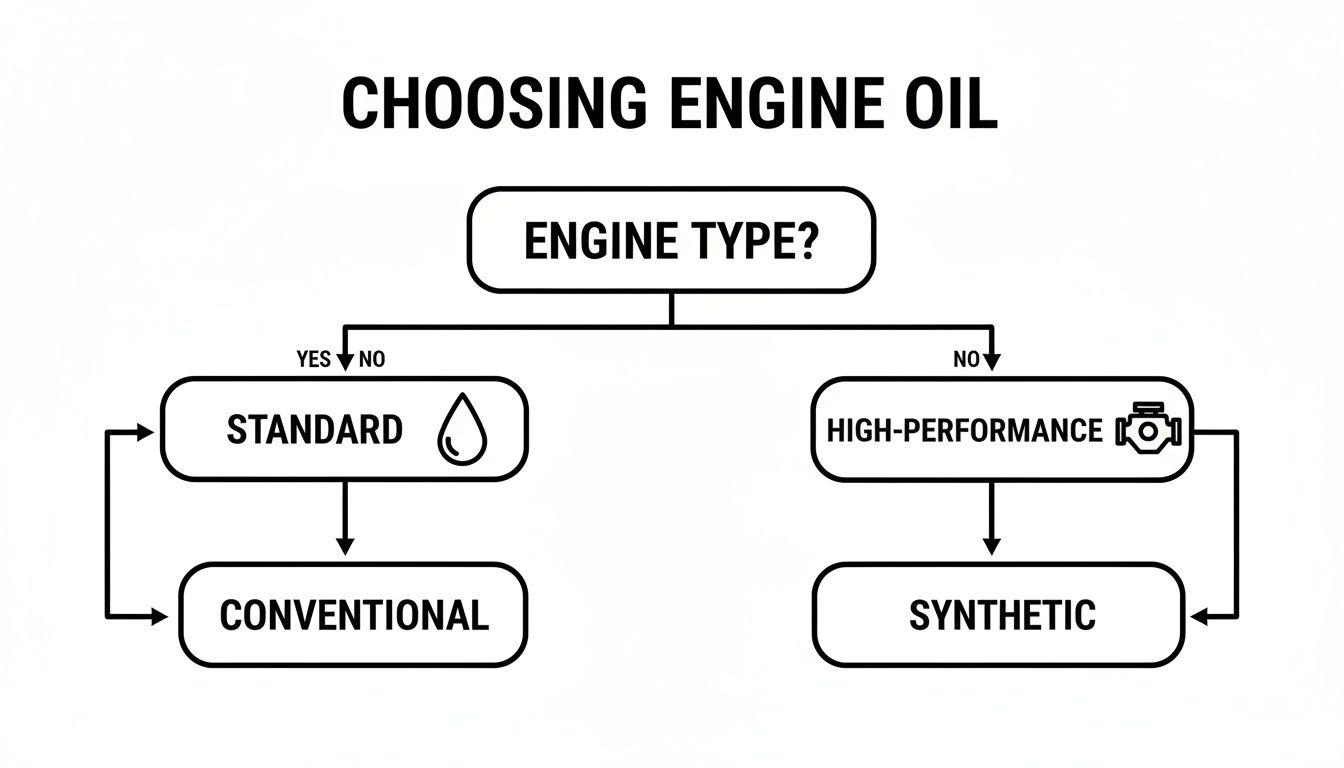
As shown, the decision often hinges on engine technology. Standard engines function perfectly well with conventional oil, whereas high-performance or newer turbocharged engines require the superior protection of synthetics.
Adjusting Your Oil Change Schedule
Real-world driving conditions can be harsh on engine oil. Certain driving patterns, known as "severe service," place greater demands on the oil and may necessitate changing it closer to the 5,000-mile interval.
Consider shortening your service interval if your daily driving involves:
- Lots of Short Trips: Journeys under 10-15 minutes prevent the engine from reaching full operating temperature, which is needed to vaporize and burn off moisture and fuel contaminants that accumulate in the oil.
- Heavy Stop-and-Go Traffic: Urban driving with frequent braking and acceleration places significant mechanical stress on the engine and its oil.
- Extreme Texas Heat: High ambient temperatures can cause conventional oil to thin out (lose viscosity) and degrade more quickly, reducing its lubricating effectiveness.
- Towing or Hauling Heavy Loads: Making the engine work harder generates excess heat, which is the primary catalyst for oil breakdown.
The optimal strategy is to balance the manufacturer's recommendations with an honest assessment of your driving habits. This ensures the engine receives necessary protection without incurring the cost of premature oil changes.
Vehicle age is another significant factor. The continued popularity of conventional oil is closely tied to the large number of older vehicles still in service. With the average age of cars on U.S. roads reaching 13.6 years, many drivers rely on regular, affordable oil changes to combat age-related engine wear. This trend contributes to market projections that see the oil change sector growing from $8.11 billion to $11.31 billion by 2030.
For a more personalized recommendation, check out our guide on how often you should change your oil to determine the ideal schedule for your car.
Recognizing the Warning Signs of Old Oil
While the service reminder sticker on your windshield is a helpful prompt, your vehicle provides its own signals when an oil change is due. Learning to recognize these indicators can help you prevent minor maintenance needs from escalating into major, costly repairs.
Ignoring these signs forces the engine to operate with degraded oil, leading to increased friction, higher operating temperatures, and accelerated wear. Be observant for these five key indicators that it's time for service.
Listen to Your Engine
A noticeable change in your engine's sound is often an early warning. Fresh oil provides a thick, cushioning film between moving components, allowing for quiet operation.
As oil ages and loses viscosity, this cushion thins, and you may begin to hear louder-than-usual engine noise. This could manifest as a low rumble or even a distinct knocking or tapping sound, indicating metal-on-metal contact due to insufficient lubrication.
Keep an Eye on Your Dashboard
Modern vehicles are equipped with sophisticated monitoring systems. If the oil level is low or the system detects inadequate oil pressure, one of two warning lights will likely illuminate on your dashboard.
- The Oil Pressure Light: This icon, shaped like an oil can, signifies a critical issue with your oil system. It should be addressed immediately.
- The Check Engine Light: This general-purpose warning light can be triggered by numerous issues, with low or excessively dirty oil being a common cause.
Notice What Comes Out the Back
A properly functioning engine's exhaust should be nearly invisible. If you observe visible, bluish, or grayish smoke coming from the tailpipe, it is a strong indication that oil is leaking past worn seals into the engine's combustion chambers and being burned along with the fuel.
This often points to wear on internal engine components that old, sludgy oil failed to protect. Ignoring this can lead to significant engine damage and a failed emissions test.
When engine oil is clean and at the correct level, it facilitates smooth and quiet operation. Any sudden change in sound, smell, or performance is your vehicle's way of signaling that it needs attention before a small issue worsens.
Use Your Senses
Sometimes, the signs are more tactile or olfactory. If you detect a burning oil smell inside the cabin, it is a clear red flag. This typically indicates an oil leak where fluid is dripping onto hot engine or exhaust components.
It is also wise to visually inspect the oil. Pull out the dipstick and observe its condition. Healthy oil is translucent and amber in color. Old, degraded oil will appear dark, opaque, and may feel gritty when rubbed between your fingers. This grittiness is an abrasive mixture of contaminants—precisely what you want to remove from your engine.
DIY vs. Professional Oil Change: What's the Right Call?
Should you perform your own conventional oil change or entrust the job to a professional? The decision involves a trade-off between cost, convenience, and technical confidence. The DIY approach can seem cost-effective, but it is more involved than simply adding new oil to the engine.
A DIY oil change requires proper equipment, including a wrench set, an oil drain pan, a funnel, and potentially jack stands for safe access. You must also purchase the correct type and volume of motor oil, source the correct replacement filter, and understand how to safely and legally dispose of the used motor oil, which is classified as hazardous waste. It's a task that demands time, precision, and some mechanical aptitude.
Why Let a Pro Handle It?
Conversely, a professional service is built on expertise and efficiency. When you bring your vehicle to a reputable shop, you are not just paying for a service; you are investing in peace of mind and professional oversight.
Here’s what a professional service provides:
- Speed and Convenience: A trained technician can perform the service quickly and cleanly, minimizing disruption to your day without the hassle of setup and cleanup.
- The Right Parts, Every Time: Professionals use the specific oil viscosity and filter type recommended by your vehicle’s manufacturer, which is crucial for optimal engine performance and warranty compliance.
- Hassle-Free Disposal: We manage the responsible recycling of your old motor oil in accordance with environmental regulations, saving you the trouble.
Perhaps the greatest benefit is the multi-point inspection that typically accompanies the service. A trained technician's eye can identify potential issues you might overlook—such as a worn belt, low fluid levels, or deteriorating brake pads—preventing a minor issue from becoming a major repair.
Making the Smart Choice
While changing your own oil can be a rewarding experience for mechanically inclined individuals, the convenience, expertise, and added value of a professional service make it the more practical choice for most drivers. It is fast, ensures the job is done correctly, and provides a valuable health assessment for your entire vehicle.
For many, this makes a professional oil change the more efficient and, in the long run, the more cost-effective option.
Finding a Trusted Oil Change Service in Plano
You understand the importance of a conventional oil change, but finding a service center in Plano you can trust can be a challenge. At Express Lube & Car Care, we prioritize what matters most: your time, your budget, and your vehicle's long-term health.

We recognize that your schedule is busy. That is precisely why our service is designed for maximum convenience. No appointments are ever needed. Simply visit us when it fits your schedule, and our efficient team will have you back on the road promptly.
The Express Lube Difference
Choosing a professional shop means placing your vehicle in the hands of experts. Every one of our technicians is ASE-certified, the automotive industry's gold standard for demonstrating proven expertise. This certification represents a career-long commitment to keeping vehicles running safely and reliably.
Our dedication to quality extends to our equipment. We use modern diagnostic tools to conduct a comprehensive vehicle health check with every oil change. This proactive approach allows us to identify minor issues—such as low fluid levels or a belt showing early signs of wear—before they can escalate into significant problems.
Choosing a service center is about more than just an oil change. It’s about finding a partner who values your vehicle’s long-term health, providing expertise and honest assessments with every visit.
Real Savings for Plano Drivers
We believe that top-tier automotive service should be affordable. Regular maintenance is an investment, not a burden, which is why we offer multiple ways to save. Getting a full service oil change in Plano at our shop is a smart decision for your car's future.
We are proud to offer various discounts and specials to thank our community and customers:
- Valuable Coupons: Grab a coupon to receive $20 off your next oil change and other services.
- Community Heroes Discount: We provide special pricing for military members, first responders, and healthcare workers as a small token of our gratitude.
- Ladies Day Special: Every Wednesday, ladies receive $25 off their oil change, making expert car care more accessible.
At Express Lube & Car Care, we do more than just change your oil. We deliver fast, reliable service from certified experts dedicated to keeping both your vehicle and your budget healthy.
Common Questions About Conventional Oil
Let’s address some of the most frequent questions drivers have about conventional motor oil. Clear, factual answers can help you make informed decisions about your vehicle's maintenance.
Can I Put Synthetic Oil in My Older Car?
Yes, in most cases. Transitioning from conventional to synthetic oil is a common upgrade and is perfectly safe for the majority of older vehicles. In fact, you may experience tangible benefits, such as enhanced protection against engine sludge and more stable performance in Texas's extreme heat and cold.
One consideration is that synthetic oil's potent detergents can sometimes clean away old deposits that were incidentally sealing a minor, pre-existing leak. The synthetic oil does not cause the leak, but its cleaning action can reveal it. A brief consultation with one of our technicians can help determine if your car is a good candidate for the switch.
Is Conventional Oil Good Enough for My Car?
For millions of vehicles, conventional oil is not just "good enough"—it is the correct and most cost-effective choice. If your car has a standard, non-turbocharged engine and the owner’s manual specifies conventional oil, you can be confident that it will provide excellent protection for normal driving conditions.
It is a reliable, budget-friendly lubricant that has served as the industry standard for decades. The most crucial factor for engine longevity is adhering to a consistent service schedule, typically every 5,000 to 7,500 miles.
A standard oil change is more than a fluid swap. It's a comprehensive service that includes a new oil filter and a courtesy vehicle inspection, providing excellent value and peace of mind.
What’s Included in a Standard Oil Change Service?
A professional oil change is a complete service for your engine’s most vital fluid. The process typically includes:
- The complete draining of old, contaminated motor oil from the engine.
- Removal and replacement of the old oil filter with a new, high-quality one.
- Refilling the engine with the correct volume and viscosity grade of new conventional oil.
- A multi-point courtesy inspection of your vehicle's essential fluids and key systems.
How Much Does a Conventional Oil Change Cost?
While the exact price varies depending on your vehicle and the amount of oil it requires, a conventional oil change is the most affordable option. You can generally expect the service to cost between $40 and $75. This price typically includes the oil, the new filter, and the labor, making it one of the best investments you can make in your vehicle's long-term health.
Ready for a quick, professional oil change that accommodates your schedule and your budget? Visit Express Lube & Car Care today—no appointment needed. Let our ASE-certified technicians provide your vehicle with the expert care it deserves. Find out more about our services.