

At its core, the difference is straightforward: a coolant flush is a comprehensive cleaning procedure designed to remove nearly 100% of the old, degraded fluid and accumulated contaminants. In contrast, a drain and fill is a partial fluid exchange that replaces only a portion of the old coolant, leaving a significant amount of used fluid and debris behind. To understand which is right for your vehicle, we must first explore the science behind your car's cooling system.
The Critical Role of Your Engine's Cooling System, Especially in Texas
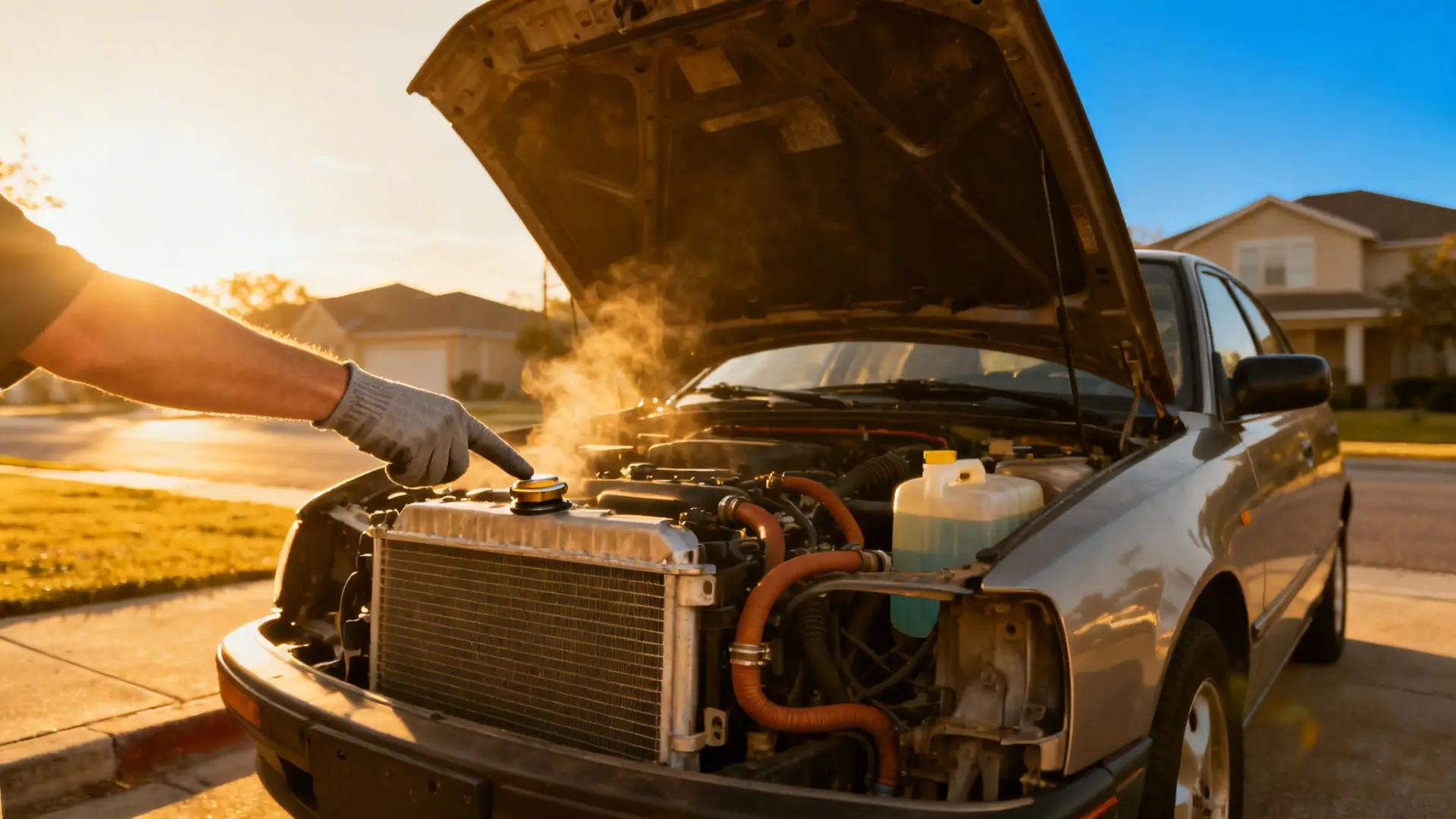
The intense Texas heat places significant thermal stress on your vehicle's engine. Your car's cooling system is the primary mechanism responsible for regulating this thermal load, preventing the engine from reaching temperatures that could cause catastrophic failure.
At the heart of this system is the engine coolant, also known as antifreeze. Its primary function is heat transfer—it absorbs heat from the engine block and carries it to the radiator, where it is dissipated into the air. This process maintains the engine's optimal operating temperature.
Beyond Temperature: The Science of Modern Coolants
Modern coolant formulations are complex chemical solutions engineered to perform several functions beyond simple heat management. They contain a sophisticated package of additives that are vital for engine longevity:
- Corrosion Inhibition: These chemical additives form a protective layer on the internal metal surfaces of the engine, radiator, and water pump, preventing oxidation (rust) and galvanic corrosion.
- Lubrication: Coolant lubricates critical moving parts within the system, such as the water pump's seals and bearings, reducing wear and tear.
- Deposit Prevention: The formula includes agents that prevent the formation of scale and mineral deposits, which can clog the narrow passages within the radiator and heater core, impeding fluid flow.
Over time, these essential additives deplete. The coolant's pH level drops, and it becomes acidic. At this point, the fluid transforms from a protective agent into a corrosive one, actively damaging the system it was designed to protect. For more detail, our guide on the primary causes of overheating in cars offers further insight.
This degradation of coolant is precisely why the choice between a coolant flush vs. drain and fill is so critical. The decision is not merely about replacing old fluid but selecting the appropriate service to restore the system's chemical balance and protective properties.
Understanding the Potential Consequences
Neglecting your cooling system, particularly in a high-heat environment, can lead to severe and costly engine damage. When coolant loses its protective abilities, the following failures can occur:
- Warped cylinder heads
- Blown head gaskets
- Total engine seizure
Cooling system maintenance is one of the most important preventative services for your vehicle. Understanding the fundamental differences between a simple drain and a comprehensive flush is the first step toward making an informed decision that ensures your engine's long-term health and reliability.
Defining the Coolant Drain and Fill Procedure
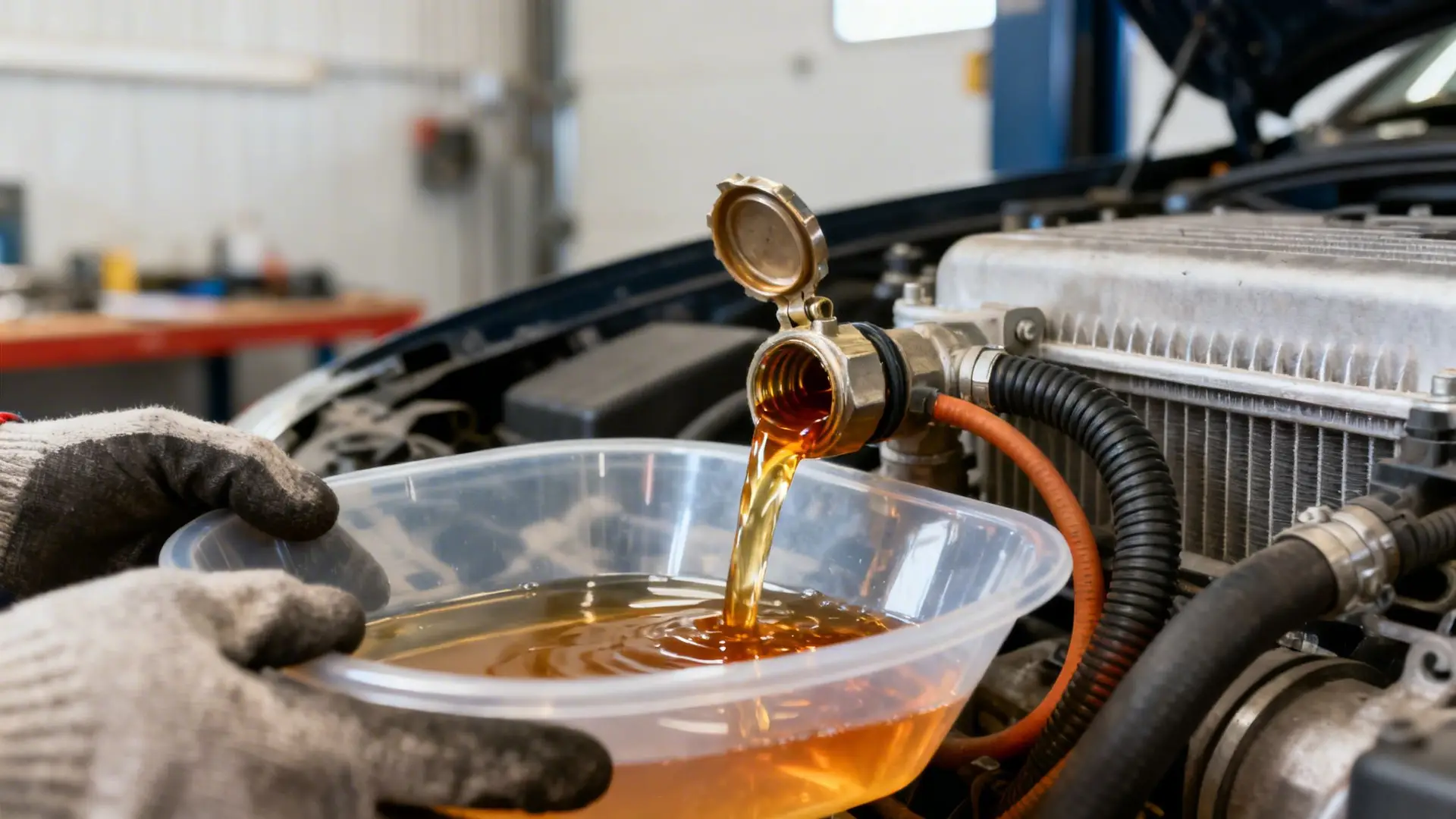
In the context of cooling system maintenance, the drain and fill is the most basic service available. While often presented as a quick and cost-effective option, it is essential to understand its procedural limitations and what it does—and does not—accomplish.
A drain and fill is a gravity-based procedure. A technician opens a drain valve, or petcock, typically located at the bottom of the radiator. The coolant in the radiator drains out, the valve is closed, and fresh coolant is added to the system.
While simple and fast, this method's primary drawback is its incompleteness. It only removes the coolant present in the radiator and the overflow reservoir.
The Problem of Retained Fluid
The significant disadvantage of a drain and fill is the volume of old, depleted coolant it leaves behind. Gravity alone is insufficient to evacuate the entire system.
A substantial amount of old fluid remains trapped in several key areas:
- The Engine Block: Contains a complex network of cooling passages holding a large volume of coolant.
- The Heater Core: A small, radiator-like component for the cabin's heating system that retains fluid.
- Hoses and Lines: The extensive network of rubber and metal lines that connect all components.
Consequently, a typical drain and fill procedure only replaces approximately 50-70% of the system's total coolant volume. The new coolant is immediately contaminated and diluted by the old, acidic fluid that was never removed.
An effective analogy: A drain and fill is akin to emptying only half the dirty water from a bucket before refilling it. While the water is fresher, it is still contaminated by the dirt and sediment left behind.
When is a Drain and Fill an Appropriate Choice?
Despite its limitations, a drain and fill can be a suitable maintenance option under specific, low-risk circumstances. It should be viewed as a partial refreshment of the coolant's additive package, not a complete system restoration.
A drain and fill may be appropriate if:
- The vehicle is relatively new with low mileage and a documented, consistent service history.
- Maintenance is performed at very frequent intervals, ensuring the coolant never has a chance to degrade significantly.
- It is used as a temporary measure before a more thorough service can be performed.
In these scenarios, it is certainly more beneficial than no service at all. However, it fails to address the root cause of most cooling system issues: the accumulation of sludge, scale, and corrosive byproducts. To learn more about coolant composition, our guide on the difference between antifreeze and coolant is a valuable resource.
This service leaves an estimated 30-50% of old, contaminated fluid circulating in the engine. This fluid contains particulate matter (rust and scale) that reduces thermal efficiency and can contribute to overheating—an issue that may lead to engine damage costing $2,000 to $5,000. This is why, as noted by automotive resources like RepairPal.com, many manufacturers now specify a full flush to ensure the longevity of critical components.
In summary, while a drain and fill is an inexpensive and quick service, it is only a partial remedy that dilutes contaminants rather than removing them, leaving the engine vulnerable to long-term damage.
Understanding The Comprehensive Coolant Flush
If a drain-and-fill is a simple rinse, a coolant flush is a complete, restorative deep-cleaning process for your vehicle’s cooling system. This service is significantly more thorough, designed to return the entire cooling circuit to a near-factory-clean condition. It represents the best practice for long-term vehicle health, especially for cars operating in high-heat climates like Texas.
Unlike a gravity-based drain, a flush utilizes specialized equipment. A technician connects a flushing machine to the cooling system, which uses pressure to perform two critical actions simultaneously: it displaces virtually 100% of the old, degraded coolant and circulates a dedicated cleaning agent throughout the entire system.
This pressurized process is engineered for complete evacuation and cleaning, reaching areas a simple drain cannot.
A Deep-Cleaning Process for the Entire System
The fundamental difference between a coolant flush and a drain-and-fill lies in this active, pressurized cleaning stage. The machine forces fluid through the engine, radiator, and heater core at a velocity that gravity alone cannot achieve.
This process is designed to locate and remove years of accumulated sludge, scale, and corrosion:
- Radiator Passages: It blasts out deposits from the small tubes where critical heat exchange occurs.
- Engine Block: It purges old coolant and corrosion from the engine's internal water jackets.
- Heater Core: It cleans the small, often-neglected passages of the cabin heating system.
- Water Pump: It clears away abrasive contaminants from the pump's impeller and seals.
- Hoses and Lines: It removes sediment that can build up and restrict flow.
This powerful circulation dislodges the rust and scale that cause most cooling system failures. The machine ensures that when new coolant is introduced, it enters a pristine environment, free from the acidic, contaminated fluid of the old system.
A coolant flush is engineered to restore the entire cooling circuit to its optimal state. It is not just a fluid exchange; it is a process of removing the very contaminants that lead to permanent component damage.
Restoring Efficiency And Preventing Future Failures
The benefits of this thoroughness are significant, making a flush a prudent investment in vehicle reliability. By completely removing contaminants instead of merely diluting them, a flush directly addresses the primary threats to your engine's health.
A professional flush delivers three major advantages:
- Restored Cooling Efficiency: A clean system is an efficient system. By removing insulating layers of sludge, the new coolant can make direct contact with metal surfaces, maximizing heat transfer and keeping your engine at its correct operating temperature, even in heavy traffic.
- Proactive Clog Prevention: The sediment and debris removed during a flush are the materials that eventually cause blockages in radiators and heater cores. Removing them now prevents these costly failures from occurring later.
- Extended Component Life: New coolant is rich with anti-corrosion additives. Introducing it into a clean system allows these additives to immediately begin protecting the metal surfaces of the radiator, water pump, and engine block, thereby extending their service life.
In conclusion, a coolant flush is both a preventative and a restorative service. It effectively resets the clock on internal wear and corrosion, safeguarding your engine from the most common causes of overheating. While a drain-and-fill offers some benefit, a full flush is a far more effective strategy for long-term vehicle dependability.
A Detailed Comparison Of Coolant Flush Vs Drain And Fill
When servicing your cooling system, you will encounter two distinct options: a drain and fill vs. a coolant flush. While the terms may sound similar, they represent fundamentally different levels of service and protection for your engine. One is a basic maintenance task, while the other is a complete restoration of your system's health.
Let's dissect the differences to determine which service your vehicle truly requires.
For a quick reference, the flowchart below outlines the recommended service based on your vehicle's age and history.
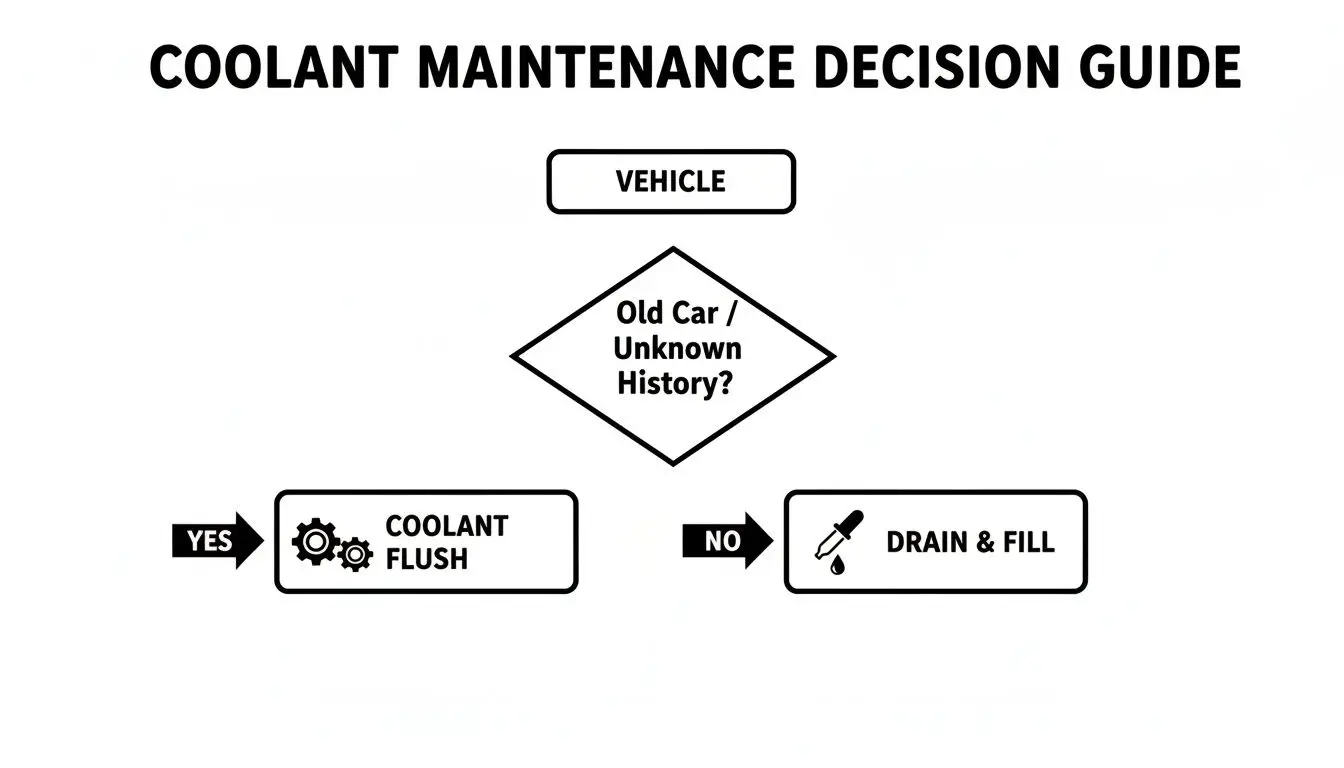
As illustrated, a newer vehicle with a complete service history is a good candidate for a drain and fill. However, for older vehicles or those with an unknown maintenance background, a flush is the recommended course of action.
Effectiveness In Removing Contaminants
This is the most significant point of differentiation. A drain and fill is a passive, gravity-fed process that removes only 50-70% of the old coolant. The remaining fluid, along with suspended rust, scale, and acidic byproducts, remains trapped in the engine block and heater core.
A coolant flush is an active, pressurized process. A machine is used to force out 95-100% of the old fluid while simultaneously circulating a cleaning solution that dissolves and suspends years of accumulated rust, scale, and sludge.
In essence, a drain and fill dilutes contaminants. A flush eliminates them.
Long-Term Component Protection
Because a drain and fill leaves behind a significant volume of old, acidic fluid, it provides only a short-term benefit. The new coolant's protective additives are immediately compromised by the old fluid, leaving your radiator, water pump, and gaskets vulnerable to corrosion.
A full flush offers superior long-term protection. By creating a completely clean environment, the new antifreeze and its anti-corrosion additives can perform their job without compromise. This translates to a longer service life for all critical and expensive cooling system components.
Think of it this way: A drain and fill is a temporary boost to your system's protection. A coolant flush is a full restoration of that protection.
True Cost-Effectiveness Over Time
On the surface, a drain and fill appears to be the more economical choice due to its lower upfront cost. However, this can be a false economy. Because it does not solve the underlying problem of contamination, it leaves the system susceptible to clogs and corrosion, which can lead to catastrophic failures and expensive repairs.
A coolant flush, while costing more initially, is a form of preventative maintenance. By investing a bit more in a thorough cleaning, you significantly reduce the risk of a cooling system failure—a repair that can easily cost thousands for a new radiator, water pump, or warped cylinder head. Over the operational life of your vehicle, a flush is nearly always the more cost-effective choice.
Service Comparison: Coolant Flush Vs Drain And Fill
This table provides a side-by-side comparison to clarify the key differences between the two services.
| Feature | Coolant Drain And Fill | Coolant Flush |
|---|---|---|
| Fluid Exchanged | 50-70% | 95-100% |
| Contaminant Removal | Low (Dilutes debris) | High (Eliminates debris) |
| Typical Cost | $75 – $150 | $150 – $300 |
| Ideal Use Case | Newer cars with low mileage and a known service history, or as a temporary top-off between full flushes. | Older vehicles, used cars with unknown history, or after replacing a cooling system component like a radiator or water pump. |
The data clearly shows that a flush is a comprehensive restoration, whereas a drain and fill is a partial refresh.
Suitability For Different Vehicle Conditions
The correct service is dictated by your vehicle's specific condition and history. A drain and fill is a perfectly acceptable procedure for a newer, low-mileage vehicle that has been maintained according to the manufacturer's schedule. In this scenario, the coolant is likely still in good condition.
However, a coolant flush is the only appropriate solution in several common situations:
- Older or High-Mileage Vehicles: Years of operation create deposits and corrosion that can only be removed with a pressurized flush.
- Used Cars: Without complete service records, assume the system has been neglected. A flush establishes a clean baseline for future maintenance.
- After a Component Replacement: If a radiator or water pump has been replaced, a flush is essential to remove the debris that likely caused the original part to fail.
- Visible Coolant Contamination: If the fluid in the reservoir is discolored (brown, rusty) or has a sludgy consistency, a drain and fill will not resolve the problem. Only a flush can adequately clean the system.
Ultimately, the choice is about matching the service to the vehicle's needs. A drain and fill acts as a top-off, while a flush serves as a complete system reset, ensuring long-term health and reliability.
When To Insist On A Coolant Flush
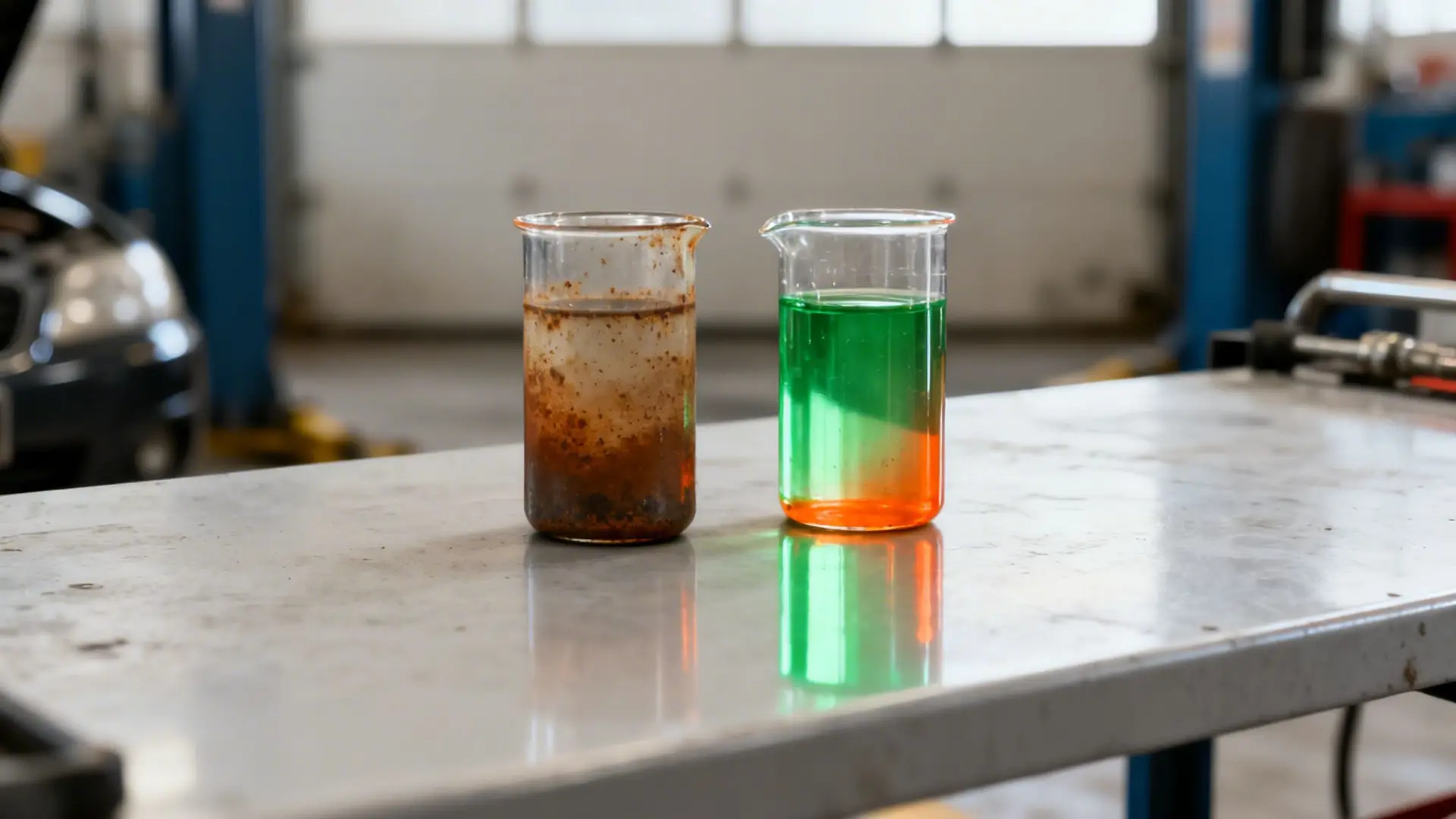
While a drain and fill is suitable for well-maintained, newer cars, certain conditions demand a complete coolant flush. In these scenarios, a flush is not merely an upgrade; it is an essential procedure for preventing costly, heat-related engine damage, especially in the Texas climate.
Recognizing these indicators allows you to be proactive about your engine's health and make an informed request for the correct service.
The Used Car Rule
When you acquire a pre-owned vehicle, particularly one with an incomplete or non-existent service history, a coolant flush should be considered a mandatory first step. You cannot be certain about the age of the coolant, its type, or whether incompatible fluids have been mixed.
A coolant flush on a newly purchased used vehicle establishes a known, clean baseline. It eliminates all variables and ensures the engine is protected with the correct, fresh fluid from the start of your ownership.
After Replacing Key Components
If you have recently replaced a major cooling system component such as the radiator, water pump, or heater core, a flush is non-negotiable. These parts often fail due to the accumulation of sludge, rust, and other debris within the system.
Failing to flush the system at this stage means the new component will be immediately exposed to the same contaminants that caused the original part's failure. For a deeper dive into this service, our guide "What is a radiator flush?" provides more detail.
When Visual Inspection Reveals Contamination
One of the most direct indicators of the need for a flush is the visual condition of the coolant in the overflow reservoir. A quick inspection can reveal serious problems. Healthy coolant should be a vibrant, translucent color (typically orange, green, or pink).
A flush is absolutely necessary if the coolant appears:
- Rusty or Brown: This is a clear sign of active internal corrosion within the engine or radiator.
- Sludgy or Opaque: This indicates that the coolant has chemically broken down and is saturated with contaminants.
- Cloudy or Gel-like: This often means incompatible coolant types have been mixed, creating a gel that can cause severe blockages.
The data supports this proactive approach. According to cooling system fluid service findings on hoganandsonsinc.com, vehicles receiving regular coolant flushes experience 40-50% fewer cooling system failures. An investment of $150-$300 for a professional flush is minimal compared to a $1,000-$4,000 repair bill for a new radiator or water pump.
Reaching a Mileage Milestone
Even if the fluid appears clean, time and mileage degrade coolant's protective qualities. If your vehicle is approaching or has surpassed 60,000 miles without a documented flush, it is time to perform this service proactively. This is especially true for vehicles subjected to severe driving conditions, such as daily stop-and-go traffic.
Do not wait for the temperature gauge to indicate a problem. A flush at this critical interval removes years of accumulated deposits and restores the antifreeze's full protective capabilities, helping you avoid a sudden and expensive failure.
Protecting Your Investment at Express Lube Plano
When evaluating a coolant flush vs. a drain-and-fill, a comprehensive flush is the superior choice for ensuring your engine's long-term health in the demanding Texas climate. This service is not just about replacing fluid; it's a deep-cleaning process that eliminates the rust and sludge that lead to overheating. At Express Lube Plano, we possess the specialized equipment and technical expertise to perform this service correctly.
Our team consists of ASE-certified technicians who have a deep understanding of modern, complex cooling systems. We reject a one-size-fits-all approach, instead providing honest, evidence-based recommendations tailored to your vehicle's specific age, mileage, and condition.
Expert Care with Maximum Convenience
We understand your time is valuable, which is why our service model is built for convenience. There is no appointment necessary—simply visit our facility when it fits your schedule, and our team will be ready to assist you. We utilize advanced flushing equipment to ensure a true, complete exchange that removes nearly 100% of the old, contaminated coolant.
At Express Lube Plano, our mission is to deliver expert automotive service that ensures your vehicle's dependability. A professional coolant flush is not just a routine task; it is a critical investment in your engine’s longevity and your peace of mind on the road.
We are also committed to providing exceptional value. Our pricing is transparent and fair, and we proudly offer special discounts for military members, first responders, and during our popular Ladies Day every Wednesday.
Choosing Express Lube Plano means partnering with a team dedicated to maintaining your vehicle's peak performance. With our fair pricing, skilled technicians, and unwavering focus on customer satisfaction, you can drive with the confidence that your vehicle is prepared for any challenge.
Frequently Asked Questions About Coolant Services
Cooling system maintenance can involve technical details that are often confusing. Here, we address some of the most common questions we receive from drivers in Plano regarding the differences between a coolant flush and a drain and fill.
How Often Should I Get a Coolant Flush?
Most vehicle manufacturers recommend a coolant service interval between 30,000 and 100,000 miles, or every 3 to 5 years. Your vehicle's owner's manual will provide the precise schedule for your specific model.
However, given the extreme ambient temperatures in Texas, it is a prudent strategy to service your system closer to the earlier end of that recommended range. Our technicians can also perform a chemical test on your coolant to assess its pH and additive levels, providing a recommendation based on its actual condition rather than just mileage.
Can I Mix Different Types of Coolant?
No, you should never mix different types or colors of coolant. This is a frequent and costly error. Combining different coolant chemistries—for example, a modern orange Organic Acid Technology (OAT) formula with an older green Inorganic Acid Technology (IAT) formula—can cause a harmful chemical reaction.
The result of mixing incompatible coolants is often the formation of a thick, gel-like precipitate. This substance can clog the narrow passages in your radiator, heater core, and engine block, leading to severe blockages and potentially catastrophic engine overheating.
Always use the exact type of coolant specified by your vehicle's manufacturer. A professional service is the best way to ensure the correct formulation is used.
Is a Coolant Flush Safe for My Older Car?
Yes, a coolant flush is not only safe but is highly recommended for older vehicles. Over many years and miles, rust, scale, and sludge accumulate throughout the cooling system. A simple drain and fill is incapable of removing this buildup; a pressurized flush is the only effective method for removing this damaging debris.
In very rare cases, on a severely neglected system, the removal of heavy sludge might expose a pre-existing leak that the debris was inadvertently plugging. Our technicians always perform a system integrity check before proceeding. The significant benefit of restoring full cooling and corrosion protection to aging components far outweighs this minimal risk.
What Are the Warning Signs That I Need Coolant Service?
Your vehicle typically provides several warning signs when the cooling system requires attention. Be observant for these indicators:
- The engine temperature gauge consistently reads hotter than normal.
- A distinct sweet, syrupy odor is noticeable after driving.
- The coolant in the overflow reservoir appears brown, rusty, or sludgy.
- You discover puddles of green, pink, or orange fluid underneath your parked car.
- You see steam or vapor coming from under the hood.
If you observe any of these symptoms, have your cooling system inspected immediately to prevent a serious breakdown.
Don't wait for a warning light to appear on your dashboard. Protect your vehicle with professional care from Express Lube & Car Care. Our ASE-certified technicians deliver honest advice and expert service to keep your car running reliably in the Texas heat. Stop by today—no appointment needed. https://www.expresslubeplano.com