
You’re sitting in traffic on Central Expressway, the car finally starts moving, and your transmission hesitates before it shifts. Maybe it feels like a small pause. Maybe it gives you a little jolt. Your first thought usually is not technical. It’s simple.
How much is this going to cost me?
That’s a fair question. Transmission service terms get confusing fast. Shops say flush, exchange, change, pan drop, filter service, and it all starts sounding like the same thing. It isn’t.
A transmission flush can be smart maintenance for the right vehicle. It can also be the wrong service for the wrong transmission. The price changes based on what you drive, what fluid it needs, and who performs the work. Plano drivers also deal with heat, long commutes, and stop-and-go traffic, which makes this decision more important than it looks on paper.
This guide is meant to clear the fog. No scare tactics. No jargon-heavy sales talk. Just the practical explanation most drivers wish they got the first time.
Your Transmission is Talking Are You Listening
When a transmission starts acting differently, most drivers notice the behavior before they know the reason.
You may feel a delay when shifting into Drive. You may notice rough upshifts leaving a stoplight. You may hear a faint whine that was not there last month. In Plano traffic, those small changes are easy to shrug off because the car still moves, and life stays busy.

The problem is that transmissions rarely fail all at once without warning. They usually give hints first. Fluid breaks down. Heat builds up. Shifting gets less consistent. Then the question changes from “Should I service it?” to “Did I wait too long?”
Why drivers get confused about the cost
Part of the confusion comes from the service names. A fluid change and a flush are not the same job, so they should not carry the same price. Another part comes from national averages that do not explain local reality. North Texas heat and daily traffic put more strain on automatic transmissions than many drivers realize.
If your car is shifting differently, smelling burnt, or showing signs of fluid trouble, the smartest first step is not guessing. It’s getting the transmission inspected before choosing the service.
Drivers often do not need a complicated lecture. They need honest answers to a few basic questions:
- What is a transmission flush
- How is it different from a fluid change
- How much does a transmission flush cost
- Which one makes sense for my car
Those are the questions that matter, especially when you want to protect the transmission without spending money blindly.
Understanding a Transmission Flush vs a Fluid Change
Transmission fluid is a lot like the working fluid in a hydraulic system and a coolant at the same time. It lubricates moving parts, carries heat away, and helps the transmission shift properly. When the fluid gets old, dirty, or heat-damaged, the transmission has to work harder.
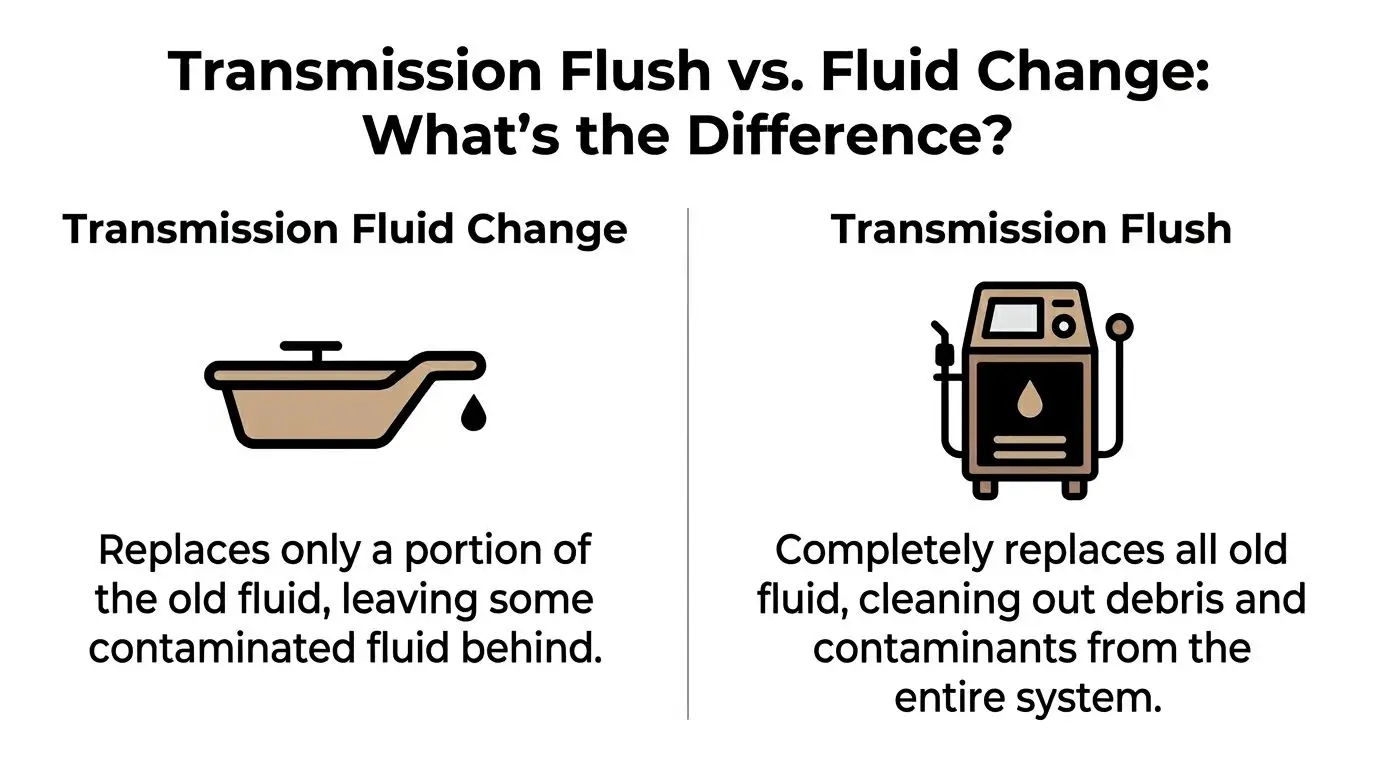
A simple way to think about the two services is this. A fluid change is like emptying part of a glass and refilling it. A flush is like replacing the whole drink in the glass, the straw, and the tubing connected to it.
Transmission fluid change: A drain-and-fill service that removes only part of the old fluid and replaces it with new fluid.
Transmission flush: A full-system fluid exchange that uses specialized equipment to replace nearly all of the old fluid.
According to Jiffy Lube’s explanation of transmission flush vs transmission exchange, a transmission flush replaces nearly 100% of the automatic transmission fluid by pushing new fluid through the torque converter, cooler lines, and valve body. It also notes that this process typically requires 12 to 22 quarts, compared with 5 to 7 quarts for a standard drain-and-fill.
What each service really does
Here is the plain-English version.
| Service | What happens | What stays behind | Typical use |
|---|---|---|---|
| Fluid change | Old fluid drains out from the pan area and new fluid goes in | A portion of old fluid remains in the system | Routine maintenance on a regularly serviced vehicle |
| Flush | A machine exchanges old fluid throughout the full system | Much less old fluid remains | A more complete service when full exchange is appropriate |
A fluid change is usually the simpler service. It uses less fluid and less equipment. A flush is more thorough, but it also depends more on the transmission’s condition and service history.
Why this matters before you compare prices
Two quotes can sound far apart until you realize they are for different jobs.
One shop may price a basic drain-and-fill. Another may price a full exchange using a machine and much more fluid. Those are not apples-to-apples numbers. If you want a better sense of what a broader service visit can include, this overview of what a transmission service includes helps clarify the terms.
The takeaway is simple. If you ask, “How much does a transmission flush cost?” make sure the shop is quoting a flush, not a basic fluid change.
Breaking Down the Cost of a Transmission Flush
The short answer is this. In the United States, a transmission flush typically costs between $150 and $400, with independent mechanics often charging $150 to $250 and dealerships often charging more than $300, according to AMSOIL’s breakdown of pan drop vs flush pricing.
That range is useful, but it only tells part of the story. The final bill depends on four main things.
Vehicle size changes the price fast
A small sedan and a full-size truck do not use the same amount of fluid.
The same AMSOIL pricing overview notes that a Ford F-150 can run $294 to $378 for service, while a Honda Civic may be $118 to $146 for a fluid change. Bigger transmissions generally need more fluid and more time. Trucks, SUVs, and heavy-duty applications usually land at the upper end of the range.
If you drive a half-ton pickup, a large SUV, or a work truck in Plano, expect your quote to look different from a compact commuter car.
Fluid type matters more than many drivers expect
Not all transmission fluid is interchangeable.
Some vehicles use standard automatic transmission fluid. Others require a synthetic or manufacturer-specific formula. The wrong fluid can create shift problems or long-term wear, so this is not an area where a quality shop should guess.
Higher-spec fluid raises the total cost because the service uses a lot of it during a flush. That is one reason flushes cost more than a drain-and-fill.
Who performs the work affects the quote
You will usually see three broad pricing patterns:
- Independent shops often land at the lower end of flush pricing
- Dealerships often charge more
- Vehicle specialists may charge more when the transmission needs a specific process or fluid
That difference does not automatically make one option better than another. What matters is whether the shop uses the correct fluid, follows the right procedure, and understands the transmission in your vehicle.
Labor is part of the total
A flush is not just pouring fluid in and calling it done. It requires service equipment and a proper exchange process.
That is also why comparing flush pricing to replacement costs matters. If you have ever looked into cost to replace a transmission, you already know preventive maintenance is usually the cheaper conversation.
A realistic Plano mindset on price
Consider the following for an honest assessment:
- If you drive a smaller, commonly serviced car, your quote may stay near the lower end.
- If you drive a truck, larger SUV, or vehicle with expensive fluid requirements, your quote may move toward the higher end.
- If a shop gives you one flat number without asking about the vehicle, transmission type, or service history, that is a red flag.
The best transmission quote is not the cheapest one. It’s the one that matches the vehicle, the fluid specification, and the condition of the transmission.
Five Signs Your Transmission Needs Attention
Some transmission problems build slowly. You adapt to them without meaning to. Then one day the symptom is too obvious to ignore.
Plano drivers see these issues more often in summer because heat and traffic are hard on fluid. If your car shows any of the warning signs below, get it checked before choosing a flush or a basic change.
Delayed or rough shifting
You put the car in Drive and it hesitates. Or it shifts harder than normal between gears.
That can point to aging fluid, internal wear, or pressure-related problems. A small delay today can turn into a much bigger drivability issue later.
Whining, humming, or grinding sounds
Healthy transmissions usually perform their function without noticeable noise.
A new noise during acceleration, shifting, or low-speed driving is your cue to stop guessing. Fluid condition can be part of the cause, but so can mechanical wear.
Burning smell
Burnt transmission fluid has a sharp, overheated smell.
In North Texas, heat makes this more important, not less. If you smell something burnt after driving in traffic, the transmission needs attention soon.
Slipping gears
This is one of the clearest warning signs.
The engine revs, but the vehicle does not move the way it should. It may feel like the transmission loses its grip for a moment before catching again. That usually means the problem has moved beyond routine maintenance and into diagnosis territory.
A quick visual explanation can help if you want to see common symptoms in action.
Red or reddish-brown fluid under the vehicle
A leak is never normal.
Transmission fluid often shows up as red or reddish-brown spots under the car. A low fluid level can cause shifting trouble, overheating, and internal damage if it is ignored.
If the transmission is already slipping badly, making strong noises, or leaking heavily, do not assume a flush will fix it. The right next step is a professional diagnosis.
Choosing the Right Transmission Service for Your Vehicle
The flush-versus-change debate becomes clear here. The right service depends less on internet opinions and more on your vehicle’s age, history, and symptoms.
According to AutoZone’s guidance on transmission flush vs change, older vehicles or those in hot Texas climates may get better long-term value from a full flush, because a simple fluid change replaces only about 30% of the fluid. The same guidance also says newer vehicles on regular maintenance schedules may not justify the $300 to $500 flush expense.
When a fluid change often makes sense
A drain-and-fill is often reasonable when the car has been serviced on schedule and the transmission is behaving normally.
That usually fits drivers who have:
- A newer vehicle
- A clear maintenance history
- No major shifting complaints
- No signs of overheating or contamination
In that situation, a simple service may be the more practical choice.
When a flush may offer better value
A flush can make more sense when the transmission needs a more complete fluid exchange and the vehicle’s condition supports it.
That can apply when:
- The vehicle has seen tough use in heat and traffic
- The fluid has aged beyond what a partial change can meaningfully refresh
- The service history suggests a more complete exchange would be beneficial
For Plano drivers, heat matters. Repeated stop-and-go driving builds temperature in the transmission, and fluid condition becomes more important over time.
When neither answer should come first
Some vehicles need inspection before anyone chooses either service.
That includes:
- Older cars with an unknown service history
- Vehicles already showing major transmission symptoms
- Used cars you recently bought with no maintenance records
If the transmission is already struggling, the safest first step is diagnosis, not a one-size-fits-all service recommendation.
What about doing it yourself
A skilled home mechanic can sometimes handle a basic drain-and-fill.
A flush is different. It uses specialized equipment and requires the correct fluid and procedure. Mistakes can create serious problems, especially on modern sealed transmissions or vehicles with strict fluid specifications.
If you are asking whether DIY is worth it, ask yourself two things. Do you know exactly which fluid your transmission requires? And can you verify the fluid level correctly when the service is done?
If the answer is no, professional service is usually the safer route.
Your Local Transmission Service Solution in Plano
When your transmission needs attention, convenience matters, but trust matters more.
You want a shop that will tell you when a basic service is enough, when a flush makes sense, and when the transmission needs diagnosis before any fluid work. That is especially important for busy Plano families, commuters, and fleet drivers who do not have time for vague answers or unnecessary upsells.
A good local shop should offer three things:
Straight answers from qualified technicians
ASE-certified technicians should explain the service in plain language. They should match the recommendation to the vehicle instead of pushing the highest-ticket option.
Convenience that fits real life
No-appointment service helps when you are juggling work, school pickups, or a packed week. This matters more than drivers often admit.
Savings that are useful
Express Lube & Car Care offers ongoing savings for military, first responders, and healthcare workers, along with a Ladies Day special on Wednesdays and additional offers on select services. If you want a closer look at local transmission help, their page on transmission service in Plano is a good place to start.
The right local shop should leave you feeling informed, not pressured. That is the standard to look for.
Common Questions About Transmission Flushes
Drivers usually ask the same few questions once they understand the basics. Here are the ones that matter most.
How often do I need transmission service
The best answer is always your owner’s manual first.
Beyond that, driving conditions matter. Plano traffic, summer heat, short trips, and heavy use all count as harder service than easy highway cruising. If you drive under tougher conditions, it makes sense to be more proactive and have the fluid checked regularly.
Can a flush damage an old transmission
It can be risky on some older transmissions, especially if the vehicle has an unknown maintenance history or is already showing signs of internal trouble.
That is why inspection matters. If the transmission is neglected or already failing, a flush is not a magic fix. In some cases, a technician may recommend a gentler service approach or a diagnostic evaluation before any fluid exchange.
A flush should be a maintenance decision, not a rescue attempt for a transmission that is already failing.
Will a transmission flush affect my warranty
It can if the wrong fluid is used or the service is done incorrectly.
That is one reason many drivers choose professional service. Modern transmissions are picky about fluid type. Using the correct OEM-spec fluid and following the right procedure helps protect shift quality, durability, and warranty compliance.
Is a flush always better than a change
No.
A flush is more complete, but more complete is not always more appropriate. A newer vehicle with a strong maintenance history may do perfectly well with a routine fluid change. A vehicle dealing with heat and neglected fluid may benefit more from a full exchange. The answer depends on the car in front of the technician, not a slogan.
What should I ask before approving service
Keep it simple. Ask:
- Is this a flush or a basic fluid change
- What fluid does my vehicle require
- Why are you recommending this service for my specific car
- Are there any signs the transmission needs diagnosis before service
If a shop can answer those clearly, you are in better hands.
If your car is hesitating, shifting hard, or you want honest guidance on the right transmission service, Express Lube & Car Care can help. Their ASE-certified team serves Plano drivers with no-appointment convenience, clear recommendations, quality fluids, and practical savings for military, first responders, healthcare workers, and Wednesday Ladies Day customers.