

Driving on a flat tire is almost always unsafe, and with a conventional flat tire, anything beyond 0.5 miles risks catastrophic rim damage. Keep going too long and a tire problem that might have stayed simple can turn into wheel, brake, and suspension damage, with repairs that can reach $1,500+.
You usually feel it before you fully process it. The steering gets heavy, the car pulls to one side, or you hear the thump-thump-thump that makes your stomach drop. In that moment, most drivers ask the same thing: can i drive on a flat tire just far enough to get somewhere safer?
Sometimes you do need to move the car a very short distance to avoid a worse situation. But the key is understanding the difference between moving to safety and trying to continue your trip. Those are not the same choice, and they don't carry the same risk.
The Real Dangers of Driving on a Flat Tire
A flat tire isn't just an inconvenience. It changes how the vehicle steers, brakes, and holds the road. When air pressure drops out, the tire stops supporting the vehicle the way it was designed to, and the wheel starts taking loads the tire should be absorbing.
That matters because tire failures have never been minor safety events. Before widespread TPMS use, NHTSA estimated that flat tires or blowouts contributed to approximately 414 fatalities and more than 78,000 crashes annually. More recently, over 500 traffic fatalities stemmed from tire-related incidents in 2024, according to NHTSA crash data.
Why a flat gets dangerous fast
A fully inflated tire cushions the wheel, helps the tread stay planted, and gives you predictable response in a lane change or panic stop. A flat does the opposite.
- Steering gets less precise because the tire carcass flexes in ways it shouldn't.
- Braking gets less stable since the contact patch changes and the vehicle can pull.
- Heat builds quickly as the sidewall folds and scrubs against the road.
- The wheel becomes vulnerable because the tire is no longer protecting it.
Practical rule: If the car feels wrong enough that you're asking whether you can keep driving, the safer decision is usually to get off the road and stop, not push on.
A lot of drivers hope they can "save time" by limping to a shop. In the bay, I see the other side of that decision. The short drive that seemed harmless often ruins a repairable tire and adds damage you can't see from the driver's seat.
Your First 60 Seconds What to Do Immediately
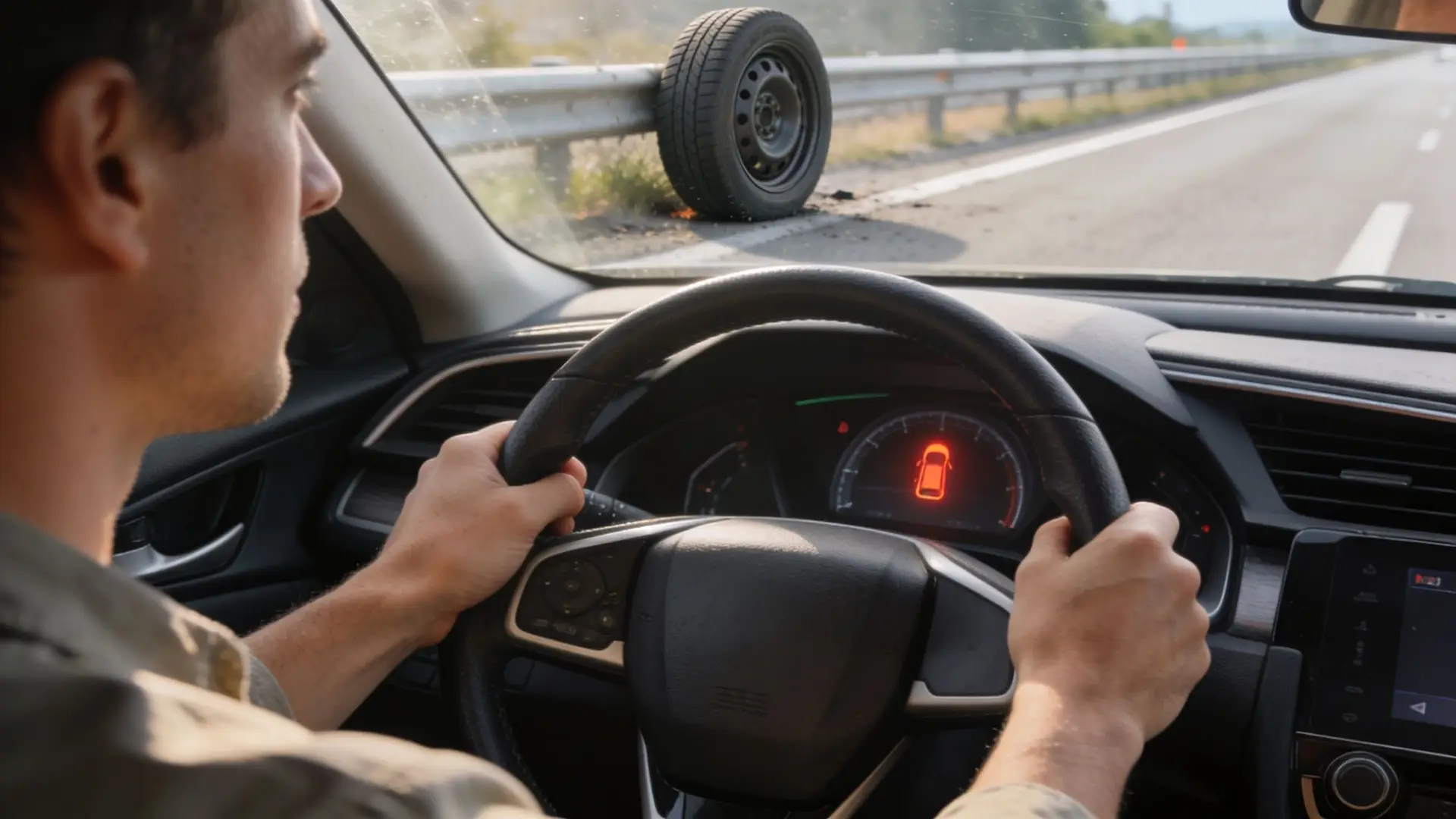
The first minute is more critical than typically realized. Your job isn't to inspect the tire yet. Your job is to keep control of the vehicle and get out of danger without making the situation worse.
What to do in order
Grip the wheel firmly with both hands. If the tire lets go suddenly, the car may pull, especially at highway speed.
Then ease off the accelerator. Don't slam the brakes unless traffic conditions leave you no other choice. Hard braking can upset the vehicle and make a bad situation harder to control.
Next, turn on your hazard lights and start looking for the safest nearby place to stop. That might be a wide shoulder, an exit ramp, a parking lot, or a side street. If you're dealing with the aftermath of a roadway incident as well, DFox Law's Texas car crash tips are a useful reference for staying safe and documenting what happened.
What not to do
- Don't jerk the wheel toward the shoulder.
- Don't keep normal speed hoping the tire will "hold a little longer."
- Don't ignore a warning light if your vehicle gives you one.
- Don't stop in a blind curve or a narrow spot if you can roll a very short distance to a safer area.
If your dash warning came on before the tire went fully flat, it's worth understanding what that system is telling you. A quick read on what your TPMS warning light means can help you tell the difference between early warning and a true emergency.
A short visual walkthrough can help if you're shaken up and need to reset your thinking:
Stop with purpose, not panic. Smooth inputs give you the best chance of protecting the wheel, the tire, and everyone around you.
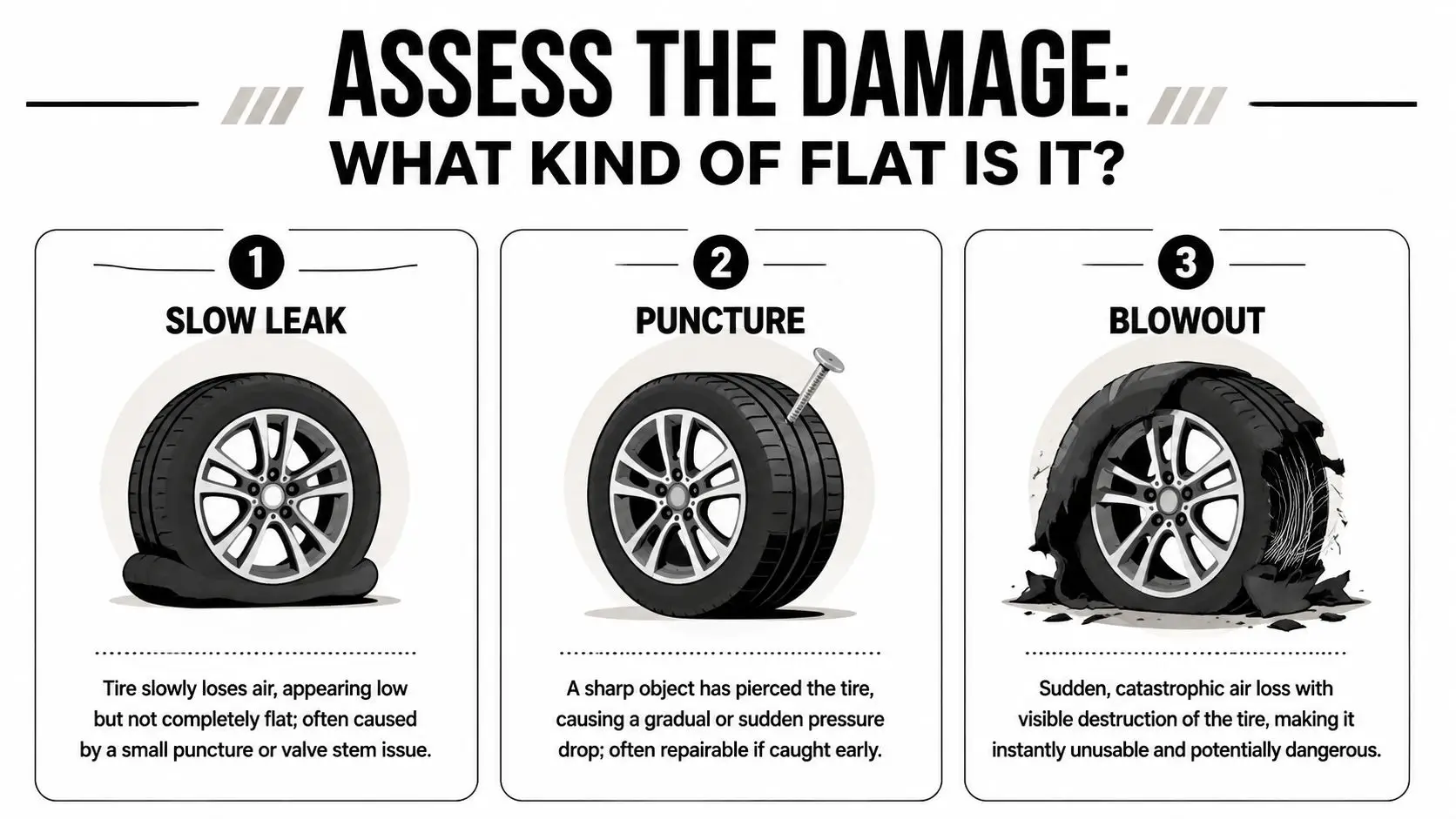
Assess the Damage What Kind of Flat Is It?
Once you're safely parked, now you inspect. Not every flat looks the same, and what you see should shape your next move.
Slow leak, puncture, or blowout
A slow leak usually leaves the tire looking low but not crushed. The sidewall may still hold shape, and you might not see obvious damage right away. Common causes include a small puncture or a valve issue.
A puncture often comes from a nail or screw in the tread area. If the object is still in the tire, don't pull it out on the roadside. That can make air loss worse and leave you with a tire that's no longer manageable.
A blowout is the easy one to identify and the worst one to drive on. You'll usually see shredded rubber, torn sidewall material, or a tire that's obviously unusable.
Check whether you have run-flat tires
This part changes the decision tree. According to automotive experts, run-flat tires are standard on only about 15% of new vehicles, so most drivers should assume they do not have that extra margin unless the sidewall says otherwise. The same source notes that 26% of U.S. drivers don't know how to change a flat tire, which is one reason roadside help matters so much. Those figures appear in this flat tire facts guide from AutoInsurance.com.
Look at the tire sidewall for markings that identify a run-flat design. If you don't see a clear marking and you aren't certain, treat it like a conventional tire.
A quick roadside check
- Look at the sidewall first. If it's torn, pinched, or chewed up, don't drive on it.
- Check the tread area for an embedded nail or screw.
- Look under the wheel well for loose liner material or fresh damage.
- Inspect tread wear if the tire was already worn before this happened. A worn tire is less forgiving, and this tire tread depth chart helps you judge what you're looking at.
If the tire has lost its shape, the sidewall is visibly damaged, or the wheel looks low enough to be sitting on rubber, you're past the point of "let's see if it makes it."
How Far and Slow Can You Safely Drive?
Here's the answer most drivers want and most articles blur: for a conventional flat, think in terms of a few hundred yards to reach safety, not miles to reach your destination.
Technicians note that for a conventional flat tire, driving beyond 0.5 miles risks catastrophic rim damage. At only 20 mph, the rubber can overheat to 250°F in minutes, causing delamination, and the chance of salvaging a conventional tire driven over a mile is effectively zero, according to this technician guide on flat tire driving distance.
Conventional tire versus run-flat
A conventional tire and a run-flat do not buy you the same options. If you're asking can i drive on a flat tire, the first question should really be, what kind of tire is on the car?
| Scenario | Conventional Tire | Run-Flat Tire |
|---|---|---|
| Best use after air loss | Move only far enough to get out of immediate danger | Temporary travel to service if the tire is designed for it |
| Distance guidance | 0.5 miles max before rim damage risk rises sharply | Roughly 50 miles under limited conditions |
| Speed guidance | Keep it very slow, around 20 mph if you must move it | Stay under 50 mph |
| Heat risk | Rubber can reach 250°F in minutes | Still heat-sensitive and meant for short-term use only |
| Chance tire can be saved | Effectively zero if driven over a mile | Better chance if used within manufacturer limits |
The practical decision
If you're on a highway shoulder with traffic flying by, moving a short distance to a safer exit or wider shoulder can be the right call. But if you're thinking about driving across town to avoid a tow bill, that's where people turn one problem into several.
A few real-world factors matter:
- Road surface matters. Rough pavement and potholes punish a flat tire faster.
- Vehicle load matters. More passengers or cargo put more force into the dead tire.
- Turns matter because the sidewall gets twisted and pinched.
- Speed matters because heat climbs fast.
What works and what doesn't
What works is a calm, minimal move to safety. Hazards on, wheel straight, speed kept down, and distance kept short.
What doesn't work is "just one more mile." That's the phrase behind a lot of ruined wheels and torn-up inner liners.
On a conventional tire, driving is only for escaping immediate danger. It is not a transportation plan.
The Ripple Effect The Hidden Costs of a Flat
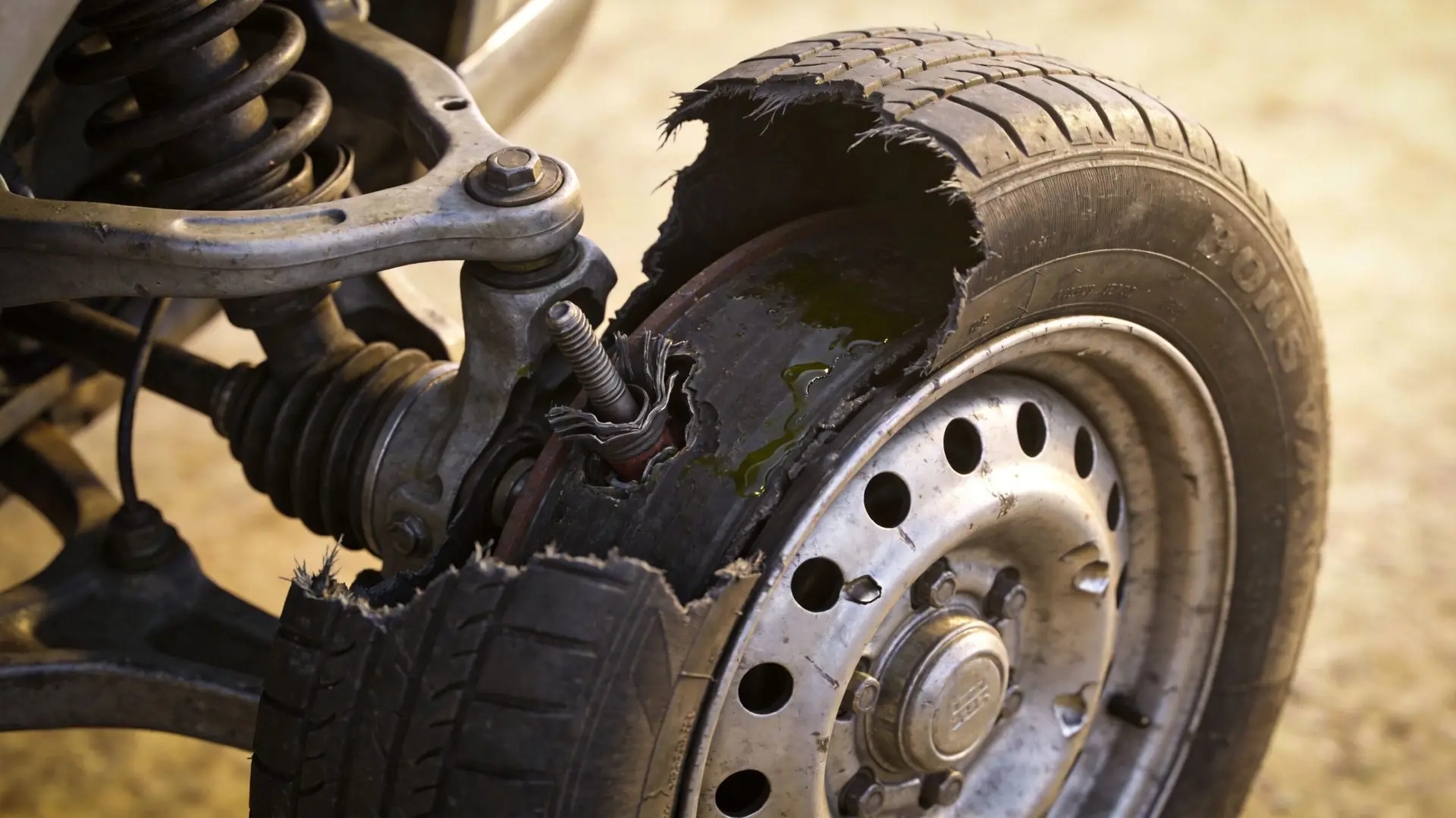
The tire is usually just the beginning. Once the tire collapses, the wheel starts taking direct abuse, and nearby parts can get hit by loose rubber or by the wheel moving in ways it normally wouldn't.
How the damage spreads
First, the tire itself gets destroyed. Then the rim can bend, crack, or grind against the road. After that, the mess can spread outward to brake and suspension parts.
According to this guide on damage from driving on a flat tire, driving on a flat can damage brake lines, rotors, and fenders, and continuing to drive can turn a simple tire replacement into a $1,500+ repair bill involving suspension, alignment, and brake system work.
Why the bill climbs so fast
- Wheel damage happens early because the tire no longer shields the rim.
- Brake components can get struck by flailing tire material.
- Alignment changes show up after the wheel takes repeated impacts.
- Suspension wear can follow because the car starts transferring shock loads into parts that weren't meant to absorb them that way.
Some drivers also end up sorting out whether this kind of damage falls under their policy's collision or property coverage. If you're dealing with insurance questions after road damage, the Nares Law Group LLC guide on coverage gives a useful plain-English overview.
A tire problem is cheapest when it stays a tire problem.
If you remember one financial takeaway, make it that. The longer a flat rolls under load, the more expensive the inspection becomes.
Getting It Fixed Right The Best Next Steps in Plano
Once the car is safe, your next choice is simple. Either install the spare if you have one and know how to do it safely, or call roadside assistance or a tow.
The best order of operations
If you're changing the tire yourself, use level ground when possible, keep the vehicle out of traffic, and don't crawl under the car. If you have a compact spare, drive on it only as a temporary measure and head straight for inspection and repair.
If you had to roll on the flat at all, ask for more than just a tire check. A proper follow-up should include a close look at the wheel, visible brake hardware, and any signs that the tire came apart inside the wheel well.
What Plano drivers should look for in a shop
Pick a shop that can do more than sell you a tire. You want technicians who can inspect for hidden damage, explain whether the tire is repairable, and tell you plainly if the wheel or surrounding parts took a hit.
If you're deciding where to go next, this guide on how to find a trustworthy mechanic is a solid checklist for separating a careful inspection from a rushed one.
The right shop visit after a flat should answer four questions:
- Can the tire be repaired, or is replacement the only safe option?
- Did the wheel take damage?
- Is there any brake, fender liner, or suspension damage?
- Is the rest of the set in good enough condition to keep driving confidently?
A calm stop and a smart inspection usually save money. Trying to force the car farther rarely does.
If you need fast, honest help after a flat tire in Plano, Express Lube & Car Care is equipped to inspect the tire, wheel, brakes, and suspension in one stop. Their ASE-certified technicians handle everything from tire-related diagnostics to broader repair work, and the no-appointment setup makes it easier to get checked quickly before a small tire issue turns into a much larger repair.