
Your check engine light comes on halfway down Preston during the morning rush. The car still runs, but not quite right. You’ve got work, school pickup, groceries, and zero interest in rolling the dice on a shop that might oversell you, keep the car all day, or hand you an invoice that doesn’t match the conversation.
This is the primary challenge for most drivers in Plano. It’s not just finding a mechanic. It’s finding one you’d trust when the repair is bigger than an oil change and more inconvenient than you can afford.
Many aren’t starting from a place of confidence either. A 2016 AAA survey found that while two-thirds of U.S. drivers distrust auto repair shops, a similar number, 64%, have successfully found a mechanic they trust. That matters because it means the skepticism is normal, but the search is still winnable if you handle it the right way.
The Plano Driver's Dilemma Finding Car Care You Can Trust
Plano drivers usually start looking for a shop under pressure. The battery drags on a hot afternoon. The brakes start pulsing on Central. A warning light pops on before a weekend trip. You’re not researching from a calm place. You’re trying to solve a problem fast without getting burned.

That’s why generic advice like “check reviews” usually falls short. In a place like Plano, the better question is narrower. Which shops do local families, commuters, and small business owners keep going back to when they have options?
A lot of drivers also wait too long to build that relationship. They search only after the car is already acting up. That’s the same mistake buyers make when they skip independent inspections until the deal is almost done. If you’re shopping for a used vehicle, pre-purchase car inspections are one of the clearest examples of why independent verification matters before you commit.
Practical rule: Don’t choose your mechanic during a breakdown if you can help it. Choose before the emergency, then confirm with a small job.
The good news is that trust in this business isn’t random. You can screen shops in a practical order. Start with who people in Plano recommend. Then verify credentials. Then call and ask specific questions. Then test the shop with a simple service before you hand them a major repair.
That approach works better than chasing the cheapest coupon or the closest map pin. Price matters, and convenience matters, but neither tells you how a shop diagnoses problems, communicates delays, or handles authorization when they find more work than expected.
If a friend asked me how to find a trustworthy mechanic in Plano, I wouldn’t hand them a list of slogans. I’d give them a process. That’s what follows.
Starting Your Search Where to Look for Mechanics in Plano
The first step isn’t evaluating shops. It’s building a short list worth evaluating.
Most drivers still find their best lead the old-fashioned way. A Harris Interactive survey found that 48% of vehicle owners found their trusted mechanic through word-of-mouth from friends and family, which made personal recommendations the strongest starting point in the search process according to this Harris survey summary.
Start with people who drive like you
Ask the people whose vehicle use matches yours. A Plano parent doing school runs and short trips needs different service habits than a contractor towing equipment around North Texas. A commuter running up and down Dallas North Tollway every day puts different stress on a car than someone who mostly stays local.
Ask three simple questions:
- Who do you use repeatedly: One good visit doesn’t mean much. Repeat visits tell you whether the shop stayed consistent.
- What kind of work did they do: Oil changes are easy. Brake work, electrical diagnosis, cooling issues, and drivability problems tell you more.
- Did the final bill match the conversation: That answer reveals a lot about how a shop handles approvals and surprises.
Local Facebook groups, neighborhood groups, and business owner circles can help too, but don’t just post “Need a mechanic.” Ask for specifics. “Who fixed an AC problem correctly?” gets better answers than “Any good shops?”
Use online reviews to find patterns, not perfection
A perfect review profile doesn’t impress me much. A realistic one does. Every busy shop gets an occasional unhappy customer. What matters is the pattern.
Look for repeated mentions of:
- Clear explanations: Customers say the shop explained what was urgent and what could wait.
- No surprise add-ons: Reviews mention authorization before extra work.
- Consistent turnaround: Not speed alone. Predictability.
- Problem resolution: If something went wrong, the shop addressed it professionally.
If you need a comparison point for another roadside category, it can help to learn from Top Motor Keys, because the same trust signals show up there too. Fast help matters, but communication and legitimacy matter more.
A review that says “they were honest about what didn’t need to be done” carries more weight than five vague comments calling a shop “awesome.”
Don’t ignore who trusts them commercially
One of the best local tells is whether a shop services work vehicles for nearby businesses. Lawn care providers, delivery operators, mobile service companies, and family-owned firms don’t keep using a shop that creates downtime, confusion, or repeat failures.
That doesn’t mean every fleet account signals excellence. It does mean commercial repeat business is usually earned. If a shop effectively keeps local business vehicles moving, that’s a strong sign they’re organized, responsive, and realistic about timelines.
Build a short list, not a giant spreadsheet
You only need three candidates.
Here’s a simple Plano-friendly way to narrow it down:
| What to check | What you want to see |
|---|---|
| Local referrals | The same shop name coming up from unrelated people |
| Review language | Specific comments about diagnosis, communication, and billing |
| Type of work | Evidence they handle your kind of vehicle problem |
| Repeat customers | Signs people return over time, not just once |
| Commercial use | Local businesses trusting them with multiple vehicles |
Once you have those three names, stop searching. The next step is verifying whether they’re qualified.
Decoding a Mechanic's Credentials What Really Matters
A clean website and friendly front counter don’t prove technical skill. Plenty of weak shops look polished. If you want to know how to find a trustworthy mechanic, then the search begins in earnest. You verify what the shop can back up.
ASE matters because it’s verifiable
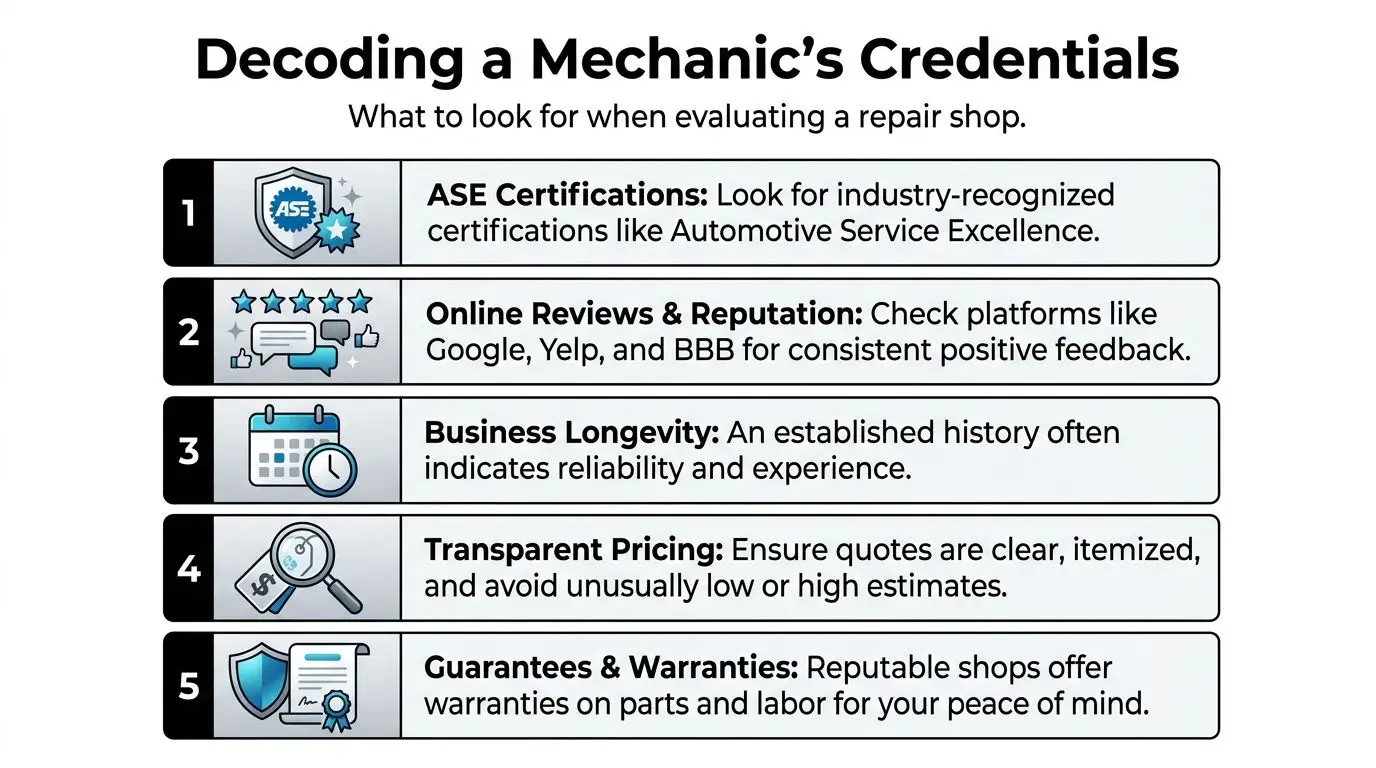
ASE certification is still one of the clearest signals a customer can check without guessing. Technicians certified by the National Institute for Automotive Service Excellence must pass rigorous exams and re-certify every five years. Consumer Reports also notes that shops with a higher concentration of ASE-certified technicians have significantly lower complaint rates filed with the Better Business Bureau, as outlined in Consumer Reports' guidance on finding a quality repair shop.
For a customer, the practical takeaway is simple. Certification doesn’t guarantee perfect service, but it tells you the shop is willing to put its technical claims against a recognized standard and maintain them over time.
When I vet a shop for someone, I look for more than a logo in the footer. I want to see whether the business makes its credentials easy to verify, whether it explains who works on the cars, and whether it shows a real commitment to professional standards. A page like this overview of ASE and RepairPal-certified service is the kind of thing a serious shop should make easy for customers to find.
Website clues that matter more than design
Some shops spend heavily on appearance and almost nothing on substance. Don’t get distracted by polished photos alone.
Check the site for these signs:
- Named certifications: Not vague claims like “highly trained technicians.”
- Service depth: Can they explain what they work on beyond oil changes?
- Warranty language: A serious shop usually explains parts-and-labor coverage in plain English.
- Diagnostic process: Good shops talk about testing and confirmation, not just swapping parts.
- Authorization policy: You want signs that they contact the customer before adding work.
A weak site often sounds broad and promotional. A stronger one sounds specific. It tells you what the shop does, how it communicates, and what standards it follows.
The difference between credentials and marketing
Here’s the trade-off customers miss. A shop can have credentials and still be poor at communication. Another shop can be warm and convenient but weak on diagnosis. You need both.
That’s why I separate a shop’s trust signals into two buckets:
| Bucket | What it tells you |
|---|---|
| Technical proof | Whether the team has recognized training and current standards |
| Customer process | Whether they explain, document, and authorize work properly |
Credentials tell you whether they can do the work. Process tells you whether they’ll handle your repair responsibly.
Watch for empty claims
A few red flags online should make you move on fast:
- No mention of who performs repairs
- No visible certifications or standards
- No discussion of warranties or approvals
- No detail on diagnostics
- Lots of “best,” “trusted,” and “expert” language with nothing to verify
The best shops don’t need to oversell. They show enough proof that you can check for yourself.
If a shop makes it easy to verify training, understand services, and see how it handles customer approvals, it goes to the top of the list. If the site leaves you guessing, the phone call probably won’t get better.
Making the Call Key Questions and Critical Red Flags
Once a shop makes your shortlist, call them. This is the fastest way to separate organized professionals from places that sound good online and fall apart in conversation.
A short phone call tells you a lot. You’re not trying to diagnose your whole car over the phone. You’re checking whether the shop has a clear process, whether the staff explains things well, and whether they respect your approval before doing work.

The reason this matters is simple. The Better Business Bureau reports over 10,000 complaints against auto repair shops annually, with top issues including bait-and-switch pricing at 28% and subpar workmanship at 22%. Asking for a detailed, written quote upfront is the primary defense against those problems, as noted in this guidance on finding a trustworthy mechanic.
What to ask on the first call
Don’t ask twenty questions. Ask the ones that reveal process.
How do you handle diagnostics?
If your check engine light is on, ask how they confirm the problem before recommending repairs. You want to hear that they test first, then call with findings.Will you provide a written estimate before repairs begin?
This is essential. If they resist putting it in writing, stop there.Do you contact customers for approval if more work is needed?
Good shops don’t treat authorization like a formality.What parts do you typically use?
You’re not looking for one “right” answer. You’re looking for a clear one. A good advisor should explain options if they exist.What’s your typical turnaround for this kind of issue?
Not because every job is predictable, but because organized shops can usually give a realistic range.What warranty do you offer on parts and labor?
A credible answer should be direct, not evasive.
If the issue involves warning lights or drivability, it also helps to understand what proper testing should look like before you arrive. A plain-language guide to car diagnostics in Plano gives a good customer view of what a competent diagnostic process should involve.
Listen for how they answer, not just what they answer
Tone matters. So does precision.
A strong service advisor usually sounds calm, specific, and used to customer questions. A weak one sounds rushed, annoyed, or overly certain before seeing the car. Real diagnosis takes inspection. Any shop that promises too much sight unseen is often selling confidence instead of process.
If a shop jumps straight from “check engine light” to “you probably need this part,” that’s not expertise. That’s guessing.
Red flags that show up fast
These are the responses that make me cross a shop off the list:
- They won’t give written estimates
- They dodge basic warranty questions
- They push you to authorize broad work before testing
- They use pressure language like “you need to do this today” without explaining why
- They sound irritated when you ask normal customer questions
- They won’t separate urgent issues from maintenance that can wait
A lot of trust problems start with rushed communication. Customers feel trapped because the conversation was vague from the beginning.
What to check when you stop by
The on-site visit should match the phone call. If it doesn’t, believe what you see.
Look for:
- Order at the counter: The front desk should know where cars are in the process.
- Clear paperwork: Estimates and authorizations should look structured, not improvised.
- Basic shop organization: A working repair shop won’t look like a hospital lobby, but tools, parts, and cars shouldn’t be in chaos.
- Professional explanations: Staff should be able to explain findings without hiding behind jargon.
Before you visit, it may help to watch a quick visual example of how customers can approach the evaluation process:
A simple script that works
If you don’t like phone calls, use this:
“I’m looking for a shop I can use long term. Before I bring my car in, I want to know how you handle diagnostics, written estimates, and approval for additional work.”
That one sentence tells the shop you’re organized, serious, and not easy to steamroll. Good shops respond well to that. Bad ones usually reveal themselves quickly.
Your First Appointment Turning a Good Mechanic into Your Go-To Shop
Once a shop passes the research and phone test, don’t hand them your biggest repair first. Give them a trial run.
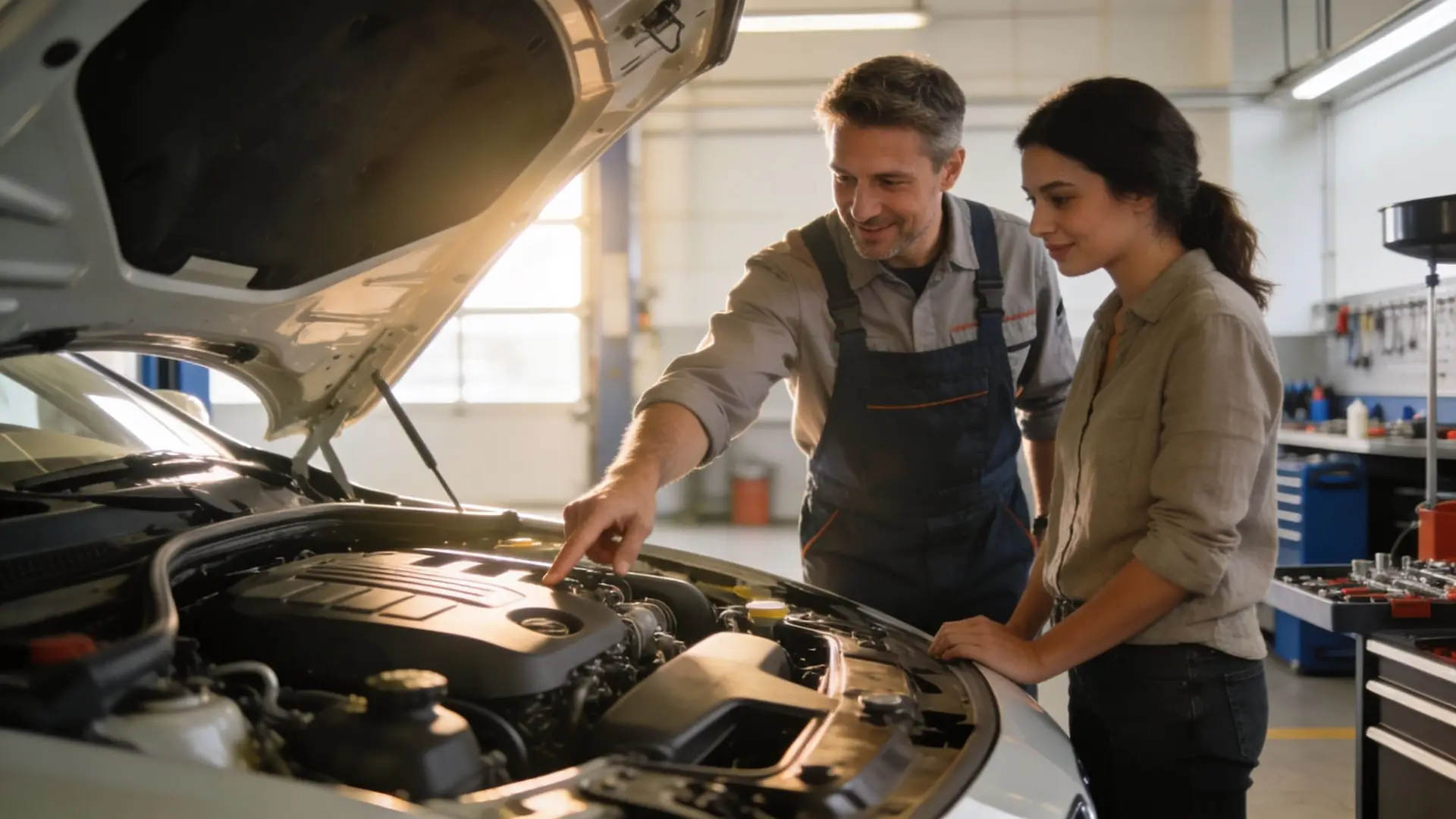
That first visit should be low risk. An oil change, brake inspection, battery test, fluid service, or basic diagnostic appointment is enough to show you how the place operates. You’re not buying the service alone. You’re evaluating the whole system around it.
What the first visit should prove
A good first appointment answers practical questions:
- Did they check the car in efficiently
- Did they explain what they found in plain language
- Did the invoice match the estimate and conversation
- Did they recommend work by priority instead of trying to stack every service at once
- Did the car leave cleaner, tighter, and with no new issues
That last point matters. Plenty of shops can complete a simple service. Fewer can complete it cleanly, communicate well, and leave you feeling informed instead of managed.
Why this matters even more for fleets
This trial-run method becomes even more important if you manage multiple vehicles for a small business. For small businesses and fleet managers, vehicle downtime can cost upwards of $500 per hour. Independent shops that offer no-appointment service and quick turnarounds can reduce operational disruptions by 30% to 50% compared to dealership service centers, which is why a test visit with one vehicle is such an important vetting step according to this fleet-focused guidance.
If I were helping a local business owner in Plano choose a service partner, I’d start with one unit. Let the shop handle a basic maintenance item first. Watch scheduling, paperwork, communication, and turnaround. Then decide if they’ve earned the rest of the fleet.
A trustworthy shop doesn’t just fix one car well. It creates a repeatable process you’d trust with the next car too.
The mistake people make here
They confuse a smooth first impression with a finished evaluation.
One clean visit is a good sign. It’s not proof yet. Your real go-to shop earns that title after a few interactions where the recommendations stay sensible, the communication stays consistent, and the car count on your side of the relationship starts to grow because trust does too.
That’s how a decent mechanic becomes your mechanic.
Driving with Confidence Your Plano Auto Care Roadmap
The best way to handle car care in Plano is to keep a simple roadmap in mind. Research. Verify. Question. Test.
Research means starting local. Ask the people whose driving habits match yours and pay attention to patterns, not hype. Verify means checking credentials and looking for proof of professional standards instead of taking marketing language at face value. Question means calling the shop and listening for a process you can trust. Test means starting small before you trust them with major work.
That approach works whether you drive a family SUV, a commuter sedan, a work truck, or a car you just bought used. It also gives you a repeatable method for every future repair instead of forcing you to start from scratch each time.
Keep a maintenance mindset, not a crisis mindset
A trustworthy mechanic relationship gets stronger when you’re proactive. That means keeping up with inspection intervals, fluids, brakes, batteries, and the service items your vehicle needs at its current mileage. If you need a practical reference, a mileage-based car maintenance schedule helps you know what to ask about before small issues turn into expensive ones.
Good ownership habits don’t stop at the engine bay either. Basic upkeep outside the shop matters too. Something as simple as protecting your car's exterior finish helps preserve the vehicle and makes it easier to spot new damage before it gets ignored.
What confidence actually looks like
Confidence doesn’t mean you’ll never have a breakdown. It means you won’t panic when something goes wrong. You’ll already know where to call, what questions to ask, and how to judge whether the answers make sense.
That’s the difference between hoping a shop is honest and knowing how to check.
If you’re ready for a shop that matches the standards in this guide, Express Lube & Car Care is a strong place to start. Plano drivers can stop in without an appointment for fast oil changes, diagnostics, brake service, battery work, and more, all handled by ASE-certified technicians with clear communication and fair pricing. If you want to test a shop the smart way, start with a simple visit and see how the process feels from check-in to checkout.