

If you’ve never been to a quick lube center, or it’s been a while, uncertainty about the quick lube visit what to expect question is completely normal. What exactly happens under the hood? How long will you actually be there? Will someone pressure you into services you don’t need? This article answers all of that. You’ll get a clear breakdown of how to prepare, what the technicians do during the service, which additional inspections are standard, and how to verify everything was done correctly before you drive away.
Table of Contents
- Key takeaways
- What to know before your quick lube visit
- Step-by-step: what happens during a lube visit
- Common additional services during a quick lube visit
- What to do after your quick lube service
- My honest take on quick lube visits
- Experience fast, thorough service at Express Lube & Car Care
- FAQ
Key takeaways
| Point | Details |
|---|---|
| Preparation saves time | Know your oil type, mileage, and vehicle specs before arriving to speed up check-in. |
| Core service is fast | The quick oil change process typically takes 10 to 15 minutes for draining, filtering, and refilling. |
| Inspections are included | Technicians check fluids, belts, tire pressure, and lights beyond just the oil change itself. |
| Stay-in-car service exists | Many quick lube shops let you remain in your vehicle throughout the entire service. |
| Post-service verification matters | Always check your oil level and review the receipt before leaving to catch any oversights. |
What to know before your quick lube visit
Walking in prepared makes a real difference, both in how fast your visit goes and how confident you feel. The first thing to do before you arrive is check your vehicle owner’s manual. Manufacturers recommend oil changes every 3,000 to 7,500 miles depending on driving conditions and the type of oil your engine requires. That range matters because showing up and asking for “whatever oil is cheapest” can actually cause problems if your engine calls for full synthetic.
Here’s what to have ready before you pull in:
- Your vehicle’s make, model, year, and current mileage. The technician needs this to pull up the correct oil specification and filter size.
- Your preferred oil type. If you’re unsure whether your car takes conventional or full synthetic, the difference between oil types affects both performance and service interval.
- Any service coupons or specials. Many quick lube centers, including Express Lube & Car Care, run ongoing promotions. Having those ready at check-in prevents you from missing a discount.
- A payment method. Most shops accept credit cards and cash. Knowing your budget helps if the technician recommends additional services during the visit.
- Realistic time expectations. Total visit time can run longer than the 10 to 15 minute core service if the shop is busy or if you approve add-on services.
Pro Tip: Call ahead or check the shop’s website to see if they’re running specials or if wait times are longer than usual. Visiting mid-week in the morning typically means shorter lines.
No appointment is needed at most quick lube centers, which is one of the biggest benefits of quick lube service over a traditional dealership. But arriving during peak hours on a Saturday afternoon can still mean a wait in line before your car even enters the bay.
Step-by-step: what happens during a lube visit
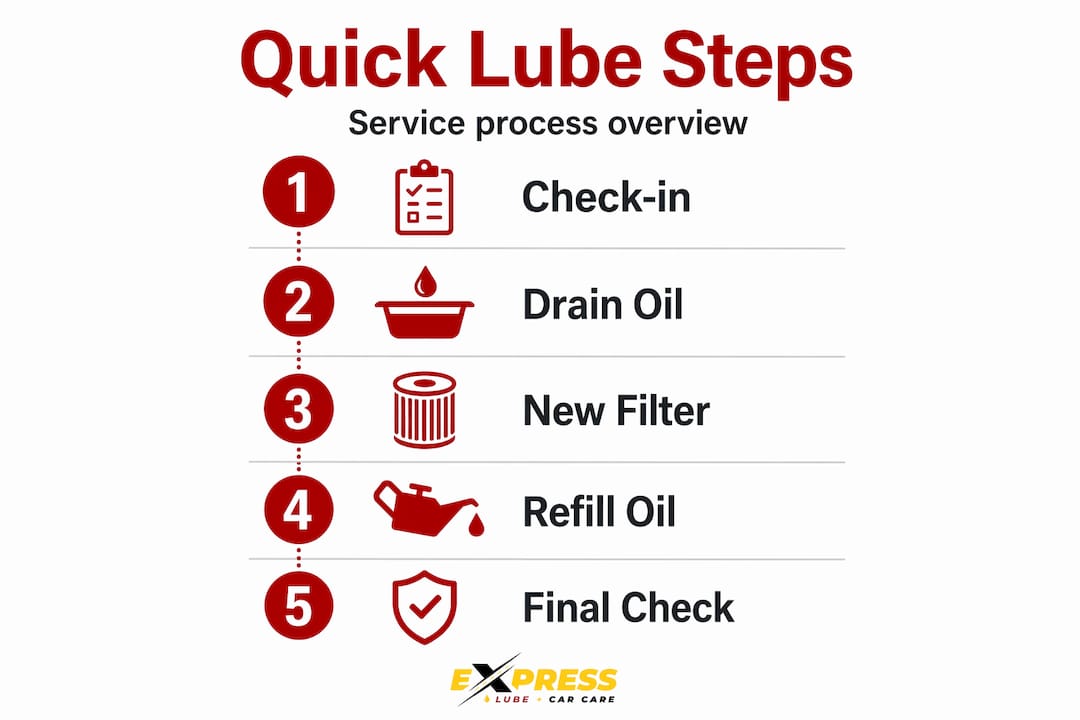
Understanding the quick oil change process from start to finish removes a lot of the mystery. Think of a well-run quick lube bay like a commercial kitchen: every station has a specific role, every step follows a sequence, and the goal is precision without wasted motion.
Here’s exactly how the service unfolds:
- Arrival and check-in. You pull into the service bay or queue. A service advisor greets you, confirms your vehicle information, and asks about your oil preference. This is the moment to mention any coupons or ask about current specials.
- Vehicle inspection before service. The technician does a quick visual walk-around and notes any obvious concerns, such as a low tire or a fluid leak already in progress.
- Draining the used oil. The technician removes the drain plug from the oil pan and lets the old oil drain completely. This step alone takes three to five minutes to do properly.
- Replacing the oil filter. The old filter is removed from the filter housing and replaced with a new one matched to your engine. The gasket on the new filter gets a light coat of fresh oil before installation to create a proper seal.
- Refilling with fresh oil. The correct grade and volume of oil is poured in, the drain plug is reinstalled and torqued to spec, and the fill cap is secured.
- Fluid top-offs and safety checks. Technicians check and top off other fluids, inspect belts, and verify tire pressure. More on this in the next section.
- Final verification. The technician starts the engine briefly to check for leaks, confirms the oil level on the dipstick, and resets the oil life monitor if your vehicle has one.
The core service steps are optimized to run in about 10 to 15 minutes. Here’s a rough timing breakdown:
| Service step | Estimated time |
|---|---|
| Check-in and vehicle confirmation | 2 to 3 minutes |
| Draining old oil | 3 to 5 minutes |
| Replacing oil filter | 2 to 3 minutes |
| Refilling with new oil | 2 to 3 minutes |
| Fluid checks and safety inspection | 3 to 5 minutes |
| Final verification and receipt | 2 to 3 minutes |
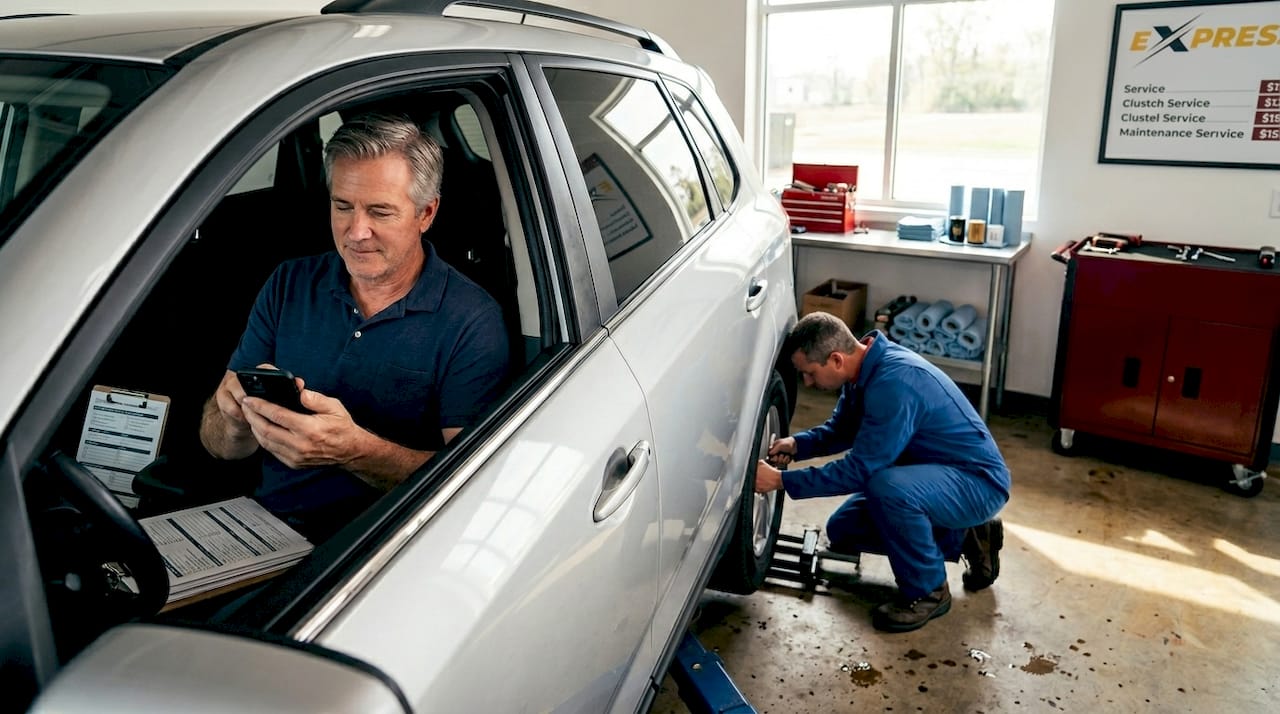
One detail many first-time visitors don’t realize: many quick lube shops allow customers to stay in their vehicle the entire time. You don’t have to sit in a waiting room. You simply remain in the driver’s seat while the work happens around and under you.
Pro Tip: If you have a newer vehicle with a digital oil life monitor, remind the technician to reset it before you leave. A monitor still showing 15% life after a fresh oil change creates unnecessary confusion.
Common additional services during a quick lube visit
The oil change is the headline service, but the quick lube services overview extends well beyond the oil itself. Certified technicians are trained to look for developing problems while they have the vehicle in the bay. This is one of the most underappreciated benefits of quick lube service: you get a basic multi-point inspection without scheduling a separate appointment.
Standard inspections typically include checks on these components:
- Radiator fluid (coolant). Low coolant is a leading cause of engine overheating. Technicians check the reservoir level and note if the fluid looks degraded.
- Brake fluid. Brake fluid absorbs moisture over time, which lowers its boiling point and reduces braking performance. A visual check of the reservoir takes seconds.
- Transmission fluid. Not all shops check this on every visit, but many do. Low or discolored transmission fluid is worth knowing about early.
- Wiper blades. Technicians note if blades are cracked or streaking. Replacement is usually offered on the spot.
- Serpentine belts. A visual inspection for cracking, fraying, or glazing on the belt surface. A failing serpentine belt can leave you stranded.
- Exterior lights. Headlights, brake lights, and turn signals get a quick check. A burned-out brake light is a safety issue and a ticket risk.
- Tire pressure. Free tire pressure checks are standard at many quick lube centers, and proper inflation directly affects fuel economy and tire wear.
Here’s a quick comparison of what a typical quick lube inspection covers versus what a full dealership service inspection covers:
| Inspection item | Quick lube visit | Full dealership service |
|---|---|---|
| Oil and filter | Yes | Yes |
| Fluid levels check | Yes | Yes |
| Tire pressure | Yes | Yes |
| Belt visual inspection | Yes | Detailed measurement |
| Brake system | Visual only | Full measurement and test |
| Engine diagnostics | No | Yes |
| Suspension inspection | No | Yes |
The quick lube visit is not a substitute for a full annual inspection. It is, however, a reliable way to catch obvious issues between those deeper service appointments. Technicians are looking for leaks, low fluid levels, and visible wear. When they flag something, take it seriously. They have no reason to invent problems, and catching a slow coolant leak during a routine oil change is far better than discovering it on the highway.
What to do after your quick lube service
The visit isn’t quite over when you pull out of the bay. Taking two minutes to verify the work before you leave is a habit worth building.
Start by checking the oil level yourself. The technician will have already done this, but confirming it on your own dipstick takes 30 seconds and gives you peace of mind. Look at the routine maintenance checklist for a clear guide on reading your dipstick correctly if you’re not sure what you’re looking for.
Next, review your service receipt carefully. It should list:
- The oil type and viscosity used (for example, 5W-30 full synthetic)
- The oil filter part number
- The mileage at time of service
- The recommended mileage or date for your next oil change
- Any additional services performed or items flagged for attention
A Motor1 report documented cases where missing oil filter gaskets caused leaks after quick lube service. This is rare, but it’s exactly why a brief post-service check matters. Before driving away, glance under the vehicle for any drips. If you see fresh oil on the ground, go back inside immediately.
Pro Tip: Take a photo of your receipt with your phone. If a question comes up about your oil type or service date three months from now, you’ll have it instantly without digging through the glove box.
Watch for these signs in the days following your service:
- A burning oil smell, which can indicate a small spill on the exhaust
- The oil pressure warning light coming on, which requires immediate attention
- Any visible oil spots where you regularly park
Frequent oil changes and these post-service checks are what extend engine life over the long run. Customers who actively confirm service components and ask questions during the visit are far less likely to encounter oversights.
My honest take on quick lube visits
I’ve seen how quick lube visits play out from every angle, and the single biggest variable in the experience is whether the customer comes in informed or not. Customers who know their oil type, have their mileage ready, and ask one or two direct questions at check-in consistently get faster, more accurate service. It’s not that technicians cut corners for uninformed customers. It’s that clarity removes guesswork on both sides of the transaction.
What I’ve learned is that speed and quality are not opposites at a well-run quick lube center. The 10 to 15 minute service time is achievable precisely because the process is disciplined, not rushed. Every step follows a sequence, and certified technicians who perform dozens of oil changes per day develop a level of precision that’s hard to replicate in a home garage.
My honest advice: don’t skip the post-service verification. Not because mistakes are common, but because the two minutes it takes to check your oil level and scan for leaks is the cheapest insurance you have. The oil change cost is already paid. Protecting that investment takes less time than unlocking your phone.
Ask questions when something is flagged. A good technician will explain what they saw, show you if possible, and let you make the call. That’s the kind of shop worth returning to.
— Express Lube & Car Care
Experience fast, thorough service at Express Lube & Car Care
At Express Lube & Car Care, the quick lube visit what to expect question has a clear answer: fast, no-appointment-needed service from certified technicians who take the work seriously. The core oil change averages 10 to 15 minutes, and every visit includes fluid level checks, a tire pressure check, and a visual safety inspection at no extra charge.
You don’t need to schedule ahead or rearrange your day. Pull in when it’s convenient, stay in your car, and drive out knowing the job was done right. Express Lube & Car Care also offers special discounts for military personnel and healthcare providers, because good service should be accessible to the people who keep our community running. Check out the current oil change service specials to see what’s available before your next visit, or browse oil change pricing to plan ahead.
FAQ
How long does a quick lube visit take?
The core service, including draining old oil, replacing the filter, and refilling with fresh oil, takes 10 to 15 minutes. Total visit time may be longer if the shop is busy or if you add extra services.
Do I need an appointment for a quick lube visit?
Most quick lube centers, including Express Lube & Car Care, operate on a no-appointment-needed basis. You can pull in during business hours and receive service without scheduling in advance.
What oil type should I request at a quick lube?
Check your owner’s manual before arriving. Manufacturers specify the correct oil grade and type for your engine, and using the wrong viscosity can affect performance and warranty coverage.
Can I stay in my car during a quick lube oil change?
Yes. Many quick lube centers offer stay-in-your-car service, where you remain in the driver’s seat while technicians work in the bay below and around the vehicle.
What should I check after a quick lube visit?
Verify the oil level on the dipstick, inspect under the vehicle for any fresh drips, and review your receipt to confirm the correct oil type was used and the next service interval is noted.