

The optimal oil change frequency for SUVs is defined by your driving conditions, engine type, and oil selection, not by a single universal mileage number. The outdated 3,000-mile rule no longer applies to most modern SUVs. Consumer Reports recommends prioritizing your actual driving style over generic mileage benchmarks. Manufacturers like Toyota, Ford, and GM now specify intervals between 5,000 and 10,000 miles depending on oil type and vehicle use. Following SUV oil change frequency best practices means building a personalized schedule that accounts for your engine, your climate, and how you actually drive.
1. What are the standard SUV oil change intervals and why they vary
Most modern SUVs carry factory-recommended oil change intervals between 5,000 and 10,000 miles when using full synthetic oil. That range exists because no two SUVs are identical in design, purpose, or workload. Understanding where your vehicle falls within that range is the foundation of any solid oil change schedule for SUVs.
The distinction between vehicle platforms matters more than most owners realize. Body-on-frame SUVs, such as the Toyota 4Runner, Ford Expedition, and Chevrolet Tahoe, are built for heavier loads and often operate under more mechanical stress than unibody crossovers like the Honda CR-V or Toyota RAV4. That stress accelerates oil degradation, which pushes the practical interval toward the lower end of the manufacturer’s range.
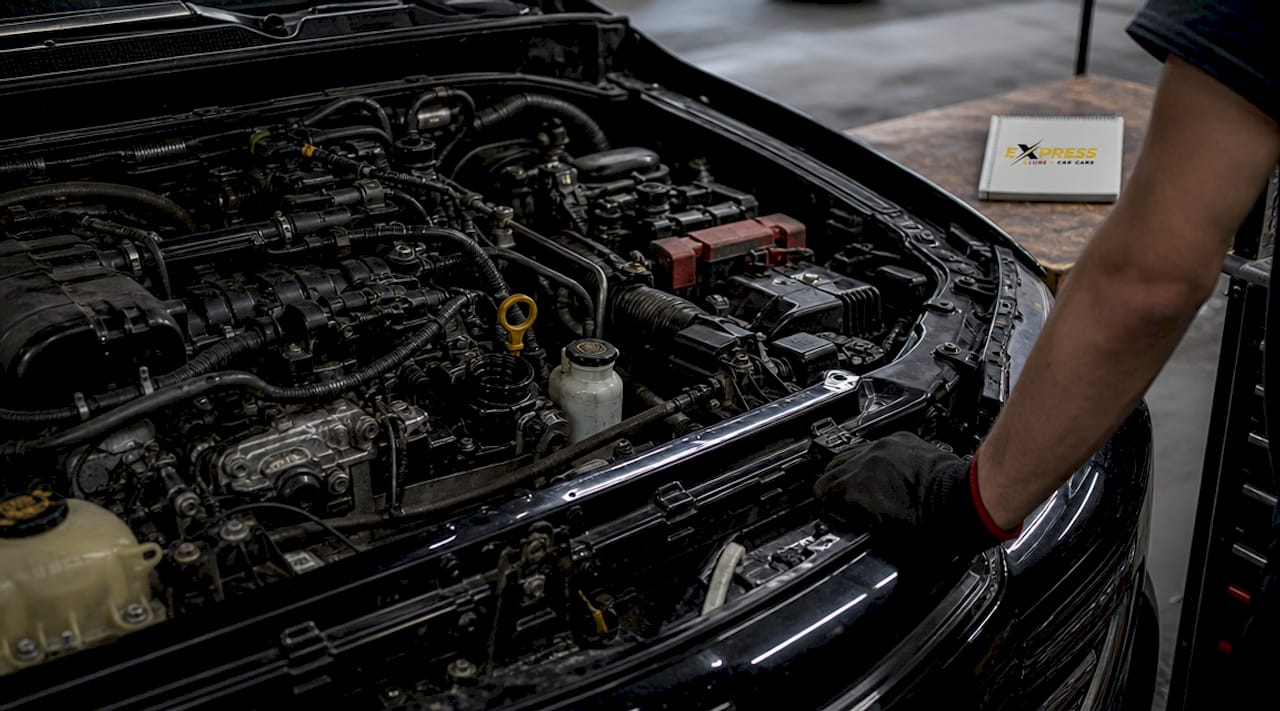
Oil life monitoring systems, found in most SUVs built after 2010, calculate remaining oil life using algorithms that factor in engine temperature, RPM, and trip length. These systems are genuinely useful, but they are not infallible. They provide a starting point, not a final answer.
Here is how standard intervals break down by oil type:
- Conventional oil: 3,000 to 5,000 miles, suitable for older SUV engines with simpler tolerances
- Synthetic blend oil: 5,000 to 7,500 miles, a middle-ground option for moderate driving conditions
- Full synthetic oil: 7,500 to 10,000 miles, recommended for most late-model SUVs with turbocharged or high-compression engines
- High-mileage synthetic oil: 5,000 to 7,500 miles, formulated for SUVs with over 75,000 miles to reduce seal degradation
The right interval from this list depends on more than oil type alone. Your driving habits, local climate, and engine design all shift the target. The sections below explain exactly how.
2. How severe driving conditions impact SUV oil change frequency
Severe service is the single most underestimated factor in oil change planning for SUV owners. Most drivers assume their commute qualifies as normal use. In reality, a significant portion of everyday driving meets the technical definition of severe service.
The following conditions all qualify as severe service according to professional mechanics and automotive service authorities:
- Towing or hauling heavy loads above the vehicle’s rated capacity on a regular basis
- Frequent short trips under five miles, which prevent the engine oil from reaching full operating temperature
- Extended idling, common in drive-throughs, school pickup lines, or stop-and-go urban traffic
- Extreme temperature operation, including both Texas summer heat above 100°F and sub-zero winter starts
- Dusty or off-road environments, which introduce contaminants into the air intake and accelerate filter and oil degradation
- Mountainous terrain driving, which demands sustained high RPM and increased thermal load on the engine
Severe service conditions require shortening oil change intervals by 2,000 to 3,000 miles or halving the standard manufacturer interval entirely. For an SUV rated at 10,000-mile intervals, that means changing oil at 5,000 miles or sooner under severe conditions. This is not excessive caution. It is the difference between an engine that lasts 250,000 miles and one that develops sludge damage at 120,000.
Short city trips cause incomplete oil warming, condensation buildup inside the crankcase, and fuel contamination of the oil supply. Each of these effects compounds over time, degrading oil viscosity faster than any mileage counter can track.
Pro Tip: If more than half of your weekly driving consists of trips under ten miles or involves regular towing, treat every oil change interval as a severe service interval. Drop your target mileage by at least 30% from the manufacturer’s recommendation.
3. The influence of engine type and oil selection on change frequency for SUVs
Engine architecture directly determines how quickly oil degrades, and turbocharged SUVs carry a specific risk that naturally aspirated engines do not. Turbo engines run hotter and accumulate contaminants faster, which means a turbocharged SUV like the Ford Explorer ST or Jeep Grand Cherokee with a 2.0T engine often needs an oil change closer to 5,000 miles despite a factory spec that may read 10,000. Fuel dilution, where unburned gasoline enters the oil supply during cold starts and short trips, is a known issue in direct-injection turbocharged engines. This dilution thins the oil and reduces its protective film strength.
The comparison below shows how oil type and engine design interact to shape the best oil change intervals:
| Engine type | Recommended oil | Practical interval |
|---|---|---|
| Naturally aspirated (V6/V8) | Full synthetic | 7,500 to 10,000 miles |
| Turbocharged direct injection | Full synthetic | 5,000 to 7,500 miles |
| Hybrid powertrain | Full synthetic (OEM spec) | 5,000 to 10,000 miles |
| High-mileage naturally aspirated | High-mileage synthetic | 5,000 to 7,500 miles |
Hybrid SUVs present a different scenario. Hybrid 4Runners and similar models share oil change intervals with their gas-only counterparts, but the engine cycles on and off more frequently. That cycling pattern creates more cold-start events per mile, which increases the risk of condensation and fuel dilution in the oil. Regenerative braking reduces brake wear significantly, but it does nothing to slow oil degradation.
Full synthetic oil is the correct choice for the vast majority of modern SUVs. It maintains viscosity across a wider temperature range, resists thermal breakdown under towing stress, and provides better protection during cold starts than conventional or blended oils.
Pro Tip: For turbocharged SUVs operating in hot climates like North Texas, use a full synthetic oil rated for high-temperature performance, such as a 5W-40 or 0W-40 viscosity grade, and do not stretch intervals beyond 5,000 miles regardless of what the oil life monitor displays.
4. How to monitor and adjust your SUV’s oil change schedule effectively
Monitoring your oil condition between changes is as important as the interval itself. An oil life monitor gives you a percentage reading, but it cannot detect every form of oil degradation. Oil life monitors do not detect fuel dilution, which means the monitor may show 40% life remaining while the oil is already compromised. Checking the dipstick manually every 1,000 miles takes less than two minutes and provides information no sensor can replicate.
Here is what to look for when checking your SUV’s oil:
- Oil level rising above the full mark on the dipstick signals fuel dilution. This means gasoline has entered the crankcase and is thinning the oil. Change it immediately regardless of mileage.
- Dark black color indicates heavy carbon contamination. Fresh synthetic oil is amber. Black oil is not automatically dangerous, but combined with high mileage since the last change, it warrants prompt service.
- Milky or foamy appearance points to coolant contamination, a serious condition requiring immediate diagnosis beyond just an oil change.
- Gasoline smell from the dipstick confirms fuel dilution in turbocharged or direct-injection engines. This is a clear signal to shorten your interval.
- Oil level dropping between changes without visible leaks may indicate oil consumption, which is common in high-mileage SUVs and requires monitoring with top-offs between services.
Maintaining a written or digital service log is one of the most practical SUV maintenance tips available. Record the date, mileage, oil brand, viscosity, and filter used at every change. This log becomes invaluable when diagnosing engine issues and helps you spot patterns, such as accelerating oil consumption, before they become expensive problems. Your owner’s manual remains the authoritative starting point for any personalized oil change schedule, but real-world adjustments based on dipstick checks and driving habits will always serve your engine better than a fixed number alone.
5. Common mistakes SUV owners make regarding oil change frequency
The most expensive oil change mistake is not changing oil too often. It is waiting too long because a manufacturer’s extended interval sounds reassuring. OEM extended intervals are partly shaped by marketing goals and sustainability optics, not solely by engineering necessity. Mechanics who work on high-mileage engines consistently recommend more conservative intervals for SUVs used in anything other than ideal highway conditions.
The cost math is straightforward. Oil changes cost roughly $100 more per year if performed at 5,000-mile intervals instead of 10,000-mile intervals. Neglecting proper intervals can lead to engine repairs costing $3,000 to $8,000. No reasonable calculation favors skipping oil changes to save $100 annually.
Beyond interval length, filter quality is a frequently overlooked variable. Premium oil filters with silicone anti-drainback valves protect the engine during cold starts by retaining oil in the filter housing overnight. Cheap filters use rubber valves that harden and crack over time, causing startup oil pressure drops and the brief but damaging metal-on-metal contact that occurs before oil pressure builds. Brands like Wix, Mobil 1, and Purolite offer filters with silicone valves at modest price premiums over generic alternatives.
Skipping one oil change to save money is the automotive equivalent of skipping a dental cleaning to save time. The short-term savings are real. The long-term cost is not worth it.
Resetting the oil life monitor after every change is also non-negotiable. Failing to reset it means the system calculates remaining life from the wrong baseline, potentially triggering a false “change soon” alert at the wrong mileage or, worse, giving you false confidence that oil life remains when it does not.
Key takeaways
The best oil change frequency for your SUV is determined by driving conditions, engine type, and oil quality, not by a single mileage number printed in a brochure.
| Point | Details |
|---|---|
| Severe service shortens intervals | Towing, short trips, and extreme heat require intervals 2,000 to 3,000 miles shorter than standard. |
| Turbo engines need earlier changes | Turbocharged SUVs should be serviced at 5,000 miles due to fuel dilution and heat stress. |
| Oil life monitors have limits | Dipstick checks catch fuel dilution and contamination that electronic monitors cannot detect. |
| Filter quality protects cold starts | Silicone anti-drainback valve filters prevent oil pressure drops during startup. |
| Cost favors frequent changes | Spending $100 more per year on oil changes protects against $3,000 to $8,000 engine repairs. |
Our take on balancing manufacturer guidance with real-world experience
At Express Lube & Car Care, we see the consequences of interval decisions every day. The owner’s manual is the right starting point, and we always recommend reading it. But the manual was written for an average driver in average conditions. Most of our customers in the Plano area are not average. They are towing boats to Lake Texoma, running school pickups in stop-and-go traffic, and operating through Texas summers that push engine temperatures well beyond what engineers in a temperate climate modeled.
Our honest position is this: full synthetic oil and a 5,000-mile interval covers the majority of real-world SUV driving in this region without being excessive. For turbocharged engines or vehicles used for regular towing, we push that recommendation to 4,000 to 5,000 miles. For naturally aspirated SUVs driven mostly on highways with minimal idling, 7,500 miles is defensible with full synthetic.
The one thing we never recommend is blind trust in an oil life monitor as the sole decision-maker. Those systems are useful tools, not substitutes for physical inspection. A rising dipstick level or a gasoline smell from the oil is a signal to act immediately, regardless of what the dashboard says. Protecting a $40,000 SUV with a $70 oil change is one of the clearest value propositions in vehicle ownership. We have never met a customer who regretted changing their oil too often. We have met plenty who regretted waiting too long.
— Express Lube & Car Care
Keep your SUV protected with Express Lube & Car Care
SUV engines are built to last, but only when the oil protecting them is clean, properly viscous, and changed on a schedule that reflects how the vehicle is actually used. Express Lube & Car Care in Plano specializes in exactly this kind of personalized service. Our certified technicians know the difference between a naturally aspirated V8 interval and what a turbocharged crossover needs in Texas heat.
We carry full synthetic oils, high-mileage formulations, and premium filters with silicone anti-drainback valves for every major SUV platform. No appointment is needed. Check our current oil change service specials and bring your SUV in for a service that includes a dipstick inspection, oil life monitor reset, and a maintenance recommendation tailored to your driving habits. Military and healthcare providers receive special discounts as our way of giving back to the community that trusts us with their vehicles.
FAQ
How often should I change the oil in my SUV?
Most modern SUVs using full synthetic oil should be serviced every 5,000 to 10,000 miles, but driving habits determine where in that range your vehicle falls. Severe service conditions like towing or frequent short trips push the interval to the lower end.
Does a turbocharged SUV need more frequent oil changes?
Yes. Turbocharged engines accumulate contaminants faster due to higher operating temperatures and fuel dilution risks, making 5,000-mile intervals the practical standard regardless of what the factory spec states.
Can I trust my SUV’s oil life monitor to tell me when to change the oil?
Oil life monitors are a useful guide but not a complete solution. They cannot detect fuel dilution, so always verify with a dipstick check and watch for rising oil levels or a gasoline smell as signs to change early.
Does a hybrid SUV need oil changes as often as a gas-powered SUV?
Hybrid SUVs still require regular oil changes on comparable intervals to their gas counterparts. Regenerative braking reduces brake wear but does not slow oil degradation, and frequent engine cycling during cold starts can accelerate contamination.
What happens if I use a cheap oil filter on my SUV?
Low-quality filters with rubber anti-drainback valves can harden and fail, causing oil pressure drops at startup and early filter clogging that forces oil through the bypass valve unfiltered. Premium filters from brands like Wix or Mobil 1 eliminate this risk at minimal added cost.