
When an emergency vehicle breaks down mid-shift, the consequences extend far beyond a repair bill. Fast auto service for first responders is the difference between a unit that answers the next call and one that sits in a bay while crews scramble for coverage. Unplanned downtime triggers overtime costs, crew fatigue, and gaps in community protection that no backup plan fully closes.
Here is what rapid, reliable vehicle maintenance delivers for emergency operations:
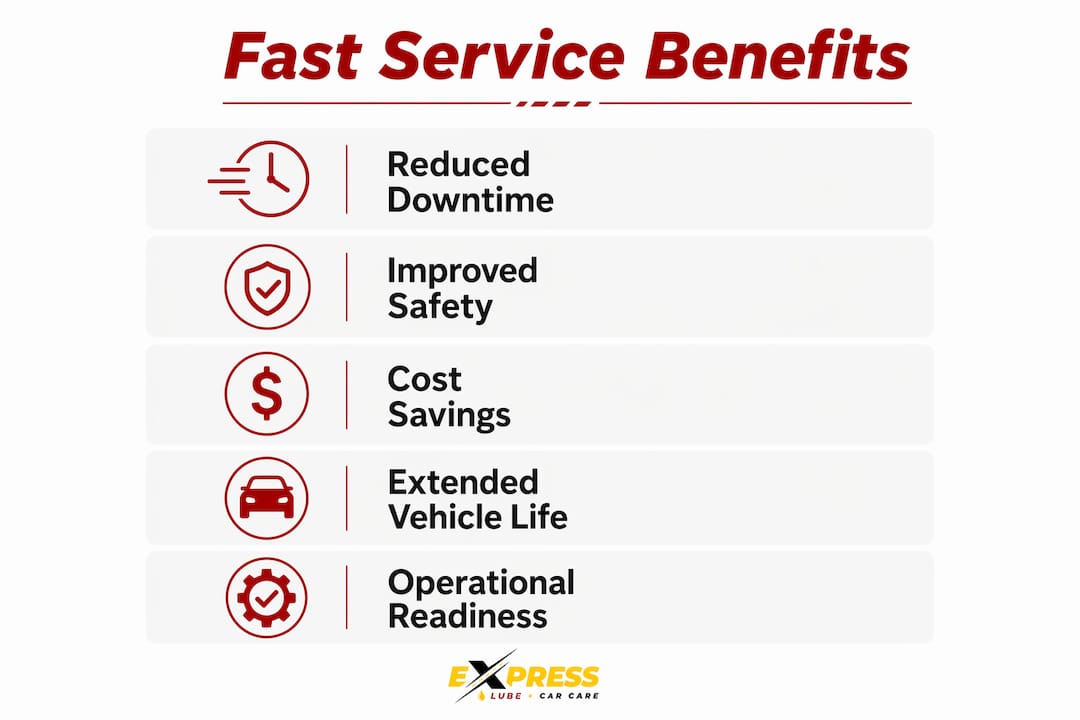
- Immediate vehicle availability keeps response times short and public safety intact.
- Unplanned downtime generates overtime liability and strains department budgets.
- NFPA 1910 mandates rigorous inspection and testing, with legal liability for agencies that fall short.
- Preventive maintenance stops costly failures before they happen, keeping apparatus mission-ready.
- Fast service supports continuous fleet capacity across every shift.
How communication and transparency speed up emergency vehicle repairs
Clear, consistent communication between service providers and fleet managers cuts repair time as reliably as any wrench. When a shop provides real-time updates on parts availability and labor progress, fleet supervisors can adjust coverage plans instead of waiting in the dark. That visibility alone prevents the reactive scrambling that turns a four-hour repair into a two-day ordeal.
- Regular status updates reduce uncertainty and allow better crew deployment during repairs.
- Transparency on parts lead times prevents surprise delays that push units out of service longer.
- Digital work orders and service documentation create accountability and support maintenance records required by state EMS agencies.
- Collaborative scheduling between agencies and providers aligns service windows with lower-demand periods.
- Clear repair scope discussions upfront prevent scope creep and unnecessary labor hours.
How fast auto service enhances safety and operational readiness
A vehicle that returns to service quickly is only valuable if it returns in safe condition. Prompt maintenance addresses the failure points that matter most under emergency conditions: brakes, steering, electrical systems, and cooling. Emergency vehicles carry electrical loads from sirens, radios, and onboard equipment that accelerate component wear well beyond what standard vehicles experience, making timely inspection a genuine safety requirement, not a scheduling preference.
NFPA 1910 mandates that brakes, steering systems, emergency lighting, and aerial devices receive regular inspection and testing. Skipping or delaying those checks creates legal exposure and puts crews at risk on every response. Vehicle downtime also creates a ripple effect: crews redeploy to unfamiliar backup units, efficiency drops, and fatigue builds across the shift.
- Quick repairs reduce the chance of mechanical failure during active emergency responses.
- Prompt brake and suspension service directly protects crews traveling at speed through intersections.
- Fast turnaround keeps fleet availability high, reducing the crew fatigue that comes from constant redeployment.
Best practices to ensure swift, reliable service for emergency vehicles
The departments that keep their fleets ready share one habit: they treat maintenance as a scheduled operation, not a reaction to failure. Preventive maintenance is mission assurance, not a budget line to trim. The “pay now or pay a lot later” principle holds especially true for apparatus that costs hundreds of thousands of dollars to replace.
- Schedule PM intervals by mileage, engine hours, fuel consumption, or a blended combination, whichever reflects the unit’s actual duty cycle.
- Use electronic fleet management systems to track service triggers automatically and eliminate manual data entry errors.
- Train operators to conduct thorough daily inspections; well-trained drivers identify 30% of mechanical problems before they escalate to breakdowns.
- Select service providers certified in emergency vehicle systems and current with NFPA 1910 requirements.
- Build contingency protocols so a reserve unit covers any apparatus pulled for scheduled service.
Pro Tip: Use oil analysis alongside routine oil changes. It detects fuel dilution, bearing wear, and coolant contamination weeks before those issues cause engine failure, and fuel dilution is an out-of-service criterion under NFPA 1910.
What the research and industry experts say about service speed
The evidence connecting fast service to operational safety is consistent across regulatory bodies and fleet management research.
| Source | Key finding |
|---|---|
| NFPA 1910 | Mandates inspection, testing, and retirement standards for all in-service emergency vehicles; non-compliance creates direct legal liability. |
| USFA / FEMA operator guide | Trained operators catch 30% of mechanical defects during daily checks, preventing roadside failures. |
| Fire Apparatus Magazine | Preventive maintenance is described by experienced fleet managers as mission assurance; cutting PM to save money reliably costs more later. |
| Frazer / EMS downtime research | EMS vehicle downtime drives overtime costs, crew fatigue, and reduced community coverage simultaneously. |
| Firefighting vehicle study | AI-driven predictive maintenance can reduce unplanned costs by up to 25% and shorten average repair time by approximately 40%. |
Industry professionals consistently frame preventive maintenance not as a cost center but as the operational foundation that keeps departments out of lawsuits and keeps crews safe.
Common challenges in emergency vehicle maintenance and how to overcome them
Parts availability is the most common bottleneck. Specialized components for fire apparatus and ambulances often carry long lead times, and a single backordered part can extend a repair from days to weeks. The fix is proactive parts inventory: work with your service provider to stock high-failure items specific to your apparatus make and model.

Budget pressure is the second obstacle. Departments facing tight fiscal years sometimes defer PM intervals, which predictably increases failure rates and repair costs. Documenting the cost of each unplanned breakdown, including overtime and reserve unit deployment, builds the financial case for consistent PM funding. Technician availability and shop capacity are also real constraints; building a relationship with a specialized provider before a crisis ensures priority scheduling when it counts.
How to choose a service provider for emergency vehicle rapid maintenance
Not every auto shop is equipped to handle apparatus with hydraulic rescue tools, aerial devices, or high-draw electrical systems. The right provider meets a specific set of criteria.
- Certification in emergency vehicle systems and familiarity with NFPA 1910 requirements.
- Access to OEM parts and factory technical resources for your apparatus brand.
- Digital documentation and work order systems that support agency recordkeeping requirements.
- Demonstrated capacity to turn units around quickly, with loaner or reserve coverage options.
- Transparent communication protocols so fleet managers receive updates without having to chase them.
A provider that also holds dealer status for your apparatus brand handles warranty claims faster and carries better parts inventory. Reviewing dealership service center benefits can help fleet managers evaluate what specialized facilities offer compared to general repair shops.
How fast service extends the life and performance of emergency vehicles
Apparatus that receives consistent, timely maintenance simply lasts longer. Deferred service accelerates wear on brakes, suspension, cooling systems, and electrical components, compressing a vehicle’s useful life and pushing replacement costs forward. Departments that skip maintenance intervals face not only higher repair bills but earlier fleet replacement cycles that strain capital budgets.
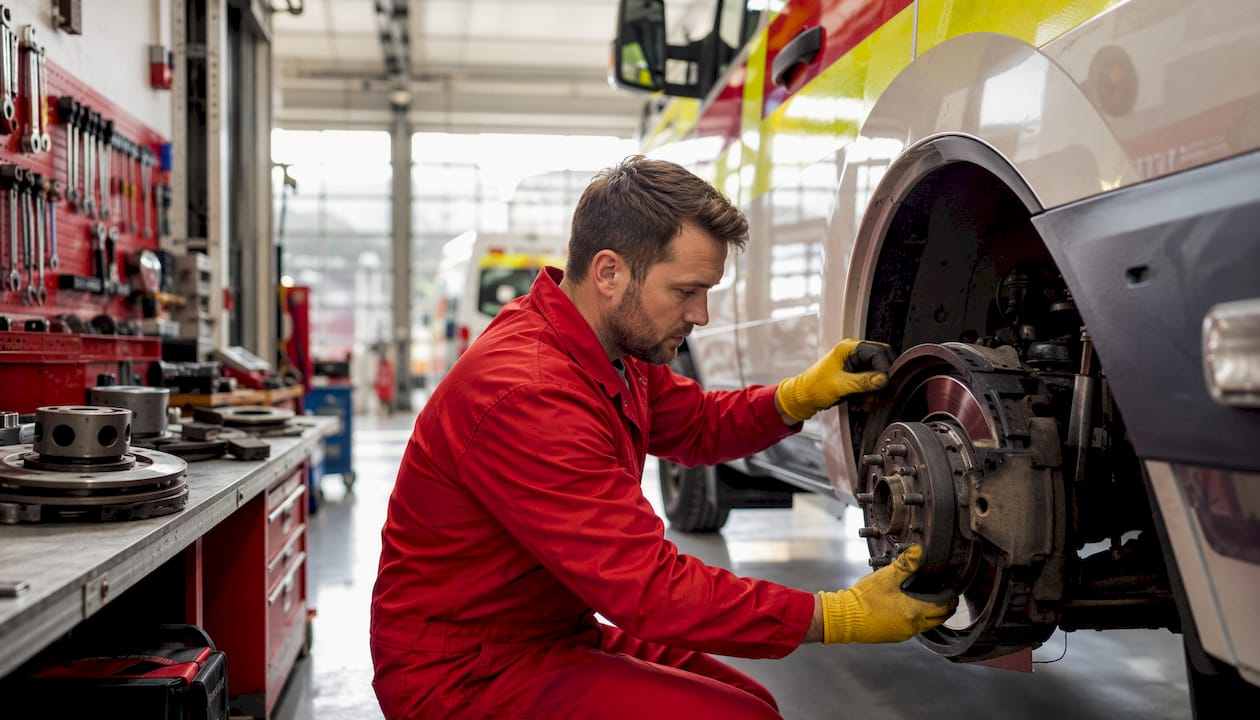
Fast service also preserves performance. Brakes that are inspected and serviced on schedule stop reliably at speed. Cooling systems that receive timely flushes prevent overheating during extended scene operations. Every service interval honored is a failure prevented.
Real-world operational outcomes from fast emergency vehicle service
Departments that shifted from reactive to predictive maintenance models report fewer mid-shift breakdowns and more consistent fleet availability. When a planned PM catches a failing alternator before it strands a unit, the department pays for a scheduled repair rather than emergency procurement, overtime for a replacement crew, and potential liability from a delayed response.
The contrast is straightforward: an unplanned breakdown takes a unit out of service for 24–72 hours, triggers overtime, and requires emergency parts sourcing. A planned service returns the same unit in 4–8 hours with no coverage gap and no emergency procurement premium.
Training and preparedness tips to speed up service turnaround
Operators who know their vehicles accelerate every service interaction. A driver who can describe the exact symptom, when it started, and under what conditions saves a technician hours of diagnostic time. That specificity translates directly into faster repairs and shorter downtime.
- Conduct daily pre-shift inspections using a standardized checklist aligned with NFPA 1910 requirements.
- Document every anomaly, noise, or warning light immediately and report it to the fleet supervisor before the shift ends.
- Complete the Emergency Vehicle Technician Certification Commission (EVTCC) operator inspection certification to meet current NFPA standards.
- Review preventive maintenance practices periodically so operators understand what technicians are checking and why.
- Establish a clear chain of communication from operator to fleet manager to service provider so defects move to repair without delay.
How Express Lube & Car Care supports first responders
First responders need a service partner who moves as fast as they do. Express Lube & Car Care in Plano, TX provides no-appointment-needed service with certified technicians who understand that vehicle downtime is not an option for emergency crews. From oil changes and fleet service to brake repair and engine diagnostics, every service is built around fast turnaround and quality results. Express Lube & Car Care also offers special discounts for military and healthcare providers as a direct commitment to the community they serve.
Key Takeaways
Fast, consistent auto service is the single most effective way first responders can protect fleet availability, crew safety, and community response capacity.
| Point | Details |
|---|---|
| Downtime has a ripple effect | Vehicle downtime drives overtime costs, crew fatigue, and reduced community coverage simultaneously. |
| Operators catch defects early | Well-trained drivers identify a significant portion of mechanical problems during daily inspections before breakdowns occur. |
| NFPA 1910 sets the standard | Agencies that neglect NFPA 1910 inspection requirements face direct legal liability and safety risk. |
| Predictive maintenance pays off | AI-driven predictive maintenance can reduce unplanned costs and shorten repair time significantly. |
| Fast service extends vehicle life | Consistent, timely maintenance prevents accelerated wear and delays costly fleet replacement cycles. |
FAQ
Why does fast auto service matter so much for first responders?
A vehicle out of service means delayed responses, overtime costs, and coverage gaps. Prompt repairs keep apparatus ready for every call and protect both crews and the public.
What are the 3 C’s of auto repair?
The 3 C’s are Condition, Cause, and Correction: document the vehicle’s condition, diagnose the root cause, and apply the correct repair. This framework keeps service records clear and repairs traceable.
What is the 30-60-90 rule for vehicles?
The 30-60-90 rule refers to common service milestones where specific fluids, filters, and components are inspected or replaced. Emergency vehicles often require more frequent intervals based on engine hours and duty cycle rather than mileage alone.
Is auto mechanic work for emergency vehicles a specialized field?
Yes. Emergency apparatus carries hydraulic systems, high-draw electrical loads, and aerial devices that require technicians trained beyond standard commercial vehicle certifications, including familiarity with NFPA 1910 standards.
How can operators help speed up service turnaround?
Operators who conduct thorough daily inspections, document symptoms precisely, and report defects immediately give technicians the information needed to diagnose and repair faster, cutting downtime significantly.