

Skipping car maintenance is the leading cause of preventable vehicle breakdowns, costly repairs, and avoidable safety failures on American roads. The dangers of skipping car maintenance go far beyond a dirty engine. Nearly half of drivers delayed at least one maintenance task by 2026, up from 35% in 2024. That jump signals a growing problem. The consequences of missed car service compound quickly, turning a $50 oil change into a $5,000 engine repair. Understanding why car maintenance skipping risks are so serious is the first step toward protecting your vehicle, your wallet, and your safety.
Why car maintenance skipping risks your vehicle’s critical systems
Neglected maintenance does not degrade your vehicle gradually and visibly. It builds silently until a system fails completely, often without warning.
Transmission fluid
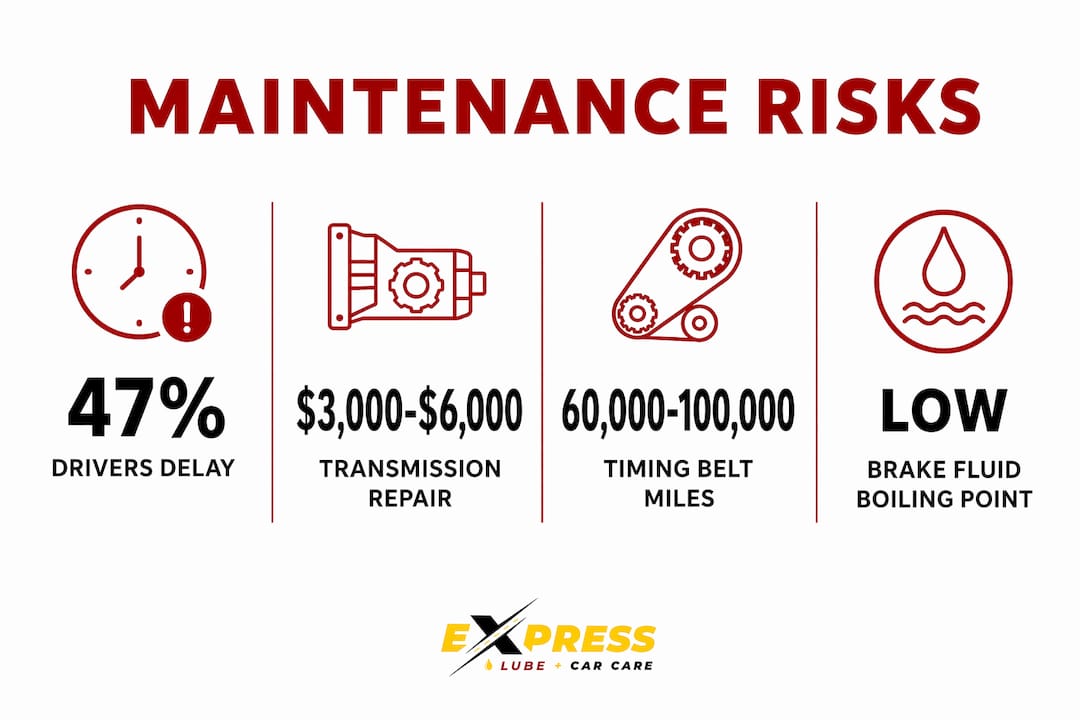
Transmission fluid neglect can trigger sudden failure costing between $3,000 and $6,000 in repairs. What makes this particularly dangerous is that transmission problems rarely announce themselves early. By the time you notice slipping gears or rough shifts, the damage is already severe. Staying current on transmission fluid service is one of the highest-return maintenance habits you can build.
Engine oil
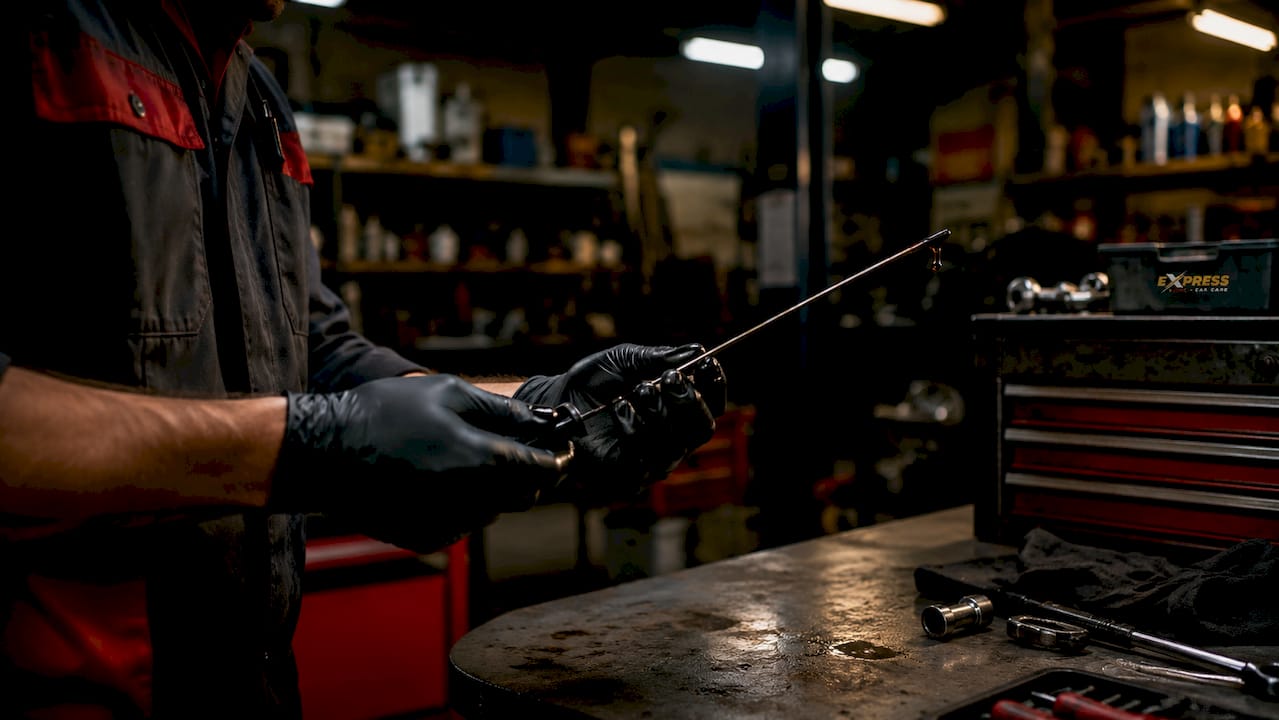
Engines can consume a quart of oil every 5,000 miles, and skipping changes lets oil levels drop to dangerous lows before the next service window. Old oil thickens into sludge, coating internal components and accelerating wear on bearings, pistons, and camshafts. Catastrophic engine failure follows, and that repair bill typically exceeds the value of the car itself.
Brake fluid
Brake fluid absorbs moisture over time, which lowers its boiling point and extends stopping distances under hard braking. Stop-and-go city driving accelerates this process. A driver who skips brake fluid changes for two or three service cycles may not notice reduced performance until a panic stop reveals the difference.
Timing belts and tires
A snapped timing belt destroys an engine in seconds. Most manufacturers specify replacement intervals between 60,000 and 100,000 miles, and missing that window is a gamble with very bad odds. Underinflated or worn tires reduce handling precision and increase blowout risk, especially at highway speeds.
Pro Tip: Check your owner’s manual for manufacturer-specified service intervals. Those intervals are set for normal driving conditions. If you tow, drive in extreme heat, or make frequent short trips, your intervals may need to be shorter.
What safety risks do drivers face when they neglect routine vehicle maintenance?
Deferred maintenance does not just damage your vehicle. It puts you, your passengers, and other drivers at direct risk.
More vehicle fires are linked to deferred maintenance than to traffic accidents. That fact surprises most drivers, who assume fires are caused by collisions. Leaking fluids, worn electrical components, and overheated systems from neglected cooling maintenance are the real culprits.
Skipping routine maintenance often leads to more expensive repairs and compromises vehicle safety, creating avoidable risks on shared roads. The vehicle you drive is not just your property. It is a piece of public infrastructure that affects everyone around you.
The most common safety failures tied to neglected upkeep include:
- Brake failure. Worn pads, degraded fluid, and corroded rotors reduce stopping power precisely when you need it most.
- Tire blowouts. Underinflated or structurally compromised tires fail without warning at speed.
- Steering loss. Low power steering fluid or worn tie rod ends reduce directional control.
- Overheating. Neglected coolant and radiator maintenance leads to engine overheating and potential fire.
- Electrical fires. Corroded battery terminals and worn wiring insulation create ignition risks.
The legal dimension matters too. If a mechanical failure linked to neglected maintenance contributes to an accident, the vehicle owner may be found partially liable under comparative fault systems. Your maintenance history can become evidence in an insurance claim or lawsuit, even when another driver caused the collision.
How does neglected upkeep affect vehicle performance and resale value?
Poor maintenance does not just create repair bills. It quietly erodes the performance and financial value of your vehicle every day.
A clogged air filter forces the engine to work harder for the same output, reducing fuel efficiency and increasing emissions. Dirty transmission fluid causes sluggish gear changes and reduces acceleration response. These are not dramatic failures. They are slow, steady losses that most drivers attribute to the car “getting old” rather than to skipped service.
Delayed maintenance reduces vehicle resale value, while cars with consistent service records sell at measurably higher prices. A documented service history signals to buyers that the vehicle was cared for and that hidden problems are less likely. Without that paper trail, buyers discount the price or walk away entirely.
| Maintenance area | Performance impact | Financial impact |
|---|---|---|
| Engine oil | Sludge buildup, increased wear | Catastrophic failure risk |
| Transmission fluid | Rough shifts, power loss | $3,000–$6,000 repair cost |
| Brake fluid | Longer stopping distances | Safety liability exposure |
| Air filter | Reduced fuel efficiency | Higher fuel costs over time |
| Service records | Reduced reliability perception | Lower resale value |
Warranty coverage is another financial risk that drivers overlook. Manufacturers can deny warranty claims if maintenance records are missing, even without proving direct causation, when failures relate to known neglected services. A powertrain warranty worth thousands of dollars becomes worthless if you cannot show you changed the oil on schedule.
Pro Tip: Keep every service receipt in a dedicated folder, physical or digital. That paper trail protects your warranty and adds real dollars to your resale price.
For a clear picture of what your vehicle needs and when, the car maintenance schedule by mileage guide breaks down service intervals by driving conditions and vehicle type.
Why do drivers skip maintenance, and what misconceptions drive this behavior?
The 47% delay rate among drivers in 2026 is not caused by carelessness alone. Real financial pressure and genuine misconceptions play a significant role.
43% of drivers who delay maintenance cite finances as the reason, and that concern is understandable. But the math works against them. A $100 transmission service deferred for 12 months does not save $100. It increases the probability of a $4,000 repair. 29% of drivers incorrectly believe skipping maintenance does not affect drivability. That belief is the most dangerous misconception in the group, because it removes the motivation to act before failure occurs.
Common misconceptions that lead drivers to skip service include:
- “The car drives fine, so nothing is wrong.” Many failures, including transmission degradation and brake fluid contamination, produce no noticeable symptoms until the system fails completely.
- “I can wait until the warning light comes on.” Warning lights are last-resort alerts. By the time a check engine or oil pressure light activates, damage is often already underway.
- “Synthetic oil means I can go longer between changes.” Extended intervals are only appropriate under specific conditions. Your owner’s manual defines those conditions, not a general rule of thumb.
- “More frequent service is always better.” Owners should push back on overly frequent service recommendations unless their driving conditions meet “severe duty” criteria. Paying for unnecessary services wastes money without adding protection.
Using cheap or non-genuine parts and cutting corners on repairs commonly results in repeat failures and higher overall costs. The savings at the counter disappear quickly when the same component fails again six months later.
The routine car maintenance checklist from Express Lube & Car Care gives drivers a clear, manufacturer-aligned reference for what actually needs to be done and when, without the upsell pressure.
Key Takeaways
Skipping car maintenance converts small, predictable service costs into large, unpredictable repair bills while simultaneously increasing safety risks and reducing vehicle value.
| Point | Details |
|---|---|
| Transmission neglect is high-cost | Skipping fluid service can cause sudden failure costing $3,000–$6,000 with no early warning. |
| Deferred maintenance causes fires | More vehicle fires result from neglected upkeep than from traffic accidents. |
| Maintenance records protect value | Documented service history raises resale prices and protects warranty coverage. |
| Misconceptions drive delays | 29% of drivers wrongly believe skipping maintenance does not affect drivability. |
| Follow manufacturer intervals | Owner’s manual schedules are the primary guide; push back on unnecessary upsells. |
What we see every day at Express Lube & Car Care
The pattern we see most often is this: a driver comes in after a long gap between services, the vehicle is running, and they assume everything is fine. Then a multi-point inspection reveals brake pads at 2mm, oil that looks like tar, and a transmission fluid sample that is dark brown instead of red. None of those conditions triggered a warning light. None of them made the car feel dramatically different to drive. But every one of them was weeks away from a serious failure.
The financial argument for skipping maintenance is almost always an illusion. Treating maintenance as a regular, non-negotiable habit converts unpredictable major expenses into manageable periodic costs. That is not a theory. It is what the numbers show, service after service.
The advice I give every driver is simple: follow your owner’s manual, keep your receipts, and do not wait for a symptom. Symptoms in a car are like symptoms in a body. By the time you feel them, the problem has been developing for a while. The engine lifespan data on vehicles with consistent maintenance histories versus those without tells the same story every time. Preventive care wins.
One more thing: a good service advisor will tell you what your car actually needs, not what generates the highest ticket. If you feel pressured into services your manual does not call for, ask for the specific manufacturer recommendation. You have every right to that information.
— Express Lube & Car Care
Staying ahead of maintenance with Express Lube & Car Care
Knowing the risks is only useful if you act on them. Express Lube & Car Care makes that easy for drivers in Plano and the surrounding area with no-appointment-needed service, certified technicians, and transparent recommendations tied to your actual driving conditions.
From oil changes and service specials to brake inspections and transmission flushes, every service is performed by technicians who follow manufacturer specifications, not upsell scripts. Military and healthcare workers receive special discounts as part of Express Lube & Car Care’s commitment to the community. Whether you are 500 miles overdue or right on schedule, the team will give you an honest assessment and get you back on the road quickly. Your vehicle’s safety and longevity are worth a 20-minute stop.
FAQ
What happens if you skip an oil change?
Skipping oil changes allows oil to degrade into sludge, accelerating engine wear and risking catastrophic failure as oil levels drop between service intervals.
How does neglected maintenance affect car resale value?
Cars with documented service histories sell at higher prices. Missing records signal potential hidden problems to buyers and can reduce your asking price significantly.
Can skipping maintenance void your car warranty?
Yes. Manufacturers can deny warranty claims when maintenance records are absent and the failure relates to a known neglected service, even without proving direct causation.
Is it safe to drive if the car feels fine but maintenance is overdue?
No. Many critical failures, including transmission breakdown and brake fluid degradation, produce no noticeable symptoms until the system fails completely.
How often should you really service your vehicle?
Follow your owner’s manual intervals as the primary guide. Only increase frequency if your driving meets “severe duty” criteria such as frequent towing, extreme temperatures, or heavy stop-and-go traffic.