
For most SUV owners, the best full-synthetic oil comparison comes down to four picks: AMSOIL Signature Series for extended drains and turbo/direct-injection protection, Mobil 1 Truck & SUV for towing and heavy-load use, Pennzoil Ultra Platinum for daily drivers prioritizing engine cleanliness, and Valvoline Advanced Full Synthetic for broad availability and value. Always verify viscosity and OEM approvals in your owner’s manual before buying.
Quick shortlist by use case:
- Best for towing/heavy load: Mobil 1 Truck & SUV — towing-focused formulation with up to 20,000-mile drain claims on qualifying SKUs
- Best for turbo/direct-injection engines: AMSOIL Signature Series — LSPI mitigation chemistry and up to 20,000-mile normal-service drain capability
- Best for engine cleanliness/daily driving: Pennzoil Ultra Platinum — deposit control and fuel-economy positioning
- Best for all-purpose value: Valvoline Advanced Full Synthetic — wide OEM approvals, easy to find at retail
- Best budget pick: Kirkland Signature Full Synthetic — API/ILSAC-compliant at warehouse-club pricing
- Best for performance-modified SUVs: Royal Purple High-Performance Synthetic — high film-strength additive chemistry
Table of Contents
- Which full-synthetic oils rank best for SUVs?
- Side-by-side synthetic oil comparison for SUVs
- How do you choose the right full-synthetic oil for your SUV?
- When should SUV owners shorten oil-change intervals?
- What is the best oil for your SUV — the final recommendation
- Key Takeaways
- What the shop actually sees with SUV engines
- Get your SUV’s oil changed right the first time
- Useful sources and further reading
- FAQ
Which full-synthetic oils rank best for SUVs?
Seven products consistently stand out in this full-synthetic oil SUV comparison. Here is how each one performs where it matters most.
-
AMSOIL Signature Series — The strongest case for turbocharged and direct-injection SUV engines. AMSOIL’s Extended-Life formula advertises up to 20,000-mile drain intervals in normal service with a specific LSPI protection package. ASE-certified technicians note that modern turbocharged SUVs are particularly vulnerable to low-speed pre-ignition, and AMSOIL’s additive chemistry directly targets that failure mode. Severe-service conditions (towing, frequent short trips) require shorter intervals, so check AMSOIL’s own severe-service guidance before stretching drains.
- Pros: Strong LSPI protection, extended-drain potential, boosted additive package
- Cons: Higher per-quart cost, primarily sold direct or through specialty retailers
-
Mobil 1 Truck & SUV — Purpose-built for gas-powered trucks and SUVs, with towing protection rated up to 10,000 lbs and a 20,000-mile drain claim on qualifying conditions. It carries GM dexos1 Gen 3 and various Ford WSS approvals, making it a natural fit for Ford and GM SUV owners. Available in 0W-20 and other common viscosities.
- Pros: Towing-specific formulation, strong OEM approval list, widely available
- Cons: Extended-drain claim (conditional) is conditional; verify against your owner’s manual
-
Castrol EDGE Advanced Full Synthetic — Castrol positions EDGE on metal-to-metal protection under extreme pressure, which translates well to high-performance and turbocharged SUV engines. Available in a broad viscosity range. API SP / ILSAC GF-6A certified on most SKUs.
- Pros: High-pressure protection claims, broad viscosity availability, widely stocked at retail
- Cons: No dedicated towing SKU; marketing leans toward performance rather than extended drain
-
Pennzoil Ultra Platinum Full Synthetic — Shell’s top-tier synthetic focuses on deposit control and fuel-economy gains, making it a strong daily-driver pick for turbocharged SUVs where piston and turbocharger cleanliness matter. API SP certified. Available at most major retailers.
- Pros: Deposit control, fuel-economy claims, widely available
- Cons: Less differentiated for heavy towing vs. Mobil 1 Truck & SUV
-
Valvoline Advanced Full Synthetic — The most practical all-rounder on this list. Broad OEM approvals, multiple viscosity grades, and consistent availability at auto parts stores and big-box retailers make it the easiest choice for owners who want a reliable, approved oil without hunting for it.
- Pros: Wide availability, solid OEM approvals, competitive price per quart
- Cons: No standout performance claim for towing or extended drain
-
Royal Purple High-Performance Synthetic — Proprietary additive chemistry aimed at film strength and performance tuning. A good fit for owners with modified or high-output SUV engines who want additive packages beyond standard API minimums.
- Pros: High film-strength claims, performance-oriented additive package
- Cons: Premium price, less focused on towing or extended-drain use cases
-
Kirkland Signature Full Synthetic — Costco’s house-brand synthetic offers API/ILSAC-compliant protection at a noticeably lower price per quart. For budget-conscious owners whose SUVs have no unusual OEM approval requirements, it covers the basics well.
- Pros: Lowest cost per quart on this list, API/ILSAC compliant
- Cons: Limited viscosity range, warehouse-club availability only
Side-by-side synthetic oil comparison for SUVs
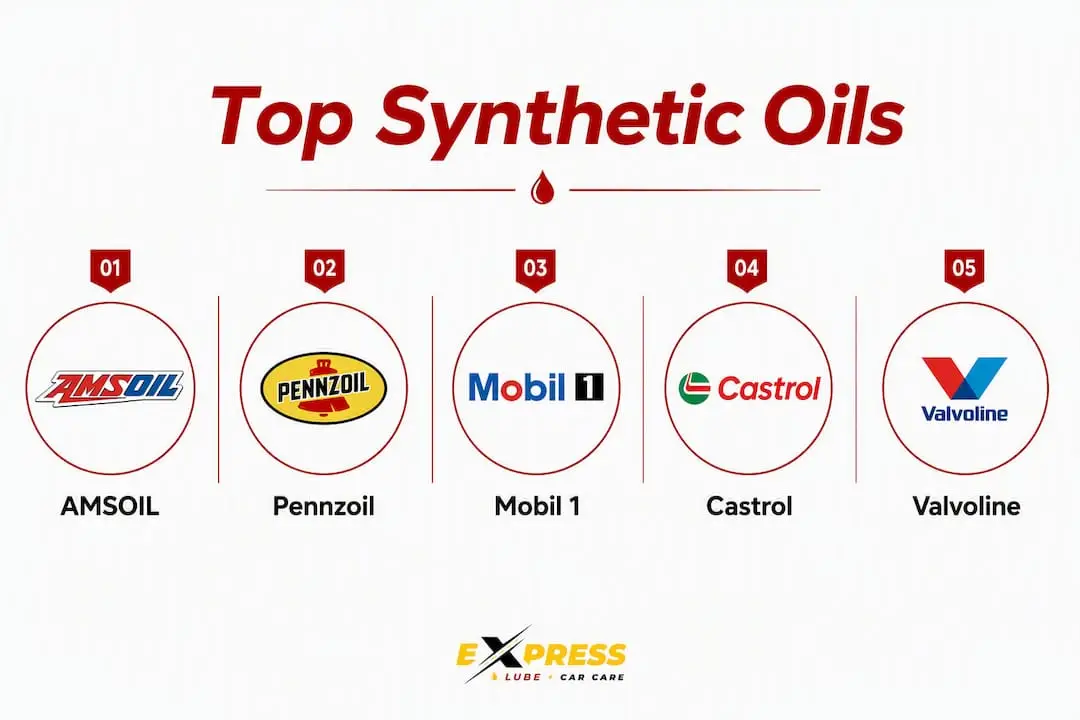
The table below covers the decision-relevant dimensions for SUV owners. Read the “Best for” column first, then cross-check the API/ILSAC approvals against your owner’s manual before buying.
| Oil | Best for | Viscosity grades (typical) | API / ILSAC / OEM approvals | Base oil type | Extended-drain claim (conditional) | LSPI / high-temp protection | Price per quart / availability |
|---|---|---|---|---|---|---|---|
| AMSOIL Signature Series | Turbo / extended drain | 0W-20, 5W-20, 5W-30 | API SP, ILSAC GF-6A | PAO / synthetic blend | Up to 20,000 mi (normal service) | Strong LSPI additive package | $$$ / online / specialty |
| Mobil 1 Truck & SUV | Towing / heavy load | 0W-20 | API SP, GM dexos1 Gen 3, Ford WSS | Group III+ / proprietary | Up to 20,000 mi (qualifying conditions) | High-temp towing protection | $$ / retail / online |
| Castrol EDGE Advanced Full Synthetic | High-performance / turbo | 0W-20, 5W-20, 5W-30, 5W-40 | API SP, ILSAC GF-6A | Group III / proprietary | Standard (per OEM) | High-pressure film strength | $$ / retail / online |
| Pennzoil Ultra Platinum Full Synthetic | Daily driver / turbo cleanliness | 0W-20, 5W-20, 5W-30 | API SP, ILSAC GF-6A | Group III (natural gas-derived) | Standard (per OEM) | Deposit control / turbo protection | $$ / retail / online |
| Valvoline Advanced Full Synthetic | All-purpose / broad availability | 0W-20, 5W-20, 5W-30 | API SP, ILSAC GF-6A, GM dexos1 | Group III | Standard (per OEM) | Adequate for most SUVs | $$ / retail / online |
| Royal Purple High-Performance Synthetic | Performance-modified SUVs | 0W-20, 5W-20, 5W-30 | API SP, ILSAC GF-6A | Group III / proprietary | Standard (per OEM) | High film-strength additive | $$$ / retail / online |
| Kirkland Signature Full Synthetic | Budget / OEM-compliant | 0W-20, 5W-20, 5W-30 | API SP, ILSAC GF-6A | Group III | Standard (per OEM) | Standard | $ / Costco only |
How to read this table:
- The “API / ILSAC / OEM approvals” column is the most important column for warranty compliance. API and ILSAC ratings tell you whether an oil meets the minimum performance standard your engine requires. OEM approvals (GM dexos1 Gen 3, Ford WSS) go further and are required by some manufacturers to maintain warranty coverage.
- Price tiers: $ = under $7/qt, $$ = $7–$12/qt, $$$ = $12+/qt. Prices vary by retailer and viscosity grade.
- Full synthetics cost roughly 25–40% more per quart than conventional oils, but their oxidation resistance and cold-flow properties support longer drain intervals in qualifying conditions.
How do you choose the right full-synthetic oil for your SUV?
The right oil is the one that matches your engine’s requirements first, then your driving conditions. Follow these steps.
-
Check the oil cap and owner’s manual for viscosity. Your manufacturer specifies an SAE grade (0W-20, 5W-30, etc.) based on engine tolerances and operating temperature range. That grade is not negotiable.
-
Confirm required API/ILSAC or OEM approvals. Viscosity alone is not enough. Using the correct viscosity without the right OEM performance specification can void warranties and risk engine damage. Look for GM dexos1 Gen 3 if you drive a GM SUV, or the relevant Ford WSS spec for Ford vehicles. The API Certification Mark (“Starburst”) on the bottle confirms ILSAC compliance.
-
Match the oil to your primary use case. Towing regularly? Go with Mobil 1 Truck & SUV. Running a turbocharged engine? Prioritize AMSOIL Signature Series or Pennzoil Ultra Platinum for LSPI protection and deposit control. High-mileage engine? Consider oils with high-mileage additive packages that condition seals and reduce consumption.
-
Evaluate extended-drain claims carefully. Manufacturer marketing claims of extended drain intervals are conditional. The extended-drain guarantee is subject to your vehicle manufacturer’s own recommendations. If your owner’s manual specifies a shorter interval, follow the manual to stay warranty-compliant.
-
Buy where you can verify the label. Look for the API Starburst and the donut symbol on the bottle. These confirm the oil meets the stated performance category. Retail (AutoZone, O’Reilly, Walmart), online (Amazon, manufacturer direct), and warehouse clubs (Costco for Kirkland) all carry the major brands.
Viscosity and climate quick reference:
| Climate / condition | Recommended viscosity | Why |
|---|---|---|
| Cold winters (below 0°F) | 0W-20 or 0W-30 | Better cold-start flow, less wear at startup |
| Moderate climates | 5W-20 or 5W-30 | Manufacturer default for most light-truck SUVs |
| Hot climates / towing | 5W-30 (if OEM-approved) | Slightly higher film strength at operating temp |
| High-mileage engines | 5W-30 or 10W-30 (if OEM-approved) | Thicker film helps worn clearances |
Pro Tip: Never switch to a thicker viscosity grade under severe service unless your owner’s manual explicitly allows it. The right response to towing or frequent short trips is a shorter drain interval, not a heavier oil grade, as Popular Mechanics confirms.
When should SUV owners shorten oil-change intervals?
Severe service is more common than most owners realize. If your SUV regularly does any of the following, your oil degrades faster than the marketing claims assume.
Severe-service triggers that require shorter intervals:
- Towing or hauling near your vehicle’s rated capacity
- Frequent short trips under 5 miles (oil never fully warms up, moisture accumulates)
- Heavy stop-and-go traffic or extended idling
- Dusty or off-road driving conditions
- High-mileage engines (typically over 75,000 miles)
- Fleet or commercial use with multiple drivers
Under these conditions, short trips, towing, and frequent idling accelerate additive breakdown. The practical rule: follow the severe-service schedule in your owner’s manual, not the oil maker’s best-case marketing interval. For most towing SUVs, that means an interval closer to 5,000–7,500 miles even with a full synthetic. Review the SUV oil change frequency guide for a detailed breakdown by use case.
At Express Lube & Car Care, ASE-certified technicians check oil condition visually and by mileage at every service. The team replaces the filter, verifies the drain plug torque, confirms the correct oil type and viscosity for your specific engine, and recommends the next interval based on your actual driving pattern, not a generic sticker. If your oil-life monitor reads below 15% before you hit the mileage mark, that is the monitor doing its job — bring it in.
Pro Tip: Your oil-life monitor uses algorithms based on driving conditions, not just mileage. Trust it over the “next oil change” sticker when the two disagree, but never let it run to zero.
What is the best oil for your SUV — the final recommendation
The single most important rule: match OEM approvals first, then pick by use case. Here is how that plays out for the most common SUV buyer types.
-
You tow regularly or haul near capacity: Use Mobil 1 Truck & SUV in your OEM-specified viscosity. Follow the severe-service schedule recommended in your owner’s manual for drain intervals.
-
You have a turbocharged or direct-injection engine: AMSOIL Signature Series or Pennzoil Ultra Platinum. Both carry API SP / ILSAC GF-6A certification with LSPI protection. Check that your required OEM approval (GM dexos1, Ford WSS) appears on the bottle.
-
You drive mostly highway miles with no towing: Valvoline Advanced Full Synthetic or Pennzoil Ultra Platinum. Both are widely available, API SP certified, and priced competitively. Follow your owner’s manual interval.
-
You want the longest possible drain interval: AMSOIL Signature Series or Mobil 1 Extended Performance, but only if your owner’s manual and oil-life monitor support it. Extended-drain claims (conditional) are conditional — the Mobil 1 Extended Performance guidance states explicitly that vehicle manufacturer recommendations take precedence.
-
You are on a tight budget: Kirkland Signature Full Synthetic at Costco covers API/ILSAC requirements at the lowest cost per quart on this list. Confirm your required viscosity is available before you go.
Key Takeaways
Matching API/ILSAC approvals to your engine’s OEM requirements is the single most important step in any full-synthetic oil selection for an SUV — use case and price come second.
| Point | Details |
|---|---|
| OEM approvals come first | Always verify API SP, ILSAC GF-6A, GM dexos1, or Ford WSS requirements before choosing a brand. |
| Match oil to use case | Towing SUVs: Mobil 1 Truck & SUV. Turbo engines: AMSOIL Signature Series or Pennzoil Ultra Platinum. |
| Extended-drain claims (conditional) are conditional | Manufacturer drain claims of 15,000–25,000 miles are subject to your owner’s manual interval. |
| Severe service shortens intervals | Towing, short trips, and heavy idling require the severe-service schedule, typically 5,000–7,500 miles. |
| Express Lube & Car Care installs the right oil | ASE-certified technicians at Express Lube & Car Care verify viscosity, approvals, and interval at every service. |
What the shop actually sees with SUV engines
Turbocharged SUVs are where we see the most preventable damage. LSPI events, which are essentially uncontrolled combustion spikes in direct-injection engines, leave behind piston damage that looks catastrophic but often traces back to the wrong oil or a stretched drain interval. Owners come in after hearing a knock or seeing a check-engine light, and the first question is always: what oil are you running, and when did you last change it?
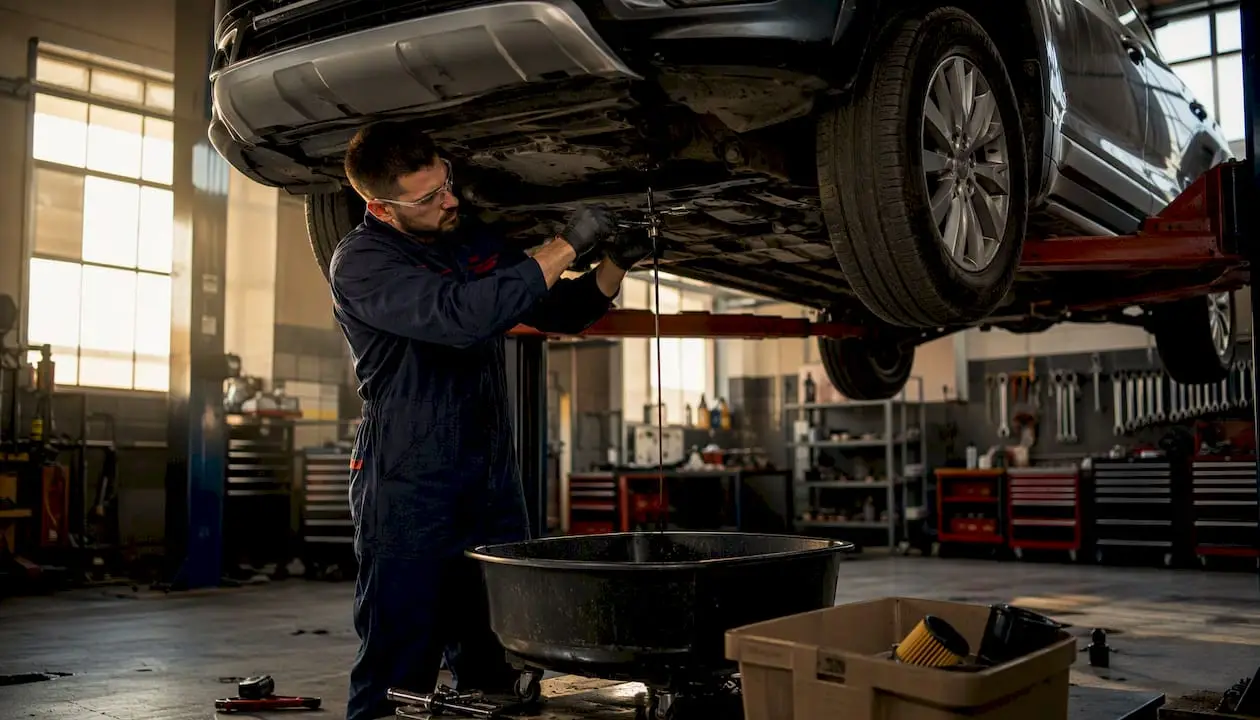
The second pattern is towing-related oil degradation. An SUV that tows a boat or trailer every weekend is running its engine at sustained high load and temperature. The oil’s viscosity index improvers shear down faster under that stress, and by 7,000 miles the oil protecting a towing engine may be performing closer to a conventional oil than the full synthetic on the label. We advise towing customers to treat every oil change as a severe-service event and schedule accordingly.
Common questions we hear: “Can I go 10,000 miles because the bottle says so?” The honest answer is: only if your owner’s manual agrees and your oil-life monitor hasn’t flagged it first. “Do I need a different viscosity for summer towing?” No — stick with your OEM-specified grade and shorten the interval instead. Those two answers cover the majority of what SUV owners need to know before they leave the service bay.
Get your SUV’s oil changed right the first time
Choosing the right oil is half the job. The other half is having it installed correctly, with the right filter, proper torque on the drain plug, and a verified fill level before you drive away.
Express Lube & Car Care in Plano handles full-synthetic oil changes with no appointment needed. ASE-certified technicians confirm your vehicle’s required viscosity and OEM approvals, install the correct oil and filter, perform a digital vehicle inspection with photos, and set your next recommended interval based on your actual driving conditions. Every service is backed by a 24-month/24,000-mile warranty. Military personnel and healthcare providers receive special discounts. Check current oil change specials and book your next service online or walk in today.
Useful sources and further reading
- API Motor Oil Guide — API certification standards, ILSAC GF-6A/GF-7A categories, and the Starburst mark explained
- API Engine Oil Categories — Current and historical API “S” and “C” service categories
- Mobil 1 Truck & SUV 0W-20 — Towing claims, OEM approvals, and drain-interval guidance
- AMSOIL 5W-30 Extended-Life Synthetic (XLF) — Normal vs. severe-service drain intervals and LSPI protection details
- Popular Mechanics: How to pick the right motor oil — Viscosity myths and severe-service guidance
- FleetRabbit: Choosing the right engine oil for trucks — Fleet-manager perspective on full-synthetic cost vs. performance tradeoffs
- Full synthetic oil benefits for large engines — Express Lube & Car Care technical guide on additive packages and oxidation resistance
- Why SUVs need more frequent oil changes — Severe-service interval guidance for SUV owners
FAQ
What brand makes the best full-synthetic motor oil for SUVs?
No single brand is best for every SUV. AMSOIL Signature Series leads for turbocharged and extended-drain applications, while Mobil 1 Truck & SUV is the strongest pick for towing. Match the oil to your engine’s OEM approvals and primary use case first.
Which engine oil is best for a turbocharged SUV?
AMSOIL Signature Series and Pennzoil Ultra Platinum are both strong choices for turbocharged SUVs. Both carry API SP / ILSAC GF-6A certification with LSPI protection, which guards against the uncontrolled combustion events that damage direct-injection turbo engines.
Does full synthetic oil really last longer in an SUV?
Full synthetics offer better oxidation resistance and cold-flow properties than conventional oils, which can support longer drain intervals under normal driving. However, extended-drain claims are conditional — always follow your owner’s manual interval, especially under severe service like towing or frequent short trips.
Should I use a thicker oil when towing with my SUV?
No. Switching to a heavier viscosity grade than your manufacturer recommends can harm components designed for specific oil flow rates. The correct approach under severe service is to shorten your drain interval and use an OEM-approved oil with the right additive package for high-heat operation.
Can Express Lube & Car Care install any of these oils?
Yes. Express Lube & Car Care in Plano installs full-synthetic oils with no appointment needed. ASE-certified technicians verify your required viscosity and OEM approvals, install the correct oil and filter, and recommend your next interval based on your driving conditions.