

SUVs require more frequent oil changes than smaller vehicles because their larger engines, heavier workloads, and demanding driving conditions accelerate oil degradation faster than a standard sedan ever would. Engine oil does more than lubricate moving parts. It acts as a cleaning agent and cooling medium, and when it breaks down, sludge and varnish deposits clog oil passages and cause costly engine failure. Understanding why SUVs need more frequent oil changes gives you the knowledge to protect your investment before a small maintenance gap turns into a major repair bill.
Why do SUVs need more frequent oil changes than sedans?
SUV engines are physically larger and more mechanically complex than those in compact cars or sedans. More cylinders, more pistons, and more moving surfaces mean more friction, more heat, and more demand placed on every quart of oil in the system. That oil degrades faster simply because it is working harder every mile you drive.
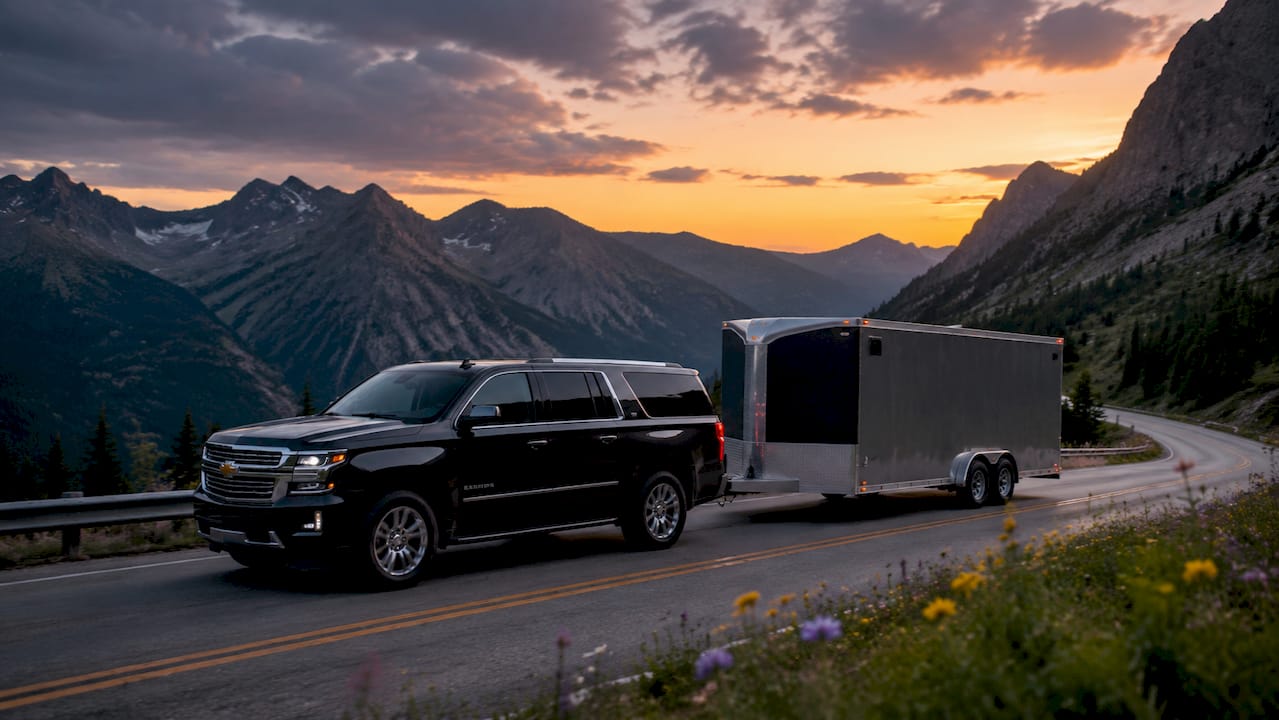
Towing and hauling amplify this effect significantly. Towing heavy loads increases engine heat to the point where oil breaks down at a much faster rate, roughly cutting the effective oil change interval in half compared to normal highway driving. An SUV pulling a boat trailer on a summer weekend is not operating under “normal” conditions, regardless of what the standard mileage sticker on your windshield says.
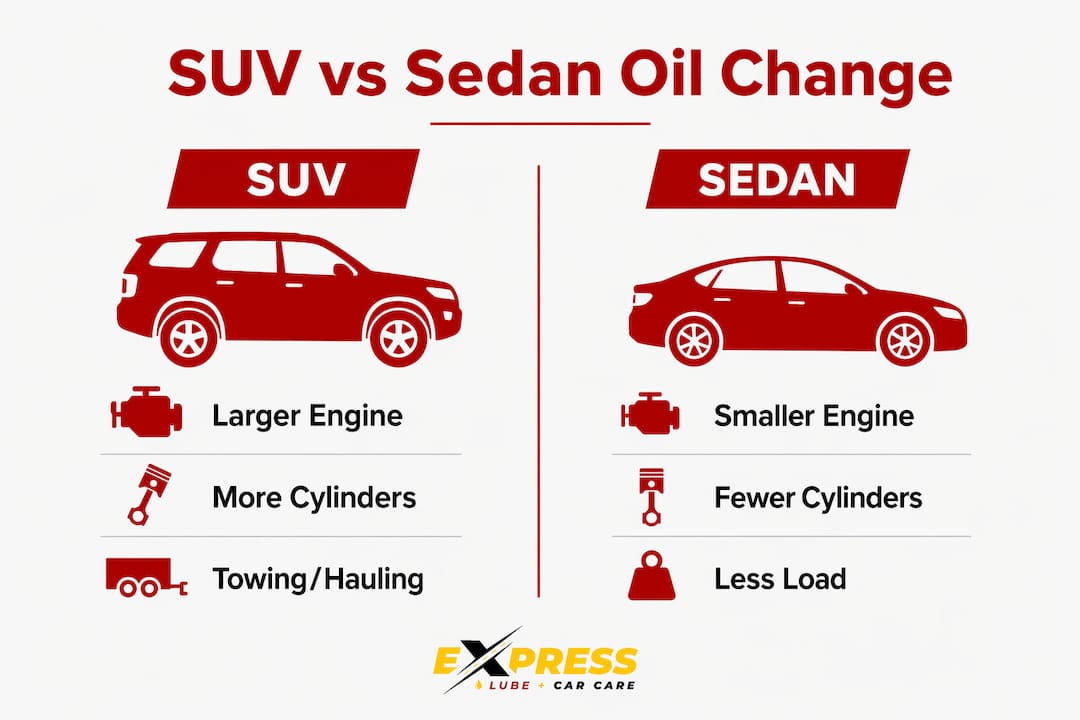
The comparison below shows how SUVs and sedans differ on the key factors that drive oil wear.
| Factor | SUV | Sedan |
|---|---|---|
| Engine size | Larger, more cylinders | Smaller, fewer cylinders |
| Typical load | Passengers, cargo, towing | Passengers only |
| Oil operating temperature | Higher under load | Lower, more stable |
| Oil change interval (severe use) | Shorter, more frequent | Longer, less frequent |
| Risk of sludge buildup | Higher without timely changes | Lower under normal use |
The mechanical stress an SUV engine endures is not a design flaw. It is a direct result of what these vehicles are built to do. The trade-off is that the engine longevity you expect from your SUV depends directly on how well you manage that oil.
Pro Tip: If your SUV is rated for towing, treat every trip with a loaded trailer as severe-duty driving and shorten your oil change interval accordingly, regardless of what the odometer reads.
What driving conditions make SUV oil degrade faster?
The way you drive your SUV matters as much as the engine size itself. Certain driving patterns put oil under stress that mileage alone cannot capture, and SUV drivers encounter these patterns more often than most.
Short trips are one of the most damaging conditions for engine oil. Trips under 5 miles prevent the engine from fully warming up, which means moisture and combustion acids stay trapped in the oil rather than burning off. Over time, that moisture accelerates oil breakdown and promotes corrosion inside the engine. If you use your SUV primarily for school runs or quick errands, your oil is degrading faster than the mileage on the dipstick suggests.
Extreme temperatures compound the problem from both ends of the thermometer. Cold-temperature starts put additional stress on engine oil because the oil is thick and slow to circulate when the engine first fires. Hot climates push oil toward its thermal breakdown threshold faster, especially under load.
The following driving conditions qualify as severe duty for any SUV:
- Frequent trips under 5 miles in normal temperatures
- Frequent trips under 10 miles in freezing temperatures
- Stop-and-go city traffic for extended periods
- Towing or hauling near the vehicle’s maximum rated capacity
- Driving on dusty, muddy, or unpaved roads regularly
- Operating in sustained extreme heat above 90°F or extreme cold below 20°F
- Extended idling, such as in drive-through lines or construction traffic
Each of these conditions depletes the oil’s additive package faster than highway cruising does. Additives are the chemical compounds in oil that fight corrosion, reduce friction, and neutralize acids. Once they are depleted, the base oil alone cannot protect your engine adequately.
Pro Tip: Keep a simple log of your driving patterns for one month. If more than half your trips fall into the severe-duty list above, tell your technician. That single piece of information changes the recommended interval.
How do oil type and oil life monitoring affect SUV oil change frequency?
Not all oil performs the same way inside an SUV engine, and the type you use directly affects how long you can safely go between changes. Full synthetic oil is the right choice for most modern SUVs. Newer SUVs using full synthetic oil typically run 7,500 to 10,000 miles between changes under normal driving conditions. Conventional oil degrades faster and requires shorter intervals, generally in the 3,000 to 5,000 mile range. The full synthetic oil benefits for large engines go beyond just longer intervals. Synthetic oil resists thermal breakdown better, flows more easily in cold starts, and maintains its protective film under the high heat that SUV engines generate.
The old “every 3,000 miles” rule is outdated for most modern SUVs. Following your vehicle’s oil life monitoring system or manufacturer recommendations is the most reliable approach today. Fixed mileage rules were designed for older engines running conventional oil under average conditions. They do not account for your specific engine, your specific oil, or how you actually drive.
Oil Life Monitoring (OLM) systems solve this problem directly. OLM systems use real-time driving data to calculate actual oil degradation and alert you when oil life drops to around 15–20%. That means the system accounts for your towing trips, your cold starts, and your stop-and-go commute, not just the miles on the odometer.
Here is how to use your OLM system effectively:
- Reset the monitor after every oil change. If the system is not reset, it cannot track the new oil’s life accurately.
- Check the display monthly. Do not wait for a warning light. A quick check takes seconds and keeps you ahead of the interval.
- Act when it reaches 15–20% oil life remaining. Schedule your oil change before the monitor hits zero, not after.
- Cross-reference with your owner’s manual. The OLM is a tool, not a replacement for manufacturer guidance. Use both together.
- Tell your technician your driving patterns. A certified technician can recommend whether your conditions warrant going shorter than the OLM suggests.
How often should you change your SUV oil? Practical recommendations
Every SUV owner should follow at least one non-negotiable rule: change your oil at least once per year, even if the mileage is low. SUVs driven infrequently still require an annual oil change because moisture and combustion by-products degrade oil over time regardless of miles driven. A low-mileage SUV sitting in a garage still has oil that is aging chemically.
Beyond the annual minimum, your interval depends on how you drive. Check your oil level monthly using the dipstick. Dark, gritty oil or oil that smells burned are clear signs the change is overdue. You can find a straightforward walkthrough of how to check your engine oil between service visits to stay on top of this between appointments.
The table below gives practical interval guidance based on driving style.
| Driving style | Oil type | Recommended interval |
|---|---|---|
| Normal highway, light loads | Full synthetic | 7,500–10,000 miles or per OLM |
| Mixed city and highway | Full synthetic | 5,000–7,500 miles |
| Severe duty (towing, short trips) | Full synthetic | 3,000–5,000 miles |
| Severe duty | Conventional | 3,000 miles or less |
| Low mileage, any driving style | Full synthetic | At minimum, once per year |
Additional maintenance habits that protect your SUV engine between oil changes include:
- Check oil level monthly and top off with the manufacturer-specified grade if needed
- Inspect the oil filter at every change. A clogged filter housing bypasses clean oil around the filter entirely
- Review your owner’s manual for the exact oil viscosity your engine requires
- Use a certified technician for changes. Proper torque on the drain plug and filter housing prevents leaks that slowly starve the engine of oil
Consulting your owner’s manual and a certified technician remains the most reliable path to the right SUV oil change frequency for your specific vehicle and driving habits.
Key takeaways
SUVs need more frequent oil changes because their larger engines, severe driving conditions, and faster oil degradation demand shorter intervals than standard mileage rules account for.
| Point | Details |
|---|---|
| Engine size drives faster wear | Larger SUV engines generate more heat and friction, degrading oil faster than smaller vehicles. |
| Severe duty shortens intervals | Towing, short trips, and extreme temperatures cut effective oil life significantly. |
| Synthetic oil extends protection | Full synthetic oil handles SUV heat and stress better, supporting 7,500–10,000 mile intervals under normal conditions. |
| OLM systems replace guesswork | Oil life monitors track real driving data and alert you at 15–20% oil life remaining. |
| Annual change is the minimum | Even low-mileage SUVs need at least one oil change per year due to chemical oil degradation over time. |
What years of service work have taught us about SUV oil maintenance
At Express Lube & Car Care, the pattern we see most often is not neglect from careless drivers. It is overconfidence in mileage numbers. Drivers pull in with 8,000 miles on their last synthetic oil change, feeling right on schedule, but they tow a camper every other weekend and run school pickups twice a day. Their oil life monitor has been sitting at 12% for three weeks. The oil itself tells a different story than the odometer.
The uncomfortable truth is that the 3,000-mile rule created a generation of drivers who think in miles instead of conditions. Modern OLM technology exists precisely because conditions matter more than distance. An SUV that tows 5,000 pounds twice a month needs oil attention far sooner than one that cruises the interstate at 65 mph with an empty cargo area.
The other thing we see regularly is drivers who skip the annual change on a low-mileage vehicle because “it barely moved.” Oil sitting in an engine still absorbs moisture and combustion acids. It still oxidizes. A Hyundai Santa Fe or Ford Explorer that sits in a garage from october through march and only accumulates 2,000 miles still needs fresh oil come spring. The cost of one oil change is a fraction of what a sludged-up engine costs to repair or replace.
Use your OLM system. Read your owner’s manual. And when in doubt, talk to a certified technician who can look at your actual driving patterns and give you a real answer.
— Express Lube & Car Care
SUV oil change service at Express Lube & Car Care Plano
Express Lube & Car Care serves SUV owners in Plano with no-appointment-needed oil changes performed by certified technicians who understand the demands these vehicles place on engine oil. Whether you drive a three-row crossover, a full-size truck-based SUV, or a compact AWD, the service is fast without cutting corners on quality.
Current oil change specials are available for SUV owners looking for full synthetic service at a competitive price. Military personnel and healthcare providers receive additional discounts as part of Express Lube & Car Care’s commitment to the community. Walk in when it fits your schedule and drive out with the confidence that your engine is properly protected.
FAQ
Why do SUVs need oil changes more often than cars?
SUVs have larger engines that generate more heat and friction, and they are frequently used for towing, hauling, and stop-and-go driving. These conditions degrade oil faster than typical sedan use, requiring shorter oil change intervals.
How often should I change the oil in my SUV?
Most modern SUVs using full synthetic oil need a change every 7,500–10,000 miles under normal conditions, but severe driving like towing or frequent short trips shortens that to 3,000–5,000 miles. All SUVs require at least one oil change per year regardless of mileage.
What is an oil life monitoring system and should I trust it?
An oil life monitoring (OLM) system uses real-time driving data to calculate actual oil degradation and alerts you when oil life reaches around 15–20%. It is more accurate than fixed mileage rules and is the recommended method for determining your oil change interval.
Does towing really affect how often I need an oil change?
Towing is classified as severe-duty driving and can roughly cut your oil change interval in half compared to normal highway use. The added engine heat from towing accelerates oil breakdown and depletes protective additives faster.
Can I skip an oil change if my SUV has low mileage?
No. Even low-mileage SUVs need at least one oil change per year because oil degrades chemically over time from moisture and combustion by-products, regardless of how many miles the vehicle has traveled.