

You’re probably here because something about your brakes doesn’t feel right.
Maybe you heard a sharp squeal backing out of the driveway. Maybe the pedal felt different at the last red light. Maybe you looked through a wheel spoke and thought, “Those pads look thin, but I’m not sure what I’m seeing.” That uncertainty is common. Most drivers notice the first clues with their ears, hands, and eyes long before they know the mechanical reason.
Bad brake pads aren’t always obvious. Some are worn down. Some get overheated and lose grip even when they still look thick enough. Some wear unevenly in ways that confuse drivers because the car still seems to stop “okay” for now. The safest approach is to learn what your car is telling you before a small brake issue turns into a bigger one.
Understanding What "Bad Brake Pads" Really Means
Think of brake pads like the soles on a good pair of running shoes. Every stop scrubs away a little material. Over time, that friction surface gets thinner, less effective, and less able to do its job safely.
A brake pad’s job is simple. When you press the pedal, the pad clamps onto the rotor and creates friction to slow the vehicle. A “bad” brake pad is one that can’t do that job reliably anymore. That can happen for a few different reasons, and pad thickness is only one of them.
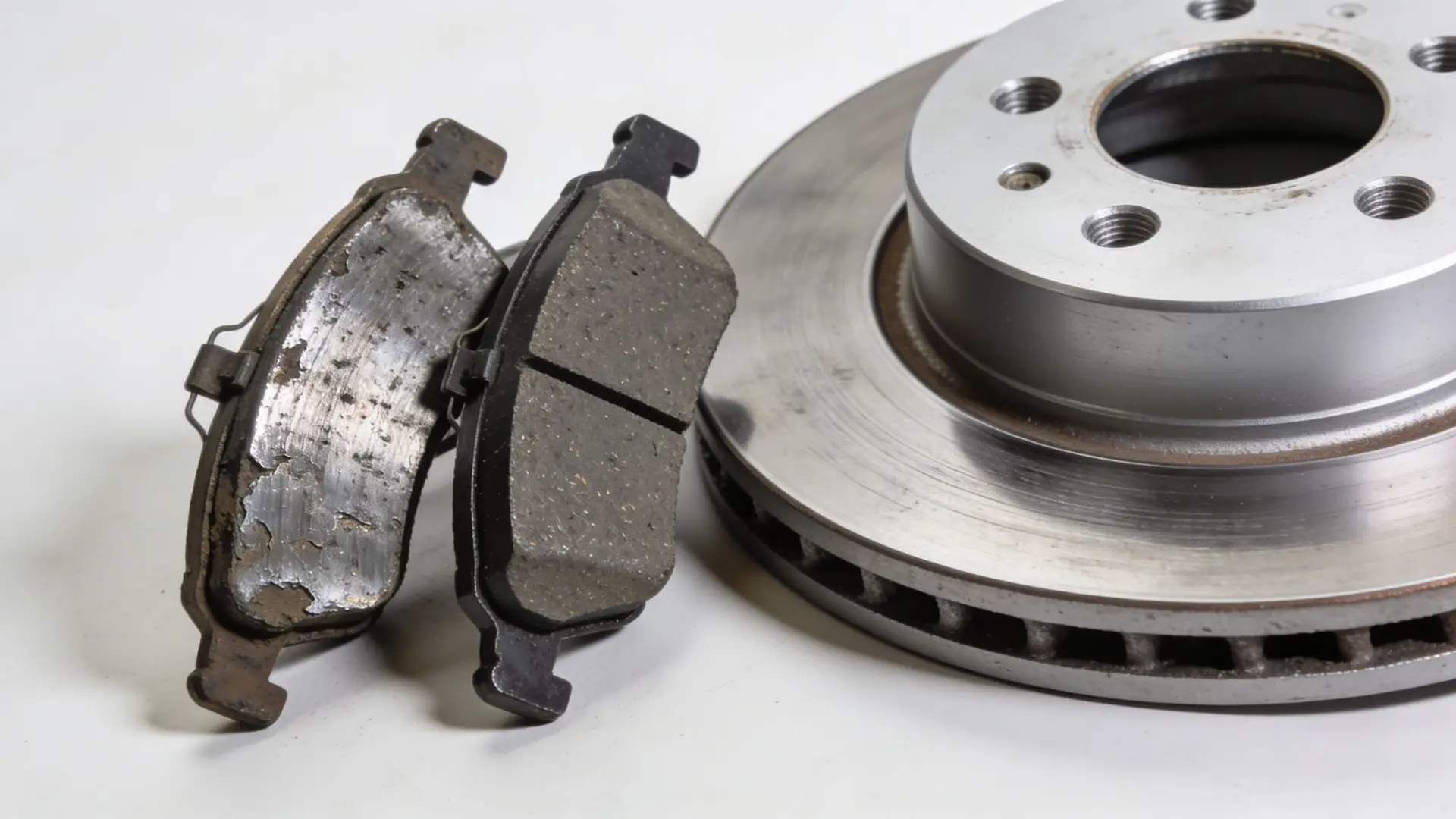
Three ways brake pads go bad
Worn too thin
This is a commonly recognized problem. The friction material gets used up from normal braking, and once it wears past the safe limit, the pad can’t absorb heat or create stopping force the way it should.Contaminated
If oil, grease, or leaking fluid gets on the pad surface, the pad can lose grip. It may still look physically present, but it won’t bite the rotor the way a clean pad should.Glazed from heat
This one surprises people. A pad can still have material left on it and still be bad.
Why overheating matters
When brake pads get hotter than they were designed to handle, the resins that hold the friction material together can break down. The technical explanation from Brake & Front End’s discussion of brake pad wear patterns is important here. Overheating can damage the binder that attaches the friction lining to the steel backing plate, and the surface can turn smooth and mirror-like, often called glazing.
Practical rule: A brake pad can look thick enough and still be unsafe if heat has changed the surface and reduced friction.
A glazed pad is a lot like a hiking boot with a hardened, slick sole. It’s still there, but it doesn’t grip well. That’s why a proper brake inspection looks at condition, color, texture, and wear pattern, not just “how much pad is left.”
Why drivers get confused
Drivers often expect bad brake pads to mean total brake failure or loud grinding. Real life is murkier than that. Sometimes the first sign is a faint squeal. Sometimes it’s a smell after heavy braking. Sometimes a technician spots a polished pad face or a wear pattern that tells a deeper story.
That’s the key idea to keep in mind. Bad brake pads don’t just mean thin pads. They mean pads that no longer stop your vehicle predictably and safely.
The Telltale Signs Your Brake Pads Are Failing
Most drivers diagnose brake trouble the same way they notice a fever. Not with a scan tool first, but with senses. You hear something new, feel something off, or see a clue that wasn’t there last week.
That instinct matters. Brake problems often announce themselves before they become severe.
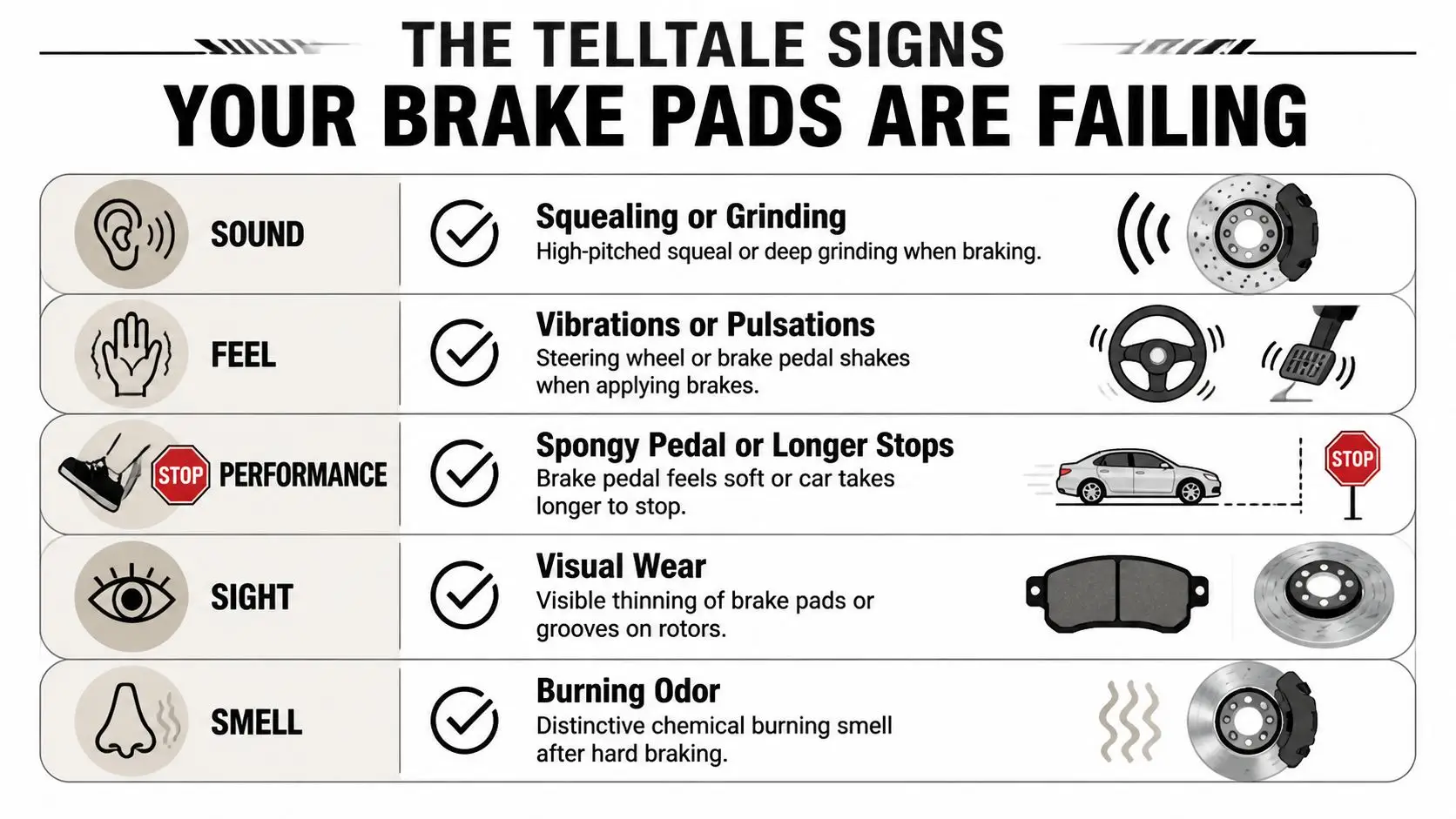
What you hear
A high-pitched squeal during braking is often the first warning. Some pads use a built-in wear indicator that makes noise to tell you the pad is getting close to the end of its service life.
A grinding sound is more serious. That usually means the friction material is gone or nearly gone, and metal parts are contacting the rotor. If your car is making a grinding noise when braking, don’t wait to “see if it goes away.” Brake noise almost never fixes itself.
A squeal is a warning. A grind is damage happening in real time.
What you feel
Some brake problems come through the pedal, steering wheel, or seat before they show up visually.
Here are common sensations that deserve attention:
Pedal vibration or pulsation
If the brake pedal shakes or pulses when you slow down, the issue may involve the rotor surface, uneven pad transfer, or heat-related distortion.Vehicle pulling to one side
If the car drifts left or right during braking, one side may be gripping differently than the other. That can point to uneven pad wear, a caliper issue, or contamination.Spongy feel or longer stopping effort
If the pedal feels softer than usual or the car needs more distance to stop, the braking system isn’t responding the way it should.
What you see
Brake warnings aren’t always dramatic. Sometimes the visual clues are small.
A quick checklist helps:
| What you notice | What it may mean |
|---|---|
| Brake warning light | A brake system issue needs inspection |
| Very thin outer pad visible through wheel | Pad material may be near replacement |
| Heavy dark dust on one wheel | One brake may be wearing differently |
| Grooves or scoring on rotor | Pad or rotor damage may already be present |
What you smell
A sharp burning chemical odor after repeated braking can point to overheating. Drivers often notice this after descending a hill, sitting in heavy stop-and-go traffic, or braking hard several times in a short span.
That smell matters because heat changes brake materials. If your brakes smell hot and the car also feels different, have them checked soon. Smell is one of the easiest warning signs to dismiss, but technicians take it seriously for a reason.
Common Causes of Premature Brake Pad Wear
Two drivers can own the same vehicle, use the same pad brand, and get very different brake life. That’s because brake wear depends less on the calendar and more on what the car experiences every day.
Industry guidance often recommends brake pad replacement around 22,000 to 25,000 miles, but actual range can stretch from 30,000 to 70,000 miles, depending on driving habits, traffic conditions, and pad type, according to this brake pad lifespan overview. The same source notes that ceramic pads can last over 62,000 miles, while organic pads last around 20,000 miles.
The driver matters more than most people think
Aggressive braking is one of the fastest ways to shorten pad life. Late braking, tailgating, repeated hard stops, and quick acceleration followed by hard braking all create extra heat. Heat is what wears and hardens brake materials.
Urban traffic is hard on brakes too. Constant stop-and-go driving wears pads faster than steady highway cruising because the brakes work far more often. For many Plano drivers, that mix of neighborhood traffic lights, school pickup lines, and commuter congestion creates exactly the kind of use pattern that eats through pads sooner.
Vehicle load and environment change the picture
Brake pads also work harder when the vehicle is carrying more weight.
- Heavier vehicles wear pads faster than lighter ones.
- Towing or hauling cargo adds stress and heat to the braking system.
- Frequent suburban errands can be tougher on pads than one long highway commute.
Monthly visual checks make sense when your driving pattern includes short trips, regular braking, or heavy loads. They won’t replace a professional inspection, but they can help you catch a change early.
If you brake often, drive loaded, or sit in traffic daily, don’t judge your brakes by mileage alone.
Sometimes the problem isn’t the pad material
Premature wear can come from hardware or hydraulic issues, not just from driving style. A sticking caliper pin or piston can keep one pad in contact with the rotor longer than it should. That creates uneven wear, extra heat, and a vehicle that may pull or feel rough under braking.
If you want a deeper look at the mechanical side, this explanation of what causes uneven brake pad wear is useful because it helps separate normal wear from wear caused by a brake system problem.
A useful benchmark, not a guarantee
Mileage estimates are only a starting point. A driver who leaves plenty of following distance and brakes smoothly may get much more life from a set of pads than a driver who brakes hard in traffic every day. That’s why technicians ask about use patterns, not just odometer reading.
Bad brake pads usually start with a cause. If you understand that cause, you have a better shot at preventing the next set from wearing out early.
The Serious Safety Risks of Ignoring Worn Brakes
Worn brakes aren’t just a maintenance issue. They change how much control you have when traffic suddenly stops, a light turns yellow, or someone steps into a crosswalk.
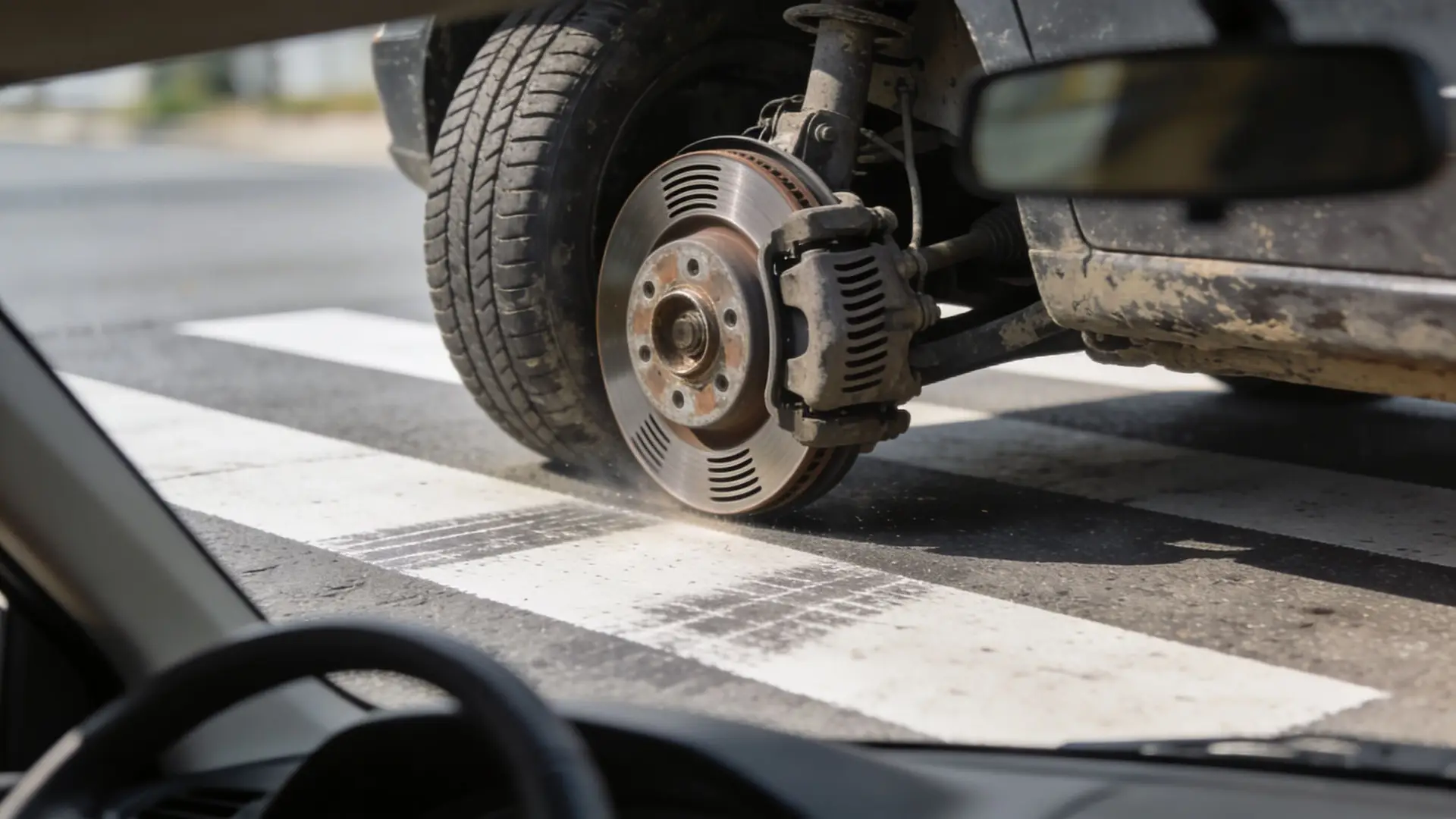
The clearest reason to take bad brake pads seriously is safety data. According to this review of brake and rotor repair citing NHTSA 2025 data, 22% of vehicle crashes where a cause could be determined involve brake system issues. The same source states that worn brake pads can increase stopping distance by 20% to 40%, and preventive maintenance can prevent an estimated 80% of brake failures.
Why extra stopping distance is such a big deal
Drivers often underestimate what “longer stopping distance” means in everyday driving. It doesn’t mean the car just feels a little less sharp. It means the car keeps moving when you expected it to be slowing harder.
That extra distance can be the difference between:
- stopping before the bumper ahead of you
- entering an intersection after the light changes
- hitting debris you could have missed with healthy brakes
- avoiding a pedestrian versus reaching the crosswalk too late
Brakes don’t need to fail completely to become dangerous. They only need to perform worse than you expect in a moment when timing matters.
The damage often spreads beyond the pads
When drivers ignore worn pads, the problem usually grows outward. Rotor surfaces can get damaged. Heat can build up. The pedal may feel less stable. Brake pull can get worse. What started as “just brake pads” can turn into a broader repair because one worn part affects the rest of the system.
Good brakes give you margin. Bad brake pads take that margin away.
A short visual explanation can help if you want to see how worn brake components affect stopping and safety:
Why waiting is risky even if the car still stops
Many drivers delay service because the car still seems drivable. That’s the trap. Brake problems usually degrade in stages, and people adapt to the change little by little.
You press harder, leave more room, and get used to the noise. Then one sudden stop asks for performance the system no longer has. That’s why brake maintenance belongs in the “safety first” category, not the “I’ll get to it next month” category.
How to Perform a Basic Brake Inspection Yourself
A simple brake check at home can tell you a lot, as long as you know its limits. You’re not trying to replace a full shop inspection. You’re trying to spot obvious warning signs and decide whether the car needs professional attention soon.
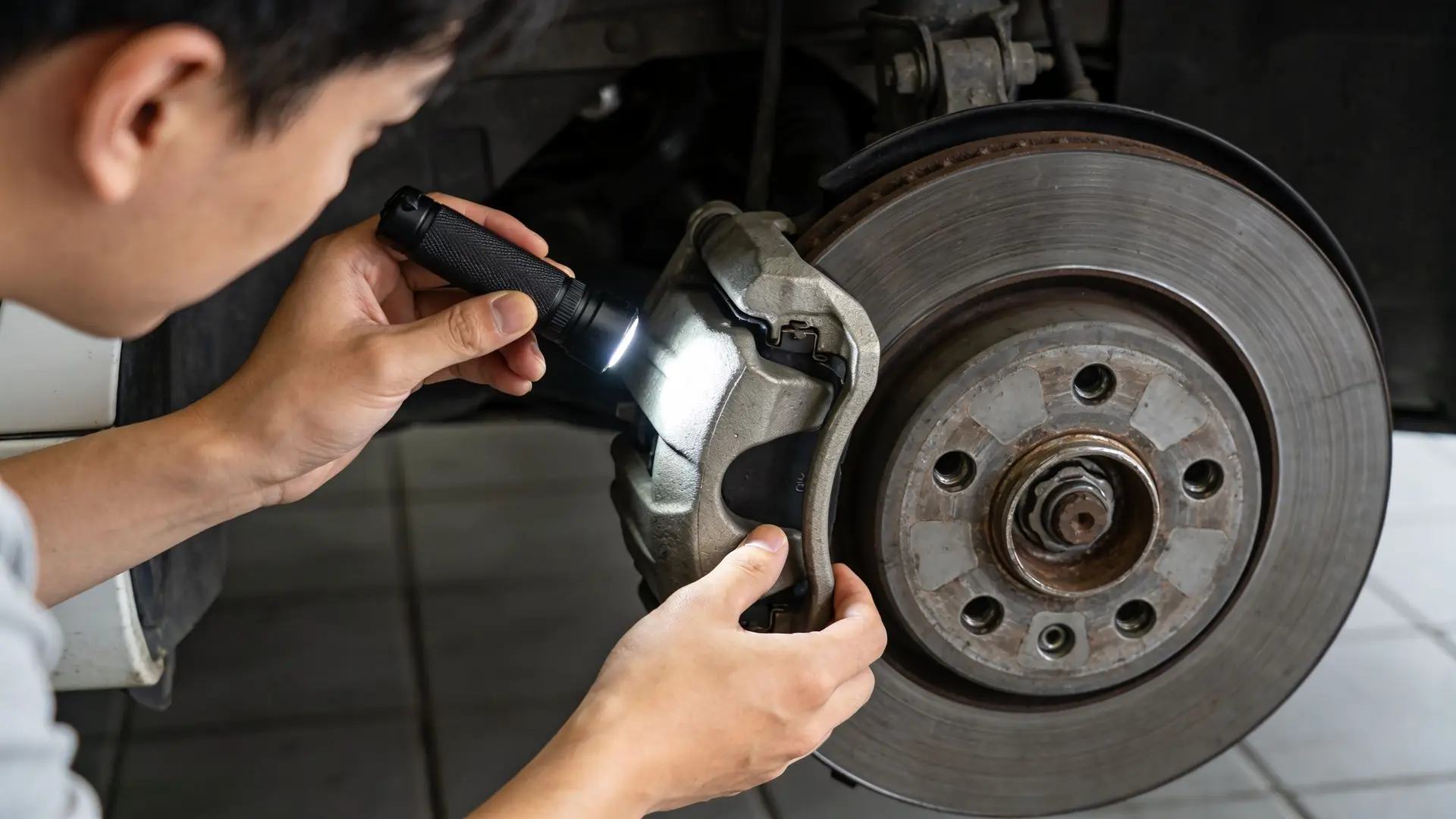
What you can safely check at home
Park on a level surface, turn the car off, and let the brakes cool before you start looking.
Use this routine:
Check the brake fluid reservoir
Look at the level and the general appearance of the fluid. You’re not diagnosing the whole hydraulic system here. You’re just looking for an obvious low level or fluid that looks questionable enough to justify a closer inspection.Look through the wheel spokes
On many vehicles, you can see the outer brake pad without removing the wheel. A flashlight helps. You’re looking for whether there is still visible friction material between the metal backing plate and the rotor.Inspect the rotor surface visually
Light marks can be normal. Deep grooves, heavy scoring, or obvious discoloration are signs that the brakes deserve professional attention.Compare side to side if you can
If one front wheel shows much more dust or a visibly different pad appearance than the other, that can hint at uneven operation.
What a visual check cannot tell you
This part is where people get misled. Looking through a wheel only gives you part of the story.
A home check usually cannot confirm:
- the condition of the inner pad
- whether a caliper is sticking
- whether a pad surface is glazed
- whether a wear pattern is getting worse over time
- whether the hardware is moving properly
Uneven wear is not always an emergency
This is one of the most misunderstood brake topics. Many drivers see an angled pad or uneven edge and assume the brakes are immediately unsafe. Sometimes that’s true. Sometimes it isn’t.
According to this discussion of angled brake pad wear on floating calipers, subtle tapered wear can be common and doesn’t always mean immediate failure if the rest of the system is healthy. What matters is whether the taper is getting worse over time.
A slight taper is often a monitoring issue. A worsening taper across two inspections points to a developing brake problem.
When to stop inspecting and schedule service
Use a basic self-check to gather clues, not to talk yourself out of service. If you hear grinding, feel pulling, notice severe thinness, or see damage you don’t understand, that’s the point to bring in a trained technician.
A professional inspection can measure pad condition accurately, compare inner and outer wear, inspect caliper movement, and tell the difference between normal variation and a pattern that predicts future trouble.
Brake Repair Options Cost Timelines and DIY vs Pro
Once you know you have bad brake pads, the next question is practical. Do you handle it yourself, or do you book a shop?
The answer depends on your tools, experience, and tolerance for risk. Brake work isn’t just about swapping parts. It’s about restoring safe, even, predictable braking.
What DIY can make sense for
DIY brake service appeals to people who already work on their own vehicles and understand the full job, not just the pad change.
A do-it-yourself approach may fit if you:
- Already have the tools needed to lift the vehicle safely and service brakes correctly
- Understand brake hardware such as slide pins, clips, torque specs, and proper lubrication points
- Know how to inspect related parts like rotors, calipers, and fluid condition while the system is apart
The benefit is control. You choose the parts, you inspect the work up close, and you avoid labor charges. The downside is simple. If you miss a sticking caliper, install parts incorrectly, or overlook rotor condition, the car may still stop poorly after the repair.
What professional service adds
A professional brake service is less about speed than about completeness. A technician can inspect the full brake assembly, measure wear, evaluate rotor condition, and check for problems that caused the pads to fail in the first place.
Here’s a side-by-side view:
| Option | Good fit for | Main trade-off |
|---|---|---|
| DIY brake repair | Experienced hands-on owners | More responsibility, no workmanship backup |
| Professional service | Most daily drivers and families | Higher upfront cost, less hands-on control |
For drivers who want a sense of what a pad replacement service involves, this overview of front brake pad replacement helps explain the normal process and what a shop should be evaluating beyond the pad itself.
Why rotors often enter the conversation
Drivers sometimes feel surprised when a brake estimate includes rotor service. The reason is that new pads need a healthy friction surface to bed in and work properly. If the rotor is badly scored, heat-damaged, or worn in a way that affects contact, installing fresh pads alone may not solve the problem.
That doesn’t mean every brake job needs the same parts. It means the pad condition and rotor condition have to be judged together.
A sensible decision rule
If you’ve done brake jobs before and understand the full inspection process, DIY may be reasonable. If you’re not fully confident, this is one repair where guessing isn’t worth it. Brakes are a safety system. Reliable stopping matters more than squeezing the last bit of savings out of the job.
One shop option in Plano is Express Lube & Car Care, which provides brake inspections, pad replacement, rotor service, and broader repair work through ASE-certified technicians. That kind of full-system approach matters when the underlying issue isn’t just “the pads are thin,” but why they wore the way they did.
Your Plano Brake Experts at Express Lube & Car Care
Brake problems rarely show up at a convenient time. They start during the school run, on the way to work, or in afternoon traffic when you need your vehicle to feel normal and dependable.
That’s why local drivers usually need two things from a shop. First, they need a clear answer about what’s happening with the brakes. Second, they need a repair process that fits real life, not a week of waiting around. Express Lube & Car Care in Plano is set up for that kind of routine need, with no-appointment service, ASE-certified technicians, and the ability to handle brake pads, rotors, calipers, and other related repairs under one roof.
For many drivers, convenience matters almost as much as the repair itself. If your car is squealing, pulling, or taking longer to stop, you don’t want a vague conversation. You want an inspection, a plain-English explanation, and the right repair based on what the brakes need.
The shop also offers straightforward savings that matter to budget-conscious families and commuters, including $20 off oil change and additional services for military, first responders, and healthcare workers, $20 off batteries with the Express Lube Signature battery service, and $25 off oil changes on Ladies Day every Wednesday. If your brake concern shows up during regular maintenance, that same visit can be a good time to ask for a closer look.
If your brakes are squealing, grinding, vibrating, pulling, or just don’t feel right, schedule a check with Express Lube & Car Care. A brake inspection can tell you whether you’re dealing with normal wear, heat damage, uneven pad wear, or a larger system problem, so you can fix it before it turns into a safety issue.