

You press the brake pedal in Plano traffic, and the car answers with a squeal, a scrape, or that ugly grinding sound that makes you turn the radio down and hope it goes away.
It usually does not.
Most drivers think the fix is simple. Put new pads on it and move on. Sometimes that works. Often, it does not, because uneven brake pad wear is usually a symptom, not the root problem. If one pad is wearing faster than the other, or one end of the pad is thinner than the other, some part of the system is no longer moving the way it should.
That matters for two reasons. First, it can cost more if you only replace the worn parts without fixing the cause. Second, your brakes are one of the few systems on the car that have to work right every single time.
That Noise Is Your Car Trying to Tell You Something
A lot of brake problems start the same way. You are slowing down for a light on Central Expressway, you hear a chirp or a metal-on-metal scrape, and you tell yourself you will get it checked next week.
Then next week becomes two weeks.
By the time many drivers come in, one brake pad is worn much more than the one next to it. The brake system did not just “wear out.” It was trying to send a message. The sound was the clue.
Why uneven wear matters
Healthy brake pads should wear in a matched, predictable way. When they do not, the car may still stop, but it often stops less smoothly. You might feel a pull, a vibration, or a brake pedal that does not feel consistent from one stop to the next.
That is why a noise complaint and a wear complaint usually belong together. The sound tells you something is rubbing, dragging, or contacting the rotor in a way it should not.
Tip: If your brakes are making noise only on one side, or only after the car has been sitting, tell your technician exactly when it happens. That pattern helps narrow down the cause.
Replacing pads alone can miss the underlying issue
If a caliper is sticking, if the rotor face is not true, or if the wheel alignment is forcing the pad to contact at an angle, fresh pads can wear unevenly all over again. That is frustrating, and it is avoidable.
If the sound has already turned into grinding, it is smart to read this guide on a car making grinding noise when braking before the damage spreads into the rotor or caliper hardware.
How Healthy Brake Pads Wear Down
Healthy brake pads wear down gradually and evenly. That even wear is your baseline. If you know what normal looks like, the odd patterns later in this guide make a lot more sense.
Every time you press the brake pedal, the pads squeeze the rotor from both sides. In a healthy system, both pads share the work, both release cleanly, and both lose friction material at a similar rate. It is a lot like a shopping cart rolling straight with both front wheels pointed the same direction. When everything tracks true, wear stays predictable.
What normal wear looks like
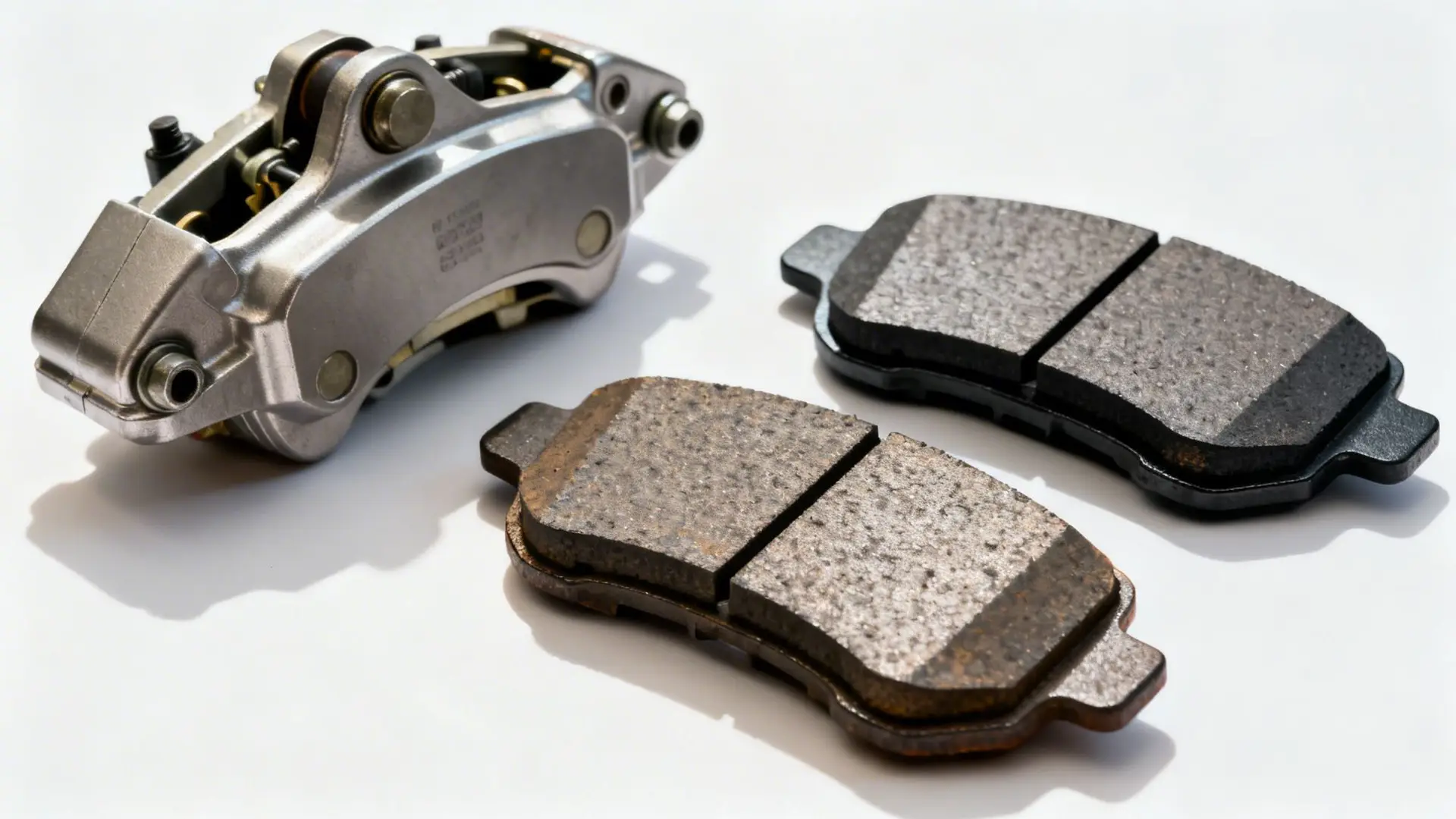
A good pad does not stay thick forever, but it should wear flat across the friction surface. On the same wheel, the inner and outer pad should also stay reasonably close in thickness.
Normal wear usually looks like this:
- Similar pad thickness on both sides of the rotor
- A flat, even contact surface
- No taper from one end of the pad to the other
- No glazing, cracking, or obvious heat marks
- Front pads wearing faster than rear pads in a typical passenger vehicle
Front brakes usually do more of the stopping, so faster front wear is not automatically a problem. The red flag is a mismatch. One pad much thinner than its partner, or one edge worn more than the other, points to a mechanical issue instead of ordinary use.
Why even contact matters
The rotor spins, and the pads have one job: press evenly, then let go. If one side presses harder, sticks longer, or meets the rotor at an angle, heat builds in the wrong place. Heat is what changes a simple pad job into a bigger repair.
That is why wear pattern matters so much. A flat, even pad usually points to a brake system that is doing its job correctly. A wedge-shaped pad, a pad worn only on the inner side, or a pad with shiny overheated spots acts like a fingerprint. It tells you where to start looking.
For a DIY check, you are mostly looking for visible differences. With the wheel off, compare the inner and outer pad thickness on the same rotor. Look at the pad face. Ask simple questions: Is it flat? Is one end thinner? Does one pad look cooked compared with the other?
A professional inspection goes further. At Express Lube Plano, that usually means checking pad movement in the bracket, slide pin travel, rotor condition, caliper release, and whether any early signs of bad brake calipers are already showing up.
Four parts have to work together for wear to stay even:
- The caliper piston applies steady pressure.
- The slide pins let the caliper center itself.
- The pads move freely in the bracket.
- The rotor gives both pads a smooth, true surface to grip.
When one of those parts stops moving the way it should, the wear pattern changes first. That pattern is the bridge between knowing something is wrong and knowing what to check next.
The Mechanical Culprits Inside Your Brake System
Uneven brake wear often starts with a simple problem. A part that should move freely is starting to bind.
Inside the brake assembly, three trouble spots show up again and again: the caliper slide pins, the caliper piston, and the brake hose. Each one affects how the pad applies pressure and how fully it releases afterward. If one part hangs up, the pad keeps rubbing the rotor like a shopping cart wheel that never quite rolls straight. It still moves, but it drags the whole time.
Seized caliper slide pins
On many vehicles, the caliper is designed to float side to side on guide pins. That sliding motion keeps the caliper centered so both pads squeeze the rotor with similar force.
When those pins rust, lose lubrication, or get trapped by torn rubber boots, the caliper stops centering itself. One pad ends up doing most of the work while the other lags behind. The wear pattern usually shows a clear inner-to-outer difference on the same wheel, and that pattern gives a technician a strong clue about where to start.
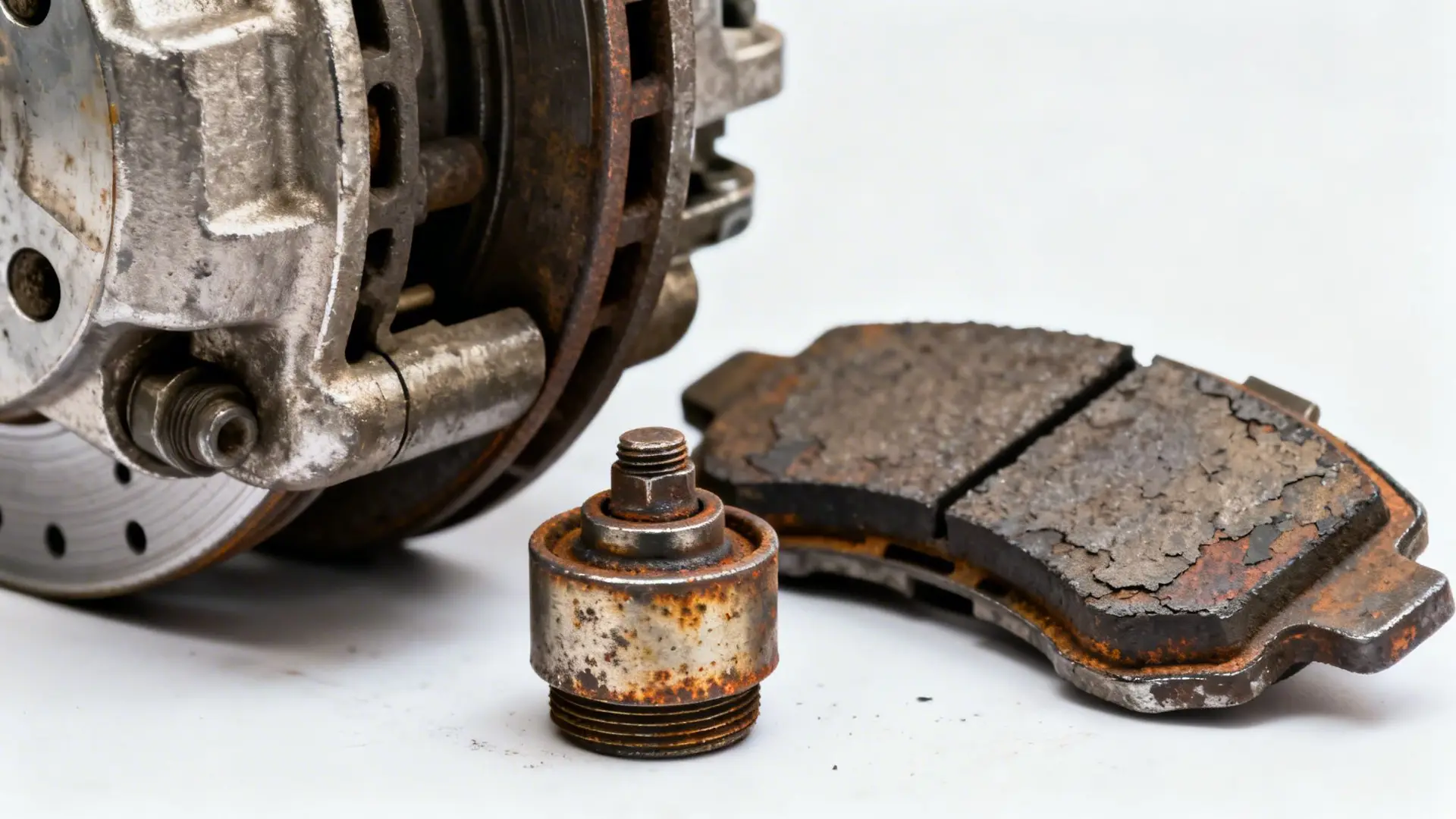
A DIY check here is limited but useful. With the caliper off, the pins should slide smoothly by hand and show clean grease, not dry rust or pitting. A professional inspection goes farther by checking bracket fit, pin condition, boot sealing, and whether the caliper can move through its full travel without sticking.
Sticking caliper pistons
The piston provides the clamping force. When you press the brake pedal, hydraulic pressure pushes that piston outward. When you release the pedal, the piston needs to back off slightly so the pad stops dragging.
If corrosion builds inside the caliper bore, or the piston seal starts failing, the piston may not retract the way it should. That leaves the pad lightly touching the rotor all the time. Even light contact creates extra heat, and heat speeds up pad wear fast.
You may notice:
- One wheel feels much hotter than the others after a short drive
- A sharp overheated brake smell
- Pulling during braking
- Heavy brake dust on one wheel
The pattern can confuse people because the problem is not always obvious from the outside. The pad may just look unusually thin on one side of the vehicle, or one wheel may burn through pads much sooner than its match on the other side. If you are seeing those symptoms, these signs of bad brake calipers can help you compare what you are noticing at home with a more complete diagnosis.
Restricted brake hoses
Brake hoses can create uneven wear without looking damaged on the outside.
The inner liner of the hose can break down and act like a check valve. Pressure goes to the caliper when you step on the pedal, but it does not release cleanly when you let off. The caliper stays partly applied, and the pad keeps scraping the rotor. From the driver’s seat, it can feel a lot like a bad caliper.
That is why a professional brake diagnosis matters. If someone replaces the pads and caliper but misses a restricted hose, the new parts can start wearing unevenly too.
What a technician checks
At Express Lube Plano, pad thickness is only the starting point. The wear pattern points us in a direction, but the repair decision comes from confirming which part is hanging up.
A proper inspection usually includes:
- Removing the caliper and checking whether the pads move freely in the bracket
- Pulling the guide pins to look for rust, dried grease, torn boots, or pitting
- Checking piston movement for smooth extension and release
- Inspecting the brake hose and hardware for swelling, drag, or contamination
- Comparing left-to-right wear so the pattern matches the suspected fault
The short version is simple. If wear is uneven inside one brake assembly, a movement problem is usually behind it. Something that should slide, retract, or release is sticking, and the pad pattern shows where to look first.
When Other Car Problems Attack Your Brakes
You can replace pads, rotors, and even a caliper, then still end up with uneven wear a few months later. That usually means the brake system is reacting to a problem next to it, under it, or behind it.
Brakes do not work in isolation. They depend on the wheel hub staying steady, the suspension holding the tire in the right position, and the rotor spinning true. If one of those support pieces is off, the pad no longer presses against the rotor in a clean, even way.
Alignment and tire angle can change brake contact
An alignment problem usually shows up in tire wear first, but it can affect braking feel and brake wear too. If a wheel points slightly the wrong direction, the tire and suspension can load that corner of the vehicle differently during a stop.
A shopping cart with one crooked wheel works here as a good comparison. It still rolls forward, but it scrubs and fights you the whole time. A misaligned front end can create that same sideways struggle at the tire, and the brake on that corner has to work through it.
The key point is cause and effect. Alignment does not usually grind one pad down by itself the way a stuck caliper can. It changes how the wheel tracks and how weight shifts during braking, which can contribute to odd wear patterns that need a closer look.
A driveway clue is a steering wheel that sits off-center or a car that pulls. A professional check confirms whether the wear pattern points to a brake fault, an alignment issue, or both.
Rotor surface problems wear the pad unevenly
Pads wear evenly only when the rotor face is smooth, flat, and consistent all the way around.
If the rotor has scoring, thickness variation, heat spots, or a rough patch from poor pad transfer, the pad gets rubbed differently with every rotation. That can leave grooves in the friction material, create patchy contact, or cause a pulse in the pedal. Many drivers call that a warped rotor, but the actual issue is often uneven rotor thickness or surface condition.
Installation can play a role here too. If rust sits between the rotor and hub, or the wheel lugs were tightened unevenly, the rotor may not run perfectly true. Then the pad keeps chasing a surface that wobbles slightly each time the wheel turns, much like a bent bicycle rim brushing the brake pad once per revolution.
Wheel bearings and suspension play can tilt the rotor
The rotor needs a stable foundation.
A worn wheel bearing, loose ball joint, weak suspension bushing, or other front-end looseness can let the hub and rotor shift under braking load. Even a small amount of movement changes the angle where the pad meets the rotor. Instead of full, square contact, one edge may touch harder than the rest.
That is one reason tapered wear can be tricky. The pad may look like a brake problem, but the root cause can live in the bearing or suspension. A DIY check might catch looseness by rocking the wheel with the car safely lifted. A shop diagnosis goes further by measuring hub movement and checking which component has the play.
Installation mistakes can start wear problems right away
Uneven wear after a recent brake job often points to setup problems.
Common examples include:
- Pads binding in the bracket because rust was left on the contact points
- Missing, bent, or reused hardware clips that let the pad sit at the wrong angle
- Incorrect pads or hardware that do not match the caliper bracket correctly
- Grease, brake fluid, or dirt on the friction surface that changes how the pad grabs the rotor
- Improper lug torque that affects how the rotor seats against the hub
This is one of those areas where the wear pattern helps narrow the next step. A DIY inspection may spot obvious contamination or missing hardware. A professional inspection adds rotor runout measurement, hub cleaning, torque verification, and side-to-side comparison so the repair matches the actual cause.
At Express Lube Plano, this matters because the fix is not always another set of pads. Sometimes the right answer is cleaning and hardware service. Sometimes it is a rotor correction, a bearing repair, or an alignment referral. In Plano, a brake hardware service or reinspection may take about an hour, while bearing, suspension, or alignment-related repairs usually take longer and cost more than a basic pad replacement.
Tip: If uneven wear shows up soon after brake service, ask what pattern was found on the old pads. The shape of that wear often tells you whether the problem came from installation, rotor runout, or a front-end issue outside the caliper.
A Visual Guide to Identifying Wear Patterns
You pull a wheel off for a brake check, and the two pads on the same caliper do not even look like they worked on the same car. One is thin, one is thick. One is worn at an angle. One looks burned. That pattern matters because brake pads wear like footprints at a scene. The shape points you toward the problem.
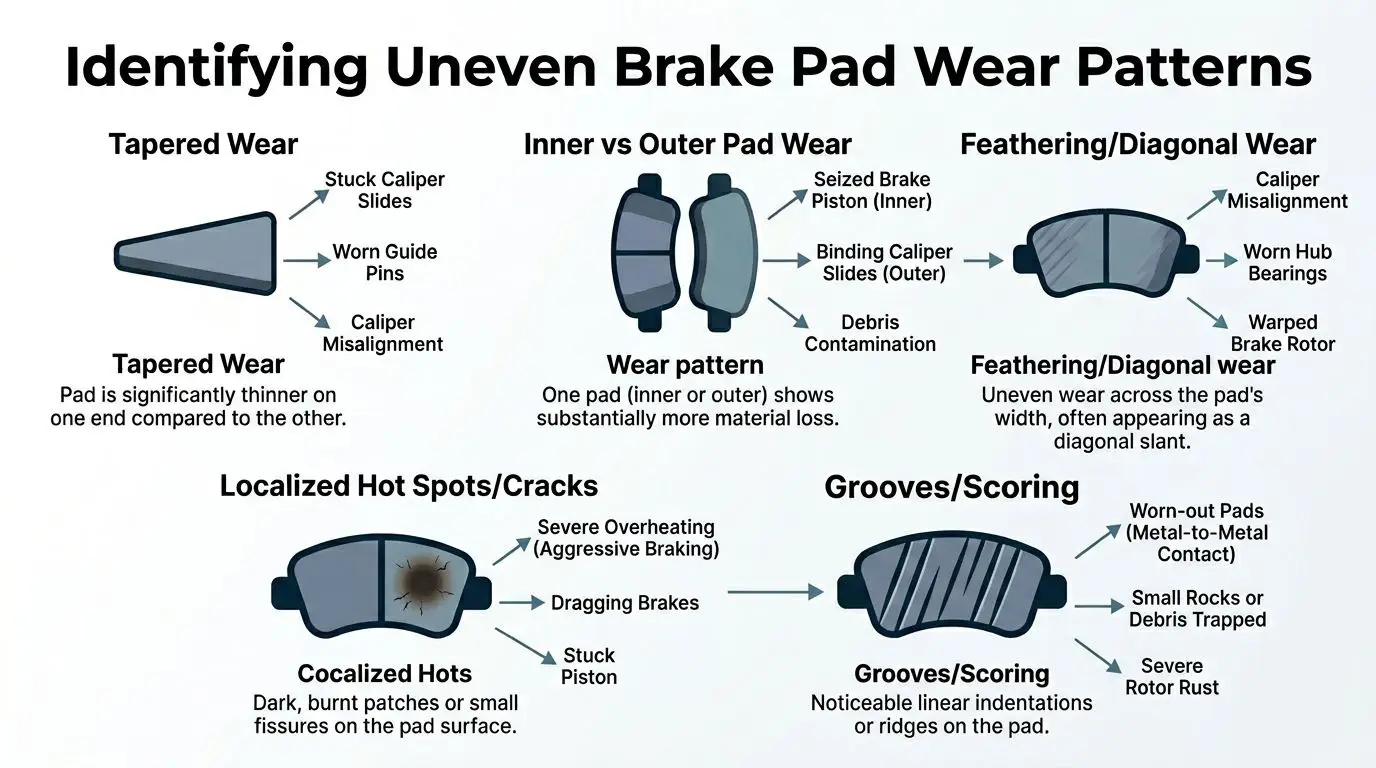
A healthy pad usually wears flat and evenly across its face. If the surface looks lopsided, grooved, or heat-spotted, the brake system is giving you a clue about what is sticking, dragging, or sitting crooked.
Inner pad much thinner than outer pad
This pattern often points to a floating caliper that is not sliding the way it should.
The caliper should move side to side on its guide pins so both pads squeeze the rotor evenly. When those pins stick, one pad can stay loaded harder than the other. It works like a shopping cart wheel that no longer swivels freely. The whole cart still moves, but it drags and pulls instead of rolling smoothly.
If the inner pad is much thinner, check caliper slide movement first. A DIY inspection may spot torn pin boots, dried grease, or obvious rust. A shop diagnosis adds hands-on slide testing, bracket inspection, and rotor condition checks to confirm whether the caliper is hanging up or if another part is causing the imbalance.
One end of the pad is thinner than the other
That pattern is called tapered wear.
The pad is contacting the rotor at an angle instead of sitting flat. That can happen if the pad binds in the bracket, the caliper does not sit square, or suspension movement changes how the rotor and pad meet under braking. You can picture it like a door that closes crooked. One corner touches first, and that corner takes the abuse.
This is one of the easiest patterns to spot with the naked eye and one of the easiest to misdiagnose without measurements. In the driveway, you can see the wedge shape. In the shop, a technician checks caliper alignment, hardware fit, rotor runout, and nearby steering or suspension looseness.
Grooves, scoring, or rough lines
Straight lines cut into the pad face usually mean something has been scraping across both the pad and rotor.
Sometimes road debris gets trapped. Sometimes the rotor surface is already damaged and keeps carving matching marks into the pad every time the wheel turns. Run a fingertip across the old friction surface only after the parts are cool and removed. If it feels like a vinyl record, the rotor often needs close inspection too.
A visual check can confirm the pattern. It cannot tell you by itself whether the fix is pads only, pads and rotors, or a correction for the reason the damage started.
Dark patches, glazing, or heat marks
A shiny pad face or scorched-looking spots usually mean too much heat built up in one area.
Brake friction material should grip the rotor with a controlled, even contact patch. When a pad drags or overheats, the surface can harden and get slick. That often leads to squeaks, chatter, or a grab-and-release feeling at the pedal. Drivers sometimes describe it as brakes that feel smooth one stop and rough the next.
Heat patterns also help answer the "what now" question. A DIY check may notice discoloration and a burnt smell near one wheel. A professional inspection looks for the cause of that heat, such as a sticking caliper, restricted hose, or pad that cannot release cleanly.
What you can check yourself
If you are doing a wheel-off inspection, compare shapes before you focus on numbers.
Look for:
- Inner versus outer pad differences on the same caliper
- Wedge-shaped wear from one end of the pad to the other
- Grooves or embedded debris on the friction surface
- Blue, black, or shiny spots that suggest overheating
- Boot or hardware damage around the caliper slides
Photos help here. Take one shot of each pad side by side. That makes it easier to compare wear and easier to show a technician what you found if you need a second opinion.
What belongs in a shop diagnosis
Pad patterns tell you where to start. They do not confirm the root cause by themselves.
A proper brake inspection connects the wear shape to the failed part. That may include checking caliper slide travel, measuring pad thickness across multiple points, inspecting rotor surface condition, and comparing side-to-side temperatures or movement. If the wear is severe, the repair may go beyond pads and include hardware, caliper service, rotor replacement, or related front brake work. If you want to see what that repair usually includes, this guide to front brake pad replacement breaks down the process.
Around Plano, a visual brake inspection may take less than an hour. If the technician needs to measure rotor runout, free up seized hardware, or trace a dragging brake, expect more time. Basic pad and hardware service usually costs less than caliper or rotor-related repairs, which is why catching the pattern early can save both money and parts.
Key takeaway: The wear pattern is the clue. The diagnosis comes from matching that clue to the part that is no longer moving, releasing, or lining up the way it should.
How to Prevent and Fix Uneven Brake Wear
The best brake repair is the one you never have to pay for because the problem got caught early.
Uneven wear usually builds slowly. A pad starts dragging a little. A rotor gets a little hotter. A guide pin gets a little stiffer. Then one day the wear has gone far enough that you hear it, feel it, and have to replace more parts than expected.
What drivers can do before damage spreads
You do not need to be a technician to reduce the chances of uneven wear.
A few habits help:
- Pay attention to early symptoms like pulling, scraping, a hot wheel smell, or new vibration during braking.
- Have brakes inspected during routine service so small movement problems get caught before metal starts contacting metal.
- Avoid waiting on noise complaints. Brake noise rarely fixes itself.
- Ask for pad measurements and wear pattern notes when your wheels are already off for service.
One practical step is to treat brake checks the same way you treat tire checks. You are looking for patterns, not waiting for failure.
What a professional repair looks like
The fix depends on the cause. Good brake work is targeted.
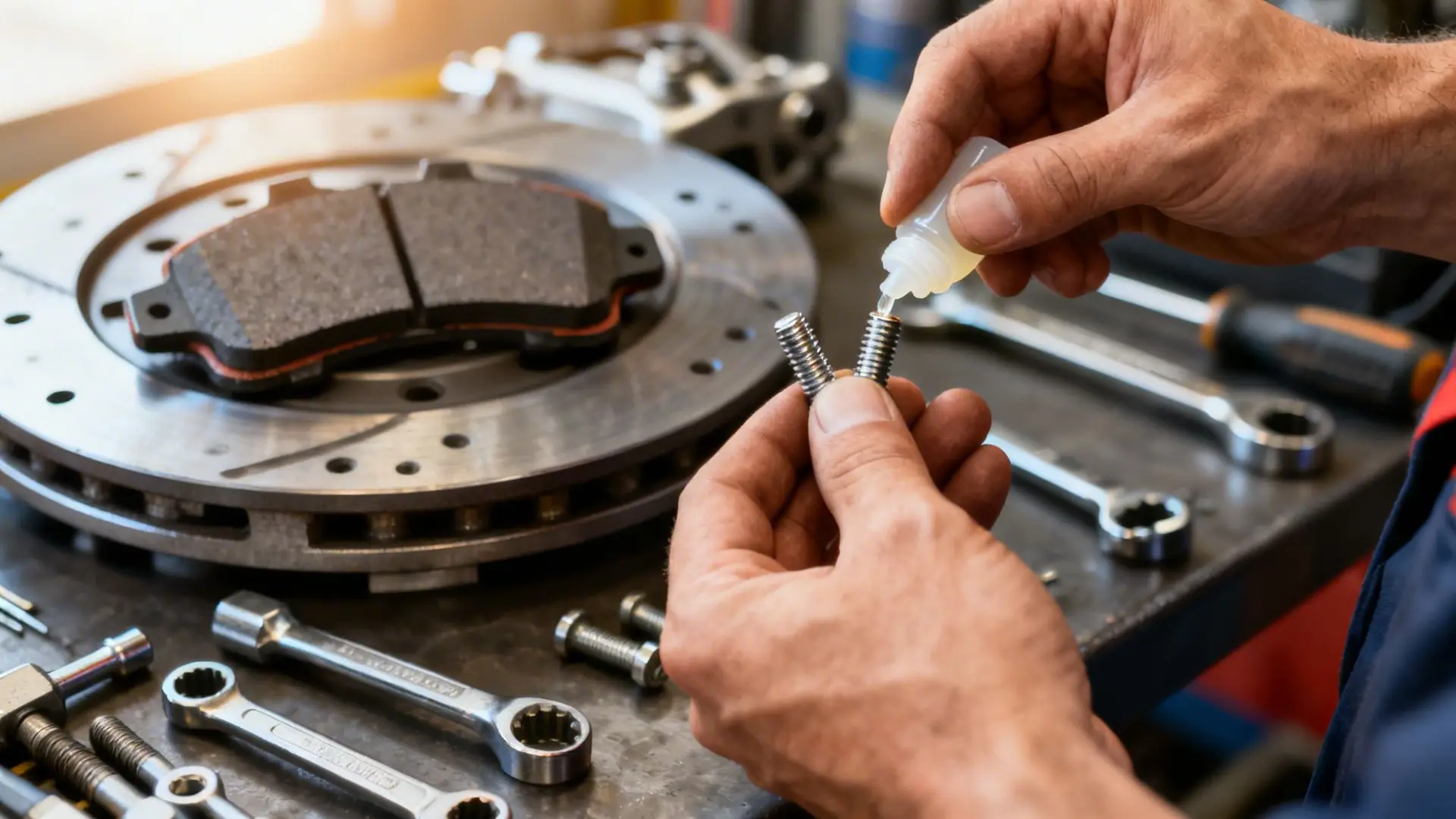
If the problem is seized guide pins, the repair may include removing the caliper, cleaning the pins and bores, checking the boots, applying the correct brake lubricant, and replacing damaged hardware. If the piston is sticking, the caliper may need service or replacement. If the wear pattern points outside the brake assembly, the repair may involve alignment work, rotor correction, or further suspension inspection.
One option for local drivers is front brake pad replacement at Express Lube Plano, where ASE-certified technicians handle brake inspection and related repairs as part of a broader maintenance service. The important part is not the brand on the building. It is that the technician diagnoses the cause before replacing parts.
Plano repair table
The exact price and time depend on vehicle type, parts quality, and what damage the uneven wear has already caused. Since no verified local cost or time figures were provided, the safest way to use this table is as a planning checklist.
| Issue | Typical Repair | Estimated Time | Estimated Cost Range |
|---|---|---|---|
| Sticking slide pins | Remove caliper, clean and lubricate pins, inspect or replace boots, reinstall pads/hardware | Varies by vehicle and condition | Varies by vehicle and parts needed |
| Sticking caliper piston | Inspect caliper operation, replace or service caliper if needed, bleed system | Varies by vehicle and condition | Varies by vehicle and parts needed |
| Damaged rotor surface | Measure rotor condition, resurface if appropriate or replace rotor, install pads | Varies by vehicle and condition | Varies by vehicle and parts needed |
| Alignment-related wear | Perform alignment inspection and correction, recheck tire and brake wear pattern | Varies by vehicle and condition | Varies by vehicle and service required |
| Binding pad hardware | Clean bracket contact points, replace clips or hardware, reinstall correctly | Varies by vehicle and condition | Varies by vehicle and parts needed |
| Restricted brake hose | Inspect hose function, replace hose, bleed brakes, verify release | Varies by vehicle and condition | Varies by vehicle and parts needed |
A useful question to ask at the counter
Instead of asking only, “How much for brake pads?” ask this:
“What caused the pads to wear unevenly, and what did you inspect to confirm it?”
That one question changes the conversation. It tells the shop you want diagnosis, not just parts.
Here is a quick look at the process and parts involved in brake service:
The goal is not just new pads
The goal is a brake system that applies evenly, releases evenly, and wears evenly.
If you fix the root cause, the next set of pads has a fair chance to live a normal life. If you skip the cause, the new pads may wear into the same bad pattern all over again.
For Plano drivers, that usually means acting early. Noise, pull, vibration, hot smells, and odd wear patterns are all worth checking before they become a larger brake job.
If your brakes are squealing, grinding, pulling, or wearing unevenly, schedule a professional inspection with Express Lube & Car Care. Their ASE-certified team can inspect the pads, calipers, rotors, and related components, explain what they find in plain language, and help you decide on the right repair before a small wear problem turns into a bigger safety issue.