

If you drive around Plano long enough, you know the feeling. Traffic slows on Preston Road, the light changes faster than you expected, and your foot goes to the brake pedal without a second thought. You trust the car to respond right now, not a second late.
That everyday moment is why brake pads and shoes matter so much. Most drivers don’t think about them until they hear a squeal, feel a shake in the pedal, or see a warning light on the dash. By then, the problem may already be affecting how safely the vehicle stops.
Plano driving is tough on brakes. Heat, stop-and-go traffic, school pickup lines, tollway exits, and short errand runs all put repeated demand on the system. Brakes are built for that job, but they still wear down with normal use.
A lot of confusion starts with the names. People hear “pads,” “shoes,” “rotors,” and “drums” and assume they all mean the same thing. They don’t. They’re related parts in the same system, but they do different jobs.
Your Guide to Safer Stops in Plano
A neighborly way to think about brakes is this. Your engine helps you go, but your brakes protect every trip. That includes the quick drive to H-E-B, the commute down the Dallas North Tollway, and the family run across town in afternoon traffic.

Why local conditions matter
Plano drivers often deal with repeated braking instead of one long highway cruise. Every stop creates friction and heat. Over time, that wears away the friction material on brake pads or brake shoes.
Texas heat adds to the workload. When outside temperatures are high and the road is hot, your brake system has less room to shed heat comfortably. That doesn’t mean your brakes will fail in summer. It means regular inspection matters more than people think.
Practical rule: If your brakes have started sounding different, feeling different, or reacting differently, treat that as a safety issue, not a minor annoyance.
What drivers usually want to know
Many readers aren’t looking for engineering theory. They want straight answers to questions like these:
- What’s the difference between pads and shoes so I know what my car has?
- What noise means trouble and what noise can wait a day or two?
- How thin is too thin before braking performance starts to suffer?
- Can I inspect anything myself without taking the whole system apart?
- Should I replace brakes at home or let a technician handle it?
Those are fair questions, especially if you’re juggling work, kids, and a car that needs to be dependable every day.
The goal is simple
You should be able to understand your brake system well enough to notice problems early and make smart decisions. You don’t need to become a master technician. You just need a clear picture of what the parts do, how they wear, and what warning signs deserve quick attention.
How Your Car's Braking System Works
You’re rolling down Preston Road on a hot Plano afternoon. Traffic bunches up near a light, you press the brake pedal, and your car slows in a smooth, controlled way. That feels simple from the driver’s seat, but several parts have to work together in the right order for that stop to happen safely.
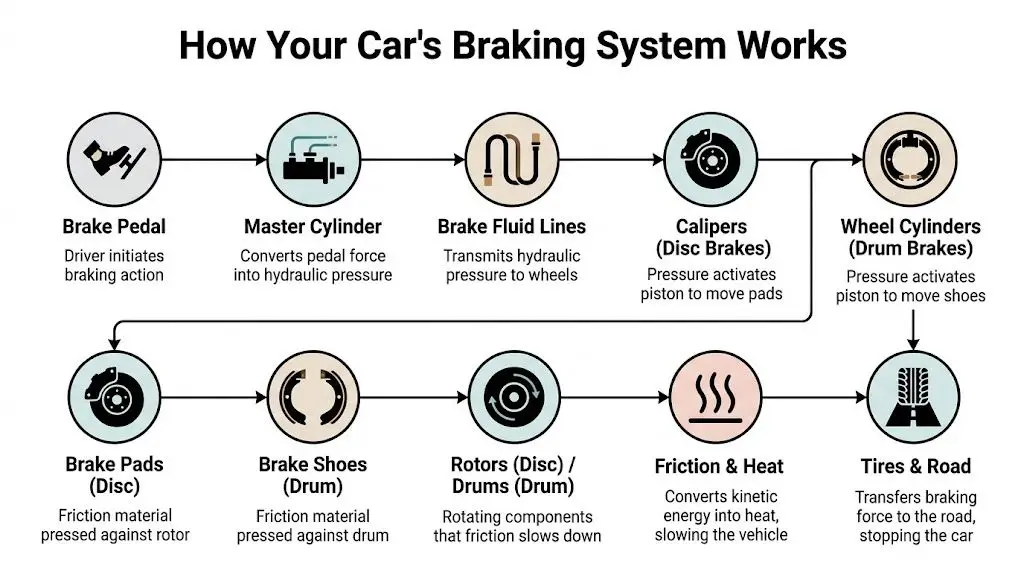
A car’s brake system works a lot like a syringe full of liquid. Press in one place, and force travels through the fluid to another place. Your foot pushes the pedal, the pedal operates the master cylinder, and brake fluid carries that pressure out through the brake lines to each wheel.
From pedal to hydraulic pressure
The master cylinder is the pressure maker. Once it pressurizes the brake fluid, that pressure reaches the wheel-end parts that do the actual clamping or spreading.
At each wheel, the pressure moves one of two components:
- A caliper on a disc brake system
- A wheel cylinder on a drum brake system
That distinction matters in Plano because stop-and-go traffic and summer heat put repeated stress on these parts. The system has to create force, manage heat, and do it over and over without a soft pedal or uneven braking.
Where the car actually slows down
The pedal starts the process. Friction does the stopping.
In a disc brake setup, the caliper squeezes brake pads against a spinning rotor. The rotor is bolted to the wheel, so when the pads grab the rotor, they slow the wheel.
In a drum brake setup, the wheel cylinder pushes brake shoes outward against the inside of a spinning drum. Same goal, different layout. Instead of squeezing a disc from both sides, the system presses outward inside a metal drum.
That rubbing force turns motion into heat. Then the tire’s grip on the road finishes the job and brings the vehicle down to speed.
One simple way to remember it is this: your foot creates pressure, the hydraulic system delivers it, and the pads or shoes turn it into stopping power.
Why heat matters in Plano
Every brake stop creates heat, but local driving changes how much heat builds up and how fast it can leave. Short trips around town, crowded intersections, school pickup lines, and long waits at lights all mean more frequent braking than a steady highway cruise.
Disc brakes usually release heat faster because the rotor is exposed to open air. Drum brakes hold more of their parts inside an enclosed housing, so inspections become more important, especially on rear brakes that many drivers rarely see. At Express Lube & Car Care in Plano, that is one reason brake checks include more than a quick glance through the wheel.
Modern friction materials matter here too. Many vehicles now use ceramic or low-dust formulas that balance quiet operation, wear, and daily driving comfort. If you want a plain-English explanation of how those materials differ, our guide to ceramic brake pad options and everyday driving tradeoffs is a helpful next read.
Key parts in plain English
Here’s the version most drivers can keep in their head:
- Brake pedal: The part you press
- Master cylinder: Builds hydraulic pressure
- Brake fluid: Carries pressure through the lines
- Caliper: Squeezes pads in a disc brake system
- Rotor: The spinning metal disc the pads clamp onto
- Wheel cylinder: Pushes shoes outward in a drum brake system
- Drum: The round inner surface the shoes press against
- Pads and shoes: The friction material that wears down with use
If you drive for work, manage a fleet, or just want a clearer sense of how brake safety is viewed outside the repair shop, DOT brake regulations give useful background on why brake condition gets serious attention.
Brake Pads and Brake Shoes A Direct Comparison
The short answer is simple. Brake pads belong to disc brakes. Brake shoes belong to drum brakes.
A lot of modern vehicles use disc brakes up front and may use either discs or drums in the rear. That’s why two drivers can both say “I need brake work” while their cars need different parts and different labor.
How they work differently
Brake pads are flat and compact. A caliper squeezes them from both sides of a rotor. Because the rotor is exposed to open air, disc brakes usually shed heat more easily and are easier to inspect visually.
Brake shoes are curved. They sit inside a drum and press outward against the drum’s inner surface. Since the whole setup is enclosed, it’s less obvious what condition the shoes are in until someone removes the drum.
That enclosure is where many drivers get tripped up. They assume no noise means no problem. With drum brakes, wear can stay hidden longer.
Brake Pads vs. Brake Shoes At a Glance
| Feature | Brake Pads (Disc Brakes) | Brake Shoes (Drum Brakes) |
|---|---|---|
| Where used | In disc brake systems | In drum brake systems |
| How they stop the car | Caliper squeezes pads against a rotor | Wheel cylinder pushes shoes against the inside of a drum |
| Ease of inspection | Usually easier to see and measure | Harder to inspect because they’re enclosed |
| Heat handling | Better airflow helps release heat | Enclosed design holds components inside the drum |
| Wet-condition behavior | Open design helps water clear more quickly | Enclosed design protects parts from outside elements |
| Maintenance access | Typically simpler to access | More time-consuming to access and inspect |
| Adjustment needs | Disc systems don’t use shoe-style manual adjustment | Shoes may require manual adjustment as they wear |
| Typical owner confusion | Drivers often notice wear sooner | Drivers may not realize there’s wear until service is overdue |
What makes drum shoes harder to live with
Drum brake shoes are harder to inspect because they are enclosed. A key DIY check is making sure the lining thickness is at least 1/16 inch, and as the shoes wear, they may need manual adjustment to maintain proper contact with the drum, according to Firestone’s explanation of brake shoes vs. brake pads.
That’s one reason rear drum service can surprise people. The parts are less visible, and there are more small pieces involved. Springs, adjusters, and contact points all need to move correctly.
If you’re comparing friction materials for a disc setup, this guide to ceramic brake pad options is useful background because material choice affects noise, dust, and daily driving feel.
A practical inspection mindset
If your vehicle has rear drums, these are the most helpful owner-level checks:
- Listen for changes: Scraping, rubbing, or a new rough sound from the rear can mean the shoes or hardware need attention.
- Watch parking brake feel: A parking brake that feels different can point to wear or adjustment issues in a drum setup.
- Look for delayed response: If the rear brakes seem slow to engage, the shoe-to-drum clearance may be off.
- Don’t guess from the outside: Because the shoes are hidden, a wheel-off glance usually isn’t enough.
Brake shoes can last a long time, but they’re less forgiving when people skip inspections because nothing is visible from the outside.
Warning Signs Your Brakes Need Service
Most brake problems announce themselves before total failure. The trick is knowing which signals matter and why. I tell drivers to pay attention in three ways: what you hear, what you feel, and what you see.
What you hear
A high-pitched squeal often means the friction material is getting low or the pad surface is glazed. That sound is your early warning.
Grinding is more serious. It can mean the friction material is worn away and metal parts are contacting the rotor or drum surface. That can damage expensive hardware fast.
A clunk or shifting noise can point to loose hardware, worn mounting parts, or movement that shouldn’t be happening when the brake applies.
What you feel
A soft or spongy pedal usually means something in the hydraulic side needs attention. Air in the system, fluid issues, or a leak can all change pedal feel.
Vibration or pulsation during braking often points to uneven contact somewhere in the system. If you want a deeper look at why that happens, this article on uneven brake pad wear causes helps connect the symptom to the wear pattern.
If the car pulls to one side while braking, one side may not be applying force evenly. That can come from sticking hardware, contamination, or mismatched wear.
If the vehicle changes direction when you brake, don’t wait for your next oil change. Have the brake system checked soon.
The thickness numbers that matter
There’s one set of numbers every driver should know. Safety standards set minimum friction material thickness at 3.0 mm for disc brake pads and 2.0 mm for drum brake shoes, according to NZTA brake inspection specifications.
Once material wears below those limits, stopping distance can increase sharply and the risk of brake failure goes up. That’s why “I still have some pad left” isn’t the same as “my brakes are safe.”
A short visual explanation can help if you want to see common symptoms in action:
What you see
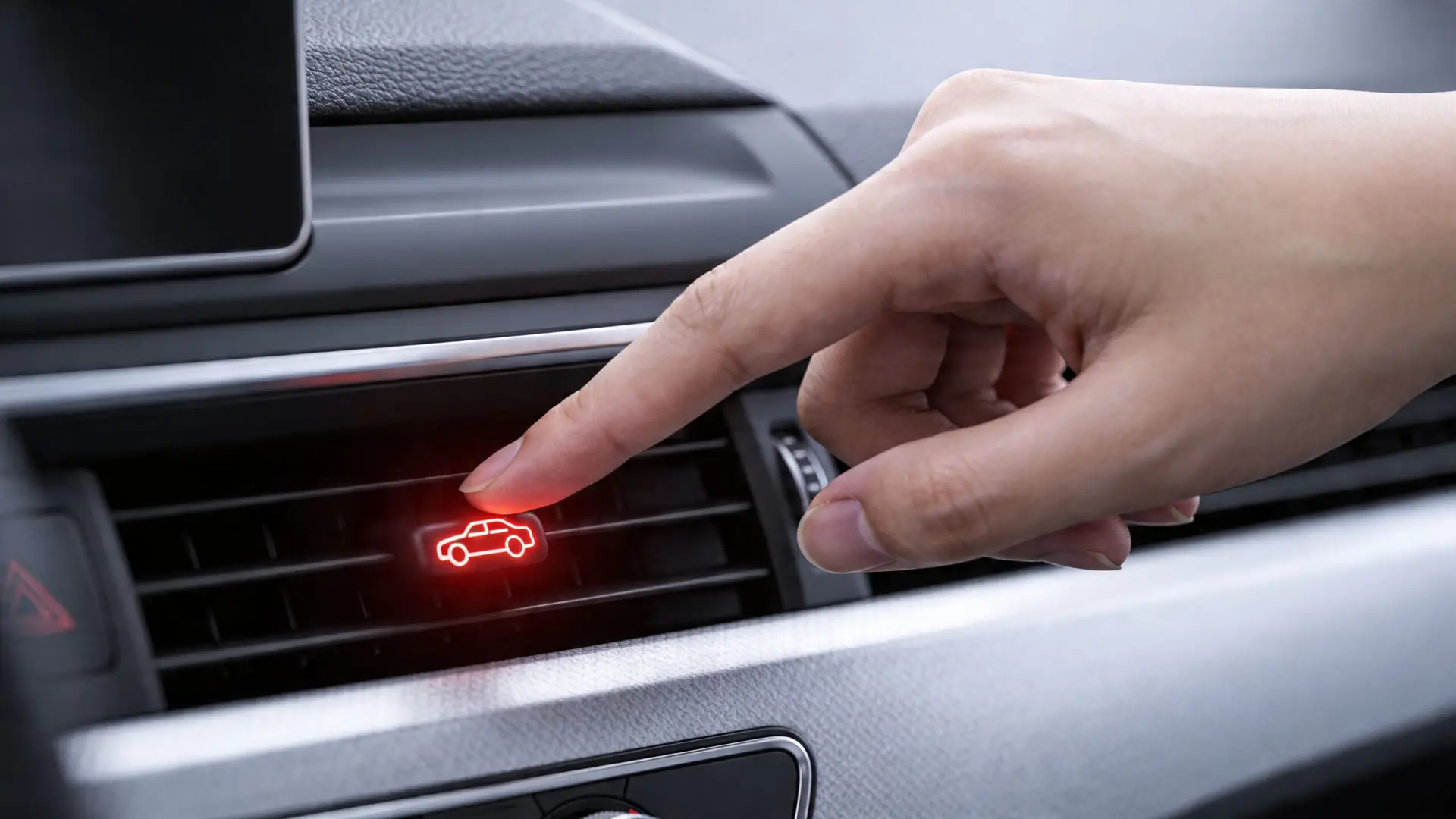
The easiest visible warning is the brake warning light on the dashboard. Never ignore it just because the car still stops.
You might also notice dark brake dust, a visibly thin outer pad on some wheels, or fluid near a wheel area. Those clues don’t confirm the exact problem by themselves, but they tell you the system deserves a closer look.
DIY vs Professional Brake Replacement
You pull into your driveway after crawling through Plano traffic on a hot afternoon, and now the brakes sound rough. At that moment, a brake job can look like a Saturday project. Once the wheels come off, though, brake work becomes a safety repair, not just a parts swap.
Where DIY goes wrong
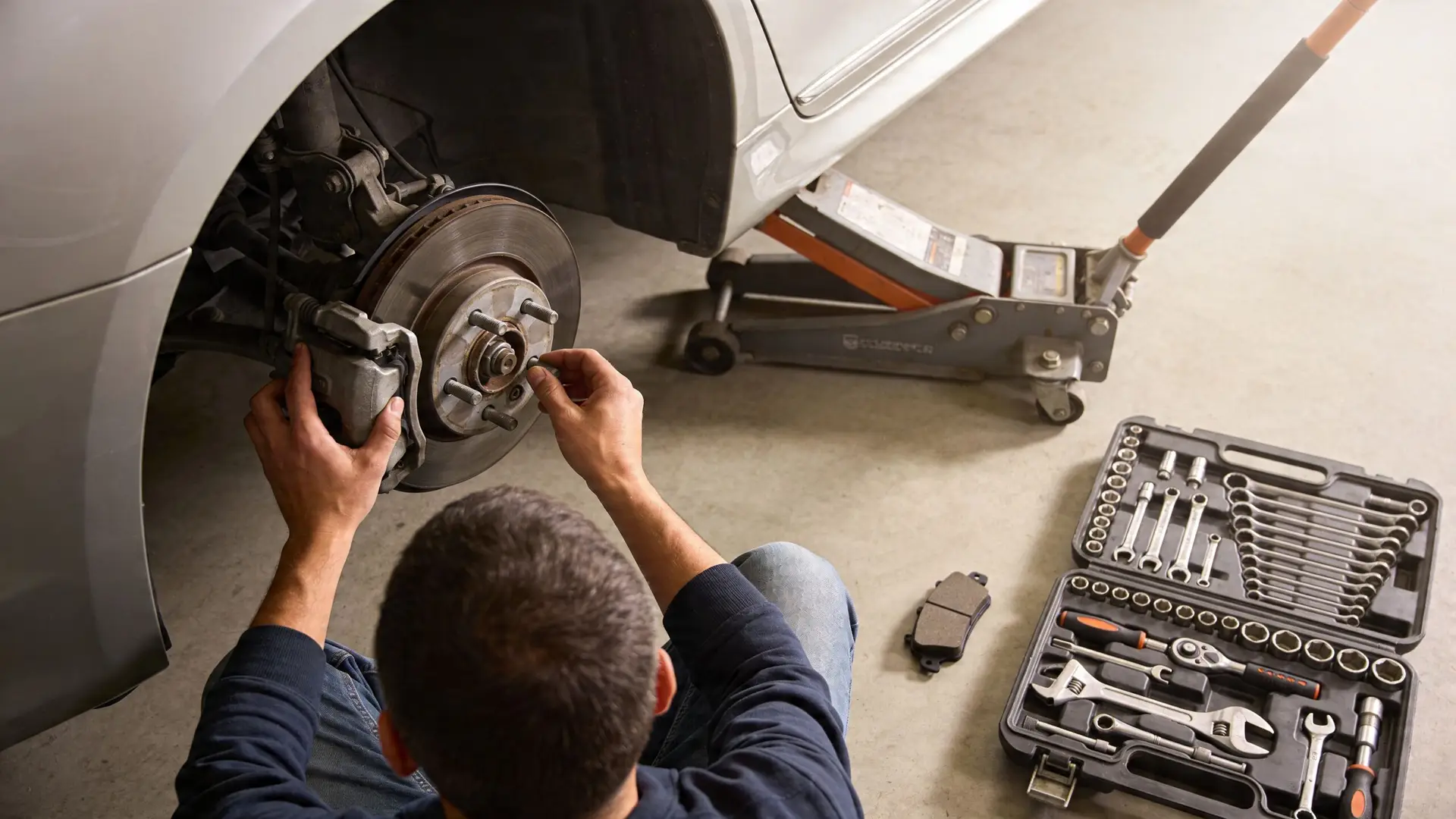
Front disc pads are the part many drivers feel comfortable tackling first. The basic idea is straightforward. Remove the old pads, compress the caliper, install the new set, and reassemble everything correctly.
The trouble is all the details around those steps.
A real brake repair can include frozen slide pins, rusty brackets, caliper pistons that do not retract smoothly, damaged bleeder screws, and rotors that are too worn, too heat-checked, or too uneven to keep using. In North Texas, heat and stop-and-go driving can speed up wear and cook brake grease, which is one reason a job that looked simple online can turn complicated in the garage.
Drum brakes raise the difficulty another level. They work like a spring-loaded mechanical watch inside a metal drum. Small parts have to sit in the right place, move freely, and stay adjusted correctly. If one spring, adjuster, or parking brake link goes back wrong, the brakes may drag, grab, or wear unevenly.
Common DIY mistakes include:
- Reusing tired hardware: Weak clips and springs can let parts rattle or bind.
- Mixing up left and right parts: Some pads and shoes are shaped for a specific side or position.
- Guessing on torque: Wheel, caliper, and bracket fasteners need the correct tightening force.
- Skipping the break-in procedure: New friction material needs proper bedding to mate to the rotor or drum surface.
- Missing the root problem: A sticking caliper, leaking wheel cylinder, collapsed hose, or worn drum hardware can quickly ruin new parts.
What a professional brake service includes
Good brake service means checking the whole system, the same way a doctor checks more than one symptom. The pads or shoes may be worn, but the cause could be uneven slide movement, a hydraulic issue, overheated rotors, contaminated friction material, or neglected drum hardware in the rear.
That is where experience helps. An ASE-certified technician can measure wear, inspect rotors and drums, check hoses and wheel cylinders, clean and lubricate the correct contact points, replace hardware where needed, and verify that the brake pedal, parking brake, and stopping feel are all correct before the car goes back on the road. At Express Lube & Car Care, that kind of brake inspection is part of helping Plano drivers deal with real-world conditions like heavy traffic, heat, and frequent short-trip braking.
Modern parts choice matters too. Many vehicles now use low-copper or ceramic-style pad materials that can reduce dust and noise compared with older formulas, but they still need the right matching hardware and installation process to work as intended.
A safe brake job leaves you with straight stops, even wear, normal pedal feel, and no surprises in traffic.
When to leave brake work to a shop
DIY brake work makes sense for some drivers with the right tools, service information, and enough experience to spot a problem before it turns unsafe.
Professional service is the better call when:
- You hear grinding or metal-on-metal noise
- The brake pedal feels soft, low, or inconsistent
- The vehicle pulls or shakes during braking
- The rear brakes use drums
- You see leaks, damaged hardware, or uneven wear
- You need the car back quickly and done correctly
Brakes are one system where trial and error can cost more than labor. A missed problem can damage new parts, lengthen stopping distance, or leave the car unsafe in Plano traffic.
Extending the Life of Your Brakes
Most drivers can make their brakes last longer without changing routes or driving like a hypermiler. Small habits matter more than people realize, especially in Plano traffic where one short trip can include a dozen stops.
Drive in a way that helps the brakes
Leave more following distance. That gives you room to brake gradually instead of making repeated hard stops.
Try to coast a little before braking when traffic is bunching up ahead. Every smooth slowdown reduces heat load on the pads, shoes, rotors, and drums.
Don’t ride the brakes downhill or in creeping traffic if you can avoid it. Light constant pressure can keep heat in the system longer than a clean, deliberate application.
Keep up with inspections
Brake wear isn’t always even. One side can wear faster because of sticking hardware or contamination, and rear drum shoes can hide wear until the system is opened up.
That’s why routine inspections matter. A technician can measure friction material, check for leaks, and catch hardware problems before they turn into rotor or drum damage.
Choose the right friction material
Not all replacement parts behave the same in daily driving. Material choice affects noise, dust, and how the vehicle feels in city traffic.
Recent brake material updates include low-copper ceramic pads that are quieter and can produce up to 70% less brake dust than traditional semi-metallic pads, according to Burt Brothers’ discussion of brake pad and shoe differences. That same source notes these eco-friendly options comply with 2025 EPA regulations and can also help extend rotor life, which makes them a practical fit for stop-and-go driving.
What works well for Plano commuters
For many daily drivers, this combination makes sense:
- Quality friction material: Especially if low noise and low dust matter to you
- Timely inspections: Before a squeal turns into grinding
- Gentler braking habits: More space, fewer panic stops
- Attention to changes: New sounds and pedal feel shifts are early warnings
Cleaner, quieter brake materials can be a nice upgrade for commuters, but they still need proper installation and periodic inspection.
Your Trusted Brake Service Center in Plano
A lot of Plano drivers first notice a brake problem in everyday traffic. You ease off Highway 75, tap the pedal at a crowded light, and the car feels a little different than it did last week. Maybe the pedal seems softer. Maybe there is a squeak that shows up in the afternoon heat. Those small changes are your cue to get the system checked before a simple fix turns into worn rotors, damaged drums, or longer stopping distances.
Knowing the difference between brake pads and brake shoes helps, but a hands-on inspection gives you the full picture. A technician can look for uneven pad wear, heat-related glazing, sticking calipers, worn drum hardware, and brake fluid leaks that are easy to miss from the driveway. If you want a clearer picture of the inspection itself, this guide explains what brake service includes.
At Express Lube & Car Care in Plano, drivers can stop in without an appointment for brake inspections, maintenance, and repair. The shop’s ASE-certified technicians check the parts you can see and the parts many drivers forget about, especially rear drum brake components that often stay hidden until a problem gets worse. That matters in North Texas, where heat and stop-and-go traffic can wear friction material faster and put extra strain on the whole system.
Practical service matters too.
Express Lube & Car Care also offers savings that can help families stay on top of routine maintenance, including oil change specials, battery discounts, military and first responder savings, healthcare worker discounts, and Ladies Day savings on Wednesdays. If your vehicle is squealing, grinding, pulling, or taking longer to stop, stop by for a brake check and get straightforward recommendations based on what your car needs.