

Most drivers pay between $60 and $180 for a standard check engine diagnostic, with independent shops running cheaper than dealerships and complex cases pushing past $200. A free parts-store scan only pulls a code. It doesn’t tell you why that code triggered. Before authorizing any work, get a written estimate that spells out exactly what the diagnostic covers and whether that fee applies toward the repair.
TL;DR:
- Most standard diagnostics cost between $60 and $180, with independent shops offering cheaper rates than dealerships for similar services.
- Professional diagnostics include live data monitoring, component testing, and visual inspection, unlike free store scans that only retrieve trouble codes.
- Costs increase with vehicle complexity, multiple codes, or difficult access to sensors, and can take from 30 minutes to several hours depending on fault severity.
- Dealerships typically charge more due to proprietary software required for European and luxury vehicles, but a systematic diagnostic approach reduces unnecessary part replacements.
- Trustworthy shops clarify upfront what the diagnostic covers, credit fees toward repairs, and avoid extra charges for specialized tests or disassembly without prior notice.
Table of Contents
- How Much Does a Check Engine Diagnosis Cost?
- What’s Included in a Professional Diagnostic vs a Free Scan?
- What Makes a Check Engine Diagnosis Cost More or Less?
- How Long Does a Check Engine Diagnosis Take?
- How Do You Choose a Shop for Engine Diagnostics?
- Are There Hidden Fees Beyond the Initial Diagnosis?
- Do Diagnostic Tools and Technology Affect the Price?
- How Express Lube & Car Care Approaches Engine Diagnostics
- Get Your Check Engine Light Diagnosed Today
- Sources
- FAQ
How Much Does a Check Engine Diagnosis Cost?
Where you take your car changes the bill more than almost anything else. Independent shops typically charge $50 to $150 for a diagnostic test, while dealerships often run $100 to $400 or more for the same basic service. Aggregated pricing for many U.S. drivers lands in the $60 to $180 range for standard passenger vehicles, with higher costs when the diagnostic requires specialized testing.
Here’s how the main options break down:
- Independent shops: $50 to $150, generally covering a full scan, live-data review, and technician analysis.
- Dealerships: $100 to $400+, reflecting brand-specific software, factory tools, and warranty-related diagnostic requirements.
- Mobile mechanics: Often priced similarly to independent shops but with an added convenience or house-call fee for coming to your driveway.
- DIY OBD-II scanners: $20 to $150 to buy outright, but they only retrieve codes. They can’t run live sensor data, freeze-frame analysis, or component testing.
RepairPal’s cost estimator puts a typical mid-range diagnostic fee in the low hundreds, noting that estimates shift based on location and vehicle. That mid-range number is a reasonable starting expectation for a standard sedan or crossover with a single, repeatable code. A European import with multiple stored codes and a check engine light diagnosis price on the higher end of that band shouldn’t surprise you.
What’s Included in a Professional Diagnostic vs a Free Scan?
A free scan at a parts store retrieves stored diagnostic trouble codes and hands you a generic code definition. That’s it. It doesn’t tell you why an oxygen sensor code appeared or whether a $30 part or a $1,500 catalytic converter is the actual fix.
A paid diagnostic goes several steps further:
- Full OBD-II code retrieval, including pending and freeze-frame data captured at the moment the fault occurred.
- Live data monitoring, watching sensor readings in real time while the engine runs under different conditions.
- Component testing, using multimeters, scan tool actuation, or pressure testing to confirm which part actually failed.
- Visual and wiring inspection, since a corroded connector or damaged harness can trigger the same code as a failed sensor.
- Road testing, needed when a fault only shows up under load or at highway speed.
A classic example: a P0420 code usually points to catalytic converter efficiency, but it’s frequently caused by a failing oxygen sensor upstream. Professional diagnostic equipment that shows live sensor data can catch that distinction before anyone replaces an expensive converter unnecessarily. Codes describe symptoms, not root causes.
Pro Tip: If a shop quotes a repair based on a code alone, without live-data testing or a wiring check, ask what confirmed the diagnosis. A code by itself is a starting point, not a verdict.
What Makes a Check Engine Diagnosis Cost More or Less?
Several variables swing your engine error diagnosis fee up or down, and most of them are visible before you ever hand over the keys.
- Shop labor rate. Diagnostic time gets billed like any other labor, so a shop’s hourly rate directly sets your floor cost.
- Vehicle complexity. European and luxury vehicles often require manufacturer-specific scan tools and proprietary software, which is part of why dealership diagnostic test pricing runs higher than independent shops.
- Multiple or intermittent codes. A single stored code is quick to isolate. Three or four codes, especially ones that come and go, mean more testing time and a higher bill.
- Access and disassembly. Some sensors sit buried behind intake components or under the dashboard, adding labor before testing even starts.
- Specialized tests. Smoke tests for evaporative emissions leaks or fuel pressure tests add time and often a separate line item beyond the base diagnostic scan cost.
- Region and shop specialization. Vehicle diagnostic service rates vary by local market and by whether a shop specializes in your make.
Ask upfront which of these apply to your situation. A shop that explains its reasoning before charging for extra diagnostic time is worth trusting more than one that just hands you a bigger number.
How Long Does a Check Engine Diagnosis Take?
A standard diagnostic generally takes 30 to 60 minutes for a single, repeatable fault. That baseline covers a full code scan, a quick live-data check, and a technician’s initial assessment.
Some cases take considerably longer:
- 1 to 3+ hours when the technician needs to log data over an extended test drive or reproduce a fault under specific conditions.
- Overnight or multi-visit diagnostics for intermittent faults that don’t show up on demand, since the technician may need to schedule a follow-up rather than guess at a cause.
- Faster turnaround when you arrive with clear notes: when the light came on, any recent repairs, and whether the light is steady or flashing.
Details speed up the process every time. A five-minute conversation about symptoms can save a technician an hour of guesswork.
How Do You Choose a Shop for Engine Diagnostics?
Before authorizing any diagnostic work, ask a few direct questions and watch how the shop answers them.
- What does the diagnostic fee cover? Get specifics: code scan only, or live data and component testing too.
- Will the fee be credited toward the repair? Many shops credit the diagnostic charge if you move forward with the recommended work, but policies differ, so confirm it before you agree to anything.
- How long will the diagnosis take, and are there extra fees for teardown or specialized testing?
Red flags are just as telling as good answers. Be cautious of any shop that recommends replacing a part immediately without running tests, gives a vague scope of work, or won’t put an estimate in writing.
Trust signals go the other direction: ASE-certified technicians, photo or video documentation of what they found, and a clear retest policy after the repair.
Pro Tip: Ask specifically whether the shop tests before it replaces. A shop that swaps a sensor “just to see” is billing you to guess.
Are There Hidden Fees Beyond the Initial Diagnosis?
The quoted diagnostic fee doesn’t always cover everything a complex problem requires, and understanding where extra charges show up keeps you from being surprised at pickup.
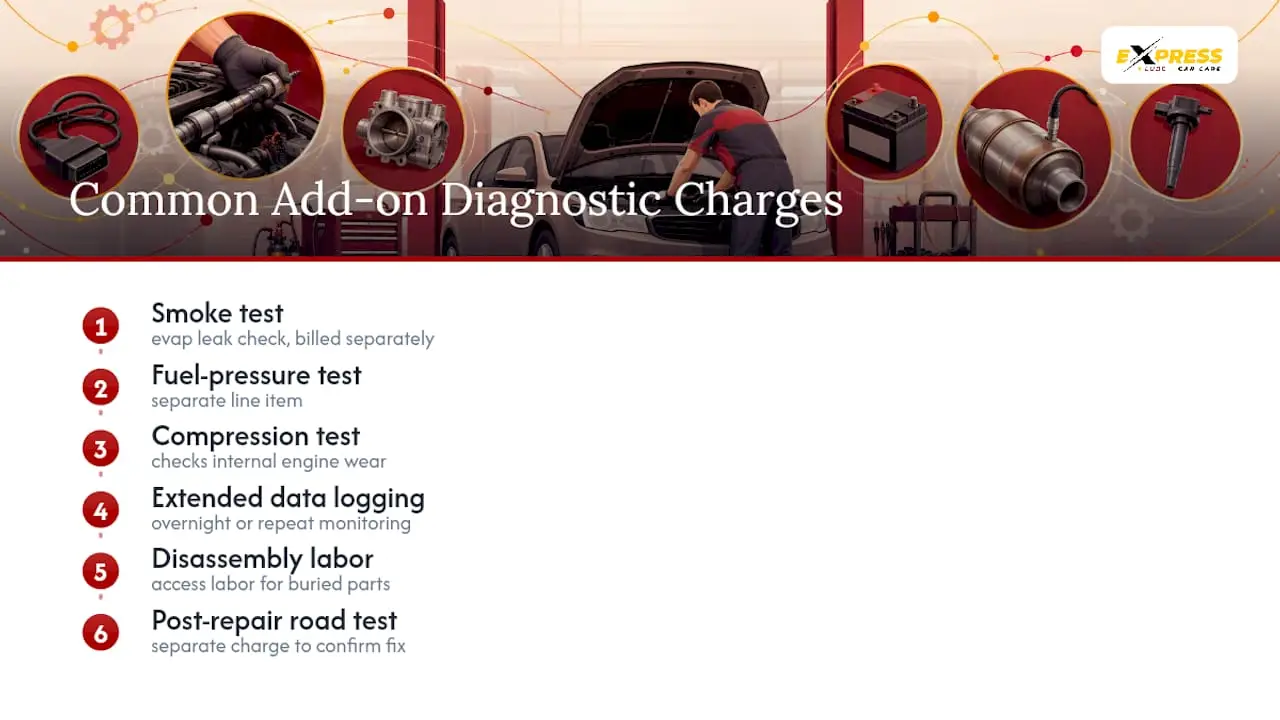
Specialized tests are the most common add-on. A smoke test for an evaporative emissions leak, a fuel pressure test, or a compression test to rule out internal engine wear typically carries its own line item separate from the base diagnostic. Extended data logging for an intermittent fault, especially one requiring overnight monitoring or a second visit, can also add to the bill if the first hour of testing doesn’t reproduce the problem.
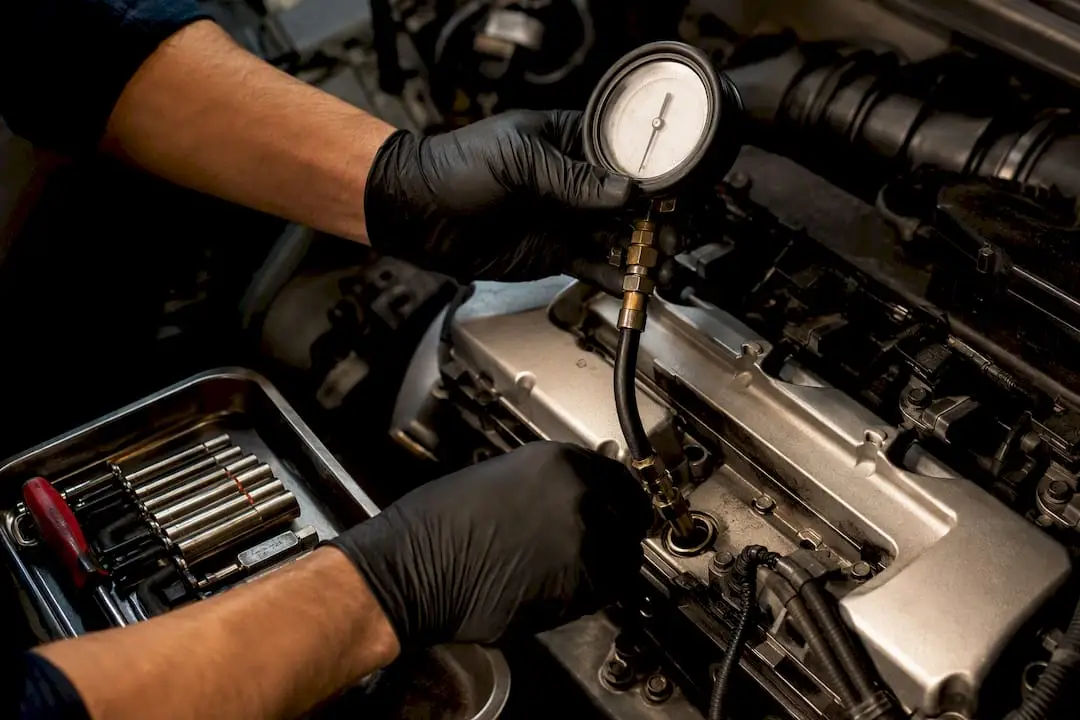
Disassembly is another quiet cost driver. If a sensor or component sits behind other parts, the labor to access it gets billed on top of the diagnostic itself, even before any repair begins. Some shops also charge separately for a post-repair road test to confirm the fix resolved the fault, particularly on speed-related or load-related issues.
None of these are unreasonable charges. They’re legitimate parts of thorough diagnostic work. The problem arises when a shop doesn’t mention them until the invoice. Ask directly whether smoke tests, pressure tests, or extended logging might apply to your symptoms before work starts, and get any potential extra fees written into your estimate. A shop willing to walk through that list with you before touching your car is one worth returning to.
Do Diagnostic Tools and Technology Affect the Price?
The equipment a shop uses shapes both the accuracy of your diagnosis and what you pay for it. A basic OBD-II code reader, the kind sold for personal use, only retrieves stored trouble codes and generic definitions. It can’t monitor live sensor data or run manufacturer-specific tests, which is exactly why free scans at parts stores come with real limitations.
Professional-grade scan tools change the equation. They pull live data streams from multiple modules at once, run bidirectional tests that actuate components on command, and access manufacturer-specific diagnostic routines that generic tools can’t touch. That capability costs shops money in equipment and training, and it shows up in the diagnostic scan cost you pay. It’s also why professional diagnostic equipment tends to prevent unnecessary part replacements. It confirms a failure instead of guessing from a code alone.
Dealership-level diagnostics often require proprietary software licensed directly from the manufacturer, particularly for European vehicles with complex electronic architecture. That’s a major reason dealership pricing runs higher than independent shops for the same basic complaint. A systematic, source-first diagnostic approach rather than a parts-swap guess tends to cost less overall, even when the initial testing fee looks higher, because it avoids paying twice: once for a wrong part, and again for the part that actually fixes the problem.
How Express Lube & Car Care Approaches Engine Diagnostics
Express Lube & Car Care runs engine diagnostics with no appointment required, so you can bring in a check engine light the same day it appears. Our ASE-certified technicians pull codes, review live data, and test components before recommending any repair, because a code is a starting point, not a diagnosis on its own.
Every inspection comes with photo documentation and technician notes, so you see exactly what was tested and why a part is being recommended. That transparency, paired with our commitment to testing before replacing, is how we keep customers from paying for parts they never needed. Ask about our diagnostic fee policy when you book. It’s one of the first questions we expect.
Get Your Check Engine Light Diagnosed Today
Express Lube & Car Care offers same-day, no-appointment engine diagnostics from ASE-certified technicians, backed by a 24 month/24,000 mile warranty on qualifying repairs. That combination means you’re not stuck waiting days for an appointment slot just to find out what’s wrong.
Before you come in, jot down what you noticed: when the light came on, whether it’s steady or flashing, and any recent repairs or unusual noises. That handful of details helps our technicians narrow the cause faster and keeps your diagnostic time closer to the standard 30 to 60 minute range. Our engine diagnostics and repair page has more detail on what’s included, and every inspection comes with photo documentation so you can see exactly what we found. Ready to get a straight answer on that check engine light? Stop by Express Lube & Car Care or book online, and ask us directly whether your diagnostic fee credits toward the repair.
Sources
Cost and timing figures in this article draw on RepairPal’s diagnostic cost estimator, Modern Collision’s diagnostic pricing breakdown, and J.D. Power’s guide to diagnostic test duration. For more on reading your own codes, see our guide to understanding check engine codes.
- How long does a car diagnostic test take? — J.D. Power
- Check Engine Light Diagnosis & Testing Cost Estimate — RepairPal
- How Much Does a Car Diagnostic Test Cost? — Modern Collision
- Check Engine Diagnostic Cost in the U.S. 2026 — Cost Insider
FAQ
Can AutoZone Do an Engine Diagnostic?
Parts stores like AutoZone typically offer a free code scan that reads stored trouble codes, but that’s not the same as a professional diagnostic with live data and component testing. A free scan tells you which code is stored; it doesn’t confirm what’s actually causing it.
Can I Drive My Car if the Check Engine Light Is On?
A steady check engine light usually means it’s safe to drive to a shop soon, but a flashing light signals a severe misfire that risks catalytic converter damage and calls for minimizing driving and seeking immediate diagnosis.
Who Diagnoses a Check Engine Light for Free?
Many auto parts stores offer free basic code scans, but that only retrieves stored codes without live data, component testing, or a root-cause explanation. A paid diagnostic at a shop like Express Lube & Car Care goes further and identifies the actual failure before recommending a repair.
How Long Does a Check Engine Light Diagnosis Take?
A standard diagnostic typically takes 30 to 60 minutes, though intermittent faults or multiple codes can extend that to several hours or require a follow-up visit for data logging.