

If you've ever asked, "is a brake flush necessary," the answer from automotive experts is a clear yes. This procedure isn't an optional upsell; it's a critical maintenance service essential for the proper function and longevity of your vehicle's braking system. Postponing it can lead to decreased braking performance and potentially costly component failure.
Understanding the Role of Brake Fluid
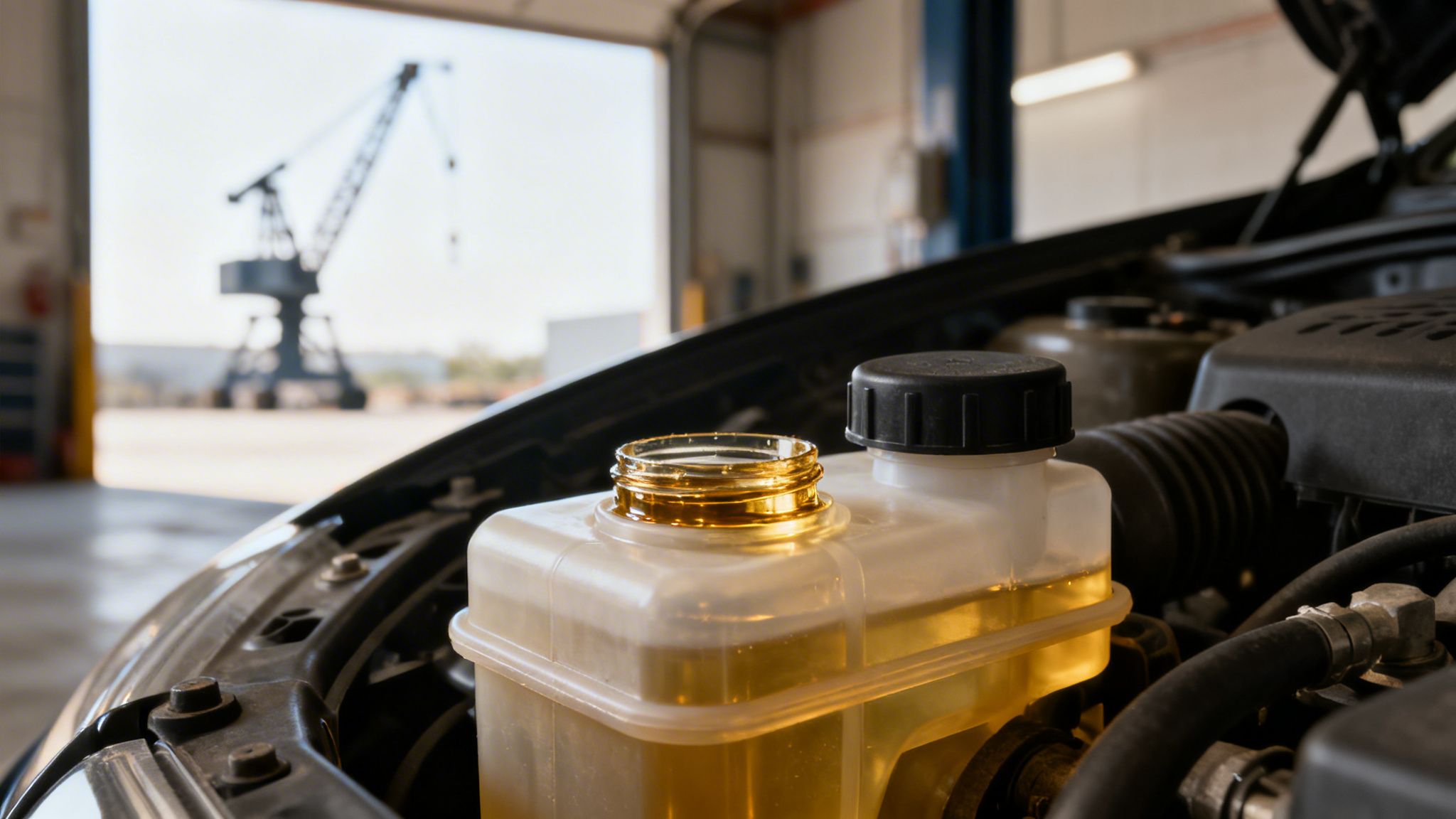
When discussing brake service, components like pads and rotors often come to mind first. However, the fluid within the system is equally vital. Your car’s brakes operate on a hydraulic system, which uses pressurized fluid to multiply the force from your foot on the pedal, activating the brake calipers to slow or stop the wheels.
Brake fluid is the medium that transfers this force. When it’s fresh and uncontaminated, the system operates as designed, providing a firm, responsive pedal feel and reliable stopping power. Over time, however, this fluid degrades, which can compromise the entire brake system.
More Than Just "Topping Off"
A common misconception is that simply adding new brake fluid to the reservoir when the level is low is sufficient. This action does not address the primary issue: the old, contaminated fluid remaining in the brake lines and components.
A brake flush is a complete fluid exchange. The procedure involves removing all of the old, degraded fluid from the system and replacing it with fresh, new fluid that meets manufacturer specifications. This service restores the hydraulic system's integrity and helps protect expensive components like calipers, wheel cylinders, and the Anti-lock Braking System (ABS) module from internal corrosion and failure.
This is analogous to an engine oil change. You wouldn't add a quart of new oil to five quarts of old, contaminated oil and expect optimal engine performance. The same principle applies to your brake system. A full flush is the only method to ensure the system is clean and functioning correctly.
To help you understand when service is needed, here is a quick guide to the signs, symptoms, and recommended actions related to your brake fluid.
Brake Flush at a Glance
This table summarizes key indicators that your brake system requires professional attention.
| Symptom or Factor | What It Means | Recommended Action |
|---|---|---|
| Spongy or Soft Brake Pedal | Air or moisture has entered the brake fluid, reducing its incompressibility and weakening hydraulic pressure. | Schedule a brake system inspection and fluid flush to restore proper pedal feel and stopping power. |
| Dark or Murky Fluid | The fluid has become saturated with contaminants from moisture absorption and microscopic particles from internal components. | Perform a full brake flush to prevent internal corrosion and potential component damage. |
| Vehicle Age/Mileage | Most vehicle manufacturers recommend a brake fluid exchange every 2-3 years or 30,000 miles. | Adhere to your manufacturer's recommended service schedule or have a technician test the fluid's condition. |
| ABS Warning Light | The Anti-lock Braking System has detected an issue, which can be related to contaminated fluid or improper hydraulic pressure. | Seek a professional diagnosis to identify the root cause and perform the necessary repairs. |
Recognizing these signs allows you to address potential issues before they escalate into significant safety hazards.
The Science Behind Brake Fluid Degradation
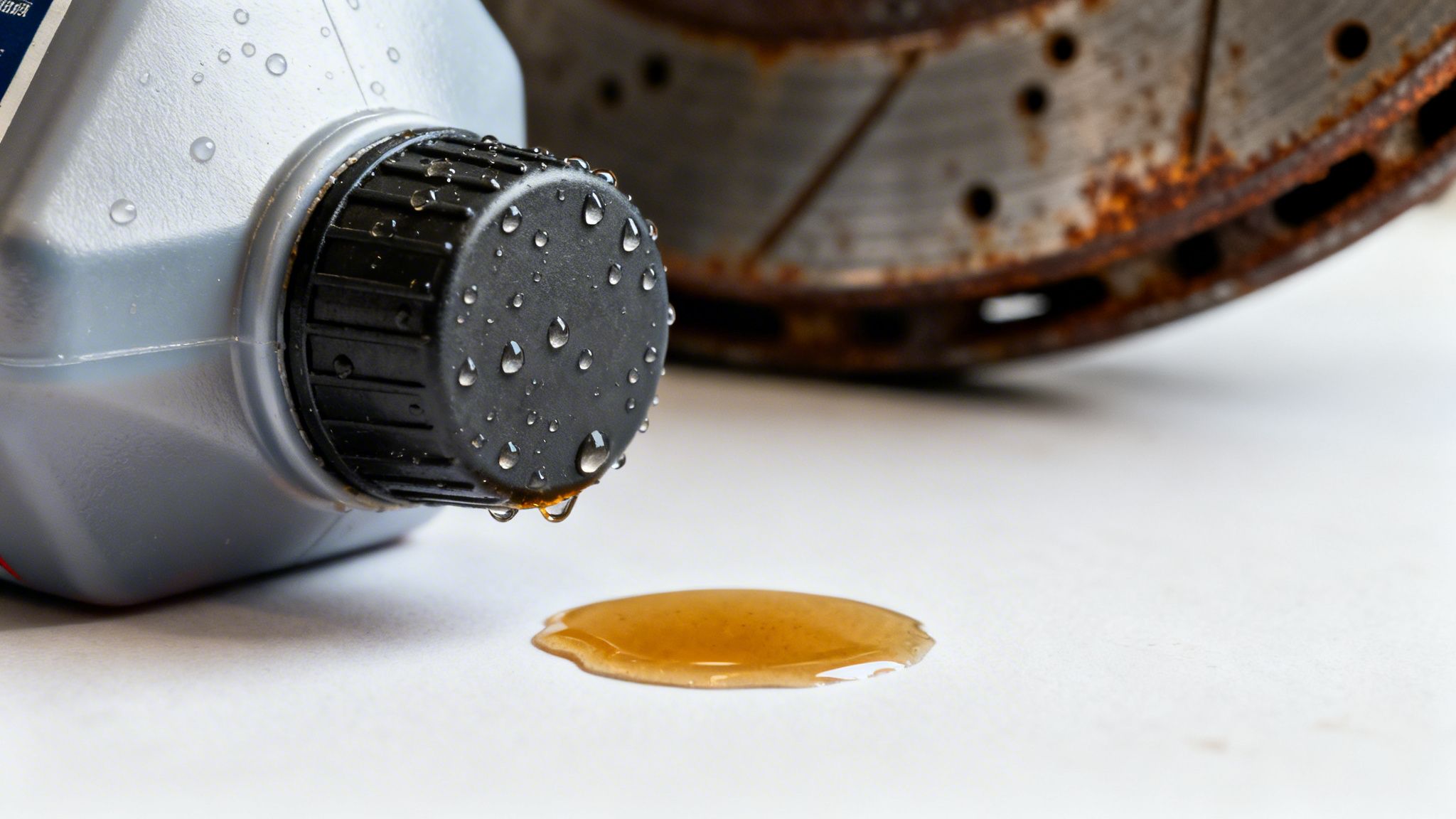
To appreciate why a brake flush is necessary, one must understand a key property of brake fluid. It is specifically engineered to withstand high temperatures and pressures, but it possesses an inherent characteristic that leads to its eventual degradation.
Most brake fluids are hygroscopic, meaning they naturally absorb moisture from the surrounding atmosphere. This absorption occurs slowly over time through microscopic pores in brake hoses and seals.
The Problem with Water Contamination
The introduction of water into the brake system causes two significant problems. First, it lowers the boiling point of the brake fluid. Fresh brake fluid has a very high boiling point to handle the extreme heat generated during braking.
Water, however, boils at a much lower temperature (212°F or 100°C). As the water content in the fluid increases, the boiling point of the entire mixture decreases significantly. During heavy or prolonged braking, this contaminated fluid can boil, creating vapor pockets in the brake lines. Because vapor is compressible while liquid is not, this leads to a soft, "spongy" pedal that may sink to the floor with reduced stopping force.
This dangerous phenomenon is known as brake fade. It significantly increases the distance required to stop the vehicle. A brake flush is a critical safety service because it ensures the fluid can withstand high temperatures without boiling, preserving braking effectiveness.
Corrosion: The Silent Threat
The second problem caused by moisture is internal corrosion. Water promotes the oxidation (rusting) of metal components within the brake system, such as steel brake lines, calipers, and the intricate valves inside the ABS module.
Over time, this corrosion can cause tiny rust particles to flake off and circulate within the fluid, potentially damaging seals and clogging small passages. This internal decay can lead to expensive component failure, transforming a routine maintenance item into a major repair. Studies have shown that neglecting this service can significantly impact system performance. You can find more valuable insights on vehicle performance and how fluid condition affects overall safety.
Recognizing the Warning Signs of Contaminated Brake Fluid
Your vehicle often provides clear indicators when maintenance is required. Learning to recognize the signs of contaminated brake fluid can help you address issues promptly and avoid more significant problems.
The most common symptom is a change in the brake pedal's feel. If the pedal feels soft, "spongy," or travels further toward the floor than usual during application, it is a primary indicator of air or moisture in the hydraulic system. This compromises the hydraulic pressure necessary for effective braking.
You should also pay attention to dashboard warning lights. An illuminated ABS (Anti-lock Braking System) light or the general brake warning light can signal a problem. Contaminated fluid can affect the sensitive sensors and valves within modern brake systems, triggering a fault code.
A Quick Visual Inspection
A visual check of the brake fluid can provide a preliminary assessment of its condition, even if you are not a mechanic.
Here is a simple procedure:
Locate the Reservoir: With the vehicle parked on a level surface, open the hood. The brake fluid reservoir is typically a small, semi-transparent plastic tank located at the rear of the engine bay on the driver's side.
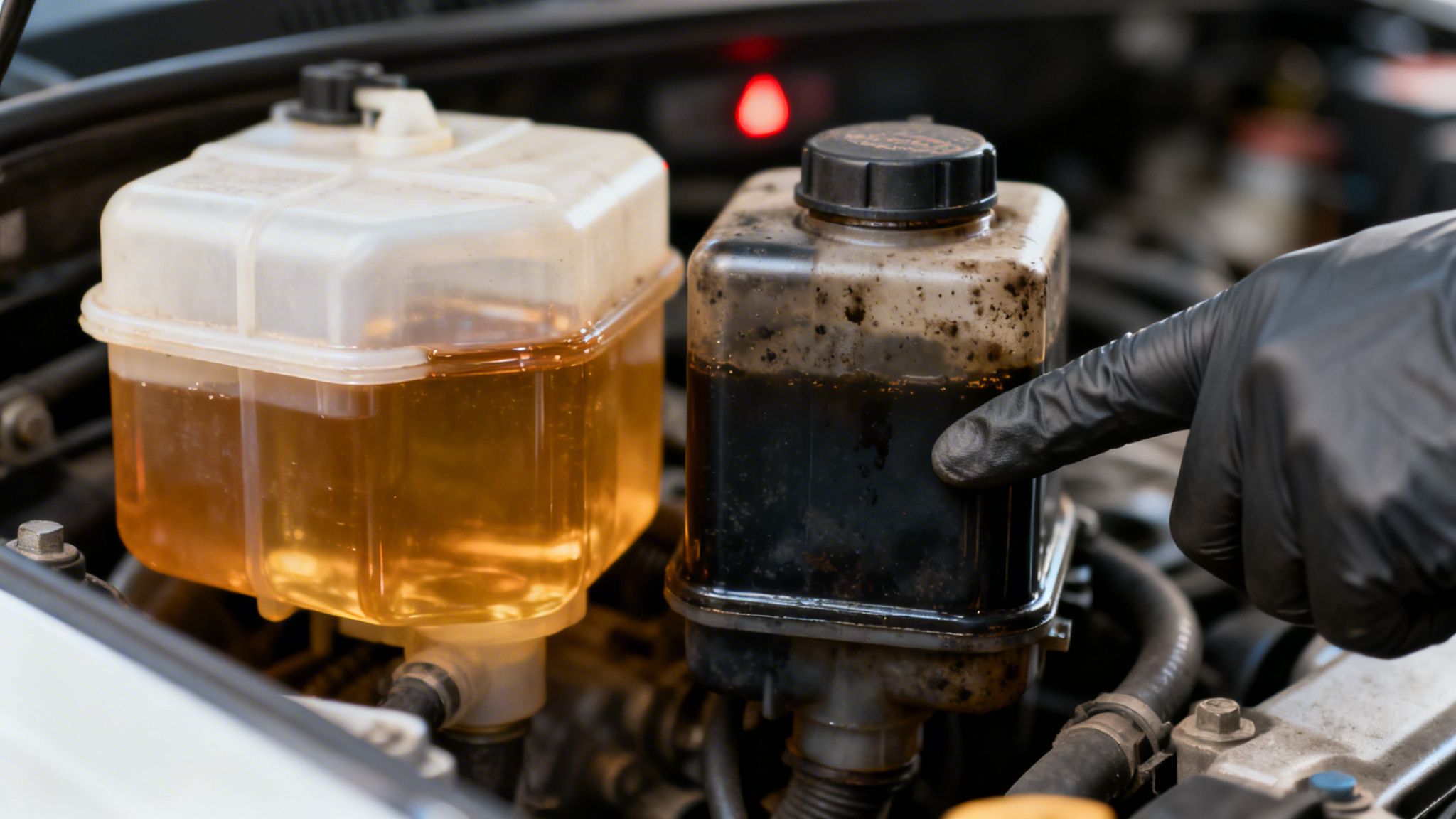
Examine the Color: Fresh, clean brake fluid is typically clear with a light-yellow or amber tint.
Identify Contamination: If the fluid appears dark brown or black, it is a strong indication that it is old, contaminated, and requires replacement. This dark coloration signifies the presence of moisture, particulates, and degraded fluid additives.
It is important to note that a visual inspection alone is not definitive. Brake fluid can have a dangerously high moisture content—its most harmful contaminant—while still appearing relatively clean. Professional technicians use specialized tools to test the fluid's boiling point or moisture percentage accurately.
Brake Flush vs. Brake Bleed: Understanding the Difference
In automotive maintenance discussions, the terms "brake flush" and "brake bleed" are often used interchangeably, but they describe two distinct procedures with different purposes.
A brake bleed is a targeted procedure designed to remove trapped air from the hydraulic lines. This is typically performed after a specific repair that has allowed air to enter the sealed system, such as replacing a brake caliper, hose, or master cylinder. Air in the lines creates the "spongy" pedal feel because, unlike fluid, it is compressible.
Proactive Maintenance vs. Reactive Repair
In contrast, a brake flush is a comprehensive, preventative maintenance service. The goal is not just to remove air but to replace all of the old, contaminated brake fluid throughout the entire system with new, clean fluid.
This process purges moisture, rust particles, and other contaminants that accumulate over time. While a bleed is a reactive fix for a specific problem (air in the lines), a flush is a proactive measure to prevent long-term damage and ensure system integrity.
A helpful analogy: bleeding the brakes is like fixing a single air-locked pipe in your home. A brake flush is like draining the entire plumbing system to remove sediment-filled water and refilling it with fresh water to protect every pipe from future corrosion.
A flush is a scheduled maintenance item, whereas a bleed is performed on an as-needed basis following specific repairs.
Brake Flush vs. Brake Bleeding Compared
This table provides a side-by-side comparison to clarify the differences between these two important services.
| Aspect | Brake Flush | Brake Bleeding |
|---|---|---|
| Purpose | Proactive maintenance to prevent corrosion, moisture contamination, and fluid degradation. | Reactive repair to remove trapped air from hydraulic lines after a service or leak. |
| Scope | A complete exchange of all fluid in the entire brake system. | A targeted procedure to expel air bubbles from the brake lines. |
| When It's Performed | Every 2-3 years or per the vehicle manufacturer's recommendation as part of a routine maintenance schedule. | After replacing hydraulic brake components like calipers, hoses, or the master cylinder. |
In summary, one service maintains the long-term health of the brake system, while the other restores its immediate function after a repair. Both are essential for safe and reliable braking.
The Professional Brake Flush Process
When you bring your vehicle to a qualified service center for a brake flush, the procedure is more involved than a simple fluid drain and refill. It is a systematic process designed to ensure the complete and safe replacement of the brake fluid.
A professional technician will typically begin with a thorough inspection of the brake system. This includes checking for leaks, examining the condition of brake hoses and lines, and often testing the existing fluid for moisture or copper content. This initial step verifies that a flush is necessary and confirms the system is properly sealed.
The Flushing Procedure Explained
After the inspection, the fluid exchange begins. Technicians use specialized equipment, such as a pressure bleeder or a vacuum system, which connects to the master cylinder reservoir. This equipment forces old, contaminated fluid out of the system while simultaneously introducing fresh, clean fluid, preventing air from entering the lines.
The process is performed systematically at each wheel, typically starting with the wheel furthest from the master cylinder and working closer. The technician opens a "bleeder valve" on the brake caliper or wheel cylinder and allows the machine to push fluid through until only clean, new fluid emerges. This methodical approach guarantees that all old fluid is purged from the brake lines, calipers, and the highly sensitive Anti-lock Braking System (ABS) module.
The use of professional equipment is critical. It maintains positive pressure in the system, which prevents air from being introduced. This is especially important for modern vehicles with complex ABS modules, as air trapped within these units can be difficult to remove and may require a factory scan tool to cycle the ABS pump—a step that is often beyond the scope of a DIY repair.
A brake flush is one component of comprehensive brake maintenance. To understand its role in a larger context, you can learn more about what brake service includes. This careful, professional process restores the firm, responsive feel of your brake pedal and ensures your braking system performs reliably and safely.
Common Questions About Brake Fluid Flushes
Even with a detailed explanation, many drivers have specific questions about this important service. Here are answers to some of the most common inquiries.
How Often Is a Brake Flush Necessary?
Most vehicle manufacturers recommend a brake flush every two to three years or approximately every 30,000 miles. However, this is a general guideline. Your specific driving habits and local climate can influence this interval.
In areas with high humidity, for example, brake fluid can absorb moisture at a faster rate. Therefore, adhering to a two-year interval is a prudent strategy for maintaining a healthy, corrosion-free brake system. For more specific information, you can consult our guide on determining the correct brake fluid flush frequency for your vehicle.
Can I Simply Top Off My Brake Fluid Instead?
While adding fluid to the reservoir may seem like an easy fix for a low fluid level, it does not solve the underlying problem of contamination. Topping off fails to remove the moisture, particulates, and degraded fluid already present in the system.
This is comparable to adding a glass of clean water to a gallon of dirty water—the entire volume remains contaminated. A complete fluid exchange is the only effective method to remove contaminants and restore the fluid's protective properties and high boiling point.
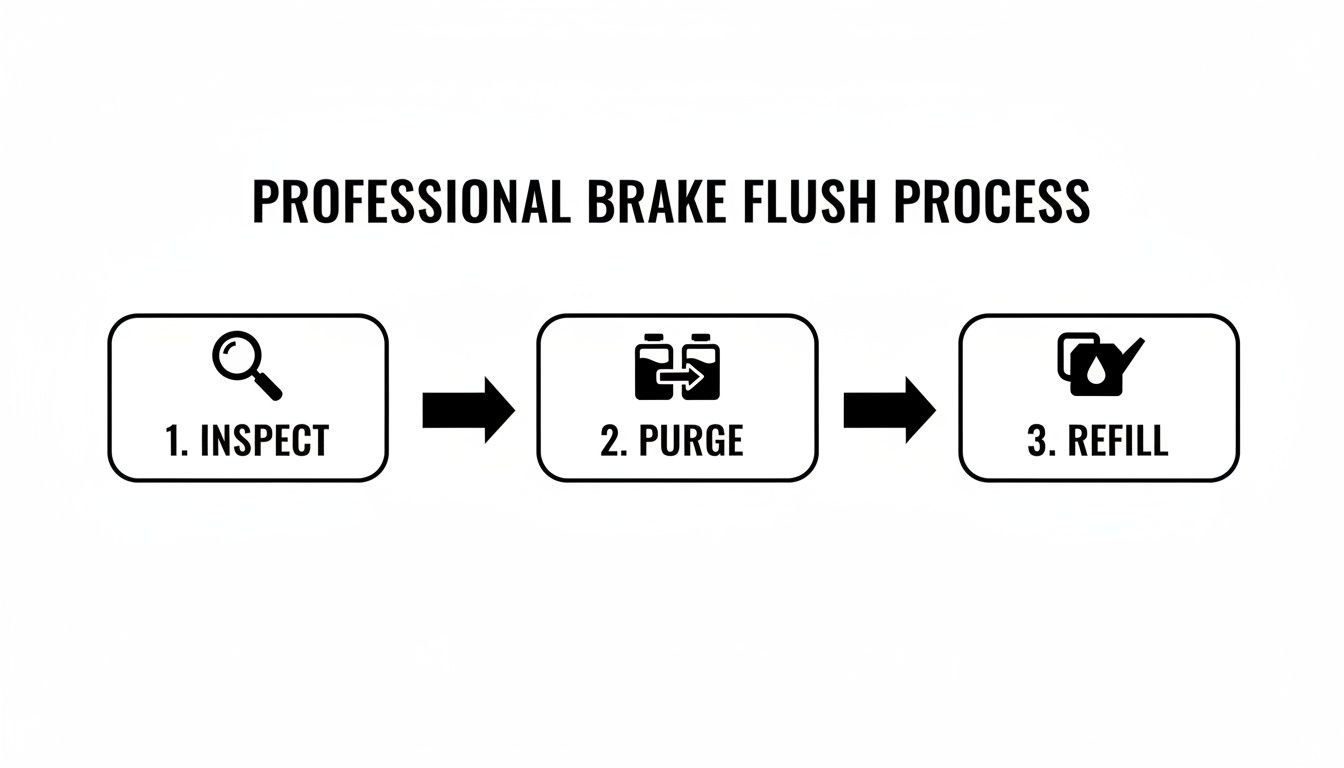
This methodical three-step process—inspect, purge, and refill—ensures that the entire hydraulic system is free of old, contaminated fluid.
Is a Brake Flush Included in a Standard Brake Job?
Typically, no. A standard brake job focuses on replacing wearable "hardware" components, such as brake pads and rotors. While a technician will need to bleed the brakes to remove air after replacing a caliper, a full system flush is a separate and distinct service.
For optimal results, performing a brake flush at the same time as a brake job is highly recommended. This ensures that the entire braking system—both the hydraulic and mechanical components—is restored to peak operating condition.
The Risk of Postponing Service: The most significant risk of neglecting a brake flush is brake fade due to a lowered fluid boiling point. When water-contaminated fluid boils under heavy braking, it creates vapor in the lines. This can lead to a sudden loss of hydraulic pressure, a spongy pedal feel, and a dangerous increase in stopping distance.
Furthermore, internal moisture leads to corrosion that can damage expensive components like the master cylinder, calipers, and ABS module, with potential repair costs reaching thousands of dollars.
For professional, reliable brake service in the Plano area, trust the ASE-certified technicians at Express Lube & Car Care. We utilize modern equipment to perform brake flushes correctly, ensuring your vehicle's braking system is safe and responsive. Visit us at your convenience—no appointment is necessary.