

Turning the key only to hear a dreaded clicking sound is a frustrating way to begin any day. A dead car battery is a surprisingly common issue for drivers, and the problem often traces back to one of three primary sources: a "parasitic drain" from a malfunctioning electrical component, a battery that is too old to maintain a charge, or a failure within the car's charging system.
Your Guide to Diagnosing Overnight Battery Drain
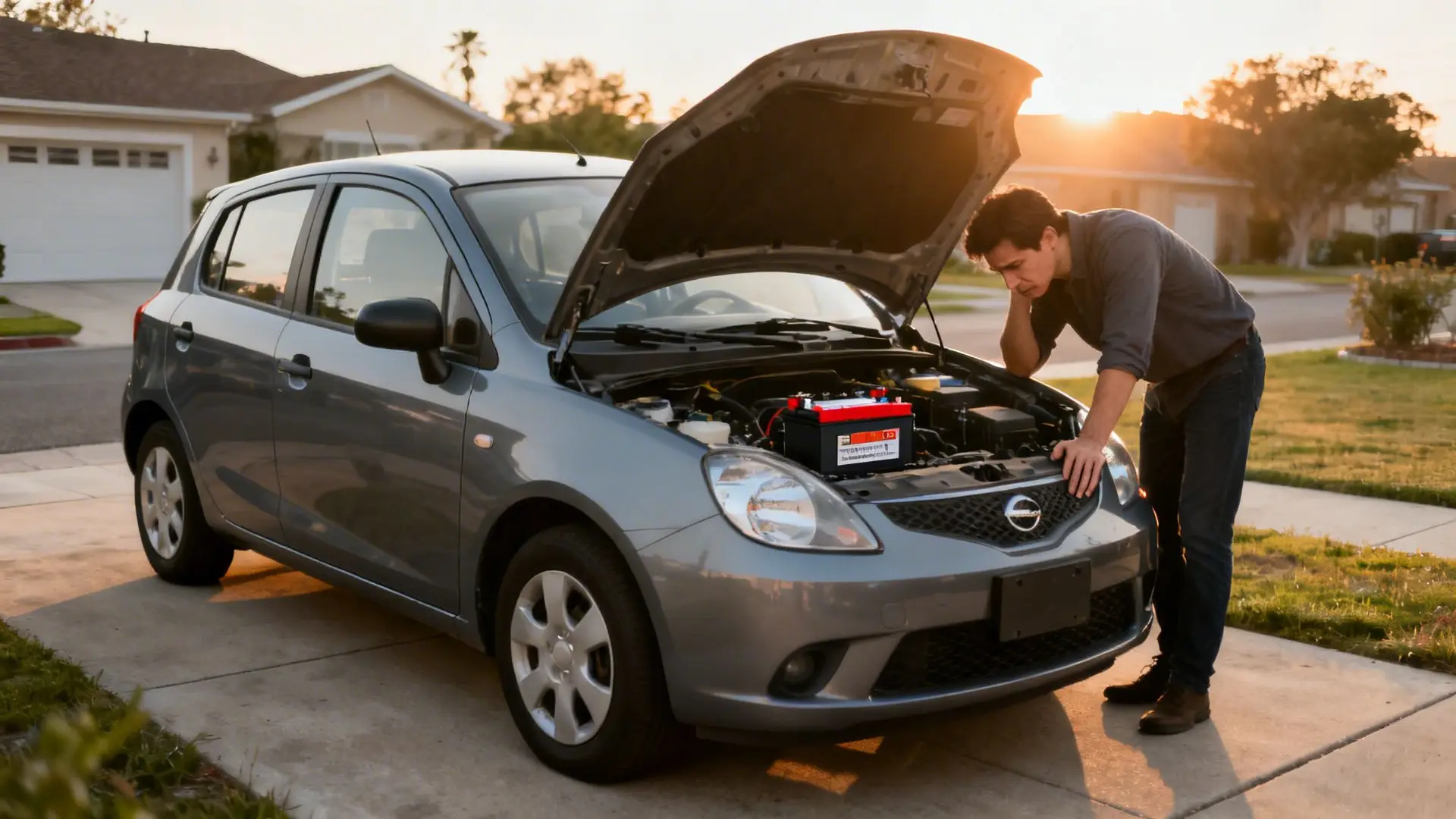
Waking up to a dead battery is more than an inconvenience; it can disrupt your entire schedule. This guide serves as a roadmap to understanding exactly what causes a car battery to drain overnight and, more importantly, how to resolve the issue.
We will explain the common culprits in clear, educational terms, so you can understand the science behind why your battery is losing power while the car is parked. From hidden electrical faults to the natural effects of age, you will learn what to look for and how to approach a diagnosis.
The Primary Causes of a Dead Battery
When a car fails to start after being parked overnight, a few key problems are almost always the cause. While they all result in the same outcome, identifying the specific issue is the first step toward a lasting solution.
The most common reasons for overnight battery drain include:
- Parasitic Drains: This occurs when an electrical component continues to draw power after the ignition is turned off. Examples include a glove box light that fails to shut off, a faulty alarm system, or a radio that does not enter its low-power "sleep" mode.
- An Aging Battery: All batteries degrade over time and lose their capacity to hold a full charge. After 3-5 years, particularly in the Texas heat, a battery may no longer have the reserve capacity to last through the night.
- Charging System Faults: The problem may not be the battery itself. A defective alternator or corroded battery terminals can prevent the battery from recharging properly during operation.
Differentiating between these issues is crucial. A new battery will not fix a parasitic drain, and a functional alternator cannot revive a battery that has reached the end of its service life.
This guide will walk you through the process of identifying these problems. We will also introduce you to Express Lube & Car Care, your local Plano experts equipped to diagnose the issue and get you back on the road.
Understanding the Hidden Thief: Parasitic Drains
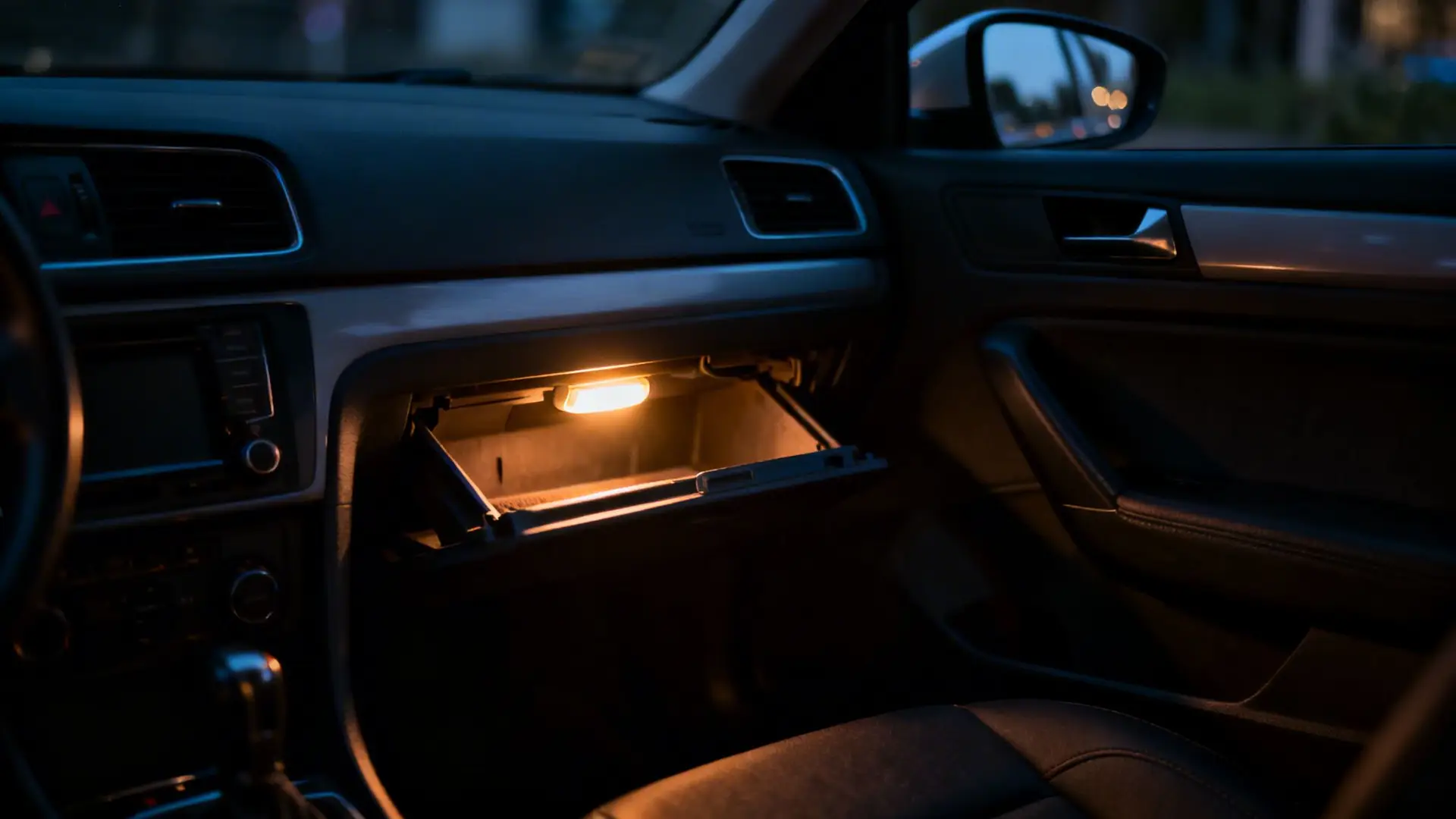
When you park your car, you expect all non-essential systems to shut down. However, a hidden electrical fault can continue drawing power, resulting in a dead battery by morning. This phenomenon is called a parasitic drain, and it's a leading explanation for what causes a car battery to drain overnight.
Imagine the battery as a reservoir of energy. A small, normal current is required to power memory functions like your car’s clock, radio presets, and security system. When a faulty component creates an excessive draw, that reservoir can be depleted by sunrise. This abnormal current is the frustrating culprit behind many no-start situations.
Where Do These Drains Originate?
Modern vehicles contain dozens of electronic modules, and any one of them can fail to enter its designated "sleep mode." The source of the drain is often a small, unnoticeable component.
Common sources of parasitic drains include:
- Interior Lights: A faulty switch in the glove box, trunk, or vanity mirror can leave a light illuminated, draining the battery without any obvious sign.
- Stuck Relays: A relay is an electromagnetic switch. If one becomes stuck in the "on" position, it can keep a component like a fuel pump, cooling fan, or computer module running long after the engine is off.
- Aftermarket Accessories: Improperly installed dash cams, audio systems, and remote starters are notorious for creating unintended power draws.
Even a small electrical leak can be sufficient to drain a battery over an 8 to 12-hour period—long enough to cause a problem overnight but not so fast that it's noticeable during daily use.
A key characteristic of a parasitic drain is that the vehicle often operates perfectly during the day. The issue only becomes apparent after the vehicle has been stationary for an extended period, such as overnight.
How Much Is a "Normal" Drain?
A minimal power draw is normal and necessary. According to automotive electrical experts, a modern vehicle should draw between 50 and 85 milliamps (mA) when turned off, while older cars should remain below 50 mA. Any measurement significantly higher than these thresholds indicates a parasitic drain.
Industry data shows that parasitic drains are responsible for approximately 30-40% of all overnight battery failures in major U.S. markets. You can learn more about the technical process from these resources on automotive electrical findings and parasitic draw testing.
How an Aging Battery Loses Its Capacity
Similar to a smartphone battery, a car's lead-acid battery has a finite lifespan. Over time, its ability to store and deliver a strong, stable charge diminishes. An aging battery might have enough power to start the engine after a short stop but often lacks the reserve capacity to survive the night without draining completely.
Think of a new battery as a large reservoir of electrical energy. Starting the engine requires a significant withdrawal from this reservoir. As the battery ages, chemical degradation effectively shrinks the size of this reservoir. It can no longer hold as much energy, so it depletes much faster.
The Impact of Age and Heat on Battery Life
The typical lifespan for a standard car battery is 3-5 years. After this period, its performance can decline sharply. In fact, an estimated 60% of battery drain complaints can be traced to a single cause: an old, weakened battery that can no longer hold a sufficient charge.
Heat is a primary adversary of battery health. In hot climates like Plano, where summer temperatures frequently exceed 100°F, batteries degrade 20-30% faster than in cooler regions. By its third year, a battery's total capacity can fall below 80%, making it highly susceptible to overnight failure.
An older battery may seem functional during the day but fails overnight because its reduced capacity cannot sustain even the small, normal power draws from the car's clock, security system, and computer memory.
Driving Habits and a Gradual Power Deficit
Your driving routine also plays a critical role in battery health. A pattern of short, infrequent trips can create a cumulative power deficit.
Starting your engine requires a massive burst of energy. The alternator's function is to replenish this energy, but it requires time. A brief 10-minute drive is insufficient for the alternator to fully restore the battery's charge.
When short trips are a daily habit, the battery may never return to a 100% state of charge. It begins each day with slightly less energy than the day before, until one morning it is completely depleted. This is a common reason what causes a car battery to drain overnight, even in the absence of other faults. To assess your battery's condition, you can interpret a car battery voltage chart.
When Your Car's Charging System Fails
In some cases, the battery is not the root cause of the problem but rather the first component to show symptoms. The actual fault often lies within the vehicle's charging system—the network responsible for generating electricity and maintaining the battery's charge while the engine is running.
Your car's alternator functions as its power plant. When the engine is on, the alternator generates the electricity needed for lights, radio, and air conditioning. Crucially, it also sends a continuous flow of power back to the battery, recharging it for the next start.
How a Bad Alternator Drains Your Battery
If the alternator begins to fail, it can no longer perform its job effectively, leaving the battery in a constant state of discharge. This is a classic explanation for what causes a car battery to drain overnight.
A failing alternator can manifest in several ways:
- Undercharging the Battery: A weak or worn-out alternator may not produce sufficient voltage to fully recharge the battery. Even after a long drive, the battery remains partially drained and vulnerable to dying overnight.
- Creating a Parasitic Drain: A fault within the alternator itself, such as a failed diode, can cause it to become a source of power drain. In this state, the alternator actively draws current from the battery even when the car is off.
This is a surprisingly frequent issue. In our professional experience, a faulty alternator or poor connections account for 25-35% of unexplained overnight drains. A healthy alternator should produce 13.5-14.5 volts. A damaged one may not only undercharge but can also create a passive drain of up to 0.5 amps.
The Problem with Corroded Connections
Another weak point in the charging system is the battery terminals. A crusty, white or greenish powder on the battery posts is evidence of corrosion. This buildup acts as an insulator, restricting the flow of electricity to and from the battery.
No matter how effectively the alternator functions, heavily corroded terminals can prevent the battery from receiving a full charge. The humidity in Plano can accelerate this corrosion, effectively mimicking a 20-50% loss in battery capacity. This means a perfectly good battery can behave as if it's old and weak simply because it's being starved of electrical current.
If you suspect an alternator issue, our detailed guide can help you identify and handle a bad alternator.
Simple DIY Checks Before Calling a Professional
Before assuming a costly repair is needed, a few simple diagnostic checks can often reveal what causes a car battery to drain overnight. Performing these steps yourself can help rule out common, easy-to-fix issues and may save you a trip to the repair shop.
Begin with a visual inspection under the hood, focusing on the battery itself.
Look for a fluffy, white or greenish powder on the metal terminals. This is corrosion, which acts as an insulator, impeding the flow of electricity and preventing a full charge.
While inspecting, gently try to move the battery cables. They should be completely secure. A loose connection is as detrimental as a corroded one, creating an unreliable path for electrical current.
Hunt Down Hidden Power Consumers
If the components under the hood appear clean and secure, the next step is to investigate potential power drains inside the car. Unnoticed power consumers are a primary cause of an otherwise healthy battery going flat.
Start by checking automatic lights. Open and close the glove box and trunk, verifying that their respective lights turn off as intended. A defective switch can leave a bulb on for hours, slowly depleting the battery.
Another common culprit is aftermarket electronics. If you have a dash cam, GPS unit, or phone charger plugged into an "always-on" power outlet, unplug all devices before parking for the night. If the car starts normally the next morning, you have identified your power drain.
The flowchart below provides a visual guide for the next steps, based on whether the problem occurs when the car is on or off.
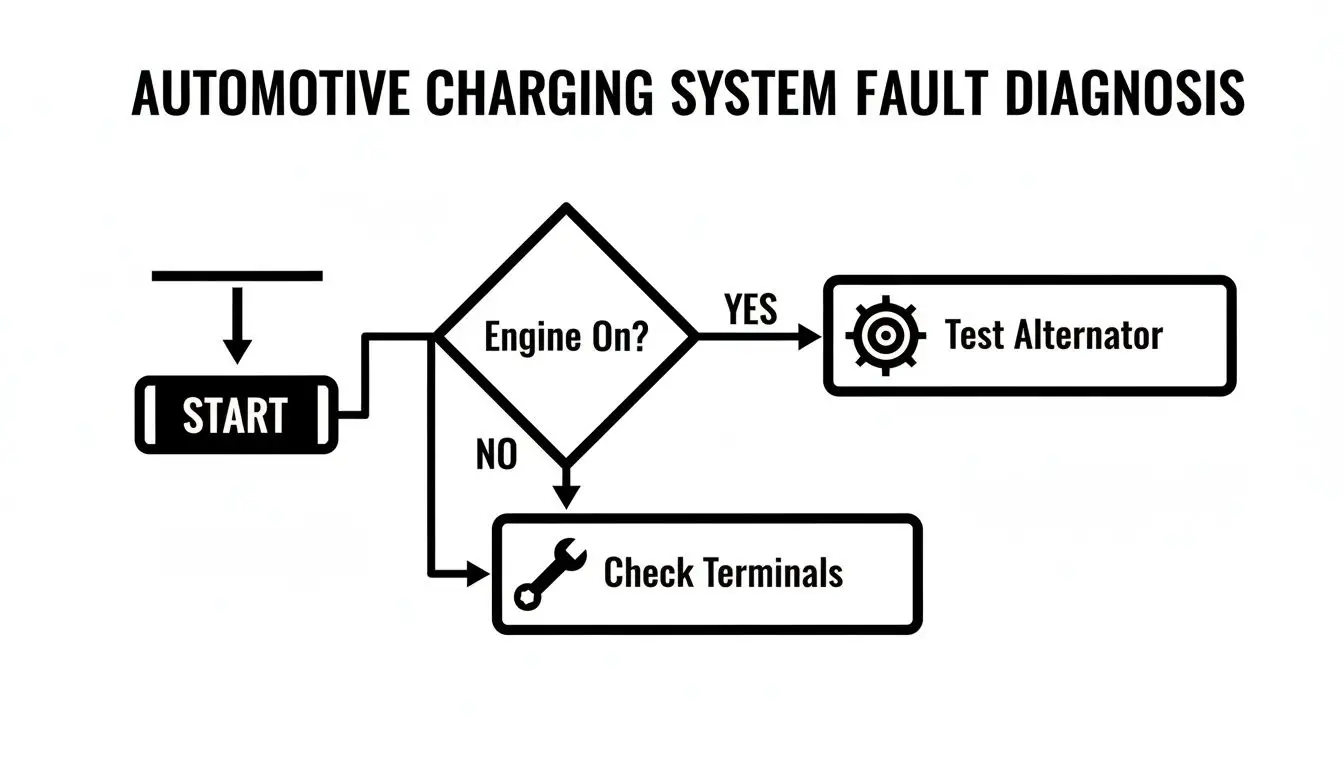
As the diagram illustrates, if the drain occurs while the car is off, your focus should be on the battery terminals and potential parasitic draws. If the issue manifests while the engine is running, the alternator becomes the more likely suspect.
DIY Battery Drain Troubleshooting Checklist
This checklist guides you through the most common, user-serviceable issues before concluding that professional assistance is required.
| Check Area | What to Look For | Simple Fix |
|---|---|---|
| Battery Terminals | Fluffy white or greenish buildup. | Clean terminals with a wire brush and a solution of baking soda and water. |
| Battery Cables | Cables feel loose or can be wiggled on the terminals. | Tighten the cable clamps with a wrench until they are snug. |
| Interior Lights | Glove box or trunk light remains on when closed. | Inspect for a faulty switch; temporarily remove the bulb if necessary. |
| Aftermarket Accessories | Dash cams, GPS, or chargers are plugged in. | Unplug all devices from "always-on" power outlets overnight. |
| Headlights/Dome Light | Lights were inadvertently left in the "on" position. | Double-check that all manually operated lights are switched off. |
Completing these checks provides a significant advantage. Even if the problem persists, you can inform your mechanic of what you have already ruled out, which accelerates the professional diagnostic process.
If you discovered significant corrosion, our guide on dealing with corrosion on car battery terminals provides detailed cleaning instructions. However, if these DIY steps do not resolve the issue, it is a clear indication that a more complex problem requires professional diagnosis.
When to Visit Express Lube & Car Care in Plano
If you have performed the simple checks and your battery continues to die overnight, it is time to consult a professional. The root cause is likely buried within the vehicle's complex electrical system, requiring specialized diagnostic tools.
An occasional dead battery can happen. However, if your vehicle requires a jump-start multiple times a week, it is not a coincidence—it is a clear warning sign of a systemic issue that needs professional attention.
Signs You Need Professional Help
When basic troubleshooting fails, your vehicle will often provide distinct clues that the problem requires expert analysis. Do not ignore these signals, as they can help you avoid being stranded.
You should seek professional diagnosis if you observe these signs:
- Repeated Dead Batteries: One dead battery could be an oversight. Two or more in a short period indicates a significant electrical drain or a charging system failure.
- Dimming Headlights While Driving: If your headlights fade at idle but brighten when you accelerate, it is a classic symptom of a failing alternator struggling to power the vehicle.
- A Persistent Battery Warning Light: The illuminated battery icon on your dashboard is a direct alert from the vehicle's onboard computer that the charging system is malfunctioning.
Guesswork can lead to replacing unnecessary parts and incurring extra costs. When you notice these symptoms, it is the opportune time to have a trusted shop accurately identify the problem.
How Express Lube & Car Care Solves the Problem
At Express Lube & Car Care in Plano, we eliminate the guesswork in determining what causes a car battery to drain overnight. Our ASE-certified technicians utilize advanced diagnostic equipment to pinpoint the root cause, whether it's a hidden parasitic draw, a faulty alternator, or a compromised battery.
We conduct a precise parasitic draw test to isolate the exact component draining power while the car is off. We also perform a comprehensive charging system analysis to ensure your alternator, battery, and cables are all functioning in harmony.
Best of all, you never need an appointment. Simply drive in, and our team will provide the fast, reliable service Plano drivers depend on. We'll even give you $20 off batteries with our Signature battery service to make the solution both effective and affordable. Let us provide the peace of mind that comes with a vehicle that starts reliably every morning.
Frequently Asked Questions About Car Battery Drain
Even after some initial troubleshooting, it is natural to have more questions about why a car battery fails to hold a charge. Understanding these details can help you maintain your vehicle more effectively and avoid being stranded. Here are answers to the questions we hear most frequently from drivers in the Plano area.
This section covers topics from the effect of Texas heat on battery longevity to why a short drive is insufficient for a recharge.
How Long Should a Car Battery Last in Texas Heat?
In a hot climate like ours, a car battery's lifespan is significantly reduced. You can typically expect a battery to last approximately 3 to 4 years. The sustained, intense heat accelerates the chemical reactions within the battery, causing its internal components to degrade much faster than they would in a cooler climate.
This is why regular battery testing is crucial in this region. A quick test can inform you of your battery's health, allowing you to replace it before it fails and leaves you stranded.
Can a Brand New Car Battery Drain Overnight?
Yes, a new battery can absolutely drain overnight. When this occurs, the battery itself is rarely the source of the problem. The issue almost always lies elsewhere within the vehicle's systems.
The most common culprit is a parasitic drain, where a faulty component continues to draw power after the ignition is off. Another possibility is a failing alternator that is not properly recharging the new battery during operation. This is a key reason what causes a car battery to drain overnight, even with a brand-new battery installed.
Will Driving My Car for 10 Minutes Recharge the Battery?
No, a 10-minute drive is not nearly long enough to meaningfully recharge a depleted battery. Starting an engine consumes a significant amount of electrical energy, and the alternator requires substantial time to replenish that power.
To make significant progress in recharging a battery, you need at least 30 minutes of continuous driving at a steady speed, without frequent stops. A routine of frequent, short trips is a leading cause of premature battery failure because the battery never has an opportunity to fully recover its charge.
If you're tired of guessing and need a definitive answer, bring your vehicle to Express Lube & Car Care. Our ASE-certified technicians will perform a full diagnostic analysis to find the exact problem and get you back on the road with confidence. Stop by our Plano location today for fast, reliable service—no appointment needed. Learn more about our services and offers.