

The white, blue, or green crystalline substance on your car battery terminals is more than just an aesthetic issue—it’s a sign of a chemical process known as corrosion. This buildup, typically lead sulfate, acts as an electrical insulator, impeding the flow of power from the battery to your car’s electrical system.
This resistance is a primary cause of symptoms like dimming headlights, difficulty starting the engine, and can ultimately lead to a complete battery failure, leaving you stranded. Understanding the science behind this buildup is the first step toward effective maintenance and prevention.
Why You Should Check Your Battery: Understanding the Crust on Your Car Battery Terminals
When you observe a powdery substance on your battery terminals, you are seeing the result of a chemical reaction between hydrogen gas, sulfuric acid, and the surrounding atmosphere. The battery naturally vents hydrogen gas as a byproduct of its charging and discharging cycles. This gas can carry minute amounts of sulfuric acid vapor with it.
For drivers in regions with high ambient temperatures, such as Plano, Texas, this chemical process is often accelerated. Extreme temperatures and varying weather conditions can significantly impact battery performance and lifespan, as both hot and cold weather can accelerate chemical degradation or reduce power delivery. This makes regular battery inspection especially important to maintain optimal function in all weather conditions.
This lead sulfate buildup increases electrical resistance, disrupting the connection between the battery and the vehicle. It’s analogous to atherosclerosis in an artery, where plaque buildup restricts flow. In this case, the restricted electrical flow prevents the starter motor from receiving the necessary amperage to turn over the engine. The typical lifespan of a car battery is three to five years, but this can vary depending on environmental conditions such as temperature and humidity.
A Quick Look at Corrosion Colors
The color of the corrosion can provide valuable diagnostic information about the underlying condition of the battery and the vehicle’s charging system.
Corrosion Color | Terminal Affected | Likely Cause | Technical Implication |
|---|---|---|---|
White/Gray Powder | Negative (-) or Positive (+) | Sulfation, often due to age, heat, or self-discharge. | Reduced electrical conductivity, leading to poor starting performance. |
Blue/Green Crust | Positive (+) | Copper sulfate formation, indicates overcharging or corrosion of copper clamps. | High electrical resistance, which can accelerate battery degradation. |
White/Gray Powder | Negative (-) | Undercharging, often linked to a failing alternator or frequent short trips. | The battery is not receiving a full charge, increasing the risk of failure. |
The presence of any of these colors indicates that maintenance is required. Ignoring these signs can lead to more significant and costly electrical system issues.
The Science Behind the Buildup
A lead-acid battery operates through a reversible chemical reaction. During its charge-discharge cycles, it naturally releases hydrogen gas. This vented gas can carry microscopic droplets of sulfuric acid, which is the battery’s electrolyte. When this acidic vapor makes contact with the lead terminals and copper clamps, it initiates a reaction that forms lead sulfate (the white deposit) or copper sulfate (the blue-green deposit).
Several factors can exacerbate this process:
Overcharging: A malfunctioning voltage regulator or alternator can cause the battery to overcharge, leading to excessive “gassing” and electrolyte boil-off.
Loose Connections: Improperly tightened terminals create small gaps, allowing corrosive gases to escape and accumulate.
Age and Wear: As a battery ages, the seals around the terminal posts can degrade, allowing more acid vapor to leak.
Undercharging: A chronically undercharged battery is susceptible to a different type of sulfation on its internal plates, which degrades its performance, reduces the battery’s ability to deliver power effectively, and can contribute to external terminal corrosion.
Battery corrosion is a significant factor in vehicle breakdowns. The extreme temperature fluctuations in Texas, from scorching summers to cold winter mornings, place additional stress on batteries, making them more prone to this issue.
Why This Is a Serious Issue
This seemingly minor buildup is a leading cause of vehicle non-starts. Automotive service data indicates that as many as 40% of all car battery failures can be attributed to the effects of corroded terminals.
As the corrosion layer thickens, it prevents the alternator from efficiently recharging the battery. This means your battery’s overall health and reliability are compromised, increasing the risk of unexpected failure. This creates a cycle of decline, progressively weakening the battery until it can no longer hold a sufficient charge, rendering the vehicle inoperable. You can learn more about the impact of these issues on the automotive battery market to understand the scale of this common problem.
How to Safely Clean Car Battery Corrosion at Home
Observing corrosion on your battery terminals is common, and fortunately, cleaning it is a manageable task for most vehicle owners. A clean, solid connection is essential for restoring optimal starting power and preventing electrical issues. If corrosion persists after cleaning, it may be necessary to replace the battery to ensure reliable performance.
Before beginning, it is important to understand the safety protocols. The residue is acidic, so personal protective equipment is necessary.
Gather Your Safety Gear and Cleaning Tools
First, ensure the vehicle’s engine is off and has had sufficient time to cool. Assemble your materials beforehand to streamline the process.
For personal safety, you will need:
Chemical-resistant gloves to protect your skin from acidic residue.
Safety goggles or glasses to shield your eyes from potential splashes.
For the cleaning process, you will need:
A stiff wire brush or a specialized battery terminal cleaning tool.
A small box of baking soda (sodium bicarbonate).
A small amount of water.
Petroleum jelly or dielectric grease.
Several clean, dry rags.
Having all tools and materials ready will ensure a safe and efficient cleaning process.
Disconnecting the Battery Terminals Correctly
With your gloves and goggles on, you can proceed to disconnect the battery, which is typically located under the hood and should be accessed with care. This step is critical to prevent accidental electrical shorts, which could damage the vehicle’s sensitive electronic components.
The standard procedure is to always disconnect the negative (-) terminal first. It is identifiable by the “NEG” marking, a minus sign, or a black cover. Use an appropriate wrench to loosen the nut on the terminal clamp. Gently twist and pull the cable vertically off the battery post. Secure the cable away from the terminal to prevent accidental re-contact.
Next, repeat the exact same procedure for the positive (+) terminal, typically marked “POS,” with a plus sign, or a red cover. With both cables safely disconnected, you are ready to address the corrosion. For a more detailed walkthrough, consult our guide on how to remove a car battery.
Neutralizing and Scrubbing Away the Corrosion
The key to effective cleaning is to first neutralize the acid. This makes the removal process safer and more effective.
Create a cleaning solution by mixing a few tablespoons of baking soda with a small amount of water to form a thick paste. Apply this paste liberally to the corroded battery posts and the inside of the cable clamps.
You will observe an immediate effervescent reaction (fizzing). This is the chemical neutralization of the sulfuric acid by the alkaline baking soda. Allow this reaction to continue for several minutes until the bubbling subsides.
Once the fizzing stops, use your wire brush to scrub the battery posts and the inner surfaces of the cable clamps. The goal is to remove all deposits and expose the bare, shiny metal underneath.
Rinsing and Protecting Your Clean Terminals
After scrubbing, carefully rinse the terminals and clamps with a small amount of clean water to remove any remaining residue and baking soda solution. Avoid excessive splashing of water onto other engine components.
Next, use a clean rag to thoroughly dry the battery posts, cable clamps, and the top of the battery case. It is crucial that all components are completely dry, as residual moisture can promote new corrosion.
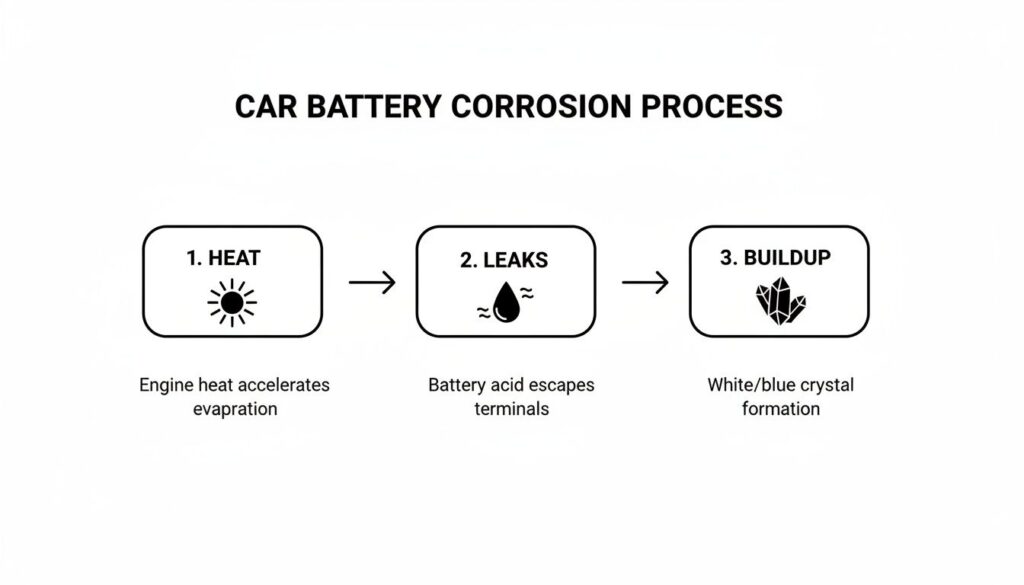
This diagram illustrates how engine heat and electrolyte leaks combine to form crystalline deposits on battery terminals.
Finally, reconnect the battery cables in the reverse order of removal: connect the positive (+) cable first, followed by the negative (-) cable last. Tighten the nuts until they are snug, but do not overtighten, as this can damage the lead posts.
To prevent future corrosion, apply a thin layer of petroleum jelly or dielectric grease over the posts and clamps. This creates a protective barrier, sealing out moisture and acidic fumes and ensuring a durable, low-resistance connection.
When Corrosion Points to a Deeper Problem
While cleaning corrosion is effective maintenance, its rapid recurrence often indicates a more significant underlying issue with the battery or the vehicle’s charging system. If you find yourself repeatedly cleaning the terminals, it’s a signal that further diagnosis is needed. Ignoring these signs can result in a dead battery, which may leave you stranded and facing unexpected costs.
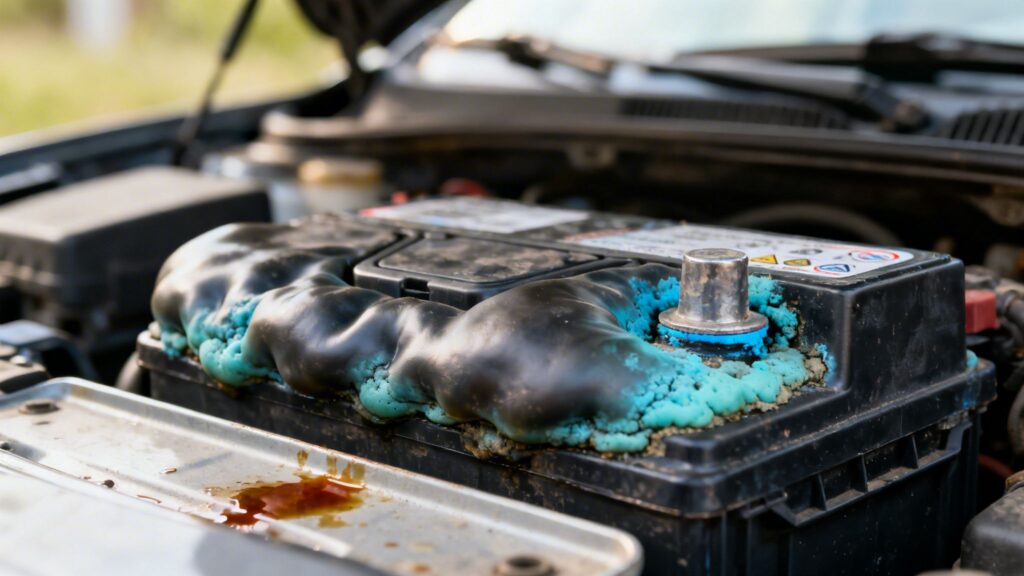
Frequent cleaning suggests excessive leaking of acid vapor from the battery. This is often due to the degradation of the seals around the terminal posts, a common sign of an aging battery nearing the end of its service life.
Another critical indicator is the physical condition of the battery case. Inspect it for any signs of bulging, swelling, or cracking. These are symptoms of severe internal damage. A bulging battery case indicates that the cells inside are swollen and about to rupture, which can lead to a fire hazard and means the battery must be replaced immediately.
A bulging battery case is an immediate safety hazard. The swelling is caused by a dangerous accumulation of internal gases, often resulting from overcharging or an internal short circuit. If you observe this, the battery requires immediate professional replacement.
Do not ignore this condition. A swollen battery is not just failing; it poses a risk of rupture or explosion.
Is It the Battery or the Alternator?
In some cases, the battery is not the root cause of the problem but rather a symptom of a malfunctioning alternator. The alternator’s function is to recharge the battery while the engine is running. If it malfunctions and overcharges the system, it can “cook” the battery.
This excessive voltage forces the battery to vent an abnormally high volume of hydrogen gas and sulfuric acid. This not only creates aggressive corrosion but also boils away the internal electrolyte fluid, causing irreversible damage. You can learn more about diagnosing this component by studying .
Key indicators of a potential alternator issue include:
Rapidly recurring corrosion, particularly on the positive (+) terminal.
Headlights that dim and brighten erratically as engine RPMs change.
A persistent battery warning light on the instrument cluster.
Dim or flickering lights, a sluggish engine crank, and electrical glitches—these are also signs that you should check your battery, as they indicate a struggling car battery.
Ignoring these symptoms can lead to a cycle of replacing batteries without ever addressing the core electrical fault.
The True Cost of Ignoring Corrosion
Battery corrosion is a costly and preventable issue for motorists. A corroded connection can reduce a battery’s cranking power by up to 30%, which helps explain why one in five drivers with battery issues experience a no-start situation. The economic impact of this common problem is significant, as detailed in the full research on the automotive lead-acid battery market. The costs of unexpected battery failure go beyond just the price of a new battery—they can include lost time, emergency services, and the inconvenience of being stranded.
If you have cleaned the terminals and the corrosion returns quickly, or if you observe a physically damaged battery case, it is time to seek professional diagnosis. Regular maintenance can save you money by preventing costly repairs and extending your battery’s life. Most car batteries last between three to five years, and regular maintenance helps ensure they operate efficiently and effectively, saving you from unnecessary expenses. A qualified technician can test both the battery and the charging system to pinpoint the root cause, preventing future breakdowns and unnecessary costs.
Keeping Corrosion Away: Proactive Tips for Better Battery Performance
The most effective strategy for dealing with battery failure is prevention. Regular checks are essential for maintaining battery health, as drivers depend on their batteries for reliable vehicle operation—including starting the engine and powering electrical systems. A few simple, proactive maintenance habits can stop corrosion on car battery terminals before it starts, ensuring reliable engine starting and maximizing the battery’s service life. It is recommended to check your car battery at least twice a year, or every six months, as endorsed by automotive experts and manufacturers, to prevent unexpected failures.
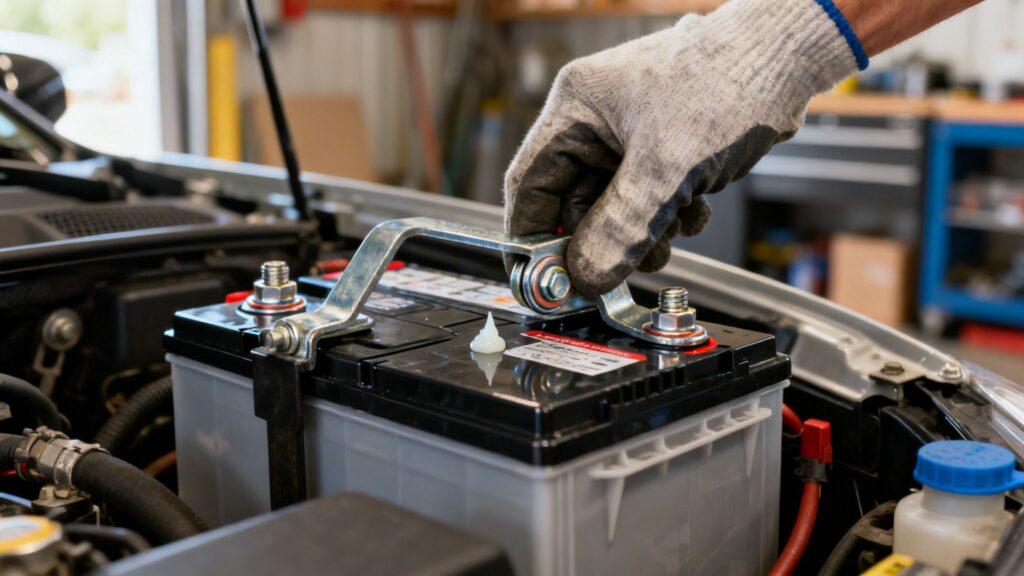
Driving habits and conditions can significantly impact battery health and performance, so it’s important for every driver to consider how their driving affects the starting and charging systems. Technicians can access your vehicle’s maintenance schedule and diagnostic information to ensure proper battery care. Using a multimeter, a healthy 12-volt battery should read between 12.4 and 12.7 volts when the engine is off, and a healthy resting voltage is between 12.6V and 12.8V. Integrating battery care into your regular vehicle maintenance schedule is far simpler than managing a non-starting vehicle. For more information on battery longevity, our guide on how long car batteries last provides valuable context.
Make Inspections Part of Your Routine
The easiest preventive measure is to incorporate a quick battery inspection into your existing routines, such as during an oil change, when refilling washer fluid, or by setting a schedule to check your battery every week, every few months, or at least once a year. For example, you can inspect for corrosion on the terminals or test the battery voltage as part of your routine.
During your visual check, look for:
The first signs of white or blue-green powder forming on the terminals.
A loose hold-down bracket (the battery should be immobile).
An accumulation of dirt, grime, or moisture on the battery case.
Routine maintenance, including cleaning terminals and monitoring voltage, is essential for vehicle reliability and cost savings. This two-minute inspection is your first line of defense. Early detection allows you to address minor buildup before it becomes a significant problem.
Consider your battery terminals as a clear electrical pathway. Corrosion introduces resistance, impeding the flow of current. Regular inspections help keep this pathway unobstructed.
Use Protective Products to Block Corrosion
After cleaning terminals or when installing a new battery, applying a protective product is a highly effective preventive measure.
Anti-corrosion washers are felt rings impregnated with a corrosion-inhibiting compound. They are placed over the battery posts before the cable clamps are reattached. They function by absorbing and neutralizing any acid fumes vented from the battery.
Alternatively, applying a thin coat of dielectric grease or petroleum jelly over the assembled terminals creates a physical barrier. This seal prevents moisture and airborne contaminants from contacting the metal, effectively inhibiting the chemical reaction that causes corrosion.
Keep the Battery Secure and Clean in Extreme Temperatures
A frequently overlooked cause of battery leaks and subsequent corrosion is mechanical vibration. If the battery’s hold-down bracket is loose, the battery will vibrate excessively as the vehicle moves. This mechanical stress can lead to micro-cracks in the case or around the terminal seals, allowing electrolyte to seep out.
Ensure the battery is securely mounted by checking the tightness of the hold-down clamp.
Additionally, keeping the top of the battery case clean and dry is important. A layer of dirt and moisture can become conductive, creating a path for a slow electrical discharge between the positive and negative terminals, a phenomenon known as “self-discharge,” which shortens the battery’s life. A simple wipe-down with a clean, dry rag is sufficient.
Know What Type of Battery You Have
Most vehicles utilize conventional lead-acid batteries, which are most susceptible to external corrosion. However, many modern vehicles come equipped with Absorbent Glass Mat (AGM) batteries. These are a type of sealed, valve-regulated lead-acid (VRLA) battery that are more resistant to vibration and leaks.
While AGM batteries are far less likely to exhibit classic terminal corrosion, they are not entirely immune. The same principles of maintenance apply: keep terminals clean, ensure the battery is secure, and consider applying a protective coating. Regardless of battery type, regular inspection is a sound practice.
When to Call a Professional for Battery Service
While cleaning battery terminals is a manageable DIY task, there are situations where professional service is the wiser and safer choice. If you are uncomfortable working on your vehicle’s electrical system or if you suspect a deeper issue, consulting an expert is recommended. Technicians at Express Lube & Car Care maintain an open conversation with customers to explain the battery testing process and answer any questions, ensuring transparency and building trust.
Professional battery service involves more than just cleaning. At a facility like Express Lube Plano, certified technicians employ specialized diagnostic equipment to identify the root cause of the problem, providing a comprehensive solution. Technicians may point to specific examples or evidence from your vehicle to support their recommendations, helping customers make informed decisions about their battery care.
Advanced Tools and an Expert Eye
A key advantage of professional service is the use of proper tools. A technician will not just wipe away corrosion but will use specialized brushes designed to clean and recondition the contact surfaces of both the battery posts and the cable clamps. This ensures a pristine metal-to-metal connection, which is essential for maximum electrical conductivity.
Even a small amount of residual corrosion can create enough resistance to impede starting and place additional load on the alternator.
Furthermore, a trained technician can identify related issues that might otherwise be missed, such as a corroded battery tray, a failing hold-down bracket, or frayed insulation on battery cables that could lead to a future short circuit.
It's More Than a Cleaning—It's a Full System Check
The primary value of professional service lies in the diagnostics performed after the cleaning. The goal is to not only treat the symptom (corrosion) but to diagnose and rectify the underlying cause. This involves a complete evaluation of the vehicle’s starting and charging system.
True confidence in your vehicle’s reliability comes from knowing that your battery is not only clean but also healthy and properly supported by the charging system. A professional service provides this assurance.
Technicians perform key diagnostic tests that are not possible at home:
A Load Test: This is the definitive method for assessing a battery’s true health. The test simulates the high current draw required to start an engine, revealing whether the battery can still deliver adequate power under load. A battery may seem fine but fail this test, providing an early warning before it fails completely. A healthy car battery should have a voltage of 12.6 or higher; if it falls below this threshold, you should check your battery and consider replacing it.
Charging System Analysis: Using a digital multimeter or a specialized analyzer, a technician measures the alternator’s voltage and current output. This confirms whether it is delivering the correct charge to the battery. Both overcharging and undercharging are common root causes of corrosion on car battery terminals.
For vehicle owners in Plano who rely on their transportation daily, this comprehensive approach offers a worry-free solution. Investing in a professional check-up, such as the Express Lube Signature battery service, is not merely about cleaning; it is an investment in your vehicle’s long-term reliability.
Frequently Asked Questions About Car Battery Corrosion
Here are answers to some of the most common questions about the crystalline deposits found on car batteries.
What does it mean if I notice a strong sulfur or rotten-egg smell near my battery?
A strong sulfur or rotten-egg smell is a warning sign of a dangerous battery acid leak. This can indicate that your battery is failing and may pose safety risks. If you detect this odor, you should check your battery immediately and have it inspected by a professional.
Can a bad battery leave me stranded?
Yes, a failing battery can leave you stranded, especially if your vehicle has been sitting unused for several hours. Regular battery checks help prevent unexpected breakdowns and ensure your car starts reliably.
Does battery performance change during different hours of the day?
Battery performance can fluctuate over different hours due to temperature changes. Extreme heat or cold can impact how well your battery holds a charge and functions, so it’s important to test your battery regularly under varying conditions.
Is the Corrosion on My Car Battery Dangerous to Touch?
Yes, direct contact should be avoided. The substance is a mixture of lead compounds and dried sulfuric acid, which can cause skin irritation and is harmful if it contacts your eyes.
For this reason, you must always wear chemical-resistant gloves and safety goggles when working near the battery terminals. If any residue gets on your skin, it should be washed off immediately with soap and water. Safety is paramount when performing any vehicle maintenance.
Does Corrosion Mean I Need a New Battery Immediately?
Not necessarily. Minor corrosion is a common maintenance issue, particularly as a battery ages. If the vehicle starts reliably and the battery is not physically damaged, a thorough cleaning is often sufficient.
However, rapid re-corrosion after cleaning is a strong indicator of a failing battery. Other signs, such as a leaky or swollen case, or consistently sluggish engine cranking, suggest that the battery has reached the end of its service life and requires replacement.
The only way to be certain of the battery’s condition is to have it professionally load tested.
Can I Just Pour Soda on My Battery Terminals to Clean Them?
While this is a popular folk remedy, pouring a sugary beverage like soda on your battery is not recommended. The mild carbonic and phosphoric acids in soda may dissolve some corrosion, but they also leave behind a sticky sugar residue.
This residue attracts dirt, dust, and moisture, which can lead to new electrical conductivity problems and promote further corrosion. A non-residual paste of baking soda and water is a far superior method. It effectively neutralizes the acid without leaving behind any harmful residue, making it the correct and safer choice for your vehicle.
Don’t let battery issues compromise your vehicle’s reliability. For a comprehensive battery and charging system evaluation, including a professional load test, visit the ASE-certified technicians at Express Lube & Car Care. We will ensure your vehicle is dependable and prepared for the road ahead. Visit us in Plano today for expert service with no appointment necessary.