

Your vehicle's braking system is arguably its most critical safety feature. Understanding how it works and what it needs is essential for any driver in Plano, TX. From navigating busy highways to stopping safely at local intersections, your brakes must function flawlessly every time.
This guide is designed to educate you on the fundamentals of brake systems and the importance of professional maintenance, empowering you to make informed decisions about your vehicle's safety.
Understanding Your Brake System: A Primer for Plano Drivers
The ability to stop your vehicle effectively is a complex process you rely on with every drive. Many drivers, however, don't consider their brakes until a problem arises. To truly appreciate the need for maintenance, it helps to understand the core components.
Think of your braking system as a team of specialized parts working in unison. The primary players are the brake pads, rotors, calipers, and brake fluid. Each has a distinct and vital role. When one component's performance degrades, it places additional stress on the others, potentially leading to more extensive and costly repairs.
Why Proactive Brake Maintenance is Crucial for Safety
Regular brake maintenance is not merely about preventing expensive repairs; it is a fundamental aspect of road safety. Routine inspections by a qualified technician can identify potential issues before they escalate into hazardous failures. Here’s a breakdown of why this proactive approach is so important:
- Prevents Compounding Damage: Identifying and replacing worn brake pads at the right time prevents them from scoring or damaging the brake rotors—a significantly more expensive component to replace.
- Ensures Optimal Performance: A well-maintained brake system provides consistent, reliable stopping power under all conditions, from emergency stops to routine braking in city traffic.
- Provides Confidence and Peace of Mind: Knowing that your vehicle's most important safety system is in excellent condition provides invaluable peace of mind every time you drive.
Your brakes are your vehicle's primary safety net. The most effective way to maintain that net's integrity is through regular, professional inspections.
This guide will walk you through the essential knowledge every vehicle owner should have, from recognizing the early warning signs of brake wear to understanding the procedures involved in a professional brake service. Our goal is to demystify brake repair, enabling you to confidently maintain your vehicle for safe driving on every Plano road.
Recognizing the Warning Signs of Brake Trouble
Your vehicle is engineered to provide feedback about its condition, and the braking system is particularly communicative. It rarely fails without providing distinct warning signs first. Learning to interpret these auditory and sensory signals is the first step in ensuring your safety and preventing minor issues from becoming major, costly problems.
Consider it a dialogue with your car. The initial signal is often a high-pitched squeal when the brake pedal is applied. This sound is not arbitrary; it's a built-in wear indicator. A small metal tab on the brake pad makes contact with the rotor, serving as an audible alert that it's time to schedule an inspection.
Sounds You Absolutely Cannot Ignore
If that initial squeal is disregarded, the auditory warnings will become more severe. The sounds can progress from a subtle notification to an urgent, alarming noise.
A deep, metallic grinding noise is a critical alert for your braking system. This indicates that the brake pad friction material has worn away completely. The noise is caused by the metal backing plate of the pad grinding directly against the rotor. This scenario severely compromises your stopping ability and actively damages other components, transforming a standard brake pad replacement into a more complex and expensive repair.
Feelings That Tell You Something's Wrong
Brake system issues are not only heard but also felt through the brake pedal and steering wheel. A change in your car's physical response during braking is just as significant as an audible warning. For a deeper look at these symptoms, check out our guide on the signs you need new brakes.
- Vibrating or Pulsating: If you feel a shudder through the steering wheel or a pulse in the brake pedal during braking, it's a classic symptom of warped rotors. Excessive heat has caused the rotor's metal surface to become uneven, reducing braking effectiveness, particularly in demanding situations.
- A "Spongy" or Soft Pedal: Should your brake pedal feel soft, "squishy," or travel further to the floor than usual, you may have air in the hydraulic lines or a brake fluid leak. This is a significant safety concern as it indicates a loss of the hydraulic pressure necessary for effective braking.
- A Hard-to-Press Pedal: The opposite can also signal a problem. A brake pedal that feels unusually firm or difficult to depress may indicate an issue with the power brake booster.
- Pulling to One Side: If your vehicle veers to the left or right during braking, it often points to a malfunctioning caliper that is not applying pressure evenly, creating a dangerous imbalance.
To help Plano drivers better understand these signals, we've created this reference table.
Common Brake Problems and What They Mean
| Symptom You Notice | What It Likely Means | Recommended Action |
|---|---|---|
| High-Pitched Squeal | Your brake pads are nearing the end of their service life; the wear indicator is functioning as designed. | Schedule a brake inspection in the near future. |
| Loud Grinding Noise | Brake pads are completely worn out, resulting in metal-on-metal contact with the rotors. | Stop driving if possible. Seek an immediate professional inspection. |
| Vibrating Steering Wheel | Your brake rotors are likely warped or have uneven surface wear. | Have your rotors inspected for potential resurfacing or replacement. |
| Spongy/Soft Brake Pedal | There is likely air in the brake lines or a potential fluid leak in the system. | This is a safety risk. A professional diagnosis is required immediately. |
| Car Pulls to One Side | A brake caliper may be sticking, seized, or otherwise failing. | Have the entire brake system inspected to diagnose the cause of the uneven pressure. |
This table serves as a general guide, but any change in your brake system's performance warrants a professional evaluation.
This flowchart can further assist you in deciding on the appropriate course of action when you notice a potential issue.
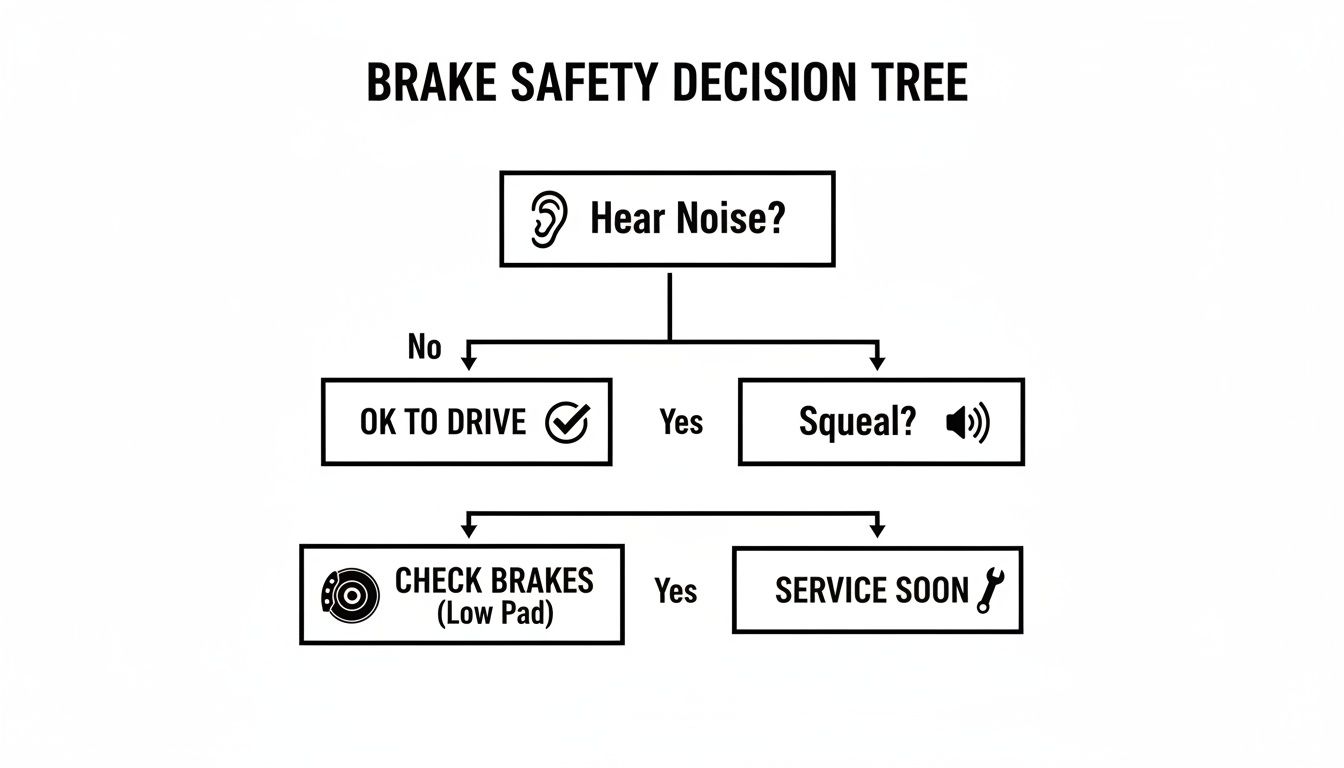
As the chart illustrates, even a seemingly minor squeal is a valid reason to schedule a service. Early detection empowers you to seek expert brake repair in Plano, TX, before a small warning escalates into a serious safety hazard.
Understanding Your Brake Service Options
When you seek brake repair in Plano, TX, it's helpful to understand that "brake service" encompasses a range of procedures targeting specific parts of your braking system. Your vehicle's ability to stop safely relies on the flawless collaboration of these components.
If one part fails to perform its function, the entire system's integrity is compromised. Let's delve into the key components of your car's braking system and their functions.
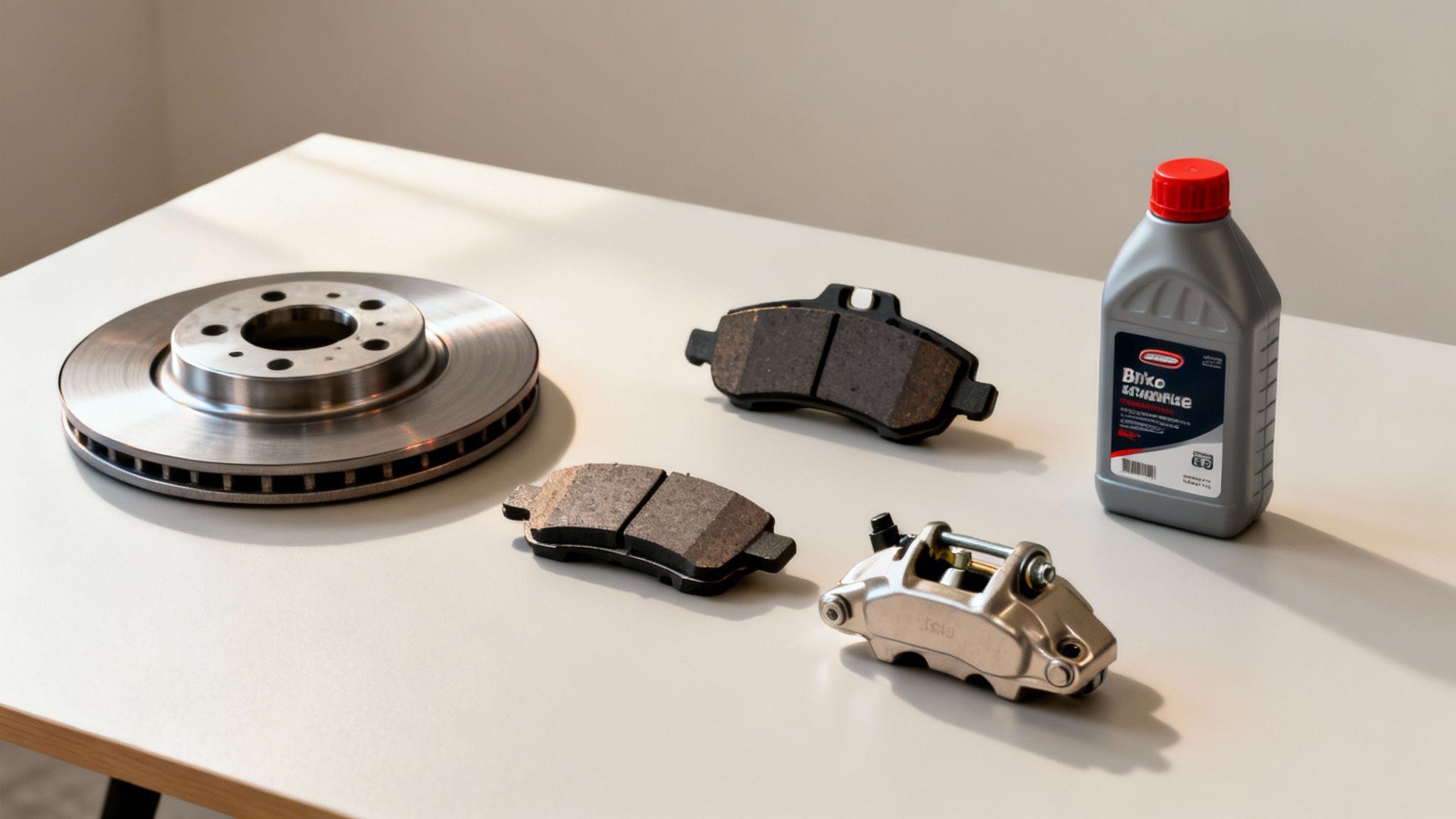
Brake Pads: The Source of Friction
Brake pads are the components that perform the most demanding work. When you depress the brake pedal, the pads are pressed against the brake rotors, creating the friction required to slow the wheels. They are designed as consumable items, meaning they wear down over time to protect more costly parts.
Consequently, brake pads are the most frequently replaced component during a brake service. Neglecting worn pads leads to the grinding noise discussed earlier, which is a clear indication of rotor damage.
Rotors: The Discs That Stop the Wheels
Rotors are the large metal discs visible behind your vehicle's wheels. They rotate in sync with the wheels, and the brake pads apply pressure to their surface to halt the car. The immense heat and friction generated during braking cause rotors to wear thin, warp, or develop surface irregularities over time.
When a rotor's condition is compromised, there are two possible solutions:
- Resurfacing: If the rotor still has sufficient thickness according to manufacturer specifications, a technician can machine its surface on a brake lathe. This process restores a perfectly flat, smooth surface for the new brake pads to contact.
- Replacement: If a rotor is worn below its minimum safe thickness or is warped beyond repair, it must be replaced. Operating a vehicle with compromised rotors poses a serious safety risk and significantly diminishes braking effectiveness.
An analogy to understand this relationship is a pencil and paper. The brake pad acts as the pencil, designed to wear down as it "writes" on the paper (the rotor). Eventually, both must be replaced for the system to function correctly.
Calipers: The Hydraulic Clamps
The caliper is the hydraulic component that houses the brake pads. When you press the brake pedal, hydraulic fluid activates a piston within the caliper, forcing it to squeeze the pads against the rotor. While calipers are durable, they can eventually seize or develop fluid leaks.
A seized caliper is a critical issue. It may cause the pads to remain in constant contact with the rotor, leading to overheating and accelerated wear. Conversely, a faulty caliper might fail to apply pressure, resulting in an imbalance that causes the vehicle to pull sharply to one side during braking.
Brake Fluid: The System's Hydraulic Lifeblood
Brake fluid is the hydraulic medium that transmits force from your foot on the pedal to the calipers at each wheel. Over time, brake fluid absorbs atmospheric moisture, which lowers its boiling point and can cause corrosion within the brake lines and other hydraulic components.
A brake fluid flush is a maintenance procedure that removes old, contaminated fluid and replaces it with fresh, new fluid. This service is vital for maintaining a firm pedal feel and preventing long-term internal damage to expensive components like the master cylinder or Anti-lock Brake System (ABS) module. The importance of these parts is reflected in the market size; the global brake parts segment of the automotive aftermarket is valued at $34,609.8 million in 2025. You can explore these trends on Grand View Research.
What a Professional Brake Inspection Involves
A comprehensive brake inspection is a systematic, diagnostic process that goes far beyond a cursory visual check. For any reputable brake repair in Plano, TX, the process begins not with tools, but with communication. A skilled technician will first listen to your description of the issue—the sounds, the pedal feel, and the conditions under which the problem occurs. This information provides crucial diagnostic clues.
Following this initial consultation, a hands-on evaluation begins. The vehicle is raised on a lift to allow for a clear, unobstructed view of the entire braking system. This is where a technician's training and experience become invaluable, as they can identify subtle signs of wear or impending failure that might otherwise be missed.
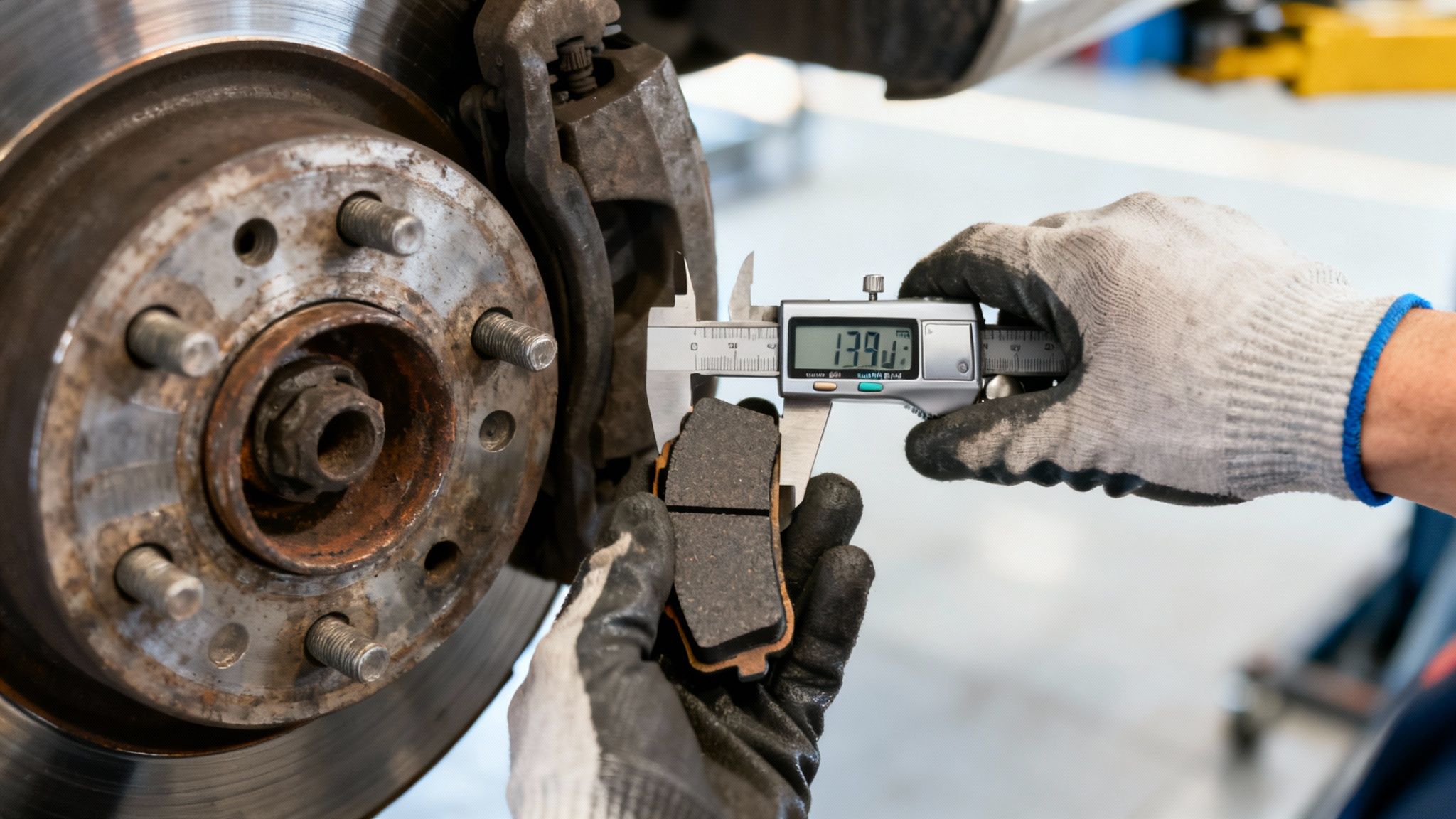
The Hands-On Evaluation Process
During the inspection, key components are meticulously checked and measured to determine their remaining service life. This procedure is akin to a complete physical examination for your brakes.
The critical checkpoints include:
- Measuring Brake Pad Thickness: A specialized gauge is used to obtain a precise measurement of the brake pad's friction material. This measurement is compared against the manufacturer's minimum safety specifications to determine exactly how much service life remains.
- Examining Rotor Surfaces: The rotors are inspected for deep grooves, scoring, or the characteristic bluish discoloration that indicates overheating. The technician will also check for warping or runout, the primary cause of pedal pulsation.
- Checking Brake Lines and Hoses: All hydraulic lines and rubber hoses are carefully inspected for cracks, brittleness, swelling, or leaks. A compromised brake hose can lead to a sudden and complete loss of braking pressure.
- Assessing Brake Fluid: The brake fluid is checked for both level and condition. Dark, murky fluid is a clear indicator of moisture contamination, which can lead to internal corrosion of brake components.
A thorough inspection provides a complete diagnostic picture of your brake system's health. It is a proactive measure that uncovers hidden problems before they become dangerous, ensuring every component is functioning as intended.
Clear Communication and Transparent Estimates
Once the physical inspection is complete, the final and most important step is communicating the findings to you. A professional service provider will explain the results in clear, understandable terms, avoiding technical jargon. They should be willing to show you the worn components on your vehicle and explain precisely why service is recommended. To better understand the scope of potential services, you can learn more about what a full brake service includes in our guide.
You will then be provided with a detailed, itemized estimate outlining the costs for parts and labor. This transparent process ensures you have all the information needed to make an educated decision about your vehicle's safety. With the automotive brake pad market projected to reach $6.08 billion by 2032, it's evident that investing in quality components and transparent service is a prudent choice.
Why Professional Brake Service Is a Smart Investment
While a do-it-yourself brake job might seem like a way to save money, the braking system is one area of vehicle maintenance where professional expertise is paramount. Your car's brakes are a complex system of interconnected mechanical and hydraulic parts that must work in perfect harmony to ensure your safety.
Choosing a professional for your brake repair in Plano, TX, is a direct investment in that safety and your peace of mind. You are not just paying for new parts; you are paying for expertise, precision, and accountability.
The primary benefit of professional service is expertise. An ASE-certified technician is a highly trained professional who has passed rigorous examinations to validate their knowledge and skills. They possess the specialized tools, diagnostic equipment, and technical information required to perform the job correctly, ensuring every bolt is torqued to precise manufacturer specifications.
Navigating Modern Braking Systems
This level of expertise is more critical today than ever before. Modern vehicles are equipped with sophisticated technologies like Anti-lock Braking Systems (ABS) and Advanced Driver-Assistance Systems (ADAS), which include features like automatic emergency braking.
These systems are intricately integrated with your vehicle's core braking components. An improper repair, or even the installation of incorrect parts, can disrupt these systems, potentially causing critical safety features to malfunction. A professional technician understands the procedures required to service your brakes without compromising the complex electronics that rely on them—a level of detail not found in a typical online tutorial.
Opting for professional service is not merely paying for labor; it is investing in precision, safety, and the assurance that the work has been completed correctly by a qualified expert.
The Value of Quality Parts and Long-Term Savings
A reputable auto repair facility will always use high-quality parts that meet or exceed Original Equipment Manufacturer (OEM) standards. While cheaper aftermarket parts are available, they often have a shorter service life and may not provide the same level of performance, potentially leading to reduced stopping power or even damage to other components.
Quality parts perform better and last longer, which reduces the frequency and long-term cost of repairs. To get a better sense of typical service intervals, you can learn more about how long brakes typically last in our detailed article.
Ultimately, professional brake service saves money over the long term. By identifying related issues during an inspection—such as a leaking caliper or a failing wheel bearing—a technician can prevent a minor problem from escalating into a major, costly failure. It's no wonder the global automotive brake systems market is projected to reach $52.51 billion by 2029, largely driven by the increasing technological complexity of modern vehicles. You can see more details on the growing brake systems market at Research and Markets. Investing in professional service is the most intelligent approach to maintaining your vehicle's most vital safety system.
Your Plano Brake Repair Questions Answered
Even with a solid understanding of brake systems, specific questions often arise when service is due. To help you feel confident when seeking brake repair in Plano, TX, we have compiled answers to the most common questions our technicians receive.
Our objective is to provide clear, straightforward information to help you maintain your vehicle's safety.
How Often Should I Get My Brakes Inspected?
As a general guideline, we recommend a comprehensive brake inspection at least once per year or every 12,000 miles. However, driving conditions in and around Plano can significantly impact brake wear. Frequent stop-and-go traffic, such as that found on the President George Bush Turnpike, accelerates the wear of brake pads and rotors.
A practical approach is to request a brake check during every tire rotation service. The wheels are already being removed, providing a perfect opportunity for a technician to perform a visual inspection without adding significant time to your visit.
What Is the Average Cost of Brake Pad Replacement in Plano TX?
The cost of brake pad replacement varies depending on the vehicle's make and model, as well as the quality of the replacement parts used. On average, you can expect the cost to range from $150 to $300 for one axle (either front or rear).
This cost may increase if the rotors are also worn or warped and require resurfacing or replacement. Any reputable repair shop will provide a detailed, itemized estimate after a thorough inspection, ensuring you understand all costs before any work is performed.
An upfront, detailed estimate is a hallmark of a trustworthy shop. It empowers you to make an informed decision based on transparent information about your vehicle's needs.
Can I Drive with the Brake Warning Light On?
It is strongly advised against driving with an illuminated brake warning light. This light is a critical alert from your vehicle's onboard diagnostic system. The cause could be relatively minor, such as low brake fluid, or it could indicate a major failure in the hydraulic system.
Ignoring this warning poses a significant safety risk and could compromise your ability to stop the vehicle. The vehicle should be inspected by a professional as soon as possible to diagnose the underlying issue and ensure it is safe to operate.
What Are the Benefits of an ASE Certified Technician for My Brake Repair?
The Automotive Service Excellence (ASE) certification is a credential that signifies a mechanic has met high standards of knowledge and competence. For a system as critical as your brakes, this certification provides invaluable peace of mind.
Here’s what ASE certification means for your brake service:
- Expert Knowledge: The technician understands the intricacies of modern braking systems, including ABS and traction control.
- Proper Procedures: They adhere to manufacturer-specified procedures and use the correct tools, ensuring the job is done right the first time.
- Guaranteed Quality: Their proven expertise ensures the quality of the workmanship and the safety of your vehicle.
When it comes to your safety, compromise is not an option. At Express Lube & Car Care, our ASE-certified technicians provide reliable, transparent, and educational brake repair services for Plano drivers. Visit us anytime—no appointment is necessary—or give us a call. Your safety is our top priority.
Learn more about our complete auto care services at Express Lube & Car Care