

Commuter car maintenance priorities are defined as the ranked set of vehicle services that prevent breakdowns, protect safety, and control costs for drivers who face daily stop-and-go traffic. The average American driver should budget about $1,650 annually for maintenance and repairs. That figure climbs fast when commuters skip services or follow schedules built for light weekend drivers. This guide covers commuter car maintenance priorities explained in full, from the safety-critical tasks you cannot delay to the simple DIY checks that save real money every year.
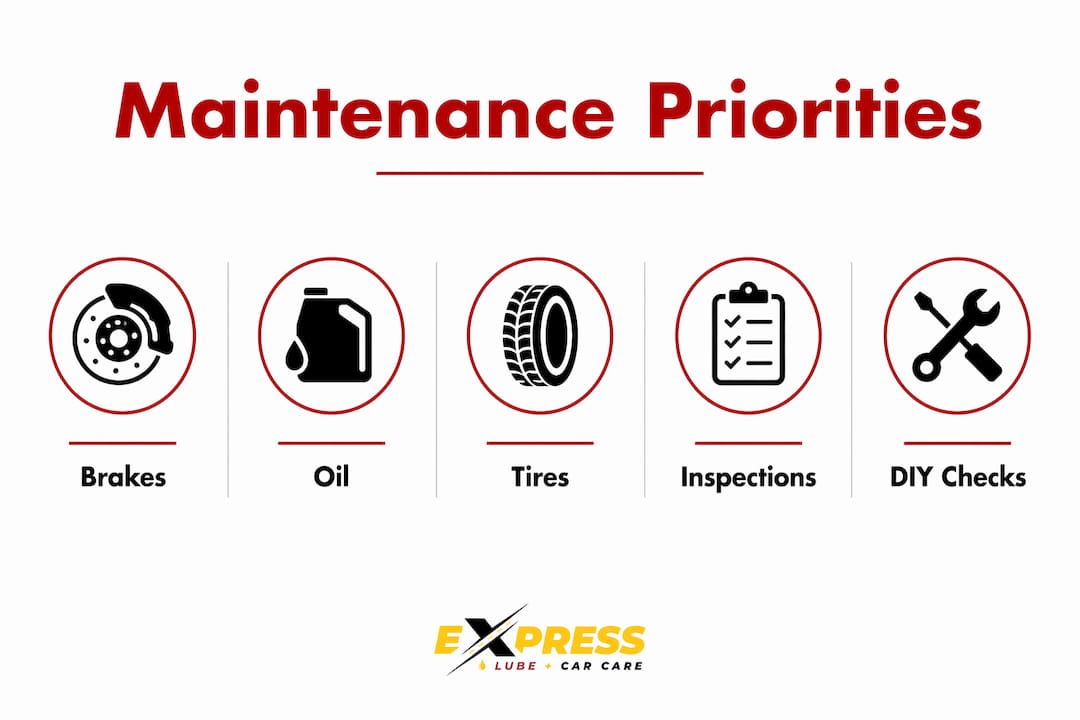
Which car maintenance tasks are most critical for commuter safety?
Brakes, tires, and oil changes are the three non-negotiable priorities for any daily driver. Each one directly affects your ability to control the vehicle and avoid a breakdown on a busy highway.
Brakes
Commuters in heavy stop-and-go traffic should inspect brakes every 6 months, not just at annual service intervals. That frequency matters because repeated hard stops heat brake pads faster than highway driving does. Routine brake pad replacement every 30,000 miles prevents far more expensive rotor and caliper damage. Replacing a worn pad costs a fraction of machining or replacing a scored rotor.
Tires
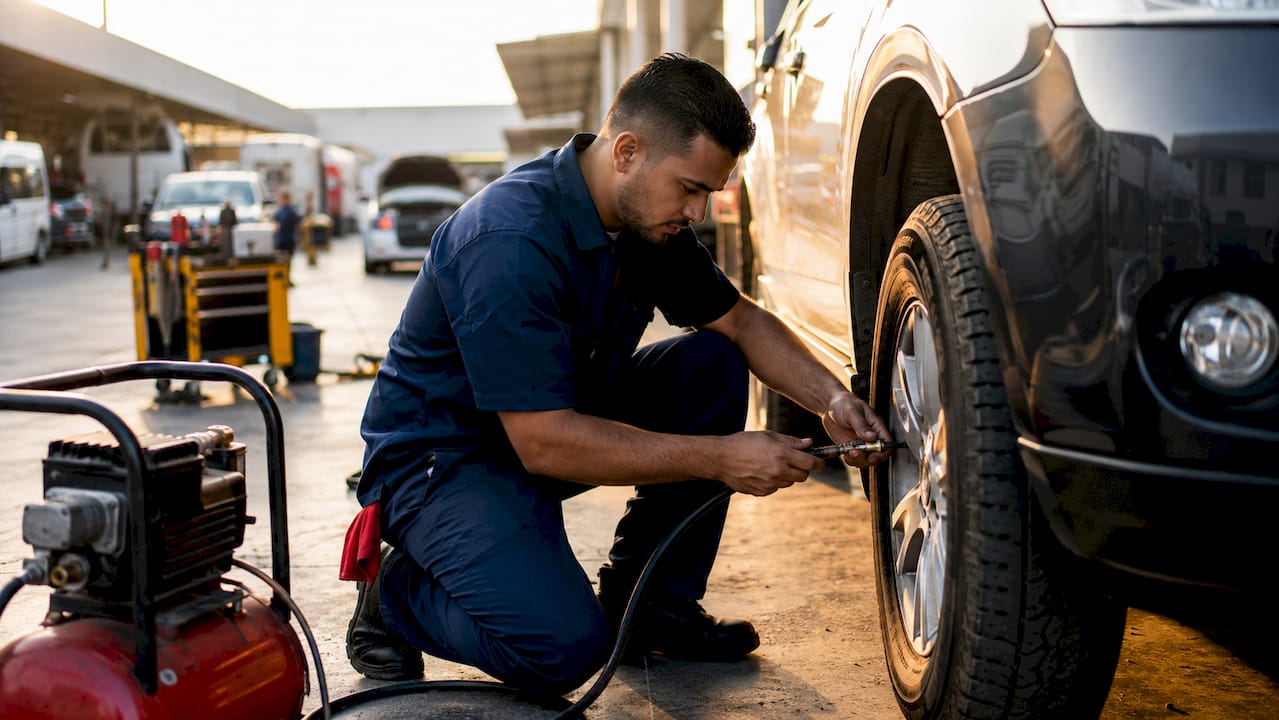
Tire pressure drops roughly 1 PSI for every 10-degree Fahrenheit drop in temperature. Under-inflated tires wear unevenly, reduce fuel economy, and increase stopping distances. Check pressure monthly, and rotate tires every 5,000–7,500 miles to extend tread life evenly across all four corners.
Oil changes
Oil is the lifeblood of your engine, and commuter conditions degrade it faster than the odometer alone suggests. Follow your manufacturer’s severe-use schedule, not the standard one, if your daily drive involves frequent short trips under 10 miles or extended idling. A routine car maintenance checklist built around your actual driving conditions is far more reliable than a generic mileage sticker.
Pro Tip: Watch for three early warning signs: a soft or pulsing brake pedal, a pulling sensation when braking, and squealing or grinding sounds. Any one of these signals an immediate inspection, not a wait-until-next-service situation.
How do heavy commuting conditions affect your maintenance schedule?
Heavy daily commuting qualifies as severe use under most manufacturer guidelines. Idling, short trips, and stop-and-go traffic all accelerate wear on the engine, brakes, and transmission beyond what mileage numbers show. That distinction changes everything about how you should schedule service.
Here is what severe commuting conditions do to your vehicle:
- Engine oil degrades faster. Short trips prevent the engine from reaching full operating temperature, which means moisture and fuel residue accumulate in the oil rather than burning off.
- Brake pads wear down sooner. Repeated low-speed stops in traffic generate more total braking events per mile than highway driving.
- Transmission fluid breaks down. Constant gear changes in slow traffic heat automatic transmission fluid, reducing its protective properties.
- Battery cycles more frequently. Stop-and-go driving means the alternator works harder to recharge the battery after each restart.
- Coolant system works overtime. Idling produces heat without the airflow that highway speeds provide, stressing the radiator and coolant.
The biggest mistake commuters make is skipping small maintenance tasks to save money. Neglecting a $12 oil filter or a $30 fluid top-off leads to engine or drivetrain failures that cost thousands. The math never favors skipping service.
Adapting your schedule means shortening oil change intervals, checking brake pad thickness at every tire rotation, and inspecting transmission fluid color every 15,000 miles rather than 30,000. A mileage-based maintenance schedule adjusted for severe conditions gives you a reliable framework.
What cost-saving checks can commuters do themselves?
Simple DIY maintenance tasks can save commuters $300–$500 annually. That is real money recovered from tasks that take less than 30 minutes and require no special tools.
The tasks with the best return on your time are:
- Tire pressure checks. A quality digital gauge costs under $15. Checking pressure monthly prevents uneven wear and improves fuel economy.
- Cabin air filter replacement. Most cabin filters slide out without tools. A replacement filter costs $15–$25 at any auto parts store, versus $50–$80 at a shop.
- Wiper blade replacement. Worn blades reduce visibility in rain. New blades cost $10–$20 each and snap on in minutes.
- Fluid top-offs. Windshield washer fluid, coolant reservoir level, and power steering fluid are all visible through translucent reservoirs. Topping them off takes two minutes.
- Battery terminal cleaning. White or blue corrosion on battery terminals increases resistance and can cause no-start situations. A wire brush and a tablespoon of baking soda dissolved in water clears it in minutes.
For a full list of tasks you can handle at home, the local auto maintenance checklist from Express Lube & Car Care breaks down what is DIY-friendly and what genuinely needs a certified technician.
Pro Tip: Keep a small notebook or a phone note with the date and mileage every time you check or top off a fluid. That log becomes valuable when a technician asks about your service history, and it helps you spot patterns before they become problems.
How should busy commuters schedule professional service efficiently?
Scheduling professional service at the right time cuts wait times and improves the quality of attention your vehicle receives. Off-peak shop hours deliver faster service and more focused technician time. Most shops are busiest on saturday mornings and monday afternoons. Tuesday through thursday, mid-morning, is typically the quietest window.
A practical scheduling system for commuters looks like this:
- Keep a maintenance log. Record every service date, mileage, and what was done. This prevents duplicate services and shows gaps at a glance.
- Schedule ahead, not reactively. Book your next oil change before you leave the shop from your current one. Reactive scheduling means you are already overdue.
- Use no-appointment service when time is tight. Express Lube & Car Care offers no-appointment service for oil changes and routine maintenance, which fits unpredictable commuter schedules.
- Batch related services. Combine a tire rotation with an oil change. Combine a brake inspection with a fluid check. Batching cuts total shop visits per year.
- Check extended warranty requirements. Many extended warranties require documented service at specific intervals. Missing a scheduled service can void coverage on a major repair.
For commuters who cannot afford long waits, understanding fast turnaround repair options is worth the research before you need urgent service.
What driving habits reduce wear on your commuter car?
Driving behavior is a form of preventative maintenance. Changing how you drive reduces brake wear and transmission stress without spending a dollar.
- Increase your following distance. A longer gap between you and the car ahead lets you coast to a stop rather than brake hard. Coasting uses engine braking and reduces pad wear significantly.
- Avoid aggressive acceleration. Hard acceleration from a stop stresses the drivetrain and burns more fuel. Smooth, gradual acceleration extends transmission and engine life.
- Let the engine idle briefly after intense drives. Idling 30–60 seconds after heavy stop-and-go driving lets oil and coolant circulate and reduce peak temperatures. This is especially relevant after long uphill drives or summer commutes in high heat.
- Disable auto stop-start in heavy traffic if your vehicle allows it. Repeated micro-restarts in bumper-to-bumper traffic cycle the starter motor and battery more than a steady idle does.
Pro Tip: Treat the accelerator like a dimmer switch, not a light switch. Smooth inputs in and out of speed changes reduce wear on every component from the tires to the transmission.
Key Takeaways
Prioritizing brakes, oil, and tires on a severe-use schedule is the single most effective way for commuters to prevent breakdowns and control long-term repair costs.
| Point | Details |
|---|---|
| Brakes are the top safety priority | Inspect brake pads every 6 months in stop-and-go traffic, not just at annual service. |
| Severe use changes your schedule | Short trips and idling degrade oil and brakes faster than mileage alone indicates. |
| DIY tasks save $300–$500 per year | Tire pressure, cabin filters, and fluid top-offs are quick wins requiring no special tools. |
| Off-peak scheduling saves time | Book service tuesday through thursday, mid-morning, for shorter waits and better technician focus. |
| Driving habits are free maintenance | Smooth acceleration and longer following distance reduce brake and drivetrain wear at zero cost. |
What we see every day at Express Lube & Car Care
The pattern we see most often is a commuter who has been following the standard oil change sticker on the windshield, not the severe-use interval in the owner’s manual. Those two numbers can differ by 2,000–3,000 miles. By the time the driver notices something is off, the oil has been working past its effective life for weeks.
The second pattern is deferred brake service. Drivers hear the early squeal and assume it is just dust or a cold morning. Sometimes it is. More often, it is a wear indicator telling you the pad is approaching metal-on-metal contact. A brake inspection takes less than 15 minutes. A rotor replacement takes considerably longer and costs considerably more.
What I find genuinely encouraging is how quickly commuters turn things around once they understand the severe-use distinction. Switching from a 5,000-mile to a 3,500-mile oil change interval, adding a mid-year brake check, and doing a few DIY fluid checks at home. Those three changes alone put most commuters in a much stronger position. The vehicle runs better, the repair bills shrink, and the driver stops white-knuckling it every time a warning light flickers. Proactive maintenance is not about spending more. It is about spending at the right time, before a small problem becomes an expensive one.
— Express Lube & Car Care
Express Lube & Car Care is built for commuter schedules
Commuters do not have time to wait in a long service queue on a saturday morning. Express Lube & Car Care offers no-appointment-needed service for oil changes, brake inspections, and routine maintenance, so you can pull in when it works for you, not when the calendar forces it.
Certified technicians handle everything from oil change specials to full brake pad and rotor service with a focus on speed and accuracy. Military and healthcare workers receive special discounts as a thank-you for their service. Check the current maintenance coupons before your next visit and put those savings directly back into your commute budget.
FAQ
How often should commuters change their oil?
Commuters in stop-and-go traffic qualify as severe-use drivers and should follow the severe-use oil change interval in their owner’s manual, which is typically shorter than the standard interval by 1,500–2,000 miles.
What are the top maintenance priorities for a daily driver?
Brakes, tires, and engine oil are the three highest priorities. Brake inspections every 6 months, monthly tire pressure checks, and oil changes on a severe-use schedule cover the most critical systems.
Can simple DIY tasks really save money on commuter car upkeep?
Replacing cabin air filters, checking tire pressure, and topping off fluids can save $300–$500 annually. These tasks require no special tools and take under 30 minutes combined.
What counts as severe driving for maintenance purposes?
Severe driving includes frequent trips under 10 miles, extended idling, and regular stop-and-go traffic. These conditions accelerate oil degradation and brake wear beyond what standard mileage-based schedules account for.
Does driving style actually affect how often I need service?
Driving style directly affects wear rates. Smooth acceleration, longer following distances, and brief post-drive idling all reduce stress on brakes, the transmission, and the engine, which extends service intervals and lowers repair costs.