
Express auto services are defined as fast, efficient vehicle maintenance and repair tasks completed in a single short visit, covering everything from oil changes to brake inspections without requiring a full-day appointment. The types of express auto services available today go well beyond the basic oil change. Brake service, air conditioning maintenance, tire care, cooling system checks, and fluid replacements all qualify as quick auto repair options that protect your vehicle without disrupting your schedule. Express Lube & Car Care built its entire model around this reality: certified technicians, no appointment needed, and quality that does not get traded away for speed.
1. What types of express auto services are most common?
Express auto services commonly include oil changes, brake service, air conditioning maintenance, tire rotations, alignment checks, cooling system flushes, exhaust inspections, fuel system cleaning, and suspension checks. That list covers the core systems your vehicle depends on every day. Each of these tasks is designed to be completed efficiently without skipping the steps that protect your engine, brakes, and tires.
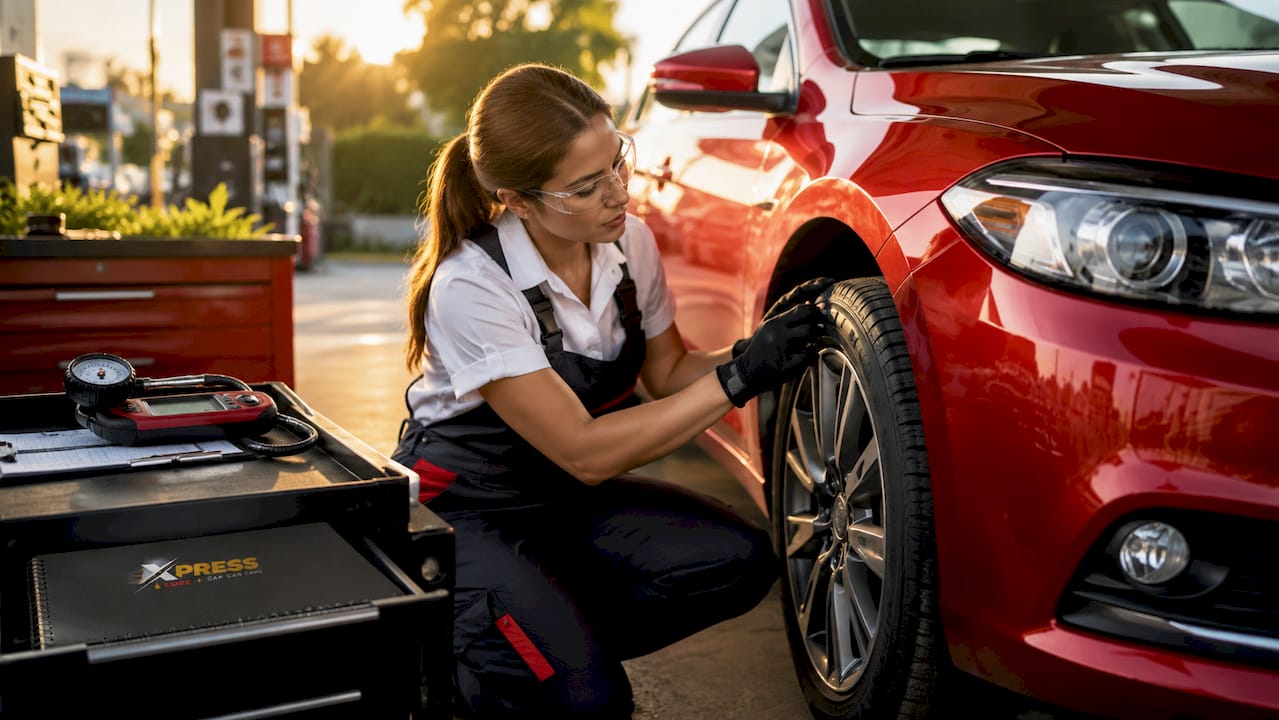
The industry term for this category is “preventive maintenance,” and express services represent its fastest delivery format. Preventive maintenance addresses small problems before they become expensive repairs. A brake fluid check that takes 10 minutes can prevent a brake failure that costs hundreds of dollars.
Pro Tip: Combine two or three express services in a single visit. Tire rotation paired with an oil change and fluid top-off covers three maintenance priorities in the time most people spend waiting for a table at lunch.
2. Express oil changes: the foundation of fast vehicle maintenance
An express oil change is the most requested short duration auto service, and for good reason. Engine oil degrades over time, losing its ability to lubricate moving parts and carry heat away from the engine. Fast oil change service includes selecting the correct oil type, replacing the filter, and verifying all fluid levels through a repeatable, efficient process.
The oil type selection matters more than most drivers realize. Using the wrong viscosity grade, such as 5W-30 in an engine that requires 0W-20, increases wear and can void manufacturer warranties. A trained technician cross-references your vehicle’s specifications before touching the drain plug. That step takes seconds and protects thousands of dollars in engine components.
Proper oil change equipment also plays a direct role in quality. A calibrated torque wrench on the drain plug prevents both leaks and stripped threads. Think of a professional oil change bay the way you would a commercial kitchen: the right tools in the right hands produce consistent results every time.
3. Brake services: quick inspections that protect lives
Brake service ranks as one of the most safety-critical express car services available. A quick brake inspection covers pad thickness, rotor condition, caliper function, and brake fluid level. Brake pad wear indicators produce a distinct squeal when pads reach minimum thickness, but waiting for that sound means you are already at the edge of safe stopping distance.
Brake fluid absorbs moisture over time, which lowers its boiling point and reduces stopping power. Replacing brake fluid is a fast service that most drivers overlook until a problem appears. Catching it early costs far less than replacing warped rotors or damaged calipers. A full brake service overview explains exactly which components get inspected and why each one matters.
4. Air conditioning maintenance: comfort and system health
Air conditioning service is a fast vehicle maintenance task that protects both cabin comfort and the A/C compressor. A refrigerant check, cabin air filter replacement, and leak inspection can be completed in a single short visit. Low refrigerant forces the compressor to work harder, which shortens its lifespan and leads to a costly replacement.
Cabin air filters trap dust, pollen, and debris before they enter the ventilation system. A clogged filter reduces airflow and forces the blower motor to work against resistance. Replacing it takes minutes and noticeably improves air quality inside the vehicle.
5. Tire services: rotation, pressure, and minor repairs
Tire rotation is one of the most straightforward express auto services, and one of the most consistently skipped. Uneven tire wear shortens tire life and affects handling. Rotating tires on a regular schedule distributes wear evenly across all four positions, extending the set’s usable life.
Tire pressure checks take under two minutes and directly affect fuel economy, handling, and tire wear rate. Under-inflated tires generate excess heat, which accelerates tread degradation. Many express service visits include a pressure adjustment as part of a bundled check at no additional charge.
6. Cooling system and radiator checks
The cooling system keeps your engine from overheating, and a quick coolant check or flush is a standard express service. Low coolant or degraded antifreeze leads to overheating, which can warp cylinder heads and cause engine damage that costs thousands to repair. A coolant flush removes old fluid and deposits, restoring the system’s ability to regulate engine temperature.
Radiator hoses and the thermostat are also inspected during a cooling system check. A cracked hose can fail suddenly and leave you stranded. Catching it during a scheduled express visit costs far less than a roadside tow.
7. Fluid checks and replacements: the overlooked essentials
Fluid maintenance at express service visits covers brake fluid, coolant, transmission fluid, power steering fluid, and windshield washer fluid. These checks are preventive measures that avoid major, expensive repairs down the road. Transmission fluid, in particular, is one of the most commonly neglected services.
Dirty transmission fluid loses its ability to lubricate and cool the transmission. Replacing it at the manufacturer’s recommended interval costs a fraction of a transmission rebuild. Express service centers stock these fluids and can complete most replacements in a single visit.
8. Alignment checks and suspension inspections
Alignment and suspension checks qualify as instant auto diagnostics that reveal how your vehicle’s steering and handling systems are performing. A vehicle that pulls to one side or produces uneven tire wear almost always has an alignment issue. Catching it early prevents accelerated tire wear and protects steering components.
Suspension inspections cover shocks, struts, ball joints, and tie rods. Worn shocks reduce braking effectiveness and handling precision. A quick visual and functional check during an express visit identifies components that need attention before they fail.
9. How express auto service maintains quality despite speed
Express service quality comes from preparation, not shortcuts. Professional shops maintain organized bays, clear role assignments, and stocked parts to deliver fast turnaround without skipping critical steps. Speed is a product of process efficiency, not reduced thoroughness.
The standardized workflow at a professional express center works like this:
- The vehicle is checked in and the service history is reviewed.
- The technician confirms the correct fluids, filters, and parts before starting.
- Each step follows a fixed sequence to prevent omissions.
- A quality check verifies fluid levels, torque specs, and component condition before the vehicle is returned.
- The service record is updated to support warranty compliance and future maintenance planning.
Pro Tip: Ask for a printed service record at every visit. That document protects your warranty, helps you track maintenance intervals, and adds value when you sell the vehicle.
Keeping detailed service records is a practice that high-mileage vehicle owners consistently follow. It removes guesswork from future service decisions and gives technicians accurate context for every visit.
10. How to choose the right express services for your vehicle
Choosing the right quick auto repair options starts with your owner’s manual. Manufacturers specify exact intervals for oil changes, brake fluid replacement, coolant flushes, transmission service, and filter replacements. Those intervals are based on engineering data, not guesswork.
Use these criteria to prioritize your express service visits:
- Mileage thresholds: Check your manual for services due at 5,000, 15,000, 30,000, and 60,000 miles. Missing these windows accelerates wear.
- Vehicle age: Older vehicles need more frequent fluid checks because seals and hoses degrade over time.
- Seasonal needs: A/C service before summer and coolant checks before winter address predictable seasonal stress on your vehicle.
- Warning signs: Brake squealing, pulling during steering, or dashboard warning lights signal that an express inspection should happen immediately, not at the next scheduled interval.
- Budget: Prioritize safety-critical services like brakes and tires first. Cosmetic or comfort services can wait if budget is tight.
Trusted local shops provide better value than dealerships for most out-of-warranty vehicles. Independent express service centers offer competitive pricing, flexible parts options, and more personalized attention. Many independent shops offer warranties covering 2–3 years or 24,000–36,000 miles, which rivals dealership coverage at a lower cost.
11. Express service comparison: speed, cost, and impact
The table below compares common express services by typical time required, general cost range, and primary maintenance benefit. Cost ranges reflect general market averages and vary by vehicle type and location.
| Service | Typical Time | Cost Range | Primary Impact |
|---|---|---|---|
| Oil and filter change | 15–30 minutes | $40–$100 | Engine protection and longevity |
| Brake inspection | 20–30 minutes | $20–$50 | Safety and stopping performance |
| Tire rotation | 15–30 minutes | $20–$50 | Even wear and extended tire life |
| Cabin air filter replacement | 10–15 minutes | $20–$60 | Air quality and blower motor health |
| Coolant top-off or flush | 20–45 minutes | $30–$150 | Engine temperature regulation |
| Brake fluid replacement | 20–30 minutes | $70–$130 | Brake system reliability |
| Transmission fluid service | 30–60 minutes | $80–$200 | Transmission longevity |
| A/C refrigerant check | 15–30 minutes | $30–$100 | Compressor protection and comfort |
Emergency brake service takes priority over a scheduled tire rotation every time. If your brakes are showing wear indicators, book that visit before anything else. Tire rotation and fluid top-offs can be combined in a single visit to cover multiple priorities without multiple trips.
Bundled express services help busy drivers cover several maintenance tasks in one appointment. That approach saves time and often comes with package pricing that reduces the total cost compared to booking each service separately.
Key takeaways
Reaching high vehicle mileage is not luck. Strict adherence to routine, mileage-based maintenance through express services prevents costly breakdowns and keeps vehicles performing reliably for years.
| Point | Details |
|---|---|
| Express services cover more than oil changes | Brake, A/C, tire, fluid, and cooling system services all qualify as fast express options. |
| Speed does not reduce quality | Standardized workflows and stocked parts allow professional shops to deliver thorough service quickly. |
| Owner’s manual sets the schedule | Manufacturer intervals for fluids and filters are the most reliable guide for service timing. |
| Local shops offer strong value | Independent express centers often match or beat dealership warranties at lower labor rates. |
| Bundling saves time and money | Combining oil changes, tire rotations, and fluid checks in one visit covers multiple priorities efficiently. |
Why routine express services are the smartest investment you make in your vehicle
At Express Lube & Car Care, we see the same pattern every week. Drivers come in with a problem that started small and became expensive because it was not caught early. A brake fluid service skipped at 30,000 miles turns into a caliper replacement at 45,000 miles. A coolant flush deferred for two years turns into a cracked head gasket. The math is not complicated.
The vehicles that reach 200,000 miles are not special. Their owners are. They follow the maintenance schedule, they keep records, and they treat express services as investments rather than expenses. Fast service done right is not a compromise. It is the most efficient way to protect a vehicle that costs tens of thousands of dollars.
We also see drivers assume that dealerships are the only option for quality service. That assumption costs money. Local independent shops that specialize in express maintenance deliver comparable results with more flexibility, faster turnaround, and pricing that reflects the actual cost of the work. The key is choosing a shop with certified technicians, a clear process, and a commitment to documenting every service.
Keep your service records. Schedule your next visit before you leave the current one. And do not wait for a warning light to tell you something needs attention.
— Express Lube & Car Care
Express Lube & Car Care: fast service with nothing left out
Express Lube & Car Care in Plano, TX handles the full range of express vehicle maintenance, including oil changes, brake service, air conditioning, tire care, fluid replacements, and transmission service, all without requiring an appointment.
Certified technicians follow a standardized process on every vehicle, so speed never comes at the expense of accuracy. Current oil change and service specials include bundled packages that cover multiple maintenance priorities in a single visit, with discounts available for military personnel and healthcare providers. Check the current specials online, then drive in when it fits your schedule. No appointment needed.
FAQ
What is express auto service?
Express auto service is a category of fast vehicle maintenance and minor repair tasks, including oil changes, brake inspections, tire rotations, and fluid checks, completed in a single short visit without a full-day appointment.
How long does a typical express auto service take?
Most express services take between 15 and 45 minutes. Oil changes typically finish in 15–30 minutes, while more involved services like transmission fluid replacement may take up to 60 minutes.
Does fast service mean lower quality?
Fast service does not mean lower quality. Professional express centers use standardized workflows, pre-stocked parts, and trained technicians to deliver thorough service efficiently without skipping critical steps.
How do I know which express services my vehicle needs?
Consult your vehicle’s owner’s manual for manufacturer-specified service intervals. Mileage thresholds for oil changes, brake fluid, coolant, and transmission fluid are listed there and provide the most accurate guide for scheduling.
Are independent express shops as reliable as dealerships?
Independent express service centers are reliable for most vehicles, particularly those out of manufacturer warranty. Many offer warranties covering 2–3 years or 24,000–36,000 miles, and their labor rates are generally lower than dealership rates.