

A family vehicle maintenance schedule is a mileage- and time-based plan that tells you exactly when to perform key services like oil changes, tire rotations, and fluid checks to keep your car safe and reliable. Gas-powered vehicle owners paid more than $1,300 annually on maintenance as of 2025. That number drops significantly when families follow a consistent upkeep plan rather than reacting to breakdowns. Skipping scheduled service creates a domino effect of repairs that costs far more than the original service would have. This guide covers the family vehicle maintenance schedule explained in full, from core intervals to seasonal adjustments and record keeping.
What are the essential maintenance tasks for family vehicles?
The foundation of any vehicle upkeep plan is a short list of recurring services tied to mileage or time. Getting these right protects your engine, tires, and brakes before problems develop.
Oil and filter changes
Modern synthetic oil lasts 7,500–10,000 miles under normal driving conditions. Most manufacturers recommend an oil and filter change every 5,000–7,500 miles for vehicles running synthetic oil. Your owner’s manual is the final authority on this interval. Families who drive in stop-and-go traffic or take frequent short trips should lean toward the lower end of that range.
Pro Tip: Never rely on the old 3,000-mile rule. That standard applied to conventional oil decades ago. Synthetic oil performs reliably well past that mark, and changing it too early wastes money without adding protection.
Tire rotations and pressure checks
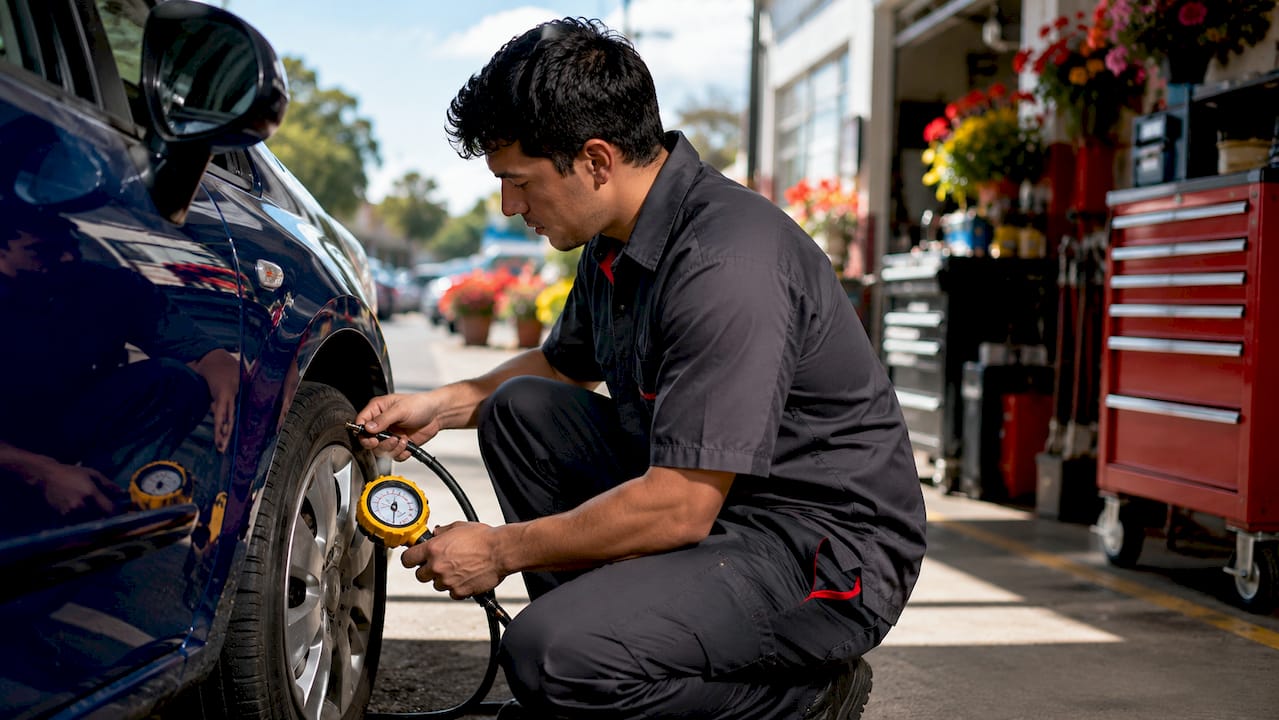
Tire rotations should happen every 5,000–8,000 miles to distribute tread wear evenly across all four tires. Uneven wear shortens tire life and reduces handling stability, which matters when you are driving kids to school or sports practice. Checking tire pressure monthly takes two minutes and prevents blowouts. Many families pair tire rotations with oil changes to keep both on the same schedule. For a detailed breakdown of timing, the tire rotation guide at Express Lube & Car Care covers intervals by vehicle type.
Fluid inspections and brake checks
A complete family car maintenance checklist includes coolant, brake fluid, transmission fluid, and power steering fluid. Each fluid degrades over time and under heat. Brake inspections should happen at least once a year or every 12,000 miles, whichever comes first. Worn brake pads on a minivan or SUV carrying passengers are a safety risk that no family should accept. Battery inspections belong on the same annual schedule, since most batteries last three to five years before voltage drops become a problem.
- Engine oil and filter: every 5,000–7,500 miles
- Tire rotation: every 5,000–8,000 miles
- Brake inspection: annually or every 12,000 miles
- Coolant flush: every 30,000 miles or per manufacturer guidance
- Battery test: annually, especially before winter
- Transmission fluid: every 30,000–60,000 miles depending on vehicle type
How do driving habits and seasons affect your maintenance schedule?
Driving patterns change what your vehicle needs and when. Families rarely drive under “ideal” conditions, which means the standard mileage intervals in your owner’s manual may not be enough.
The impact of family driving patterns
Frequent short trips, stop-and-go traffic, and city driving are classified as severe driving conditions by most manufacturers. Under these conditions, standard service intervals can be cut roughly in half. That is a significant shift. A family that drives 10 miles to school and back each day, idles in carpool lines, and runs weekend errands puts far more stress on engine oil than a driver covering the same mileage on the highway. Short trips prevent the engine from reaching full operating temperature, which means moisture and fuel residue stay in the oil longer. Adapting your maintenance schedule for driving patterns is one of the most overlooked steps in family car care.
Pro Tip: Check your owner’s manual for the “severe duty” maintenance schedule. If your family drives mostly in city traffic or takes lots of short trips, that schedule applies to you, not the standard one.
Seasonal maintenance checkpoints
Seasonal checks before winter and spring catch problems that mileage-based schedules miss entirely. Cold weather strains batteries, thickens fluids, and drops tire pressure. Heat accelerates coolant breakdown and puts extra load on the air conditioning system. Before winter, test the battery, check antifreeze concentration, inspect wiper blades, and verify tire tread depth. Before summer, check coolant levels, inspect belts and hoses for cracking, and confirm the AC system is working. Seasonal maintenance is as important as mileage-based service for keeping a family vehicle dependable year-round.
- Before winter: battery test, antifreeze check, tire pressure adjustment, wiper blade replacement
- Before spring/summer: coolant flush if due, AC system check, belt and hose inspection, tire tread check
- Year-round: monthly tire pressure, fluid top-offs, and visual brake inspection
What are the major service milestones and their costs?
Every vehicle hits three major service points that go beyond routine oil changes and tire rotations. These milestones require more thorough inspections and often involve replacing components that wear out over time.
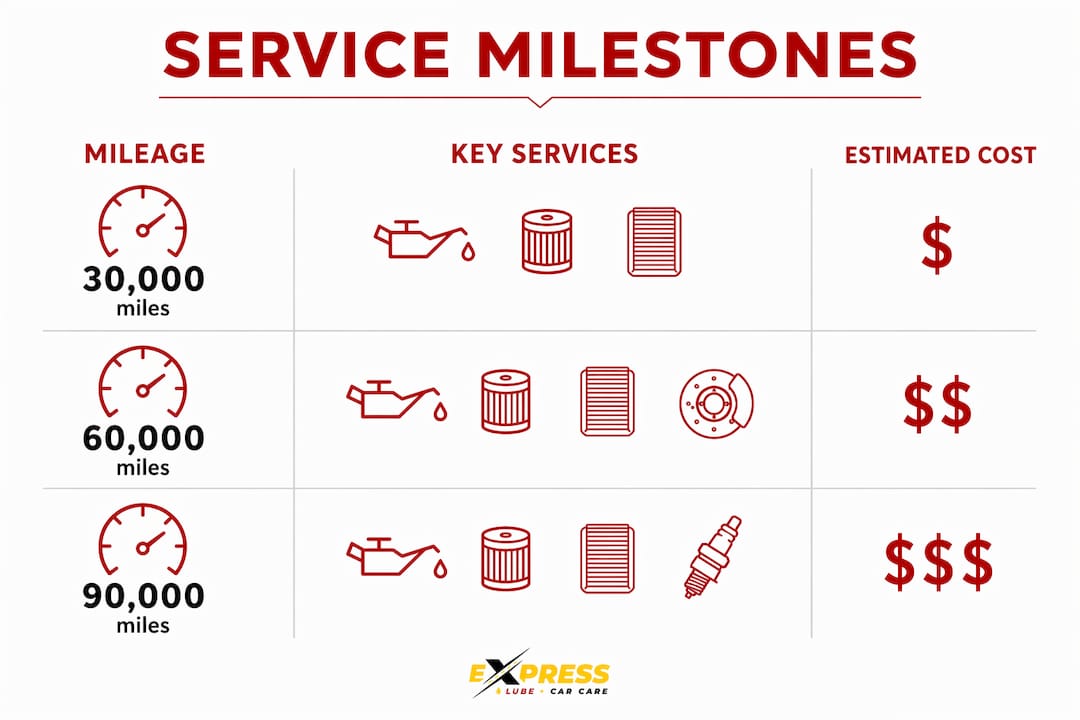
The 30,000, 60,000, and 90,000-mile services each cover a different set of systems. At 30,000 miles, technicians typically inspect or replace the air filter, fuel filter, and spark plugs on some vehicles, and check brake pad thickness and fluid conditions. The 60,000-mile service adds transmission fluid replacement, coolant flush, and a full brake system inspection. By 90,000 miles, spark plugs, timing belts on older engines, and all major fluids need attention. These services cost between $300 and $800 at dealerships, depending on what the vehicle needs. Independent shops often charge less for the same work.
Skipping a major service milestone does not save money. It delays the discovery of worn components until they fail, and failures at 70,000 miles cost far more than a scheduled inspection at 60,000. Families can budget for these services by setting aside a small monthly amount, treating it like a subscription to vehicle reliability. The car maintenance schedule by mileage guide from Express Lube & Car Care breaks down exactly what each milestone covers.
For families who want a broader picture of what these services cost relative to repair bills, the auto repair estimates guide from Dent Erasers provides useful context on dealership versus independent shop pricing.
| Milestone | Key Services | Estimated Cost |
|---|---|---|
| 30,000 miles | Air filter, spark plugs (some vehicles), fluid checks | $150–$400 |
| 60,000 miles | Transmission fluid, coolant flush, brake inspection | $300–$600 |
| 90,000 miles | Spark plugs, timing belt (if applicable), all fluids | $400–$800 |
Pro Tip: Ask your service provider for a written estimate before any major milestone service. A trustworthy shop will itemize every task and explain what is urgent versus what can wait.
How can busy families build simple maintenance routines?
A maintenance checklist for families works best when it fits into the schedule you already have. The goal is to make upkeep automatic, not another task that falls through the cracks.
- Anchor service to familiar events. Schedule oil changes when the seasons change. That gives you four natural reminders per year and aligns with seasonal checkpoints at the same time.
- Use your phone’s calendar. Set recurring reminders for monthly tire pressure checks and annual battery tests. A two-minute check prevents a flat tire on the way to school.
- Keep a service folder. A physical or digital folder of service receipts and dates is the most effective way to protect resale value and confirm that maintenance is current. Buyers pay more for vehicles with documented histories.
- Do a weekly walk-around. Check tire condition visually, look for fluid spots under the car, and confirm all lights work. This takes less than five minutes and catches problems early.
- Track mileage at fill-ups. Note your odometer reading each time you fill the tank. This makes it easy to know when the next oil change or tire rotation is due without relying on memory.
Organized service records also protect you if a warranty dispute arises. Manufacturers and extended warranty providers can deny claims when maintenance history is missing. A simple folder eliminates that risk entirely. The routine car maintenance checklist from Express Lube & Car Care gives families a ready-made starting point for building this habit.
Key Takeaways
A consistent family vehicle maintenance schedule is the single most effective way to prevent costly repairs, protect resale value, and keep every passenger safe on the road.
| Point | Details |
|---|---|
| Follow mileage-based intervals | Change oil every 5,000–7,500 miles and rotate tires every 5,000–8,000 miles. |
| Adjust for severe driving | Short trips and city traffic cut standard service intervals roughly in half. |
| Plan for major milestones | Budget $300–$800 for 30K, 60K, and 90K-mile services to avoid larger repair bills. |
| Add seasonal checkpoints | Inspect battery, fluids, and tires before winter and summer to catch weather-related issues. |
| Keep organized records | A service folder protects resale value and supports warranty claims. |
What we have learned from years of family vehicle service
The most common mistake busy families make is treating maintenance as optional until something breaks. We see it regularly at Express Lube & Car Care. A family comes in with an engine warning light, and the root cause is an oil change that was overdue by 4,000 miles. The repair bill is always larger than the service they skipped.
The second pattern we notice is that families underestimate how much their driving style matters. A parent who drives 20 miles of city traffic daily is not driving under “normal” conditions, regardless of what the standard schedule says. Severe-duty intervals exist for exactly this reason, and ignoring them accelerates wear on every major system.
What actually works is building maintenance into the family calendar the same way you schedule pediatric checkups or school events. When service becomes a scheduled appointment rather than a reaction to a problem, the vehicle stays reliable and the costs stay predictable. Families who bring their vehicles in on a consistent schedule spend less over time, not more. Proactive care is always cheaper than emergency repair.
— Express Lube & Car Care
Express Lube & Car Care is ready when your family is
Keeping up with vehicle service should not require taking a day off work or waiting in a long line. Express Lube & Car Care provides no-appointment-needed service for oil changes, brake inspections, fluid checks, and engine diagnostics, handled by certified technicians who work efficiently without cutting corners.
Families can check current oil change and service specials to find savings on the services their vehicles need most. If your vehicle is approaching a major milestone or you have not had a brake inspection recently, now is the right time to stop in. Express Lube & Car Care also offers discounts for military members and healthcare providers as part of its commitment to the community.
FAQ
How often should a family vehicle get an oil change?
Most modern vehicles using synthetic oil need an oil change every 5,000–7,500 miles. Families driving in stop-and-go traffic or taking frequent short trips should change oil closer to the 5,000-mile mark.
What counts as severe driving for maintenance purposes?
Severe driving includes frequent short trips under five miles, daily city traffic, extreme heat or cold, and towing. These conditions require service intervals roughly half as long as the standard schedule.
What happens if I skip the 60,000-mile service?
Skipping the 60,000-mile service leaves transmission fluid, coolant, and brake components uninspected past their service life. This increases the risk of component failure and turns a $400 service into a much larger repair bill.
How do I keep track of my family vehicle’s maintenance history?
Keep a folder, physical or digital, with every service receipt and the mileage at the time of service. This record protects resale value and provides proof of upkeep for warranty claims.
Does seasonal maintenance replace mileage-based service?
Seasonal maintenance works alongside mileage-based service, not instead of it. Seasonal checks catch weather-related issues like battery strain and fluid degradation that mileage intervals alone would miss.