

Stop-and-go driving is the single biggest reason Plano commuters burn through brake pads faster than drivers in less congested areas. Every time you press the brake pedal in bumper-to-bumper traffic on the Dallas North Tollway or Preston Road, your pads clamp against the rotors and generate heat. On a highway, that heat has miles to dissipate. In city traffic, the next stop is seconds away, and the heat keeps building. The result is accelerated material wear, glazed pads, and warped rotors, all arriving sooner than most drivers expect.
Here is what that looks like in practice:
- Brake applications per mile multiply dramatically. City driving involves far more brake applications per mile than highway driving, where brakes are used infrequently over long distances.
- Heat accumulates without recovery time. Each braking event generates thermal energy. Without adequate cooling intervals between stops, that heat compounds and accelerates pad and rotor degradation.
- Glazing sets in faster. When pads overheat repeatedly, the friction material hardens and becomes less effective, a condition known as glazing, which extends stopping distances and produces squealing.
- Front brakes carry the heaviest load. Front pads handle the majority of your vehicle’s stopping force, so they wear faster under the constant demands of city traffic patterns.
- Plano’s traffic geometry adds pressure. School zones, construction corridors, and rush-hour congestion on major arteries create concentrated braking cycles with little relief between them.
Understanding why this happens is the first step toward protecting your brake system and your safety.
How to recognize the signs of brake wear while driving in Plano
Catching brake wear early keeps a manageable maintenance issue from becoming a safety hazard or a costly repair. Your vehicle gives clear warnings when the brake system needs attention, and Plano drivers should know exactly what to listen and feel for.
- Squealing or high-pitched noise when braking. Most brake pads include a metal wear indicator that contacts the rotor when the pad material gets thin, producing a deliberate squealing sound. Brake pad glazing from repeated heat cycles also causes squealing as the hardened surface slips against the rotor instead of gripping it cleanly.
- Grinding noise during braking. A grinding sound typically means the pad material has worn through completely and metal is contacting metal. At this stage, rotor damage is likely and repair costs rise quickly.
- Vibration or pulsation in the brake pedal. Pedal pulsation usually points to warped rotors, a direct consequence of the thermal stress that city traffic imposes on the braking system through repeated heating and insufficient cooling.
- Steering wheel vibration when braking. If the vibration travels into the steering wheel, the front rotors are likely warped, which is especially common in vehicles that spend most of their time in urban stop-and-go conditions.
- Soft or spongy brake pedal feel. Brake fluid absorbs moisture over time, and frequent hard braking accelerates that process. Contaminated fluid loses efficiency under high temperatures, producing a softer pedal that requires more pressure to achieve the same stopping force.
- Increased stopping distance. If your vehicle takes noticeably longer to stop than it used to, glazed pads or worn friction material are likely reducing the grip between pad and rotor.
- Car pulling to one side during braking. Uneven pad wear across the front axle causes unequal braking force, pulling the vehicle left or right. This is a clear sign that the brake system needs professional inspection.
- Visible pad thinness through the wheel. On many vehicles, you can see the brake pad through the wheel spokes. If the pad material looks thinner than a quarter-inch, it is time for a brake inspection.
Pro Tip: If you hear squealing only during the first few stops of the morning, that is often surface rust burning off the rotors and is generally harmless. Squealing that persists through every stop is the warning sign that demands attention.
Main causes of uneven and accelerated brake pad wear in Plano traffic
Plano’s traffic conditions create a specific combination of mechanical stress and thermal load that accelerates brake wear beyond what most drivers anticipate. Both the road environment and the vehicle’s own condition play a role.
- Front pads absorb disproportionate wear. Weight transfers forward under braking, placing the majority of stopping demand on the front axle. In stop-and-go traffic, this imbalance compounds with every cycle, wearing front pads significantly faster than rear pads.
- Thermal glazing from insufficient cooling. Repeated braking without recovery time causes pad surfaces to harden and glaze. Glazed pads grip poorly, generate more heat through slipping, and wear unevenly across the pad face.
- Rotor warping from heat accumulation. Excessive heat from frequent city braking can warp rotor surfaces, creating the uneven contact that accelerates pad wear and produces pedal pulsation.
- Worn wheel bearings and loose suspension components. Mechanical issues such as worn wheel bearings or loose ball joints allow the rotor to shift slightly during braking, causing the pad to contact the rotor surface unevenly and wear in a tapered or diagonal pattern.
- Brake fluid degradation under heat. Frequent hard braking accelerates moisture absorption in brake fluid, reducing its boiling point and responsiveness. Degraded fluid contributes to brake fade and a soft pedal under sustained traffic conditions.
- Aggressive driving behavior. Braking intensity and frequency directly influence how fast brake material degrades. Hard, late braking generates far more heat per stop than gradual, anticipatory slowing, compounding the wear that traffic congestion already creates.
- Caliper sticking or uneven piston pressure. A sticking caliper keeps the pad in partial contact with the rotor even when the brake pedal is released, causing one pad to wear far faster than its counterpart on the same axle.
- Construction zone and school zone braking cycles. Plano’s active construction corridors and school zones force drivers into repeated hard stops from moderate speeds, creating the extreme heating cycles that are especially damaging to brake components.
How driving habits and Plano traffic patterns shorten brake pad life
The way you drive through Plano’s congested streets has a direct and measurable effect on how long your brake pads last. Traffic patterns create the environment, but driving habits determine how hard that environment hits your brake system.
- Tailgating forces constant reactive braking. Following too closely leaves no room to coast and requires frequent, often hard, brake applications to match the vehicle ahead. Every unnecessary stop adds heat and wear.
- Hard braking from high speed. Stopping from 45 mph generates significantly more thermal energy than stopping from 25 mph. Drivers who accelerate aggressively between lights and then brake hard at the next red light put their brake system through extreme stress repeatedly throughout a commute.
- Keeping a foot on the brake on inclines. Rush-hour traffic on Plano’s elevated interchange ramps and hilly residential streets tempts drivers to hold the brake pedal down while stopped on a slope. This keeps pads pressed against hot rotors, accelerating glazing and wear. Using the parking brake on inclines eliminates that contact entirely.
- Stop-and-go idling in congested zones. School pickup zones, shopping center parking lots, and construction corridors all involve slow-speed maneuvering with frequent braking. The heat generated may be lower per stop, but the sheer volume of brake applications adds up quickly over a typical Plano commute.
- Smooth acceleration and coasting reduce wear measurably. Maintaining safe following distances and anticipating stops allows drivers to coast to a slower speed before applying the brakes, reducing both the force and heat of each braking event.
- Rush-hour timing concentrates wear. Driving during peak congestion on roads like US-75 or the George Bush Turnpike means more braking cycles per mile than at off-peak hours. Adjusting departure times even slightly can reduce the number of brake applications on a given trip.
Practical tips for Plano commuters to reduce brake wear
You cannot eliminate city traffic, but you can change how your vehicle responds to it. These habits protect your brake system and extend the time between service visits.
- Anticipate stops and coast early. Watch traffic signals and the flow of vehicles ahead. Lifting off the accelerator early and coasting toward a stop reduces brake pedal pressure and allows the system to cool between applications. This technique, sometimes called traffic smoothing, also improves fuel economy.
- Maintain a generous following distance. More space between your vehicle and the one ahead gives you time to slow gradually rather than brake hard. A three-second gap at city speeds is a practical minimum; extending it to four or five seconds in heavy traffic reduces reactive braking significantly.
- Use engine braking when possible. Lifting off the accelerator in a lower gear or using a vehicle’s tow/haul mode engages engine resistance to slow the car without touching the brake pedal. Drivers with vehicles that offer regenerative braking modes gain an additional advantage in stop-and-go conditions, as the system recaptures energy while reducing mechanical brake use.
- Avoid resting your foot on the brake pedal. Light, constant pressure on the pedal keeps pads in partial contact with rotors, generating heat without meaningful deceleration. Keep your foot off the pedal entirely when not actively braking.
- Use the parking brake on hills. When stopped on an incline in traffic, engage the parking brake rather than holding the service brake. This removes pad-to-rotor contact and prevents heat buildup during extended stops.
- Schedule regular brake inspections. Catching worn pads before they reach metal-on-metal contact prevents rotor damage and keeps repair costs predictable. Plano drivers who commute daily in heavy traffic benefit from more frequent checks than the standard interval suggests. You can learn more about realistic brake pad lifespan for city drivers to set appropriate expectations.
- Address mechanical issues promptly. A sticking caliper, worn wheel bearing, or loose suspension component will accelerate brake wear regardless of how carefully you drive. Resolving these issues at the first sign of uneven wear prevents a minor repair from becoming a full brake system overhaul.
For drivers who also want to keep their vehicle’s other components in good shape, understanding wheel and component durability is part of the same maintenance mindset that protects your brakes.
Expert advice from Express Lube & Car Care on brake health in city traffic
Express Lube & Car Care has worked with Plano drivers long enough to see exactly how local traffic conditions translate into brake system wear. The patterns are consistent, and the solutions are straightforward when caught early.
- Certified technicians identify wear before it becomes damage. The team at Express Lube & Car Care inspects brake pad thickness, rotor condition, caliper function, and brake fluid quality as part of routine service. Early detection of glazing or uneven wear prevents the kind of rotor damage that turns a pad replacement into a full brake job.
- Plano-specific traffic knowledge informs service recommendations. Technicians who service vehicles driven on Preston Road, the Tollway, and US-75 daily understand the specific wear patterns those routes create. That local context shapes how they advise drivers on inspection intervals and component replacement timing.
- No appointment is needed for brake inspections. Express Lube & Car Care’s walk-in model means Plano drivers can get a professional brake check without scheduling around a busy week. Fast, thorough service is the standard, not the exception.
- Brake fluid condition is checked alongside pad and rotor wear. Because frequent city braking accelerates fluid degradation, Express Lube & Car Care evaluates fluid moisture content and recommends flushing when the fluid’s boiling point has dropped to a level that affects braking responsiveness.
- Warranty coverage backs every repair. Drivers can review the auto repair warranty terms that apply to brake service, providing confidence that the work is guaranteed.
- Military and healthcare discounts reflect a genuine community commitment. Express Lube & Car Care offers dedicated discounts for military personnel and healthcare providers, a direct expression of the shop’s connection to the Plano community it serves.
- Comprehensive brake service covers the full system. From brake pads and rotors to ABS components, the team handles the complete braking system, not just the most visible wear items.
Pro Tip: If your brake pedal feels softer than usual after a long commute in heavy traffic, ask for a brake fluid test at your next service visit. Fluid that has absorbed too much moisture can boil under sustained braking, causing a sudden and dangerous loss of pedal firmness.
Plano drivers dealing with accelerated brake wear from city traffic can get professional service and a full brake system evaluation at Express Lube & Car Care, with no appointment required.

Key Takeaways
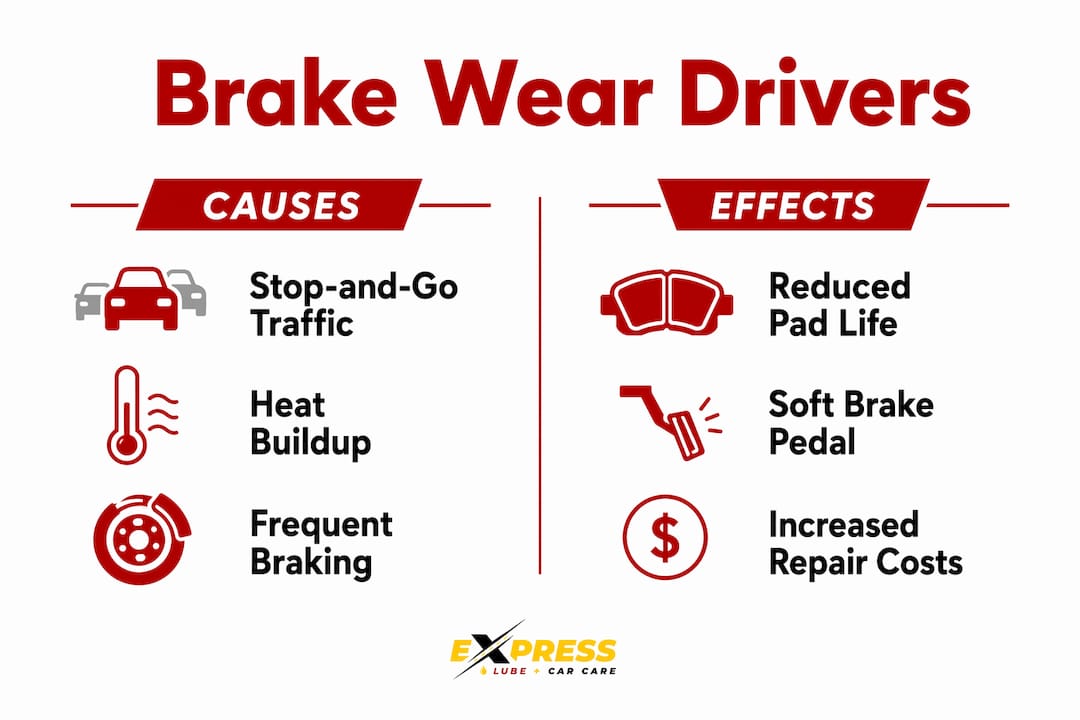
Plano’s stop-and-go traffic accelerates brake wear by multiplying brake applications per mile, building heat without adequate cooling, and creating the conditions for glazing, rotor warping, and uneven pad wear.
| Point | Details |
|---|---|
| City traffic multiplies brake applications | Stop-and-go driving involves far more brake applications per mile than highway driving, wearing pads faster. |
| Heat buildup causes glazing and warping | Insufficient cooling between stops hardens pad surfaces and warps rotors, reducing grip and extending stopping distances. |
| Front pads wear fastest | Front brakes handle the majority of stopping force, making them the first to show wear in city traffic conditions. |
| Driving habits compound traffic stress | Tailgating, hard braking, and resting a foot on the pedal accelerate wear beyond what traffic alone causes. |
| Regular inspections prevent costly repairs | Catching worn pads, glazing, or fluid degradation early keeps brake service predictable and prevents rotor damage. |
FAQ
Why do brake pads wear out faster in city traffic than on the highway?
City driving requires far more brake applications per mile than highway driving, and each stop generates heat that accumulates without adequate cooling time between events. That combination of high frequency and thermal buildup degrades pad material and rotor surfaces much faster than sustained highway speeds.
Does city driving in Plano wear brakes faster?
Yes. Plano’s congested corridors, school zones, and construction areas create concentrated braking cycles that impose repeated thermal stress on the brake system. Drivers who commute daily through heavy local traffic typically experience faster brake wear than those who primarily drive on open roads.
Why are my brake pads wearing down so quickly?
Frequent hard braking, a sticking caliper, worn suspension components, or glazed pads from heat buildup can all accelerate wear beyond the normal rate. In Plano traffic specifically, the combination of high braking frequency and insufficient cooling between stops is the most common cause.
How can you drive to reduce brake wear in stop-and-go traffic?
Anticipate stops early and coast toward them rather than braking hard at the last moment, maintain a generous following distance, and use engine braking or regenerative braking modes when available. These habits reduce both the frequency and intensity of brake applications, extending pad and rotor life.
When should Plano drivers schedule a brake inspection?
Any squealing, grinding, pedal pulsation, or increased stopping distance warrants an immediate inspection. For drivers with heavy city commutes, a professional brake check at least once a year, or whenever a warning sign appears, keeps the system in safe working condition.