

A high mileage oil change is a targeted maintenance service for vehicles that have surpassed 75,000 miles. It utilizes a specialized motor oil formulated with specific additives designed to protect aging engines, rejuvenate seals to prevent leaks, and ultimately extend the reliable service life of the vehicle.
What Is High Mileage Oil and Why Does It Matter
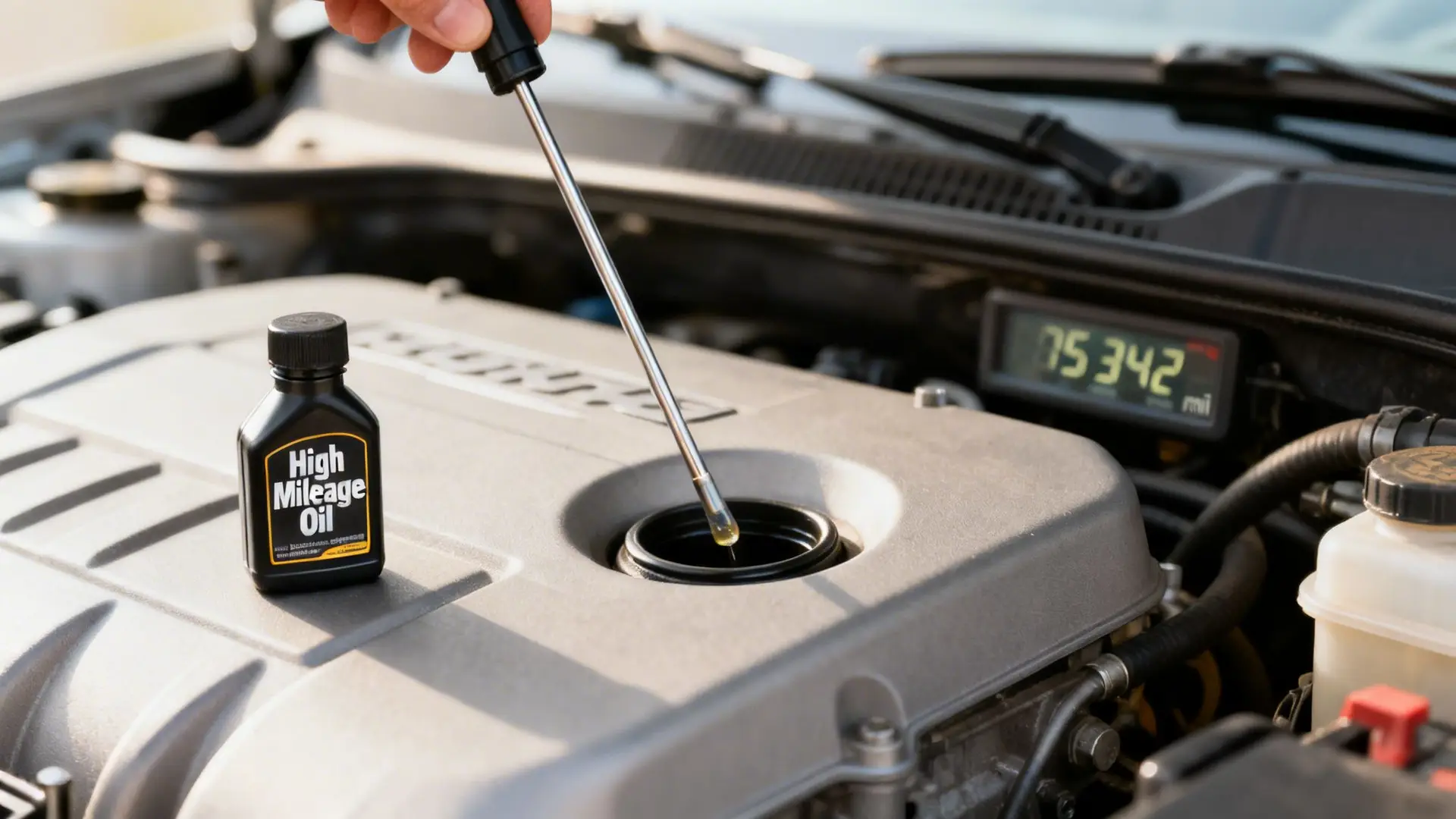
To understand its value, consider an analogy: conventional oil serves as the standard, balanced diet for a young, healthy engine. High mileage oil, in contrast, is a specialized nutritional plan fortified with essential supplements, crafted for a veteran engine that requires enhanced support to maintain peak performance.
This is not a marketing gimmick; it is a product of careful chemical engineering designed to address the specific challenges of an older engine.
Once a vehicle's odometer reads over 75,000 miles, the engine has endured thousands of thermal cycles (heating and cooling) and immense frictional forces. These operational stresses begin to manifest as wear and tear on internal components. At this stage, transitioning to a high mileage oil change becomes a crucial, proactive maintenance strategy.
Common Issues in Older Engines
As an engine accumulates mileage, several predictable issues begin to emerge. The elastomeric seals (rubber gaskets and seals) that contain the oil can lose their plasticizers, causing them to harden, become brittle, and shrink.
This degradation process leads to the characteristic symptoms of a high-mileage engine:
- Minor Oil Leaks: The contraction of seals creates microscopic gaps, allowing oil to seep out and cause drips on pavement.
- Increased Oil Consumption: Worn piston rings and valve stem seals can permit a small amount of oil to enter the combustion chamber, where it is burned off with the fuel. This requires more frequent oil top-offs.
- Sludge and Varnish Accumulation: Over time, oil oxidation byproducts can form sludge and varnish deposits within the engine, which can restrict narrow oil passages and impede lubrication.
The 75,000-mile threshold is the widely accepted industry benchmark. This is the point at which the majority of engines begin to derive significant benefit from the unique additive package found in high mileage oils. Making the switch is a preventative measure to manage wear before it escalates.
How High Mileage Oil Provides a Solution
What differentiates this oil is its sophisticated additive package. High mileage oil contains a robust and enhanced formulation that extends beyond basic lubrication to provide therapeutic benefits for an aging engine.
These formulas typically include seal conditioners to restore elasticity to old gaskets, increased levels of detergents to clean out sludge, and more anti-wear agents to provide a thicker protective film for worn engine parts. For a deeper understanding of oil composition, you can explore the differences between synthetic and conventional oils.
Employing a high mileage oil is not a singular repair but a long-term maintenance strategy. By aligning the oil's properties with the engine's current condition, you actively work to preserve its power, maintain its efficiency, and extend its operational lifespan. For a vehicle you rely on, it is one of the most cost-effective investments in its longevity.
The Science Behind High Mileage Oil Additives
To fully appreciate the efficacy of a high mileage oil change, it is essential to examine its chemical composition. Its superior performance is not due to a single ingredient, but rather a synergistic blend of specialized additives, each engineered to address the specific failure modes of an older engine.
Reconditioning Seals and Preventing Leaks
The primary defense against leaks is a significant dose of seal conditioners. These are ester-based chemical compounds that are absorbed by the elastomeric seals and gaskets within the engine. Over tens of thousands of miles, these seals lose their flexibility and shrink, creating pathways for oil to escape.
Seal conditioners work by rejuvenating these rubber components, restoring their pliability and causing them to gently swell. This action helps them reclaim their original dimensions and sealing capability, effectively closing off micro-leaks and preventing drips.
Cleaning Sludge and Protecting Internals
Next are the powerful detergents and dispersants. These additives function as a "cleanup crew" for the engine's interior, combating the harmful sludge and carbon deposits that accumulate over a vehicle's life. This accumulation, known as engine deposit buildup, poses a significant threat.
It can obstruct the narrow oil galleys that deliver lubricant to critical components like bearings and camshafts, leading to oil starvation. This is a primary contributor to catastrophic engine failure and can manifest as symptoms similar to what causes low oil pressure in an engine.
For those interested in the broader world of chemical engineering in vehicles, it's fascinating to explore the science behind fuel additives and note the parallels in their function.
Fighting Wear, Friction, and Breakdown
Beyond cleaning and conditioning, high-mileage oil is fortified with additional protective agents:
- Enhanced Anti-Wear Agents: Compounds like Zinc Dialkyldithiophosphate (ZDDP) are often used in higher concentrations. They form a sacrificial, protective film on metal surfaces, providing an extra layer of defense for components that have already experienced significant operational wear.
- Antioxidants: These additives combat thermal oxidation—the breakdown of oil at high temperatures. By neutralizing free radicals, they help the oil maintain its viscosity and protective qualities throughout its service interval.
- Friction Modifiers: These are microscopic, polarized molecules that adhere to metal surfaces, reducing the coefficient of friction between moving parts. This can contribute to improved fuel efficiency and minimized metal-to-metal contact.
To provide a clear comparison, consider the additive packages side-by-side.
Conventional Oil vs High Mileage Oil Additives
| Additive Type | Conventional Oil | High Mileage Oil |
|---|---|---|
| Seal Conditioners | Minimal or none | Enhanced levels to swell and recondition seals |
| Detergents | Standard levels for basic cleaning | Higher concentrations to remove existing sludge |
| Anti-Wear Agents | Baseline protection | Increased amounts for worn metal surfaces |
| Antioxidants | Standard levels | Fortified to resist breakdown under high heat |
| Friction Modifiers | Basic levels | Enhanced to reduce friction and improve efficiency |
This specific formulation is engineered to counteract the natural aging processes within an engine. By reconditioning seals, cleaning deposits, and reducing friction, these oils provide targeted protection that helps extend a vehicle's life and reliability.
So, when is the correct time to transition to high-mileage oil? This is a frequent and important question for vehicle owners. The decision marks a significant step in promoting your car's long-term health.
The most direct indicator is the odometer. Once your vehicle surpasses the 75,000-mile mark, it is considered to be in the high-mileage category.
This is not an arbitrary figure. It represents the mileage point at which even well-maintained engines typically begin to exhibit the effects of age. Gaskets and seals start to lose their elasticity, potentially leading to minor leaks or increased oil consumption. High-mileage oil is specifically formulated with conditioners that help re-swell these seals to maintain a tight barrier.
More Than Just Miles
While 75,000 miles is the general guideline, your vehicle also provides direct feedback that it may require enhanced support. These are diagnostic signals from the engine itself.
Here are the key indicators that it may be time for a high-mileage oil change, regardless of the exact mileage:
- Small Puddles on the Driveway: Dark, oily spots under your parked car are a definitive sign of an active oil leak. The seal conditioners in high-mileage oil are specifically designed to address these minor seepages.
- Topping Off the Oil Frequently: If you find yourself adding oil between scheduled changes, the engine is consuming it. The typically higher viscosity and robust formulation of high-mileage oil can help reduce this "burn-off."
- Blue Smoke from the Exhaust: A puff of bluish-colored smoke, particularly on startup, is a clear indication that oil is bypassing worn seals and entering the combustion chamber.
Addressing these symptoms early is crucial. They are not merely cosmetic issues but direct evidence of internal engine wear that a high-mileage oil change is engineered to mitigate.
This flowchart illustrates the decision-making process.
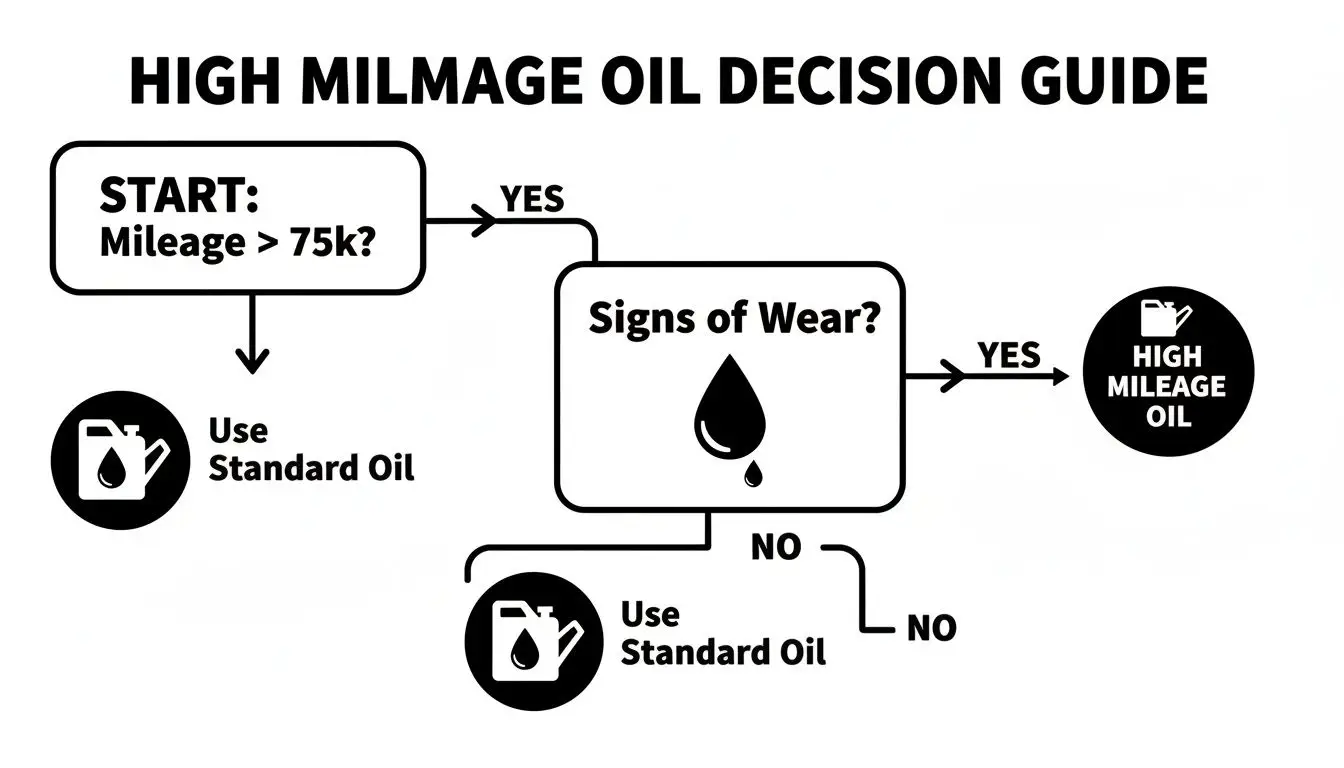
The logic is straightforward: if your vehicle is over 75,000 miles or is exhibiting any of the warning signs, switching is a prudent, proactive measure for your engine's future health.
Making the Right Call
Ultimately, switching to high-mileage oil represents an investment in your vehicle’s longevity. By monitoring both the odometer and the subtle signals your car provides, you can make an informed decision at the optimal time.
Many of these symptoms are shared with the general signs your car needs an oil change, but they carry greater significance in an older vehicle. Do not wait for a minor issue to evolve into a major repair. Provide your engine with the specialized care it requires to continue performing reliably for years to come.
Oil Change Intervals for High Mileage Cars
Let's dispel a persistent myth: the traditional 3,000-mile oil change interval is largely obsolete for most modern and high-mileage vehicles using quality oil.
With today's advanced synthetic blend and full synthetic high-mileage oils, service intervals can be safely extended. A typical high mileage oil change interval now ranges from 5,000 to 7,500 miles.
Adhering to an outdated 3,000-mile schedule with a modern oil is not only unnecessary but also economically and environmentally wasteful. Major automakers like GM and Volkswagen have recommended longer intervals in their owner's manuals for years (e.g., in 2020-2026 models), reflecting significant advancements in both engine design and lubrication science.
Finding the Sweet Spot for Your Vehicle
If 3,000 miles is no longer the standard, what is the correct interval for your high-mileage car? The answer is nuanced, as the optimal interval depends on the vehicle itself, its monitoring technology, and your driving conditions.
Your primary reference should always be the owner's manual. This document provides the manufacturer's specific recommendations, which serve as the best baseline for your maintenance schedule.
Many contemporary vehicles are also equipped with an Oil Life Monitoring System (OLMS). This is not a simple mileage counter; it is a sophisticated algorithm that analyzes engine revolutions, operating temperatures, and other data points to calculate the remaining useful life of the oil. When the system indicates a change is needed, it is time for service.
How Your Driving Habits Affect Oil Life
Finally, your personal driving habits are a critical factor. "Normal" and "severe" driving conditions have vastly different effects on oil longevity.
The following are considered "severe service" conditions, which can shorten your oil's life and necessitate more frequent changes:
- Frequent Short Trips: Journeys under 10 minutes prevent the engine from reaching its full operating temperature, which is needed to burn off moisture and fuel contaminants that accumulate in the crankcase. This accelerates oil degradation.
- Extreme Temperatures: The intense heat of a Texas summer accelerates oil oxidation, while freezing winter weather can cause moisture condensation and reduce flow.
- Towing or Hauling: Placing heavy loads on the vehicle forces the engine to work harder, generating more heat and placing greater stress on the oil's lubricating film.
The optimal strategy is to start with the manufacturer's recommendation, heed the OLMS if equipped, and then adjust based on your driving style. For most high-mileage cars under normal driving conditions, a high mileage oil change every 5,000 miles provides a safe and effective benchmark.
What a Professional High Mileage Oil Change Includes
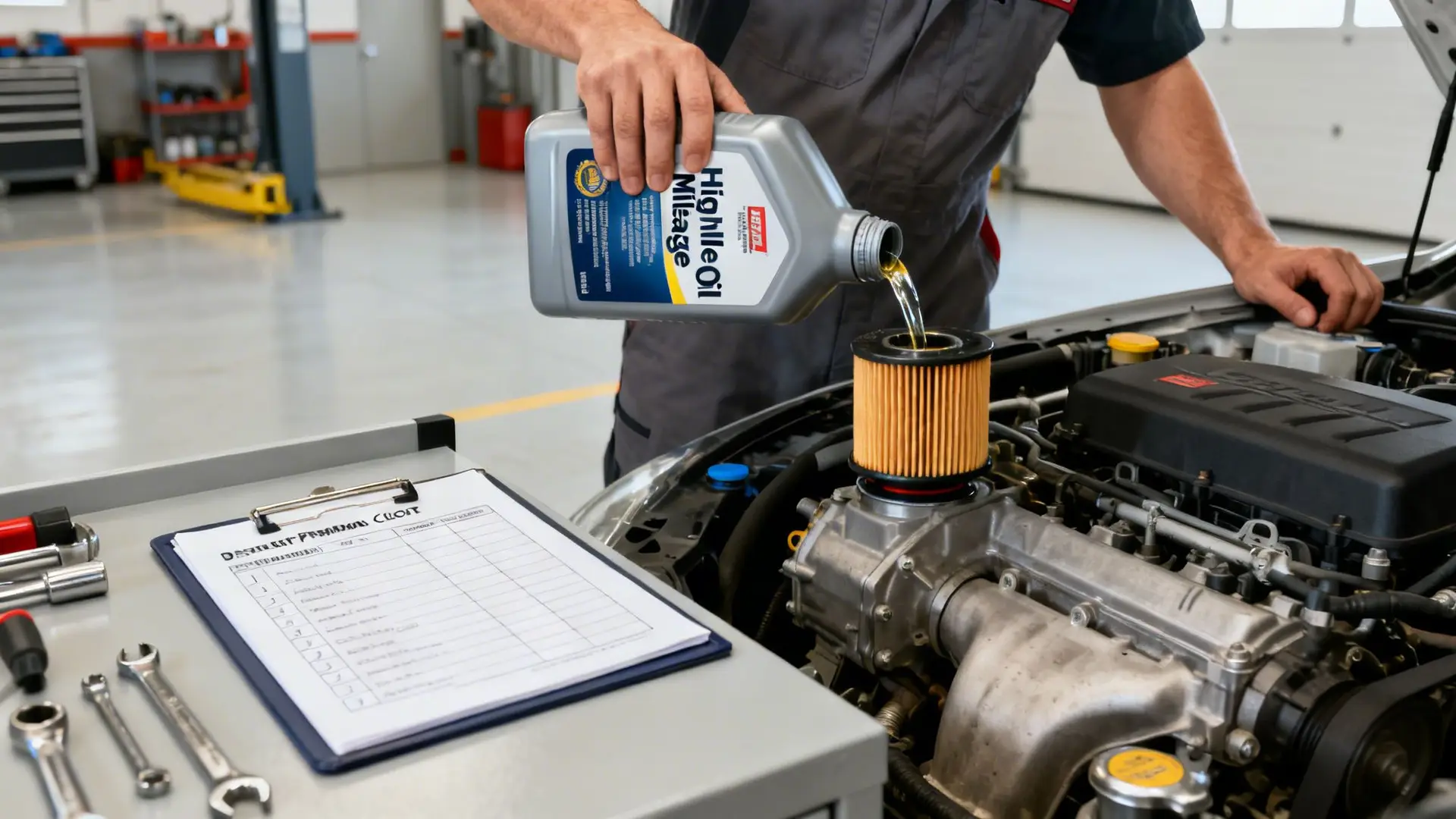
When you entrust your vehicle to a professional for a high mileage oil change, you receive more than a simple fluid replacement. It is a comprehensive service designed to address the specific needs of an older engine and ensure its continued health and reliability.
The process begins with the complete draining of the old, degraded motor oil. This is a critical step, as it removes not just the depleted oil but also the harmful contaminants suspended within it—microscopic metal particles, soot, and acidic byproducts of combustion that can cause abrasive wear.
More Than Just an Oil Swap
Once the old oil is drained, the oil filter is replaced. A reputable service center will never reuse an old filter. A new, high-quality filter is installed, chosen for its capacity to effectively trap contaminants and maintain proper oil flow until the next service interval.
With a new filter secured, the technician refills the engine with the correct viscosity grade and volume of high-mileage oil as specified by the vehicle manufacturer. This is a precision task; using the wrong oil type or volume can compromise engine protection.
A professional service extends beyond the oil change itself. It incorporates a thorough multi-point inspection, which acts as a preventative health screening for the entire vehicle, delivering significant value and peace of mind.
This is where the true value of professional expertise becomes apparent. A trained technician can identify nascent issues before they escalate into major failures, transforming a routine oil change into a proactive maintenance event.
The Multi-Point Inspection Process
A proper high mileage oil change is always complemented by a multi-point inspection. This is a systematic review of the vehicle's key safety and operational systems.
Our technicians meticulously check the following:
- Inspect and Top Off Vital Fluids: We verify the levels and condition of your coolant, brake fluid, power steering fluid, and windshield washer fluid.
- Visually Inspect Key Components: We examine engine belts and hoses for cracks or fraying, check the battery terminals for corrosion, and inspect the engine and cabin air filters for blockages.
- Perform a Safety and Undercarriage Check: Our technician will check tire pressures and inspect tread wear patterns, visually inspect the undercarriage for any signs of fluid leaks, and test the functionality of your windshield wipers.
This holistic approach ensures that you drive away not just with fresh oil, but with the confidence that your vehicle has been thoroughly evaluated by a professional, enhancing the safety and dependability of your high-mileage car.
Your High Mileage Service Partner in Plano
Understanding the benefits of high-mileage oil is the first step. The next is to find a trusted automotive partner in Plano to perform the service correctly. At Express Lube & Car Care, we specialize in the expert care of seasoned vehicles.
We recognize the demands on your time. That’s why our service is no-appointment-needed. Simply drive in at your convenience, and our skilled team will provide efficient, high-quality service to get you back on the road without unnecessary delay.
Peace of mind is paramount when servicing your vehicle. Our technicians are ASE-certified, which means they have met rigorous national standards for automotive service excellence, assuring you of the highest level of professional care.
Making Essential Care Affordable
We believe that essential vehicle maintenance should be accessible. We are committed to providing outstanding value through discounts that help our Plano community keep their vehicles running safely and reliably.
Be sure to inquire about our current offers:
- $20 Off Any Oil Change to help you save on your next service.
- Ladies Day Wednesdays with a special $25 off any oil change.
- Discounts for Military, First Responders & Healthcare Workers as our small way of expressing gratitude for their service.
Choosing the right facility for your high-mileage oil change ensures your engine receives the specialized protection it requires to operate reliably for many more years. Visit Express Lube & Car Care in Plano today and let our experts deliver the fast, professional, and affordable service your vehicle deserves.
Common Questions About High-Mileage Oil
Even with a clear understanding of the benefits, some questions may remain about making the switch. These are common and valid concerns we frequently address for drivers in Plano.
Can I Go Back to Conventional Oil After Using High-Mileage?
While technically possible, it is strongly discouraged. High-mileage oil is formulated with specific additives that condition and swell older seals to prevent or stop leaks.
Reverting to conventional oil means removing these critical additives. As a result, the seals may revert to their previous hardened state, and any oil leaks or consumption issues that the high-mileage formula was managing will likely reappear. For consistent protection, it is best to continue using high-mileage oil once you have made the switch.
Does a High-Mileage Oil Change Cost More?
Yes, a high-mileage oil change typically has a slightly higher cost than a standard conventional oil change, usually an additional $20 to $40. The price difference is due to the oil itself; it is a more advanced product containing a sophisticated and expensive additive package engineered for the specific needs of older engines.
Consider this a small, strategic investment in your engine's longevity. The modest additional cost can help you avoid significantly more expensive repairs down the road by preventing leaks, cleaning internal deposits, and reducing wear.
Is High-Mileage Oil Always Synthetic?
Not necessarily. High-mileage oil is available in several formulations, allowing you to choose the best option for your vehicle's requirements and your budget.
- Conventional: This is the most basic option, but it is still fortified with the essential seal conditioners and extra detergents that define a high-mileage formula.
- Synthetic Blend: This offers a balance of performance and cost. It provides superior protection and longevity compared to conventional oil without the full price of a full synthetic.
- Full Synthetic: This is the premium choice, offering the highest level of protection against thermal breakdown (critical for Texas heat), superior performance in extreme temperatures, and the potential for the longest oil change intervals.
Our technicians can provide expert guidance on which formulation is most appropriate for your vehicle and driving patterns.
Is It Too Late to Switch If My Car Has Over 150,000 Miles?
Absolutely not. In fact, a vehicle with 150,000 miles or more is an ideal candidate for high-mileage oil. It is never too late to provide your engine with the enhanced protection it needs.
The benefits—such as seal conditioning, sludge removal, and increased wear protection—are even more crucial for engines with significant mileage. Switching now can help manage oil consumption, reduce leaks, and contribute to keeping your trusted vehicle running reliably for many more miles.
Ready to give your high-mileage vehicle the expert care it deserves? The ASE-certified technicians at Express Lube & Car Care are here to help. Stop by our Plano location for a fast, professional, and affordable high mileage oil change today—no appointment needed. Visit us online at Express Lube & Car Care to learn more.