

A full-service oil change is defined as a complete engine lubrication service that combines oil drain and refill, oil filter replacement, and a multi-point vehicle inspection covering fluids, tires, belts, lights, and more. Most drivers assume an oil change means swapping out old oil for new. The reality is that a proper full-service visit addresses your engine’s health and your vehicle’s safety in a single appointment. Understanding what’s included in oil change service helps you make smarter maintenance decisions and avoid costly surprises down the road.
What does a full-service oil change include?
A full-service oil change covers far more than the oil itself. Certified technicians begin by gathering information about your vehicle’s age, mileage, and driving habits to select the right oil and identify any additional attention the engine may need. That upfront assessment is what separates a professional full-service visit from a rushed quick-lube stop.
The core mechanical steps include completely draining the old contaminated oil, replacing the oil filter, and refilling with the manufacturer-recommended oil type and quantity. Beyond that, the service extends to a multi-point inspection that checks tire pressure, fluid levels, belts, hoses, exterior lights, and windshield wipers. Think of it like a commercial kitchen prep check: every station gets verified before service begins, not just the main ingredient.

Full-service oil change details also include a service summary at the end, noting the oil type used, current mileage, and your next recommended service interval. The oil life monitor or maintenance reminder light gets reset as part of closing out the visit. That documentation creates a paper trail that supports your vehicle’s maintenance history and, in many cases, its warranty.
What are the core mechanical steps in a full-service oil change?
The mechanical portion of a full-service oil change follows a precise sequence that protects your engine from the moment the old oil comes out to the moment the new oil goes in.
- Complete oil drain: The drain plug is removed and all old, contaminated oil is allowed to drain fully from the oil pan. A partial drain leaves degraded oil behind, which compromises the fresh oil immediately.
- Drain plug gasket inspection: The crush washer or drain plug gasket is inspected and replaced as needed. A worn gasket is one of the most common sources of slow oil leaks that drivers never notice until damage is done.
- Oil filter replacement: The old filter is removed and a new one is installed at every service. A dirty filter cannot remove contaminants effectively even when fresh oil is added, making filter replacement non-negotiable.
- Correct oil refill: The technician adds the oil type and quantity specified by your vehicle’s manufacturer, whether that is conventional, synthetic blend, or full synthetic.
- Fill level and leak verification: Before the vehicle leaves the bay, technicians verify oil fill levels and check for leaks around the drain plug and filter housing.
Pro Tip: Both overfilling and underfilling engine oil cause real damage. Overfilling creates excess pressure that can blow seals; underfilling starves the engine of lubrication under load. Always confirm your technician checked the dipstick before you drive away.
What additional inspections and fluid checks are included?
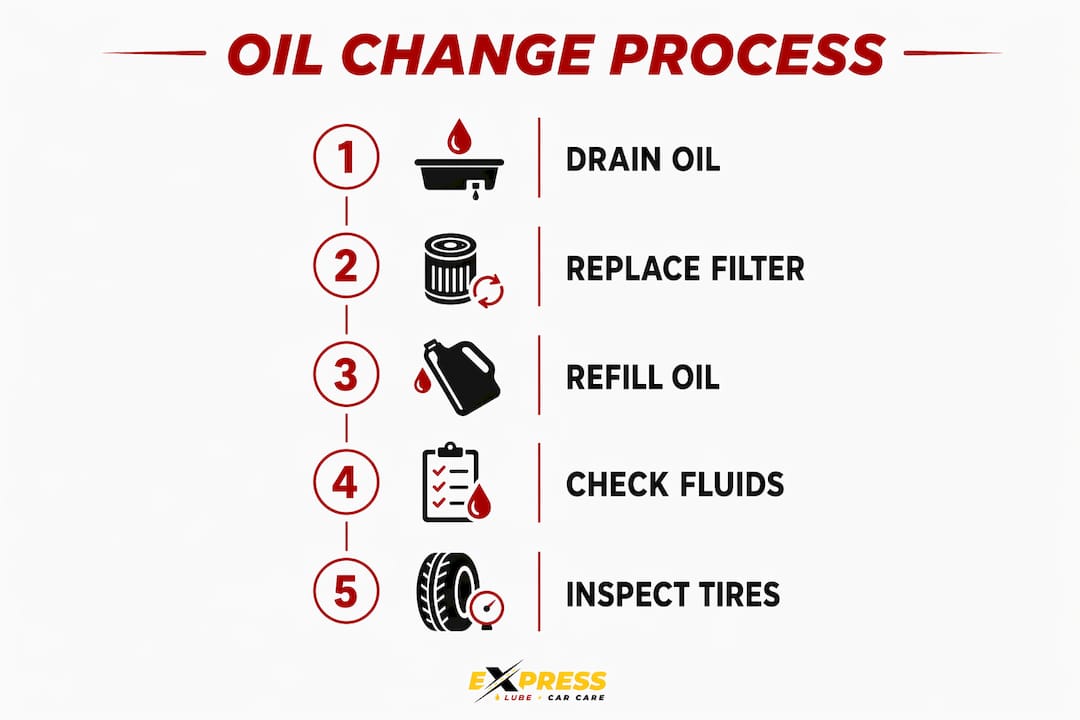
The inspection component is where a full-service oil change earns its name. Multi-point inspections bundled with oil service cover the vehicle systems most likely to cause breakdowns or safety issues between major service appointments.
Fluid checks and top-offs typically cover:
- Coolant (antifreeze): Low coolant leads to overheating, one of the fastest ways to destroy an engine.
- Brake fluid: Degraded or low brake fluid directly affects stopping power and pedal feel.
- Transmission fluid: Checked visually for level and condition; low transmission fluid causes slipping and long-term gear damage.
- Power steering fluid: Keeps steering responsive; a low reservoir often signals a slow leak worth addressing early.
- Windshield washer fluid: Topped off as a standard courtesy item.
Beyond fluids, the safety and wear inspections cover tire pressure and visible tread wear, belt and hose condition for cracks or fraying, exterior lights including headlights and brake lights, and windshield wiper blade condition. A technician also performs a visual scan of the engine bay for oil leaks, coolant seepage, or any signs of wear around seals and gaskets.
These checks add genuine value because they catch problems at the observation stage, before they become repair bills. A cracked serpentine belt spotted during an oil change costs a fraction of what a roadside breakdown and tow costs.
How does a full-service oil change differ from a basic oil change?
The difference between a basic and a full-service oil change is scope. A basic oil change covers only the oil drain, filter replacement, and refill. A full-service visit layers a multi-point inspection, fluid top-offs, and service documentation on top of that foundation.
| Feature | Basic oil change | Full-service oil change |
|---|---|---|
| Oil drain and refill | Yes | Yes |
| Oil filter replacement | Yes | Yes |
| Multi-point inspection | No | Yes |
| Fluid top-offs | No | Yes |
| Tire pressure check | No | Yes |
| Belt and hose inspection | No | Yes |
| Oil life monitor reset | Sometimes | Yes |
| Service summary provided | Rarely | Yes |
| Typical price range | $65–$85 | $85–$105 |
Price data from Car Caress shows full-service oil changes typically run $85 to $105 depending on oil type, compared to $65 to $85 for basic changes. That $20 to $40 difference buys you a documented inspection of every major fluid and wear item on your vehicle. For most drivers, that trade-off is straightforward. You can also review oil change cost factors in detail to understand what drives pricing at different service levels.
What should you expect after a full-service oil change?
When the service wraps up, a reputable provider hands you more than just your keys. Full-service providers document the oil type used, the amount added, your current mileage, and the recommended mileage or date for your next service. That record matters for warranty compliance and for tracking your vehicle’s maintenance history accurately.
The oil life monitor or maintenance reminder light gets reset as a standard step. Skipping this reset means your dashboard will display inaccurate information, which can cause you to change oil too early or miss the next service window entirely. Your technician should also walk you through any findings from the inspection, clearly distinguishing between items that need immediate attention and those worth monitoring at the next visit.
Pro Tip: Before you leave the service bay, confirm three things: the oil life monitor was reset, you received a written service summary, and any flagged inspection items were explained with a clear urgency level. These three steps maximize service value and keep you informed rather than surprised at your next visit.
Why are the benefits of a full-service oil change worth the investment?
Regular full-service oil changes deliver benefits that go well beyond clean engine oil. The preventive maintenance aspect of catching problems early is the single strongest argument for choosing full service over a basic change every time.
- Engine longevity: Fresh oil with the correct viscosity reduces friction and heat, extending engine life significantly over high-mileage use.
- Early problem detection: Technicians spot worn belts, low brake fluid, or tire pressure issues before they escalate into safety hazards or expensive repairs.
- Warranty protection: Many manufacturer warranties require documented, regular oil changes. Full-service records satisfy that requirement more completely than a basic receipt.
- Safety assurance: Knowing your brake fluid, tire pressure, and lights were checked at every oil change gives you confidence between major service appointments.
- Financial efficiency: A $20 inspection finding that prevents a $400 repair is not a coincidence. It is the direct result of consistent preventive maintenance.
Pairing full-service oil changes with a routine car maintenance checklist gives you a complete picture of your vehicle’s health across all service intervals.
Key takeaways
A full-service oil change combines oil and filter replacement with a multi-point inspection of fluids, tires, belts, and lights, making it the most complete single maintenance service available for your vehicle.
| Point | Details |
|---|---|
| Core mechanical steps | Oil drain, filter replacement, correct refill, and leak check are all required at every visit. |
| Multi-point inspection | Fluids, tires, belts, hoses, lights, and wipers are checked and topped off as part of full service. |
| Full service vs. basic | Full service adds inspections and documentation for roughly $20 to $40 more than a basic change. |
| Post-service documentation | You should receive oil type, mileage, next interval, and a written summary of inspection findings. |
| Preventive value | Early detection of wear items during oil service prevents breakdowns and reduces long-term repair costs. |
Why full-service oil changes matter more than most drivers realize
At Express Lube & Car Care, we see the same pattern repeatedly. A driver comes in for what they think is a routine oil swap, and during the multi-point inspection we find a coolant level that has been low for months, or a serpentine belt with visible cracking that is weeks away from failure. Neither issue would have been caught with a basic oil-only service.
The honest truth is that most drivers do not think about their vehicle between oil changes. That makes the full-service visit the single best opportunity to catch problems while they are still inexpensive. We have seen a $12 drain plug gasket replacement prevent a slow leak that, left unaddressed, would have caused significant oil loss and engine wear over 5,000 miles.
Our advice: treat the inspection findings as seriously as the oil change itself. Ask your technician to explain anything flagged, even if it is marked as “monitor only.” Understanding your vehicle’s condition is not just reassuring. It is the foundation of smart ownership. Drivers who engage with their service records and ask questions consistently get more miles out of their vehicles than those who treat every visit as a transaction.
— Express Lube & Car Care
Get a full-service oil change at Express Lube & Car Care
Express Lube & Car Care in Plano offers full-service oil changes with no appointment needed, so you can fit quality maintenance into your schedule without planning around it. Every visit includes the complete oil service, multi-point inspection, fluid top-offs, and a written service summary handled by certified technicians.
Current oil change specials are available for conventional, synthetic blend, and full synthetic oil types, with additional discounts for military and healthcare workers. If the inspection flags anything beyond the oil service, such as brake wear or a fluid concern, our team handles those repairs in the same visit. Check the latest service deals in Plano and stop in when it works for you.
FAQ
What is included in a full-service oil change?
A full-service oil change includes a complete oil drain and refill, oil filter replacement, multi-point inspection of fluids, tires, belts, hoses, lights, and wipers, plus a service summary and oil life monitor reset.
How much does a full-service oil change cost?
Full-service oil changes typically range from $85 to $105 depending on oil type, compared to $65 to $85 for a basic oil and filter change, according to pricing data from Car Caress.
How is a full-service oil change different from a quick oil change?
A quick or basic oil change covers only the oil and filter. A full-service oil change adds fluid top-offs, a multi-point safety inspection, service documentation, and an oil life monitor reset.
How often should you get a full-service oil change?
Service intervals vary by mileage and oil type, but most vehicles benefit from a full-service oil change every 5,000 to 7,500 miles for conventional oil or every 7,500 to 10,000 miles for full synthetic.
Why is the oil filter replaced at every oil change?
A dirty oil filter cannot remove contaminants from fresh oil, which defeats the purpose of the oil change entirely. Replacing the filter at every service is a non-negotiable step in maintaining engine protection.