

Most radiator problems fall into two camps: a cracked hose, loose clamp, or failed cap that an owner or a quick shop visit can resolve cheaply, and a cracked core, split plastic tank, or internal contamination that usually calls for replacement. If your temperature gauge is climbing right now, pull over and shut off the engine before reading further. Otherwise, check the ground under your car and the coolant level in the overflow tank before deciding your next move.
TL;DR:
- Most radiator issues are caused by small peripheral parts like hoses or caps, which are easy and inexpensive to fix, rather than internal damage.
- Diagnosing the exact leak or failure requires a thorough visual inspection after at least 30 minutes of cooling, as leaks can be intermittent and hidden.
- Repair options vary from quick DIY fixes for external leaks to full radiator replacement for internal corrosion or cracked tanks.
- Chemical sealants or high-temperature tape can temporarily stop small external leaks but are not reliable long-term solutions.
- Cost and repair time depend heavily on vehicle specifics, part choice, and whether related parts like hoses or thermostats are replaced simultaneously.
Table of Contents
- Quick diagnosis checklist for a radiator problem
- How to diagnose the source of a coolant leak or overheating
- Repair options: DIY fixes, shop repairs, or full replacement
- Can sealants or tape fix a radiator leak? What to know first
- When a radiator needs to be replaced, and what drives the cost
- Preventive maintenance that keeps your radiator healthy
- What to do right now if your engine overheats
- Why a proper diagnosis matters more than a quick guess
- Get your radiator checked without an appointment
- FAQ
- Sources
Quick diagnosis checklist for a radiator problem
A few minutes of looking can tell you whether this is a weekend fix or a shop matter. Start in the driveway, not under the hood.
- Puddles and color: Bright green, orange, pink, or blue fluid under the front of the car points to a coolant leak.
- Smell: A sweet odor after the engine runs often signals leaking coolant hitting a hot surface.
- Hoses: Look for cracks, bulges, or soft, spongy spots when the engine is cold.
- Reservoir level: A tank that keeps running low between fill-ups means coolant is escaping somewhere.
Watch for red flags that outrank any DIY attempt: repeated overheating, white smoke from the exhaust, or oil that looks milky on the dipstick. Those point to a blown gasket or cracked block, not a simple radiator fix, and need a technician’s evaluation right away.
Pro Tip: If the heater suddenly blows cold air along with rising temperatures, suspect low coolant or a stuck thermostat before assuming the radiator itself has failed.
How to diagnose the source of a coolant leak or overheating
A methodical check saves time and avoids replacing parts that were never the problem.
- Let the engine cool. Wait at least 30 to 40 minutes before opening the hood or cap. AAA warns that opening a hot cooling system risks severe steam burns.
- Inspect visually, in order. Check the overflow reservoir, then hoses and clamps, then the radiator neck and cap, then the fan and shroud, then look underneath for puddles.
- Squeeze hoses when cold. A hose that feels mushy, overly stiff, or collapses under light pressure is failing from the inside out.
- Start the engine and watch. Confirm the cooling fan kicks on as the temperature rises and that the heater puts out warm air, a sign coolant is circulating properly.
- Ask for a pressure test. Small or intermittent leaks rarely show themselves on a cold engine. A shop can pressurize the system and use a dye test to find the exact source.
Diagnosis itself is not always quick. AAA Oregon notes that locating an intermittent or hidden leak is vehicle-specific work that can take real technician time, sometimes adding as much to the bill as the repair itself. That is worth knowing before you compare quotes on price alone.
Repair options: DIY fixes, shop repairs, or full replacement
The right fix depends entirely on what failed, not on how dramatic the symptom looked.
- Simple, low-cost fixes: A split hose, a loose clamp, or a worn radiator cap can usually be swapped quickly and inexpensively, and these account for many of the “radiator problems” that turn out to be something smaller.
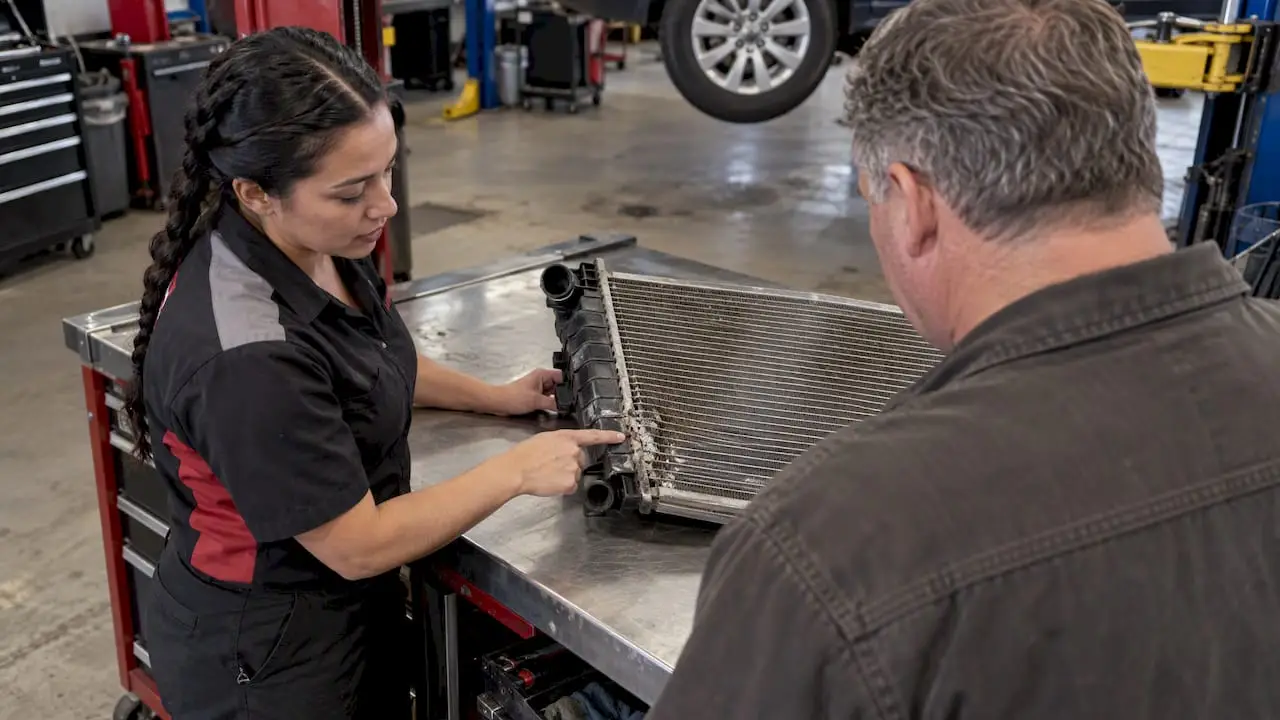
- Shop-level repairs: A radiator with a damaged end tank or a small core leak can sometimes be soldered, welded, or have the tank replaced rather than swapping the whole unit. These repairs make sense on radiators that are otherwise in good condition.
- Full replacement: Heavy internal corrosion, a cracked plastic tank, or coolant that has mixed with transmission fluid (on vehicles with an integrated transmission cooler) generally means replacement is the more sensible path.
ConsumerAffairs notes that many radiator complaints trace back to peripheral parts like a cap, clamp, or small hose, which a careful technician checks before recommending a full radiator swap.
When you review an estimate, ask whether the quoted radiator is OEM or aftermarket, how much labor time is tied to accessing the unit on your particular vehicle, and whether related parts like the thermostat or water pump should be replaced in the same job to avoid a repeat visit.
Pro Tip: Ask to see the failed part before approving replacement. Consumer Reports advises customers to request a clear explanation and a look at the actual failed component, since this protects against unnecessary repairs.
Can sealants or tape fix a radiator leak? What to know first
Chemical sealants, epoxy, and high-temperature tape have a real but narrow use. They work best on small, external leaks, like a pinhole in a hose or a hairline crack at a seam, and they are meant as a short-term measure, not a fix for a compromised core or tank.
- How they work: Sealant circulates through the system and hardens where it meets a small leak path.
- Limits: Most need time to cure and have their own temperature and pressure ceilings; a field repair rarely lasts as long as a proper one.
- Risks: Sealant can clog a heater core, mask a leak that reappears later, or fail suddenly under pressure and dump coolant fast.
- Right use case: Getting home or to a nearby shop safely, not replacing a radiator that genuinely needs repair or replacement.
If you lean on a sealant to get moving, treat it as a reason to get the radiator properly inspected soon, not as the end of the story.
When a radiator needs to be replaced, and what drives the cost
Some damage simply cannot be repaired in a way that holds up. A cracked or split plastic tank, heavy internal corrosion, clogging that restricts flow, or a leaking transmission cooler built into the radiator are all signs that replacement is the more reliable choice over patching.
- Vehicle make and model: Radiator design, size, and access vary widely between vehicles.
- OEM versus aftermarket parts: Part cost differs, and so can fit and longevity.
- Labor time: Some radiators sit behind bumpers, fans, and other components that add hours to the job.
- Related parts: Hoses, the thermostat, or the water pump sometimes need replacing in the same visit.
RepairPal’s cost estimator shows that replacement cost ranges widely by vehicle, with parts and labor as the two biggest drivers of the final number. Treat any online range as a starting point, not a quote, and ask for a written estimate once a technician has actually seen the failed radiator.
Diagnostic time is part of that math too. As AAA Oregon points out, tracking down a hidden or intermittent leak can take long enough that the diagnosis itself approaches the cost of the repair.
Preventive maintenance that keeps your radiator healthy
Most radiator failures build slowly, which means routine attention catches them before they turn into a roadside breakdown.
- Follow the coolant change interval in your owner’s manual; clean coolant resists the deposits that clog a radiator’s internal passages over time.
- Check hoses regularly. Consumer Reports recommends replacing hoses roughly every four years or at the first sign of failure, since hoses are the cooling system’s weakest structural link.
- Watch for electrochemical degradation, which attacks hoses from the inside and rarely shows obvious outer cracking, so a squeeze test matters even when a hose looks fine.
- Inspect before extremes. A short check before a hot-weather road trip or before towing a heavy load catches a weak hose or low coolant level before it becomes a highway problem.
Pro Tip: Keep a jug of the correct coolant type in your trunk during summer, but use it only to top off, not to diagnose a leak yourself.
A coolant flush on the manufacturer’s schedule and periodic radiator flushing both play a direct role in preventing the buildup that leads to clogging and overheating down the road.
What to do right now if your engine overheats
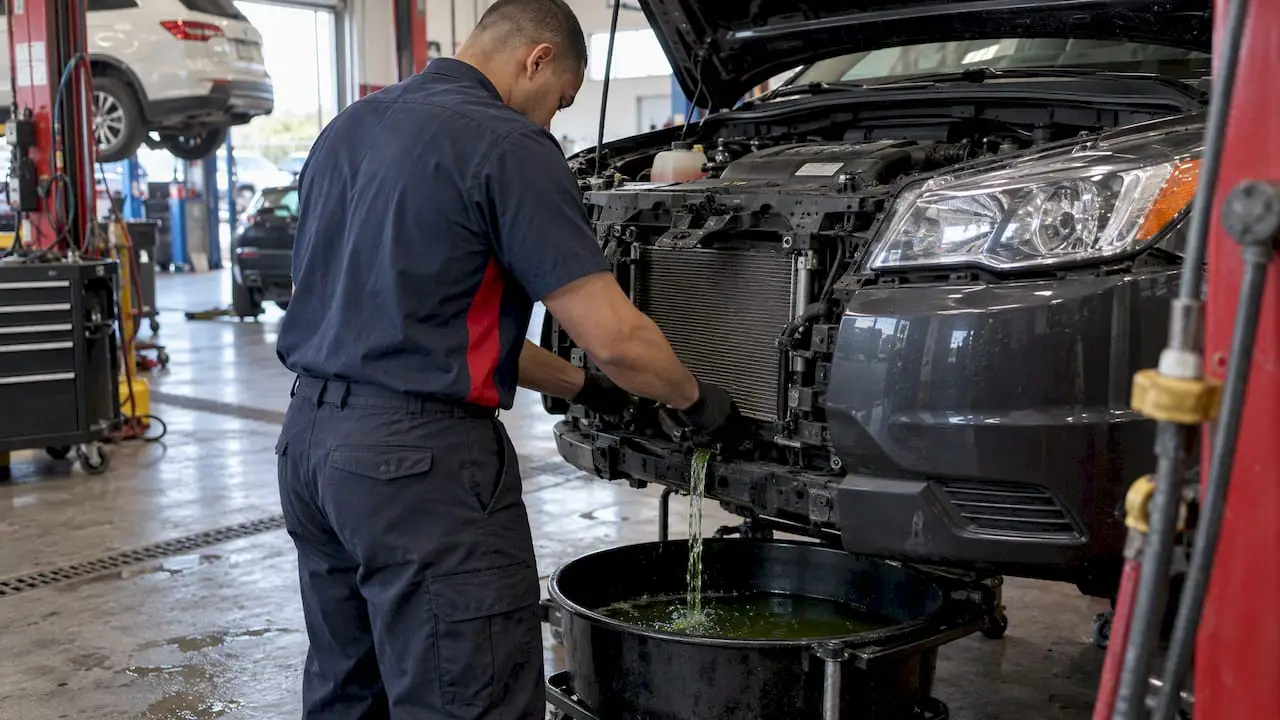
A rising temperature gauge calls for a specific sequence, not guesswork.
- Pull over safely as soon as you notice the gauge climbing or warning light.
- Turn off the engine and let it sit, undisturbed, for at least 30 to 40 minutes.
- Do not open the radiator cap while the system is hot, since pressurized steam can cause serious burns.
- Decide on towing versus a short drive. If the temperature has returned to normal and a trusted garage is close, a slow drive with the heater on full blast (it pulls heat away from the engine) may get you there; if it climbs again, stop and call for a tow.
If a vehicle overheats, the safest action is to immediately pull over, turn off the engine, and avoid opening the hood or cooling system until the engine has cooled for at least 30 to 40 minutes to prevent the risk of severe steam burns.
AAA
For a fuller breakdown of this sequence, see our guide to what to do when an overheating warning hits.
Why a proper diagnosis matters more than a quick guess
Our technicians perform digital inspections with photos so you see exactly what failed before approving any caliper problems: signs, causes, and fixes explained. A pressure test and a look at the actual failed part remove the guesswork, and same-day service aims to minimize your wait time.
— Express Lube & Car Care
Get your radiator checked without an appointment
We handle radiator diagnostics, hose replacement, coolant flushes, and full radiator replacement, and you can walk in without scheduling ahead. Every visit includes a digital inspection with photos, so you see the failed part on your own phone before we start work.
- ASE-certified technicians evaluate the cooling system and explain findings in plain language.
- Written estimates show parts and labor before any work begins.
- Same-day turnaround on most radiator repairs and a 24-month/24,000-mile warranty back the work.
- Military, first responder, and healthcare discounts apply where eligible.
If your car is showing overheating symptoms or a coolant puddle, visit our radiator and cooling system services page or stop by for a same-day inspection through our main service page.
FAQ
How much does it cost to repair a radiator?
Cost depends on the vehicle, whether the fix is a hose or cap versus a full radiator, and whether parts are OEM or aftermarket. RepairPal’s estimator shows pricing varies widely by make and model, so a written estimate from a shop that has actually seen your vehicle is the only reliable number.
Can a damaged radiator be repaired instead of replaced?
Small issues like a damaged end tank or a minor core leak can sometimes be soldered or welded rather than replaced, especially on an otherwise healthy radiator. Heavy corrosion, a cracked plastic tank, or internal contamination usually means replacement is the more dependable option.
What drives up the cost to fix a severely damaged radiator?
Labor time to access the radiator, the choice between OEM and aftermarket parts, and any related components replaced in the same job, like hoses or a thermostat, all affect the final price. Diagnostic time can also add to the bill, since AAA Oregon notes that tracking down a hidden leak can take as long as the repair itself.
How do you repair a radiator leak without replacing the whole unit?
A small, external leak can sometimes be sealed temporarily with a chemical sealant, epoxy, or high-temperature tape to get you home or to a shop safely. These are short-term measures, not permanent fixes, and a shop repair like soldering a seam works better for a lasting result on an otherwise sound radiator.
Sources
- AAA: Prevent overheating
- AAA Oregon: dealing with an overheating car
- Consumer Reports: Can you trust your mechanic?
- RepairPal radiator replacement cost estimator